

In the previous article, we went over what a limited liability company, or LLC, is and why you may want one. It offers various lucrative advantages to its member-owners and it comes with relatively few strings attached. Such an idyllic scenario is very rare to stumble upon in the corporate realm, which is why many businesses aim to achieve LLC status. However, to establish an LLC there are some key requirements you must complete in order for the state of California to grant recognition of your company as an LLC. Firstly, you’ll need to select a business name, then you’ll have to file the necessary documentation to the state of California, and you will have to come to an agreement with the other members of the LLC as to how everything will be run. Let’s start with that first part.
To start, you’ll want to decide upon a name for your LLC. But the trick is that you’re not the one that’s going to do the final deciding. That’s reserved for the state to decide and grant. As a general rule, you’ll want to ensure that the name you’ve settled on is:
Lastly, it’s also definitely worth making sure that your chosen LLC name doesn’t infringe upon any potential copyright issues. If your name is too similar to another LLC’s name, then you may be held in contempt of copyright violation.
This second step is arguably the most important one on the list. You will have to create and file Articles of Organization. These are important documents which outline and affirm the initial statements required of you to form an LLC. The Articles of Organization will be filed to the state secretary’s office and, once approved, they establish the LLC as a registered business entity within the state.
The information that is required typically includes the name of the LLC, its registered address, the names of the owners and their roles, as well as a few more key points of information about the LLC. These documents are used by the state government to keep track of which LLCs are claimed and who their registered agents are. Registered agents must be designated in order for your LLC to get formed because that person will have legal authority to respond to any legal documents that your LLC may receive.
Lastly, you’ll want to draft up an Operating Agreement. This is an extremely important part of the LLC creation process because it plainly establishes the business’ financial and operational decisions, the processes for arriving at those decisions, the protocols and chain of command, as well as many other rules, regulations, or provisions. The main reason you’d want to spend quite a bit of time working on the specifics of an Operating Agreement is that it outlines and governs the internal operations of your business in such a way that is most suitable to the specific needs of the business owners. Therefore, by investing time in writing it out now, you will save a lot of frustration, confusion, and time later down the line.
Do note that once signed by the member-owners of the LLC, the Operating Agreement acts as an official contract which binds them to its terms and conditions. The legal significance of this document is yet another reason to spend time on it–should any legal disputes or issues arise between the owners of the LLC, the operating agreement is one of the first things the courts will point to. As such, you’ll generally want your operating agreement to mention:
Also, bear in mind that the Operating Agreement must be completely transparent and agreed upon by all members of the LLC. You will all have to sign the document affirming your assent to its terms and rules.
There are many points to make sure you get down in just right way while filing the documents for forming your LLC. In particular, the Articles of Organization and the Operating Agreement are so crucial to get right that the future of your business depends on it. That’s a very tall order to ask of anyone to complete on their own. That’s where we come in; you do not have to go through that process alone. We can help you with the filing of these documents so that you can focus more on your business and worry less about the details. Give our office a call today at (310) 943-1171 to speak to our experienced California business lawyers. We will make the process as smooth as can be.
KAASS LAW is authorized to practice law in California. Our lawyers in Glendale, Los Angeles County, California specialize in offering services for multiple practice areas. The above content is intended for California residents only. This content provides only general information which may or may not reflect current legal developments. KAASS LAW expressly disclaims all liability in respect to actions taken or not taken based on any of the contents of this website. The above content DOES NOT create an attorney-client relationship. KAASS LAW does not represent you unless you have expressly retained KAASS LAW in person at the KAASS LAW office. KAASS LAW helps clients in: Los Angeles, Burbank, Hollywood, Glendale, Van Nuys, North Hollywood, Studio City, Highland Park, Eagle Rock, Sunland, Tujunga, Sylmar, San Bernardino, La Crescenta, La Canada, Beverly Hills, Westwood, Santa Monica, Brentwood. Pacoima, Montebello, Commerce, Alhambra, Downey, Bell, Maywood, Walnut Park, Vernon, Lynwood, Echo Park, Silverlake, Mission Hills, Northridge, Woodland Hills, Encino, Canoga Park, North Hills, Porter Ranch, Chatsworth, Reseda. Get Directions on Google Maps

An LLC, or limited liability company, is a term used to describe a private limited company. LLCs, along with LLPs, are relatively new forms of business organization in the United States. In particular, LLCs have gained much traction and popularity in the United States because of the many perks they offer over other, perhaps more traditional, forms of business organization. They carry with them very few disadvantages and as such, for many businesses an LLC is an idyllic means of conducting business. If you are considering which form of business is best for your new venture, or if you are considering changing your business to an LLC, it is definitely worth taking a few minutes to read on about their potential benefits to your business.
Many of the perks and benefits that a limited liability company offers stem from its unique status as a hybrid form of business organization. This hybridity allows for it to offer the benefits of limited liability like a corporation, while also simultaneously providing the tax advantages of a partnership. Essentially, an LLC can dip in between both types and offer dual benefits to its member-owners. As a result of these dualities, many businesses favor becoming an LLC, a trend that is only further encouraged by state statutes permitting and simplifying their establishment and longevity.

Health and safety code 11365 governs unlawful presence during unlawful controlled substance use. Getting arrested for HS 11365 can feel a lot like, being in the wrong place, at the wrong time.
Life is full of surprises, some good and some that just cause headaches. The law, on the other hand, is designed to be as unsurprising as possible. It has clear cut guidelines for what is, and what isn’t, legal. However, how the law gets used against you is another matter entirely. What could have been an honest mistake or an unfortunate coincidence can be damning in some respects of the law and California Health and Safety Code 11365 is one such law.
HS 11365 states that it is a misdemeanor to willingly and knowingly be somewhere that controlled substances are being used, given that you actually helped out or supported that usage. The law itself is sound, but many problems arise when this particular law is put into effect. This is because one can get charged with violating HS 11365 without ever having possessing any controlled substance or been under their influence. The way this typically works is that you may get arrested if you happened to be somewhere where controlled substance were being used; in practice this means that people can get charged with an HS 11365 violation for simply being in the wrong place, at the wrong time.

Penal Code 647(f) is California’s public intoxication law. It defines and outlines the criteria by which a person may be found guilty of being intoxicated in a public place and it also sets the penalties for committing such a crime. Though this law may sound relatively straightforward on paper, it’s actually a very nuanced and heavily layered one that requires a lot of proof in order to charge someone with it. And since it’s very likely that you, or someone you know, partakes in drinking it’s especially important to understand the scope of this law so that you know your rights.
Okay, So How Drunk is Drunk?
Glad you asked! This law is very clear as to how intoxicated a person needs to be in order to get charged with a Penal Code 647(f) violation—simply being tipsy, or even wasted, in a public place is not enough to warrant being charged. You would need to be so intoxicated that:

Under California Health and Safety Code 11358, individuals who are 21 and older can not only use marijuana recreationally, but they can also legally cultivate and grow their own marijuana plants. These new freedoms come with restrictions and regulations built into the very laws that grant their legal status, effectively limiting the amount of marijuana that one can legally own or cultivate for personal use. These limitations are designed to prevent excessive amounts from being created and distributed. Understanding these complex laws is a feat in itself, but being aware of them is important to all consumers of marijuana. In what follows, we break these laws down for you as simply as we can.
Health and Safety Code 11358 in relevant part, "...Each person who plants, cultivates, harvests, dries, or processes cannabis plants, or any part thereof, except as otherwise provided by law..."
It is legal to grow marijuana in California under H&S 11358, for person's over the age of 21 can grow up to 6 mature marijuana plants for their own personal use and cultivation. There are some strings attached, though. You will have to follow any additional local laws and ordinances that further regulate the cultivation of marijuana plants.
Penal Code section 148(a) Resisting Arrest aims to secure the physical wellbeing of officers, and encourages only compelling, legally applicable examinations of civilians. Lamentably, it isn't unprecedented for some officers to abuse this statute by rebuffing people who show any little sign of disobedience towards the officer. This is a serious and recurring issue all throughout California, with some counties and cities experiencing more of this abuse of power than others. For instance, Ventura county law enforcers are infamous for incarcerating civilians if the officer senses even the slightest amount of hesitation from the civilian. In many situations, this results in a gross and negligent abuse of power, originating from misinterpreted ideas of what the Penal Code 148(a) entails.
According to Penal Code 148(a)(1), any person who "obstinately" opposes or delays any law enforcement agent is blameworthy of a crime. They must demonstrate the following past a sensible uncertainty:
Most importantly, there does not need to be an intention of hurting the officer, a mere demonstration of knowingly resisting an officer is sufficient. As such, a prosecutor does not have to demonstrate that the defendant expected to commit a crime or even to cause any injury to the officer. Taking all of these elements into consideration, it can become murky and difficult to understand where to draw the line between officer aggression and defendant resistance. To help illustrate these, here are just a few examples:

Vehicle Code 23152(a) VC governs the crime of operating a motor vehicle “under the influence” of alcohol. In California motorists charged with driving under the influence can even be charged with a DUI, the blood alcohol concentration was below 0.08%. It should also be noted that if you have been charges with a DUI, there are two governmental bodies that are generally involved and require hearings; that is the DMV and the Courts. The DMV case is extremely time sensitive, and if not fixed immediately, will result in an automatic suspension of your driver’s license. A Driving under the influence conviction generally can result in costly fines, required attendance at alcohol-education classes, suspension or revocation of your driver’s license, probation, placing an ignition interlock device in your car, and even jail or prison time depending on the facts of the case.
California DUI charges can result in driver’s license suspensions, sometimes even on a first DUI. Our DUI attorneys in Glendale, CA have the ability to extend your driver’s license privileges and aggressively fight the DMV case to protect your license. It is critical to act quickly so you do not miss the deadline to demand a DMV hearing. If the deadline is missed it is likely that the DMV will automatically suspend your license.

California Penal Code § 1000 indicates an arrangement commonly known as a pretrial diversion or a deferred entry of judgment, in which a qualifying drug defendant requests to get their case put on hold for a set period of time while the defendant completes a state-approved drug rehabilitation or educational program. Penal Code § 1000 is very important because it enables some defendants to avoid conviction entirely with the deferred entry of judgment, or DEJ for short (this is also referred to as a pretrial diversion).
Whether DEJ applies for any given case will depend on several factors, such as age, previous criminal history, and the crime in question. For instance, DEJ is more restricted for adults, applying only for certain types of drug offenses. On the other hand, for juveniles, deferred entry of judgment usually applies for most first-time felonies.
First, a defendant asks to complete an approved program in any county in California. The court determines the eligibility of the defendant and, once approved, provides the defendant with a set period of time in which to complete the program. California courts have both . A list of state-approved programs can be found at the courthouse in which the hearing took place. All of these programs will assess the defendant and must ensure a minimum of 20 hours of drug education or rehabilitation. At the end of the program, an assessment report must be provided to the court, detailing the defendant’s progress and successful completion of the program.
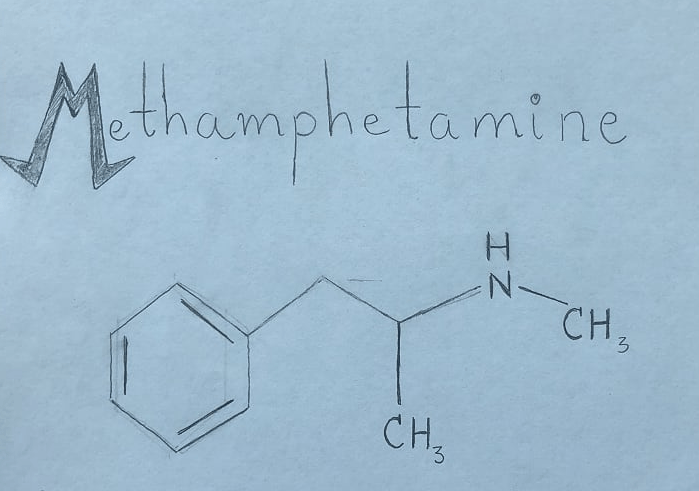
In California, there are many different health and safety codes and statutes in place to protect citizens. Some of these focus on illegal substances, such as methamphetamine, and the consequences one may face for possessing them.
Being accused of possessing meth is a serious crime because it is a controlled substance under the California Uniform Controlled Substances Act. Under California Health and Safety Code Section 11377, the mere possession of meth is considered a misdemeanor, which involves a penalty of up to $1,000 and a year in prison. However, these repercussions can be far more severe, depending on how the drug was found and whether or not the prosecutors determined if there was an intent to sell or distribute the drug. Therefore, it stands to reason that you should be aware of the ways in which a prosecutor can prove meth possession. So...
In order for a prosecutor to convict you of meth possession under Health and Safety Code Section 11377, they must be able to prove or show beyond reasonable doubt that: (1) you had actual possession of the drug in question; (2) you knew the drug was methamphetamine, a controlled substance, and (3) you had possession of usable amounts of the drug, i.e. more than just trace amounts of methamphetamine.

California Identity Theft , under Penal Code 530 PC usually occurs when: a defendant unlawfully gained unauthorized access to a computer’s information or someone else’s sensitive personal information and used that information for financial or personal gain. This can be achieved by creating a credit card or opening up an account under someone else’s identity in order to obtain money or items which they are not entitled to.
As discussed above, identity theft under California Penal Code Section 530 occurs when a person unlawfully and intentionally acquires and retains possession of personal identifying information of another person. In other words, identity theft occurs when a person uses your personal identifying information without permission to commit fraud or other theft related crimes. Identity theft crimes can include obtaining a consumers:
Insofar as questions of jurisdiction, LLCs share many traits with corporations. Like corporations, LLCs are creatures of the state. As such, they are formed and operated in accordance with state laws. Furthermore, both corporations and LLCs are treated as legal entities separate and distinct from their owners, who are instead referred to as ‘members’. Given their status as a legal entity, LLCs can sue or be sued, enter into contracts and arrangements, and hold titles to property or estates.
Notably, the members of an LLC enjoy limited liability just like the shareholders of a corporation would. Members can also undertake actions on behalf of the LLC, and as with a corporation’s shareholders, any damages or charges recovered go to the LLC, not to the members themselves. However, just like how courts can, on occasion, determine that they ought to disregard a corporation as a legal entity and hold shareholders personally liable for damages, so too can the courts pierce the corporate veil of an LLC to hold individuals accountable for damages. These cases, however, are extremely rare and far and few between.
As previously alluded to, the advantages of LLCs are many and the drawbacks are relatively few. One such disadvantage to consider is that the management structure of an LLC is not clearly stated nor defined in the legal literature. More often than not, it is up to the members to create, agree upon, and sign off on articles of organization which outline the key rules and principles of operation of the company. While, this may seem inconvenient at first, it can actually be viewed as a major advantage of an LLC, speaking to its flexibility and the level of freedom and control it can offer to its members. Below is a chart that effectively sums up the potential pros and cons of an LLC. Things to Consider About LLCs:
Advantages
Disadvantages
As you can see, the benefits of an LLC generally outweigh the drawbacks. For further information, use the following chart as a reference; it provides answers to many common questions surrounding the details of how an LLC works.
Characteristics of
A Limited Liability Company
Method of Formation
It is formed by an agreement of the owner-members of the company. Articles of organization are filed. Charter has to be given by the state.
Legal Position
It is treated as a legal entity.
Liability
Member-owners liability is limited to the amount of capital contributions or investments.
Duration
Can have perpetual existence, unless there is only one member (like a corporation).
Interest Transferability
Member interests are freely transferable.
Management Scheme
Member-owners can fully participate in management, or they can designate managers to oversee the firm on their behalf.
Taxation
LLC does not get taxed, and members are taxed personally based on the profits that get “passed through” the LLC.
Fees and Annual Reports
Organizational fee is required, as well as a possible business privilege fee.
Foreign Business Transactions
Generally no limitations.
While an LLC can offer you and your business many powerful tools and advantages, getting it set up as an LLC can be a somewhat difficult process. That’s where we can help. We have helped many clients start up LLCs for their businesses as well as converting an already existing business into an LLC. We always look for ways to help our clients maximize their profits in the legal realm, and this is no exception. If you or a loved one wishes to open an LLC, or has any further questions, we invite you to give us a toll free call at (310) 943-1171 to speak to one of our Los Angeles business lawyers today.
KAASS LAW is authorized to practice law in California. The above content is intended for California residents only. This content provides only general information which may or may not reflect current legal developments. KAASS LAW expressly disclaims all liability in respect to actions taken or not taken based on any of the contents of this website. The above content DOES NOT create an attorney-client relationship. KAASS LAW does not represent you unless you have expressly retained KAASS LAW in person at the KAASS LAW office. KAASS LAW helps clients in: Los Angeles, Burbank, Hollywood, Glendale, Van Nuys, North Hollywood, Studio City, Highland Park, Eagle Rock, Sunland, Tujunga, Sylmar, San Bernardino, La Crescenta, La Canada, Beverly Hills, Westwood, Santa Monica, Brentwood. Pacoima, Montebello, Commerce, Alhambra, Downey, Bell, Maywood, Walnut Park, Vernon, Lynwood, Echo Park, Silverlake, Mission Hills, Northridge, Woodland Hills, Encino, Canoga Park, North Hills, Porter Ranch, Chatsworth, Reseda.
Technical elements constitute the legal definition of presence during unlawful use of controlled substances, which means that for the HS 11365 charges to hold, the following five elements must be true:
Therefore, while HS 11365 has wording that focuses primarily around the idea of someone being ‘present’ while the use is happening, there is actually to show than merely being at the scene of the crime. You would additionally have to take an action or say something that helps or abets the use of the controlled substance.
Lending a ‘Helping Hand’ isn’t Always a Good Thing
To understand what ‘helping’ or ‘encouraging’ use of a controlled substance means in legal terms, we must know that it entails these critical points:
Clearly, there are a lot of principles and points that a violator of this statute would have to meet. To better illustrate these in a more real-world situation, let’s consider to different scenarios which may end with two very different results.
The following are examples of HS 11365 charges and how they might play out in court.
In the first scenario, suppose you went to a party with some friends where some people were snorting coke. You notice and become aware that some people are doing coke, but you choose not to say or do anything about it. You are clearly uneasy and you walk away whenever someone offers you a chance to do a line yourself. Given this scenario, you would not be found guilty of violating HS 11365 because even though you were present at a venue where drugs were being used, you did nothing to help or encourage the use of those drugs, nor did you partake in it yourself.
Conversely, let’s say the scene played out a bit differently. You’re still at a party with your friends where some people are using coke. Throughout the night, you dance with someone and have a few drinks with them. You take a liking to them and want to see them after the party. One of their friends interrupts by offering some coke. The person you liked looks at you for approval and you, not wanting to be a buzzkill, encourage them to go ahead and have fun. If that person then goes ahead and takes a hit of coke, then you may later be found guilty of violating HS 11365 since you encouraged the use of a controlled substance while at a place where they were being used.
California Health and Safety Code 11365 applies solely to a select group of ‘controlled substance’. These substances are:
As you may have noticed, marijuana is ostentatiously absent from the list. This is because California’s HS 11365 law does not apply to marijuana and thus you cannot be guilty of violating HS 11365 if you are present and encourage marijuana use.
As we alluded to at the beginning, knowingly being in a place where controlled substances are used is considered a misdemeanor. As such, the potential consequences are:
It is imperative to keep in mind that even if you are convicted of being present at the time of controlled substance use under Health and Safety Code 11365, you may still be eligible for California’s ‘deferred entry of judgement’ or pretrial diversion program. In a nutshell, deferred entry of judgement suspends the charged placed against you while you complete a state-approved drug rehabilitation program. Upon successfully finishing it, the charges get dismissed. However, to qualify for this option, there are some requirements. For example, you typically will need to have no previous controlled substance related charges and the charges need to not have involved violence.
There are a few legal defenses to California Health and Safety Code 11365. Despite possibly having the option of drug diversion, sometimes it may be far more sensible to fight the charges that are posed against you directly. This is typically done by using some of the common legal defenses, such as lack of knowledge.
As an example, if you weren’t aware of the illegal controlled substance use, and/or had no knowledge that your actions or words may have indirectly encouraged use of those substance, then you are not guilty of helping or supporting the use of controlled substances, even if you were present at the location. Alternatively, another method is to argue that you flat did not say or do anything to aid or support someone in using the controlled substance. These are just two of the many possible ways of defending an HS 11365 case.
For answers to any other questions you may still have about California Health and Safety Code 11365, about being present while controlled substances are used, or to discuss your case confidentially with our team of experienced California criminal defense attorneys, give us a call at (310) 943-1171. Our lawyers in Glendale, Los Angeles County, CA, are highly dedicated to serving the needs of our clients.
KAASS LAW is authorized to practice law in California. The above content is intended for California residents only. This content provides only general information which may or may not reflect current legal developments. KAASS LAW expressly disclaims all liability in respect to actions taken or not taken based on any of the contents of this website. The above content DOES NOT create an attorney-client relationship. KAASS LAW does not represent you unless you have expressly retained KAASS LAW in person at the KAASS LAW office. KAASS LAW helps clients in: Los Angeles, Burbank, Hollywood, Glendale, Van Nuys, North Hollywood, Studio City, Highland Park, Eagle Rock, Sunland, Tujunga, Sylmar, San Bernardino, La Crescenta, La Canada, Beverly Hills, Westwood, Santa Monica, Brentwood. Pacoima, Montebello, Commerce, Alhambra, Downey, Bell, Maywood, Walnut Park, Vernon, Lynwood, Echo Park, Silverlake, Mission Hills, Northridge, Woodland Hills, Encino, Canoga Park, North Hills, Porter Ranch, Chatsworth, Reseda.
What’s important to note is that if neither of the above points holds true, and you are merely drunk in a public place, like a bar or a street, then you are not guilty of violating this penal code...no matter what an annoyed, or even aggressive, cop might say!
Words carry lots of weight in the legal realm because what is meant and conveyed in the law can be used to argue in favor of, or against someone in a case. As it pertains to public intoxication or “drunk in public” charges, wording is very relevant. This is because the formal legal definition of being “drunk in public” bears with it three very key elements that must hold true in order for the charge to be justified. This means that the prosecutor has to show these elements are true in court for a defendant to get convicted of violating Penal Code 647(f). The elements are:
Therefore, simply being really drunk, even drunk enough to blackout or pass out, does not automatically make you guilty of violating Penal Code 647(f). So, while on the surface it may seem easy enough to denote a law for public intoxication, it actually becomes a very technical and specific process. We can use those technicalities to our advantage.
First off, let’s zero in on that first element of the definition we mentioned above. To be willingly under the influence means that you got intoxicated of your own free will. Therefore, the prosecutor would have to establish that you intentionally got drunk or intoxicated and that it was something you did by your own deliberate choice. So, let’s say you were drugged or someone slipped something in your drink. In that scenario, you could not be found guilty of violating Penal Code 647(f). Similarly, let’s say you thought you were enjoying a non-alcoholic beverage, but someone changed your drink and gave you something else...in that situation you would still not be guilty because you did not get intoxicated willingly.
All Publicity is Good Publicity...right?
Now about that second crucial element in the definition—“public”. As far as California law is concerned, a public place is anywhere outside of a private residence where people are free to walk. Some obvious examples that fit the definition would be places like a shopping center, a bar, a restaurant, a movie theater, a street, and a park or a beach. There are some less obvious places that this definition also covers, such as shared, communal hallways or lounges in apartment complexes, the front yard, front porch and driveway of someone’s home, and a parked car on a public road. Similarly, a hotel hallway is a public place, but the actual hotel room is not.
It is important to know that a place can be considered ‘public’ even if there aren’t any other people actually present at that location: what matters is that it is accessible to the public, not that anyone is there or likely to be there. On the other hand, some examples of private areas would be places like private homes, apartments or residences, and garages, sheds, guest houses, or backyards. Finally, it’s imperative to keep in mind that you cannot be found guilty of being intoxicated in public if you got drunk or inebriated in a private place, but then were forced out to a public place. There have been instances where people (sometimes even law enforcement!) force intoxicated people to go with them to a public place and then arrest or accuse them of being drunk in public. That’s why it is so important to always know your rights.
Safety First!
The whole third premise of this penal code rests upon safety, specifically denoting when someone poses a threat to safety. The law specifies that a person who is so intoxicated that they are unable to care for themselves or for those around them are considered drunk enough that they pose a risk to the wellbeing of themselves and to those around them. To illustrate this, picture two different people, Leo and Kevin, both of whom are outside of an LA bar at 2 in the morning.
Leo is trying to call for an Uber when a cop comes up to him and questions him. Leo is able to answer the cop’s questions, and while the cop can both see and smell that Leo is definitely drunk, he can also tell that Leo is coherent enough to get himself into a cab. Therefore, Leo doesn’t pose a threat to himself or to anyone else outside that bar. However as the cop begins to leave, he notices Kevin, who is also trying to find his Uber. The difference is that Kevin has wandered onto the middle of the road to see if any of the cars are his cab and as a result the drivers are forced to slam their brakes to avoid running into Kevin. He is clearly incoherent and he trips and falls right in the middle of the street.
Given that situation, it’s clear that both Leo and Kevin are drunk, but what matters is that Leo’s actions aren’t threatening his safety or the safety of others, whereas Kevin’s drunken shenanigans are endangering his life as well as the safety of others around him. Thus, Leo would not be charged with violating Penal Code 647(f), but Kevin very well may be. The cop could notice that Kevin’s level of drunkenness is so extreme that it actually does pose a safety hazard and so Kevin can be found guilty of a Los Angeles public intoxication charge.
And While You’re at it...Try Not to Get in the Way Either
The second half of that last component deals with obstructions of public places. Going back to our previous example, Leo gets in his cab and heads home, whereas Kevin stumbles and falls in the middle of the street. Let’s say he manages to drag himself back onto the sidewalk, where he passes out from being so drunk. In this situation, people who are walking on that sidewalk may be forced to step onto him, step over him, or otherwise go off the sidewalk to walk around him. Therefore, Kevin is blocking the free passage of people in a public space and that is also grounds for a potential public intoxication arrest.
The penalties of penal code 657(f) are more than just a bad hangover. If convicted of a Penal Code 647(f), the penalties include the following:
However, if you get a “public intoxication” conviction three or more times within a 1 year period, then you will have a minimum sentence of 90 days in county jail. The court can reduce that sentence down to a 60 day period, provided that you spend those 60 days in an alcohol recovery program and treatment center.
Sometimes a Good Legal Defense...is a Great Offense
A seasoned Glendale criminal defense attorney will explore several methods of protecting you by incorporating the details of your case as well as the circumstances leading up to the alleged public intoxication charges. The following are some examples of defenses that your lawyer may use to fight the accusations:
If you or a loved one has been accused of violating Penal Code 647(f), don’t hesitate to give us a toll free call at (310) 943-1171 to speak with our experienced California defense attorneys today. Our lawyers in Glendale, Los Angeles, California, are dedicating to providing all of our clients with the highest quality legal services possible.
KAASS LAW is authorized to practice law in California. The above content is intended for California residents only. This content provides only general information which may or may not reflect current legal developments. KAASS LAW expressly disclaims all liability in respect to actions taken or not taken based on any of the contents of this website. The above content DOES NOT create an attorney-client relationship. KAASS LAW does not represent you unless you have expressly retained KAASS LAW in person at the KAASS LAW office. KAASS LAW helps clients in: Los Angeles, Burbank, Hollywood, Glendale, Van Nuys, North Hollywood, Studio City, Highland Park, Eagle Rock, Sunland, Tujunga, Sylmar, San Bernardino, La Crescenta, La Canada, Beverly Hills, Westwood, Santa Monica, Brentwood. Pacoima, Montebello, Commerce, Alhambra, Downey, Bell, Maywood, Walnut Park, Vernon, Lynwood, Echo Park, Silverlake, Mission Hills, Northridge, Woodland Hills, Encino, Canoga Park, North Hills, Porter Ranch, Chatsworth, Reseda. Get Directions on Google Maps
Can you grow marijuana outdoors in California is a frequently asked question. In California you cannot grow marijuana outdoors, nor can it be plainly visible to the naked eye from a public place. In other words, you can’t realistically grow pot in your backyard, because if your neighbors can see it with their unaided vision, then it’s still technically illegal. Due to these restrictions, you will typically want to cultivate your marijuana indoors and somewhere that is not easily visible from the outside. Furthermore, if there is more than one person living in that residence, you are still limited to no more than 6 marijuana plants. In other words, you and your spouse cannot grow twelve plants together, because the 6 plant limit applies per residence, not per person.
You’ll have noticed pretty quickly that all of these official legal definitions and restrictions utilize the word ‘cultivate’ when referring to growing of marijuana plants. This is because it gives a sense of consistency to the semantics that are at play in the law. However, the word ‘cultivate’ in these legal contexts is a bit more encompassing than you might usually expect. Here, to cultivate can mean any or all of the following:
As you can see, the definition of ‘cultivate’ is heavily expanded in these contexts for simplicity’s sake and for the sake of being able to capture more meaning into the word itself. These additional meanings of ‘cultivate’ are significant because the wording of the law is key to understanding what you may be accused of or charged with. Because of the expanded meaning, you do not even have to be physically present to ‘cultivate’ marijuana—even just being indirectly involved with its process is sufficient to be accused. This means that if you were to help your friend remove the leaves, you’d still be ‘cultivating’ marijuana.
This is where things get a bit more murky. Cultivating marijuana for medicinal use is different than for personal use. Even the laws used to denote them are distinct. The one that matters most here is California’s “Compassionate Use Act of 1996”, which came into law through Proposition 215; its provisions are further outlined in California Health and Safety Code 11362.5 and other subsequent sections. In a nutshell, the Compassionate Use Act gives exemptions to the following groups from the usual California laws that govern and regulate the possession and cultivation of marijuana:
Medicinal marijuana patients and their primary caregivers can grow or cultivate 6 mature marijuana plants, 12 immature marijuana plants, or, with a doctor’s recommendation, an even greater number of plants, relative to the patients’ needs for treatment.
Now that marijuana legalization in California has kicked in, most violations of Health and Safety Code 11358 will be considered misdemeanors. The punishments for breaking this statute may include:
You should, however, keep in mind that violating HS 11358 does have more severe consequences if:
In these situation, you would instead be convicted of a felony and you could be sentenced up to 3 years in county jail and be fined a maximum fine of $10,000.
Provided that your arrest was solely for cultivating excessive amounts of marijuana for personal use, you are a non-violent first or second time offender, and/or you are a minor, you can qualify for deferred entry of judgement or a pretrial diversion (enter links to article here). In this case, you will have your sentencing put on hold while you participate and complete a state-approved drug counseling or treatment course. This procedure is due to California Penal Code 1000 and upon successfully completing it, the charges will be dismissed. Crucially, this means that the arrest and the charges will not exist on your record for most purposes, like applying for a job, school, housing, and other applications. However, it does require that you plead guilty first and foremost, as well as meeting the eligibility requirements. Only then will the court consider and accept your case for pretrial diversion. Whether or not your case may qualify for pretrial diversion is something your lawyer will discuss with you.
Proposition 64, now that it is fully in effect, has greatly changed the way that California handles marijuana cases as they pertain to use, possession, and cultivation. As a result of this, the law does work retroactively. In other words, if you were convicted of marijuana cultivation prior to the passing of Prop 64, you may now not be found guilty of convicting a crime at all. In fact, even if you had grown more than the legal limit of 6 marijuana plants, you would still have a reduced punishment since you would have been guilty of a misdemeanor, not a felony. Prop 64, through Health and Safety Code 11361.8 permits those who were convicted under the old version of HS 11358 to appeal for redesignation or resentencing of their violation. For the most part, the court will grant the resentencing without much thought, unless they feel that you would pose some serious risk to public safety. Based on how much of your sentence has already been served, you might even be subject to immediate release. This also holds true for those that were convicted of a marijuana cultivation or use felony under older laws; you can apply to have your crime redesignated from a felony to a misdemeanor, or possibly even get it expunged entirely if you would not been found guilty of any crime under these new laws.
A skilled criminal defense lawyer will get the details of your case and use them to shield you. The following are just some of the possible defenses that may be used in your situation:
f you or a loved one has been accused of violating California Health and Safety Code 11358, or any marijuana law, we invite you to give us a call at (310) 943-1171 to speak to a skilled Los Angeles marijuana defense attorney with confidentiality today.
Location & Directions KAASS LAW Location: 701 North Brand Blvd. Suite 100 Glendale, CA 91203 Telephone: (310) 943-1171 Email: [email protected]
Our lawyers in Glendale, Los Angeles, CA at KAASS LAW are authorized to practice law in California. The above content is intended for California residents only. This content provides only general information which may or may not reflect current legal developments. KAASS LAW expressly disclaims all liability in respect to actions taken or not taken based on any of the contents of this website. The above content DOES NOT create an attorney-client relationship. KAASS LAW does not represent you unless you have expressly retained KAASS LAW in person at the KAASS LAW office. KAASS LAW helps clients in: Los Angeles, Burbank, Hollywood, Glendale, Van Nuys, North Hollywood, Studio City, Highland Park, Eagle Rock, Sunland, Tujunga, Sylmar, San Bernardino, La Crescenta, La Canada, Beverly Hills, Westwood, Santa Monica, Brentwood. Pacoima, Montebello, Commerce, Alhambra, Downey, Bell, Maywood, Walnut Park, Vernon, Lynwood, Echo Park, Silverlake, Mission Hills, Northridge, Woodland Hills, Encino, Canoga Park, North Hills, Porter Ranch, Chatsworth, Reseda.
There are several avenues of defense that a skilled Glendale criminal defense attorney will utilize in order to defend their client in situations of unlawful arrest. A few examples of these defenses include: the use of excessive force or police brutality, acting in self-defense, or being wrongfully accused of a crime. Which path is best for your particular case is something your lawyer will be able to determine with you. If you feel that you or a loved one have experienced a wrongful accusation of violating Penal Code 148(a), or been the victim of police brutality or misconduct, please give us a call at (310) 943-1171 to speak to a defense attorney specialist, or send us an email with a description of your case at [email protected].
KAASS LAW is authorized to practice law in California. The above content is intended for California residents only. This content provides only general information which may or may not reflect current legal developments. KAASS LAW expressly disclaims all liability in respect to actions taken or not taken based on any of the contents of this website. The above content DOES NOT create an attorney-client relationship. KAASS LAW does not represent you unless you have expressly retained KAASS LAW in person at the KAASS LAW office. KAASS LAW helps clients in: Los Angeles, Burbank, Hollywood, Glendale, Van Nuys, North Hollywood, Studio City, Highland Park, Eagle Rock, Sunland, Tujunga, Sylmar, San Bernardino, La Crescenta, La Canada, Beverly Hills, Westwood, Santa Monica, Brentwood. Pacoima, Montebello, Commerce, Alhambra, Downey, Bell, Maywood, Walnut Park, Vernon, Lynwood, Echo Park, Silverlake, Mission Hills, Northridge, Woodland Hills, Encino, Canoga Park, North Hills, Porter Ranch, Chatsworth, Reseda.
If convicted of a DUI in Court, while the driver would have full driving privileges, the DMV will require the installation of an ignition interlock device, which is the breathalyzer device for several month period. Typically, probation is for three years and is also known as "informal" or "summary probation" on a first time DUI offense. Summary probation means that it is “non-reporting probation".
A criminal conviction in California, even for a first time DUI offense can have negative consequences on immigration status. For instance, a DUI offense can trigger deportation requirements and other immigration difficulties. Winning your case instead of being convicted can often mean staying in the United States instead of being deported. Therefore, hiring an experience Glendale DUI defense lawyer may mean the difference of keeping your immigration status or suffer adverse consequences. Our goal in DUI cases is to first attempt to seek a dismissal. If that does not work, we seek to reduce charges and all punishment.
It is imperative that you hire the best Los Angeles DUI attorney to ensure you get the best possible defense. Our Glendale criminal defense lawyers have handled numerous cases. If you have been accused of a DUI, contact one of our Glendale DUI attorneys at (310) 943-1171. It is important to have a defense attorney that you can trust. It is imperative not to speak with investigative authorities without seeking legal counsel first in these situations.
KAASS LAW is authorized to practice law in California. The above content is intended for California residents only. This content provides only general information which may or may not reflect current legal developments. KAASS LAW expressly disclaims all liability in respect to actions taken or not taken based on any of the contents of this website. The above content DOES NOT create an attorney-client relationship. KAASS LAW does not represent you unless you have expressly retained KAASS LAW in person at the KAASS LAW office. KAASS LAW helps clients in: Los Angeles, Burbank, Hollywood, Glendale, Van Nuys, North Hollywood, Studio City, Highland Park, Eagle Rock, Sunland, Tujunga, Sylmar, San Bernardino, La Crescenta, La Canada, Beverly Hills, Westwood, Santa Monica, Brentwood. Pacoima, Montebello, Commerce, Alhambra, Downey, Bell, Maywood, Walnut Park, Vernon, Lynwood, Echo Park, Silverlake, Mission Hills, Northridge, Woodland Hills, Encino, Canoga Park, North Hills, Porter Ranch, Chatsworth, Reseda.
Upon finishing the DEJ program, the court has an obligation to dismiss the drug charges against you. As such, the benefits of completing the program are that:
Throughout your participation in the court-sanctioned program, the court may determine that your efforts or participation are not satisfactory, or that some other issue has come up. Any of these may disqualify your eligibility for the diversion program. Some of these reasons can include:
Basically, a defendant can be removed from the DEJ program if at any point they fail to complete the program satisfactorily or if they get convicted of a felony or a misdemeanor involving violence. In that case, the defendant will get dropped from the program and sentenced per the underlying charge(s).
There are two factors that are responsible for determining your eligibility for a DEJ. The first is the type of drug offense itself and the second is your previous criminal history.
According to California Penal Code § 1000, some drug offenses are eligible for deferred entry of judgment. Most often, these are:
*A ‘controlled substance’ refers most commonly to such drugs as Cocaine, Marijuana, Heroin, Methamphetamines, Ketamine, Ecstasy, Vicodin, Codeine, and GHB.
Your prior criminal history is the other major factor used to determine whether your case is eligible for a DEJ. The conditions are:
You should know that there are some strings attached with the deferred entry of judgment. It does require the defendant to plead guilty, with the condition that the court does not enter judgment. Thus, the final sentencing, or conviction, is never finalized. The case is therefore left in a limbo period, or deferment. During this period, the defendant must then successfully complete the appropriate, state-approved program. The court will look over the details of the case again and if everything was correctly done, the charge against the defendant will be dismissed.
The details surrounding the deferred entry of judgment can get complicated and murky. We can help you to assess if a pretrial diversion or a DEJ is possible given the details of your case. To speak to an Glendale criminal defense attorney, please call our firm at (310) 943-1171 or email us at [email protected].
KAASS LAW is authorized to practice law in California. The above content is intended for California residents only. This content provides only general information which may or may not reflect current legal developments. KAASS LAW expressly disclaims all liability in respect to actions taken or not taken based on any of the contents of this website. The above content DOES NOT create an attorney-client relationship. KAASS LAW does not represent you unless you have expressly retained KAASS LAW in person at the KAASS LAW office. KAASS LAW helps clients in: Los Angeles, Burbank, Hollywood, Glendale, Van Nuys, North Hollywood, Studio City, Highland Park, Eagle Rock, Sunland, Tujunga, Sylmar, San Bernardino, La Crescenta, La Canada, Beverly Hills, Westwood, Santa Monica, Brentwood. Pacoima, Montebello, Commerce, Alhambra, Downey, Bell, Maywood, Walnut Park, Vernon, Lynwood, Echo Park, Silverlake, Mission Hills, Northridge, Woodland Hills, Encino, Canoga Park, North Hills, Porter Ranch, Chatsworth, Reseda.
While the burden to prove these things falls on the State, you should be prepared with ample evidence to show otherwise, just in case they do manage to produce sufficient evidence in the courtroom. Bear in mind there are two different kinds of possession for which you may be convicted. The first kind is actual possession, which entails that the authorities discovered the drug on your person, meaning in your pocket, clothes, or bag. The second kind is constructive possession, which simply means that the authorities found the drug in a place that you have access to, such as your house, car, or office. If you did not expressly admit to having knowledge of the illegal substance of methamphetamine being in your possession, the prosecutor will have to meticulously prove that through evidence. Evidence can include the way you behaved or reacted during the search or arrest process. As an example, if you attempted to hide or get rid of the drug, then they could reasonably assume that you had knowledge of the drug and its illegality. However, assumptions can work against the prosecutor as well.
One of the first things your lawyer will do is to determine whether the police encounter that led up to the discovery of the meth was legal. In other words, the prosecutor cannot use evidence against you in a court of law if it was obtained illegally. Remember that the police must adhere to strict laws which are upheld by the United States Constitution, including when they stop and search vehicles, when they enter into private property, and even when they arrest or detain someone on suspicion of illegal substance possession. Should a law enforcement agent knowingly, or inadvertently, violate the suspect’s constitutional rights, then your lawyer can request to suppress the evidence being presented against you.
There are many different avenues and possibilities that a lawyer can explore with you in order to best gauge what your next optimal move will be. Getting charged with possession of a controlled substance may seem overwhelming and getting out of that situation even more so, but we will guide you through the criminal justice process and get you the best possible result. We invite you to give KAASS Law a toll free call at (310) 943-1171 to have a free consultation with our skilled defense attorneys.
Felony identity theft charges in California carry punishment of 3 years in state prison, court order to pay compensatory damages to the victim(s) that suffered damages, other fines, parole, and/or probation. Call now for a free consultation and case review at (310) 943-1171. If you or someone you love got these accusations of identity theft in California, it is important to understand the penalties that accompany a identity theft conviction. We invite you to contact our Glendale criminal lawyers for a free consultation and case review. Call our office at (310) 943-1171, our attorneys at KAASS Law speak English, French, Spanish, Russian, Armenian, and Italian.
KAASS LAW is authorized to practice law in California. The above content is for California residents only. This content provides only general information which may or may not reflect current legal developments. KAASS LAW expressly disclaims all liability in respect to actions taken or not taken based on any of the contents of this website. The above content DOES NOT create an attorney-client relationship. KAASS LAW does not represent you unless you have expressly retained KAASS LAW in person at the KAASS LAW office.
KAASS LAW helps clients in: Los Angeles, Burbank, Hollywood, Glendale, Van Nuys, North Hollywood, Studio City, Highland Park, Eagle Rock. Sunland, Tujunga, Sylmar, La Crescenta, La Canada, Beverly Hills, Westwood, Santa Monica, Brentwood. Pacoima, Montebello, Commerce, Alhambra, Downey, Bell, Maywood, Walnut Park, Vernon, Lynwood, Echo Park, Silverlake, Mission Hills, Northridge, Woodland Hills, Encino, Canoga Park, North Hills, Porter Ranch, Chatsworth, Reseda.