Health and Safety Code § 11358: Growing Marijuana
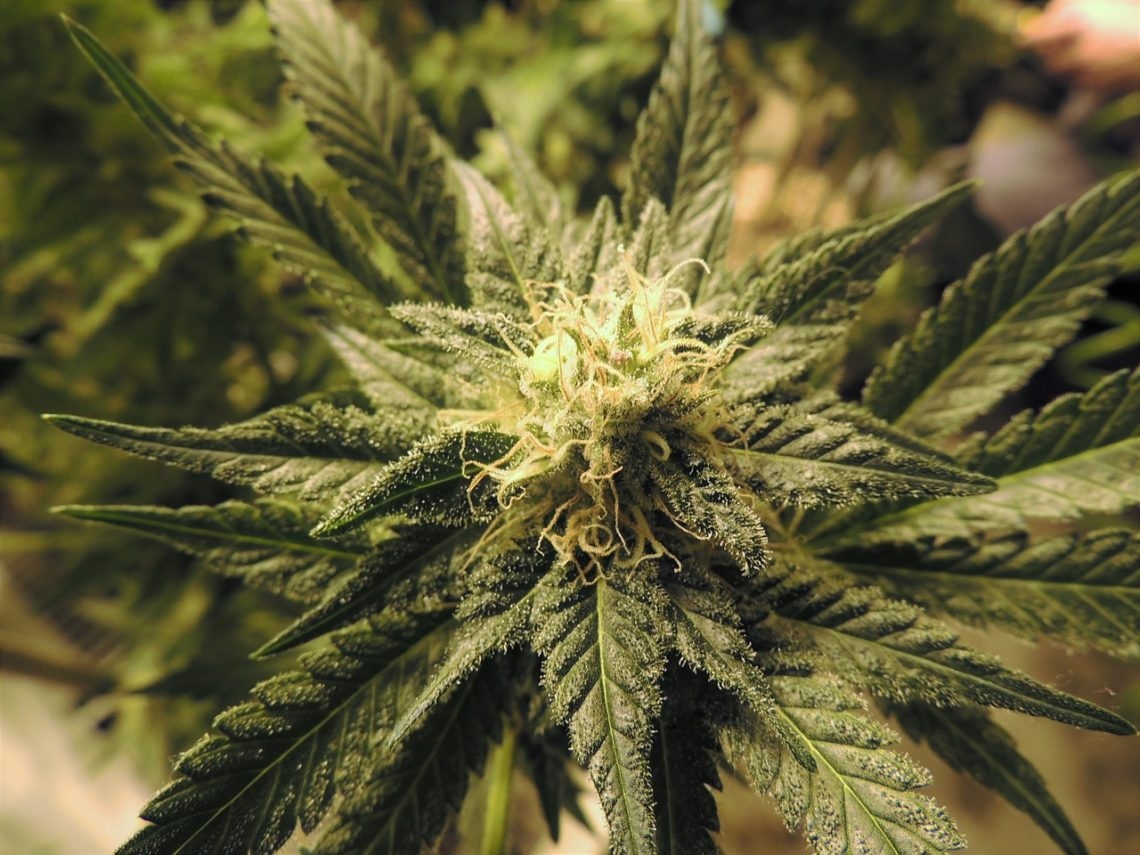
Health and Safety Code 11358 Growing Marijuana
Under California Health and Safety Code 11358, individuals who are 21 and older can not only use marijuana recreationally, but they can also legally cultivate and grow their own marijuana plants. These new freedoms come with restrictions and regulations built into the very laws that grant their legal status, effectively limiting the amount of marijuana that one can legally own or cultivate for personal use. These limitations are designed to prevent excessive amounts from being created and distributed. Understanding these complex laws is a feat in itself, but being aware of them is important to all consumers of marijuana. In what follows, we break these laws down for you as simply as we can.
Health and Safety Code 11358: Cultivates, Plants, Harvests, and Processes Cannabis Plants
Health and Safety Code 11358 in relevant part, "...Each person who plants, cultivates, harvests, dries, or processes cannabis plants, or any part thereof, except as otherwise provided by law..."
When is it Legal to Grow Marijuana in California?
It is legal to grow marijuana in California under H&S 11358, for person's over the age of 21 can grow up to 6 mature marijuana plants for their own personal use and cultivation. There are some strings attached, though. You will have to follow any additional local laws and ordinances that further regulate the cultivation of marijuana plants.
Can You Grow Marijuana Outdoors in California?
Can you grow marijuana outdoors in California is a frequently asked question. In California you cannot grow marijuana outdoors, nor can it be plainly visible to the naked eye from a public place. In other words, you can’t realistically grow pot in your backyard, because if your neighbors can see it with their unaided vision, then it’s still technically illegal. Due to these restrictions, you will typically want to cultivate your marijuana indoors and somewhere that is not easily visible from the outside. Furthermore, if there is more than one person living in that residence, you are still limited to no more than 6 marijuana plants. In other words, you and your spouse cannot grow twelve plants together, because the 6 plant limit applies per residence, not per person.
What Does Cultivating Mean?
You’ll have noticed pretty quickly that all of these official legal definitions and restrictions utilize the word ‘cultivate’ when referring to growing of marijuana plants. This is because it gives a sense of consistency to the semantics that are at play in the law. However, the word ‘cultivate’ in these legal contexts is a bit more encompassing than you might usually expect. Here, to cultivate can mean any or all of the following:
- To plant,
- To harvest,
- To nurture,
- To grow,
- To dry,
- To water,
- To process,
- To care for,
- Or to cultivate any marijuana plant or any of its parts therein.
As you can see, the definition of ‘cultivate’ is heavily expanded in these contexts for simplicity’s sake and for the sake of being able to capture more meaning into the word itself. These additional meanings of ‘cultivate’ are significant because the wording of the law is key to understanding what you may be accused of or charged with. Because of the expanded meaning, you do not even have to be physically present to ‘cultivate’ marijuana—even just being indirectly involved with its process is sufficient to be accused. This means that if you were to help your friend remove the leaves, you’d still be ‘cultivating’ marijuana.
“But, it’s Medicinal”, You Say!
This is where things get a bit more murky. Cultivating marijuana for medicinal use is different than for personal use. Even the laws used to denote them are distinct. The one that matters most here is California’s “Compassionate Use Act of 1996”, which came into law through Proposition 215; its provisions are further outlined in California Health and Safety Code 11362.5 and other subsequent sections. In a nutshell, the Compassionate Use Act gives exemptions to the following groups from the usual California laws that govern and regulate the possession and cultivation of marijuana:
- People who need to use marijuana for treatment of a serious medical condition, as prescribed by a doctor,
- The primary caregivers to those people, and
- Dispensaries, or, more formally, medicinal marijuana collectives.
How Many Cannabis Plants Can a Medicinal Marijuana Patients Grow in California?
Medicinal marijuana patients and their primary caregivers can grow or cultivate 6 mature marijuana plants, 12 immature marijuana plants, or, with a doctor’s recommendation, an even greater number of plants, relative to the patients’ needs for treatment.
Violations of Marijuana Health and Safety Code 11358
Now that marijuana legalization in California has kicked in, most violations of Health and Safety Code 11358 will be considered misdemeanors. The punishments for breaking this statute may include:
- Serving a maximum of 6 months in county jail, and/or
- Being fined no more than $500.
You should, however, keep in mind that violating HS 11358 does have more severe consequences if:
- You have been convicted of any violent felonies or crimes in the past,
- You are a registered sex offender,
- You have 2 or more previous convictions for cultivating or growing more than the legal limit of 6 marijuana plants, and/or
- You violated other California environmental laws or ordinances while cultivating marijuana.
In these situation, you would instead be convicted of a felony and you could be sentenced up to 3 years in county jail and be fined a maximum fine of $10,000.
One Other Way to Patch Things Up: California Penal Code 1000—Pretrial Diversion
Provided that your arrest was solely for cultivating excessive amounts of marijuana for personal use, you are a non-violent first or second time offender, and/or you are a minor, you can qualify for deferred entry of judgement or a pretrial diversion (enter links to article here). In this case, you will have your sentencing put on hold while you participate and complete a state-approved drug counseling or treatment course. This procedure is due to California Penal Code 1000 and upon successfully completing it, the charges will be dismissed. Crucially, this means that the arrest and the charges will not exist on your record for most purposes, like applying for a job, school, housing, and other applications. However, it does require that you plead guilty first and foremost, as well as meeting the eligibility requirements. Only then will the court consider and accept your case for pretrial diversion. Whether or not your case may qualify for pretrial diversion is something your lawyer will discuss with you.
Re-sentencing of California Marijuana Cases Through Prop 64
Proposition 64, now that it is fully in effect, has greatly changed the way that California handles marijuana cases as they pertain to use, possession, and cultivation. As a result of this, the law does work retroactively. In other words, if you were convicted of marijuana cultivation prior to the passing of Prop 64, you may now not be found guilty of convicting a crime at all. In fact, even if you had grown more than the legal limit of 6 marijuana plants, you would still have a reduced punishment since you would have been guilty of a misdemeanor, not a felony. Prop 64, through Health and Safety Code 11361.8 permits those who were convicted under the old version of HS 11358 to appeal for redesignation or resentencing of their violation. For the most part, the court will grant the resentencing without much thought, unless they feel that you would pose some serious risk to public safety. Based on how much of your sentence has already been served, you might even be subject to immediate release. This also holds true for those that were convicted of a marijuana cultivation or use felony under older laws; you can apply to have your crime redesignated from a felony to a misdemeanor, or possibly even get it expunged entirely if you would not been found guilty of any crime under these new laws.
A Good Defense Doesn’t Have to Be Hard to Come By
A skilled criminal defense lawyer will get the details of your case and use them to shield you. The following are just some of the possible defenses that may be used in your situation:
- The marijuana was not yours.
- If the prosecutor cannot definitively prove the marijuana belonged to you, then you are not guilty of committing a crime. For example, let’s say the marijuana was found in a communal space that is shared amongst different residents, such as a garden or backyard. If there is no other proof that you were the one to specifically plant or cultivate the marijuana then you are not guilty.
- You were not aware there was marijuana.
- Let’s say you go on vacation and come back to find some marijuana plants growing on your property. The prosecutor must still be able to show at the very least that you knew there was marijuana being grown on your property and that you chose not to do anything about it.
- You did not recognize that it was marijuana.
- If the prosecutor cannot demonstrate that you know what marijuana plants look like, then you cannot be found guilty of violating the law. For example, if your roommate plants a bunch of marijuana plants at your residence, then you wouldn’t be found guilty of breaking the law if you didn’t even know that they were marijuana plants in the first place.
- You are a medical marijuana patient whose needs are higher than the limits set out in Prop 64 and the Compassionate Use Act.
- This would be an affirmative defense to an accusation that you have cultivated more than the legal limit of marijuana. The burden is still on you to show that:
- You have a serious medical condition as defined by the Compassionate Use Act
- You have gotten a recommendation or approval from a physician to use marijuana in your treatment of the ailment and that
- You need more than the current legal limits on marijuana cultivation can provide.
- The marijuana was found illegally.
- This is where your Fourth Amendment Right kicks in to protect you from unreasonable searches and seizures of your private property. If a law enforcement officer did not have a valid warrant to search through your property, nor sufficient cause to do so, then any evidence obtained from such unsanctioned searches and seizures cannot be used in a court of law.
Los Angeles Marijuana Lawyer: California Health and Safety Code 11358
f you or a loved one has been accused of violating California Health and Safety Code 11358, or any marijuana law, we invite you to give us a call at (310) 943-1171 to speak to a skilled Los Angeles marijuana defense attorney with confidentiality today.
Location & Directions KAASS LAW Location: 701 North Brand Blvd. Suite 100 Glendale, CA 91203 Telephone: (310) 943-1171 Email: [email protected]
Our lawyers in Glendale, Los Angeles, CA at KAASS LAW are authorized to practice law in California. The above content is intended for California residents only. This content provides only general information which may or may not reflect current legal developments. KAASS LAW expressly disclaims all liability in respect to actions taken or not taken based on any of the contents of this website. The above content DOES NOT create an attorney-client relationship. KAASS LAW does not represent you unless you have expressly retained KAASS LAW in person at the KAASS LAW office. KAASS LAW helps clients in: Los Angeles, Burbank, Hollywood, Glendale, Van Nuys, North Hollywood, Studio City, Highland Park, Eagle Rock, Sunland, Tujunga, Sylmar, San Bernardino, La Crescenta, La Canada, Beverly Hills, Westwood, Santa Monica, Brentwood. Pacoima, Montebello, Commerce, Alhambra, Downey, Bell, Maywood, Walnut Park, Vernon, Lynwood, Echo Park, Silverlake, Mission Hills, Northridge, Woodland Hills, Encino, Canoga Park, North Hills, Porter Ranch, Chatsworth, Reseda.
Related Articles
View All Posts
A Downtown Los Angeles fatal stabbing and vehicle incident raises questions about wrongful death, negligence, and potential civil liability.

What Are California's Clean Car Rules?
Clean Car rules refer to California's vehicle emission standards aimed at reducing air pollution and greenhouse gases. These rules come from the California Air Resources Board (CARB). They require automakers to cut tailpipe emissions and produce zero-emission vehicles like electric or hydrogen-powered cars.
California's program is stricter than federal rules. Over a dozen other states have adopted these standards under Section 177 of the Clean Air Act.
Legal Challenge to Clean Car Standards Gains Traction
Recently, the U.S. Supreme Court allowed a lawsuit against California’s Clean Car rules to move forward. This case was brought by Republican-led states and industry groups. They claim that California's authority to set its own emission rules is unconstitutional.
The main argument revolves around the federal Clean Air Act. It allows California to request a waiver to impose stricter standards. The plaintiffs argue that these waivers create confusion and impose unfair burdens on car manufacturers. Automakers must then meet both federal and California standards.
Supreme Court Declines to Block the Case
The Supreme Court did not rule on the lawsuit’s outcome. Instead, it simply allowed the case to continue in lower courts. This reverses earlier decisions that blocked the case on jurisdictional grounds.
California Attorney General Rob Bonta has promised to defend the rules. Environmental groups also support the Clean Car program, citing public health and climate benefits.
What This Means for Automakers and Consumers
If the challenge succeeds, California might lose its power to enforce stricter emissions rules. Automakers would likely reduce investments in zero-emission vehicles for the California market.
Consumers could see fewer Clean Car options and increased vehicle emissions. If California wins, the state could continue shaping national clean vehicle policy and technology.
Environmental and Health Impacts
Clean Car standards are about more than climate change. They address serious public health concerns. Vehicle emissions worsen smog and trigger asthma and heart conditions, especially in cities.
California suffers from some of the worst air pollution in the U.S. Areas like Los Angeles and the Central Valley are most affected. Clean Car rules aim to reduce the harm caused by millions of vehicles.
To learn more about vehicle pollution and public health, visit the Environmental Defense Fund.
Legal Battle Over State vs. Federal Power
This lawsuit raises big questions about federalism. Should California be able to set stricter rules than the federal government?
The Clean Air Act gives California the right to apply for waivers. That’s because the state has struggled with air pollution for decades.
Opponents argue these waivers give California too much control over national markets. Supporters say they drive innovation and protect public health.
The Trump administration revoked California’s waiver. President Biden later restored it. The back-and-forth has led to legal uncertainty.
Clean Car Standards Drive the Electric Vehicle Future
No matter how this case ends, the shift toward electric vehicles (EVs) is underway. Automakers like Tesla, Ford, and GM are heavily investing in EVs.
Clean Car rules helped build charging infrastructure and encouraged EV adoption. Weakening these rules might slow progress. But market forces and climate goals will likely keep the EV transition moving forward.
KAASS LAW’s Legal Insight
At KAASS LAW, we closely track cases like the Clean Car challenge. Environmental laws affect businesses, consumers, and government entities alike. Our attorneys are ready to help you understand and respond to these legal changes.
Visit our Business Law page to learn how we assist clients with compliance and litigation. We also handle Lawsuits and Litigation in various sectors, including environmental matters.
What Happens Next?
The case returns to lower courts for full litigation. Both sides will present their arguments. A final decision may take years.
Until then, Clean Car standards remain active. Automakers, regulators, and environmental groups will be watching closely. The ruling could reshape national clean air policy.
Conclusion
The Supreme Court’s action allows a high-stakes lawsuit against California’s Clean Car rules to move forward. The outcome will affect state powers, public health, and the auto industry.
Whether you’re a business, consumer, or policymaker, the decisions made in this case could impact you. Contact KAASS LAW to learn how we can help you navigate these evolving legal landscapes.

E-bikes are gaining popularity across California, offering an efficient and eco-friendly way to get around. But with the rise in usage, the number of e-bike injury incidents involving both riders and pedestrians has also grown. If you’ve been injured while riding an e-bike—or struck by one—you need to take swift action to protect your health and your legal rights. Here's what to do immediately after an injury accident in California
Step 1: Get Medical Attention for Your E-Bike Injury
Your health should always come first. After an e-bike injury, call 911 or go to the nearest emergency room, even if you feel okay. Some injuries, such as concussions or internal bleeding, may not show immediate symptoms.
Seeing a doctor promptly not only protects your health but also creates a medical record that can be critical if you decide to pursue a legal claim.
Step 2: Report the E-Bike Injury to the Police
Call local law enforcement to report the accident. In California, any collision involving injury or property damage must be documented. The responding officer will create an official police report.
Be clear and honest when giving your statement. Make sure you ask how to obtain a copy of the report. It will serve as important evidence in your case.
Step 3: Preserve Evidence—Don’t Disturb the Scene
In any e-bike injury case, preserving the accident scene is critical. If you are physically able, avoid moving the e-bike, other vehicles, or debris until authorities arrive. This helps investigators document the scene accurately.
Take photographs or videos of:
- Damaged e-bikes or vehicles
- Skid marks and debris
- Traffic signs or signals
- Visible injuries
- Your location relative to the road or sidewalk
If you're unable to take photos yourself, ask a witness or bystander to help. Never clean up or move items until the scene is documented.
Step 4: Collect Witness Statements After an E-Bike Injury
Witnesses can play a key role in verifying your version of events. If anyone saw the crash, ask them for:
- Full name
- Contact information
- A brief statement of what they saw
Eyewitness accounts are especially helpful in e-bike injury cases involving disputes over right of way, sidewalk use, or rider negligence.
Step 5: Document Your Injuries and Financial Losses
Keep records of everything related to your e-bike injury, including:
- Photos of injuries
- Doctor’s notes
- Prescriptions
- Physical therapy sessions
- Time missed from work
- Property damage (e.g., broken phones, cracked helmets, damaged e-bike)
Hold on to all bills, receipts, and repair estimates. This documentation will help build your case and support your claim for compensation.
Step 6: Don’t Speak to Insurers Without Legal Help
After an e-bike injury, insurance companies may contact you for a statement. Don’t provide one without first consulting a lawyer. Insurers often try to minimize payouts or shift blame.
At KAASS LAW, we deal with insurance adjusters on your behalf. We make sure your rights are protected and help you pursue fair compensation.
Step 7: Understand Liability in an E-Bike Injury Case
Determining fault is key in any e-bike injury case. Liability may fall on:
- A negligent e-bike rider
- A driver who hit a rider
- The city has hazardous road conditions
- An e-bike manufacturer is experiencing equipment failure
A personal injury attorney can help investigate the cause, gather evidence, and identify all responsible parties.
Common Causes of E-Bike Injury in California
Here are the common causes of e-bike injury for both riders and pedestrians:
- Reckless or speeding riders
- Riding on sidewalks or pedestrian paths
- Distracted riding or driving
- Mechanical failures (brakes, tires, batteries)
- Dooring accidents from parked vehicles
- Failure to yield at crosswalks or stop signs
If negligence was involved, you may be eligible for compensation for your injuries and damages.
Know Your Rights After
California law provides legal options for victims of injury accidents. Whether you're a rider or a pedestrian, you have the right to seek damages if someone else was at fault.
Visit our Personal Injury and Bicycle Accident Lawyer pages to learn more about your rights and how KAASS LAW can help.
When to Contact an Attorney
Don't wait to speak with a qualified attorney if you’ve suffered an injury in California. At KAASS LAW, we assist victims in gathering evidence, filing claims, and securing the compensation they deserve.
We offer free consultations and work on a contingency fee basis, meaning you pay nothing unless we win your case.
E-Bike Safety Resources
Visit the National Highway Traffic Safety Administration (NHTSA) to learn more about e-bike safety, traffic laws, and accident prevention. This reputable resource offers valuable guidance for both riders and motorists.
Call KAASS LAW Today for Help With Your E-Bike Injury Case
If you or a loved one has been involved in an e-bike injury accident—whether as a rider or a pedestrian—you don’t have to face the aftermath alone. The legal team at KAASS LAW is here to help you understand your rights, gather critical evidence, and pursue the compensation you deserve.
Our experienced California personal injury attorneys have successfully represented clients in a wide range of transportation-related accident cases. We are committed to holding negligent parties accountable and helping you get the justice you need to move forward. Call us today at (310) 943-1171 or visit kaass.com to schedule your consultation.