

California law generally prohibits individuals from recording confidential communications between two or more parties.
Under Penal Code Section 632 (PC-632), authorized under the California Invasion of Privacy Act, makes it illegal for an individual to record a “confidential communication” whether the communication is carried among one of the parties or recorded on a telephone.
California Penal Code section 632.7 enforces criminal liability upon persons who record confidential communications. While Penal Code section 637.2, enforces civil liability upon persons who intercept or receive a communication involving a cellular or cordless telephone and record the communication without consent.
Under Penal Code § 632(c), defines “confidential communication” as any communication disclosed between two persons in a private environment. This excludes communication exchanged between two people in a public environment because the conversation could be overheard or recorded by anyone within the vicinity of that area.
(b) This section shall not apply to any of the following:
(1) Any public utility engaged in the business of providing communications services and facilities, or to the officers, employees, or agents thereof, where the acts otherwise prohibited are for the purpose of construction, maintenance, conduct, or operation of the services and facilities of the public utility.
(2) The use of any instrument, equipment, facility, or service furnished and used pursuant to the tariffs of the public utility.
(3) Any telephonic communication system used for communication exclusively within a state, county, city and county, or city correctional facility.
(c) As used in this section, each of the following terms have the following meaning:
(1) “Cellular radio telephone” means a wireless telephone authorized by the Federal Communications Commission to operate in the frequency bandwidth reserved for cellular radio telephones.
(2) “Cordless telephone” means a two-way, low power communication system consisting of two parts, a “base” unit which connects to the public switched telephone network and a handset or “remote” unit, that are connected by a radio link and authorized by the Federal Communications Commission to operate in the frequency bandwidths reserved for cordless telephones.
(3) “Communication” includes, but is not limited to, communications transmitted by voice, data, or image, including facsimile.
Pursuant to Roberts v. Wyndham defendants' motion to dismiss plaintiffs' claims brought under Cal. Penal Code § 632.7 was denied because plaintiffs suspected a communication involving at least one cellular phone, which satisfied the California Supreme Court's interpretation of § 632.7.
The appeal of section 632.7 to plaintiffs is that it may not require the subject communication be confidential, unlike section 632. The question arises whether Section 632.7 applies to the parties involved in a cellular or cordless telephone call.
Please get in touch with KAASS Law for any questions or concerns.

The most common fundamentals of moral turpitude crimes include crimes such as larceny, fraud, theft, DUI, murder, rape, spousal abuse, and intent to harm persons or things. Below is a list that includes, but is not limited to examples of crimes that fall under "crimes of moral turpitude".
If you commit a crime and get found guilty, you risk deportation or removal proceedings. If you face these risks due to a conviction, or if you believe criminal charges may harm your immigration status, you must speak with an immigration attorney experienced in criminal matters. Therefore, if this applies to you, call our office to schedule a free consultation with a Los Angeles immigration attorney.
Generally, convictions considered or determined to be “crimes of moral turpitude" or “aggravated felonies” may affect your immigration status.
Some common fundamentals of moral turpitude crimes include crimes with the INTENT of harm. The following are some specific examples of “moral turpitude crimes”

In California, offenders involved in an auto or vehicle theft can be charged with either grand theft auto under Penal Code 487(d)(1) PC or Joyriding under Vehicle Code 10851 VC, which is the unlawful taking or driving of a vehicle.
An offender facing vehicle theft charges in Los Angeles may be charged with a misdemeanor or a felony. This depends on the defendant's case, criminal history, and whether he or she has had prior convictions, has been charged with similar crimes. This is primarily because in California grand theft auto under Penal Code 487(d)(1) PC and joyriding under Vehicle Code 10851 VC are generally considered as "wobbler" offenses.
Grand Theft Auto Penal Code 487(d)(1) PC charges require the court to show that the offender intended to keep the car permanently or for a "substantial" period of time.
While joyriding under Vehicle Code 10851 VC charges generally require the court to show that the offender intended to simply take the vehicle for a short spin.
Examples of grand theft auto in California include:

California Penal Code 484(a) states: Every person who shall feloniously steal, take, carry, lead, or drive away the personal property of another, or who shall fraudulently appropriate property which has been entrusted to him or her, or who shall knowingly and designedly, by any false or fraudulent representation or pretense, defraud any other person of money, labor or real or personal property, or who causes or procures others to report falsely of his or her wealth or mercantile character and by thus imposing upon any person, obtains credit and thereby fraudulently gets or obtains possession of money, or property or obtains the labor or service of another is guilty of theft.
Generally, a defendant can be charged with if he or she stole property valued over $950. Petty theft crimes are possibly the most common theft crimes prosecuted in Los Angeles County. According to an released by the LA Times last year, "Property crimes, which include burglary, theft and auto theft, increased by 7%, largely because of an 11% increase in grand- and petty-theft cases, which together jumped from 964 during the first half of last year to 1,074 during the same period this year." Luckily, an experienced Los Angeles criminal defense attorney may help in reducing or dismissing Grand Theft charges and or penalties; including:

Business interruption insurance, provides coverage to businesses that suffer loss of income and incur expenses due to temporary closure during repairs or restoration process following physical damage to your business (i.e flood, burglary, fire, hurricane, or vandalism).
If your business has suffered a loss due to physical damage you may be entitled to loss of business income. Dealing with business insurance adjusters can be a difficult task because many times adjusters attempt to quickly pay out the insured to avoid further payment under applicable coverage, estimate physical damage extremely low, estimate the repair and or replacement costs extremely low, and or request overly broad and or unreasonable evidence or documentation under business property and business income claim.

Robbery charges under Penal Code 211 PC or any other theft charges such as, California grand theft or petty theft PC 484 and 488 charges is considered as a serious felony-level offense. Under Penal Code 211 PC robbery is the felonious taking of personal property in the possession of another, from his person or immediate presence, and against his will, accomplished by means of force or fear.

In California, burglary charges under Penal Code 459 PC, are divided into two categories, first-degree and second-degree. Under to Penal Code 459 PC any burglary of a residence is deemed as first degree burglary. Second-degree burglary is burglary of any other type of structure including commercial or business establishment.
Under California burglary laws, you may face burglary charges by entering a structure through an unlocked door or window. Thus, a judge or district attorney may find you guilty of burglary even if you didn't necessary "break into" the establishment or structure.
Under Penal Code 459, "Every person who enters any house, room, apartment, tenement, shop, warehouse, store, mill, barn, stable, outhouse or other building, tent, vessel, as defined in Section 21 of the Harbors and Navigation Code, floating home, as defined in subdivision (d) of Section 18075.55 of the Health and Safety Code, railroad car, locked or sealed cargo container, whether or not mounted on a vehicle, trailer coach, as defined in Section 635 of the Vehicle Code, any house car, as defined in Section 362 of the Vehicle Code, inhabited camper, as defined in Section 243 of the Vehicle Code, vehicle as defined by the Vehicle Code, when the doors are locked, aircraft as defined by Section 21012 of the Public Utilities Code, or mine or any underground portion thereof, with intent to commit and or petit larceny or any felony is guilty of burglary.”

California VC 23222(b) driving in possession of marijuana only pertains to marijuana that is not in a concentrated form, such as, hash; nor does it pertain to large amounts of marijuana.
Unlike, California Health and Safety Code 11359 Possession of Marijuana for Sale, which pertains to being caught with a large amount of marijuana in your vehicle. California Vehicle Code 23222(b) punishes those who are found guilty of driving with up to 1 ounce of marijuana in their cars.

Did you know you can become a permanent United States resident by investing money into a US business?
If you are interested in becoming a US permanent resident via EB-5, below are a few things you should now about EB-5 investment program:
The immigrant investor must invest or be actively in the process of investing $1.000.000.
The qualifying amount of investment is $500.000 for targeted employment areas which are rural areas and areas with high unemployment rate. A mere intent to invest or prospective investment arrangements without present commitment will not suffice.
The investment must take the form of contribution of capital that has been placed at risk for the purpose of generating income.
The USCIS rules define capital to include cash, cash equivalents, equipment, inventory, other tangible property, and indebtedness secured by assets owned by the investor. The required investment cannot be made in the form of a loan to the company. The foreign investor also has to show that the invested capital was obtained through lawful means.
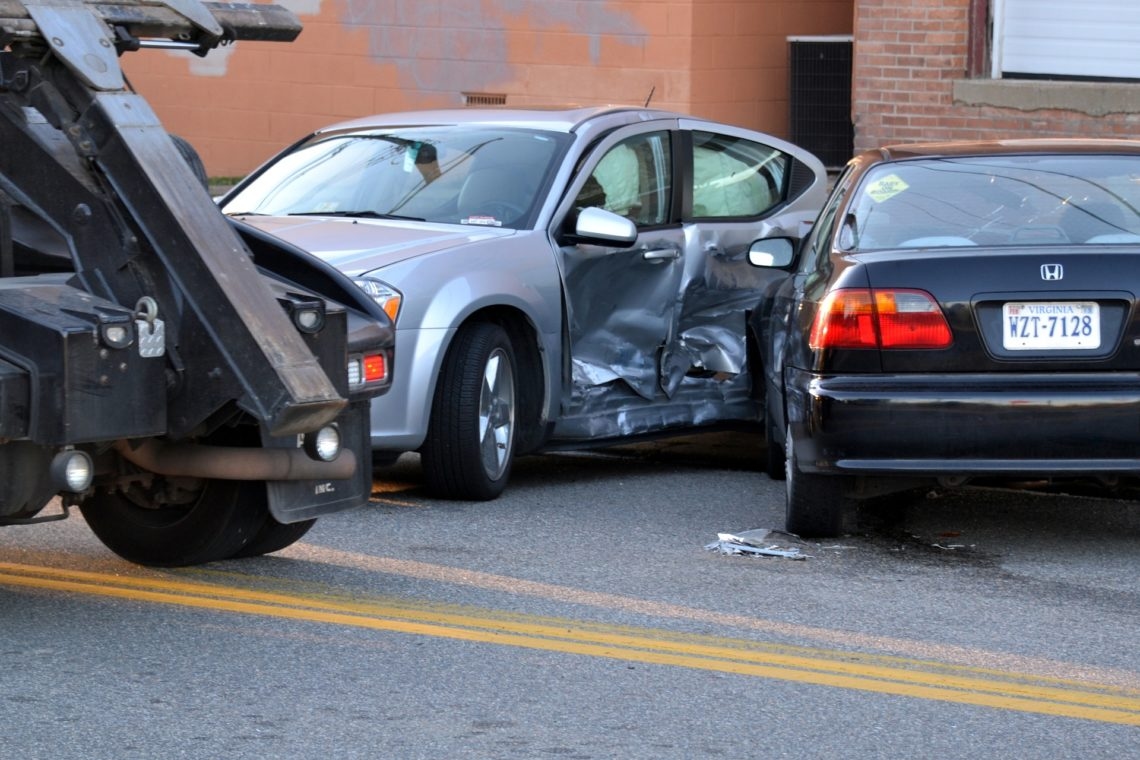
A left turn collision is when a vehicle turning left at an intersection is involved in a collision with another vehicle on the opposite side of the road that is going straight through the intersection.
Under the reasonable person standard, the driver turning left is usually at fault for the accident. This is because a vehicle turning left turning must wait until it is safe to turn.
However, the driver going straight through the intersection may be partially at fault if s/he was speeding or ran a red light. This may also reduce recovery, but not completely. Usually, speeding makes it difficult for the ‘left turning’ driver to judge when it is safe to turn. More commonly, when the light turns red, most drivers will assume it is safe to proceed in making a left turn. This is not the case if a driver runs a red light. However, many times even in these instances, the driver determined “mostly at fault”, is usually the driver turning left.
Under the reasonable person standard, a driver that rear-ended another will almost always be found at fault. One of the main factors insurance adjusters consider during rear end collisions is vehicles must maintain a safe distance behind the cars in front of them at all times. However, if you were breaking and one or more of your brake or tail light bulbs were out or broken, fault can be split between drivers. For instance an adjuster may find the drivers partially at fault or 50/50. If an driver can prove that due to the broken tail light, the driver did not have enough time to respond or had a difficult time stopping. In this situation the amount of money you can recover will be reduced, however, you will probably still be able to get something.
Immigration officials or judges determine if a crime qualifies as a crime of moral turpitude. Generally, the facts, evidence, circumstances that surround the conviction, and the legal language described in penal code, law, or statute violation.
Immigration officials general consider the fact surrounding the persons' convictions. The Board of Immigration Appeals (BIA) define moral turpitude as a “nebulous concept,” and one that “refers generally to conduct that shocks the public conscience as being inherently base, vile, or depraved, contrary to the rules of morality and the duties owed between man and man, either one's fellow man or society in general.”
It is important to keep in mind that if the facts that surround the specific crime clearly displays that you acted intentionally.
[video width="1280" height="720" mp4="https://kaass.com/wp-content/uploads/2020/02/Crime-of-Moral-Turptitude.mp4"][/video]
Yes, you can argue that your charges do not fall under the classifications of a crime of moral turpitude. While you or an immigration attorney can use this defense, you must consider the specific language or wording of the law, penal code, or statute under which the authorities charged you.
Call our office at (310) 943-1171 or contact us via email at [email protected] to schedule a free consultation with a Glendale immigration attorney, near Los Angeles, CA.
Offenders charged with Grand Theft Auto PC 487 (d)(1) may very likely face the charge as a felony conviction. usually charged as a felony, which generally carries a potential jail sentence of two (2) years or three (3) years or sixteen 16 months.
While, on the other side of the spectrum, first-time offense for defendants facing Unlawful Taking of a Vehicle or "Joyriding" under Vehicle Code 10851 VC may be charged as a misdemeanor with other potential penalties such as:
An experienced Los Angeles criminal defense attorney specializing in theft crimes may be able to reduced or dismiss your vehicle theft charges. If you are facing vehicle theft charges it is imperative you speak with a Los Angeles criminal defense attorney and preserve your case. Call our office and schedule a free consultation with our experienced lawyers at KAASS Law. We will explain the criminal justice process, be there for you every step of the way, and advise you on various defense options available such as:
Call our office at (310) 943-1171 or contact us via email at [email protected] to schedule a free case consultation.
Generally, the court will often look at various factors surrounding the charges, such as the value of the property that was allegedly stolen, prior criminal convictions, charges, or cases, and the defendant intends to permanently deprive the owner of the property.
In Los Angeles, a majority of petty theft cases involve "larceny", otherwise known as shoplifting Many times, defendants caught shoplifting are merely booked and released from jail with only a petty theft citation. However, even if the defendant is booked and released from jail immediately, that does not necessarily decrease the chances of facing less serious penalties, such as jail time. Theft charges may also affect immigration status because the charges involve a crime of "moral turpitude".
Example 1: Theft Under Penal Code 484 and 488: Jose is a lawful immigrant and has a pending citizenship application and was arrested for shoplifting at a Macy's Department Store in Los Angeles and is currently facing petty theft by larceny charges. Jose is charged with larceny, such charges may negatively affect his citizenship application may because theft charges are considered as "a crime involving moral turpitude".
Generally, theft by false pretenses occurs when a defendant deliberately misrepresents facts in order to obtain possession or ownership of property from another. In order to be charged with theft by false pretenses, prosecutors are required to prove:
Larceny occurs when:
Call our office at (310) 943-1171 or contact us via email at [email protected] to schedule a free consultation with a Glendale criminal defense attorney. Our lawyers in Glendale, Los Angeles, CA, are highly dedicated to serving to needs of our clients.
KAASS LAW Address: 701 North Brand Blvd. Suite 100 Glendale, CA 91203 Phone: (310) 943-1171 Email: [email protected]
Before you provide any sensitive information to yours or third-party insurance company, it is recommend that you speak with a business insurance attorney in order to ensure you claim is processed properly, thoroughly, and effectively. Our business lawyers at KAASS Law will advise you on the business insurance claims process, help you determine the amount of business income lost, review your business insurance policy, along with your commercial lease agreement, if any.
[video width="1280" height="720" mp4="https://kaass.com/wp-content/uploads/2020/02/How-to-deal-with-business-insurance-claims-and-adjusters.mp4"][/video] While these are only a few things a business owner should consider, filing a business insurance claim can become confusing and convoluted. Our business insurance attorneys provide a free consultation and case review for your commercial insurance claim following a loss. Call (310) 943-1171 and speak with a Los Angeles business insurance attorney. We are available 24-hours a day.
Unfortunately, even if a defendant decided to immediately return the stolen property, they may be charged with robbery.
As mentioned above, robbery is a serious crime and, if you're facing robbery charges you must raise the best defense possible. A Los Angeles criminal defense attorney can develop a defense that can potentially either drop or mitigate the charges. For instance, a A criminal defense attorney paints a picture that creates reasonable doubt about whether the defendant had the intent to commit the crime. Some typical robbery defenses include:
If you are facing robbery charges under Penal Code 211 PC or any other theft charges it is imperative to your criminal case that you speak with an experienced Los Angeles criminal defense attorney immediately. Our criminal defense attorneys can help mitigate your robbery or other theft charges. Call us today and schedule an free consultation. We will evaluate your case, determine what defenses may apply to you, and develop a strategic defense for your criminal case. Call now and speak with one of our criminal defense attorneys at (310) 943-1171. We are available 24-hours a day.
Yes, it is possible to reduce your PC 459 burglary conviction to shoplifting conviction under Proposition 47.
If you were convicted of felony second-degree burglary you may be eligible for Proposition 47 re-sentencing from felony burglary to shoplifting misdemeanor. Call our office a schedule a free criminal defense consultation.
As mentioned above, burglary charges in California are divided into two categories, thus a conviction under penal Code 459 depend on whether you are charged with first-degree burglary or second-degree burglary.
In California, first-degree residential burglary are always felony. Additionally, due to California's "Three Strikes" law, a first-degree burglary charge is considered as a "strike". Consequences for first-degree burglary may include:
Unlike first degree burglary, second-degree commercial burglary under Penal Code 459 PC carries lighter penalties. If you are lucky the district attorney or prosecutor will consider charging you with a misdemeanor second-degree burglary charge rather than a felony. However, you can still potentially face an felony second-degree burglary charge. If you are convicted of felony second degree burglary charges you may potentially face:
Call our office at (310) 943-1171 request a free criminal defense consultation. Our criminal defense lawyers in Glendale, Los Angeles County, California, may be able to help defend you and potentially reduce or drop your charges.
A Los Angeles criminal defense attorney can help you with the sort of legal assistance that you require regarding drug crimes in the county. Our lawyers in Glendale, Los Angeles, CA are here to help understand your legal rights. Please call our office at (310) 943-1171 or contact us via email at [email protected]
The qualifying investment must be in a new commercial enterprise.
An enterprise established after November 29, 1990 is considered a new enterprise even if the investor did not participate in its establishment. When a person makes investment in a business established on or before November 29, 1990 the investment will qualify for E-B5 purposes if the investor establishes one of the following: (1) the investment will result in a substantial change in the business; or (2) the business will be restructured or reorganized.
The investor must be engaged in the management of the company where he invests.
This can be done either through managerial control or through policy formulation. This requirement can be satisfied by becoming a corporate officer or being a member of the board of directors. Maintaining a purely passive role towards the investment cannot satisfy the requirement of USCIS rules.
The enterprise must benefit the US economy by creating full-time jobs for at least 10 qualifying employees.
There is an exception to this rule for troubled businesses where the investment does not have to create 10 new jobs but the investor has to show that the number of existing employees is or will be maintained at no less than the pre-investment level for at least two years.
There is an annual limit of 10000 E-B5 visas per year. Until now the annual E-B5 cap has never been reached.
The investor is initially granted conditional residence for two years.
Prior to the expiration of two years the investor must file a petition requesting removal of the conditional basis of the residence. The investor must show that he still meets the conditions for participation in the program.
Do you need help deciding on what steps to take next? A Glendale immigration lawyer at KAASS LAW can help you out with any sort of legal assistance you require.
Insurance companies will often classify a rear-end collision as a low impact accident and will attempt to argue that the due to the impact bodily injury damages are minimal, thus offering low ball offers, even if medical reports prove otherwise. However, a typically injury one may sustain from a rear-end collision is whiplash or an neck injury, which may sometimes cause serious soft tissue damage. Some soft tissue damage includes, muscle tissue, ligaments and tendons. These types of damages frequently results in pain, swelling, tightness, bruising, or inflammation. However, these injuries are not always immediately apparent. Thus, injured parties may be offered a low settlement amount. Don't be that guy. Contact our office and receive free no obligation consultation with our Glendale personal injury attorneys specializing in auto accidents.
Address: 701 North Brand Blvd. Suite 100 Glendale, CA 91203 Phone: (310) 943-1171 Email: [email protected]