

In California law primary assumption of the risk doctrine was first set forth in Knight v. Jewett (1992). The doctrine of primary assumption of risk is applicable to sports or sports-related recreational. Activities where the conduct or conditions that otherwise can be a consideration of danger are usually the essential part. Primary assumption of risk arises where a plaintiff willingly engages in a sport or activity involving certain inherent risks. Primary assumption of risk usually absolves the defendant of a duty of care toward the plaintiff with regard to injury incurred in the course of a sporting or sports-related recreational activity covered by the doctrine. A person can be only guilty if he intentionally injures another one or engages in conduct that is so reckless as to be totally outside the range of the ordinary activity in the sport.
When a person has an injury while playing sports or engaging in another recreational activity, he can seek financial compensation for the caused injuries against the responsible party through a California personal injury lawsuit. According to CACI 470 if the plaintiff claims that he has an injury while participating in sport or other recreational activity, and the defendant is responsible for that harm, he must be able to prove all of the following elements to establish the claim.
Conduct is entirely outside the range of ordinary activity in case it:
A person can’t be responsible for injuries resulting from conduct that was merely careless, accidental, or negligent
Secondary assumption of the risk refers to cases when the defendant owes the plaintiff a legal duty to protect him from a particular injury or harm, but the plaintiff proceeds to encounter the risk imposed by the defendant’s breach of duty. Cases, which involve secondary assumption of the risk are comparative negligence, which is a legal standard dealing with conditions, where two parties to an action are partially at fault. According to CACI 404 plaintiff’s damages aren’t recoverable to the extent his own negligence contributed to the caused injuries. This will be proportionately reduced to reflect the percentage of his fault. Thus, in California law, plaintiff can still recover damages after his percentage of fault has been deducted, even in case his degree of negligence was more that the defendant’s. Though, it is important to mention, that comparative negligence doctrine only applies to cases where the plaintiff’s conduct wasn’t intentional. For any further legal assistance and or seeking attorney representation, contact KAASS LAW today!

According to CACI 3113 recklessness in California is something more than just the failure to use reasonable care. Recklessness is more than simple negligence, as it involves more than inadvertence, unskillfulness, incompetence, or a failure to take precautions. Recklessness is defined as a conscious choice of a course of action with knowledge of the high danger to other people involved in it. (Delaney v. Baker 1999)
To establish the claim the plaintiff must be able to prove the following elements:
Thus, to be found liable for reckless conduct the defendant must have knowledge of a high degree of probability that dangerous consequences will result from his actions. Moreover, the defendant should act with deliberate or conscious disregard of those probable consequences.

The California Unfair Practices Act , which is found at Section 17000 of the California Business and Professions Code, deals with certain pricing practices, such as charging different prices to competing customers below cost pricing. Generally, the California Unfair Practices Act prohibits the following types of pricing practices
According to the Business and Professions Code, it is prohibited to sell a product below its cost for the purpose of destroying competition or injuring competitors, hence the term below cost pricing.
According to CACI 3301, in case the plaintiff claims that the defendant engaged in unlawful sales below cost he must be able to prove all of the following elements to establish this claim.
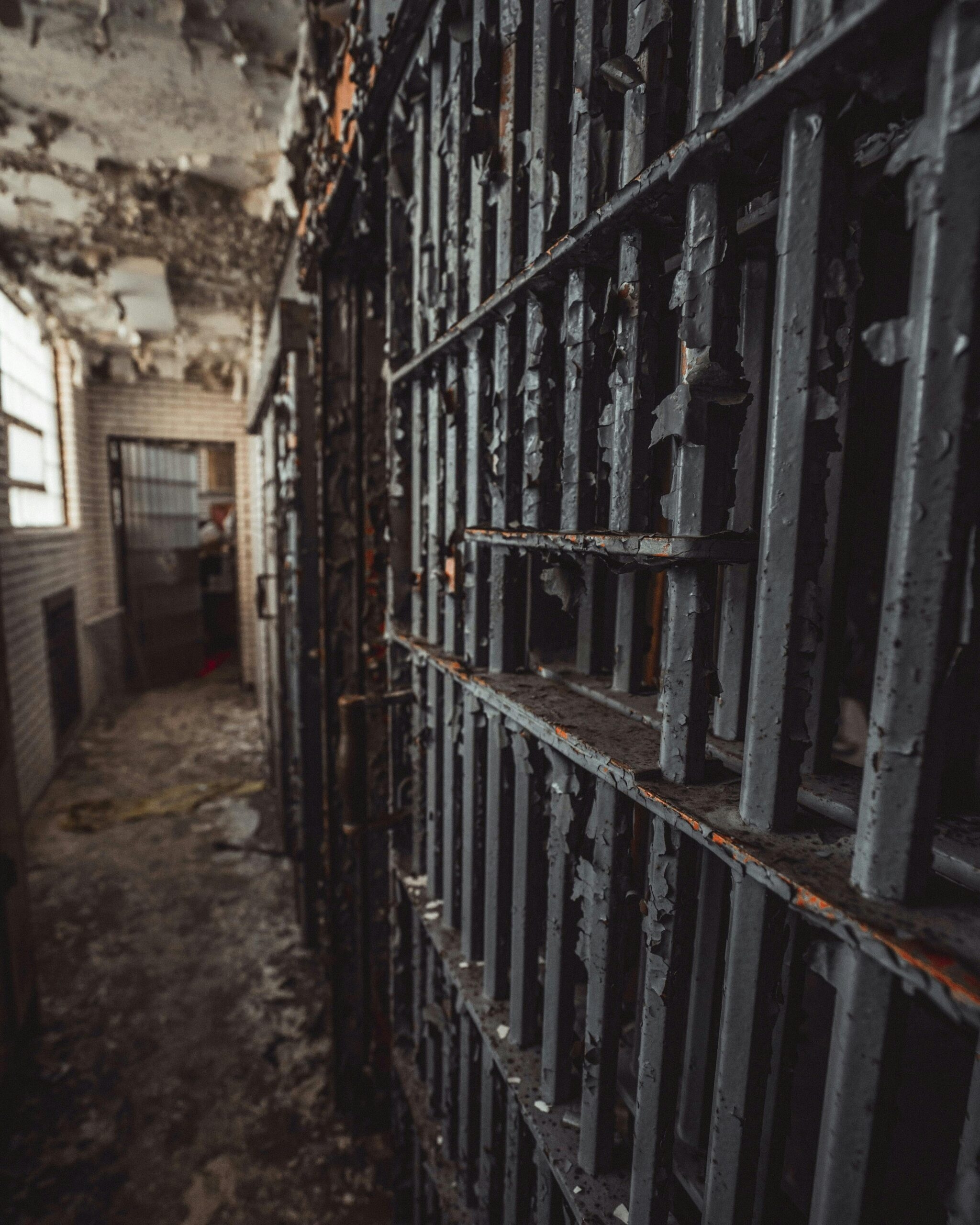
Violation of Prisoner's Federal Civil Rights in California: A prisoner in California has a right to file a lawsuit for money damages against a prison official, whose conduct caused the prisoner to suffer harm, bodily injuries or psychological distress. A lawsuit can be based on violations of either federal, state law or both) and can be filed in either federal or state court.
According to CACI 3040, in case the plaintiff claims that the defendant subjected him to prison conditions that violated his constitutional rights he must be able to prove all of the following elements to establish the claim:

Whistleblowing usually involves raising concerns about a company’s negligent, unethical, unlawful, fake, fraudulent or dangerous action. The behavior can vary from violating corporate policy and procedural requirements to unlawful transactions, or to a threat against public safety, health, including fraud and safety violations. Here are some informative tips in whistleblower protection.
According to CACI 4603 to establish the claim the plaintiff must be able to prove the following elements:

Comparative fault is a negligence rule according to which parties can share fault for one single accident, and the plaintiff can still receive compensation. According to California Civil Code Section 1714 every person is responsible for intentional acts he commit, and injuries that arise because of his acts. California is a pure comparative fault state, where a plaintiff has the entitlement for compensation regardless of his percentage of fault. Thus, in case the courts finds a plaintiff guilty for 85% in an accident he will still be gain some compensation. In a modified rule state, a plaintiff usually cannot exceed a certain degree of fault.
The rule of comparative fault is based on a public policy of holding people legally liable for their actions. In case a person was injured partly because of his own negligence and partly because of the negligence of other people, he should not be totally barred from bringing a claim.
According to CACI 405 in case the defendant claims that plaintiff's own negligence contributed to his harm he must be able prove the following elements:

California law imposes financial motor vehicle owner liability on the owner of a vehicle involved in an auto accident, even if the owner wasn’t driving or wasn’t in the vehicle at the time of the accident. According to California Vehicle Code Section 17150 vehicle owner is liable for damages to another people, which result from the negligence of another person operating the vehicle with the owner’s permission. The law limits a vehicle owner’s liability to $15,000 for injury or death to one person and $30,000 to several people. Property damage liability has a limit to $5,000.
According to CACI 720 to establish this claim, the plaintiff must be able to prove all of the following elements:

The Ralph Act is a civil rights law, enforced by the DFEH, which has aim to protect individuals with special characteristics and their property from violence or intimidation by the threat of violence. The Ralph Act is codified in California’s Civil Code Section 51.7 according to which all individuals have the right to be free from any kind of violence, or intimidation by threat of violence, committed against them or their property, based on race, religion, color, political affiliation, ancestry, sexual orientation, sex, age, citizenship, immigration status, age, or position in labor dispute.
According to CACI 3063, in case the plaintiff claims that the defendant committed an act of violence against him or his property he must be able to prove all of the following elements to establish the claim:
California's court system is the nation's biggest and serves over thirty-nine million people — about 12 percent of the total American population.
There are fifty-eight trial courts in California, one in each county. A judge and sometimes a jury hears the testimony of witnesses and other proof in trial courts or superior courts and chooses cases by applying the appropriate law to the appropriate facts. The judiciary in California serve almost thirty-four million individuals. Until June 1998, the trial courts of California were made up of superior and municipal courts, each with their own jurisdiction and the number of judges set by the Legislature. Proposition 220 file type icon was endorsed by California voters in June 1998, a constitutional amendment that allowed the judges in each county to merge their superior and municipal courts into a «unified», or single, superior court. All 58 counties in California had also voted to unify their trial courts as of February 2001.
According to California Government Code Section 830(a) a dangerous condition of property is a condition which creates a substantial risk of injury when such property is used with due care in a way in which it is foreseeable that it will be used. In California, property managers and owners are obliged to establish engineering standards when designing buildings and roadways and buildings. They should also conduct regular inspections for assuring that the property is not dangerous and maintain the property in a safe and secure manner. When the manager or owner fails to fulfill his legal obligations and someone is injured, he is responsible for the caused injuries and financial damages.
According to CACI Instructions 1100 and California Government Code Section 835 the plaintiff must be able to prove the following elements to establish the claim.
A person who is acting recklessly does so with the knowledge that his actions involve a risk of causing harm to another people. Thus, a person is conscious of what his conduct, knows that his conduct can cause a harm or injury, but he still engages in the act.
A person who is acting negligently can be unaware that his conduct involves a risk of causing harm, even if he should have known about that. In California law, a person is acting negligently in case he is acting in a way that a reasonably careful person would not act in the same situation, or fails to act in a way that a reasonably careful person would act in the similar situation.
Here are some examples of recklessness:
In case the defendant is found guilty in performing reckless conduct and causing harm or injuries to the plaintiff, then the trier-of-fact may award damages to the plaintiff. Damages must be rationale and be causally related to the accident.
The plaintiff may also be entitled to punitive or exemplary damages, in case he proves by clear and convincing evidence that the defendant was acting with malice. For any further assistance or seeking legal representation, contact KAASS LAW today!
Loss leaders are defined as selling below cost with the intention to induce the purchase of other merchandise, divert business from competitors, or mislead purchasers.
According to CACI 3302 in case the plaintiff claims that the defendant offered to sell, sold, offered the use of product or service as an unlawful loss leader, he must be able to prove the following elements to establish this claim:
According to California Business and Professions Code Section 17049, the word “price” should be read sufficiently broadly to include collateral contracts, special rebates, or any device of any nature whereby such sale below cost is in fact or substance affected.
According to CACI 3303 “cost” means all costs of doing business, including variable costs that tend to change with sales, such as sales commissions, and also fixed costs that don’t tend to change with sales, such as light and heat. Costs of doing business can include:
In unfair competition cases, the plaintiff can’t recover punitive damages. https://youtu.be/u0ylwefv4WI
According to CACI 3041, in case the prisoner claims that the defendant provided him with inadequate medical care in violation of his constitutional rights he must be able to establish the following elements to prove the claim.
Serious medical need exists when the failure to treat a prisoner’s condition can bring to further substantial injury or infliction of pain. The defendant can’t be found responsible for services that he couldn’t provide or cause to be provided because the necessary personnel, financial, and other resources could not be reasonably obtained or weren’t available.
In prison-conditions cases, the prisoner must show that the defendant was deliberately indifferent to his safety or health. Deliberate indifference includes a two-part inquiry. First, the prisoner must be able to show that the prison official was aware of a substantial risk of serious harm but failed to act to address the danger. Second, the prisoner must be able show that the prison official had no reasonable justification for his conduct, despite that risk. For any further legal assistance and or consultation, contact KAASS LAW right away!
The plaintiff must have a reasonable belief that the defendant’s policies violated federal, state, or local statutes, rules, or regulations. The disclosure of policies that an employee considers gross misconduct, wasteful, unwise is not protected. Disclosure of information is protected even though disclosing can be a part of the plaintiff’s work duties.
In case the employer fires the employee for whistleblowing illegal information, his action would be considered wrongful termination, and he will be penalized for workplace retaliation against whistleblowers. Whistleblowers have a right to remain anonymous, employers can try to discover who made the complaint or file a False Claim Act case.
Whistleblowing laws in California can provide monetary rewards to whistleblowers who managed to successfully recover funds for the government. In case the whistleblowing was related to fraud against the government, the person can receive a monetary reward through a qui tam lawsuit. According to the False Claims Act, a person who supports stopping fraud can receive up to thirty percent of what the government recovers from the guilty party. In some cases, whistleblowers can also receive compensation for the emotional distress they suffered as a result of retaliation by the company or individual they reported. For any further assistance or legal consultation, contact KAASS LAW today! https://www.youtube.com/watch?v=AhaH4mEDj7k
In case the defendant proves all the above mentioned elements, the plaintiff’s damages will be reduced by the jury's determination of the percentage of his responsibility. According to CACI 406 the percentages must be total 100 percent when dividing up fault among the plaintiffs, defendants, and any non-parties.
The Court or jury will assign a percentage of fault to each party involved in the accident. Once the percentages of fault are assigned. Each party will be responsible for a percentage of his medical bills, lost wages, pain and suffering, and other financial damages. Which are equal to the percentage assigned to that party.
In case when two or more defendants are responsible for the plaintiff’s injuries, he can recover damages from either or both of the defendants; in other term: joint and several liability. Joint and several liability is applicable to economic damages, including medical expenses, loss of income, property damage and loss of earning capacity. The plaintiff can also recover pain and suffering.
As stated above, California is a comparative fault state. This allows the plaintiff to recover damages even if he shares the fault for accident. Contributory negligence is a harsher rule. This usually provides that in case the plaintiff is negligent in causing his own injury, he cannot get any compensation. The majority of states use some version of comparative fault, either modified comparative negligence or pure comparative fault. Some states follow a combination of both types of negligence laws.
When the direct evidence of permission (also known as “explicit permission”) is in dispute, one can consider the relationship between the owner and the driver. It is more likely that the owner granted permission if the owner and driver were married, had an employer-employee relationship, or were close friends. A fact-finder can reasonably conclude that the owner gave permission, even if the owner denies it and there is no direct evidence of prior permission. This is called “implied permission.”
According to CACI 721 in case the defendant claims that he is not responsible the plaintiff’s harm he must be able to prove the following elements:
Thus, if the defendant gives permission for a limited time, and the driver uses the vehicle beyond that time without consent, the owner cannot be liable for any resulting injuries, unless the circumstances suggest that the owner impliedly consented to further use.
In case the driver was acting on behalf of the owner, (for example, they were in employment relationship), then the limitations of damages under Vehicle Code Section 17515(a) doesn’t apply. The owner of the vehicle can be responsible for all the damages and injuries caused by the negligent conduct of the driver.
According to California Vehicle Code Section 14604(a) before lending a vehicle to another one the owner needs to make a reasonable effort to determine if the driver has a valid driver’s license. Thus, in case the owner of the vehicle acted with independent negligence by lending his car to another person, the damage limitation isn’t applicable.
[video width="1280" height="720" mp4="https://kaass.com/wp-content/uploads/2019/12/output_HD7203.mp4"][/video]
According to CACI 3064, in case the plaintiff claims that the defendant intimidated by threat of violence he must be able to prove all of the following elements to establish the claim:
In successful claims, the victims are entitled to the following remedies:
In a successful Ralph Act lawsuit, the court can order additional damages for the victims. The plaintiff can be entitled to punitive damages even if he already got a full compensation for caused harm or injuries. Civil Fine: The Ralph Act also allows plaintiff to recover a fine of $25,000. Restraining Order: The victims can get a restraining order and the defendant can be fined or jailed. Contact KAASS LAW for any further legal assistance!
The competition of two judges of the Superior Court's appeal division shall be essential for the rendering of the judgment in each situation and for the transaction of any other company except that which the presiding judge of the division may do in the chambers. In an appeal, an appeal division's decision shall contain a short declaration of the grounds for the judgement. There is inadequate a judgement saying only «affirmed» or «reversed».
Court proceedings may be recorded or electronically taped by a court reporter. Transcripts applications in civil and probate matters for privately owned court reporters must be created directly with the private court reporter. A paper transcript or a copy of an electronic recording may be accessible upon request, depending on the recording of a particular event.
In some cases, it is easy to determine who is the owner of the property. For example, if a person is injured in a dangerous curve in a roadway it is easy to know that it involves a public entity. The victim must determine whether the roadway is the responsibility of the Country, the State or the City. Other cases can involve a piece of business or a land that seems to be private, but is actually operated by a government entity. Sometimes there are no signs letting us know who is the owner of the property. In response to a letter to the entity requesting ownership information a public entity typically confirms the ownership or directs to the potential owner.
It is important to know that government entities have a multitude of defenses and immunities for fighting the claims.