
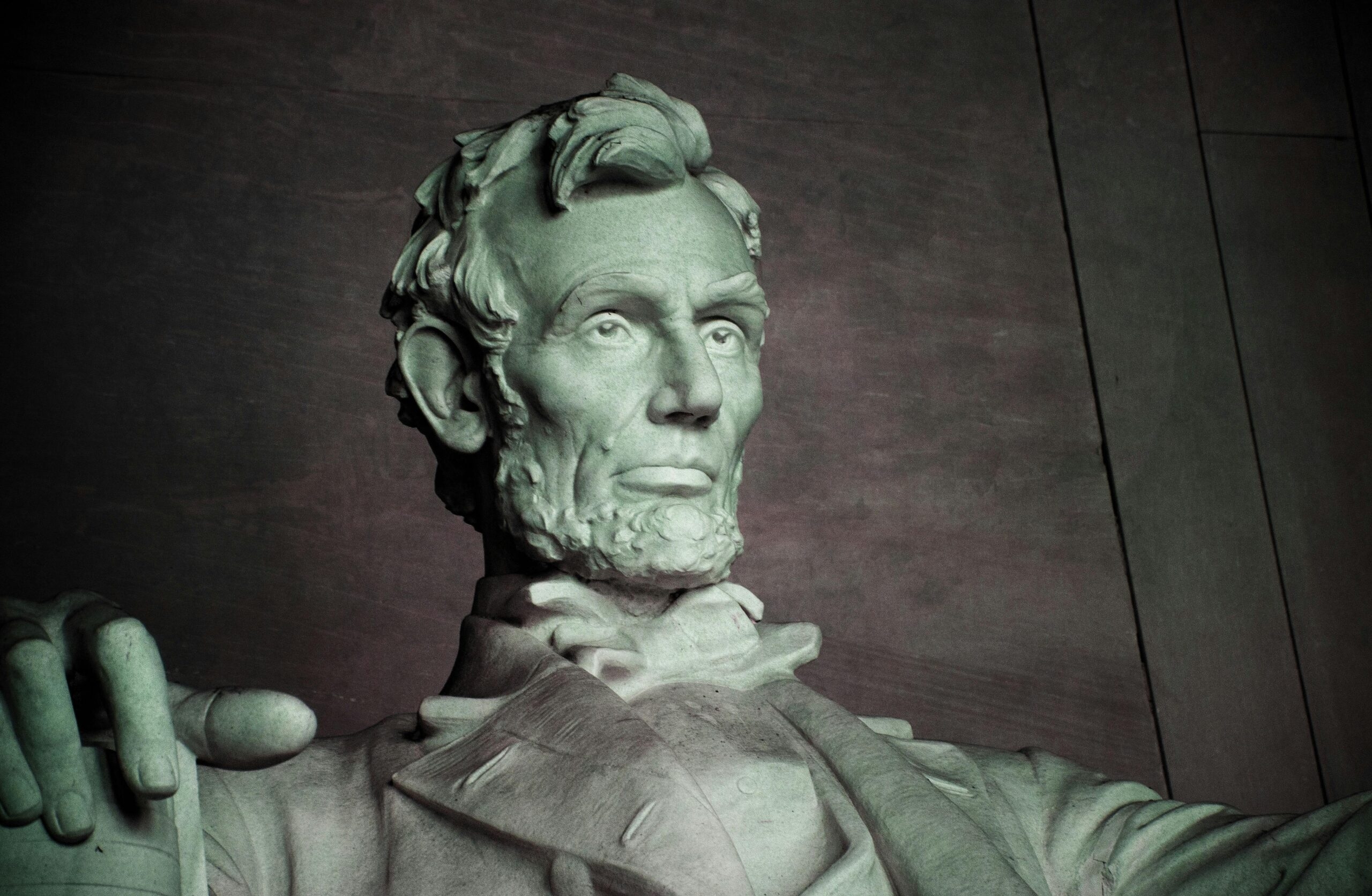
This is an overview of the elements of a Superior Court and steps of Civil Actions. But every case is going to vary.
The claimant prepares a claim report containing a clear description of the material facts on which the plaintiff relies. The court is issuing the claim statement. The claimant serves the claim statement on all defendants and files with the court an affidavit of service. If the defendant fails to defend the action, this service affidavit is necessary to obtain the default judgment from the claimant.
The defendant prepares and delivers a defensive claim on the claimant. Together, with evidence of delivery, files a copy with the court. The defendant may make a counter-claim against the claimant, cross-claim against a co-defendant, or make a claim against a non-party against a third party. Where a defendant fails to deliver a defense statement within the prescribed time, depending on the type of claim, the default judgment may obtain by the court registrar or a judge.
If the parties wish to obtain evidence through the discovery process, they must agree on a discovery plan. The parties expect to provide an affidavit to all other parties listing all relevant documents in the authority, possession or control of the party. At the request of a party, copies of the documents must be available. A party can serve on an opponent a notice of examination suggesting a time and place where the party needs to answer questions under oath. The exam records and transcribes upon request. Typically, for research, only parties can investigate. The maximum time period for discovery to investigate by each group is 7 hours.
By serving and/ or filing the record of the court, each party can set the case for jury. A record of the trial includes the copy of all trial pleadings and orders. The registrar puts the action on the trial register, or a judge in the assignment court will set trial dates at some sites.
The parties have to attend the pre-trial meeting to try to settle the dispute or to clarify the issues before a judge or court officer. The parties must arrange a pre-trial date and time with the registrar within 180 days of a case being scheduled for trial, which is appropriate to all parties. Whether the parties can not schedule a pre-trial within 180 days of the trial schedule, a pre-trial date will be scheduled by the registrar.
The defendant and the claimant make opening remarks. The witnesses of the claimant will examine and cross-examine. The witnesses of the accused will examine and cross-examine. Closing arguments will be from the claimant and defendant. After both the sides have finished presenting the cases, a judge may give judgment in court. Though, sometimes the judge may not give the judgment immediately. However, he or she will give the judgment later (this is called the judgment reserving). For any further assistance and or seeking legal representation, contact KAASS LAW today!

Unless otherwise provided by statute, where a levy is made by serving a copy of the execution letter and a notice of levy on a third person, the third person shall comply with Article 5 ' Duties and Liabilities of Third Persons Upon Levy ' at the time of levy or promptly afterwards.

In California, a "wrongful death claim" occurs when one person dies as a result of another person or entity's wrongful act or negligence. A wrongful death statement is a civil lawsuit. It is brought directly to court by the survivors of the deceased, or by the personal representative of the estate of the deceased, and fault is expressed solely in terms of money damages that the court orders the defendant to pay to the survivors of the deceased (if the lawsuit is successful). A "wrongful death" Law in California allows families to claim damage when a loved one died as a result of the negligence of someone. The rule was set out in Code of Civil Procedure Section 377.60 of California. A wrongful death is equivalent to a cause of action under California law for “loss of consortium”. Consortium loss occurs to cases where a spouse or licensed domestic partner is robbed of a living partner's companionship and confidentiality due to the misconduct of someone. Under Section 377.30 of Code of Civil Procedure of California, a lawsuit is often paired with a California “survival” cause of action. In behalf of the victim's property, preservation grounds of conduct are to compensate for the losses suffered by the victim from the wrongdoing.

You're not happy with the superior court's decision. You want a higher court to appeal. Could you do that? You will have guides to decide the first three stages. First of all, you have to consider whether you are an attractive person. Next, the court has made an appealable judgement, an appealable order, or an appealable order, and you must have the paperwork to verify that. You then have to file a form called a Notice of Appeal within a certain period of time, letting the court know that you plan to appeal.
Not every court decision can be appealed. Most of the orders made in the case can appeal as soon as possible in family law and probate cases. However, in other cases, with some exceptions, you can only appeal a final judgment or an order after the final judgment. Usually in the middle of the trial, the court makes its final judgment. In some cases, before it ever goes to trial, the court dismisses a lawsuit.
A demurrer is a motion put forward by the defendant arguing that although everything the complainant said in his complaint is valid, the complaint still does not pose anything that is legally wrong or that can serve as the basis for a lawsuit. If the court agrees there is no basis for a claim, the case will have a dismissial. The condition under which a lawsuit may be a dismissal before the court is following a motion for summary judgment. After the parties have found that they have heard the facts of what happened and established evidence in the case. Then a motion for a summary judgment arrives. If there are no "triable material factual problems"- that is, there is no conflicting evidence of dispositive facts - either the plaintiff or the defendant or both can bring a motion/ or motions for arguing that the court will rule on their behalf as a matter of law. Despite the name "summary judgment", the court's ruling after a summary judgment motion will file as , not just a final judgment. With the exception of the demurrer's situation- in which a final judgment isn't in need- a summary judgment order cannot appeal. A final judgment must decide by the court later, which is appealable.
Guide for Using Judicial Council of California Civil Jury Instructions: Jurors' ease of understanding, without sacrificing accuracy, is the primary objective of these instructions from the Judicial Council. A secondary objective is to facilitate the use of lawyers.
While the instructions of the jury are not a primary source of the law, they are a statement of the law, a secondary source. The fact that the instructions are in plain English does not alter their status as an accurate legal statement.

You have to file a form called a Notice of Appeal within a certain period of time.
In the judgment and/or order under appeal as well as the date of entry of judgment or order, the appellant fills in. The appellant, the appellant's lawyer, or the self-represented plaintiff who brought the appeal signs the appeal notice. Once the appellant completes the Notice of Appeal, both parties will get a copy and the original. This must submit with the division of the Superior Court of Appeals.
Paper service means, if you choose to file electronically, email, hand delivery or electronic transmission. You let the parties know what you are doing by mailing, or hand-delivering. Also, digitally submitting copies of the papers you want to file with the court. Hence in this case, the Notice of Appeal. Copies of all the papers you prepare (with the exception of a fee waiver or accommodation for disabilities) should be served on all lawyers and self-represented parties and the original lodged with the court. Only someone over the age of 18 who is not a party to the lawsuit can hand-deliver and/ or mail a document. For instance, if in an appeal you are in pro per, you can not send your notice of appeal to the parties by hand or by fax. Another, an adult who isn't a party, has to do it for you.
It is important to have some clear understanding of the current legal framework before contemplating radically changing California's trial court system. Nevertheless, any brief explanation of such a complex undertaking would inevitably be somewhat oversimplified. Even so, a common factual basis from which to analyze the issue of unification is included here.
The California Constitution places the state judiciary in the Supreme Court of California, the courts of appeal, and three levels of the superior, municipal, and judicial tribunals. Superior courts are general jurisdiction trial courts. We hear civil suits when the contentious sum reaches 15,000$, domestic partnerships, and jury problems. Superior courts handle criminal charges and juvenile cases in police divisions. Municipal and criminal courts use the same powers for all practical purposes. Once the amount of controversy is $15,000 or/ and less, including small claims cases, they are empowered to hear civil suits. Municipal and appellate courts treat misdemeanors, preliminary felony hearings, and traffic cases (both misdemeanors and offenses) on the criminal side. That county of California must set up a superior court. Counties must be split into districts for municipal and court establishment purposes. Districts with a population of over 40,000 must have a municipal court. No city could be divided into more than one division of the tribunal.
The Judicial Council is the California judicial system's pinnacle in principle. The Council includes the Chief Justice and another Supreme Court Justice, 3 Appeal Court Justices, 5 Superior Court Court Judges, 3 Municipal Court Judges, 2 Justice Court Judges, 4 State Bar Members, and 1 member of each Legislature House. The role of the Council is to improve the administration of justice by monitoring judicial affairs, making recommendations, carrying out demonstration projects and adapting the regulations of the court. The Administrative Office of the Courts shall have the staff of the Judicial Council to assist with its work. The Judicial Council, in addition, exercises very little administrative control over the trial court, which essentially operate as autonomous, locally based units. The main task of the Judicial Council is to provide central planning and analysis in relation to the courts of the jury.
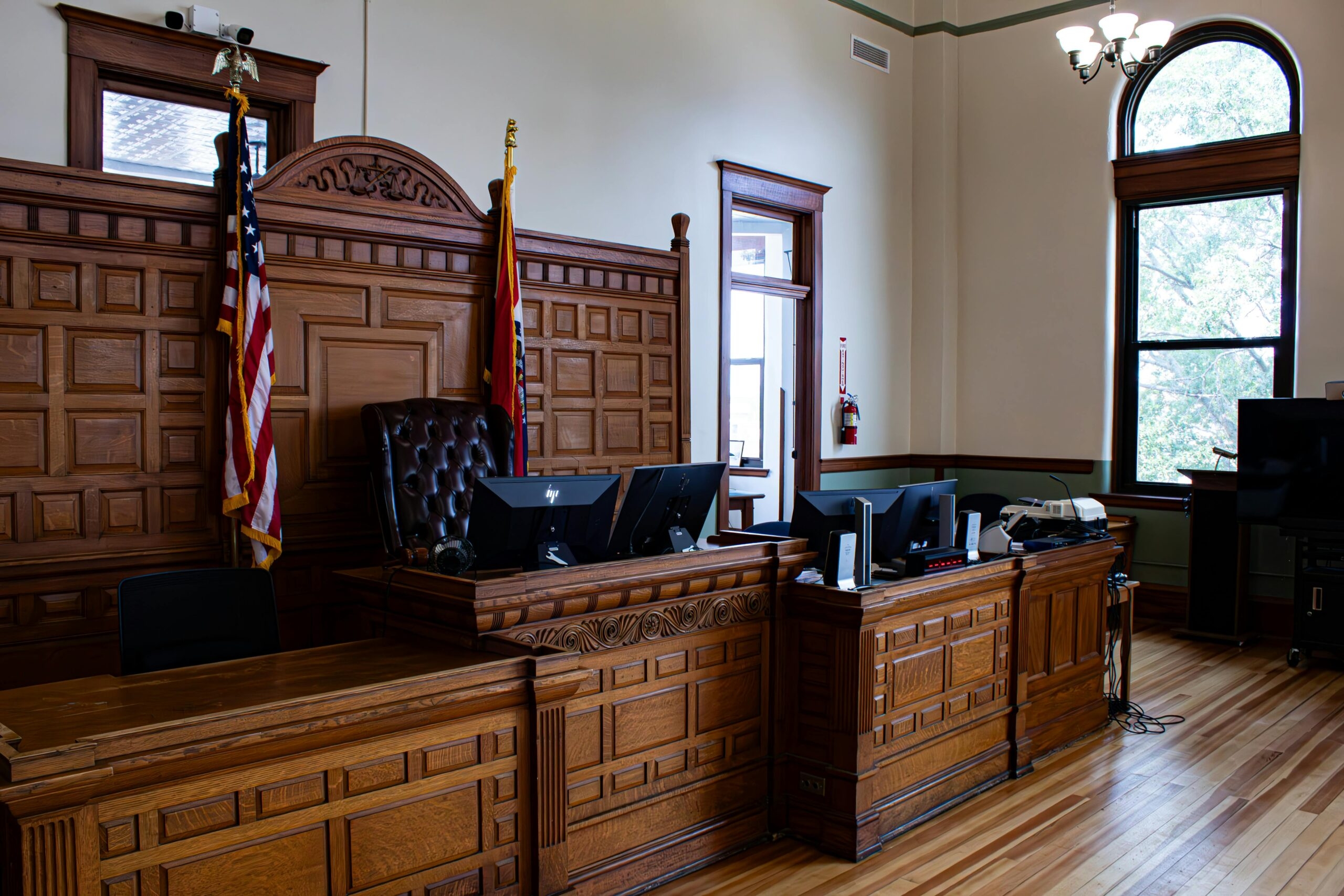
According to Code of Civil Procedure of California (hereinafter: CCP) Section 191 of Title 3 “Persons specially invested with powers of a Judicial Nature” of Chapter 1 “Trial Jury Selection and Management Act”: The Legislature agrees that jury trial is a respected constitutional right and that jury service is a citizenship responsibility. It is the State of California's policy that all persons selected for jury service are randomly selected from the population of the area served by the court; that all qualified persons get an equal opportunity, in compliance with this chapter, to be known for jury service in the state as well as an obligation to serve as jurors when summoned for that purpose; and that it is the responsibility of the State of California.
There are three types of Juries:
Article 7 of the Code of Civil Procedure provides for California's eminent domain rules. The hegemony is of great importance. As long as government payments just reimbursement, that national, state or federal governments take private property for public use. Private property can take over by eminent domain pursuant to California Code of Civil Procedure Section 1230.030.
No withdrawal could request on the claimant of a copy of the request after operation or until the time has elapsed for all complaints, whichever is later. When an objection is a lodge on the ground that the other parties know or suspect to have interest in the property, the plaintiff shall serve or offer to inform such other parties that they may appear of the service and object to the withdrawal. The notice shall inform those parties that, to the degree of the amount withdrawn, their failure to object would result in the waiver of any rights against the complainant. Also, a plaintiff will file and serve on the applicant a document setting out ànames of the parties to whom the notice has been given and the dates of service, and ànames and last known addresses of the other parties known or suspected to have interest in the property but not served so. A plaintiff can represent parties not served by the plaintiff.
California's Supreme Court is the highest court in the state. Its primary function is to guide and harmonize state law development. After confirmation by the Judicial Appointments Commission, the court composes of a Chief Justice and six Associate Justices. These are who stand for 12-year retention election at the first post-appointment governor’s election. The court's chambers have been in San Francisco's Civic Center Plaza since 1923.
According to Code of Civil procedure of California (hereinafter: CCP) Section 165 : The justices of the Supreme Court as well as the courts of appeal, or any of them, may issue in chambers all orders and writings that are normally issued in the first instance upon an ex parte petition, with the exception of mandamus, certiorari, and prohibition; and may hear, at their discretion, applications for discharge of such orders and writings.
Also, according to the law except otherwise ordered by a court on the decision that the lien of the judgment creditor takes precedence over the security interest, where the property levied is subject to a security interest attached prior to the levy, the property or duty shall be subject to enforcement of the security interest without regard to the levy, unless the property is in the custody of the levying officer; however, where appropriate. If the levying officer is granted custody for an instrument levied and serves the obligor in compliance with the levy under the instrument, the obligor shall make fees to the levying officer as they become due. Fees paid to a person apart from the levying officer do not fulfill the obligor's obligation to make payments as required by this section if payments are made after notification of the levy has been received by the obligor. For any further assistance and or legal representation, contact KAASS LAW today!
Section 377.60 of Code of Civil Procedure of California requires the following family members (or their representatives) to bring a case against the deceased:
In this claim in California, a number of different varieties of personal injury damages are available. The particular amounts involved will depend on an individual case's facts. Compensation is usually split according to whether it compensates the property for death-related losses or the surviving family members for the death-related personal losses. Losses typically attributed to the property include:
Losses usually attributed to surviving family members include:
The limits statute for both wrongful death and recovery proceedings in California is two years. In an unjust death case, on the date of death, the two years "accrues" (starts running). The family has two years to sue for recovery acts from the later: the date of an accident, or six months after death.
[video width="1280" height="720" mp4="https://kaass.com/wp-content/uploads/2019/12/output_HD7205-2.mp4"][/video] Do you feel like your friend or family member has passed away due to a wrongful death? Please feel free to get in touch with our attorneys at KAASS Law.
The Minutes are the official account of what happened in the case. The clerk writes the minutes and keeps them in the record of the Superior Court for the trial. Through looking at the bottom of the pages in your file and seeing the "Minutes" tag, you may recognize the minutes. If it is an order, the clerk may record the court's ruling between the minutes. The term is minute order because it's delivery is in the minutes. You may understand the order because it is specifically referred to as an order. Or the language orders something to be done or the language determines or settles a conflict. If the judge and the file-stamped sign the minute order. Then it can be a usage as the basis for the notice of appeal. For further assistance and or legal representation, contact KAASS LAW today!
No new revision date by additions or changes to the Sources and Authority and Secondary Sources.
Cases should always treat as a digest of relevant citations. The use of an abstract does not necessarily mean that the committee finds it a legal authority. Actually, they provide a starting point for further legal investigation into the subject.
The omission of uncontested elements could leave the jury with an incomplete understanding of the cause of the action and the full burden of proof of the plaintiff. It is best to include all the elements and then say that the parties have agreed to determine one or more of them and that the jury does not have to decide. Contact KAASS LAW today for any further legal assistance and or representation!
Depending on if you're delivering by mail or in person, the service provider needs to fill out the Service Evidence properly. The originals of the Appeal Report and Service Evidence are filed with the Superior Court's Appeals Division.
The appellant will have to include, together with the Notice of Appeal, a $775 filing fee per check, money order, cash, credit card or electronic transfer of funds unless the appellant has a waiver of fee. The check or money order must be payable to the Executive and/or to the Clerk Officer Court of Appeal. A second check or money order for $100 must also be payable to the "Clerk of the Superior Court". This is for a deposit for the transcript of the clerk.
Whether these charges are not paid or suspended, or if the appellant's check bounces, the court must inform the appellant that he or she has 15 days to either pay or waive the charge, or the appeal might be dismissed. If the case falls under dismissal, the court can reinstate the appeal on a petition. If there is a good reason why the payment is late, the court can reinstate the appeal on a petition. When the court grants the motion to re-establish the appeal, it will give a specific time to make payment. For any further assistance and or legal representation, contact KAASS LAW today! Here are some forms in regards to making an appeal.
The underlying principle of the restructuring of the trial court is that these various, decentralized and conflicting providers of judicial services should be replaced by a framework "where the courts are structured and operated in such a way as to provide a consistent administration of justice throughout the state as nearly as possible." A basic principle of a consolidated trial court system is a greater degree of centralized administration. State trial courts will operate under similar sets of guidelines, laws and working conditions whenever possible. There are different mechanisms and models to developing a unified court system. A number of key indicators for determining the extent to which a system is consolidated include the degree to which:
According to Law All individuals are eligible and qualified as prospective jurors of the court, with the exception of:
No person shall be excluded from eligibility for jury service in the State of California for any other reason than the reasons set out in Section 203 CCP. Contact KAASS LAW today for any further legal assistance and or representation.
Within the 20-day period, the plaintiff can file withdrawal objections on one or more of the following grounds:
If any part of the money deposits under the Chapter 6 of CCP (Deposit and Withdrawal of Probable Compensation; Possession Prior to Judgment) has been a withdrawal. The receipt of any of these money shall constitute a waiver of all claims and defenses in favor of the individuals receiving such payment by the operation of law, except a claim for greater compensation. Any withdrawal under this article by a party beyond the amount eventually decides the eminent domain proceeding, shall pay to the parties. The judgment will enter by the court accordingly. Contact KAASS LAW for any further assistance and or seek legal representation.
Superior court Judges may, in chambers:
Also, according to Section 166 of Code of Civil Procedure of California part B: A judge shall exercise all the powers and perform all the roles and duties imposed on a judge as being contrary to the court, out of court, anywhere in the government, or that a judge may exercise or perform in chambers. What else to know?
For any further assistance and or seeking legal representation, contact KAASS LAW today!