
While a swimming pool is one of the best places to enjoy your weekend, it can become a risk for you and also the owner of the pool if an drowning accident happens.
You can file a lawsuit for the drowning accident in case the swimming pool does not comply with the safety requirements of the state or in case the lifeguards were negligent and, as the result of such negligence, the accident happened. The owner of the pool can also be liable in case the lifeguard it hired was not qualified for the performance of job duties.
Upon filing a lawsuit for negligence arising out of a drowning accident in California the Plaintiff is required to prove the following:
Family members can file a lawsuit, such as:
The above-mentioned family members can sue if the accident does not kill the victim but leaves him unable to protect his rights.
While filing the lawsuit, you can seek compensation of:
In case you file a lawsuit for the wrongful death of a family member, you can seek compensation of:
In case you had a drowning accident, try to gather evidence, as:
In California, pool owners are required by law to keep their facilities safe. This means installing:
And other items required by law. For example, the California Swimming Pool Safety Act requires residential properties with swimming pools to install safety barriers. Failure to do so can make the owner liable for damages. Especially if the victim is a child. Failure to comply with safety standards may be considered a failure to exercise due care. This opens up the possibility of a lawsuit.
In legal terms, negligence means that the defendant failed to exercise reasonable care under the circumstances. In a drowning case, this could mean that:
Even if the victim was on private property without permission, the owner can be held liable. But only if it is proven that he or she knew of the danger and failed to take appropriate action.
If the drowning occurred at a municipal pool or on property managed by a government entity, special procedures may apply. In California, to file a lawsuit against a public entity, you must first file a government claim. Within six months of the accident. Failure to meet this deadline may result in the loss of your right to sue.
Even in case you signed a waiver for liabilities, or the defendant argued that there is the "assumption of risk"-an inherent risk present while swimming, you can still expect to receive compensation if you have an experienced attorney. We invite you to contact KAASS LAW firm at (310) 943-1171 for a free consultation and case review by a Glendale personal injury attorney.
California Vehicle Code forbids driving under the influence of drugs and alcohol. The law considers a driver intoxicated if drugs or alcohol impair their ability to drive. If you have a driving accident by the fault of the DUI driver, you are entitled to seek compensation for damages as well as filing a civil lawsuit against the at fault party.
Any driver has a duty of care towards other drivers and pedestrians. This duty is also the basis of all restrictions under California law regarding intoxicated driving. Thus, if this duty of care is violated and one is injured because of such violation, the driver can be held liable. Furthermore, the DUI driver may be liable under the "negligence per se" legal theroy. In other words, if the driver violates a statute, such as driving under the influence of alcohol or drugs or exceeding the BAC limit, and causes a car accident, the driver will be liable for the injuries to the victim. To seek compensation for damages for DUI accidents, you shall prove that the driver was drunk or under the influence of drugs at the time of the accident, and this fact acted as a direct reason for the accident to happen. You do not need to wait for the drunk driver’s conviction to file a civil lawsuit. If you can present evidence of damages caused by the DUI car accident, you can seek compensation without waiting for the driver’s conviction.
While, many people may enjoy rainy weather, rainy weather also becomes a problem for drivers and often times lead to traffic accidents. Particularly, rainy weather is a reason for most hydroplaning accidents.
Hydroplaning is a term describing "sliding and skidding" of a vehicle across a wet surface. It also means the vehicle’s tires contact more water, causing them to displace and lose traction. This causes drivers to lose control over the brakes of the vehicle.
The main cause of the accidents is bad weather. However, there is also another reason for such accidents. Mechanical reasons can also cause them. Particularly, poor tire tread or poor tire pressure can lead to failure to keep control over the car. Among such factors, a driver's negligence can cause car accidents. Particularly, drivers must not exceed the speed of a vehicle in bad weather conditions, and failing to slow down can lead to a hydroplane accident. However, others can also be responsible for the accident, which is a ground for the driver to seek compensation for damages.
Aside from the negligent party, road defects can often cause hydroplane accidents. As such, the government may also be an at-fault party in hydroplane accidents if there was a defect in the road. The government must design and construct roads to maintain safety and prevent dangerous road incidents. In the event you believe that a hydroplane accident was caused by defective road conditions, you must file a within 6 months of the accident with the appropriate government agency. Other drivers' negligence can also lead to the occurrence of hydroplane accidents.

Have you ever thought that there are special requirements for building stairs or stairwells? Almost everyone has slipped on stairs and even fell, some of us have got serious injuries and some of us, fortunately, don't break any bones. Is it possible to get compensation for being damaged in a stairway accident or what has happened is only your fault?
As mentioned already, there are special requirements for stairs under California Residential Code. These requirements concern the width and height of such stairs, tread depth, slip resistance, etc. This means that if the constructor fails to meet the requirements or the house owner doesn't maintain the stairs clean and in good repair, the house owner may be responsible for the accidents. Thus, the stair accident claims shall be based on negligence or product liability of:
Let’s examine the grounds for the liability of each of them.

When you are in an accident with a drunk driver, it seems obvious that the driver should be responsible for your losses. However, drunk drivers are not always automatically completely liable in a motor vehicle accident in California. In some cases, accidents involving a drunk driver may not result from the drunk driver themselves.
To hold a driver responsible for an accident, he or she must have been driving in an unlawful or negligent manner which directly caused the accident. This includes any number of traffic safety rule violations such as:
Liability depends on examining the facts of the accident and identifying the direct cause, which can be quite complex. Consult with one of our Los Angeles Personal Injury attorneys to help you figure out who was at fault in your accident.
Road debris accidents occur when objects that don't belong on the road cause harm. Road debris can result from any number of sources, both vehicular and non-vehicular. Examples include:
Road debris is hazardous to drivers, cyclists, and even pedestrians. Accidents caused by road debris usually happen when a driver hits the object itself, or when a driver swerves to avoid the object and hits another vehicle or another object.
A few questions to ask that can help determine who is at fault for a road debris accident are:
When an object falls off of a vehicle and into the road, the driver often does not notice and immediately drives away, making it difficult to assign blame to the party who dumped the debris.
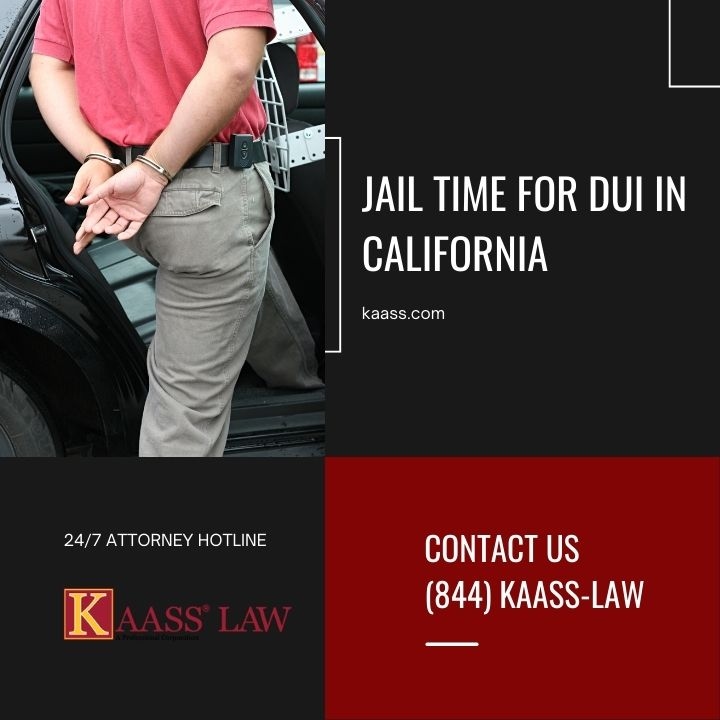
The most terrifying of all the California DUI consequences is probably going to jail. Depending on the circumstances, whether it is your first or fourth DUI conviction, you might spend time in jail. Additionally, state jail term is part of several DUI penalties. You must be aware of your particular sentence and understand how to reduce or prevent it.
Under the Vehicle Code of California, it is unlawful for a person who is under the influence of any alcoholic beverage to drive a vehicle. Driving under the influence (DUI) is an offense punishable under California law. Like any offense, DUI also has its manifestations. It may be committed under a variety of circumstances, which can both aggravate and mitigate the gravity of the offense. The content of such circumstances compose of the following factors:

“Miranda rights” or otherwise “Miranda warning” comes from the 1966 U.S. Supreme Court case Miranda vs. Arizona. The judgment of this case was precedential since it set up several procedural requirements that are to be followed by the law-enforcement bodies while arresting and interrogating a suspect. Meanwhile, the procedural safeguards are considered to be the rights vested to the defendant.
Especially, the Court held that defendant must be warned before any questioning that:
The conjunction of these four procedural safeguards constitutes Miranda rights, which shall be enjoyed by everyone. They apply to all criminal proceedings, including cases comprising offenses of driving under the influence (“DUI”). Not only should the defendant be informed of his/her Miranda rights, but also they are to be fulfilled without hindrance. This means that the mere announcement of Miranda rights by law-enforcement bodies does not suffice. The defendant shall enjoy the consequences of Miranda rights. So if the police explain Miranda rights to the suspect, but then start to question him ignoring his refusal to be questioned or his request to call his lawyer, the essence of Miranda rights will be impaired.

Declaration of non-ownership is a legal process by which citizens officially report to state bodies that they do not own a vehicle. At first sight, it may seem rather strange why citizens should seek to have the fact of non-ownership of a vehicle to be asserted. However, it is not an end in itself. It is a useful tool for California residents when they:
Particularly, the common penalty for the felony as of DUI is an order to install an IID in all vehicles of the defendant. The latter should clearly comply with the court order. Alternatively, he/she can declare non-ownership of a vehicle if there is really no vehicle under his/her ownership due to a variety of reasons (the vehicle is unexpectedly sold or crashed in the accident). Filing such a declaration to the court exempts the convicted person from the obligation to execute the respective order.

California Vehicle Code section 22517 states: “No person shall open the door of a vehicle on the side available to moving traffic unless it is reasonably safe to do so and can be done without interfering with the movement of such traffic.”
When a parked car on the side of the road opens its door haphazardly, there are 2 types of accidents that typically occur as a result. It will either be the case that:
CVC section 22517 clearly states that the person who opens the door without taking proper caution is liable for the damages caused by it. However, it is common practice for insurance companies to give partial liability to both parties, especially car door opening accidents. For example, an insurance company would likely declare partial liability if the person who opened their door could prove that they did so while the other driver was a significant distance away. Just because the law supports the position of the party that crashed due to an open door, it does not mean that drivers shouldn’t take caution when driving alongside parked cars. While the law assesses fault to someone who opens their door haphazardly, the person who does so will almost certainly argue that they did so safely, leaving enough time for other drivers to take precautions.
You can seek compensation for the following damages caused to you as the result of a DUI accident:
To receive the compensation, you shall prove that you suffered from the mentioned damages and shall show the direct link between the negligence of the driver and your damages.
Most insurance policies cover compensatory damages if the policyholder injures someone while driving under the influence. In case the driver does not have insurance or the aggregate policy doesn't cover the damages, you shall sue the driver directly to receive compensation.
If you or a loved one has been in an accident with a DUI driver, contact KAASS LAW at (310) 943-1171 for a free consultation. Our attorneys will evaluate the details of your case and let you know what to expect and how you can proceed.
Cases involving dangerous roads are specific and complex. Proving that a badly constructed road caused your accident can be very challenging. In other words, it can be difficult, but at the same time essential to prove the direct link between your accident and negligence of, for instance, governmental bodies. Collecting evidence after an auto accident is important. As such, you should do the following:
The court usually evaluates compensation based on the accident's impact on your health and financial conditions. In the event you suffered injuries due to a hydroplane car accident, you can expect to receive compensation for:
Based on the complexity of the case, it is mandatory to have a professional lawyer on your side to assist with the evidence-gathering process and support your claim.
While many aquaplaning accidents occur unexpectedly, there are preventative measures that can be taken. They can significantly reduce the risk of aquaplaning. Check tire pressure and tire wear regularly. It is also important to avoid sharp turns and braking on wet roads, and to slow down at the first sign of rain. This is when the asphalt becomes particularly slippery due to the mixture of water and road dust.
In California, insurance companies play a key role in personal injury claims. However, insurance adjusters often try to minimize their payouts. Especially when it comes to disputed fault. It is important to remember that your insurance company's claims can be used against you. For this reason, it is highly recommended that you first consult with an attorney.
Aquaplaning accident victims should be aware of the statute of limitations. In California, it is two years from the date of the accident. If you are filing a lawsuit against a government entity, you must first file a claim within six months. Failure to meet these deadlines may disqualify you from receiving compensation. Contact KAASS LAW if you have any questions regarding aquaplaning. We are ready to help you protect your rights and seek justice.
If you or a loved one have been injured in a hydroplaning car accident, we invite you to contact KAASS LAW (310) 943-1171 for a free consultation with a Los Angeles auto accident attorney today. Our attorneys will help you determine the liable party and proceed accordingly.
If the stairs haven't met the requirements and the injury results from defective stair surfaces or rails, the manufacturer or seller is liable for the defects and injuries under product liability laws. In other words, under such laws, the liability arises for anyone, who:
In order for liability to attach on a stairway manufacture, designer, seller, distributor or contractor the Plaintiff must prove the following elements:
Often times, it can be more problematic to recover damages from an employee of a company, rather than the construction company itself. However, the corresponding legal regulations provide the possibility to recover damages from the employers for negligence of the employees, because the employer shall be vicariously liable for such actions. It is just essential to prove that the negligent employee while constructing the stairs, was acting within the scope of his employment.
Can a property owner be liable for the damages to the victim? Yes, a property owner has a duty of care for keeping the property in a safe condition. Duty of care is shown by either fixing the issues with the stairway or at least warning the persons about the problems. Thus, if such actions have not been conducted and as a result, an accident took place, the property owner will be held liable for compensating the damages. Generally, the owner's insurance policy covers such compensation. However, if the policy is insufficient, the owner must pay "from their own pockets." The following factors are often taken into account for determining the owner's liability:
A injured party in a stairway slip and fall accident has a number of remedies. The injured party can receive compensation for the following expenses:
Of course, often times, the insurance company will try to blame you for the occurred accident for at least sharing the expenses and not compensating you the whole amount. As such, collecting valuable evidence such as photos or videos of the stairway, details of witnesses of your stairway accident, your medical record of treatment after the accident is very essential. Getting professional legal assistance will help you to efficiently plan your steps for getting the compensation.
If you or your loved one had a stairway accident, contact our Los Angeles premises liability attorneys today. KAASS LAW (310) 943-1171 for a free constellation and case review.
When the drunk driver’s impairment is the cause of the crash, they are completely liable for the accident. However, the driver could be drunk but follow traffic laws, and the other driver’s actions could cause the crash. For example, you may have failed to brake in time and hit a drunk driver’s car from behind. In that case, you are liable for the accident. The police will charge the other driver with a DUI, but that won't change your fault in the accident if the driver’s drunken impairment didn’t cause the crash. If it was your wrong action that ultimately caused the accident, you are at fault, regardless of the other driver’s impairment. If their drunken impairment did not cause the accident, it will most likely not be a factor in deciding liability.
California follows comparative negligence, allowing both parties to share fault in an accident based on their level of responsibility. In such cases, the settlement amount recovered to cover losses will be much lower. For example, you may have been looking at your phone while you were driving and a drunk driver swerved out of their lane and side swiped your car. In such a case, both parties will most likely share fault because both parties’ actions contributed to the accident. If you hadn't used your phone and the driver hadn't swerved while impaired, the accident would not have occurred. If you are partly at fault in your accident, our Los Angeles Personal Injury attorneys can help you figure out what percentage of the accident was your fault. You can still recover losses, but the amount will reduce by the percentage of your fault in the accident. So if you were 90% at fault, you can still receive 10% of your damages as compensation.
It is important to realize that the presence of alcohol in the driver's blood does not automatically make him or her the sole perpetrator of the accident. In order to determine fault, it is necessary to conduct a thorough investigation of all the circumstances surrounding the accident. The key factor in determining liability is causation. Between the driver's actions and the resulting consequences. In accident cases, courts and insurance companies analyze evidence such as:
If it is proven that the injured party's actions were also negligent, the amount of compensation may be reduced. This is especially true in California where comparative negligence applies.
Even if you are partially at fault for an accident, you may still be entitled to recover damages. These may include:
The amount of your payout will depend on the extent of your liability. For example, if you were found to be 30% at fault, you could receive 70% of your total damages.
Legal help is especially important in cases involving drunk drivers, as these cases often involve emotional distress and complex legal nuances. Attorneys can help you present the facts correctly, protect your interests, and seek fair compensation.
If you or a loved one has been in an accident involving a drunk driver, contact KAASS LAW (310) 943-1171 for a free consultation. Our attorneys will evaluate the details of your case and let you know what to expect and how you can proceed. Our team speaks English, Spanish, Russian, and Armenian.
In some cases, the government can take responsibility for the accident. If the public entity in charge of that road had proper notice of the road hazard, and had ample time to take measures to protect against the hazard and failed to do so, then they may be at fault.
To avoid a road debris accident, one should always:
However, identifying the at-fault party can be a difficult process, especially when the at-fault party leaves the scene of the accident. In such situations, it can be virtually impossible to find him or her. Nevertheless, victims can seek compensation through their insurance company or, if there is sufficient evidence, file a civil lawsuit.
If the government knew about the hazard on the road but failed to fix it in time, it can be held liable. For example, if the highway department ignored complaints about litter on the highway, the victim can file a lawsuit against the city. It's important to keep in mind that filing a lawsuit against government agencies is often subject to strict deadlines. There are also specific procedural requirements. Therefore, it is important to contact an attorney early.
Focus on data from the US National Highway Traffic Safety Administration (NHTSA). Every year, thousands of accidents are caused by litter on the roadways. These accidents can have very serious consequences. Such as:
Debris falling from trucks is particularly dangerous. Also, poorly secured objects on passenger vehicles. They can become an unexpected hazard at high speeds. The driver has only a fraction of a second to react to keep himself and his passengers alive.
In addition to the driver who directly collides with debris, other road users are often affected. For example, in an attempt to avoid hitting the object, the driver may swerve into the oncoming lane. He or she may hit a pedestrian or collide with another vehicle. Thus, one thrown object can cause a chain reaction and multiple lawsuits.
If you have been injured in a road debris accident, it is important to act quickly. It is recommended that you:
The attorneys at KAASS LAW have extensive experience in car accident cases. We help clients deal with:
If you or a loved one has been injured in a litter accident, contact KAASS LAW at (310) 943-1171 for a free consultation. We will carefully review the circumstances of your case and recommend a strategy that is in your best interest. Our staff speaks Spanish, Armenian, Russian, and French.
When "aggravating circumstances" surround your DUI, your punishment will be enhanced. In addition to the standard DUI sanctions, the enhancement includes additional punishments. The following sentence enhancements are most prevalent in California:
Obviously, if a felony is attributed to the person, he/she will face a stricter penalty as compared with the other ones in the range of penalties envisaged for the particular offense. In this regard, DUI is not an exemption, and it has such harsh penalties as imprisonment in the county jail for a certain period. Almost all DUI offenses may entail a jail sentence in California. Jail time varies upon the nature, frequency, and gravity of the offense. Jail time has its lower and upper limits. According to the Vehicle Code and court practice of California, based on the frequency of the offense jail time for DUIs constitutes as follows:
Frequency
Minimum Jail Time
Maximum Jail Time
1st DUI
48 hours
6 months
2nd DUI (within 10 years)
10 days
Up to 1 year
3rd DUI (within 10 years)
120 days
Up to 1 year
4th (or more) DUI (within 10 years)
180 days
Up to 3 years
The court can credit the convicted with the time he/she served after an arrest. For example, if a driver spent 2 days in jail after a DUI arrest, and further he/she is sentenced to 22 days. His final jail time will be 20 days. Some circumstances can increase the likelihood of applying jail time by the judge while considering the type of penalty. Such circumstances are known as “aggravating circumstances." These include:
Due to the overcrowding in California prisons, the courts are more prone to apply other measures of liability as an alternative to jail time. Also, it may happen in cases when the offense is nonviolent or the defendant is a first offender. Possible alternatives for jail time are:
Given the seriousness of DUI penalties, it is important to contact an experienced attorney as soon as possible. A skilled attorney will be able to analyze the details of your case. He or she will be able to identify possible errors in police actions and develop an effective defense strategy. This is especially true if this is your first offense or if there are extenuating circumstances.
Without legal assistance, defendants in DUI cases are often unaware of their rights. Or of possible alternative penalties. For example, an experienced defense attorney can challenge:
In addition, an attorney can request that the jail time be converted to alternative measures. Such as:
If you have been charged with DUI, do not delay in seeking legal help. Contact KAASS LAW we can help you understand the situation, protect your rights, and minimize the consequences. Call us at (310) 943-1171 for a free consultation.
To obtain Miranda rights, the defendant must gain special status. In Miranda case the court established that the presence of the following two conditions is a must:
As of DUI arrests, the road police are not necessarily required to give Miranda warning before carrying roadside DUI investigation. In case a DUI investigation is accompanied by an arrest and interrogation of a driver, a Miranda warning should be given.
One does not need to be read a Miranda warning to gain the right to exercise it. In that regard, drivers may be well informed about their rights and responsibilities. At least, they may learn it from action movies. Nevertheless, Miranda rights need to be invoked clearly in order to achieve them. The way of invocation does not matter, someone might say “I want to remain silent”, “I want to call my lawyer”, or “Please, provide a lawyer”.
The police will probably ask you if you understand your rights after reading them to you after the Miranda warning. The police will then give you the option to surrender your rights if you want to cooperate with their investigation. You might have to sign a Miranda waiver in order to give up your rights. Insist on your right to stay silent when the police ask you whether you wish to renounce your rights. You might be able to renounce your Miranda rights without actually signing a waiver by making an implied waiver instead. As long as your statement is voluntary and you have been informed of your Miranda rights, it may be presumed in this situation. The suspect may waive his Miranda rights. The waiver must be clear and affirmative․ It should be accepted in case the police are confident in the following:
In the event Miranda rights are somehow violated, a DUI defense attorney can submit a motion to suppress evidence referring to section 1538.5 of the California Penal Code. If the motion is granted, the evidence obtained in violation of Miranda rights (statements of the defendant) is considered inadmissible in the court proceedings and the judge throws it out of the lists of evidence.
In another case, people may receive traffic and (or) parking ticket which lacks relevance. Declaration of non-ownership may be an effective remedy to challenge such tickets. Suppose a vehicle is registered by the name of one person, but it is actually driven by another one. It passes through a red traffic light instead of stopping. For this violation, the traffic ticket is sent to the person under whose name the vehicle registered. The person may escape the ticket by filing the declaration to the competent agency.
The declaration is a type of legal document usually composed of a single page. The structure of the standard form is as follows:
The process is rather simple. The drivers need to:
It depends on the purpose of the declaration. If it is filed to escape from the court order, the competent body would the court that has issued such order. Thus the declaration is sent for the approval of the court. Accordingly, if it seeks to fight the ticket, it is sent to the Department of Motor Vehicles (DMV) in California., which has its own form of declaration (Form DL 4062). Here is the address:
Department of Motor Vehicles
Mandatory Actions Unit, MS J233
PO Box 942890
Sacramento, CA 94290
The paperwork must be mailed within 30 days following the ticket or court order and it must have a postmark from that time frame. Otherwise, the form submission may be disregarded by the court or administrative body. You will be required to pay the penalty connected with the ticket if you submit the paperwork after the 30-day deadline but before then. If you don't get an exemption for IIDs, even if you don't own a car, you will be required to install an IID and present it to the court. Even if you do not possess a car, failing to seek for an exemption and comply with the order to install the IID will result in a breach of your DUI probation, which might result in tougher probation or even jail time.
Nobody wants to pay a fine or spend time in jail for a crime or infraction they did not commit. You might not need any further evidence to establish your innocence and stave off severe punishment. Even though we receive numerous questions from people in similar circumstances, we will make every effort to connect you with a skilled attorney from our firm.
First, you should find a safe place to pull over, or if it is unsafe, then leave the scene and find a safe place to exchange information with the other driver. It is required by law that all drivers exchange license and insurance information when they are involved in an accident. If any of the involved parties try to leave without doing so (hit and run), you should try to take a picture or make a note of their license plate, so liability and damages can be fairly assessed. While not required by law, it is always a good idea to call the police to the scene unless the accident is extremely minor. This will help create a more accurate narrative of what happened in the accident. You should also take pictures of the vehicles involved, so the property damage can be properly assessed. While you could open up a claim with your insurance provider yourself, it is recommended that you seek attorney representation and let them handle the process for you. Insurance companies will often ask you several questions in order to get your unprepared answers and use them to minimize the amount they need to pay you in the future. It is paramount that you seek high-quality legal representation in order to protect yourself from being taken advantage of.
If you or a loved one has been involved in an auto accident we invite you to contact our auto accident attorneys at KAASS Law at (310) 943-1171 for a free consultation or fill out the contact form below. [contact-form-7 id="5673" title="KAASS LAW Contact Form"]