
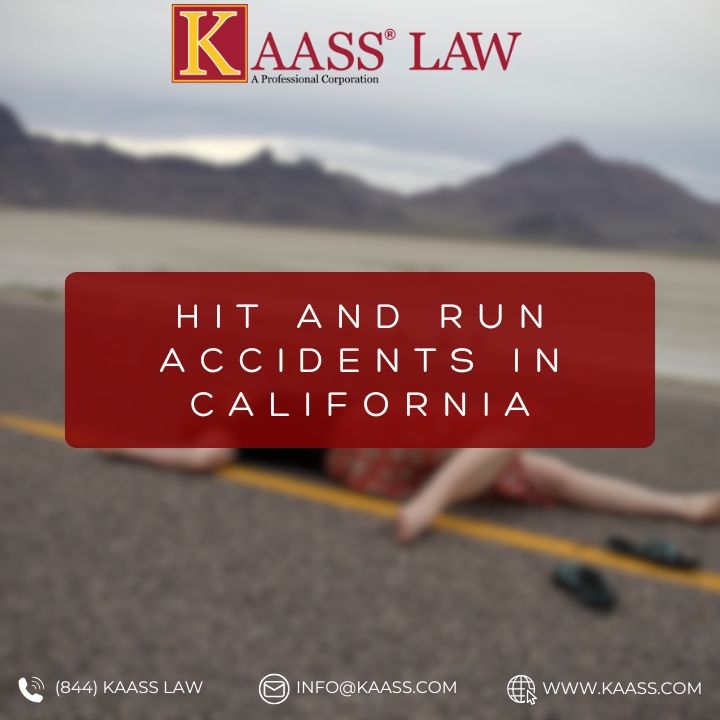
It goes without saying, but getting in a car accident is the last thing on anyone's mind. Furthermore, the situation can be more stressful when the other driver decides to flee the scene and leave you in the dust. These types of scenarios are extremely dreadful, and on behalf of KAASS LAW, we don't wish this on anyone. Committing a hit-and-run is a serious offense in California, carrying major legal penalties for the responsible driver. Additionally, leaving victims after the accident is just disgraceful. At KAASS LAW, we are dedicated to providing clarity on the legal ramifications of hit-and-run incidents and offering guidance to those who have been a victim of this unlawful act. The following will aim at the legal codes of a hit and run, steps to take after the incident, and how KAASS LAW can help.
California Vehicle Code section 16025 makes it a crime to leave the scene of an accident without providing the following information (except under special circumstances, such as being under a lot of injury):
If you cannot find the driver, compensation for the damages depends on your insurance policy coverage. Furthermore, if you have collision coverage, your insurance will cover your property damage. In addition, if you have Medpay coverage, your insurance will cover any medical bills you incur. Keep in mind, however, that Medpay will only cover the direct costs of your medical bills, and it will not compensate you for lost wages, pain, suffering, or emotional distress caused by the accident. If you have uninsured (UM) coverage, your insurance will pay for your bodily injury claim, which includes future medical expenses as well as pain and suffering. Depending on your limits, your uninsured motorist coverage will be able to provide coverage for injuries sustained by you and your passengers.
California Vehicle Code sections 20002 and 16025 make it illegal to flee the scene of an accident and withhold the required identification and insurance information from the other parties involved.
CVC 16025, requires drivers must share and exchange insurance information. A CVC 16025 offense is considered an infraction in California and is punishable by a fine of up to $250.
CVC 20002 makes it illegal to flee the scene of an accident where there is only damage to property and no injuries. It is considered a misdemeanor in California, however, it is common for these cases to be dropped, if the defendant pays financial restitution for the damages.
The penalties for violating CVC 20002 can include:
CVC 20001 makes it a crime to flee the scene of an accident where there are injuries or death. This is a felony offense in California that is punishable by:
Being the victim of a hit-and-run accident can be a frightening and frustrating experience. Here are crucial steps to take to protect your safety and legal rights:
At KAASS LAW, we are here for you. The following are some of the many things we normally offer:
Please contact us for a free consultation so may further help!
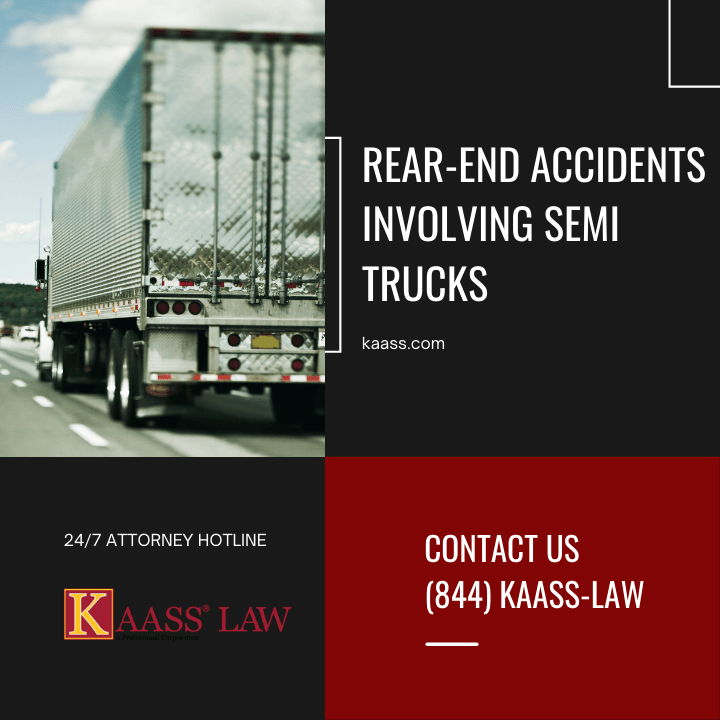
A rear-end collision between a semi-truck and a passenger vehicle is something that happens often. The first thing that comes to mind when you hear the words "rear-ended by a semi-truck" is most likely the severity of damage such an accident can cause. This is primarily due to the overwhelming size and weight of the semi-truck can pose a serious risk of catastrophic injury or wrongful death in an accident.
There are many causes for rear-end accidents involving semi-trucks. Some common causes as to why a semi-truck driver may rear-end another vehicle include:

Construction site accidents are fairly common. An injured victim may either file an insurance claim with the at-fault party's insurance carrier and/or a personal injury lawsuit against the at-fault party.
The plaintiff must be able to prove the following elements to establish negligence in a construction accident case:
In some cases, property owners are liable for the occurred accident on their property. According to CACI 1000 in a premises liability lawsuit, the plaintiff must be able to establish the following elements:
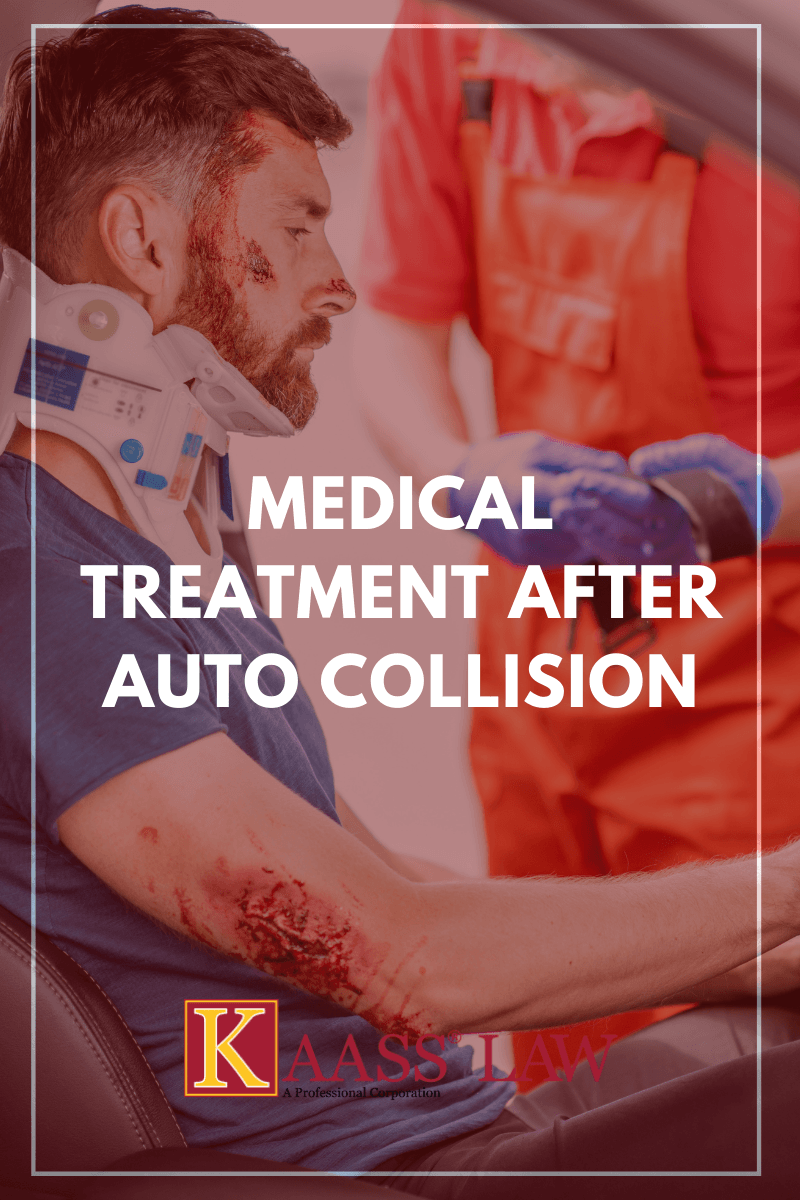
An automobile collision may be one of the most distressing events that one can go through. Whether the event is minor or major, it is critical to get medical attention for an injury. This is especially important if the accident victim intends to file a personal injury claim. Getting medical help after a car accident is one of the most important components. It helps document the injuries, and preserve your rights and remedies. As the injured victim, consider several key criteria while seeking medical help. Let's discuss some important factors you should be aware of in order to protect your rights.
Depending on the case, you may or may not require emergency medical assistance. If the accident results in apparent catastrophic injuries, the person will almost certainly be taken to a local hospital. In some circumstances, if an injury is not immediately visible, the victim must seek medical assistance on their own. If you do not require emergency medical assistance for whatever reason, you should be aware that injuries may not be distinctive immediately. A variety of factors can contribute to a lack of sensitivity to an injury. For example, due to the initial adrenaline rush, a person may fail to notice whiplash after an accident. There are also a variety of physical symptoms that can take days to surface. Thus, it is critical to get medical help as quickly as possible following an automobile accident.

California is one of many states that are considered car-dependent. The kind of offer of lending your vehicle to another person is quite common. However, such an innocent act may result in accidents and injuries, given the circumstances. A typical question always pops up when you're in this situation: am I liable for this, even though I wasn't the driver? The state of California also recognizes a legal doctrine called negligent entrustment. Applying to the law, this can potentially hold the vehicle owner liable for damages due to permitting someone else to drive their vehicle. At KAASS LAW, we understand and help resolve these complex cases with our expert team. The following will aim to shed light on negligent entrustment in California, and we can offer legal services, given the opportunity.
Negligent entrustment means that you can be liable and legally responsible if you lend your var to someone you knew or should have known potentially driving negligent and or recklessly. Usually negligence falls under the person that initiated the act. However, this will go against your negligent decision to entrust the vehicle to an unfit driver.

In California, you can sue for injuries sustained in a horse-riding equestrian accident. An injured party may be entitled to damages, such as medical expenses and pain and suffering.
Liability for an injury sustained in a horse-riding accident may attach to:
Common causes of action in horseback riding and equestrian accidents include the following: General Negligence: Often times horseback riding accidents and injuries occurs due to the equestrian club and or riding agency’s negligent actions. Common negligent action on part of the equestrian club includes failure to the instructor to train new riders, failing to properly train a horse, or failure to properly fasten saddles and girths to the horse. : Horseback riders can sustain injuries due to the use of defective riding equipment such as defective saddles, defective riding helmets, defective girth, and bridles. In order to succeed on a product liability claim, the plaintiff must prove that the existence of a defect in the product substantially increased the risk of harm to the end-user. A plaintiff may prove the existence of a defect in a product in 3 ways. (1) Defect in the manufacturing process of the product; (2) Defect in the product's initial design; and (3) Failure to warn. : Injuries sustained in horse-riding accidents can be caused by defective riding trail conditions including. Under premises liability, owners and operators of the property/land are liable for any injuries caused by known and knowable dangers.

Often times, a collapse of a balcony or deck can lead to serious injuries or even death. An injured party may file a claim or lawsuit to seek compensation for damages sustained.
Under the premises liability law of California, the owner of the property should exercise reasonable care of the property. A defendant can prove that he/she exercised reasonable care by showing her or she did the following:
Generally, landlords will be held liable in the event the rented property has an unsafe deck or balcony which resulted in an injury. Liability attaches on a landlord because the landlord has an obligation to timely inspect, correct the defects, and warn the tenants regarding possible dangers.

Buses are common carriers because they are in the business of transporting people or property for a fee. However, there are other factors used to determine if in fact the entity is a common carrier. These factors include the following:
Common carrier responsibilities ensure the safety of passengers as well as others that are sharing the road. Some examples of common carrier responsibilities include:

California Vehicle Code does not have any limitations with regards to the age of drivers, that's why it is easy to notice both young and old drivers on roads. However, senior-aged drivers can have more problems while driving and can cause more car accidents. The reasons for the above mentioned are very simple-the physical conditions of the elderly drivers do not let to drive more carefully. For example, a driver of a senior age can suffer from problems with eyesight, thus can fail to notice any marks and signs on the roads. Not hearing the traffic can also become a problem and lead to car accidents.
California law requires drivers that are 70 years or older to renew their drivers license.
As mentioned above, you must complete the driving license renewal process in person to allow the DMV to evaluate your condition before deciding. The DMV may require the elderly driver to undergo a medical evaluation to assess their physical and mental condition. The medical evaluation shall include:
Car accidents, unfortunately, happen every day and cause damages to both the vehicle leading to negative economic consequences to drivers but also their life and health. Car accidents are caused by different reasons such as hydroplane car accidents, accidents involving elderly drivers, and ordinary accidents happening because of the negligence of the drivers. One of the types of car accidents is defective tire accidents.
Manufacturing defects are related to such issues, which, arising during production, make the tire differ from particular specifications.
Design defects are considered to be in place if the tire doesn't perform as safely as it can be expected by an ordinary customer and place risk of danger on the latter.
In the case of the manufacturer, the designer does not provide instructions, safety warnings to the use of the tires and lead them to cause damages, it is considered that the tire had a warning defect.
Commercial truck drivers are required to maintain a 'logbook" that records the "hours of service". In other words, this log contains the number of hours the drive has been driving. Semi-truck drivers hauling cargo have an 11-hour driving maximum after 10 consecutive hours off duty. Further, semi-truck drivers can work a maximum of 70 hours per week. A driver can then resume driving if they rest for 34 consecutive hours, including 2 nights. Furthermore, all carriers and drivers operating commercial motor vehicles (CMVs) must comply with "hours of service" regulations found in 49 CFR 395.
Driving a semi-truck with unmaintained or worn-out brakes is negligent. Commercial vehicles such as tractor-trailers and semi-truck are moving fast and burdened with a heavy load and therefore generally will need a lot more time to come to a full stop than any SUV. As a result, failing to routinely maintain commercial vehicle breaks will need even more time to come to a complete halt.
Step 1: Firstly, if you are involved in an accident, the first and most important thing to do is call an emergency response to request medical and police assistance. Step 2: Take pictures of the damage to the vehicles, the position of the vehicles, and the entire accident scene. If there is a debate as to how the semi-truck accident occurred, the damage and positions of the vehicles will help the police and accident reconstruction experts to determine what occurred. Moreover, taking a picture of the driver's logbook logs for that day is a plus. Step 3: Attempt to locate people who may have witnessed the collision. Get their name, address, and telephone number. Additionally, exchange information with the other driver, such as insurance information and driver's license information, vehicle registration, driver's contact, and employer information. Step 4: Seek the proper and immediate medical treatment as soon as possible. Going to the emergency room to be examined will ensure there are no internal or hidden injuries, as well as document your injuries. Step 5: Lastly, contact an auto accident lawyer immediately if you have been involved in a semi-truck accident.
A victim involved in an accident with a commercial truck can file a lawsuit against the at-fault driver and the commercial truck company. It is important to keep in mind that the tractor and trailer can have different owners. As such, it is important to ask the driver of the truck who owns the tractor and trailer.
As experienced litigators, we have successfully litigated various personal injury cases including complex personal injury matters. Above all, our attorneys possess the mastery it takes to successfully receive fair settlements during the claims stage of a personal injury case. Don’t accept low-ball offers from insurance companies. An injured truck accident victim may seek compensation for damages which includes:
If you or a loved one has been seriously injured or killed due to a negligent semi-truck driver it is crucial to seek advice from an experienced commercial truck accident attorney as soon as possible in order to preserve your claim and legal remedies. We invite you to contact our commercial truck accident attorney today at (310) 943-1171 for a free consultation.
Kaass Law will connect you with leading medical professionals in your area to diagnose and treat your injuries. If you are unable to pay for the medical treatment we can facilitate treatment on a medical lien basis. This means you pay nothing up front. As the conclusion of your case, your medical bills are paid from the settlement.
[contact-form][contact-field label="Name" type="name" required="true" /][contact-field label="Email" type="email" required="true" /][contact-field label="Website" type="url" /][contact-field label="Message" type="textarea" /][/contact-form]
Under California products liability laws, whoever sells designs, or manufactures a defective product is liable for caused injuries. According to CACI 1200, the following types of defects can be involved in product defect claims involve:
A product liability lawyer near you should be able to provide you with additional information.
There are a handful of parties that can be held responsible for construction accidents, which include:
Even if the injured person is partially liable for the accident, he can still file a lawsuit against others who were also at fault. According to CACI 405 an injured victim can still recover damages regardless of his percentage of fault, however, the plaintiff’s damages award will be reduced by the proportion of negligence.
People injured at construction sites can suffer different types of injuries, including:
Under California law, a plaintiff must file a lawsuit within a two–year period from the date of sustaining a construction accident injury.
In a successful claim, the plaintiff is entitled to compensatory damages, including economic and non-economic damages.
Recoverable economic damages in a construction accident include:
Recoverable non-economic damages in a construction accident include:
In case the defendant’s acted with malice, extreme recklessness, intentional or fraud, or oppression the plaintiff can also be entitled to punitive damages.
If you or a loved one has suffered an injury in a construction accident we invite you to contact our Glendale Personal injury attorney KAASS LAW at (310) 943-1171 for a free consultation and case review.
Determining that a medical issue has occurred as a result of an auto accident is not the only factor to consider. After the initial doctor's appointment, it's imperative that accident victims retain and follow up with their medical care. Delaying medical treatment can have a negligible effect on a personal injury claim. Not following up can also result in a negative impact on a financial compensation claim. Consequences may arise if someone fails to attend physical therapy sessions. For example, the court determines that the accident victim's lack of care has caused the illness to worsen.
A person involved in an automobile accident may sustain injuries ranging from small cuts and abrasions to serious injuries. Normally, accident victims will be burdened with significant medical bills and, in many circumstances, the inability to work. If you or someone you know has just been in a car accident, we invite you to contact our Glendale personal injury attorney at (310) 943-1171 for a free consultation.
CCPC 193.8 states that: "An adult, who is the registered owner of a motor vehicle or in possession of a motor vehicle, shall not relinquish possession of the vehicle to a minor for the purpose of driving if the following conditions exist: (1) The adult owner or person in possession of the vehicle knew or reasonably should have known that the minor was intoxicated at the time possession was relinquished. (2) A petition was sustained, or the minor was convicted of a violation of Section 23103 as specified in Section 23103.5, 23140, 23152, or 23153 of the Vehicle Code or a violation of Section 191.5 or subdivision (a) of Section 192.5. (3) The minor does not otherwise have a lawful right to possession of the vehicle."
Some possible defenses to negligent entrustment include:
Additionally, one can argue that the car owner was not aware that the driver (who allegedly caused the accident) was not a reasonably safe driver due to having a clean driving record and possessing a valid driver's license.
While you can't control the actions of every driver on the road, you can take steps to protect yourself from potential negligent entrustment claims:
If you have been injured in an accident caused by someone driving a vehicle they were negligently entrusted with, or if you are a vehicle owner facing a negligent entrustment claim, it is crucial to seek experienced legal counsel. At KAASS LAW, our skilled attorneys can:
The concept and doctrine of negligent entrustment show a big key in the responsibility of the vehicle owner. By understanding this legal concept and taking action towards safety, both vehicle owners and those injured by negligently entrusted vehicles can navigate the complexities of California law. Contact KAASS LAW today for a consultation to discuss your specific situation and learn how we can help. Alternatively, to know more about negligence, especially gross negligence in California, KAASS LAW can offer guidance.
If someone suffers an injury in a horse-riding accident, they can seek compensation for the following:
The statute of limitation for filing a civil lawsuit in a horse-riding accident is 2 years.
If you or a loved one has been injured in a horse-riding accident, we invite you to contact KAASS LAW at (310) 943-1171 for a free consultation and case review.
In some cases, the determination of liability may depend on the specific relationship between the parties involved in the incident. For example, if an injury occurs during a paid horseback riding lesson, the instructor has a duty to ensure the safety of the client. Failure to fulfill this duty may result in the company being held liable for negligence. In addition, a signed waiver of liability does not always exempt the defendant from legal consequences. In California, courts look at the circumstances of the case. Especially if the defendant's conduct goes beyond ordinary negligence and approaches gross negligence. Therefore, with a signed waiver, an injured person can still file a lawsuit.
To successfully bring a negligence claim, four key elements must be proven:
In the case of horseback riding, such duties may include:
It is important to gather evidence as soon as possible after an accident. Such as:
You may also need the opinion of equine or veterinary experts. To confirm that there is a defect in the equipment or that the animal is unfit for use.
In addition to economic losses, the injured party is entitled to compensation for:
The court may consider the severity of the injuries, the length of recovery, and the impact on personal activities.
If you have been injured in an equestrian accident, it is important to consult with an attorney as soon as possible. Contact KAASS LAW at 844-522-7752 for a free consultation. We will analyze the details of your case and explain your legal rights and options.
The contractors/builders' liability generally attaches if the deck or balcony was not constructed in a manner required under regulations and existing standards. If you are injured on the property belong to a third party, you can sue the:
Particularly, to sue the defendant for the injuries sustained due to a balcony or deck collapse, the injured party must prove that:
As mentioned, sometimes the party, who is liable, is the building contractor. The liability of the building contractor is hard to prove but it is still possible by engaging professional experts in your case by bringing expert reports or using their statements as evidence.
In order the prove that the property owner knew or should have know about the defective condition of the balcony or deck, the plaintiff can provide evidence showing the negligence of the property owner in the following ways:
A plaintiff may seek compensation arising out of a injury sustained due a collapse of a balcony or deck. Examples of such compensation may include the following:
In the event a death occurred due to a balcony or deck collapse, a party may file a lawsuit to seek compensation for a family member by filing a wrongful death lawsuit.
If you or a loved one has been injured in a balcony or deck collapse, we invite you to contact our Los Angeles Personal Injury attorney at (310) 943-1171 for a free consultation and case review. Our attorneys will evaluate the details of your case and advise you on what to expect and how you can proceed.
Yes, a bus driver may be held liable should they fail to observe local laws. The idea here is that when an individual becomes a passenger in a bus, the passenger is essentially putting themselves under the bus driver’s control. Thus, a bus driver has a responsibility to provide the highest degree of care and safety to its passengers regardless if riding for a short or long trip.
In order to successfully prove liability of a bus driver in California, you must prove that negligence occurred. Proving negligence of a common carrier usually means showing that the bus driver violated the law. Additionally, negligence can be shown should the driver fail to act reasonable in using care and diligence expected of a cautious bus operator.
Bus accidents may cause severe and long-term injuries as well as cause other damages that may impact ones life. If you or someone you know has been injured in a bus accident, contact our Los Angeles bus accident lawyer at (310) 943-1171 for a free consutlation. Our personal injury attorneys can provide you with any sort of legal assistance you require.
The following medical conditions can be a reason to suspend your driving license:
The DMV also considers the medications elderly people use to treat illnesses, as their side effects can cause drowsiness and dizziness, impairing driving.
The common sources which DMV has to assess driving conditions of the elderly person can be:
In the event there are threatening physical or mental conditions, the DMV can ask you to submit a DMV driver medical evaluation regarding your medical history with your doctor. Another option is to ask for re-examination (including a driving performance test).
Pursuant to California Vehicle Code 14100, you can challenge the revocation at DMV administrative hearings. The period for such a request is 10 days after receiving the notice of revocation. If the hearing result is unsatisfactory and the license does not renew, the next step involves the department reviewing the case. The period for submitting for this review is 15 days after receiving the decision. In any case, you have the right to challenge the decision in court if neither the 14100 hearing nor the department review gives any result. The period is:
There are a number of steps older drivers can take to keep their license. First and foremost:
This will allow you to monitor your health and identify potential problems early. Older drivers are also advised to have their vision checked in a timely manner. Be sure to wear corrective lenses if necessary. In addition, it is important to avoid taking medications while driving that cause:
To successfully pass a DMV recertification, a driver should prepare in advance. You can take additional training at a driving school or take a few lessons with an instructor. It's also a good idea to study the current rules of the road and take practice tests.
In some cases, the DMV may impose restricted driving conditions instead of suspending a driver's license altogether. For example, a driver may only be allowed to drive during daylight hours. Such restrictions allow you to maintain your mobility while minimizing the risk to public safety. Contact KAASS LAW for advice and representation.
Experienced and professional legal assistance can help you to challenge the DMV decisions and renew your license-restoring your right of driving. We invite you to contact KAASS LAW at (310) 943-1171 for a free consultation on your case and further assistance.
As discussed above, if it is believed that the case of an accident arose out of a defective tire, the liable party of said accident may include:
Generally, to prove that the defect of a tire was the reason for the accident, an qualified expert would testify in the form of expert testimony. Common examples that the expert would need to testify to includes:
You shall also prove that you used the tire in a foreseeable manner and the defects occurred before your use of the vehicle. Expert's opinion shall also assist you with this evidence.
Family members are entitled to file such lawsuits and receive compensation. The family members having such rights are:
Other common losses
Compensation in a defective tire lawsuit can include the following:
The defendant can bring different arguments supporting his position, such as that the tires were affected not by his fault but by your negligent use. For this reason, it is essential to receive professional assistance and consult an experienced attorney.
If you or a loved one has been in a defective tire accident, contact our Los Angeles Personal Injury attorney at (310) 943-1171 for a free consultation and case review. Our attorneys will evaluate the details of your case and let you know what to expect and how you can proceed.