Defective Children's Products: Holding Manufacturers Accountable for Unsafe Designs
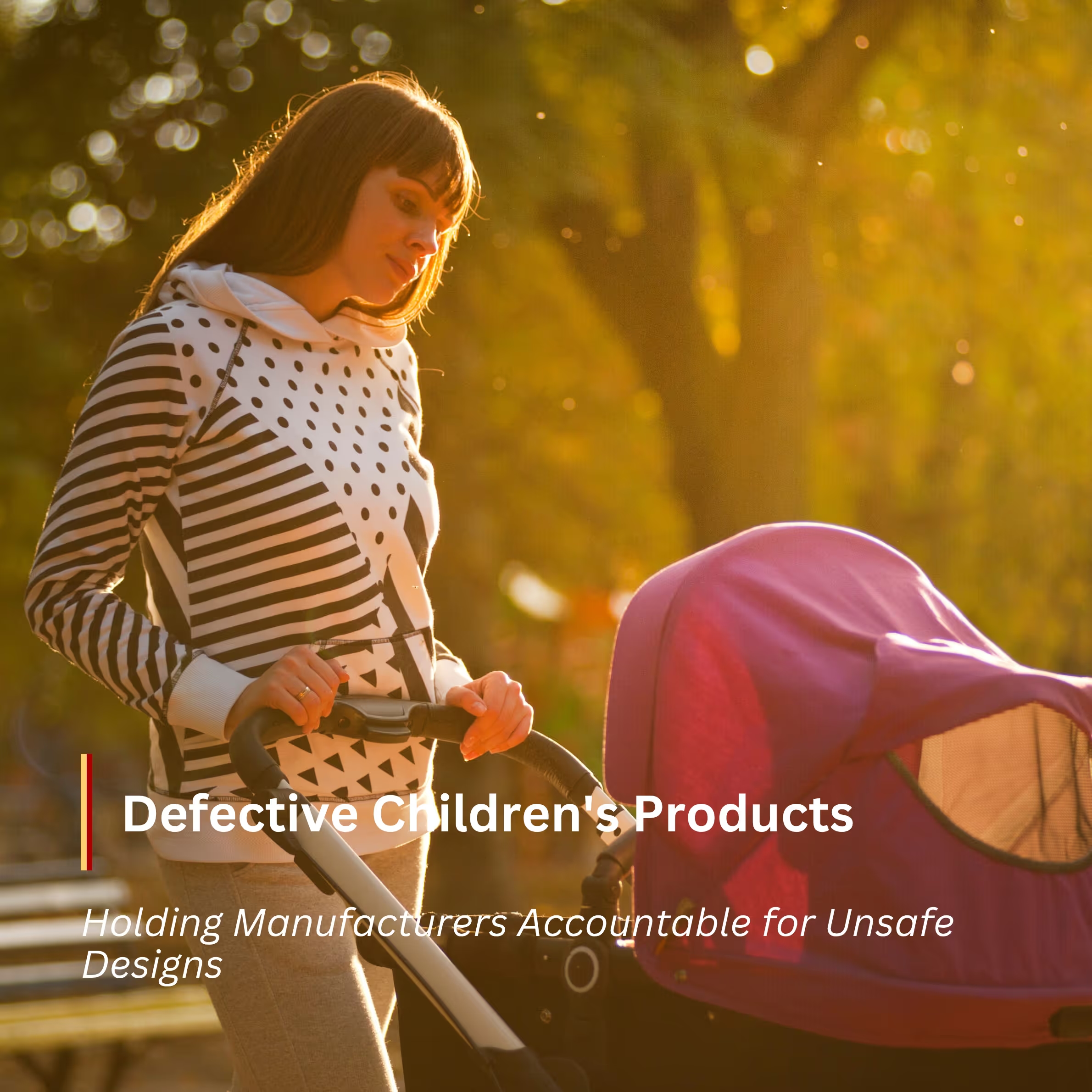
Children's products are meant to bring individuals, families, and loved ones joy and happiness. However, when products such as car seats, strollers, cribs, and other types of furniture become defective, they may pose serious harm to those children. Understanding how a defective children's product may lead to injuries or sometimes life-altering events is important in maintaining the safety of yourself, your child, and your family.
Understanding Defective Children’s Products
A product-related injury does not automatically mean that the product was legally defective. Usually, a product liability claim requires evidence connecting a defect or inadequate warning to the resulting harm. California product liability cases commonly involve three categories of alleged defects:
- Design defects
- Manufacturing defects
- Failure-to-warn or inadequate-warning claims
California's product liability framework recognizes these different types of defects when determining whether a manufacturer, distributor, or seller may potentially be responsible for injuries caused by a product. For children’s products, design considerations can be especially important because manufacturers may need to account for reasonably foreseeable behavior. Young children may pull, climb, chew, shake, drop, or otherwise interact with products differently from adults.
Defects in the Product's Design
A design defect concerns the underlying design of a product rather than a mistake affecting only one particular unit. It is important to note that the product may have been manufactured exactly as intended, but the design itself may create an unreasonable safety concern. Examples of this when it comes to children's products could include the following.
- A dresser that can tip over when drawers are opened
- A toy containing easily detachable small components
- A stroller with an unstable locking mechanism
- A crib containing openings capable of creating an entrapment hazard
- A high chair with an inadequately designed restraint system
- A product containing an accessible button battery
- A child safety product that does not provide the protection reasonably expected during foreseeable use
Whether any particular product is legally defective requires an analysis of the specific facts, evidence, and applicable law. As a result, seeking legal guidance and support may be extremely beneficial.
Manufacturing Faults
Evidence showing how the specific product was different from its intended design can become important. Families should usually avoid repairing, altering, discarding, or returning an allegedly defective product before obtaining legal guidance, because the product itself may become relevant evidence.
Warnings
Potential issues could involve missing choking warnings, unclear age restrictions, inadequate assembly instructions, insufficient warnings regarding tip-over risks, or failure to adequately disclose hazards associated with batteries, cords, chemicals, heat, or moving components. Whether a warning was adequate depends on multiple factors, including the nature of the risk and the circumstances surrounding the product's use.
Who is Liable?
Product liability claims are not always limited to the company whose name appears on the packaging. Depending on the facts, potentially responsible parties could include the following individuals.
- Manufacturers
- Distributors
- Importers
- Wholesalers
- Retailers
As a result, identifying the businesses involved in designing, manufacturing, distributing, and selling a product can be an important part of investigating a claim.
Types of Injuries
Children may be especially vulnerable to product-related injuries because of their size, developmental stage, and ability to recognize hazards. Depending on the product and accident, injuries may include but are not limited to the following.
- Choking or suffocation
- Severe burns
- Fractures
- Cuts
- Poisoning
- Head injuries
- Internal injuries
- Entrapment injuries
A serious childhood injury may also involve ongoing medical care or future treatment.
Preserving Important Records
Evidence can play an important role in determining what happened and whether a product defect contributed to an injury. Parents or caregivers may consider preserving the product in its post-accident condition, keeping packaging and instruction manuals, saving receipts or order confirmations, photographing the product and accident area, documenting visible injuries, and retaining relevant medical records. It may also be useful to record the product's model number, serial number, manufacturing information, and any recall notices or communications received from the manufacturer. Avoiding unnecessary alterations to the product may help preserve its condition for later evaluation.
Speaking to a Legal Professional
It may be beneficial to seek legal guidance and support after a defective children's product has caused injuries to your child or another family member. Legal support may be able to help victims feel cared for throughout the legal process while allowing them to understand their rights.
How the KAASS LAW Attorneys Can Help
Our qualified personal injury attorneys at KAASS LAW are determined to help victims who have suffered injuries from a defective children's product. Oftentimes, these types of cases may pose serious challenges or complications to family members and loved ones. Product liability matters may also be difficult to understand on your own. That is where KAASS LAW comes in. Call us today for a confidential consultation and to learn more about your personal injury case.
Related Articles
View All Posts
Learn who may be responsible for injuries caused by uneven sidewalks in California and how liability may depend on property control and local laws.
Learn common causes of bike lane accidents, who may be liable, and what legal options may be available to injured California bicyclists.

Learn how premises liability may apply to swimming pool accidents, including unsafe conditions, owner responsibilities, and legal options.
