
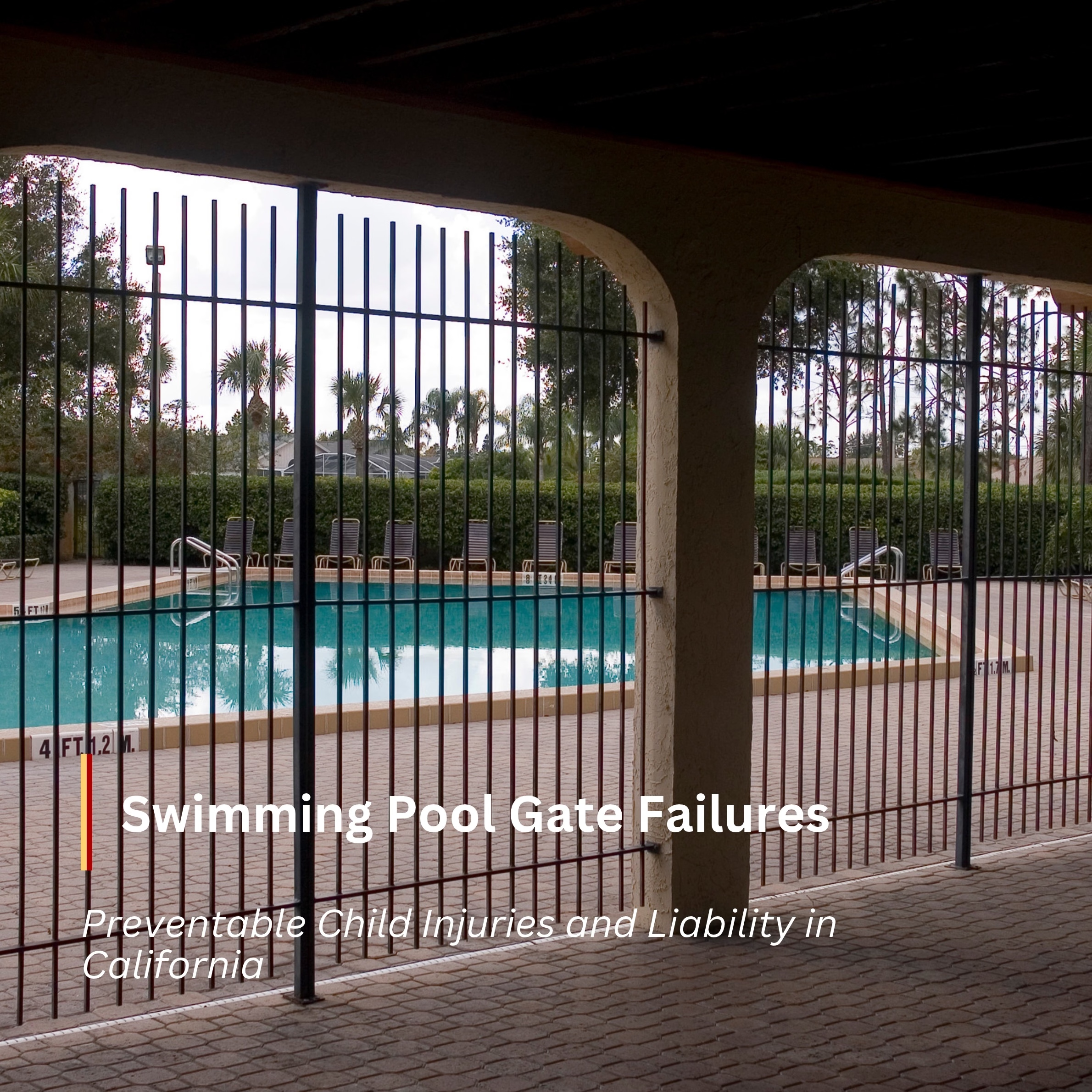
Swimming pools are a common feature of homes, apartment complexes, hotels, and recreational facilities throughout California. They are a great way for children and families to spend time outside and enjoy the sun. Oftentimes, families will host birthday parties and bring food, drinks, and pool toys to entertain the children present. While pools provide opportunities for recreation, they can also present serious safety hazards, especially for young children. When pool gates fail to protect the surrounding individuals, many issues can occur. Children may become seriously injured and need immediate medical care as a result. Understanding the importance of pool safety practices and the ways to reduce harm is crucial for your safety as well as the safety of others moving forward.
Pool gates are designed to stop unauthorized access, especially when it comes to young children who may not recognize the dangers associated with water. However, several conditions can interfere with their intended function:
These conditions may increase the likelihood that a child enters a swimming pool area without supervision. Although not every gate malfunction results in an injury, addressing known defects is an important part of maintaining a safer pool environment.
California has established safety requirements intended to reduce accidental drownings and unauthorized access to residential swimming pools. The California Swimming Pool Safety Act, found in California Health and Safety Code Sections 115920–115929, establishes requirements for certain residential pools and spas. Pool gates must satisfy applicable standards, including self-closing and self-latching requirements. However, the specific rules depend on factors such as the property's characteristics, pool construction date, renovation history, and applicable local ordinances. Property owners in Los Angeles, Glendale, Pasadena, and surrounding communities should also consider relevant safety regulations.
Liability depends on the circumstances surrounding the accident and whether another party failed to exercise reasonable care. Potentially responsible parties may include but are not limited to the following:
Property owners: Homeowners may face liability when an unsafe pool condition contributes to a child's injury.
Landlords and property management companies: Those responsible for maintaining common swimming pool areas may have duties concerning inspections, repairs, and safety precautions.
Hotels and recreational facilities: Businesses operating swimming pools may be responsible for unsafe conditions within areas under their control.
Contractors or manufacturers: When defective installation, negligent repairs, or a defective gate component contributes to an accident, additional liability questions may arise.
Swimming pool accidents may cause serious or sometimes life-threatening injuries, leaving individuals in a state of fear and uncertainty. Often, understanding the necessary steps to take to receive compensation can also be extremely challenging. In addition, children are more vulnerable to swimming pool falls. Common injuries that may occur after a swimming pool accident include, but are not limited to, the following.
Determining whether a defective gate contributed to an injury often requires examining the condition of the pool area before and after the incident. Relevant evidence may include, but is not limited to, the following.
An investigation may also examine whether the gate complied with applicable safety requirements and whether the responsible party knew or reasonably should have known about the hazard. Preserving evidence as soon as possible may be important because damaged parts can be repaired or replaced after an accident.
Families dealing with a child's swimming pool injury may have questions about medical expenses, responsibility, and available legal remedies. Depending on the circumstances, recoverable damages may include medical costs, future treatment expenses, and compensation for qualifying noneconomic harm. Speaking with a qualified attorney may help reduce the risk of additional harm from occurring in the future. This is important to ensure that you are staying healthy and safe moving forward.
Can a homeowner be sued if a child enters through a broken pool gate?
Liability depends on whether the homeowner owed a duty of care, failed to meet that duty, and caused or contributed to the injury.
Are apartment complexes required to maintain functioning pool gates?
Apartment complexes may be subject to applicable building, health, and local pool safety requirements. Their responsibilities depend on the property and governing regulations.
Does a broken pool gate automatically prove negligence?
A defective gate may be evidence of an unsafe condition, but establishing negligence generally requires additional proof of duty, breach, causation, and harm.
The qualified personal injury attorneys at KAASS LAW understand the challenges that may follow a broken pool gate that ultimately causes an injury. We want to help victims and their loved ones understand their rights, responsibilities, and the necessary steps they may need to take moving forward. If you have been involved in a defective pool gate accident, don’t wait. Call KAASS LAW today to learn more and discuss your potential options.
Learn how falling ice, water hazards, and poor property maintenance may lead to injuries and premises liability claims in California.
Learn about youth media harm claims, social media addiction, mental health injuries, and legal options for affected families in California.

Learn how California's new CARS Act, three-day used car cancellation rights, and updated lemon law procedures affect car buyers and owners.