
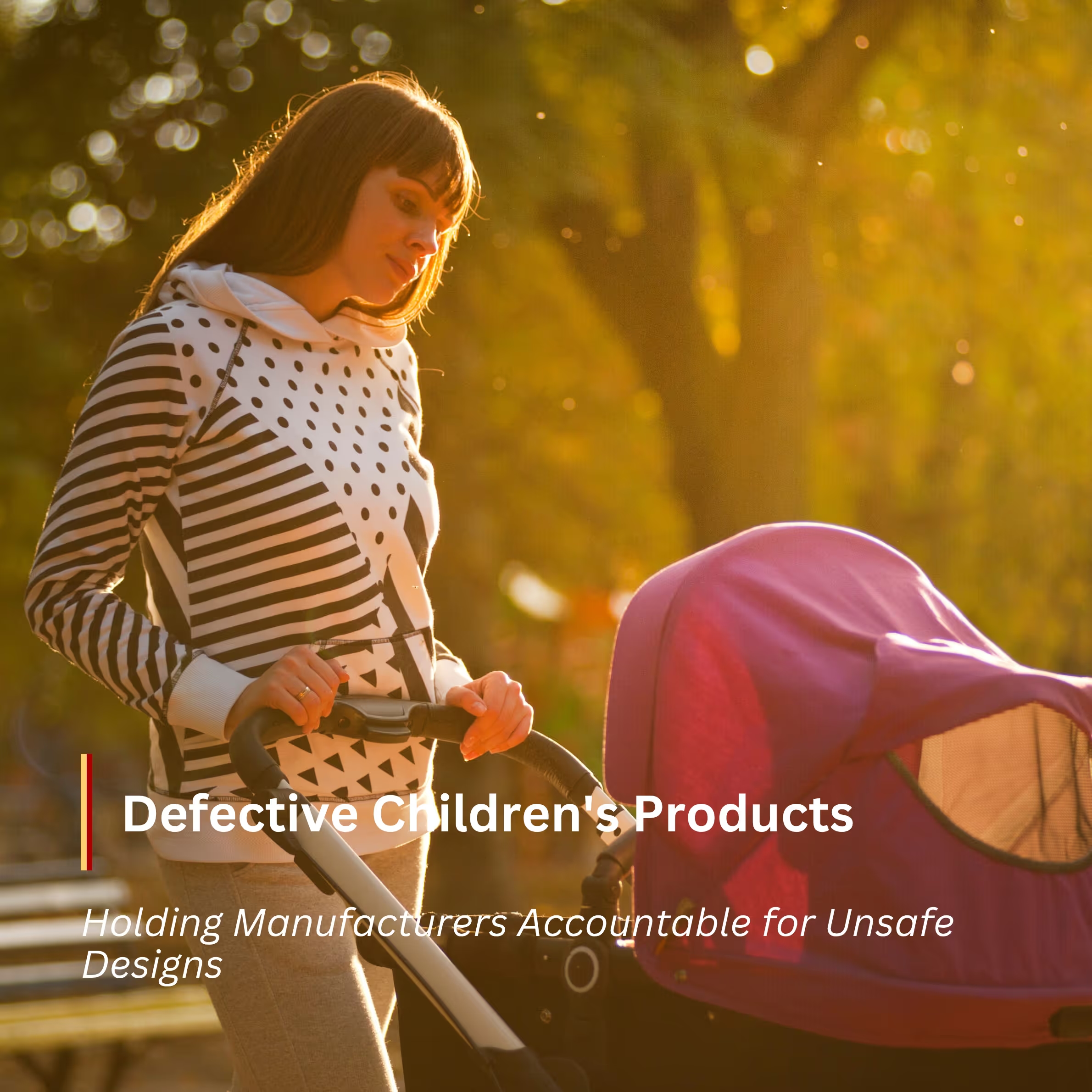
Children's products are meant to bring individuals, families, and loved ones joy and happiness. However, when products such as car seats, strollers, cribs, and other types of furniture become defective, they may pose serious harm to those children. Understanding how a defective children's product may lead to injuries or sometimes life-altering events is important in maintaining the safety of yourself, your child, and your family.
A product-related injury does not automatically mean that the product was legally defective. Usually, a product liability claim requires evidence connecting a defect or inadequate warning to the resulting harm. California product liability cases commonly involve three categories of alleged defects:
California's product liability framework recognizes these different types of defects when determining whether a manufacturer, distributor, or seller may potentially be responsible for injuries caused by a product. For children’s products, design considerations can be especially important because manufacturers may need to account for reasonably foreseeable behavior. Young children may pull, climb, chew, shake, drop, or otherwise interact with products differently from adults.
A design defect concerns the underlying design of a product rather than a mistake affecting only one particular unit. It is important to note that the product may have been manufactured exactly as intended, but the design itself may create an unreasonable safety concern. Examples of this when it comes to children's products could include the following.
Whether any particular product is legally defective requires an analysis of the specific facts, evidence, and applicable law. As a result, seeking legal guidance and support may be extremely beneficial.
Evidence showing how the specific product was different from its intended design can become important. Families should usually avoid repairing, altering, discarding, or returning an allegedly defective product before obtaining legal guidance, because the product itself may become relevant evidence.
Potential issues could involve missing choking warnings, unclear age restrictions, inadequate assembly instructions, insufficient warnings regarding tip-over risks, or failure to adequately disclose hazards associated with batteries, cords, chemicals, heat, or moving components. Whether a warning was adequate depends on multiple factors, including the nature of the risk and the circumstances surrounding the product's use.
Product liability claims are not always limited to the company whose name appears on the packaging. Depending on the facts, potentially responsible parties could include the following individuals.
As a result, identifying the businesses involved in designing, manufacturing, distributing, and selling a product can be an important part of investigating a claim.
Children may be especially vulnerable to product-related injuries because of their size, developmental stage, and ability to recognize hazards. Depending on the product and accident, injuries may include but are not limited to the following.
A serious childhood injury may also involve ongoing medical care or future treatment.
Evidence can play an important role in determining what happened and whether a product defect contributed to an injury. Parents or caregivers may consider preserving the product in its post-accident condition, keeping packaging and instruction manuals, saving receipts or order confirmations, photographing the product and accident area, documenting visible injuries, and retaining relevant medical records. It may also be useful to record the product's model number, serial number, manufacturing information, and any recall notices or communications received from the manufacturer. Avoiding unnecessary alterations to the product may help preserve its condition for later evaluation.
It may be beneficial to seek legal guidance and support after a defective children's product has caused injuries to your child or another family member. Legal support may be able to help victims feel cared for throughout the legal process while allowing them to understand their rights.
Our qualified personal injury attorneys at KAASS LAW are determined to help victims who have suffered injuries from a defective children's product. Oftentimes, these types of cases may pose serious challenges or complications to family members and loved ones. Product liability matters may also be difficult to understand on your own. That is where KAASS LAW comes in. Call us today for a confidential consultation and to learn more about your personal injury case.
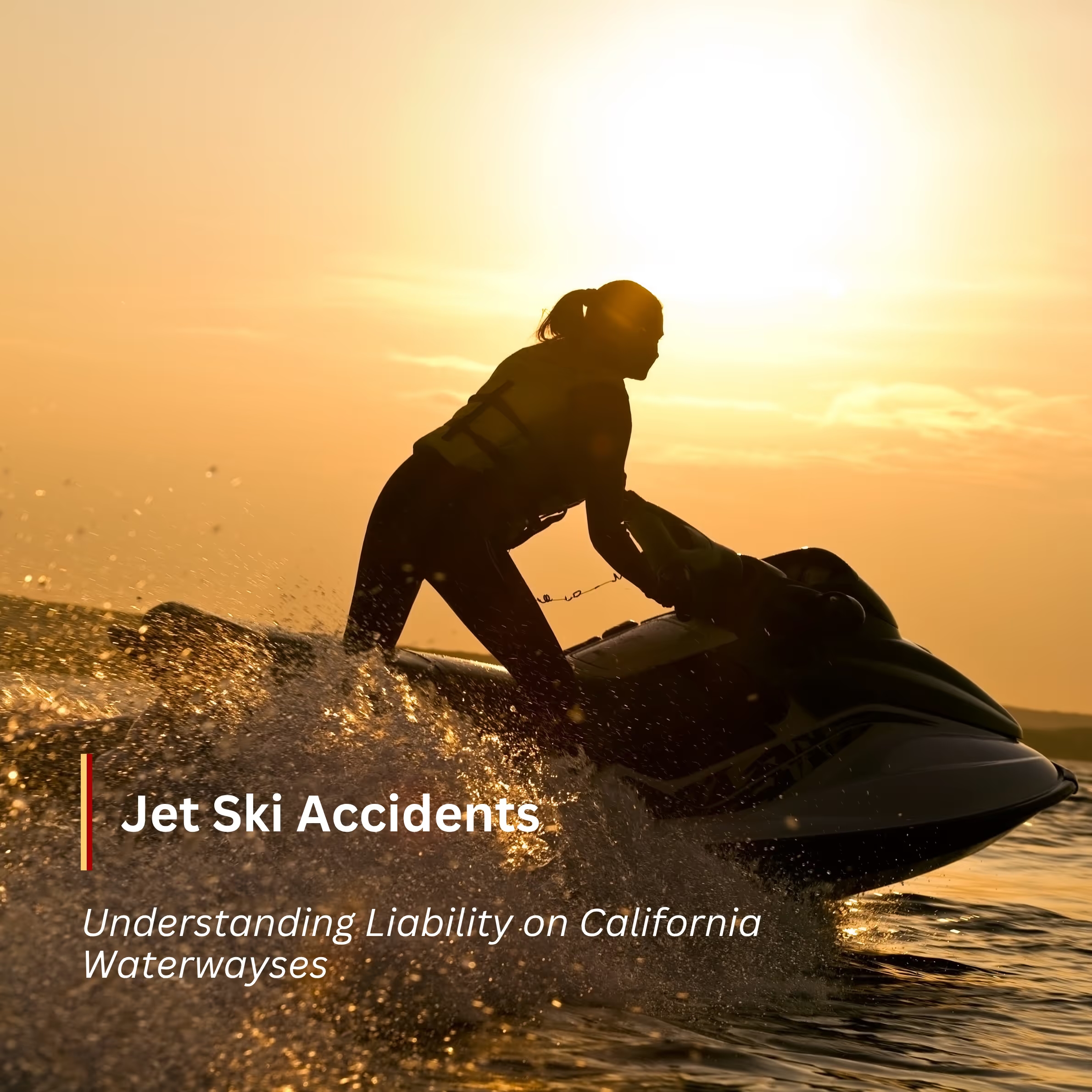
Jet skis are a great way for friends and families to get together, especially during the summer. These vehicles may be operated on lakes, rivers, and other coastal areas, often bringing a sense of joy and fun. However, jet ski accidents can also cause serious injuries that may be life-threatening at times. Riders who lose control, are not aware of their surroundings, or are speeding on the water may pose serious threats to themselves and other individuals around them. Understanding the risks that come along with jet skis and the necessary precautions when an accident occurs is important for the future.
Under California law, jet skis are considered vessels that are required to follow boating safety requirements. Operators have a responsibility to use their watercraft in a reasonable and careful manner. Violating boating rules does not automatically determine the outcome of every civil claim. However, evidence that an operator disregarded an applicable safety requirement may be relevant when evaluating negligence and responsibility for an accident.
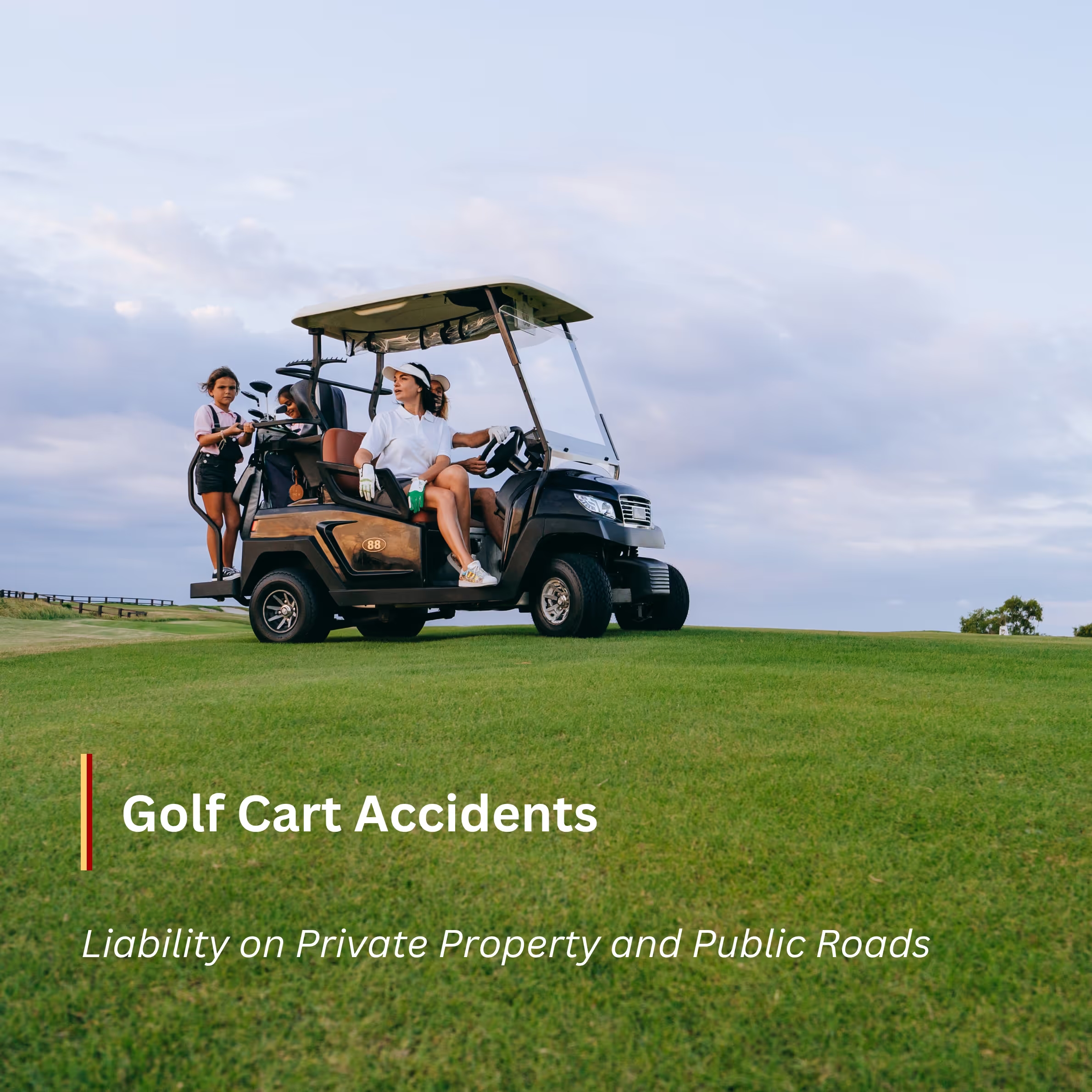
Golfing is meant to be a fun and exciting activity for many individuals and their loved ones. It is a great sport to bring friends and families together to experience joy and a sense of community. However, golf cart accidents may cause severe or sometimes life-threatening injuries when the necessary safety precautions are neglected or not put in place properly. In addition, determining who may be held responsible after a golf cart accident occurs is a difficult and challenging process to navigate by yourself. Understanding golf cart accidents and the importance of maintaining private or public properties is important the next time you or a loved one goes golfing.
Golf carts usually travel at lower speeds than passenger vehicles, but lower speed does not always mean an accident will result in minor injuries. Many traditional golf carts lack doors, airbags, and other protective features usually found in cars. Passengers may be thrown from the cart during a sudden turn, collision, or rollover. Pedestrians, bicyclists, and other road users can also be injured when struck by a golf cart.

Child seats save lives and protect the most vulnerable passengers in motor vehicles. Young children must also ride in proper booster and safety seats for their height, weight, and age in California. However, defective car seats and boosters can cause significant injury and even death to young children.
According to state laws and regulations, all children under the age of eight must be in an appropriate car seat, with certain exceptions for older children whose parents are in the vehicle. To guarantee that tiny children are safe in the case of an accident, these standards differ based on the child's age and weight. While victims of catastrophic automobile accidents nearly always experience some injuries, the assumption is that a child safety seat, booster seat, or harness should decrease these risks and save the lives of little children. When car seat and child seat manufacturers fail to regard kid safety, the civil court system can frequently find them legally accountable.

Spinal cord injuries commonly occur after a slip-and-fall accident. When you've fallen and hurt yourself, it may seem like your rehabilitation process will take months. Some people may experience back discomfort that persists after slipping or falling, which can cause sadness to set in very fast. Spinal cord injuries brought on by falls have significantly increased during the previous 40 years. Environmental factors like icy surfaces or wet floors frequently cause same-level slip-and-fall accidents. Serious spinal cord damage can ensue from such incidents, especially in the elderly population. Slips and falls often result in more serious, life-threatening consequences for older individuals. Additionally, their hospital stay is longer, and their medical expenses are higher.
One of the most severe and disabling injuries brought on by a slip and fall is a spinal cord injury. A broken or displaced vertebra may be the cause of a spinal cord injury. There are two types of spinal cord injuries: complete and incomplete. When the cord can no longer convey impulses below the level of injury, it is considered complete. As a result, the area that has been under the impact is losing all sensation below. If the injury is not complete, the victim can still move somewhat and feel a little under the stress.

Cardiovascular problems can develop down the road as a result of physical injuries sustained in a vehicle accident. It is well-known that severe car crashes can result in fractures, ligament tears, and sprains. However, many individuals are unaware that a bad vehicle collision can also affect circulatory health, leading to cardiac issues. Heart attacks and irregular heartbeats are common aftereffects of automobile accidents. These conditions may result in long-lasting health issues, potentially shortening one’s lifespan.
Several causes can contribute to heart attacks following an automobile collision. The most prominent reasons are:

Only non-economic damages in medical malpractice cases are subject to a damage cap in personal injury cases in California. However, no matter how severely they were injured, victims in these cases are only allowed to receive $250,000 in non-economic damages. However, if Assembly Bill 35 is approved, the non-economic damages cap will rise to $350,000 for non-death cases and to $500,000 for wrongful death cases beginning in 2023. The caps will then gradually rise until 2033, reaching $750,000 in non-death cases and $1 million in wrongful death cases.
In California, there are often no damage ceilings for lawsuits involving personal injuries. There is one significant exception, though: In cases of medical misconduct, non-economic damages will be no more then $250,000. There is a damage cap that sets a limit on how much money a sufferer can get in compensation for their losses. Even though the sufferer has had terrible injuries and should be entitled to much more, it caps the amount of compensation that can be given to them. In most personal injury cases filed in California, there are no damage caps. Damage caps do not apply in personal injury cases involving injuries brought on by a(n):

In some personal injury cases, parties may include pain and suffering damages and receive a compensation for the physical and emotional suffering they endure as a result of an accident. Plaintiffs may receive the damages in some countries as a sort of compensatory damages. They fall under the heading of non-economic damages rather than economic damages. Additional instances of non-economic harms include:
There is no set formula for calculating the monetary worth of a pain and suffering award in personal injury cases where compensation is granted for non-economic losses. Usually, accident victims or people who have been hurt have to provide evidence that they were hurt physically or psychologically. A judge or jury will then decide on a fair monetary sum for pain and suffering damages using their discretion. While compensating parties that were harmed or accident sufferers for subjective losses, pain and suffering damages are frequently supported by objective proof, such as loss of enjoyment of life.

When exiting a parking space, drivers must yield right of way to passing vehicles and pedestrians. If they collide with a pedestrian or another vehicle while backing out, they will almost always be held accountable. There may be exceptions, such as when the oncoming vehicle was speeding or the pedestrian was particularly careless.
Vehicles that have been parked and are pulling out of a parking space do not have the right of way. They must yield to vehicles moving through the parking lot. They must also yield to pedestrians. However, parking lots are notorious for having a lot of activity. They are also densely packed with parked cars, resulting in poor visibility and numerous blind spots. This can make seeing oncoming traffic through the other parked cars difficult. Nonetheless, drivers backing out of a parking spot have a legal obligation to do so safely. They are usually liable if they hit another car or a pedestrian. They can be made to compensate the parking lot accident victim. There are, however, exceptions.
In the event of an accident involving a police vehicle, injured parties or their families may be eligible to file a personal injury claim or wrongful death case. Whether or not a police officer is responsible may depend on:
Accidents involving a police vehicle are distinct from other types of collisions. The driver may believe that the police are immune from liability if they struck a pedestrian or driver with their vehicle. However, in cases where a patrol car is a part of an accident and injures a motorist, passenger, or pedestrian, the police and the city may still be responsible. Everyone involved in an automobile collision needs to make sure they are okay and safe. The sufferers should seek quick medical assistance if they sustain any injuries. The driver and passengers should think about consulting a doctor even if they are unsure if they sustained any major injuries. A day or two after the collision, many car accident victims discover they sustained injuries. Avoid accepting responsibility for an accident. When the other driver is a police officer, it may be more challenging to accomplish this, especially if the officer is attempting to intimidate you. The decision on who was at fault for the accident is not up to the officer. After considering all the facts, the court should decide who was at blame, not on the basis of a single officer's point of view.
Jet ski accidents can happen for many reasons. The following factors may contribute to a jet ski accident.
California requires these vessels to carry appropriate wearable flotation devices for individuals. Safety-equipment requirements may become relevant when investigating how an accident occurred and the severity of resulting injuries.
A jet ski operator may potentially be responsible when negligent conduct causes another person to suffer an injury. For example, an operator may collide with another jet ski because they were traveling too fast. A negligence claim usually involves analyzing whether the operator owed a duty of reasonable care, whether that duty was breached, and whether the conduct contributed to the victim’s injuries and damages.
Evidence such as witness statements, photographs, video recordings, accident reports, boating citations, GPS information, and medical records may help determine what happened during the accident.
The operator and owner of a jet ski are not always the same person. An owner may allow a friend, relative, guest, or another individual to operate the vehicle. Depending on the circumstances, questions may arise regarding whether the owner knew or reasonably should have known that the individual was not capable of safely operating the vessel.
For example, liability issues may arise if an owner knowingly allows an inexperienced or impaired individual to use the jet ski.
When an accident involves a rented jet ski, the rental agreement and the company's actions may become important. Depending on the circumstances, an investigation may consider whether the rental company maintained its equipment, provided required safety information, followed applicable rental requirements, or rented equipment that had a dangerous mechanical condition.
Sometimes an accident may involve a mechanical or product defect instead of the operator’s behavior. Potential issues could involve steering systems, throttles, engine cutoff mechanisms, fuel systems, or other components. When defective equipment is suspected, parties involved in the design, manufacture, distribution, maintenance, or repair of the watercraft may need to be investigated.
In addition, preserving the jet ski in its original condition after the accident is important. Repairs or disposal of the equipment could make it more difficult to determine whether a mechanical problem contributed to the incident.
California follows a comparative negligence approach. This means responsibility may be distributed among the parties based on their percentage of fault in the initial accident. Comparative negligence makes it especially important to avoid assuming that responsibility belongs entirely to one person before the circumstances have been investigated.
Since riders have little physical protection, jet ski accidents can cause significant injuries. A rider may be thrown from the watercraft, struck by another vessel, or collide with a fixed object. Potential injuries that may occur after a jet ski accident include but are not limited to the following.
The nature and extent of an injury can affect the medical evidence and damages considered in a personal injury case later on. As a result, documentation of emergency treatment, follow-up care, rehabilitation, missed work, and continuing symptoms may become important.
Seeking legal guidance in support after suffering injuries from a jet ski accident may be beneficial when determining potentially liable parties and understanding your rights throughout your personal injury claims. A jet ski accident can pose serious threats and be dangerous to families and loved ones. These types of incidents may also cause various legal and insurance questions, leaving individuals unsure of what to do next. A legal professional may be able to review your case and help you understand your rights throughout the legal process.
Our qualified personal injury attorneys are determined to help victims who have suffered injuries from a jet ski accident. Understanding who may be held responsible can be a challenging and complicated process, leaving victims unsure of the steps to take moving forward. Our legal team at KAASS LAW is ready to help those involved in a jet ski accident understand their rights throughout their case. Call KAASS LAW today to learn more.
The following are common injuries associated with golf cart accidents.
Children and older adults may face additional risks depending on the circumstances of the accident.
Many golf cart accidents occur on privately owned property, including golf courses, resorts, hotels, apartment complexes, private communities, event venues, and recreational facilities.
When an accident occurs on private property, liability may depend on how the incident happened. Property owners have the legal responsibility to maintain safe conditions for customers and other individuals. If a property was not properly maintained or included dangerous conditions, that property owner may be part of the overall investigation and possibly held accountable.
Some California communities allow certain golf carts or low-speed vehicles to operate on designated public roads. When a golf cart is legally operated on a public street, drivers may be required to follow applicable traffic laws. Running a stop sign, failing to yield, making an unsafe turn, or driving negligently could possibly result in liability if that behavior causes an accident.
Public-road golf cart collisions can also involve passenger vehicles, motorcycles, bicycles, and pedestrians. For example, if a motorist fails to yield and strikes a golf cart, the motorist may be held responsible depending on the facts and evidence of the specific case. In addition, a golf cart operator who enters an intersection improperly could potentially share responsibility.
Determining liability after a golf cart accident may be extremely difficult and require extensive evidence and documentation. A golf cart owner who allows another person to operate the vehicle may potentially face liability under certain circumstances. One issue that may arise is negligent entrustment.
Negligent entrustment typically involves providing a vehicle to someone the owner knew, or reasonably should have known, was not qualified to operate it safely. Whether negligent entrustment or another theory applies depends on the evidence and circumstances of the specific incident.
Not every golf cart accident results from driver behavior. A mechanical or product-related problem may contribute to an accident. Potential issues could include, but are not limited to, the following:
Depending on the circumstances, potential responsibility could involve a manufacturer, distributor, rental company, maintenance provider, or another entity. Preserving the golf cart after an accident may therefore be important. Repairing, modifying, or disposing of the vehicle before it can be examined could make it more difficult to determine whether a mechanical problem contributed to the incident.
Depending on where and how the golf cart was being used, potential coverage could involve a homeowners policy, automobile policy, commercial liability policy, golf course or resort insurance, rental coverage, or another form of liability insurance. However, exclusions and limitations may apply. Reviewing the relevant insurance policies can help identify potential sources of coverage.
After a golf cart accident occurs, it may be important and beneficial to seek legal guidance in order to understand your personal injury claims moving forward. A qualified personal injury attorney may explain applicable laws, speak to insurance companies, and preserve the necessary evidence and documentation needed for your specific case. This may be crucial when you have suffered injuries from a golf cart accident.
Our personal injury attorneys at KAASS LAW understand the challenges that may come after a golf cart accident. Oftentimes, determining who may be held liable can be a complicated and challenging process, and one that requires the help of a legal professional. That is where KAASS LAW comes in. If you or a loved one has suffered severe life-threatening injuries from a golf cart accident, don't wait. Call KAASS LAW today for a confidential consultation and to discuss your potential options for your case.
Part of the problem with child car seat injuries stems from the absence of proper safety requirements for car seat manufacturers. There are presently no industry-wide regulations for safe performance in a kid seat in a rear-, side-, or rollover collision. Children who are too big for a child seat but too tiny to be securely secured by the vehicle's seat belt system are also in danger of harm.
It may be upsetting when you rely on a product to keep your children safe, and that product fails. Keep up with safety recalls and unfavorable publicity for any seats or manufacturers to avoid purchasing a faulty kid car seat. The NHTSA offers a webpage dedicated to informing customers about the most recent recalls.
The following are examples of common car seat flaws:
If you're tempted to buy or give away an old car seat, resist. Child car seats have a shelf life. You will not be penalized or charged if you use an expired or used car seat. They can develop cracks and lose their straps with time, resulting in catastrophic failure in an accident. Also, do not purchase a secondhand child car seat from the internet. You don't know the seat's history, which puts your child at risk in an accident. When your children are close in age, this is an exception. You can hand it down to the younger child as long as the seat is still safe to use.
Child car seats are designed to safeguard young passengers during vehicle crashes. Unfortunately, when these products are defective, such as collapsing seatbacks, faulty buckles, or poorly designed boosters, the consequences can be devastating. A lack of federal safety standards for side, rear, and rollover collisions further increases the risk. Manufacturers may be held liable if their negligence contributes to a child’s injury or death. At KAASS LAW, we’re committed to holding them accountable and protecting your family’s rights.
If your child was harmed due to a defective car seat, you deserve justice. Our attorneys at KAASS LAW understand the emotional and financial toll these cases can bring. We use our legal experience and investigative resources to pursue maximum compensation for families affected by design flaws or manufacturing failures. Let us help you hold negligent companies responsible. Call us at 310-943-1171 or explore more of our legal services online.
Children who survive a vehicle accident with a faulty safety seat may miss out on a lifetime of chances ranging from lifelong paralysis to traumatic brain damage to spinal cord injuries - and regrettably, many of the tiniest children cannot survive such a crash at all. Our experienced personal injury attorneys at KAASS LAW have considerable investigative tools to assist you in exploring all legal options following a tragic death or catastrophic injury. You can contact us at 310-943-1171. We believe in finding justice for families and ensuring that no parent has to endure the same pain because we've seen firsthand the devastation that vehicle faults can bring. You can rely on our team to offer the compassionate representation you need following a vehicle accident. Visit this link to be introduced to our additional practices.
The fact that slip and fall accidents have both short-term and long-term effects is a very common concern. You are significantly more likely to have a major injury following a fall if you are a high-risk person, such as an elderly person or someone with brittle bones, previous damage, or fissures. Torn ligaments, crushed discs, and pinched nerves can also result in severe harm that may last a lifetime. The spine has three primary regions:
Different regions of the body are affected by the discs, nerves, and muscles that are unique to each region of the spine. Chronic pain can quickly deteriorate due to improper diagnosis or lack of therapy, leaving you in moderate to severe discomfort.
Every patient is different, thus we always create individualized treatment strategies for each of them. However, there are some commonalities among those who slip and fall that can help us identify issues and develop better solutions for quicker relief. Recognizing the causes of your back injury symptoms may be made easier if you are aware of these conditions. Always get a medical professional's advice before attempting any remedies. Early treatment can lessen the intensity of your pain and stop permanent nerve and muscle damage.
Vertebral compression fractures (VCFs), which can occur anywhere in the spine but are most frequently found in the lower thoracic and upper lumbar spine, can be caused by some falls. From excruciating pain to physical deformity, the impacts are varied. People with brittle bones are more likely to get VCF injuries, just like patients with osteoporosis. Compression fractures are also more likely to occur in postmenopausal women. Vertebral compression fracture symptoms include:
The softer inner component of the disk might herniate when a disc ruptures due to a fall or slip that twists the spine. This puts pressure on the nearby nerves, which can cause mild to severe pain, tingling and numbness, and weakness of the muscles. Herniated disc sufferers can experience discomfort that corresponds to individual spine injuries. For instance, you might feel discomfort and tingling in your lower limbs if a disc in your lumbar region herniated. Herniated discs can be controlled early on with chiropractic care, physical therapy, therapeutic ultrasounds, steroid injections, and medication, but surgery is the only effective treatment for them.
One of our many practices is slip and fall accidents. If you sustain a spinal cord injury from slip and fall accident, contact Kaass Law experienced an attorney for a consultation and case evaluation. With our help, you can file a California slip and fall claim and seek the financial compensation you deserve. Feel free to give us a call at 310.943.1171
These factors contribute to the heightened risk of cardiac issues after a car accident, and they highlight the importance of understanding the connection between traumatic events and heart health.
In addition to cardiac issues, car accidents can also increase the risk of strokes. Stress from a vehicle collision may trigger a stroke, especially when accompanied by other bodily injuries. Surprisingly, even minor accidents, such as low-impact rear-end crashes, can result in neck injuries or shock that may eventually lead to a brain aneurysm.
In some cases, the effects of these injuries can persist long-term, and overcoming these challenges without proper medical treatment can be difficult. High blood pressure induced by stress during an accident significantly increases the risk of both heart attacks and strokes, making automobile accidents a major contributor to cardiac issues and other life-threatening conditions.
The severity of burn injuries sustained in a car accident is categorized as follows:
While burn injuries are serious and require timely medical care, the cardiac issues that stem from trauma often receive less attention. Long-term recovery for both types of injuries demands significant medical intervention.
Heart Disease and Injury Connection – Learn more about how trauma affects cardiovascular health from reputable sources like the American Heart Association.
Some injuries are immediately apparent after a car accident, such as cuts and fractures. However, there are injuries that may not manifest until days or even hours after the incident. Failing to address these injuries can lead to long-term complications.
Brain trauma can result in permanent complications, especially if left untreated. Some long-term effects of untreated brain injuries include:
Traumatic brain injuries can lead to long-term consequences, and cardiac issues might further complicate recovery, as the body’s stress response negatively impacts overall health.
Internal bleeding is a serious concern after a vehicle collision. Symptoms of internal bleeding include:
In severe cases, internal bleeding can lead to death if not treated quickly. It is essential to monitor for signs of internal bleeding after an accident, as this condition can exacerbate existing cardiac issues due to the body's strained circulatory system.
Hairline fractures may not be immediately noticeable after a car accident. X-rays or other imaging tests are necessary to detect these hidden injuries. Even a minor fracture, if left untreated, can lead to serious complications and long-term pain.
Burn injuries from car accidents are often more difficult to treat, cause significant pain and suffering, and take longer to heal compared to other injuries. If you’ve sustained burns or cardiac issues from a vehicle collision, it’s crucial to consult with a personal injury lawyer who specializes in burn injury cases. They can help ensure you receive fair compensation for your medical expenses, pain, and suffering.
A car accident involving burn injuries and cardiac issues can be complex, but experienced attorneys know how to navigate these cases. With the right legal guidance, you can ensure that your injuries are fully compensated, allowing you to focus on recovery.
If you’ve experienced severe burns or cardiac issues as a result of a car accident, don’t hesitate to reach out. Contact a knowledgeable personal injury attorney at 310.943.1171 today for a consultation.
Victims in these situations can receive the full amount of compensation they are due for their injuries. However, allegations of medical misconduct are an exception. Legislators in California have targeted these lawsuits for a damage cap. Damage threshold to $250,000 for all non-economic losses is a limit for victims of medical negligence in California. The Medical Injury Compensation Reform Act, or MICRA, is the source of this cap on medical malpractice damages. This tort reform law became operative in 1975.
An instance of a personal injury lawsuit is one involving medical misconduct. It entails a healthcare professional's negligence while performing medical services for which the person has a license. The medical professional and his or her institution may be held accountable for the outcome if that medical negligence was the direct cause of an accident or wrongful death. So there is for, patients may file a medical malpractice action to hold them accountable. Medical personnel, individually, or the professional's medical facility, may be the target of accusations of medical misconduct. Following are a few instances of medical malpractice:
Mentioned above malpractice incidents are serious or fatal. Certain are fatal. Since victims in California are only able to recover $250,000 to pay their non-economic damages, it can controversial.
Non-economic damages pay the sufferer for factors that are difficult to value financially, such as:
The magnitude of a victim's non-economic damages may frequently outweigh his or her economic damages, particularly in extreme situations of medical negligence. Personal injury lawyers frequently utilize the "multiplier method" to estimate the amount of money a victim may receive in damages for non-economic losses. However, this method is used to total the victim's economic losses. Then, multiplying the result by a value between 1 and 5 will give the victim's non-economic harm compensation. However, the higher the number utilized by personal injury attorneys, the more severe the victim's injuries were. The multiplier method's broad range illustrates how challenging it is to predict how a potential jury would respond to your claim. In personal injury cases, jury verdicts for pain and suffering damages are notoriously unpredictable. The large numbers, on the other hand, highlight how divisive the implementation of non-economic damage caps in California medical negligence cases is.
Contact our Glendale personal injury lawyer today for a consultation and case review. Please feel free to give our office a call at 310.943.1171.
Yes. Damages for pain and suffering could include emotional anguish. "Emotional anguish" refers to the mental harm a person experiences as a result of a physical injury or accident. These are some instances of emotional distress:
If a claimant experiences emotional distress without a corresponding physical damage, they may still be eligible to collect compensation for their pain and suffering. However, it is frequently advisable for a plaintiff in these situations to obtain some sort of mental health counseling. Having a counselor testify is especially suitable when the plaintiff has severe subjective symptoms like:
In order to calculate pain and suffering claims, parties (such as attorneys, plaintiffs, and insurers/insurance adjusters) frequently employ a "multiplier approach." With this approach, one totals up all economic losses related to a case. After that, the party doubles that sum by a specific quantity (typically between 1 and 5, with 3 are common). The precise multiplier applied in a case will depend on how badly someone was hurt. In cases of light injuries, persons will use a low multiplier (such as 1 or 2), but parties may use a higher multiplier (such as 4 or 5) in cases of serious injuries. In the following circumstances, a greater multiplier may be used:
It is common to compare and contrast the multiplier method with the pier diem methodology for measuring pain and suffering. In the latter, attorneys for the plaintiffs, plaintiffs' representatives, and an insurance provider attempt to determine a particular monetary sum for each day the plaintiff feels pain and suffering as a result of an injury.
The basic rule is that neither state nor federal law applies to the money a plaintiff obtains in a personal injury case. This is valid in terms of compensation for both economic and non-economic losses. The majority of states state that this rule applies when a plaintiff experiences any of the following:
This implies that a party's damages may be subject to taxation if they get damages for emotional distress (but not for physical harm).
We encourage you or a loved one to get in touch with our legal office for further information or to discuss your case with one of our personal injury attorneys. Please feel free to give our office a call at 310.943.1171.
In a case involving an auto accident, disregarding certain driving regulations can serve as proof of negligence. The finding of negligence may significantly impact the assessment of responsibility for the incident. If the driver or pedestrian who was hit was acting inappropriately, their share of the blame may be greater than that of the driver pulling out of the parking spot. Their carelessness can manifest itself in a variety of ways, including:
The person hit by the car pulling out may have contributed to the accident in these cases. If they hire a car accident lawyer to file a personal injury lawsuit against the driver who pulled out, shared fault rules, such as comparative negligence, may reduce or eliminate their compensation.
Usually, both parties are at fault when two vehicles back out simultaneously in different directions and collide. If acceleration and impact were striking at high speeds, it is possible for both drivers to get injuries. However, injuries may vary. In any case, it is crucial to contact your attorney and find out if you are able to receive compensation for your loss. Those in parking spaces must yield to those in the main lanes, meaning the driver coming from the traffic flow has the right of way. In other words, the driver in the main lane has priority over individuals exiting parking spaces. On the traffic flow, alternatively, this hierarchy is based. When pulling out of a parking space, parked automobiles yield to moving vehicles. Moving cars in the main lane of traffic must yield to stationary vehicles during the time of traffic. All cars, however, have to stop for pedestrians. Parking lots are always one-way for pedestrians. They can still cause an accident, though, by acting inappropriately. In parking lots, there is a standard regulation for the speed restriction. This aims to give drivers ample time to brake and avoid an accident in a parking lot. Certain parking lots have their own right-of-way guidelines. These must be clearly visible on street signs or painted on the pavement. These might, for instance, lower the speed limit or change who gets the right of way. Parking lots can be especially dangerous for children and pedestrians. According to the National Highway Traffic Safety Administration, thousands of pedestrians are injured each year due to driver inattention and poor visibility in areas like parking lots.
Parking lot collisions happen frequently and can be incredibly serious. A tendency to drive while distracted in a parking lot is a major contributing factor to the large number of these accidents. Driving with any distraction can lead to serious or even fatal injuries, especially to vulnerable victims. Many victims in parking lot accidents are children. Because of their short height, even an attentive driver backing up from his or her parking spot is often unable to see young kids. Additionally, children frequently run through parking lots, making it difficult for drivers to predict their location. The family of the victim may bring a wrongful death claim if there has been a tragic parking lot collision involving a vehicle or a pedestrian. In order to obtain compensation from the party at fault if you were injured in a busy parking lot, you might think about creating an attorney-client relationship with a personal injury lawyer. If you have been involved in a collision in a parking lot, call Kaass Law at 310.943.1171.
Which motorist was at fault in a car accident typically determines who was at fault. A driver may be held accountable for an accident if they run a red light and collide with another vehicle. What transpires, though, if a police officer runs a red light and strikes another motorist? Injury claims for those struck by police cars depend on the circumstances surrounding the incident and the driver's actions. The injured party may be entitled to seek compensation from the city or county for their damages if the police officer is found to have been negligent. If a driver breaks a traffic rule and causes an accident as a result, the driver may be labile . Emergency vehicles are, however, occasionally exempt from regular traffic restrictions under California's "emergency vehicle exemption" law.
The officer must be reacting to an emergency in order to be excluded from some traffic restrictions. An officer who is:
A police officer does not have the right to argue that since they are officers. They are exempt from following the law. When an officer is returning from a call or using his or her own vehicle when there is no emergency, it is not regarded as an emergency.
Even if a police officer was responding to an emergency while driving with lights and sirens on, the officer may still have been culpable in causing the collision. According to California's negligence statutes, the negligent party is responsible for any harm and losses brought on to any motorists, passengers, or pedestrians involved in the collision. Driving negligently is not adhering to the obligation of care. Drivers, including police personnel, must adhere to the following standards of care:
Compared to typical automobile accident claims, police car accidents are significantly more complicated. Hiring the best personal injury attorney will allow the injured victims and their families to feel secure knowing they are in skilled hands rather than attempting to manage a catastrophic accident claim alone. Please feel free to give our office a call at 310.943.1171.