
Loss of consortium is the loss of moral support, companionship, or intimacy following an injury to a person’s spouse or registered domestic partner.
In California, a claim of loss of consortium can be brought by the spouse or child of a person who was injured by the negligent conduct of a third party. The cause of action arises when a third party negligently or intentionally injures the plaintiff’s spouse such that the plaintiff no longer enjoys the injured spouse’s conjugal companionship, society, and sexual relations (Rodriguez v. Bethlehem Steel Corp. (1974) 12 Cal.3d 382, 408.)
A spouse of an injured person must be able to establish the following elements to prove a loss of consortium lawsuit:
The plaintiff must prove that the defendant committed a wrongful act against his spouse or domestic partner. Such acts can include:
Generally, the judge or a jury will determine how much value to give a plaintiff for a claim for loss of consortium. Factors considered in loss of consortium claims include loss of:
Loss of consortium falls under the category of non-economic damages, this means that the loss is intangible, and can’t be proven through documentation. Because of the nature of the injury, spouses in loss of consortium cases will be asked about their marriages before the injury. While determining the amount of compensation the courts can consider the stability of the marriage, each spouse’s life expectancy, and the degree to which the benefits of the marriage were lost.
According to CACI 3920, the spouse of the injured person can recover damages to reasonably compensate for the past and future loss of the injured person’s companionship and services.
Damages that are not recoverable in loss of consortium claims include:
A loss of consortium recovery will be correspondingly reduced in case the injured spouse was contributorily negligent. This means that in case the injured spouse’s negligence was partially caused the injury, then the other spouse’s compensation for loss of consortium will be reduced correspondingly.
If you believe you may have a loss of consortium claim we invite you to contact our personal injury attorneys today at (310) 943-1171 for a free consultation.
[video width="1280" height="720" mp4="https://kaass.com/wp-content/uploads/2020/03/output_HD720-4.mp4"][/video]
In California all drivers of TNCs (transportation network companies), such as Uber, are required to have a rideshare insurance at all times when the app is on. When the app is switched on, the Uber driver’s time is divided into three periods. Uber then decides when its insurance is applicable based on the period the accident happened. Uber's insurance coverages work different ways depending on which "period" the coverage falls under as it may impact your Uber accident claim. The rideshare app is off: The driver's personal insurance is active, which must meet California's minimum auto insurance requirements.
California law has the following minimum auto insurance requirements while rideshare app is on but the driver hasn’t been paired with a passenger.

Carbon Monoxide, also known by its chemical abbreviation (CO), is a gas comprised of one part carbon and another part oxide. Carbon monoxide is a colorless and odorless gas which exposure can lead to serious illness or death. The most common causes of the wrongful death from Carbon Monoxide poisoning are improperly ventilated generators, stoves, fireplaces and water heaters. According to the California Air Resources Board carbon monoxide poisoning causes death from thirty to forty people each year
The primary law in California which protects victims from Carbon Monoxide Poisoning is California's Carbon Monoxide Poisoning Prevention Act of 2010, which requires carbon monoxide detectors to be installed in every dwelling unit intended for human occupancy. According to the Act all residential property that have a non-electric heater, non-electric appliance or have a fireplace, are required to install carbon monoxide detectors.
All California employers, regardless the number of workers they have, must provide their employees with compensation benefits and pay for compensation insurance. Employers can choose from the State Compensation Insurance Fund (SCIF) or from licensed insurers in the state.
Under California's Workers Compensation Act if an employee has suffered an injury because of his job he can be entitled to benefits. If a person is an eligible employee with a work-related illness or injury, the law requires his employer to pay for medical treatment and partial wage replacement while he is recovering. If an employee wants to get workers’ comp benefits in California it’s under his responsibility to file a claim on time.
In California most common work related injuries are from car or truck accidents, falls, and moving or lifting objects. Almost all injuries related to the job or caused at workplace are eligible for workers’ compensation benefits. The list of injures include:
When a gym member experiences an injury at a gym or a fitness center as a result of an unreasonably dangerous condition or some other negligence, he may be able to sue the gym for caused injuries and recover money damages suffered from the gym related injury.
Before filing a personal injury lawsuit several important issues must be considered:
Gym can be liable if the injury is proven to be causes by the facility’s fault. This can be due to construction hazards, faulty equipment, or improper maintenance procedures. The gym has a certain degree of responsibility to ensure the members well being.
Some specific situations or examples when an injured person may sue the gym and seek compensation include:

The rise of the app-based sharing economy has led to many insurance challenges. States like California have taken steps to protect consumers. From homesharing to ridesharing, the U.S. population is embracing the sharing economy. People frequently rent cars through platforms like Turo or use ridesharing services such as Uber and Lyft.
California Public Utilities Commission Regulating Ridesharing
California was the first state to regulate ridesharing services. It requires companies to obtain a license from the California Public Utilities Commission, provide a minimum of $1 million in insurance, conduct vehicle inspections, and offer driver training programs.
Liability Issues with Rental Sharing Economy Apps
When an accident occurs involving a vehicle rented through an app like Turo, liability issues may arise. California's AB 1871 bill specifically addresses liability for car-sharing. Under this law, Turo is considered the vehicle owner during the rental period. The law also prevents your insurance company from canceling your policy due to participation in car sharing.
Is Turo Liable for Insurance Purposes During the Rental Period?

Peer-to-peer car rental sharing apps and services, such as Turo or Gertaround which allows you to rent another person’s vehicle. There are a few things to keep in mind when using such service, such as insurance covered and P2P car sharing liability issues.
If you are wondering if your personal auto insurance will cover your auto damage in the event the you rented a car and were involved in an accident you will have to check the language in your own policy. Many auto insurance companies included language which specifically excludes coverage if you’re using a P2P vehicle. While your personal car insurance covers traditional rentals, it may not cover peer-to-peer car sharing.
Often, car sharing companies such as Turn, generally provided basic insurance plans, however they carry very low limits, thus it’s worth spending more to get top-tier plans to increase coverage in the event the renter of your car is involved in an auto accident. Therefore, you will need to purchase the car-sharing company’s auto insurance to be sufficiently covered
KAASS Law fights hard to help victims involved in Uber and Lyft accidents, including both drivers and passengers, as well as third-party drivers and pedestrians who were injured, to get the compensation they deserve.
Under California law, Transportation Network Companies, including Uber and Lyft, must provide primary third-party liability insurance. They must maintain $200,000 of excess liability coverage during "Period 1". Period 1 occurs when the Uber or Lyft app is on but still waiting for a passenger. Therefore, you’ll still want rideshare insurance to cover you during Period 1 when your App is on driver mode. Period 2 Match Notification begins when you accept a ride request, as such Auto Liability Coverage and Uninsured/Underinsured Motorist Coverage, as well as Contingent Collision and Comprehensive Coverage, is in effect. Likewise, during period 3, when you're dropping off your passenger(s), the same coverage applies.
Lyft’s third-party automobile liability policy will be your primary policy during Period 1. Lyft will also maintain $200,000 of excess liability coverage during Period 1. The rideshare app is on, but you haven't been paired with a passenger. California law has the following minimum requirements.
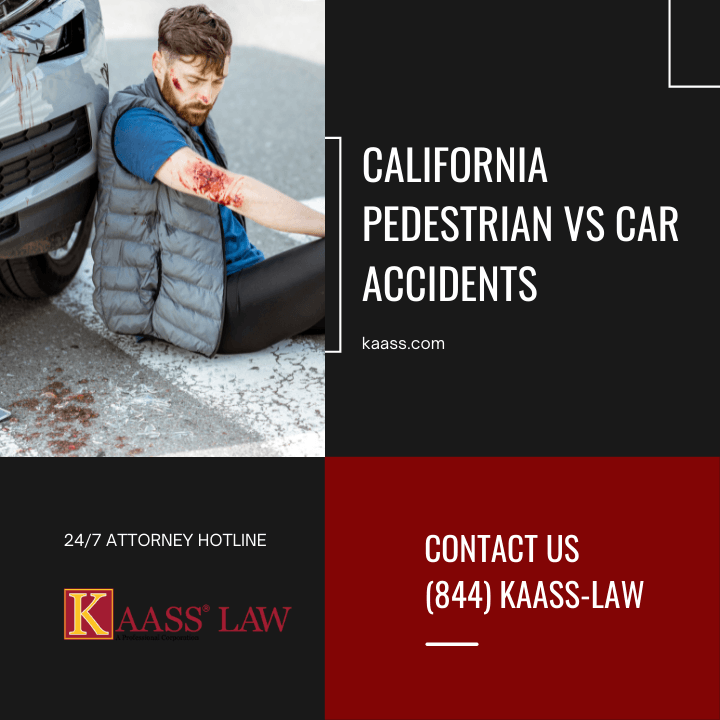
Pedestrian vs vehicle accidents occurs far often than one may believe, especially in Los Angeles. California has several right-of-way laws designed to protect pedestrians and may serve to show that a driver is liable for an accident.
CVC 21950(a) provides that "the driver of a vehicle shall yield the right-of-way to a pedestrian crossing the roadway within any marked crosswalk or within any unmarked crosswalk at an intersection, except as otherwise provided..."
In order for an injured pedestrian to recover in a personal injury lawsuit they must prove:
An experienced Glendale personal injury lawyer can evaluate the facts and circumstances of a case and help recover for damages such as:

Car accident claims involving left turn in California often involve numerous factors in determining fault or liability. Under California Vehicle Code § 21801 (a) The driver of a vehicle intending to turn to the left or to complete a U-turn . . . shall yield the right-of-way to all vehicles approaching from the opposite direction which are close enough to constitute a hazard at any time during the turning movement, and shall continue to yield the right-of-way to the approaching vehicles until the left turn or U-turn can be made with reasonable safety. Vehicle Code 21801 (a) also applies to left turn motorcycle accidents. Accordingly, California Civil Jury Instructions (CACI) outlines a “hazard” exists if: "any approaching vehicle is so near or is approaching so fast that a reasonably careful person would realize that there is a danger of a collision [or accident]." In other words, the driver who is attempting to make a left turn must ensure that no oncoming vehicles are close enough to be a hazard before he or she proceeds across each lane the driver of a vehicle will yield the right of way, until the turn may be made with reasonable safety.
Uber’s rideshare policy isn’t applicable for accidents that take place before a driver accepts a passenger, since Uber considers drivers contractors rather than employees. Consequently, they are not responsible for what happens while the driver isn’t on duty.
Once there is a ride request from a passenger and the driver accepts it, this puts the driver in “on duty” status and Uber’s insurance coverage starts. But in case the driver gets in an accident before he picked up the passenger, it follows that the passenger would have to cancel the ride. This adds a layer of difficulty when claiming the insurance coverage.
The third period is the easiest one to claim insurance coverage from Uber. The passenger is in the Uber car, the driver is “on duty” and the Company must cover whatever happens during this period. Consequently once the driver has been paired with a passenger and after the passenger has entered the Uber car, the company is required to carry a $1 million liability insurance policy. Uber provides its drivers with $1 million of uninsured and underinsured motorist bodily injury coverage. It also provides comprehensive and collision coverage with a $1,000 deductible as long as the driver has collision coverage on his personal auto insurance policy. California law requires the driver to be covered by an auto insurance policy at all times. But since the TNC can help meet that requirement, not all rideshare drivers in California need to purchase rideshare insurance for driving legally. But, the driver may want to purchase an individual rideshare policy which will let to maintain some coverage, such as comprehensive, collision and medical payments, during the First period. Otherwise, the driver would have to pay the costs himself if he is injured or the vehicle is damaged in that period.
It is in your best interest to consult with a Los Angeles Uber accident lawyer about your claim before speaking with Uber or an insurance adjuster. This way you will have more leverage in settlement negotiations with Uber and Uber's insurance adjusters to get the compensation you deserve rather than getting lowball settlement offers. If you or a loved one have been injured in an Uber or Lyft accident we invite you to get in touch with our office. We are available 24 hours a day, 7 days a week.
[video width="1280" height="720" mp4="https://kaass.com/wp-content/uploads/2019/12/Uber-auto-insurance-coverege.mp4"][/video]
CO device is designed to detect carbon monoxide and produce a distinct audible alarm. Carbon monoxide device provides a vital, low-cost and highly effective protection against carbon monoxide poisoning. It can be battery powered or plug-in devices with battery backup. The detector must be certified pursuant to the requirements of Underwriters Laboratories Inc. (UL) and the American National standards Institute (ANSI).
According to California’s Building Code Carbon Monoxide devices are required be installed outside of each separate sleeping area, however for maximum security the State Fire Marshal’s Office recommends to have a CO detector in each sleeping room. CO devices are also required to be installed in garages, basements and on each level of a multi-level home. In hotels, motels, and boarding houses the device must be placed in a sleeping unit that has a fuel-burning appliance. Because Carbon Monoxide is lighter than air and can be found with warm, rising air, detectors must be placed on a wall about five feet above the floor. The detectors can be placed on the ceiling far from a fireplace or flame-producing appliance.
Health and Safety Code Section 17926.1 particularly applies the requirements of the Act to landlords who rent dwelling units to tenants. According to the Act, CO devices shall be operable when the tenant takes possession of the unit. Landlords can enter units for purposes of maintaining or installing CO detectors with notice pursuant to California Civil Code Section 1954. Tenants are required to inform the landlords if the CO device is deactivate or is not operating properly. In case CO device or its batteries were unplugged or removed and the owner was not informed, the owner is not in violation of the law.
Violations of Carbon Monoxide Poisoning Prevention Act can lead to a maximum fine of $200. However property owners will be given a thirty-day notice to correct as a chance to avoid the fine.
Usually the process of filing a workers’ comp claim in California is the following:
According to Labor Code Section 5400 employee must report about the injury to his employer in writing within 30 days of its occurrence to qualify for worker’s compensation benefits. However, according to Labor Code Section 5402 in case the employer obtains information about the injury in some other way (for example from the employee’s supervisor) it is equivalent to written notice. In case the employee failed to report the employer in 30 days he will still be eligible for the recovery unless the delay caused significant negative consequence for the employer.
The insurance company has 90 days for accepting or denying the claim. In case they don’t’ inform the employee of anything within 90 days then the claim is presumed to be accepted.
The insurance company might deny the claim in case:
After learning that the claim is denied the employee is entitled to see a Qualified Medical Evaluator for getting an additional opinion. This is an impartial doctor who is reviewing workers’ compensation claims. In case after the independent evaluation the employee still disagrees with the employer or insurer about a compensation benefits decision, including the claim denial he can file a Declaration of Readiness to Proceed with the Worker’ Compensation Appeals Board (WCAB) within one year of his injury. The employee must serve this form on the insurance company and include a proof of service form. The Appeals Board will hold a hearing and make a decision on his claim.
If a worker is injured and if the employer was not properly insured about the worker’s injury, California’s Uninsured Employer’s Benefit Trust Fund (UEBTF) will step into the place of the insurance company to pay worker’s compensation insurance benefits. The UEBTF will then attempt to recover the money from the illegally uninsured employer.
Some of the common injuries that gym accidents can cause:
Gym owners must use reasonable care to discover any unsafe conditions; they are also responsible for fixing dangerous conditions and warn the gym members about those dangers. In case a property owner is unable to fix the dangerous condition he must put up a notice or warning of the hazard. A person injured in fitness center may be able to recover damages for medical bills, hospital bills, physical or occupational therapy, medical supplies, lost wages, pain and suffering, lost earning capacity, punitive damages and property damage.
The more popular legal defenses that fitness facilities such as LA Fitness or 24 Hour Fitness may use to defend gym accident lawsuits include the following defenses.
Assumption of risk is a legal defense that makes liable a person who engaged in strenuous physical activity. The gym owners can prove that the victim assumed the risk of injury, knew he could get hurt at the gym and chose to join anyway.
Generally, most gyms and fitness facilities require their members to sign a waiver of liability. While, others gyms or fitness centers may post disclaimers that all members are working out at their own risk.
Moreover, gyms generally include a release of liability waiver within their membership contract which depending on the language ultimately releases the gym and its employees from liability in the event the member suffers an injury and wants to file a personal injury lawsuit against the gym. However, a gym and fitness facility can not completely reveal themselves from absolute liability. The skilled Glendale personal injury attorney at KAASS LAW have been able to successfully sue and recover money damages for injuries suffered at a fitness facility with the existence of release of liability waiver.
In California a victim can sue a fitness center or a gym in California for suffering an injury due to::
As such, a release of liability gym waiver can be considered void if it is overly broad or violates public policy.
In some cases gym accidents are caused by a defective piece of exercise equipment. A part of workout equipment can break and cause a person to lose control of the equipment and suffer an injury.
According to California's products liability law, the company who manufactured, designed, or sold the defective workout/fitness equipment product is liable for caused injuries. The injured person does not have to prove the company was negligent. In product defect cases, strict liability can be imposed for manufacturing defects, design defects, and failure-to-warn defects.
Have you been injured due to a gym accident in California? If so, we invite you to hire our dedicated Los Angeles gym accident lawyers today. You can rely on our experienced lawyer to carefully analyze the facts of your case to prove the facts necessary.
To schedule a free consultation with one of our personal injury lawyers, call Kaass law today at (310) 943-1171 or send us an email through our online appointment form.
The AB 1871 bill makes Turo liable for insurance instead of your personal coverage. Once the $1M insurance limit is exceeded, Turo becomes responsible. Turo must also indemnify you in any civil action, replacing your personal insurance unless the incident results from willful negligence. Turo’s Third-Party Automobile Liability Insurance includes property damage claims and Uninsured/Underinsured Motorist (UIM/UM) coverage.
California Turo Car Rental Accident Lawyer
If you’re involved in a peer-to-peer car rental accident in California, contact our experienced Turo car rental accident lawyer. Our attorneys have extensive experience securing significant settlements from insurance companies known for denying claims. We’ll thoroughly review your case to gather the necessary evidence. To schedule a free consultation, call KAASS LAW at (310) 943-1171 or contact us via our online appointment form.
If you were involved in an auto accident using a Turo peer-to-peer rental car, you will be charged a deductible, typically from $1,000 to $3,000 if the company needs to file a claim.
Participation in any peer-to-peer sharing apps comes with risks, especially in your renting your car out. The most obvious risks is potential damages to your vehicle, fighting with the insurance companies to receive a fair market value for your car in the event. Further, if you don’t notify your insurance company that you’re renting out your car and or your participation in a P2P car-sharing you may potentially be at risk of having your policy canceled. Thus, its best to check with your insurer before placing your car for rent on a car-sharing app.
If you rent your car through a PTP car sharing App such as Turo, generally your car will not be covered unless you have a commercial auto insurance police. Personal auto insurance policies are now being written to specifically exclude peer car-sharing apps from coverage. While, companies such as Uber or Lyft provide liability insurance coverage to accommodate peer-to-peer car sharing it is best you check if the P2P car sharing company you are participating offers such coverage. Turo, works a bit different than Uber and Lyft liability insurance claims.
Turo's Primary liability insurance coverage covers the car owner up to $1,000,000; protection for physical damage to your car is provided without deductible for the Premium and Standard host protection plans, and with a $3,000 deductible for the Basic plan.
Under Turo's premium and standard liability insurance plans, car owners receive the actual cash value of their car or up to $125,000, in the even the vehicle is deemed as totaled. Coverage is not available for hosts who are not utilizing a Turo protection plan. More over, primary liability coverage up to $1,000,000; no protection for physical damage to your car.
Per Turos Premium Plan haves insurance liability coverage up to to $1,000,000. Physical damage to the car covered up to the actual cash value of the car. No deductible for the supplemental liability coverage. Turo's premium liability insurance insurance is secondary to any other insurance the renter may have, however as mentioned, often times your own insurance will exclude coverage for car-sharing services. Lastly, once you’ve exhausted your own insurance for physical damage, your out-of-pocket expense is limited to $500.
Liability coverage for owners who rent their car out using Turo are covered up to a combined single limit of $1,000,000 for liability. Coverage includes personal liability for the renter, third-party liability for passengers and other affected parties, and third-party property damage arising from a car accident. Comprehensive and collision coverage The collision coverage provided protects the owner's vehicle in the event of an accident. Liability insurance coverage applies for the duration of each rental, from start to finish, and includes liability, collision and comprehensive.
If you were involved in an peer-to-peer sharing auto accident in California we invite you to hire our dedicated Los Angeles Peer-to-peer accident lawyers today. Our skilled accident attorneys leverage their considerable experience into obtaining significant settlements from insurance companies who are known for being reluctant to pay out on claims. You can rely on our experienced lawyer to carefully analyze the facts of your case to prove the facts necessary.
To schedule a free consultation with one of our peer-to-peer sharing app lawyers, call Kaass law today at (310) 943-1171 or send us an email through our online appointment form.
KAASS LAW, 815 E Colorado St #220, Glendale, CA 91205, (310) 943-1171
Periods 2 and 3: Once you've been paired with a passenger and after they've entered your vehicle, the rideshare company, such as Uber or Lyft, are required to carry a $1 million liability insurance policy in California. This covers you and your passengers during Periods 2 and 3. Depending on the company, it may offer additional coverage during these periods as well.
If an Uber driver is involved in an accident with a passenger in the car, Uber and Lyft’s insurance will provide liability and collision coverage. However, they often won’t cover things like rental cars, lost wages, and medical expenses. Thus, It is in your best interest to consult with a Los Angeles Uber accident lawyer about your case before speaking with Uber or an insurance adjuster. With professional legal assistance, you will have more leverage in settlement negotiations with Uber and get the compensation you deserve.
A Los Angeles Uber accident lawyer can help Uber drivers recover damages for the following:
If you were involved in an Uber or Lyft accident in California, we invite you to hire our dedicated Los Angeles Uber and Lyft accident lawyer today. Our skilled Uber and Lyft accident attorneys leverage their considerable experience into obtaining significant settlements from insurance companies that are known for being reluctant to pay out on claims. You can rely on our experienced lawyer to carefully analyze the facts of your case to prove the facts necessary. To schedule a free consultation with one of our rideshare lawyers, call Kaass law today at (310) 943-1171 or send us an email through our online appointment form.
There are two types of damages that are recoverable in California personal injury cases, which include special damages and general damages. Special damages are those damages that are financial in nature, such as hospital and medical bills or lost wages. On the other hand, general damages are those that are non-financial losses, including pain and suffering, loss of consortium, and emotional distress.
The statute of limitation for bringing a pedestrian vs car accident is 2 years from the date of the accident. However, claims involving government tort or injury involving a government entity, such as a car accident with a government city vehicle, requires the injured party to first file a claim with the appropriate governmental agency within 6 months from the date of the accident. Finally, depending on the outcome of the claim, the claimant will then have either 6 months or two years to file suit. If you fail to follow the guidelines for the statute of limitations, you may lose your right to file a claim.
California Code of Civil Procedure section 335.1 provides, an injured pedestrian has two years to file a claim against those who may be liable for their accident.
Our personal injury attorneys specialize in various personal injury matters including complex personal injury cases, government torts specifically related to auto accidents, motorcycle accidents, left turn motorcycle accidents, truck accidents, multi-car accidents, which involve a government vehicle such as Metro Bus, fire truck, U.S Postal Service, and Water & Power Truck. If you have been involved in an accident involving a Government vehicle, give our office a call at (310) 943-1171 for a free consultation. [contact-form][contact-field label="Name" type="name" required="true" /][contact-field label="Email" type="email" required="true" /][contact-field label="Website" type="url" /][contact-field label="Message" type="textarea" /][/contact-form]
[video width="1280" height="720" mp4="https://kaass.com/wp-content/uploads/2020/02/California-Pedastrian-Vehicle-Accident.mp4"][/video]
The location of the property damage to the vehicles involved in an accident can help determine how the accident may have occurred, as well as which driver was at fault. Below is an example of determining fault in left turn accidents by assessing property damage.
The you're driving straight and someone made a left turn in front of you scenarios, often times the driver going straight will attempt to swerve to the right to avoid a collision. In this instance, if the damage is located on your left front corner or left front side, that can indicate that you tried to avoid the accident by swerving away. Finally, if the property damage to the other vehicle is located to the right front corner, this likely evidences that the other driver was not paying attention and disregarded and or cut off oncoming traffic. However, if the property damage to the turning car is to the right rear corner, that is evidence that it may have been the fault of the driver going straight and likely may have not been paying attention.
While, every driver is required to yield before making a left, if the person hanging the left made a reasonable right of way yield before turning. Therefore, approaching on-coming traffic then can not speed up, run a red light, or otherwise allow the left turning driver to pass safely. It should be noted that the further the left turning car gets across the oncoming traffic lane, the more likely the driver that is going straight will be found at least partially at fault for not slowing down, and attempting to avoid the collision.
The term "Negligence" is a term used to characterize conduct that creates an unreasonable risk of harm to others. In order to prove negligence you must prove:
In theory both drivers can potentially be partially responsible for causing the left turn collision. For instance under the comparative negligence theory a party may contribute to an act of negligence or be comparatively negligent for his or her own injuries.
Recovery for damages in comparative negligence auto accident claims are reduced by the percentage of fault of each party. If you were found 30% at fault for causing the left turn accident, your settlement and or judgement will be reduced by 30% of the entire dollar amount settled or awarded. If you are in need of legal assistance, our Glendale auto accident attorneys at KAASS LAW can help you through every step of the way.
We provide 24/7 auto accident accident hotline available for victims involved in various accidents including truck accidents, pedestrian accidents, accidents with government vehicle, and more. Our auto accident attorneys in Glendale, CA, charge our clients' zero upfront legal fees. You pay nothing until and unless we successfully secure a settlement or judgement. Our attorneys speak English, Spanish, Russian, Armenian, and French.
[video width="1280" height="720" mp4="https://kaass.com/wp-content/uploads/2018/09/Left-Turn-Auto-Accidents-California.mp4"][/video]
Address: 701 North Brand Blvd. Suite 100 Glendale, CA 91203 Telephone: (310) 943-1171 Email: [email protected] Get Directions on Google MapsOur lawyers in Glendale, Los Angeles, California, are dedicating to providing the highest quality legal services for all of our clients.
KAASS LAW, 815 E Colorado St #220, Glendale, CA 91205, (310) 943-1171
KAASS LAW is authorized to practice law in California. The above content is intended for California residents only. This content provides only general information which may or may not reflect current legal developments. KAASS LAW expressly disclaims all liability in respect to actions taken or not taken based on any of the contents of this website. The above content DOES NOT create an attorney-client relationship. KAASS LAW does not represent you unless you have expressly retained KAASS LAW in person at the KAASS LAW office. KAASS LAW helps clients in: Los Angeles, Burbank, Hollywood, Glendale, Van Nuys, North Hollywood, Studio City, Highland Park, Eagle Rock, Sunland, Tujunga, Sylmar, San Bernardino, La Crescenta, La Canada, Beverly Hills, Westwood, Santa Monica, Brentwood. Pacoima, Montebello, Commerce, Alhambra, Downey, Bell, Maywood, Walnut Park, Vernon, Lynwood, Echo Park, Silverlake, Mission Hills, Northridge, Woodland Hills, Encino, Canoga Park, North Hills, Porter Ranch, Chatsworth, Reseda.