
Recently, Illinois has taken significant measures towards restricting influence from outside investors in the legal world. According to reports, Governor JB Pritzker has signed legislation that ultimately limits the ways that private equity groups, hedge funds, management services organizations (MSOs), and other non-lawyer entities may be able to financially participate in specific law practices. Understanding this topic and how this specific law may influence and affect the legal industry is crucial for the future.
Private equity firms usually invest in businesses with the expectation of increasing their value and eventually generating a financial return.
Traditional law firm structures often create barriers to outside investment. Rules modeled on professional-responsibility principles usually restrict lawyers from sharing legal fees with nonlawyers and limit nonlawyer ownership or control. One approach attracting attention has been the management services organization, or MSO.
Under an MSO arrangement, the legal practice remains lawyer-owned while a separate business may provide administrative services including but not limited to the following.
In addition, outside investors may also invest in that separate entity rather than directly purchasing the law firm.
Illinois HB 5487 adds restrictions intended to prevent certain outside entities from exercising control over lawyers and their practices. Under the legislation, the following may not be able to interfere with an attorney’s professional judgment when representing a client.
The law also limits covered outside entities from exercising specified forms of control involving client records and employment decisions involving attorneys and legal staff. In addition, it restricts covered entities from charging law firms fees that are directly or indirectly based on the firm's legal fees, revenue, or profits.
These requirements are especially relevant because financial arrangements based on law firm revenue could potentially give an outside organization a significant economic interest in how a legal practice works.
One of the central issues surrounding outside investment in law firms is attorney independence. Lawyers have professional responsibilities that are different from those of ordinary commercial businesses. Attorneys owe duties to their clients, including confidentiality, loyalty, competence, and independent professional judgment.
An outside investor may have financial objectives related to growth, efficiency, revenue, or investment returns. As a result, lawmakers and legal organizations have raised concerns about what could happen if investors gain enough influence to affect legal decisions.
Attorney-client confidentiality is an important part of the legal system. Clients usually provide their lawyers with sensitive information, including details about their:
Illinois' legislation specifically restricts covered outside entities from controlling or determining the content of client records.
Law firms usually work with technology providers, consultants, marketing agencies, litigation-support companies, and other outside vendors. These relationships can provide operational benefits, but firms still must consider their professional responsibilities when determining how client information is stored, accessed, and managed.
The issue may be especially relevant to personal injury practices because many operate on contingency-fee arrangements and may require significant capital for advertising, staffing, litigation expenses, technology, and case development.
According to reports on the Illinois legislation, its coverage includes law firms below specified revenue thresholds or firms getting more than half of their revenue from contingency fees over a three-year period.
As a result. owners considering an MSO, outside investment arrangement, sale, merger, or succession strategy should carefully evaluate both the financial terms and applicable professional-responsibility requirements.
Law firm owners considering outside investment or a restructuring arrangement should review the applicable law and professional-conduct requirements before entering into an agreement. Important considerations may include who controls the legal entity, how an MSO or outside business is compensated, who controls hiring and termination decisions, whether outside parties can access client information, and how decision-making authority is assigned.
Developments involving private equity and law firm ownership demonstrate how quickly the business environment surrounding legal practices can change.
KAASS LAW understands that law firms are both professional practices and operating businesses. Attorneys and firm owners considering the following may benefit from carefully reviewing legal guidelines.
Depending on the circumstances, KAASS LAW may assist with the following.
These are crucial and often necessary in the legal world. Call KAASS LAW today for a confidential consultation with our qualified personal injury attorneys and to learn more.

Defective product injuries are more common than you might think. Before the general public utilizes a product, manufacturers need to make sure it is safe. Unfortunately, substandard products cause hundreds of injuries and fatalities every year. Defective products don't function properly and may not have the necessary safety features. Let's review some of the typical injuries brought on by faulty items in more detail:
The pharmaceutical medications that suppose to help you feel better may wind up doing even more harm. There may be long-term side effects from some medications that aren't part of the label. Long-term use of some medications can harm the heart, liver, kidneys, brain, or other organs.
Motorcycles, bikes, and scooters are more prone to crash and result in severe head injuries if they are not built properly. Even if the user is wearing a helmet, it might not be sufficient to shield the user's head from impact. Cognitive challenges, speech and language disorders, emotional problems, and other complications can result from severe head trauma. Those who sustain head injuries might not be able to go back to work and might need long-term therapy.

Anyone can sustain an injury in various circumstances, such as car accidents, riding a horse, swimming in a pool, and even smoking an e-cigarette. When such situations happen, you usually think of how it is possible to receive compensation for such injuries. Some scenarios can also lead to the criminal responsibility of the defendant. However, it is essential to get compensation for your recovery expenses rather than see the defendant behind bars. To have a successful claim and receive as much compensation as possible, you shall imagine the lawsuit process and be ready for it. There are several steps you shall undertake after sustaining injury. Let's examine those steps and the lawsuit process as a whole.
To prove a certain size of damages and seek the compensation you shall be able to prove the link between the actions of the defendant and your injury. Collecting evidence immediately after the injury happened is a key to success in the process.
Fixed evidence in the place where the accident happened. This can be done by taking pictures of the place of the accident, and collecting details of witnesses if there were any. If there was a car accident, it is essential to maintain the evidentiary value of the car.

A minors' compromise and release hearing is required by California law if a child under the age of eighteen is injured and receives a monetary settlement from the at-fault party. This means that a guardian must be appointed by the court unless the child is legally emancipated, a judge must approve the settlement for your injured child, and the settlement funds must generally be deposited into a blocked account in any FDIC-insured bank, trust company, savings and loan associate, or similar financial institution located in the state of California, until the child is eighteen years of age. The settlement funds can also be invested in a vehicle like an insurance annuity contract (single-premium deferred annuity). Alternatively, you can have a portion of the funds deposited in a bank and a portion of the funds deposited in an investment vehicle. Please see other articles on this website for more information, or your child's injury lawyer can explain which method is best for depositing settlement funds.
According to California Probate Code Sections 2504,90 3500,91 3600,92 and California Code of Civil Procedure Section 372.93, an enforceable settlement of a can only be consummated with California court approval. The whole point of a court-supervised settlement for injured minors in California is to: Appoint a guardian to assist the minor child in monitoring his or her settlement funds.

Cycling is a popular and eco-friendly choice in California, offering benefits like avoiding traffic, improving fitness, and reducing your carbon footprint. It also serves as an alternative for people who want to avoid the dangerous combination of alcohol or drugs with driving. While bicycles are not motor vehicles under California law, cyclists must still follow specific regulations, including those about cycling while intoxicated. Understanding these laws is crucial for anyone planning to ride their bike under the influence of alcohol or drugs.
In California’s cycling laws, a bicycle is any human-powered vehicle with one or more wheels, typically propelled by pedaling. It includes bikes powered by gears, chains, or belts. However, motorized bikes or mopeds are not considered bicycles. These bikes are subject to the same DUI laws as motor vehicles, so if you're riding one, you must follow the same alcohol and drug restrictions as drivers.
According to California Vehicle Code (CVC) Section 21200.5, a refers to any public road or street, but not freeways. Bicycles are generally not allowed on freeways. Cyclists must stay on permissible roads and avoid restricted areas like freeways.

The number of uninsured drivers in the United States is believed to be around 32 million. This figure varies a lot depending on where you are in the country. This is sometimes determined by the cost of auto insurance. Other times, it's due to a lack of knowledge about which vehicle insurance company to choose.
A variety of factors go into determining the cost of car insurance. It's also not uncommon to receive different quotes from different businesses. These can include the following:
When looking for vehicle insurance, there are a few terms you should be aware of. The phrase "premium" is one that you may come across. Simply put, this is the amount you must pay the insurance company to cover your vehicle. Deductible is another phrase for the same thing. You must pay this amount before the insurance company will pay out. You can reduce the overall cost of your insurance by increasing your deductible.
One of the more confusing policies is comprehensive insurance. This sort of insurance appears to cover all parts of an accident, however, it doesn't. In actuality, it only protects a vehicle against harm caused by something other than another vehicle. This includes the following:
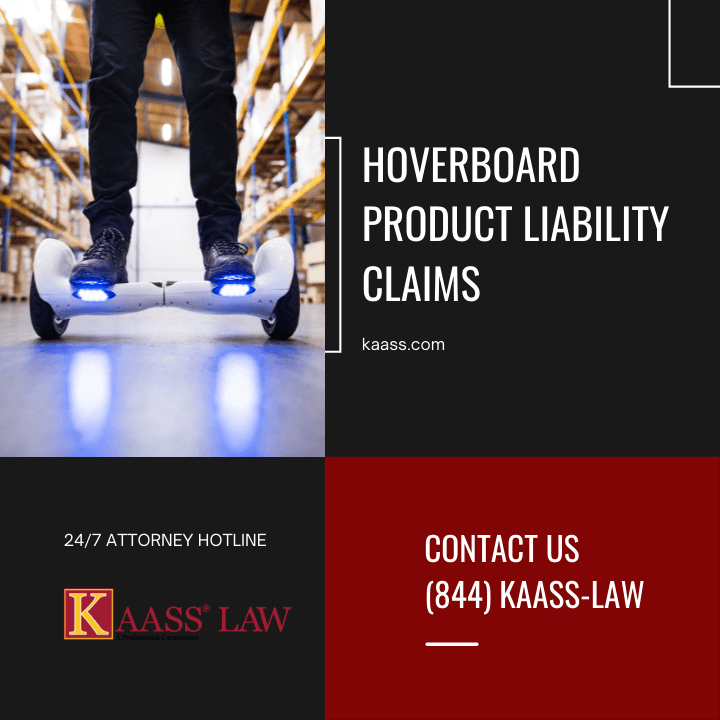
Started back in 2013, hoverboards have been in public for some time now . They began to quickly gain fame as most teenagers started purchasing the product. However, many problems arose during that time. Let's discuss Hoverboard Product Liability Claims.
A hoverboard is a way of portable transport, made to ride with only feet. There is a common term for them, which is "self-riding scooters." Hoverboards came to be the "next big thing" at the time of their release. With it being technologically so active, there came along a variety of issues with the product.
With the hoverboard being the new portable way of transit, technological reliability is highly dependent on during the use of this product. An example of a defect in technology included the hoverboard coming to an immediate stop. Now, this may not sound so bad, however, the damages it led to have been far more serious. With further elaboration, let's discuss how the hoverboard is driven. Riding a hoverboard, you must place your two feet in the two given spots. Being able to move the hoverboard forward or backward, you must lean forward and backwards, respectfully. To turn in direction, the body weight must transfer to one leg while the other maneuvers the opposite leg to start turning. This applies to both sides while you are turning. So, if someone were to be riding the hoverboard and going in a forward motion and suddenly the hoverboard comes to an immediate stop, there are a countless number of physical damages that may arise in the midst of this accident. Technology crashing may also lead to a loss of control.

California is one of many states that are considered car-dependent. The kind of offer of lending your vehicle to another person is quite common. However, such an innocent act may result in accidents and injuries, given the circumstances. A typical question always pops up when you're in this situation: am I liable for this, even though I wasn't the driver? The state of California also recognizes a legal doctrine called negligent entrustment. Applying to the law, this can potentially hold the vehicle owner liable for damages due to permitting someone else to drive their vehicle. At KAASS LAW, we understand and help resolve these complex cases with our expert team. The following will aim to shed light on negligent entrustment in California, and we can offer legal services, given the opportunity.
Negligent entrustment means that you can be liable and legally responsible if you lend your var to someone you knew or should have known potentially driving negligent and or recklessly. Usually negligence falls under the person that initiated the act. However, this will go against your negligent decision to entrust the vehicle to an unfit driver.
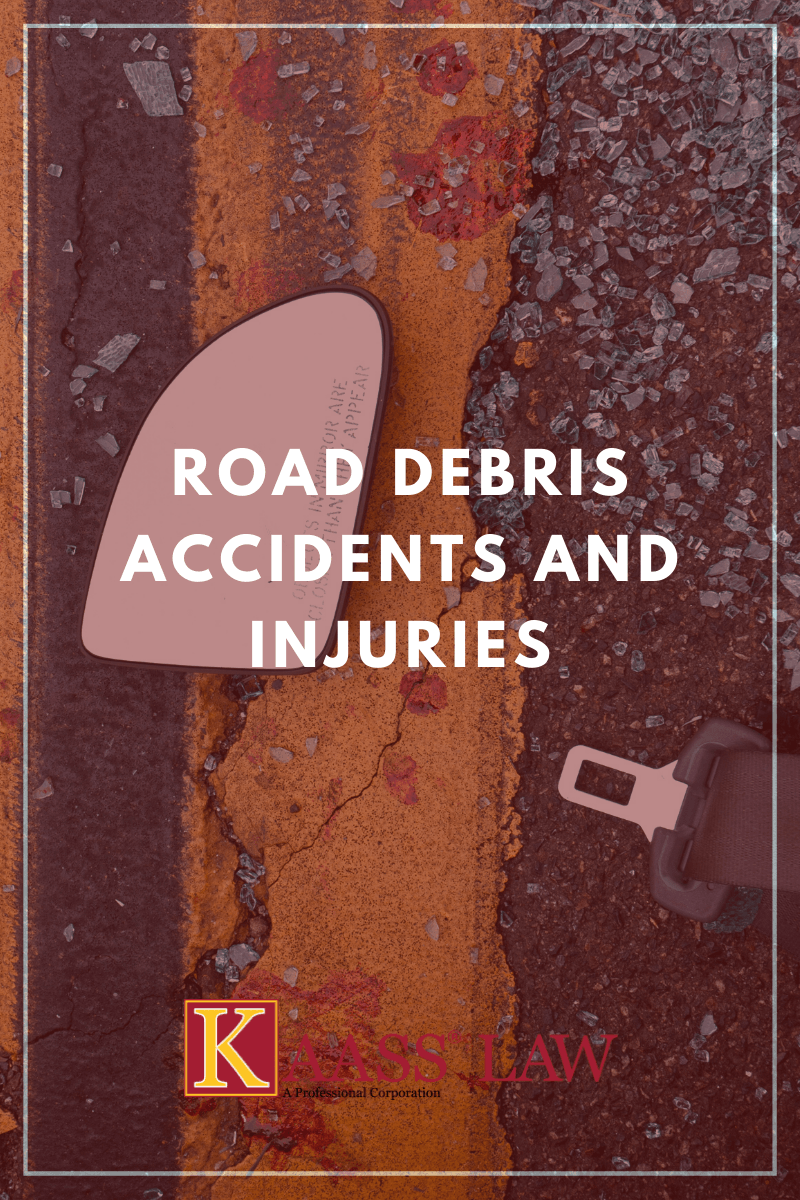
Road debris accidents occur when objects that don't belong on the road cause harm. Road debris can result from any number of sources, both vehicular and non-vehicular. Examples include:
Road debris is hazardous to drivers, cyclists, and even pedestrians. Accidents caused by road debris usually happen when a driver hits the object itself, or when a driver swerves to avoid the object and hits another vehicle or another object.
A few questions to ask that can help determine who is at fault for a road debris accident are:
When an object falls off of a vehicle and into the road, the driver often does not notice and immediately drives away, making it difficult to assign blame to the party who dumped the debris.
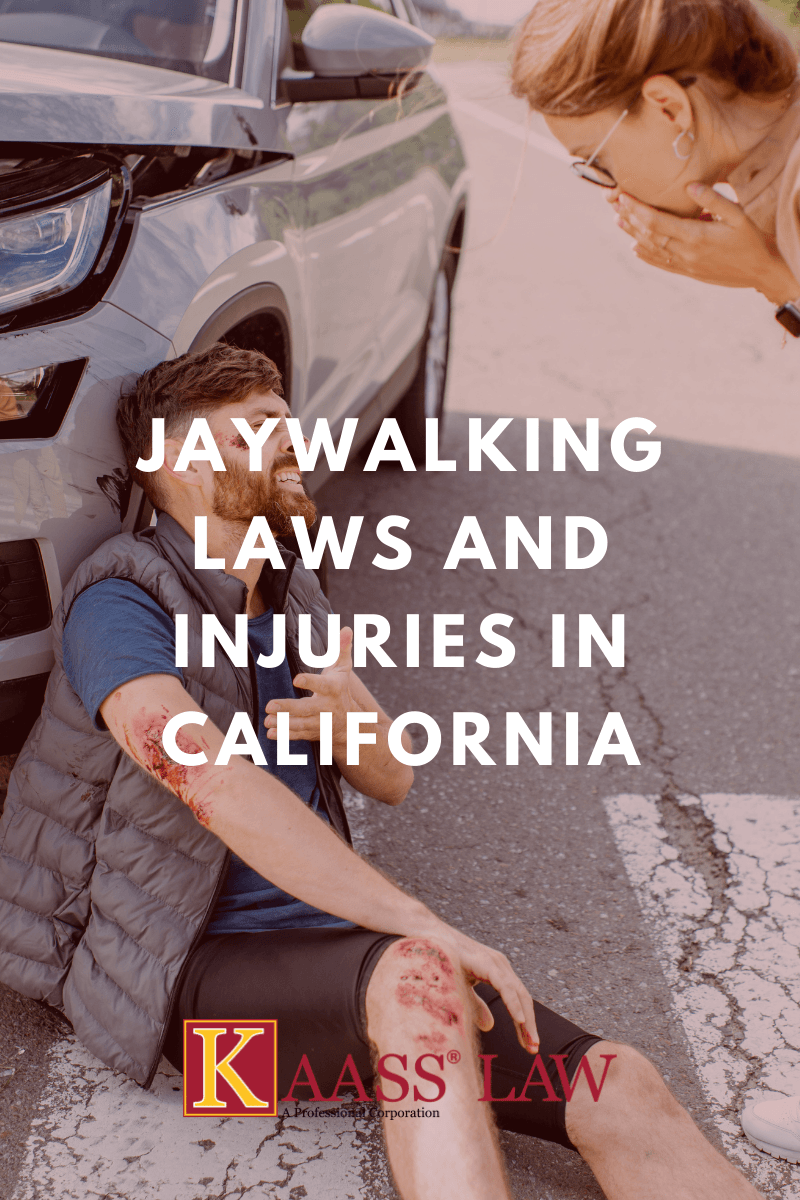
California Vehicle Code (CVC) 21955 states that “between adjacent intersections controlled by traffic control signal devices or by police officers, pedestrians shall not cross the roadway at any place except in a crosswalk.”
Jaywalking refers to when a pedestrian crosses a road with marked crosswalks or a marked intersection but does so from a point other than the designated crosswalk. Jaywalking laws protect both pedestrians and automobile drivers from avoidable car accidents. Law enforcement officers are unlikely to arrest you for jaywalking, but they will likely issue a ticket if they see you. In California, jaywalking is an infraction, and a first offense will cost you a minimum fine of $196. The DMV will not assess points onto your driving record.
As a pedestrian, it is your duty and your responsibility to keep yourself safe. In addition to abiding by jaywalking rules, here are some safety tips you can follow to ensure your safety when walking:
The likelihood of home appliances catching fire increases if the wiring is defective, such as in toasters and curling irons. The individual using them risks suffering from serious burns as a result. Burns may result in extreme pain, an infection, permanent disfigurement, and other problems.
Broken bones can result from a defective product. A child might sustain a broken arm or leg, for instance, if the high chair in which they are sitting breaks. Broken bones can be excruciatingly painful and take a very long time to heal. A broken bone may require surgery if it has many fractures.
When a medical discovery may treat a disease, lengthen a person's life, or reduce pain, a lot of people are in favor of it. But the market is overrun with drugs that are marketed as a kind of illness prevention or as a form of illness protection. These new medications are typically made for younger people to help them live healthier lives. Unfortunately, a rise in drug recalls has occurred in recent years due to the risks that some of these medications pose. A personal injury legal firm in Atlanta is aware of the significant effects that drug-related injuries can have on a victim.
A significant problem with compounding pharmacies and the contamination of materials leading to a tainted product and customers being harmed if the defective product is consumed is one cause for the increased surge in recalls over the past several years. The FDA mandates that products include a black box warning if they are causing substantial negative effects yet are still on the market. Sometimes, these medications by themselves raise a warning sign for actual, possible negative effects. Another approach to stay informed about a new drug regimen that your doctor may have given to you is to regularly check the FDA website for the most recent recalls.
Even before you speak with a personal injury attorney, consider the following actions if you sustained a serious injury from a negligently caused accident:
Did you or a loved one sustain an injury because of a defective product? If so, our experienced attorney will assist you to compensate your injuries. Defective product liability is one of our many practices. Feel free to contact our office at 310.943.1171.
Receiving medical treatment as soon as possible is not only good for your health and quick recovery of damages. This is also essential for documentation of your visit, professional assessment of your health conditions, and stating that the accident is the cause of your injuries.
The reports immediately after the accident happens, have a big value in your evidence set.
In addition, don't forget that you have limited time to file a lawsuit. The terms of a statute of limitations differ based on the type of accident, however, the general term is two years. If you don't react actively and undertake the necessary steps, you'll not be able to further recover from your damages.
You do not immediately go to court if you sustain injury. Sometimes it is possible to receive compensation even after filing a lawsuit. For this reason, you can file a demand letter to the liable party or the insurance company asking for compensation for your damages. If you are denied, you are free to file a lawsuit with the court.
Without having legal standing, you'll not be able to file a lawsuit. You have legal standing when:
Particularly, if the amount of your claim:
The lawsuit is a formal claim for damages that states your intent to recover compensation from the defendant who is at fault for the accident. The lawsuit contains evidence of such fault and the direct link with your injuries. There is a legal obligation to respond to your claim. In case the defendant does not respond to your claim, the court decides if the defendant is accepting his fault for causing damages. In this case, the court will automatically hold the judgment in favor of you.
The Discovery stages of proceedings allow the parties to gather relevant evidence and information from each other. Depositions are utilized which be used in combination with the first findings gathered.
Most of the cases end before going to trial. Parties are more interested in ending the case sooner without further trial. A fair settlement is a usual solution to injury cases. However, sometimes you will not be satisfied with the offer and decide to continue the process. In this case, just note that more time (approximately more than one year) and expenses will be spent on the settlement of your injury case. If you or your loved one wants to file a personal injury lawsuit, we invite you to contact KAASS Law at (310) 943-1171 for a free consultation on your case and further assistance.
In California, the court process is the best way to approve and monitor a bodily injury settlement for a minor. After the court approved their child’s injury settlement and deposited the funds into a bank account, parents approached me to petition the judge for an early release of part of the funds that didn’t directly benefit the minor. Some parents forget that California’s court process exists to protect the child’s interests because the settlement funds belong to the child. Courts will allow an early release of funds, but they closely scrutinize such requests and require that the money benefit the minor directly.
Courts supervise minor settlements in California to ensure that children receive full protection under the law. Judges appoint guardians, evaluate the fairness of settlement terms, and oversee fund distribution. This process ensures that parents, insurance companies, or other parties do not misuse the minor’s funds. The courts take an active role in protecting a child’s financial interests until they turn eighteen. Without this safeguard, many minors could lose access to money that was rightfully theirs. The legal system prioritizes the child’s well-being above all else and aims to prevent financial exploitation or irresponsible use of settlement proceeds.
At a minor’s compromise hearing, the court reviews all settlement documents and hears from the guardian and attorneys involved. The judge examines the proposed settlement amount, attorney fees, and any medical liens or expenses. If the judge finds the settlement fair and in the best interest of the child, they approve it. Once approved, the funds move into a blocked account or annuity. Parents and guardians must present clear justification for any early withdrawal requests. Judges often ask questions to ensure that the settlement truly benefits the minor. They also check that the agreement complies with California Probate Code and Civil Procedure requirements.
Parents must gather key documents and understand the legal steps before attending a minor’s settlement hearing. They should consult with a personal injury attorney to file the proper paperwork, including a petition for approval and financial documentation. Courts expect parents or guardians to fully explain how they will use and safeguard the funds. Parents should also discuss blocked account options or annuity investments with financial advisors. Courts want to see responsible planning to protect the minor’s future. Preparing thoroughly not only helps ensure a smooth court process but also builds trust with the judge, increasing the likelihood of approval.
For more information on California’s court procedures for minor settlements, visit the California Courts Self-Help Center on Minor's Compromise.
If the monetary settlement is less than $5,000, California Probate Code Sections 3611(d), 94, and 340195 have routinely allowed custodial parents to manage the settlement funds directly on behalf of their minor children, avoiding the need for court approval. In fact, all of California's major insurance carriers routinely waive minors' compromise and release hearings when the settlement amount to the injured child is less than $5,000.
Judges do not require court approval for settlements under $5,000. Judges can choose to place the minor child's funds in a blocked account with court-approved withdrawals. They may also order direct payment to the custodial parent(s).
Are you looking for an attorney to help you with your case? Look no further, Kaass Law will be able to provide you great experience, knowledge and satisfaction. Fell free to call our office at 310.943.1171.
Yes, it is illegal to cycle intoxicated in California. This law applies if you are under the influence of alcohol, drugs, or both. Under California Vehicle Code Section 21200.5 VC, cycling while intoxicated is prohibited on public roads, trails, and highways. Cycling intoxicated is considered a misdemeanor and carries penalties.
Cycling while intoxicated can impair your ability to ride safely, just like driving under the influence. If you can’t control your bicycle or navigate traffic due to alcohol or drugs, the law considers you “under the influence” and holds you accountable for your actions.
Cycling while intoxicated is a misdemeanor in California. If convicted, you face:
To secure a conviction, prosecutors must prove three key elements:
Yes, California law treats cyclists similarly to motor vehicle drivers on public roads or highways. If you're cycling intoxicated, you face the same Driving Under the Influence (DUI) laws that apply to motor vehicles. Section 21200 of the California Vehicle Code requires people on bicycles to follow the same rules as vehicle drivers, including those prohibiting intoxicated driving.
California Vehicle Code Section 21200.5 extends this provision to cycling while intoxicated. So, cyclists must understand that riding while intoxicated carries penalties similar to a DUI for car drivers.
If you’re charged with cycling under the influence (DUI), several defenses could reduce or dismiss the charges. Some common legal defenses include:
You may successfully argue that you were sober at the time of the incident. Proving your sobriety can lead to the dismissal of the charges.
The law applies only to cyclists on public roads or highways, which excludes private property. If you were cycling on private property, the law doesn’t apply.
Officers need probable cause to stop and arrest you. If the officer didn’t have a valid reason or cause for the stop, this could serve as a defense to suppress evidence collected during the arrest.
California law considers any substance that impairs your ability to ride safely as intoxicating. This includes alcohol, marijuana, prescription medications, and illegal drugs like heroin or cocaine.
Unlike DUI laws, which set a clear blood alcohol concentration (BAC) limit, there is no set baseline for drugs in your system. Therefore, any substance that impairs your ability to control your bike or ride safely could lead to a CUI charge.
For more details on cycling laws, visit the KAASS Law website.
If you’ve been arrested for cycling under the influence in California, it’s essential to get help from an experienced attorney. A skilled lawyer can investigate your case, challenge weaknesses in the prosecution’s evidence, and protect your rights.
An attorney can argue that you were sober, that you were not on a public road, or that the officer didn’t have probable cause to stop you. These defenses can reduce or even dismiss the charges against you.
To schedule a consultation or case review, contact KAASS Law at 310.943.1171.
Nothing covered by liability insurance is covered by comprehensive insurance. As a result, no medical expenses or car repairs incurred as a result of a traffic accident are covered. It also doesn't cover you if you collide with a stationary item like a mailbox or a wall. This form of coverage is optional for car owners. Comprehensive insurance is required for people who leased an automobile or took out a loan to buy one. In fact, it is frequently required by the lease or loan agreement's terms.
You are liable if you are the cause of a car collision. In terms of money, this implies you'll have to pay for the victim's vehicle repairs and medical expenses. It is also known as minimum coverage and is the most basic type of affordable vehicle insurance. There are two types of liability insurance. Depending on the laws of your state, you may be required to obtain both. These two sections address the following topics:
Keep in mind that your responsibility only extends to the victim(s) and not to you. Furthermore, you will be responsible for paying for your own medical expenses and car repairs out of pocket.
Collision coverage can be considered as an extension of comprehensive coverage. It covers your vehicle even if you are not driving at the time of the collision. If your friend is driving at the time of the accident, collision insurance would cover the damage. This motor insurance, unlike comprehensive, covers collisions with unmovable object. Collision coverage, on the other hand, does not cover any damage to other vehicles involved in the accident, nor does it cover medical expenses.
Even if you have complete coverage, there are some things your policy won't cover. Wear and tear is an example of coverage that is often not covered. You will have to pay for it out of pocket if your car is experiencing general age-related difficulties or breakdowns. If you wish to add people aside from yourself to the policy, you'll have to do it separately. That implies your policy won't cover other passengers in your car or if you're driving someone else's car. Finally, if you work for a ridesharing firm as a contracted driver, you will not be insured. Uber and Lyft, for example, have extremely stringent insurance requirements. For this, you'll need specialized company insurance.
It is always preferable to get legal assistance if you are in an accident or are involved in a car insurance claim. In the event of an automobile accident, insurance firms are instructed to decrease payments. This may result in you not receiving the compensation you deserve. Give KAASS Law a call at 310.943.1171.
Some issues with the hoverboard include:
There are several possible hoverboard product defects that can exist causing injury. There are 3 theories that a product liability lawsuit can be brought under. The 3 product liability theories include:
California hoverboard or electrically motorized board riders should be aware that there are California laws that govern its use. Some of these California hoverboard laws include but are not limited to:
If you or someone you know has been injured and think this can potentially be a Hoverboard Product Liability Claim, don’t hesitate to contact our Los Angeles personal injury attorney today at (310) 943-1171 for a free consultation and case review.
CCPC 193.8 states that: "An adult, who is the registered owner of a motor vehicle or in possession of a motor vehicle, shall not relinquish possession of the vehicle to a minor for the purpose of driving if the following conditions exist: (1) The adult owner or person in possession of the vehicle knew or reasonably should have known that the minor was intoxicated at the time possession was relinquished. (2) A petition was sustained, or the minor was convicted of a violation of Section 23103 as specified in Section 23103.5, 23140, 23152, or 23153 of the Vehicle Code or a violation of Section 191.5 or subdivision (a) of Section 192.5. (3) The minor does not otherwise have a lawful right to possession of the vehicle."
Some possible defenses to negligent entrustment include:
Additionally, one can argue that the car owner was not aware that the driver (who allegedly caused the accident) was not a reasonably safe driver due to having a clean driving record and possessing a valid driver's license.
While you can't control the actions of every driver on the road, you can take steps to protect yourself from potential negligent entrustment claims:
If you have been injured in an accident caused by someone driving a vehicle they were negligently entrusted with, or if you are a vehicle owner facing a negligent entrustment claim, it is crucial to seek experienced legal counsel. At KAASS LAW, our skilled attorneys can:
The concept and doctrine of negligent entrustment show a big key in the responsibility of the vehicle owner. By understanding this legal concept and taking action towards safety, both vehicle owners and those injured by negligently entrusted vehicles can navigate the complexities of California law. Contact KAASS LAW today for a consultation to discuss your specific situation and learn how we can help. Alternatively, to know more about negligence, especially gross negligence in California, KAASS LAW can offer guidance.
In some cases, the government can take responsibility for the accident. If the public entity in charge of that road had proper notice of the road hazard, and had ample time to take measures to protect against the hazard and failed to do so, then they may be at fault.
To avoid a road debris accident, one should always:
However, identifying the at-fault party can be a difficult process, especially when the at-fault party leaves the scene of the accident. In such situations, it can be virtually impossible to find him or her. Nevertheless, victims can seek compensation through their insurance company or, if there is sufficient evidence, file a civil lawsuit.
If the government knew about the hazard on the road but failed to fix it in time, it can be held liable. For example, if the highway department ignored complaints about litter on the highway, the victim can file a lawsuit against the city. It's important to keep in mind that filing a lawsuit against government agencies is often subject to strict deadlines. There are also specific procedural requirements. Therefore, it is important to contact an attorney early.
Focus on data from the US National Highway Traffic Safety Administration (NHTSA). Every year, thousands of accidents are caused by litter on the roadways. These accidents can have very serious consequences. Such as:
Debris falling from trucks is particularly dangerous. Also, poorly secured objects on passenger vehicles. They can become an unexpected hazard at high speeds. The driver has only a fraction of a second to react to keep himself and his passengers alive.
In addition to the driver who directly collides with debris, other road users are often affected. For example, in an attempt to avoid hitting the object, the driver may swerve into the oncoming lane. He or she may hit a pedestrian or collide with another vehicle. Thus, one thrown object can cause a chain reaction and multiple lawsuits.
If you have been injured in a road debris accident, it is important to act quickly. It is recommended that you:
The attorneys at KAASS LAW have extensive experience in car accident cases. We help clients deal with:
If you or a loved one has been injured in a litter accident, contact KAASS LAW at (310) 943-1171 for a free consultation. We will carefully review the circumstances of your case and recommend a strategy that is in your best interest. Our staff speaks Spanish, Armenian, Russian, and French.
Drivers and pedestrians must share the road. They also share the responsibility for keeping themselves and each other safe by staying alert and abiding by traffic rules. If you injure yourself while jaywalking or injure someone who is jaywalking, you must determine who was at fault or more at fault for the accident.
If you injure yourself while jaywalking, you will likely share some fault for the accident. This doesn’t mean you won’t receive compensation, but we recommend seeking help from a Los Angeles pedestrian injury lawyer to avoid full responsibility. If you or a loved one were injured while crossing the street, contact KAASS LAW (310) 943-1171 for a free consultation.