

Cycling is a popular and eco-friendly choice in California, offering benefits like avoiding traffic, improving fitness, and reducing your carbon footprint. It also serves as an alternative for people who want to avoid the dangerous combination of alcohol or drugs with driving. While bicycles are not motor vehicles under California law, cyclists must still follow specific regulations, including those about cycling while intoxicated. Understanding these laws is crucial for anyone planning to ride their bike under the influence of alcohol or drugs.
In California’s cycling laws, a bicycle is any human-powered vehicle with one or more wheels, typically propelled by pedaling. It includes bikes powered by gears, chains, or belts. However, motorized bikes or mopeds are not considered bicycles. These bikes are subject to the same DUI laws as motor vehicles, so if you're riding one, you must follow the same alcohol and drug restrictions as drivers.
According to California Vehicle Code (CVC) Section 21200.5, a highway refers to any public road or street, but not freeways. Bicycles are generally not allowed on freeways. Cyclists must stay on permissible roads and avoid restricted areas like freeways.
Yes, it is illegal to cycle intoxicated in California. This law applies if you are under the influence of alcohol, drugs, or both. Under California Vehicle Code Section 21200.5 VC, cycling while intoxicated is prohibited on public roads, trails, and highways. Cycling intoxicated is considered a misdemeanor and carries penalties.
Cycling while intoxicated can impair your ability to ride safely, just like driving under the influence. If you can’t control your bicycle or navigate traffic due to alcohol or drugs, the law considers you “under the influence” and holds you accountable for your actions.
Cycling while intoxicated is a misdemeanor in California. If convicted, you face:
To secure a conviction, prosecutors must prove three key elements:
Yes, California law treats cyclists similarly to motor vehicle drivers on public roads or highways. If you're cycling intoxicated, you face the same Driving Under the Influence (DUI) laws that apply to motor vehicles. Section 21200 of the California Vehicle Code requires people on bicycles to follow the same rules as vehicle drivers, including those prohibiting intoxicated driving.
California Vehicle Code Section 21200.5 extends this provision to cycling while intoxicated. So, cyclists must understand that riding while intoxicated carries penalties similar to a DUI for car drivers.
If you’re charged with cycling under the influence (DUI), several defenses could reduce or dismiss the charges. Some common legal defenses include:
You may successfully argue that you were sober at the time of the incident. Proving your sobriety can lead to the dismissal of the charges.
The law applies only to cyclists on public roads or highways, which excludes private property. If you were cycling on private property, the law doesn’t apply.
Officers need probable cause to stop and arrest you. If the officer didn’t have a valid reason or cause for the stop, this could serve as a defense to suppress evidence collected during the arrest.
California law considers any substance that impairs your ability to ride safely as intoxicating. This includes alcohol, marijuana, prescription medications, and illegal drugs like heroin or cocaine.
Unlike DUI laws, which set a clear blood alcohol concentration (BAC) limit, there is no set baseline for drugs in your system. Therefore, any substance that impairs your ability to control your bike or ride safely could lead to a CUI charge.
For more details on cycling laws, visit the KAASS Law website.
If you’ve been arrested for cycling under the influence in California, it’s essential to get help from an experienced attorney. A skilled lawyer can investigate your case, challenge weaknesses in the prosecution’s evidence, and protect your rights.
An attorney can argue that you were sober, that you were not on a public road, or that the officer didn’t have probable cause to stop you. These defenses can reduce or even dismiss the charges against you.
To schedule a consultation or case review, contact KAASS Law at 310.943.1171.

Fortunately, to qualify as a criminal annoying communication, a phone call, text message, or other communication must be more than just annoying. It must use filthy language or make threats, or it must be part of a series of harassing phone calls. The bad news is that determining what form of vulgar language or threats might lead to criminal liability for irritating phone calls is not always easy. The courts in California are still attempting to figure this out as well. This means that it may be difficult for someone to know whether or not what they're doing is illegal.
Making annoying phone calls and communicating with people is prohibited by law. Let's examine what are the criteria to define that communication is annoying;
We can conclude that there are several types of criminally annoying communication under the law;

Despite ongoing efforts across the United States to expand knife rights, California maintains strict regulations on certain types of concealed and deceptive knives. One such weapon is the air gauge knife, a rare but prohibited item under California law.
In this article, we’ll break down what an air gauge knife is, why it’s illegal, the penalties involved, and what defenses may be available if you’re facing charges related to one.
According to California Penal Code Section 16140, an air gauge knife is defined as:
"An instrument that appears to be an air gauge but has concealed within it a pointed blade."
In simpler terms, this is a deceptive weapon that:
These deceptive features make it especially dangerous, as it disguises a blade in an everyday-looking object. Because of this concealment, lawmakers have criminalized the possession, manufacture, and sale of it.

No driver, unfortunately, is insured against a car accident. After a car, truck, or motorcycle accident, drivers have several options for getting their compensation for vehicle repair. While the damaged vehicle is in the process of repairing, the at-fault driver or his or her insurer is also liable for the payment of renting a similar vehicle. However, just because another driver is at fault does not guarantee that the responsible party will pay up without a fight.
The negligent driver who is the "at fault" party for the car accident, shall be responsible to compensate you for the caused injuries. However, if you have collision coverage, you can decide to seek compensation from the insurer. In any case, the right option for you is to file a notification with the negligent driver as you can later decide that the best option for you is to seek compensation from him. If you have optional collision insurance, the insurer is obliged to pay the costs of repairing the vehicle, regardless of the fact who is the liable party in the accident. This kind of insurance is not mandatory under California law; however, many drivers obtain it. The insurer afterward is eligible to seek reimbursement from the other driver who is at fault of the accident. In case you do not have collision coverage, you have several options to decide on:

Air pollution in scientific literature is usually defined as “releasing pollution into the air, which can be detrimental to human health and the planet as a whole. WHO data shows that air pollution kills over seven million people worldwide every year, thus it is a major threat to the health of people and the climate of the earth. This causes the USA as a whole and the states to develop legal regulations for air pollution control and punishment of air pollutants. The Clean Air Act authorizes the US Environmental Protection Agency to protect public health with the help of regulating the emissions of harmful air pollutants. In California, Health and Safety Code lists the actions which are considered unlawful from the perspective of air pollution. The appropriate sections are 2400, 42400.1, 42400.2, 42400.3, 42400.3.5, 42400.4, which will further be examined throughout this article. Any violation of a section is a misdemeanor.
This section is the general provision, which considers the violation of law designed to protect the quality of the State's air by an entity as an offense. Penalties for violation of this section Under the corresponding section, the entity can be using these punishments:
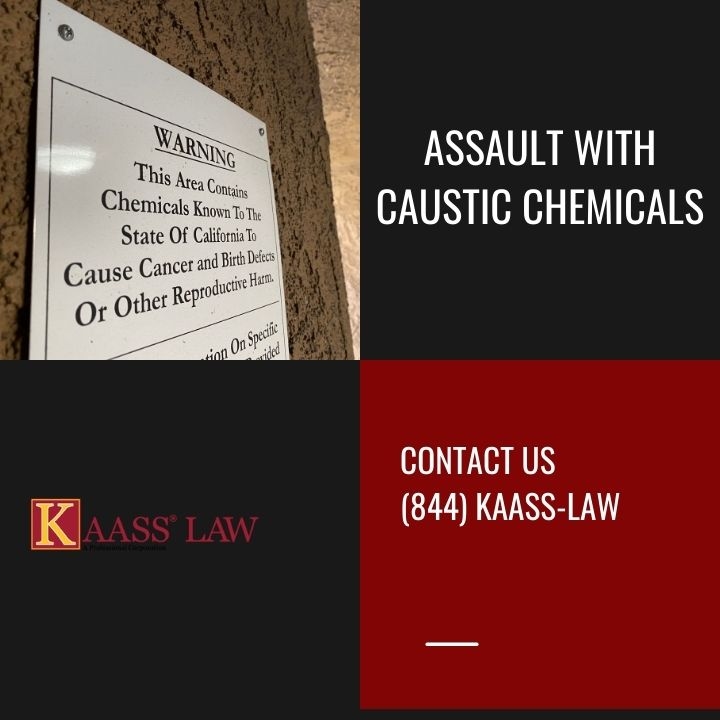
Assault can take many forms under California law. However, one particularly dangerous and disturbing type is assault with caustic chemicals. This offense involves someone deliberately attempting to harm another person by throwing or placing harmful substances, such as acids or flammable liquids, on their body. Because these acts often result in serious physical and emotional trauma, the law takes them very seriously.
Under California Penal Code Section 244, assault with caustic chemicals occurs when someone willfully and maliciously throws, places, or causes a caustic chemical, corrosive substance, flammable material, or vitriol to come into contact with another person with the intent to injure or disfigure them.
The term caustic chemicals includes substances capable of burning or corroding human tissue. Common examples include:

Workplace violence can take many forms, and one of the most troubling is coworker assault. Whether it involves verbal threats, physical intimidation, or actual bodily harm, assault by a coworker is both a serious legal matter and a violation of workplace safety standards. In California, victims of coworker assault have multiple legal avenues to seek justice and financial compensation.
Coworker assault refers to an intentional act by a fellow employee that causes you to fear imminent physical harm or results in actual physical contact. California law defines assault as an attempt or threat to injure someone. For example, if a coworker screams at you and threatens to throw a heavy object, even if they don’t follow through, you may still have a valid claim under assault laws.
Workplace violence, especially when unaddressed, creates a toxic environment that can affect employee well-being, morale, and productivity. Victims often suffer from emotional trauma, stress, and physical injuries, which is why it’s crucial to take appropriate legal steps immediately.
If you’ve experienced coworker assault, here are several important actions you should consider:

Have you ever come across news concerning a lawsuit against doctors for sexual harassment? In the latest news, there was information regarding compensation to 6600 patients by the University of California for sexual harassment of a gynecologist. The abuse included sexual inappropriate comments to patients, touching them without medical gloves, etc. Sexual assault/abuse/harassment are criminalized under California law. However, filing a lawsuit for such crimes against doctors is a personal injury claim. The claim is mostly focused on receiving compensation for the damages caused by the criminal actions of doctors rather than seeing the doctor convicted to imprisonment in jail.
The first addressee is the doctor, who caused the injury to the patient. However, a doctor's employer (hospital, clinics, college, university) can also be liable for the actions of the doctor. What is the reason to implicate the employer? It helps to increase the amount of compensation you can receive in the recovery of your damages. Mostly, the plaintiff must show that the doctor was not competent and was working negligently, as well as that the employer knew the doctor could be of a risk for the patients. Under two legal doctrines, sexual assault cases against doctors can hold the doctor's employer liable:

This article about burn injuries after using a curling wand will explore the importance of accurate product design and proper warning labels on hairstyling tools. Many people use heated hair tools regularly, especially curling wands. While these tools are useful for styling, they also pose serious burn risks. This article will explain how defective design and a lack of warnings can lead to injuries and what consumers need to know when using these products.
What exactly is a defective product? A curling wand becomes defective if any part of it poses a danger to the user due to poor design. For instance, curling wands without stands or protective features may roll off surfaces or burn users during styling. A well-designed curling wand should have a stand, a clamp, or even include a heat-resistant glove. The stand keeps it stable, the clamp helps control hair without exposing the user’s skin to extreme heat, and the glove protects the hand during use. These features reduce the risk of injury and show how design directly affects safety.
Proper labeling helps prevent accidents. When manufacturers fail to include warning labels, users might not realize the tool’s full risks. Curling wands can reach dangerously high temperatures. If someone uses the tool near their face without understanding how hot it is, they can suffer serious burns. Warning labels must inform users about heat levels, safe usage times, and precautions. When a curling wand lacks clear guidance, injuries become more likely—especially for new users. Manufacturers have a responsibility to inform and protect customers through clear, visible warnings.
Proposition 22 (prop 22) has passed in California, and many people are happy about this. The passing of this proposition makes app-based workers like: Uber drivers, Postmates delivery drivers, and Lyft drivers “independent contractors” instead of “employees.” This employment status grants these drivers the freedom to work at their own pace and schedule. You may be wondering why anyone would want to vote against this proposition. People believe that because these major companies like Uber and Doordash classify workers as independent contractors, they are generating more profit by creating their own tax exemptions. As individual contractors, these drivers are not entitled to any benefits like unemployment, healthcare, sick leave, etc. If you were to force these benefits onto app-based workers, they would potentially see less pay because it would cost these major companies a lot more money to provide benefits to people who work on their own time. Making someone, an employee would mean that they have a set amount of time to work to use their benefits. Therefore, the freedom of working on your time is the main attraction to app-based work.
“Independent Contractor” means you work on your own. “Employee” status would make the employer liable for all damages resulting from accidents involving their drivers. Being an independent contractor means you’re liable for your own accidents. Personal insurance coverage alone will not protect a person driving for income because it is not for personal use. To make sure you have coverage for app-based working, call your insurance provider. As a result, companies like Uber and Lyft offer their driver's liability insurance which will cover damages if the driver’s insurance denies the claim.
Besides the above mentioned, the law also qualifies as criminal such actions as not reaching the recipient but leaving a message to call back. In this case, when the recipient calls back and the person uses obscene language or threats in the phone conversation, this will be qualified as a violation under section 653m.
The most important element to criminalize the action is the presence of intent. This means that the person using this language or threatening shall have an intent to annoy or harass the recipient of the communication. For example, in case 2 friends in their usual conversations use “obscene” language. They argue, and after that one of them calls and texts again using this language. The other friend cannot claim that the use of obscene language, which has always been a usual element in their conversations, had the intent to harass him. Let’s also examine another situation. In case me and you have a common best friend and once we make a joke of calling and threatening to kill her the dog, and after several days we tell her about this joke, this will not be qualified as annoying calls and violation of the relevant section, as, there is no intent to annoy or harass our best friend.
The answer is again- the intent. For example, if every week you receive a call from an insurance company offering their new health insurance package, you cannot sue them for making annoying calls as they do not have the intent to annoy or harass you. Calling potential customers is their usual course of business.
Violation of section 653m is considered a misdemeanor. The punishment for such violation can be a conviction of up to six months in a country jail or a penalty in the amount of up to 1000 dollars. The defendant may also be sentenced to misdemeanor probation. As defense tools, it is possible to claim that the intent of communication was not to annoy or harass the person. Moreover, it is also possible to claim that the language was not really "obscene". Don't forget that anyone has a right to freedom of speech by the Constitution. Thus, sometimes, qualification of the communication as having "obscene" language can violate the constitutional right of a person.
Contact our Glendale attorney today for a consultation and case review. Please feel free to give our office a call at 310.943.1171.
California takes weapon safety seriously. As such, California Penal Code Section 20310 criminalizes the manufacture, import, sale, gift, loan, or possession of air gauge knives.
Additionally, Section 16590 PC lists air gauge knives among other prohibited weapons, such as:
These weapons are deemed dangerous due to their hidden nature and potential for surprise attacks. The law aims to prevent such weapons from circulating in the public, reducing the risks of harm.
For a complete list of prohibited weapons under Section 16590, you can view the California Legislative Information website.
California Penal Code 20310 makes it illegal to:
Violation of these actions can lead to prosecution. Importantly, PC 20310 is classified as a "wobbler" offense, meaning the crime can be charged either as a misdemeanor or felony, depending on the situation and the defendant’s criminal history.
If you’re convicted of violating PC 20310, penalties can be severe.
The decision to pursue felony or misdemeanor charges often depends on factors such as prior criminal history, intent, and use of the weapon.
Facing charges related to an air gauge knife doesn't automatically mean a conviction. Several legal defenses may apply:
You cannot be charged under PC 20310 if the item in question doesn’t meet the legal definition provided in Section 16140. If the object does not resemble an air gauge or does not contain a hidden blade, the charge may be dropped.
Under California law, certain professionals, such as law enforcement officers, may be exempt from PC 20310. If you are a police officer or fall under another exemption category, you may be legally allowed to possess such tools for duty purposes.
Another common defense is a lack of knowledge. If you were unaware that the object you possessed was an air gauge knife or that it had a blade inside, your attorney may argue that you lacked the criminal intent required for conviction.
In rare circumstances, one might argue that possession was necessary due to a compelling reason, such as a self-defense emergency. This defense is difficult to prove but may apply in unique cases.
Weapons like air gauge knives are intentionally deceptive and potentially deadly. They can be easily smuggled or carried without detection, making them a concern for public safety. California’s strict weapons laws aim to prevent harm by controlling access to such disguised tools.
Understanding these laws helps ensure you don’t unintentionally violate them. If you collect knives or tools resembling weapons, it’s critical to verify whether they fall into any prohibited categories under state law.
If you’ve been charged with violating Penal Code 20310, you need experienced legal help. The consequences of a conviction could affect your freedom, finances, and future.
At KAASS Law, our skilled Glendale criminal defense attorneys are ready to help you understand your options and defend your case. We have extensive experience handling cases involving California weapons laws and can help craft a strong defense strategy.
📞 Contact us today at (310) 943-1171 for a free consultation or visit our Criminal Defense Practice Page for more information.
Air gauge knives may appear harmless, but under California law, they are treated as dangerous concealed weapons.
Whether you’re a knife collector, seller, or have unknowingly purchased a prohibited weapon, understanding these regulations is essential. When in doubt, consult with a qualified attorney to ensure compliance with California’s strict weapons laws.
Reporting the accident to your insurance company can be mandatory under numerous policies. Also, not reporting the accident to the California Department of Motor Vehicles can even lead to criminal liabilities.
The best solution for proving property damages is the collection of necessary evidence. This can be:
The insurance shall determine who was liable for the accident based on the photos, testimonies of witnesses, reparation estimates, police report of the accident, etc.
An insurer's only legal obligation is to compensate you for damages up to the value of your vehicle. If you've received a couple of repair estimates and it appears that the cost of repairs will exceed the value of your car, your insurer may declare it a total loss. In this case, you have the right to receive:
To get the most available amount of compensation for the damages, you will definitely need professional legal advice.
If you caused damage to your own vehicle - for example, by driving off the road or colliding with a tree or fence. You'd have to pay for it yourself or file a claim against your own collision coverage, if you have it. If the damage isn't severe, you may want to pay for repairs yourself rather than through your own policy's coverage. This could raise your car insurance premium and cost you more money in the long run.
If you or a loved one has been harmed as the result of another's negligence, then you may be entitled to compensation. If that is the case, contact our Glendale personal injury lawyer today for a consultation and case review. Please feel free to give our office a call at 310.943.1171.
This section regulates that it is an offense to emit any air contaminant negligently, which may violate state laws or other relevant regulations. Penalties for violation of this section Under relevant legal regulations, the committed actions shall include punishment by:
This section states that it is a crime for the defendant to emit an air contaminant in violation of state laws, and to commit the action knowingly. Penalties for violation of this section The violation of section 42400.2 charges the party and includes these punishments:
Under this section, it is a crime for the accused person or an entity:
Penalties applied for violation of this section The punishment of the violations of section 42400.3 includes :
Under the mentioned section, it is considered to be a crime for the defendant to:
Penalties applied for violation of this section The punishment of the violations of the mentioned section includes:
This Section is a part of the programs of the Environmental Protection Agency of the US, namely Title V permit programs, which issue permits to the entities to help limit the emissions of air contaminants. Penalties for violation of the relevant section No imprisonment as a penalty applies to the above-mentioned section. The accused shall be subject to the imposition of a fine in the amount of not exceeding 10000$. Are there any defenses to overcome penalties imposed by the relevant regulations of law?
If you have any questions, contact our Glendale personal injury lawyer today for a consultation and case review. Please feel free to give our office a call at 310.943.1171.
These chemicals are often found in industrial cleaners, automotive fluids, and other household or commercial products.
Importantly, flammable liquids are also covered under this statute. To qualify, a substance must have a flashpoint of 150°F or less, meaning it can ignite quickly and inflict serious harm when misused.
To secure a conviction under Penal Code 244, prosecutors must demonstrate four essential elements beyond a reasonable doubt. These elements, as explained in CALCRIM 877 Jury Instructions, are:
Intent is a critical factor in these cases. The law applies only when the accused deliberately uses a harmful substance to injure or disfigure another individual.
Suppose someone, trying to escape a robber, tosses a liquid to distract them. If the liquid unintentionally contains acid and injures the robber, the person may not be guilty under Section 244. There was no intent to disfigure or injure, which is a necessary element of the offense.
In contrast, imagine a woman in an argument with her neighbor throws a chemical in their face while yelling insults. If the chemical causes burns or scarring, and there’s evidence of intent to harm, prosecutors are likely to charge her with felony assault under this statute.
Because of the severe potential consequences, this offense is classified as a felony in California. Penalties include:
If probation is granted, the court may impose additional conditions such as:
Although these charges are serious, several valid defenses may apply. Some common strategies include:
If the defendant had no intention to harm or disfigure the other person, the charges may not stand. Accidental contact, even if harmful, does not satisfy the required intent.
If the accused acted to prevent imminent harm to themselves or another person, that justified use of force can be a strong defense.
Mistakes can happen. For example, if someone accidentally spilled a chemical while handling it responsibly, that does not amount to an assault.
Several other California laws may be charged alongside or instead of Penal Code 244, including:
If you’re facing a felony charge for assault with caustic chemicals, don’t wait. The stakes are high, and early legal representation can significantly impact your case outcome. A knowledgeable criminal defense attorney can evaluate the evidence, protect your rights, and advocate for the best possible resolution.
On the other hand, if you were injured by someone else’s use of caustic chemicals, you may have a valid personal injury claim. Victims often face long-term medical treatments, lost wages, and emotional trauma. The attorneys at KAASS LAW help victims seek compensation for:
Call us today at (310) 943-1171 for a free consultation.
Learn more here: KAASS LAW – Glendale Personal Injury Lawyer
Assault with caustic chemicals is among the most serious forms of assault in California. Defined under Penal Code Section 244, it requires a clear intent to injure or disfigure using harmful substances. Whether you’re facing charges or were injured in such an attack, understanding the law—and taking action—can make all the difference.
Yes, in specific circumstances. Employers have a legal duty of care to maintain a safe workplace. If they neglect this duty, they can be held liable for damages caused by coworker assault. Here are two main scenarios that may support a claim against your employer:
The employer has a duty of care to establish a safe working environment, as emphasized by OSHA workplace violence prevention guidelines, and may be held liable if this duty is breached.
Filing a civil lawsuit and a criminal complaint are separate legal actions. You can pursue one without the other. However, reporting the assault to law enforcement is often beneficial, as criminal case evidence can strengthen your civil claim.
Additionally, when you report the incident, you protect yourself and other potential victims by bringing workplace violence to light. Legal professionals recommend documenting everything: save emails, messages, medical records, and any witness statements that support your case.
Victims of coworker assault may be entitled to several forms of compensation, particularly if the assault results in physical or emotional injuries. Compensation may include:
Because assault in the workplace is often considered a work-related injury, workers' compensation may also be available depending on your employer’s coverage. However, civil lawsuits allow broader damages compared to the limits of workers’ compensation.
It's important to be cautious when taking legal action against a coworker. In some cases, the accused may file a defamation counterclaim, arguing that your allegations damaged their reputation. To avoid this risk, always ensure your claims are supported by documented facts and filed in good faith.
This is another reason why professional legal support is vital. A skilled attorney will help you present your case correctly, defend against counterclaims, and pursue the maximum compensation available.
Facing workplace violence can be frightening and overwhelming. You may be unsure of your rights or how to proceed. That’s where a knowledgeable employment lawyer can make a big difference. From negotiating settlements to representing you in court, an attorney ensures that your rights are fully protected.
If you or a loved one has been assaulted by a coworker, you don't have to face it alone. At KAASS LAW, we provide compassionate and aggressive legal representation for victims of workplace violence. Our team can help you pursue justice and secure the compensation you deserve.
Call us today at (310) 943-1171 for a free, confidential consultation.
Learn more at KAASS LAW – Glendale Employment Lawyer
Coworker assault is a serious matter that should never be ignored. Whether it’s verbal threats, physical aggression, or intimidation, every employee has the right to a safe and respectful workplace. If you’ve been the victim of workplace violence, take action today. Report the incident, protect your rights, and seek help from a trusted employment lawyer.
The main plaintiff is the patient-who suffered from the actions of the doctor. However, the victim's family members, even domestic partners, or legal heirs can also act as a plaintiff for such a lawsuit. Anyone who's been the target of one of the following offenses can sue the doctor who caused them harm:
The injury claim continues the criminal proceedings against the doctor. So, the victims of such crimes as sexual assault, rape, statutory rape, sexual battery, nonconsensual sex, touching, etc. can file for this lawsuit. In case the criminal proceedings succeed, the civil lawsuit automatically shall become easy, the civil claim can use evidence gathered during the criminal proceedings as well. One of the features of a civil claim is that the latter requires a lower standard of proof. While filing the civil claim, the victim needs to show that there were damages.
Under California law, you can file for this kind of lawsuit in 2 years period from the date of the commitment of the assault. In case the victim was assaulted while being a child, the term for filing for the civil lawsuit extends to his 26th birthday or 3 years after the discovery that the victim had a psychological illness that occurred after the victim of abuse turned 18, and that this illness was a result of that particular abuse. What compensation can the victim receive if they file the civil lawsuit? The compensation types which are possible to receive include the recovery of:
If you or a loved one has been harmed as the result of sexual assault, then you may be entitled to compensation. If that is the case, contact our Glendale personal injury lawyer today for a consultation and case review. A sexual assault lawsuit is an extremely complex legal process in which plaintiffs are suing doctors who was not competent at their work place. Please feel free to give our office a call at 310.943.1171.
Many modern curling wands now come equipped with digital displays that show temperature levels. This helps users know exactly when the tool is hot enough to use, avoiding unnecessary burns. For example, Emily plugs in her curling wand to style her hair. She waits for it to heat but isn’t sure when it’s ready. She touches the barrel to check—and burns her finger. If the wand had a ready-to-use indicator or digital screen, Emily could’ve avoided injury.
Manufacturers can reduce risks with built-in features such as heat indicators, auto shut-off functions, and easy-to-understand instructions. Clear design and visible indicators play a vital role in consumer safety.
When a curling wand malfunctions or causes injury due to defective design or missing warnings, the manufacturer may be held liable. For instance, if the device overheats, lacks safety features, or catches fire, the user could suffer serious burns or property damage. In California, product liability laws allow injured consumers to seek compensation if a manufacturer failed to design the product safely or warn users properly. In such cases, working with an experienced personal injury attorney can help you recover damages for your medical bills, lost income, and pain.
As a consumer, always read the instruction manual and review any warning labels on your curling wand before use. Avoid using the product near children or while multitasking. Always place the wand on a heat-resistant surface and unplug it when not in use. When shopping, look for models that offer safety features like automatic shut-off, heat control, and anti-burn gloves. Your awareness and cautious approach can prevent accidents.
Different hair types require different heat settings. Thick, coarse hair may need higher temperatures, while fine or treated hair is more sensitive and requires lower heat. Curling wands often lack universal temperature recommendations, leaving users to guess. This adds to the risk of burns or hair damage. If your curling wand doesn’t display real-time heat levels, it may not be safe. Opt for tools that clearly show heat settings and include warnings about suitable hair types. Being informed helps you style safely without risking injury.
Have you or someone you love suffered an injury from a curling wand? Product manufacturers must take responsibility when their tools harm consumers. You may be entitled to compensation for injuries resulting from defective design or lack of warnings. KAASS LAW helps injured clients navigate California product liability laws and fight for the justice they deserve. Contact our Los Angeles office today at 310-943-1171 for a free consultation.
For more safety tips and consumer rights information, visit the Consumer Product Safety Commission (CPSC) website. This federal resource offers guidelines and recall information related to personal care appliances and curling wand safety
Like all other accidents, we recommend taking the following steps:
Listing their drivers as “independent contractors” gives major companies like Uber a cushion to fall on. The argument is that the drivers are independent and work independently; Uber cannot be held liable for their driver’s negligence. Although this is an argument the companies can make, it isn’t always set in stone. California’s 2020 AB5 law protects app-based drivers by making it difficult for companies like Uber to deny their status as employees within that business entity. Your attorney may seek compensation from the major company as a last resort if the driver’s insurance denies coverage.