Parking Lot Slip and Falls: Who May Be Liable for Dangerous Conditions in California?
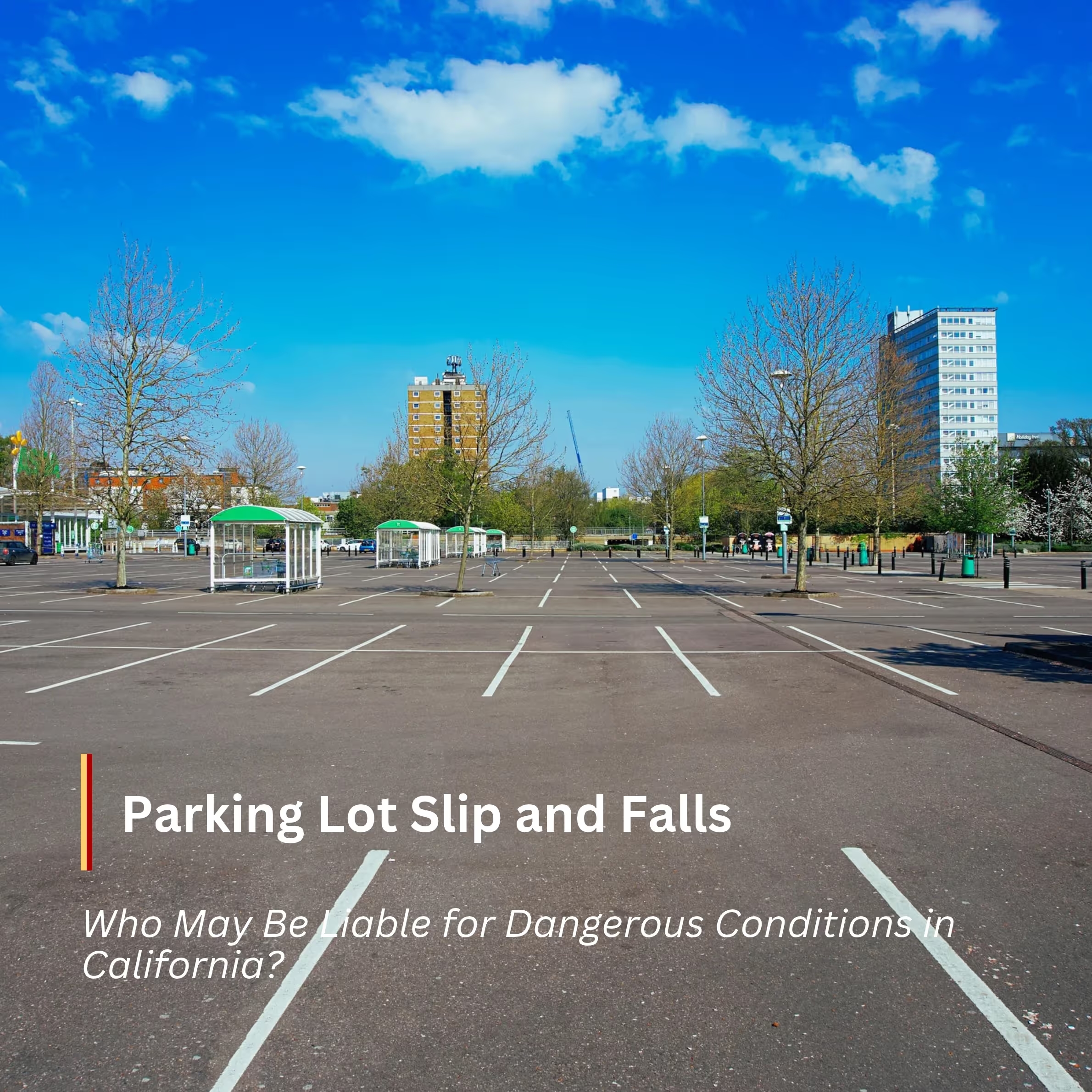
Parking lots are part of everyday life. Whether visiting a grocery store, shopping center, office building, or apartment complex, most people expect to walk safely from their vehicles to their destinations. However, poorly maintained parking lots can present serious hazards that may result in slip-and-fall accidents.
Cracked pavement, uneven surfaces, standing water, inadequate lighting, and neglected maintenance can create dangerous conditions for pedestrians. When someone suffers an injury because of these hazards, questions may arise about who was responsible for maintaining that property. Understanding these responsibilities can help injured individuals evaluate their legal options moving forward.
What Can Cause a Parking Lot Slip and Fall
Parking lots are exposed to constant vehicle traffic, pedestrian activity, and changing weather conditions. Over time, these factors can contribute to hazardous conditions. Some common causes of parking lot accidents may include, but are not limited to, the following.
- Uneven pavement and potholes: Cracked asphalt, broken concrete, and deteriorating surfaces may create tripping hazards.
- Water and oil spills: Leaking vehicles, poor drainage, and accumulated liquids can make walking surfaces slippery.
- Inadequate lighting: Poor visibility may prevent pedestrians from noticing pavement defects, curbs, or other obstacles.
- Damaged sidewalks and curbs: Broken walkways, raised concrete, and poorly maintained pedestrian paths can increase the risk of falls.
- Debris and loose materials: Gravel, trash, leaves, and construction materials may interfere with safe walking.
- Improper drainage: Standing water can conceal uneven surfaces or contribute to slippery conditions.
Not every accident involving these conditions establishes negligence. Liability often requires examining whether the responsible party failed to exercise reasonable care under the circumstances.
Who is Responsible for a Parking Lot Slip and Fall Accident?
Several parties may share responsibility for maintaining a parking lot. Identifying the appropriate party often requires reviewing ownership records, lease agreements, maintenance contracts, and the circumstances surrounding the accident. The following parties may be held liable after a parking lot slip-and-fall accident occurs.
- Property owners
- Property management companies
- Businesses and commercial tenants
- Maintenance companies and contractors
Understanding Negligence
In California, a premises liability claim usually involves establishing four elements:
- Duty of care: The defendant owed the injured person a legal duty to exercise reasonable care.
- Breach of duty: The defendant failed to meet the applicable standard of care.
- Causation: The failure was a significant factor in causing the injury.
- Damages: The injured person suffered legally recognizable harm.
An important consideration is whether the responsible party knew or reasonably should have known about the dangerous condition. California courts evaluate these circumstances based on the available evidence rather than assuming that every fall results from negligence.
Important Types of Evidence Used to Determine Liability
Evidence plays an important role in determining how an accident occurred and whether reasonable safety measures were taken. Relevant evidence may include but is not limited to the following.
- Photographs of the hazardous condition
- Surveillance footage
- Witness statements
- Incident reports
- Maintenance records
- Prior complaints
Inspection logs may help establish whether the property was regularly monitored for potential hazards. Since parking lot conditions can change quickly, documenting the accident scene as soon as reasonably possible may be especially important.
Liability when Multiple Parties are Involved
Depending on the circumstances, more than one party may contribute to a parking lot accident. If several parties contributed to the hazardous condition, their respective responsibilities may need to be evaluated. California also follows comparative fault principles. An injured person's own behavior may affect the amount of recoverable damages without necessarily eliminating the claim.
Types of Compensation that May Be Available
Depending on the circumstances, an injured person may seek compensation for losses associated with a parking lot accident. Potential damages may include but are not limited to the following.
- Medical expenses
- Lost income
- Reduced earning capacity
- Rehabilitation costs
- Physical pain and suffering
The availability and amount of damages depend on the evidence, the extent of the injuries, applicable law, and any comparative fault. It is important to understand that compensation is not automatic simply because an injury occurred on someone else's property.
The Importance of Seeking Legal Guidance and Support
After a parking lot slip and fall accident, victims should consider seeking legal guidance and support to better understand their rights while moving through the claims process. A legal professional may review the specific facts of your case, speak to insurance companies on your behalf, and preserve important details that may help you moving forward.
How KAASS LAW Can Help
The qualified personal injury attorneys at KAASS LAW are ready to help those who have suffered injuries from a parking lot slip and fall accident. We want to make sure that victims understand their rights and the necessary steps they may need to take to recover from their injuries. If you have been involved in a parking lot slip and fall accident, you are not alone. Call the legal team at KAASS LAW today.
Related Articles
View All Posts
Learn what injured shoppers should know after store slip and falls, including common hazards, evidence, liability, and California legal options.
Learn when grocery stores may be responsible for slip and fall accidents, common hazards, evidence, and legal options under California law.
Hotel injuries can involve unsafe balconies, security failures, elevators, pools, furniture, and other hazards beyond slip and fall accidents.
