Grocery Store Slip and Fall Accidents: How Businesses May Be Held Responsible
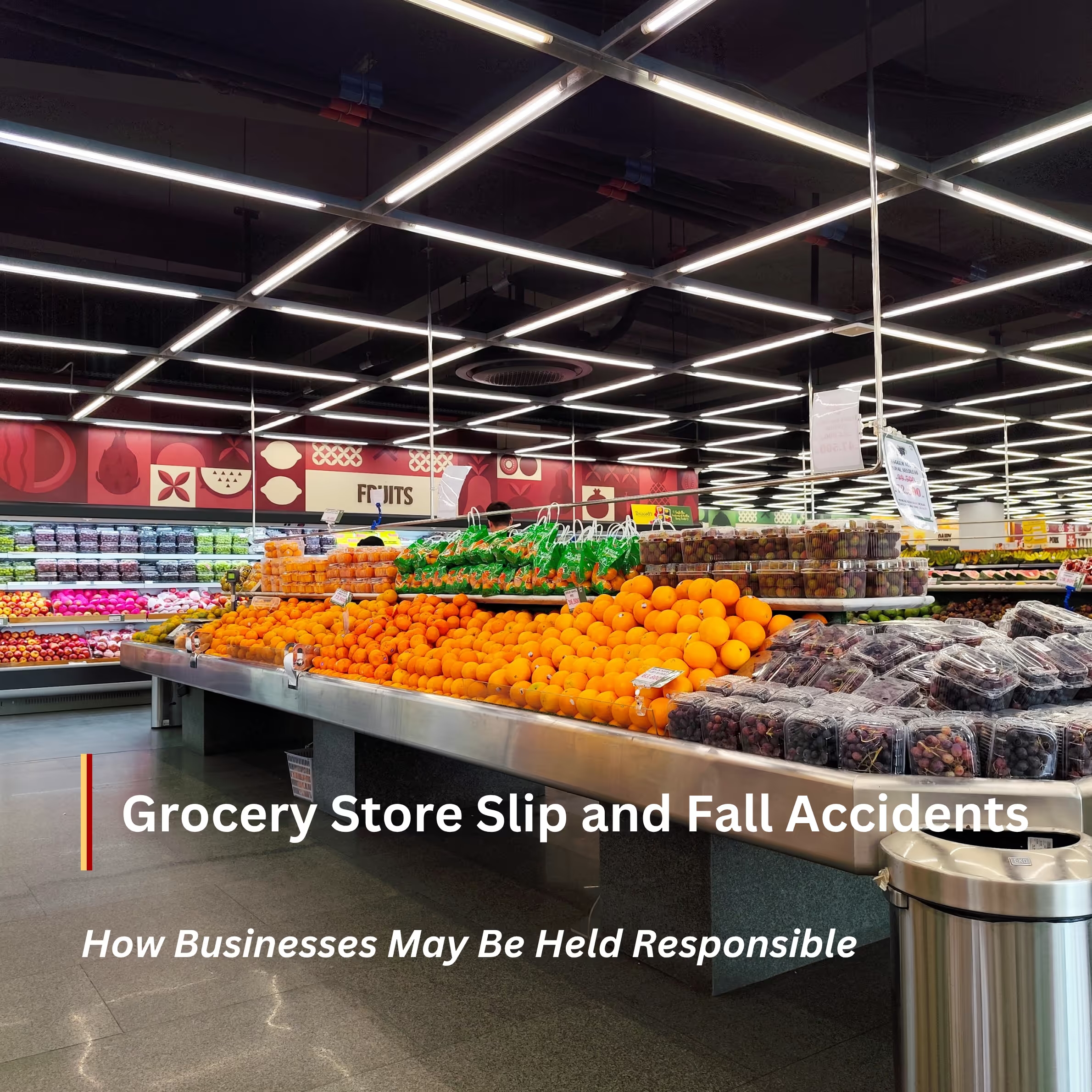
Grocery store slip and fall accidents can cause serious injuries to individuals and their family members. Oftentimes, damaged or wet floors may create dangerous situations, causing individuals to become severely injured. Understanding grocery store slip and fall accidents and ways to recover from the damage is important in making sure you maintain the safety of yourself, your children, and those around you.
Understanding the Dangers of a Slip and Fall at a Grocery Store
Grocery stores can contain many potential slipping and tripping hazards. Some are caused by customers, while others may result from store operations, equipment, or maintenance practices. Common examples may include, but are not limited to, the following.
- Spilled liquids, beverages, or food
- Water near entrances during rainy weather
- Leaking refrigerators or freezer cases
- Produce that has fallen onto the floor
- Recently mopped floors
- Cleaning products or other merchandise that has leaked
- Uneven or damaged flooring
- Loose mats or rugs
- Items left in aisles
- Broken containers or packaging
- Poorly maintained parking lots or sidewalks
- Insufficient warnings around temporary hazards
When one of these conditions occurs, it does not always establish that a grocery store was negligent. The circumstances surrounding the hazard, including how it developed and how long it existed, can be important when determining responsibility.
Premises Liability Laws
California premises liability law usually requires property owners and businesses that possess or control property to exercise reasonable care in maintaining their premises. For an unsafe property condition, an important issue is often whether the business knew or reasonably should have known about the condition and failed to repair it, protect customers from it, or provide an adequate warning.
Who caused the Hazard?
Not every grocery store slip and fall case involves a spill caused by another customer. Sometimes the condition may result directly from store operations. An employee might leave water behind while cleaning, place merchandise in a walkway, improperly position a floor mat, or create another potentially hazardous condition while stocking shelves.
Important Records
Evidence can disappear quickly after a slip and fall. Employees may clean a spill immediately, merchandise may be moved, and surveillance footage may eventually be overwritten or deleted according to a store's policies. When circumstances allow, an injured customer may want to document the area where the accident occurred.
Potential evidence may include, but is not limited to, the following.
- Photographs or videos of the accident scene
- Maintenance records
- Inspection logs
- Surveillance footage
- Witness information
- Incedent reports
- Medical records
The Steps to Take
Medical needs should usually come first after an accident. Some injuries may be immediately apparent, while symptoms associated with certain soft-tissue, head, neck, or back injuries may develop or become more noticeable later on.
If it is safe and appropriate, victims should document the condition that caused the fall before it is changed or removed. In addition, it may also be beneficial to obtain contact information from witnesses and report the incident to management. Keep relevant documents, including medical bills, receipts, photographs, correspondence from the store, and communications with insurance companies.
It may also be helpful to avoid making assumptions about fault immediately after the accident. Premises liability depends on the specific facts, and an investigation may reveal information that was not available to the injured customer at the scene.
Compensation
When a business is legally responsible for a slip and fall accident, an injured person may be able to pursue damages associated with the harm caused by the incident. The particular damages available depend on the facts of the case. Potential damages can include medical expenses, future medical care, lost income, reduced earning capacity, and noneconomic damages such as pain and suffering.
The existence and amount of any recovery are not automatic. They depend on issues including liability, causation, the nature of the injuries, available evidence, comparative fault, insurance coverage, and other circumstances.
Comparative Fault Principles
California follows comparative fault principles. As a result, responsibility for an accident may sometimes be divided among multiple parties. A grocery store or its insurer might argue that a customer was distracted, ignored a warning sign, failed to watch where they were walking, or otherwise contributed to the accident.
Speaking to a Legal Professional
A legal professional may be able to help you understand the specific steps to take to recover from a grocery store slip and fall accident. Determining potentially responsible parties after an accident like this may be extremely difficult and challenging for victims to handle on their own. This is where legal support comes in. A qualified professional can help you throughout the legal process while making you feel supported and cared for.
The Attorneys from KAASS LAW
The legal team at KAASS LAW is determined to help individuals suffering from a grocery store slip and fall accident. Oftentimes, severe injuries may occur, leaving victims and their family members fearful of the future. A qualified personal injury attorney from KAASS LAW can help you understand the necessary steps to take to work towards recovery. Call KAASS LAW today to discuss your potential options.
Related Articles
View All Posts
Hotel injuries can involve unsafe balconies, security failures, elevators, pools, furniture, and other hazards beyond slip and fall accidents.

Slip and fall accidents are among the most common personal injury claims, but they can be surprisingly difficult to prove. Whether the incident occurred in a grocery store, restaurant, or on a public sidewalk, securing the proper injury evidence is critical to establishing liability and maximizing your compensation. In California, property owners have a legal obligation to maintain safe premises. However, simply being injured on someone's property does not automatically guarantee that you’ll win your case. To build a robust slip-and-fall claim, you need solid injury evidence to prove that the property owner was negligent. In this blog, we’ll explore the types of injury evidence that can help strengthen your case and give you the best chance of success.
1. Incident Reports: Crucial Injury Evidence
The incident report is one of the most critical pieces of injury evidence in a slip-and-fall claim. If your accident occurred in a commercial setting, like a store or restaurant, it’s important to immediately report the incident to management. Most businesses have standard procedures for documenting accidents on their premises. Why it’s essential: Incident reports are often the first formal record of your accident. They may include details about the time, date, and location of your fall and statements from employees or witnesses. If you don’t report the fall immediately, the property owner may argue that your injuries aren’t as serious as claimed or that the accident didn’t happen at all. What to do: After your fall, ask the manager or employee on duty to create an official incident report. Be sure to get a copy for your records.
2. Photographs and Video Footage as Strong Injury Evidence
Visual evidence can be one of the most persuasive elements in a slip-and-fall case. Photographs and video footage capture the accident scene and show hazardous conditions, such as spills, broken stairs, or uneven surfaces, that may have caused your fall. Why it’s essential: Photographs and videos can provide indisputable injury evidence of unsafe conditions. They allow you to demonstrate the state of the property at the time of the accident, preventing the property owner from disputing the hazard's existence or claiming it was promptly addressed after your fall. What to do: Take photos or videos of the area where you fell immediately after the incident. Focus on capturing what caused the fall, such as a wet floor, clutter, or poor lighting. If the property has security cameras, request that footage be preserved before it’s overwritten or deleted.
3. Medical Records: Key Injury Evidence
After any slip and fall, seeking medical attention as soon as possible is crucial. Even if you think your injuries are minor, symptoms may worsen over time, and early medical intervention could prevent complications. Medical records are key injury evidence in showing the severity of your injuries and their connection to the fall. Why it’s essential: Medical records document the nature and extent of your injuries and the treatment you received. These records validate your claim and help quantify damages, such as medical bills and ongoing care needs. What to do: Visit a doctor or healthcare provider as soon as possible after your fall, and follow all recommended treatment plans. Keep detailed records of your medical visits, prescriptions, physical therapy, and any related expenses. These documents will be critical in proving your injuries and the costs of your recovery.
4. Witness Statements: Supporting Injury Evidence
If there were any witnesses to your slip and fall, their testimony can significantly bolster your case. Witnesses provide an unbiased account of what happened. They may be able to corroborate your version of events, such as the presence of a hazardous condition or the property owner’s failure to address the problem. Why it’s important: Witnesses offer independent confirmation that the property was unsafe and that your actions didn’t cause your fall. In cases where there’s a dispute over liability, witness testimony can help clarify how the accident occurred. What to do: Get the names and contact information of anyone who saw your fall or noticed the hazardous condition. Ask them to provide a written or recorded statement describing what they saw.
5. Expert Testimony: Strengthening Your Case with Injury Evidence
Expert testimony can be precious in some slip-and-fall cases, particularly those involving complex safety issues or building codes. Experts in fields like safety, engineering, or medicine can offer professional opinions on whether the property owner acted negligently or if specific conditions contributed to your fall. Why it’s crucial: Experts lend credibility to your claim by providing objective, fact-based analyses of the hazard and its potential to cause injury. Their testimony can clarify technical issues, such as whether a surface was too slippery or a handrail was improperly installed. What to do: Your personal injury lawyer will help determine if expert testimony is necessary and coordinate with qualified professionals to strengthen your case.
6. Maintenance and Inspection Records: Additional Injury Evidence
A key aspect of proving negligence in a slip and fall claim is showing that the property owner either knew about the hazard or should have known about it but failed to take appropriate action. Maintenance and inspection records can reveal whether the property owner regularly checks the premises for hazards and promptly addresses any issues. Why it’s important: These records can demonstrate whether the property owner had a history of neglecting maintenance or was aware of a specific hazard before your fall. If the owner fails to take reasonable steps to prevent accidents, these records could help establish liability. What to do: Your attorney can request maintenance and inspection logs during the discovery phase of your case. This evidence is especially important if the hazardous condition was not immediately obvious or if the property owner claims they were unaware of the problem.
7. Comparative Negligence Defense: Countering Claims with Injury Evidence
California follows a comparative negligence system in personal injury cases, meaning that your compensation may be reduced if you’re found partially responsible for the accident. The property owner’s legal team may argue that you were texting while walking, wearing inappropriate footwear, or not paying attention. Why it’s essential: The defendant’s legal team will likely try to shift some of the blame to you to reduce their liability. Strong injury evidence to counter these claims can help you receive fair compensation. What to do: Work with your attorney to gather evidence demonstrating you acted reasonably during the accident. Witness testimony, video footage, and a detailed account of the incident can help refute the comparative negligence defense.
8. Legal Guidance: Why You Need an Experienced Attorney
Slip and fall cases can be complex, mainly when gathering and presenting evidence. An experienced personal injury lawyer can help you navigate the legal process, ensure crucial injury evidence is preserved, and advocate to maximize your settlement. Why it’s important: A skilled attorney can determine the best legal strategy for your case, from negotiating with insurance companies to taking the case to trial if necessary. Your lawyer will also be able to counter any arguments that the property owner’s legal team may present, such as claims of comparative negligence or disputing the severity of your injuries. If you’ve been injured in a slip-and-fall accident, don’t wait to seek legal advice. KAASS LAW can help you collect the required injury evidence to build a strong case and fight for the compensation you deserve. Contact us today for a free consultation and learn how we can assist with your slip and fall claim. For more details on maintaining a safe environment and preventing slip-and-fall accidents, check out the Occupational Safety and Health Administration (OSHA) website for valuable safety resources.

For those seeking locally produced fruit, handcrafted goods, and a sense of community, the farmer's market industry has grown in popularity. These markets frequently provide a distinctive shopping experience where customers may speak with merchants, try out new goods, and take in the outdoors. Unfortunately, Farmer's market slip-and-fall accidents can occur because of the busy crowds and rough terrain, occasionally resulting in severe injuries. In this article, we'll look at one instance where a customer tripped and fell at a farmers market, suffering severe physical harm. We'll look at the potential reasons for these mishaps and discuss what farmers' markets may do to stop them. Farmer's markets may continue to give their customers a safe and happy experience. The key is being aware of the hazards and taking the necessary precautions to prevent accidents.
Causes of Farmer's Market Patron Slip and Fall
So, at farmer's markets, the following are the most frequent reasons for slip-and-fall incidents:
- Farmer's markets frequently take place on grassy or dirt areas that can become damp or uneven due to weather or high foot traffic. This may present a trip risk, particularly for elderly or disabled consumers.
- Food or water spills are inevitable, given the abundance of fresh produce and bottled water available. If they are not cleaned up immediately, they can produce slippery surfaces and cause falls.
- Lack of Lighting. Farmer's markets frequently operate in the early morning or late evening, when there is little natural illumination. Without sufficient lighting, customers may find it challenging to spot possible hazards and avoid them.
Farmer's Market Patron Slip and Fall Case
In February 2020, a woman in her mid-50s was walking in the parking lot at one of the oldest Farmers' Markets in Los Angeles. So, while passing the cars, she did not see there was something on the floor. She fell and hit her head, arm, and leg. She is having headaches, bruises, and bleeding. Also, her arm and leg hurt. She has to visit and be treated by multiple doctors and specialists. Those injuries cause plenty of inconvenience. That is not even taking into account the time and effort she has to spend during her treatment process.
Preventing Slip and Fall Accidents at Farmers' Markets
Farmers' markets can take a number of precautions to avoid trip-and-fall incidents, such as:
- Frequent Inspection. Farmers' markets should regularly inspect the grounds to spot and remedy potential dangers like uneven surfaces or spilled produce.
- Clear Signage. Farmers' markets need to put up signs alerting visitors to potential dangers including muddy or uneven terrain. Organizers should put marks on any locations that are off-limits or undergoing repairs.
- Appropriate Lighting. Farmer's markets need enough illumination installed so that customers can spot dangers and avoid them.
- Staff Education. Market employees should receive training on spotting potential dangers and immediately cleaning up spills or fixing uneven surfaces.
- Insurance. Farmers' markets should carry liability insurance that covers slip-and-fall accidents to protect themselves and their customers in the event of an accident.
Slip and Fall Hazards at Farmers' Markets
Victims of these incidents often face not only physical pain but also emotional and financial stress. Medical expenses can pile up quickly, and time off work can lead to lost wages. When the fall occurs due to negligence—such as failure to maintain walkways or clean up spills—injured patrons may have grounds to file a premises liability claim. Legal action can help victims recover damages for their medical bills, pain and suffering, and other related costs.
Moreover, local governments and market organizers should consider implementing stricter safety guidelines for outdoor markets. Creating clear walkways, ensuring adequate drainage, and requiring stallholders to maintain tidy spaces can all contribute to a safer environment. For more detailed guidance on premises liability and how business owners can prevent injury claims, The National Safety Council offers resources on fall prevention in public spaces.
Seek Legal Help
In conclusion, slip-and-fall incidents can have significant repercussions at farmers' markets, and farmers' markets have to safeguard the safety of their customers. Farmer's markets may considerably lower the risk of accidents by putting in place measures, including routine inspections, apparent signs, appropriate lighting, staff training, and liability insurance. So, farmers' markets must take these security measures to protect their standing as a fun and secure community meeting place. Also, as customers, we must be mindful of our surroundings and follow safety procedures to prevent any threats. Farmer's markets may live on as a cherished tradition in our communities with a shared dedication to safety. So, if a security guard has assaulted you or your loved one, contact experienced attorneys from KAASS Law. Give us a call at 310.943.1171 or visit our website for other practices.
