Falling Merchandise Injuries: Retail Store Safety Responsibilities
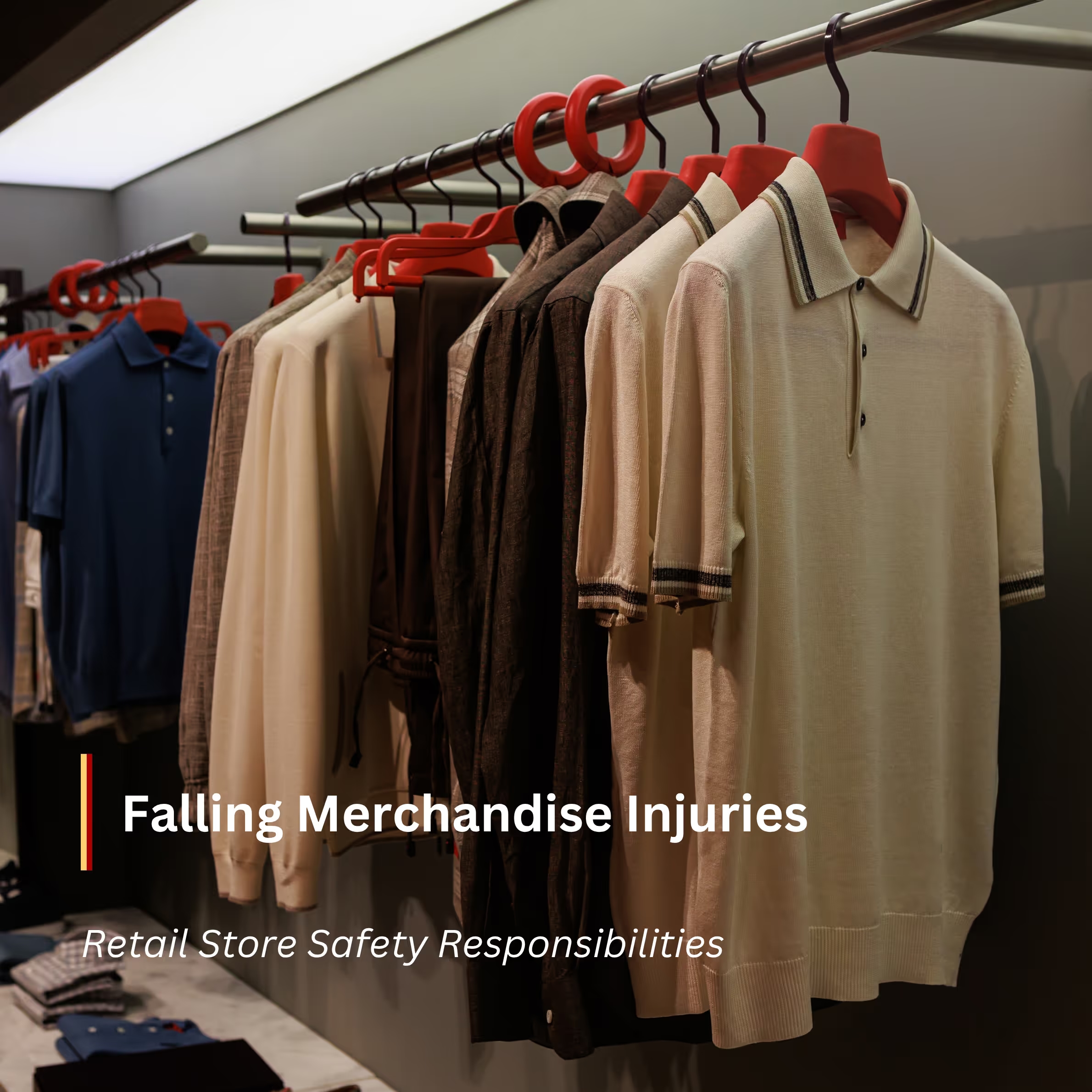
Merchandise in a store is usually not something individuals are concerned about. However, falling merchandise may cause serious injuries to individuals and nearby employees. Merchandise that is stacked and properly, unstable, or not adequately secured may fall and cause serious injuries that may require medical care. Understanding these types of accidents and how to prevent them is important the next time you go shopping.
The Dangers of Falling Merchandise
Merchandise can fall for many reasons. Some incidents involve products that were stacked too high or placed unevenly. Others may result from damaged shelving, overloaded racks, unstable displays, or merchandise being stored in a way that allows it to move. Common circumstances may include, but are not limited to:
- Heavy products stored on high shelves
- Improperly stacked boxes or merchandise
- Shelves carrying more weight than they were designed to support
- Damaged or unstable shelving systems
- Products extending beyond the edge of a shelf
- Employees moving inventory near customers
- Forklifts or stocking equipment disturbing merchandise
- Customers removing one item and causing nearby products to shift
- Failure to inspect shelving and merchandise arrangements
Liability usually requires consideration of what happened, who controlled the condition, what the store knew or reasonably should have known, and whether reasonable precautions were taken.
Reasonable Care
California premises liability law usually requires property owners and businesses controlling property to use reasonable care in managing and maintaining their premises. A retail store is not automatically responsible whenever someone is injured on its premises. California courts have recognized that a store owner is not an insurer of every customer's safety. However, a store must still maintain its products. For falling merchandise, reasonable precautions may include, but are not limited to, the following.
- Inspecting shelves
- Following the appropriate stocking procedures
- Maintaining racks and displays
- Responding to known hazards
- Taking reasonable measures to prevent unstable merchandise from falling on customers.
Regular Inspections
Regular inspection can be important in retail environments because merchandise and displays change throughout the day. Employees stock products, customers move items, and shelves may become disorganized. As a result, a store's inspection practices may become relevant after an accident. Questions may include when the area was last inspected, whether employees noticed an unstable display, whether similar problems had previously occurred, and whether store policies regarding stocking and shelving were followed.
Who is Liable?
The retailer may be one potential party, but falling merchandise cases can also involve other individuals. For example, a merchandising company or product distributor may have created or maintained a display. A shelving manufacturer or installer could potentially become relevant if a defective or improperly installed shelving system contributed to the incident. Contractors responsible for stocking or maintaining merchandise might also be involved. Determining responsibility may require reviewing contracts, surveillance footage, maintenance records, employee statements, stocking procedures, and other evidence.
Types of Injuries
The severity of an injury may depend on the weight of the object, the height from which it fell, and the part of the body it struck. The following injuries may occur after merchandise falls inside a store.
- Head injuries
- Concussions
- Cuts
- Shoulder injuries
- Fractures
- Neck and back injuries
- Knee injuries
- Soft-tissue injuries
It is also important to note that some symptoms may not be immediately obvious. Someone who has been struck by falling merchandise should consider obtaining appropriate medical evaluation, especially when experiencing pain, dizziness, headaches, limited mobility, or other concerning symptoms.
Necessary Steps to Take
After an accident, health and safety should come first. When it is safe to do so, victims should also consider the following steps.
- Documenting what happened
- Preserving important pieces of evidence
- Reporting the accident to store management
- Requesting that an incident report be prepared
- Photographing the merchandise and shelving area
- Obtaining contact information from witnesses
- Keeping receipts
- Preserving medical and expense records
It may also be important to identify potential video surveillance as soon as possible. Retail security footage can sometimes show how merchandise was positioned before an accident or document the incident itself.
Preserving Important Pieces of Evidence
Evidence can be particularly important because a store may rearrange or restock the area shortly after an accident. Potential evidence may include, but is not limited to, the following.
- Surveillance footage
- Photographs and videos of the accident area
- Store incident reports
- Witness statements
- Employee testimony
- Inspection and maintenance records
- Stocking procedures and training materials
- Prior complaints or incidents
- Medical records documenting the injuries
Speaking to a Legal Professional
Individuals who have been hit by falling merchandise from a store may consider speaking to a legal professional to better understand their rights and legal considerations moving forward. An attorney may be able to review the facts of your case, help you preserve important pieces of evidence, and explain applicable laws that may be useful later on.
How KAASS LAW Can Help
Our qualified personal injury attorneys at KAASS LAW are determined to help you feel supported after suffering injuries from a falling merchandise accident. Oftentimes, individuals are unaware of their rights and the necessary steps they may need to take to recover from this type of accident. That is where KAASS LAW comes in. Call us today for a confidential consultation.
Related Articles
View All Posts
Learn who may be responsible for injuries caused by uneven sidewalks in California and how liability may depend on property control and local laws.
Learn common causes of bike lane accidents, who may be liable, and what legal options may be available to injured California bicyclists.

Learn how premises liability may apply to swimming pool accidents, including unsafe conditions, owner responsibilities, and legal options.
