Uneven Sidewalks: Who Is Responsible for a Trip and Fall?
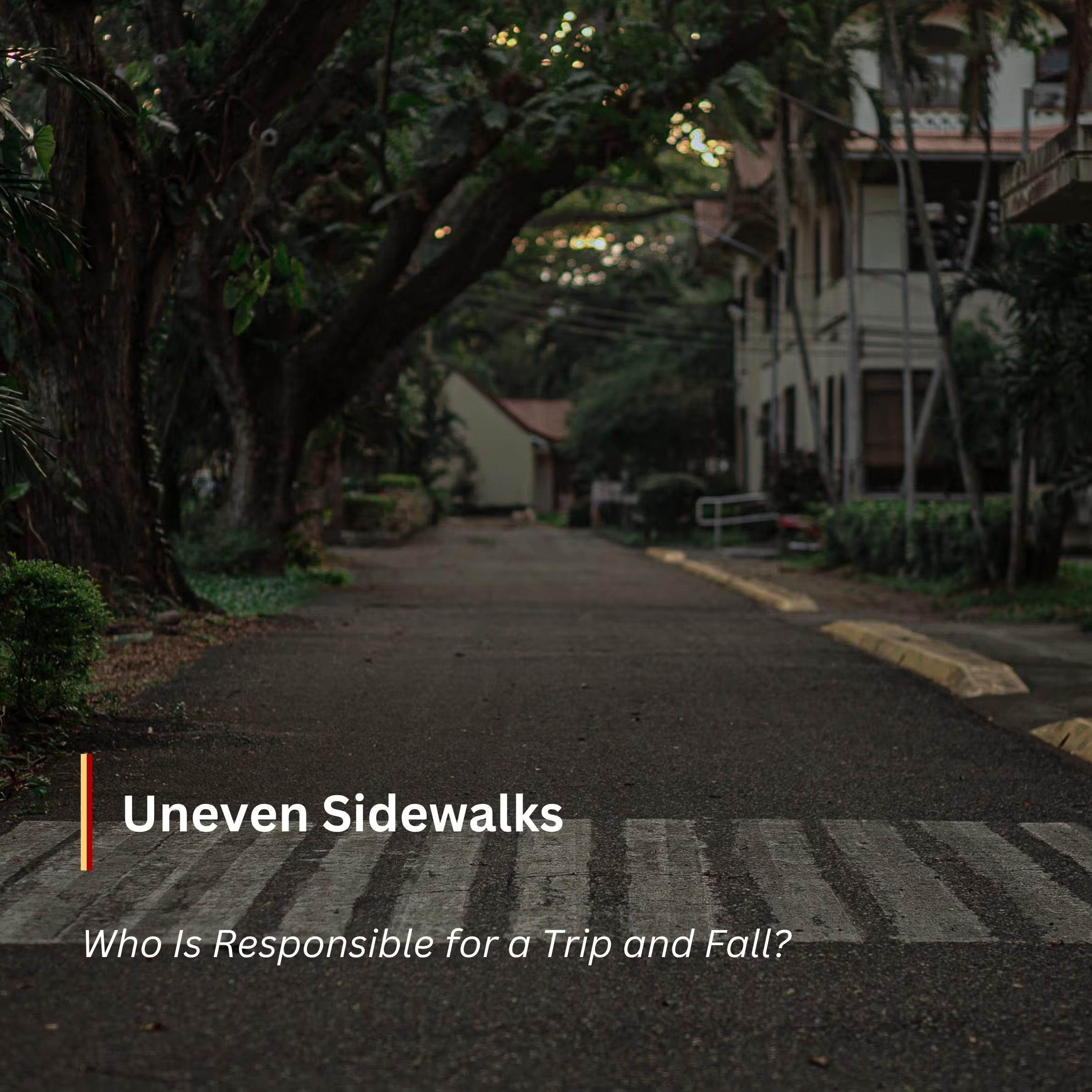
An everyday walk can quickly turn into a painful accident when a sidewalk is cracked, raised, broken, or uneven. Tree roots, aging concrete, poor maintenance, construction activity, and weather conditions can all create changes in sidewalk elevation that may be difficult for pedestrians to notice. When someone trips and falls because of an uneven sidewalk, determining who may be legally responsible is not always straightforward. Depending on where the accident occurred and what caused the dangerous condition, responsibility may involve a city or other public entity, a private property owner, a business, a homeowners association, or another party. Understanding how sidewalk responsibility works can help an injured individual determine what steps may be appropriate after an accident.
Understanding the Dangers of Uneven Sidewalks
Sidewalks can deteriorate or shift for many reasons. One of the most common causes is tree-root growth. Other conditions may include, but are not limited to, the following.
- Cracked or deteriorating concrete
- Soil movement or erosion
- Poorly performed repairs
- Construction or utility work
- Damage caused by vehicles or heavy equipment
- Improper drainage
- Missing sections of pavement
- Changes in elevation between adjoining sidewalk slabs
Even relatively small differences in sidewalk height may cause someone to lose their balance, especially when visibility is limited or the defect is difficult to recognize while walking.
Who is Liable After An Accident?
Responsibility for a sidewalk accident depends heavily on the location, applicable local laws, control over the sidewalk, and how the dangerous condition developed. In California, property owners usually have a duty to avoid creating unsafe conditions on surrounding public streets or sidewalks.
Cities and Other Public Entities
Many sidewalks are located on public property and may fall under the responsibility of a city, county, or another governmental entity. A public party may be held liable when a dangerous condition of public property contributes to an injury and the legal requirements for a claim are satisfied. These cases can involve questions such as whether the condition created a substantial risk of injury, whether the public entity had actual or constructive notice of the condition, and whether there was enough time to address it.
Businesses and Commercial Property Owners
When a sidewalk or walkway is part of privately owned commercial property, the person or entity that owns, occupies, or controls the property may have responsibilities regarding its condition. Whether a property owner or business may be responsible for an accident can depend on factors including control of the area, knowledge of the condition, inspection practices, maintenance responsibilities, and whether reasonable measures were taken to address a known hazard.
Homeowners Associations
In condominiums or townhouses, a homeowners association (HOA) may be responsible for maintaining certain common areas, including private sidewalks and pedestrian pathways. Determining responsibility may require reviewing governing documents, maintenance agreements, property boundaries, and the specific circumstances surrounding the accident.
How do you know if a Sidewalk is Dangerous?
An uneven sidewalk does not automatically establish liability. Several factors may need to be examined when evaluating what happened. One important question is whether the sidewalk condition presented an unreasonable risk of harm. Other important factors may include but are not limited to the following.
- Size and characteristics of the defect
- Lighting
- Visibility
- Prior complaints or accidents
- How long the condition existed
- Whether the responsible party knew or should have known about it
Types of Injuries that may Occur
A sudden trip can cause a pedestrian to fall forward or sideways without enough time to protect themselves. Depending on the circumstances, resulting injuries may include but are not limited to the following.
- Fractures
- Sprains
- Facial injuries
- Shoulder injuries
- Head injuries
- Wrist injuries
- Knee injuries
Medical evaluation following a serious fall can help identify injuries that may not be immediately apparent and creates documentation of the person's condition following the accident.
The Steps to Take After An Accident
The following safety precautions may be important after an uneven sidewalk accident. These may include but are not limited to:
- Seeking medical care as soon as possible
- Documenting the location and condition of the sidewalk
- Recording the exact location
- Obtaining contact information from witnesses
- Preserving the shoes and clothing worn during the incident
- Keeping copies of all medical records and documentation
Legal Guidance for Uneven Sidewalk Accidents
Seeking the support of a legal professional after suffering injuries from an uneven sidewalk accident may be helpful for victims and their loved ones. Oftentimes, these types of accidents may present unique legal challenges that may be difficult to understand on your own. That is why legal guidance may be useful.
The Legal Team At KAASS LAW
After a sidewalk trip-and-fall accident, identifying the potentially responsible party may require reviewing property records, maintenance responsibilities, photographs, witness information, and other available evidence. KAASS LAW can review the circumstances surrounding a sidewalk accident and explain legal options that may be available under California law. Call KAASS LAW today to learn more.
Related Articles
View All Posts
Learn common causes of bike lane accidents, who may be liable, and what legal options may be available to injured California bicyclists.

Learn how premises liability may apply to swimming pool accidents, including unsafe conditions, owner responsibilities, and legal options.
Learn about pedestrian rights after crosswalk accidents, California traffic laws, common injuries, liability, and potential legal options.
