Business Startups Investor Risks, Obligations, and Rights

Interested in investing in business startup? It is crucial to understand your rights as an investor to ensure you are making a safe investment.
Investing can be a very stressful process for first-time investors. Knowing your legal rights as an investor can ease this process and provide you comfort in moving forward with an investment. To effectively assess the legitimacy of an investment, investors have the right to honest advertising, complete and accurate information, and disclosure of risks and future obligations. Providing investors with false or misleading information is against the law and subject to civil, criminal, or regulatory penalties. It is a good idea to become familiar with business law or get help from an experienced professional before opening a business.
Honest Advertising. The person or entity selling the investment is required to provide honest and lawful information about the investment they are advertising. Advertisements can be deceiving and an easy way to convince potential investors to invest their money and trust that it will provide them with a solid return. An investor will never know the true position of that person or entity in the market without conducting proper and thorough research to learn “what they’re all about.” In 1986, ZZZZ Best, Inc., claimed itself as a multimillion-dollar carpet cleaning company and after going public, reached a market capitalization of $200 million. Shortly after, the owner, a teenager at the time, was found to have “built” this company based on fraudulent invoices and documents. The owner provided dishonest advertising to investors and as a result, spent 25 years in prison.
Complete and Accurate Information. Having access to complete and accurate information will allow investors to make well-informed decisions about their investments. Companies are required by law to provide investors with all the information necessary to make that informed decision. It is illegal for companies to hide information from the public or from potential investors to make their company sound healthier than it really is. As an investor, you have the right to seek more information needed to make your decision including any formal documentation, financial statements, or annual reports.
Disclosure of Risk and Future Obligations. The person or entity selling the investment is required to provide information about any risks they face or future obligations they are expected to meet. There are many different factors that can make an investment risky and knowing exactly how risky it is will be a crucial indicator to the long-term success of that investment. Individuals or companies, who have future obligations that they are required to meet, increase the risk of the investment and put investors in an undesirable position. A business lawyer at KAASS LAW can provide you with any legal assistance you may require regarding business law. Receive legal assistance from an experienced professional now!
In all, be sure to know your rights as an investor so that you can make the best-informed decision you possibly can. There are many people and companies who make an effort to provide the least information possible while making a great effort to reel you in. Be cautious of the investments you decide to take on and remember that you are protected by the law in situations where there are efforts to fraud an investor out of their money.
Related Articles
View All Posts
Personal injury settlements can be a saving grace for individuals who have suffered. The harm can be physical, emotional, or financial, caused by others' negligence. Whether it's compensation for medical expenses, lost wages, or pain and suffering, these settlements aim to provide relief and justice to the injured party. However, regarding taxes, things can get a bit murky. Are there tax implications in personal injury settlements? Let's delve into the complexities of this issue.
Personal Injury Settlements
Before we tackle the tax implications, it's essential to understand what constitutes a personal injury settlement. These settlements arise from legal claims filed by individuals injured due to another party's actions or negligence. They can stem from various incidents, including car accidents, slip and falls, medical malpractice, or workplace injuries.
Types of Compensation
Personal injury settlements typically involve compensation for various damages. Medical Expenses: Reimbursement for medical bills incurred due to the injury. Lost Wages: Compensation for income lost during the recovery period. Pain and Suffering: Damages awarded for physical or emotional distress caused by the injury. Punitive Damages: Additional compensation aimed at punishing the responsible party for egregious behavior. Tax Treatment of Personal Injury Settlements
The tax treatment of personal injury settlements
In general, compensation for physical injuries or sickness is not taxable under federal and state tax laws. This means that settlements or jury awards specifically designated to cover medical expenses or physical injuries are typically exempt from taxation. Whether you receive the settlement in a lump sum or structured payments, it remains non-taxable as long as it is attributable to physical injuries or sickness. Compensation for emotional distress and mental anguish is more nuanced. At the same time, damages awarded for emotional distress stemming from physical injuries are usually non-taxable. However, arising from non-physical injuries may be subject to taxation. Therefore, if you can demonstrate the emotional distress from the bodily injury, the settlement amount attributable to such distress may still be considered non-taxable. Punitive damages are almost always taxable.
Tax Reporting Requirements
When it comes to personal injury settlements, understanding the tax reporting requirements is crucial. The IRS has specific rules regarding how settlements are treated for tax purposes, and failing to comply with these requirements can lead to unexpected tax liabilities or penalties. Generally, the taxability of a personal injury settlement depends on the nature of the damages awarded. Compensation for physical injuries or sickness is typically tax-free, while punitive damages and interest may be taxable. It's essential to carefully document and report any personal injury settlement to ensure compliance with IRS regulations and minimize potential tax consequences.
Exceptions and Special Cases
Navigating the tax implications of personal injury settlements involves understanding various exceptions and exceptional cases that may apply. While compensation for physical injuries or sickness is generally tax-free, exceptions exist. For instance, if a portion of the settlement is designated for medical expenses that were previously deducted, it may be taxable. Additionally, punitive damages and interest earned on the settlement amount are typically subject to taxation. Exceptional circumstances, such as structured settlements or allocations for emotional distress, require careful consideration to ensure accurate tax reporting. Consulting with a tax professional can help individuals navigate these complexities effectively.
Contact us Today
Navigating the tax implications of personal injury settlements can be complex. At the same time, compensation for physical injuries is typically non-taxable. However, emotional distress and punitive damages may be subject to taxation. For personalized assistance navigating the complexities of personal injury settlements and their tax implications, contact us at 844.522.7752, and our experienced attorneys will help you. Also, visit our website for other practices.
Truck accidents, often resulting in serious injuries and fatalities, have a profound impact on road safety. Preventing truck accidents is a collective responsibility that involves various stakeholders, including truck drivers, regulators, also other road users. Therefore, we'll explore essential strategies and best practices for truck accident prevention.
Understanding the Causes of Truck Accidents
Preventing truck accidents, we first need to understand what contributes to them. Common factors include driver fatigue, distracted driving, weather conditions, mechanical failures, blind spots. Long hours on the road can lead to fatigue, impairing a driver's judgment and reaction time. Mobile phone use and other distractions divert a driver's attention from the road, increasing the risk of accidents. Adverse weather, such as rain, snow, or fog, can reduce visibility and traction, increasing accident risks. Neglected maintenance can lead to brake failures, tire blowouts, and other mechanical issues. Trucks have significant blind spots, where smaller vehicles can go unnoticed by the driver.
The Importance of Proper Truck Maintenance
Regular truck maintenance plays a pivotal role in accident prevention. Routine checks and repairs ensure that a truck can stop safely and maintain traction. Properly functioning lights and signals enhance visibility, especially during adverse weather conditions. Well-maintained steering and suspension systems contribute to stability and control.
Driver Training and Education for Preventing Truck Accidents
Comprehensive training for commercial truck drivers is essential for accident prevention. Drivers should be well-versed in defensive driving techniques and handling adverse conditions to make safer decisions on the road. Strict adherence to these regulations is crucial in preventing driver fatigue. Also, drivers should be trained to handle emergencies efficiently and avoid panic, reducing the risk of accidents.
Technology's Role and Regulatory Changes
Modern technology can significantly reduce the risk of truck accidents. Real-time monitoring of driver behavior and vehicle performance allows for intervention in risky situations. Advanced systems can automatically apply brakes or provide warnings to avoid collisions, reducing accidents. ELDs help enforce hours-of-service regulations and prevent driver fatigue, a leading cause of accidents. Government and regulatory bodies play a crucial role in promoting safety on the roads. Enforcing stricter safety regulations and inspections raises the overall standard of trucking safety. Ensuring that drivers meet strict qualification standards is vital in reducing accidents. However, required ongoing training for drivers keeps their skills up-to-date, contributing to safety on the road. Therefore, accident prevention is not the sole responsibility of truck drivers. Staying out of a truck's blind spot and giving ample space reduces the risk of accidents.
Collaboration Between Trucking Companies and Safety Agencies
Another critical component of truck accident prevention is fostering strong collaboration between trucking companies and safety agencies. Trucking companies must take a proactive approach by creating a culture of safety within their organizations. This includes not only complying with federal and state regulations but also going beyond the minimum standards by adopting internal safety policies, incentivizing safe driving practices, and ensuring consistent performance reviews. Partnerships with organizations such as the Federal Motor Carrier Safety Administration (FMCSA) allow companies to stay informed about evolving safety standards, participate in industry research, and access valuable resources for training and compliance. These partnerships help identify high-risk behaviors and implement corrective measures before they result in accidents. Safety audits, data sharing, and industry roundtables also facilitate transparency and encourage innovation in road safety. In addition, companies that engage in safety-oriented programs may benefit from lower insurance premiums, improved driver retention, and a stronger public reputation. When trucking companies actively engage with safety agencies and prioritize safety as a business objective, the ripple effects can be seen across the entire transportation ecosystem. Such collaboration ensures not only regulatory compliance but also a deeper commitment to the shared goal of preventing truck accidents and saving lives.
The Legal Consequences of Truck Accidents
Understanding the legal aspects of truck accidents is crucial for all parties. Determining who is at fault in an accident can be complex and may involve multiple parties, making legal considerations essential. Victims of truck accidents may be entitled to compensation for medical bills, lost wages, also as other damages, emphasizing the legal dimension of accidents. Insurance policies can vary, so understanding coverage is essential for all parties involved in truck accidents.
Promoting Awareness and Advocacy
Advocacy organizations and awareness campaigns are pivotal in accident prevention. Some organizations raise awareness about the dangers of truck accidents and advocate for safer practices to prevent accidents. Advocacy groups often lobby for stricter regulations, so as to improve safety standards to reduce the likelihood of accidents. Gathering and analyzing accident data helps identify trends and areas for improvement, enabling more effective accident prevention strategies.
Contact Us
Preventing truck accidents is a shared responsibility among truck drivers, vehicle manufacturers, and regulatory bodies, as well as for all road users. By understanding the causes of accidents, maintaining trucks, promoting proper driver training, and embracing technology, we can work together to create safer roads for everyone. Increased awareness, advocacy, and the adoption of new technologies hold the key to a future with fewer truck accidents and safer transportation for all. If you have questions or would like to discuss truck accident prevention further, please feel free to contact us at 310.943.1171. Also, visit our website for other practices.
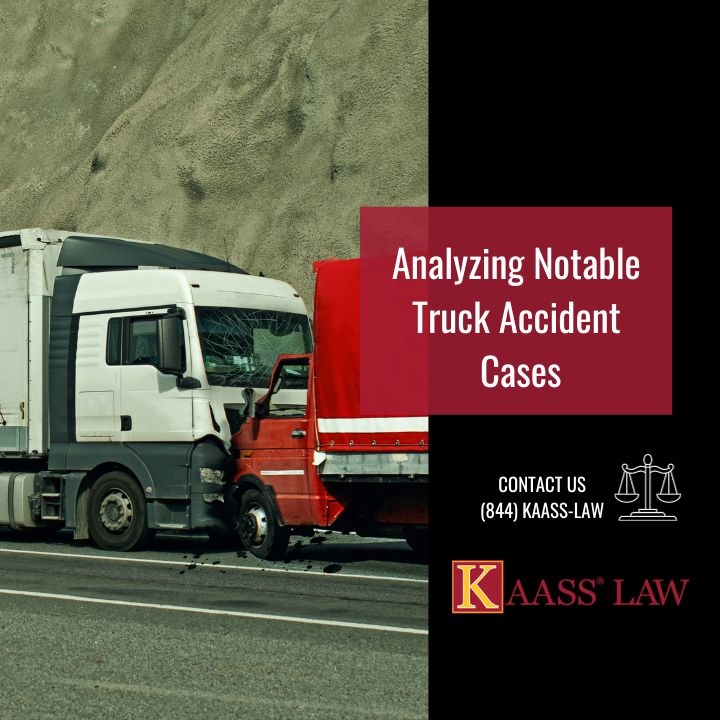
Truck accidents can have horrific results, including serious injuries, fatalities, and substantial legal repercussions. A number of well-known truck accident cases in recent years have illuminated the intricacies of these situations. We will be analyzing notable truck accident cases in this blog post, noting the salient features, ramifications for the law, and lessons discovered.
The Tracy Morgan Case: The Impact of Driver Fatigue
Tracy Morgan was a part of one of the most well reported truck accident incidents in the past few years. In 2014, a Walmart truck and Morgan's limousine collided, killing one passenger and gravely injuring several more. The fact that the truck driver had slept for more than twenty-four hours at the time of the collision highlights the problem of driver fatigue in the trucking industry. This case showed how important it is to properly enforce the hours of service restrictions in order to control driver weariness. It also emphasized how important it is for trucking businesses to ensure that their drivers can drive safely.
The Coca-Cola Truck Accident: Exploring Mechanical Failures
Yet another recognized incident featured a Coca-Cola truck that lost its brakes, resulting in a multi-vehicle collision. The question in the subsequent litigation was whether the trucking company had given its cars the necessary care and inspections. The tragedy demonstrated how important regular servicing is to avoid mechanical malfunctions that may cause disasters. This case serves as a reminder of the trucking industry's necessity for strict inspection procedures as well as the possible legal consequences for businesses that fail to maintain their fleet in a safe operational state.
Punitive Damages in the Schneider National Case
Punitive damages in truck accident claims became a topic of discussion after the Schneider National case. Because of evidence of deliberate negligence and disregard for safety concerns, the jury in this case awarded punitive damages against the trucking firm. This case highlighted the financial ramifications that businesses that consistently disregard safety procedures may face. The significance of an industry-wide proactive approach to safety is shown by the analysis of instances. For example Schneider National, which sheds light on the legal requirements for punitive damages in truck accident cases.
The Role of Technology in the FedEx Truck Accident Case
Technology was a factor in determining who was at fault in a well-known FedEx truck case. A lawsuit was brought to find out if the truck's safety features—like its collision avoidance technology—were functioning as intended following the collision between the truck and the passenger car. This case demonstrates the ways in which the trucking industry is evolving and the potential legal repercussions of over-reliance on technology. It sparks discussions about how much of an obligation automakers have to maintain and update the state-of-the-art safety technologies in their cars.
Contact Kaass Law Attorneys Today
These case studies provide insightful information on the intricacies of truck accident claims. Moreover, they illuminate topics including driver weariness, technical malfunctions, punitive damages, and the function of technology. It is critical that businesses and drivers prioritize safety, follow the law, and adopt new technologies. In order to hold negligent parties accountable and encourage systemic reforms that would improve general road safety, are vital. Analyzing notable truck accident cases give an opportunity to be able to comprehend the difficulties and the significance of ongoing efforts to avert similar occurrences in the future by looking at these situations. Be sure to visit our other website for more information regarding potential cases you may have.