

According to California law, several claimants can only fill in one wrongful death claim. Thus, to recover damages, everyone must file under the same claim.
Only several people are eligible to claim damages following a wrongful death. The California Code of Civil Procedure specifies that a surviving spouse, domestic partner, and children have priority in bringing a wrongful death claim under Section 377.60. Thus, anyone legally entitled to the decedent's property through intestate succession may file if these parties are not present. This may, in some instances, involve parents, stepchildren, or a potential spouse. In certain situations, people financially dependent on the deceased may also be eligible to sue for damages in a wrongful death case.
Here is the list of damages one can recover in a wrongful death claim:
In California, most wrongful death claims can be resolved through settlement, which involves negotiations between the insurance company and the claimant to determine a reasonable settlement sum. However, there are certain cases are heard in court and determined by a judge and jury. In any case, the party calculating a fair judgment will follow specific procedures to choose the correct sum to give a family in monetary compensation. The family's financial losses due to the death will be added to any foreseeable future losses. The attorney usually uses hard evidence to establish economic damages, such as invoices, bills, receipts, and the decedent's previous pay stubs. On the other hand, the valuation of noneconomic damages is more arbitrary. It depends on the beneficiaries' relationship with the decedent, the home services the decedent provided, and if the decedent is leaving behind a spouse or young children.
In California, only medical malpractice cases have a damage cap, which sets the maximum amount of compensation one can recover. So, your family cannot receive more than $250,000 in noneconomic damages if you are suing for wrongful death brought on by medical misconduct. Under California law, a person can't recover punitive damages in a criminal death case.
Generally, after recovering the damages, the family members can decide how to distribute the award. However, there are cases when family members disagree on the divided shares. Then the court can decide how to distribute the funds. As a result, the court takes into consideration the following:
The law would be on your side if someone else's negligence caused the death of a loved one. You might be qualified to sue the responsible party for wrongful death. No amount of money could ever make up for the grief and suffering you have endured, but neither you nor your family should have to endure financial hardship. Contact a Los Angeles Attorney today for a consultation on your case. Wrongful death cases are one of our many practices. Please dial 310.943.1171 to speak to our specialized attorneys. Call us now!

Wrongful death accidents are more common accidents than you may believe. A dedicated worker's death might sometimes result from an accident, which is tragic. If an employee passes away while working, the workers' compensation system pays death benefits to all qualifying dependents. Particularly if the employee was the family's main source of income, these benefits are frequently a crucial source of money for the surviving relatives.
What if an employee dies on the job? In this instance, my surviving family members proceeded to a wrongful death claim. To begin, understand that if you lost your spouse or domestic partner in a working/workplace accident, you may be eligible for workers' compensation death payments. You may be able to collect if you file a wrongful death case based on the precise circumstances of your loved one's death. A worker's compensation attorney may help you understand your rights to benefits and negotiate the best possible settlement. Of course, no amount of money can bring your loved one back, but it can help you keep afloat financially. The last thing anyone needs after a sad loss is to be struggling to pay their obligations.
A wrongful death lawsuit is a complicated procedure. The family members or survivors of the deceased person may file a wrongful death lawsuit. A lawsuit can be filed if the death was caused by the wrongdoing or negligence of another. For the losses of the survivors, recompense is sought in this kind of case. Loss of companionship missed payments, and burial costs are just a few examples of the several kinds of losses that can occur.
You can bring a wrongful death lawsuit if a loved one dies as a result of someone else's misconduct. A few examples of such an at-fault person include:
Wrongful death laws vary from state to state. Therefore, the state's statutes often specify who may file a claim for wrongful death and set monetary limits on damages. These cases are to help widows and orphans by giving them financial support.
Wrongful death claims may be pertinent when a victim who could have legitimately filed a personal injury claim against the other party dies as a result of the negligent act. This might happen under a variety of conditions, like the ones listed below:

Car accidents involving death happen because of someone else's carelessness. Although various things might cause them, deadly automobile accidents are the most frequent. Unfortunately, this can happen when a negligent driver engages in unsafe driving practices, for example:
While nothing can bring your loved one back, you can feel justified and get money from the driver who caused the accident. Thus, you can make a wrongful death claim with the insurance provider. Instead, the family members of the victim will have the option to file two different lawsuits: a wrongful death action or a survival action.
A wrongful death action is a civil lawsuit in which the plaintiff seeks compensation for losing a loved one. In some circumstances, the negligent party may also be charged with crimes. A wrongful death action is a civil claim to get compensation for someone's loss of a loved one. The negligent party can sometimes also be convicted for separate criminal charges. Usually, people file wrongful death claims in the following cases:

An electrocution lawsuit can be brought by a family member of an electrocution victim if resulting in death. Someone is accountable for an electric shock accident if:
The surviving family members of the victim of an electrocution accident may file a wrongful death lawsuit to recover damages. Funeral fees, burial costs, and loss of financial assistance are all eligible for compensation in a wrongful death claim.
Anyone hurt in an electrical shock accident can file a personal injury lawsuit for damages. However, the accident's offender may have to compensate the other party. The victim of an electric shock will pursue financial recompense for their losses and harms in a personal injury lawsuit. Following an electrocution injury accident, damages could include:

Treatise: Motorcycle Helmet Product Liability in California Product liability lawsuits frequently arise as a result of motorcycle accidents, and a common product at issue is the rider’s motorcycle helmet. For instance, in California, manufacturers, distributers, and retailers of motorcycle head gear can liable for injuries and damages that occur as a result of defective protective gear.
In California, lawsuits brought under the theory of products liability are strict liability cases, meaning the plaintiff does not have to show negligence on the part of the manufacturer or seller in order to prevail on a claim of defective product. The basis for strict products liability is grounded on the public policy considerations that parties involved in the commercial enterprise who make a profit by placing defective products into the marketplace should bear the responsibility of the injuries caused to consumers by those products. V 61 C.2d 256 (Ca. 1964). In order for a plaintiff to prevail and be awarded damages under the theory of products liability the plaintiff must show: (1) there was a defect in the manufacture or design of the helmet or the helmet’s product warning was defective or did not exist; (2) the defect was the cause of the plaintiff’s injury; and (3) injury did in fact occur. , 137 Cal.App.4th 292, (Ca. Ct. App. 2006).
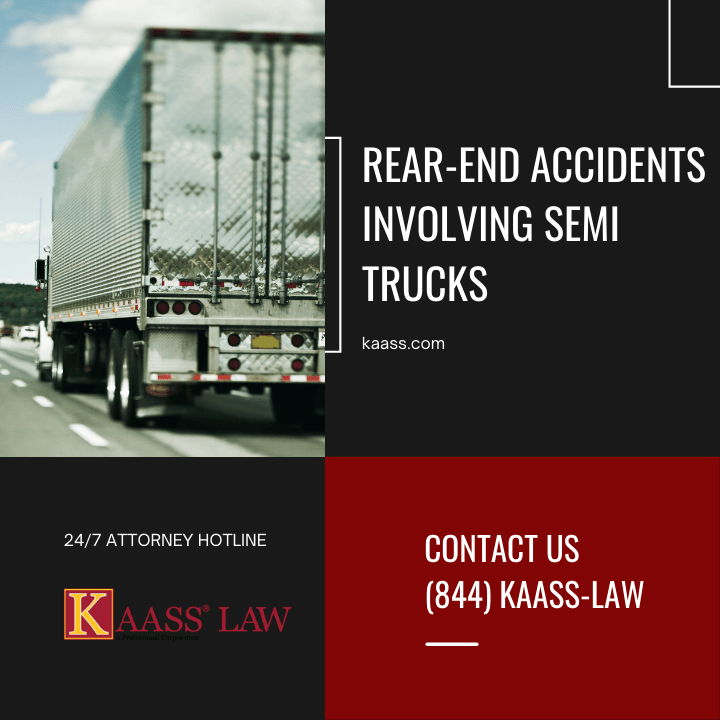
A rear-end collision between a semi-truck and a passenger vehicle is something that happens often. The first thing that comes to mind when you hear the words "rear-ended by a semi-truck" is most likely the severity of damage such an accident can cause. This is primarily due to the overwhelming size and weight of the semi-truck can pose a serious risk of catastrophic injury or wrongful death in an accident.
There are many causes for rear-end accidents involving semi-trucks. Some common causes as to why a semi-truck driver may rear-end another vehicle include:
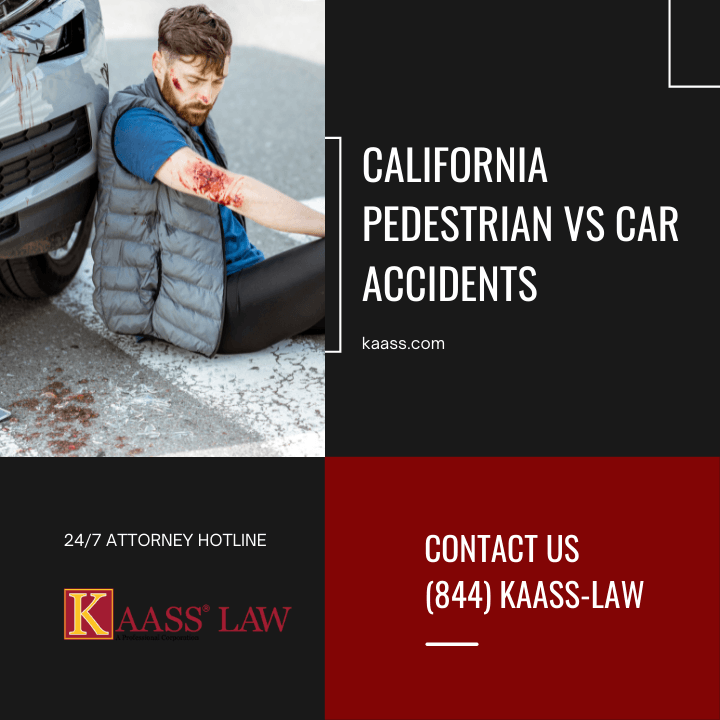
Pedestrian vs vehicle accidents occurs far often than one may believe, especially in Los Angeles. California has several right-of-way laws designed to protect pedestrians and may serve to show that a driver is liable for an accident.
CVC 21950(a) provides that "the driver of a vehicle shall yield the right-of-way to a pedestrian crossing the roadway within any marked crosswalk or within any unmarked crosswalk at an intersection, except as otherwise provided..."
In order for an injured pedestrian to recover in a personal injury lawsuit they must prove:
An experienced Glendale personal injury lawyer can evaluate the facts and circumstances of a case and help recover for damages such as:
In California, anyone who owns property has a legal obligation to keep it safe from hazards. When determining who is liable in a premises liability or slip and fall case, the plaintiff must show that the defendant(s) had ownership, possession, and control of the premises. The individual(s) who owns, possesses, or controls the premises is the one responsible for any injuries arising from a hazardous or dangerous condition of the premises. Therefore, without the crucial element of "control over the premises", no duty to exercise reasonable care to prevent injury on the property can be found.
In California, the owner, operator, and/or lessor of property owe a duty to visitors to ensure that the property is in a reasonably safe condition. Furthermore, another crucial element in premises liability cases is the element of "foreseeability" .The foreseeability of harm is a prerequisite for the recovery of damages. The foreseeability of the danger establishes the duty owed.
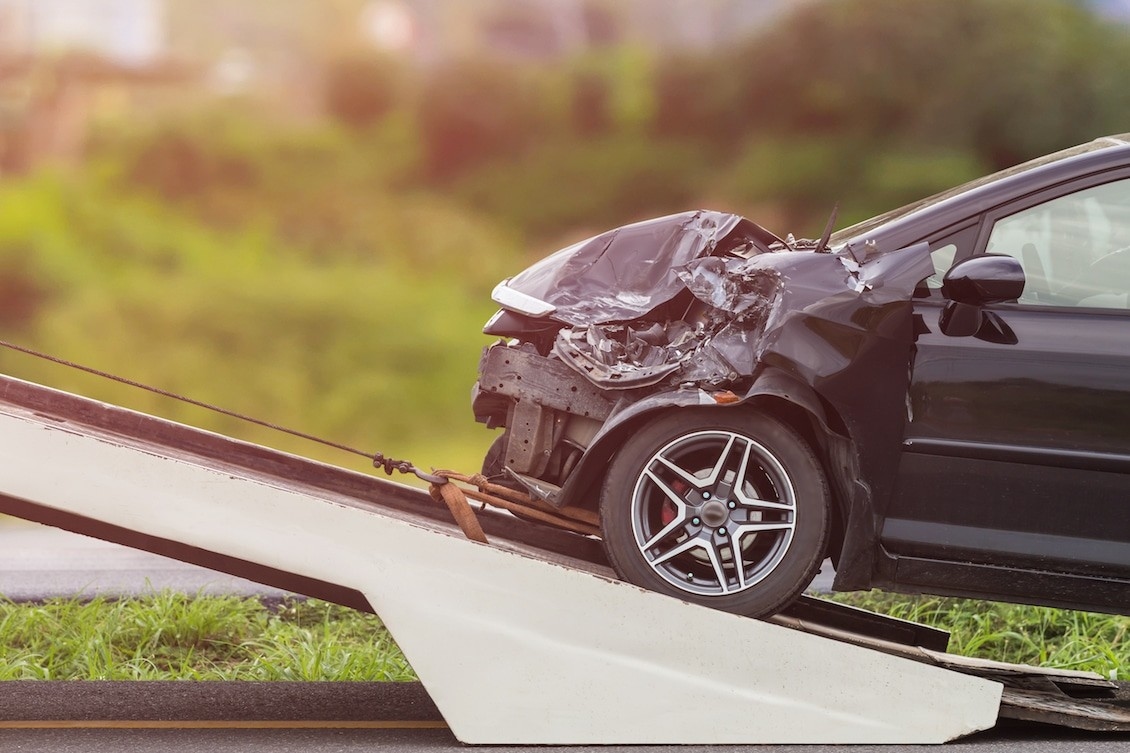
Some common personal injury cases include:
There are two types of damages that are recoverable in California personal injury cases, which include special damages and general damages. Special damages are those damages that are financial in nature, such as hospital and medical bills or lost wages. On the other hand, general damages are those that are non-financial losses, including pain and suffering, loss of consortium, and emotional distress.
Benefits for dependents and workers/employees who sustain work-related injuries or fatalities are designed under the concept of workers' compensation. Many people are unaware that workers' compensation protects employers from responsibility for job-related injuries or fatalities. That applies even if the employer was negligent or contributed to a hazardous workplace environment. If the workplace fatality was caused by a negligent general contractor, subcontractor, or equipment manufacturer, surviving family members may be able to pursue a wrongful death claim against the guilty party rather than the employer. An example of this would be the deceased employee who was killed as a result of a coworker's irresponsible driving of a vehicle. Get in touch with a Los Angeles work death attorney right away if someone you know has passed away in an automobile accident while driving for work. Family members of the unjustified death victim must show the following to initiate a wrongful death lawsuit:
Compensation for intangible losses is one of the features that distinguishes an unjustified death claim from workers' compensation.
Death benefits may be available to surviving family members who, at the time of the accident or injury, were wholly or partially financially reliant on the employee. Some family members automatically qualify as full dependents. This covers children under the age of 18 and children who are unable to work due to mental or physical disabilities. Surviving family members have one year from the date of death to make a claim. They will then qualify for workers' compensation death payments. The surviving spouse is eligible for death benefits up to a second marriage. Workers' compensation must also compensate surviving dependents. Dependents are children under the age of 18 years old. This applies to medical expenditures, temporary incapacity, or permanent disability that the employee owed when he or she died.
It is critical not to rush into a settlement. Consult with a knowledgeable workers' compensation attorney to assist and ensure you get fair compensation for your loss. You may reach our office line at 310.943.1171. Take a guide through this link to view our other practices.
Cases involving death have to meet conditions:
The limitation period for the area where the deceased passed away specifies how long you have to submit a wrongful death claim. If a death investigation takes longer than expected to identify the reason for the incident, you may still submit a claim.
The primary measurement of damages in a wrongful death lawsuit is financial. This category of damages includes lost services, support, medical costs, funeral costs, and the chance to inherit something. The majority of states uphold negligence laws that specify who qualifies for damages and what kinds of damages a court may grant. Frequently, each state will stipulate that the verdict in a wrongful death case serves as just recompense for the monetary losses brought on by the deceased person's passing. A person who is a co-owner of a decedent's estate may be entitled to compensation for funeral and medical expenses that they paid for or assume responsibility for. A damage judgment could also include interest charges dating back to the decedent's passing.
Age is one of the factors that will determine compensation. Therefore, damages like medical expenses, cemetery, and funeral costs, and the cost of your suffering and pain as calculated by applying the multiplication or per diem approach will all be taken into account. The at-fault party's insurers will send a check to your attorney for the full amount of the settlement when a wrongful death lawsuit is over. After deducting their fees and other legal expenses, your attorney will send a cheque for the remainder to the surviving family members in accordance with the settlement agreement. The estate executor may also receive the check from them.
If your loved one was a victim of someone's negligence which resulted in wrongful death, you should talk to a lawyer as soon as possible. Since there is a statute of limitation for a wrongful death claim. For a consultation right away, contact Kaass Law at (310) 943-1171. Visit our other website for more information.
Numerous circumstances allow one to file a lawsuit for wrongful death in California after a fatal auto collision. Therefore, as a surviving family member of a victim, you will first need to prove the following elements for a valid wrongful death lawsuit:
The defendant had a legal responsibility to do everything to prevent harm to the loved one. According to California law, all drivers are obliged to drive in a way that does not injure others.
This means that the defendant committed wrongdoing and breached his duty of care towards the victim.
The defendant is directly responsible for the car accident that claimed the life of your loved one.
To clarify, your loved one's passing must have caused your family to experience financial or nonfinancial losses, such as the absence of the decedent's companionship, care, and earnings. Thus, you will probably be able to obtain a settlement or jury decision that compensates you and your loved ones for both concrete and intangible damages if you or your wrongful death attorney can demonstrate that these aspects are more likely true than false. Moreover, the victim's family can have a different claim against the reckless driver for additional damages, like the medical costs related to their injuries before they passed away.
According to California law, only certain people can file a wrongful death claim for compensation, including:
Under California's intestate succession laws, anyone entitled to the victim's property can file a wrongful death action if no family member is listed above. This can also include the victim's siblings and parents too. Additionally, some people who were financially reliant on the victims at the time of the accident may be able to file a wrongful death claim. They include:
Certainly, you will receive support, advice, and representation from the Kaass Law wrongful death and automobile accident attorneys at this difficult time. Give our office a call at 310.943.1171 and visit our other website for more information.
Some surviving family members may be eligible to pursue a wrongful death case if a family member died in an electrocution accident. The family can seek damages for their loss through a wrongful death lawsuit, which also serves as a means of holding the accident's cause accountable for their deeds.
Construction workers frequently become victims of electrocution at work sites. Construction accident lawsuits in these situations may concentrate on recovering worker's compensation benefits as well as financial compensation from the employer, contractors, and others accountable for the working site's harmful circumstances. Two factors determining the damages of recovery in an electrocution lawsuit are how severe the injuries were and whether they were fatal. Compensation damages are meant to put the victim of an electric shock accident back in the same situation they would have been in if the event hadn't happened. Punitive damages may also be available in specific circumstances. When the defendant acted in a particularly egregious manner, punitive damages, also known as exemplary damages, may be available. Injuries brought on by the defendant's malice, oppression, excessive carelessness, or deception are included in this. The jury takes into account these factors while determining how many punitive damages to award:
Electric shock results in electrocution, which is death. However, the deceased victim of an electrical accident is not eligible to bring a personal injury claim on their behalf. Nevertheless, a wrongful death case enables the remaining family members to obtain compensation. When a loved one passes away as a result of another's negligence, some family members may be eligible to launch a lawsuit for damages. Depending on the state law in question, certain family members may be qualified to make a wrongful death claim. The following relatives may bring a wrongful death claim in California:
An additional "survival" cause of action can be brought in addition to a wrongful death claim. To make up for damages incurred by the victim as a result of the wrongdoing, this kind of claim is made on behalf of the decedent's estate.
The location of the accident, the parties involved, and the source of the electric shock are all important considerations for determining who is responsible for an electric shock accident. Negligence is typically a number one cause of an electrocution lawsuit filing. Any losses resulting from the wrongdoing of the negligent person are their responsibility. Following an injury accident, the plaintiff alleging negligence must prove the elements below to get damages:
Employers are accountable for an employee's negligent acts when they result in an accident. A company is vicariously accountable for its workers' negligence under "Respondeat Superior" rules. The owner of the property may be held accountable for any hazardous conditions that existed there when an electrical shock happens on someone else's property. According to "premises liability" rules, property owners and occupiers have a responsibility to keep their property in good shape and notify visitors of any potentially hazardous situations.
Contact a Los Angeles Attorney today for a consultation on your case. Wrongful death cases are one of our many practices. Please dial 310.943.1171 to speak to our specialized attorneys.
Product defects can determine by: (1) manufacturing defect; (2) design defect; or (3) warning defect. The mere fact that a plaintiff suffered an injury from the normal use of a product does not itself establish that the product was defective. Hennigan v. White, 199 Ca.App.4th 395 (Ca. Ct. App. 2011). For example, a plaintiff who suffers a head injury while wearing a motorcycle helmet in its normal use is not, by itself, sufficient to establish a claim for products liability. Instead, there has to be some kind of legal defect in the motorcycle helmet.
Manufacturing defects are most common. Strict products liability for a manufacturing defect can be found in two scenarios: (1) when the product left the manufacturer’s control, it differed from the manufacturer’s intended result or (2) when the product left the manufacturer’s control, it differed from apparently identical products of the same manufacturer. Barker v. Lull Engineering Co., Inc., 20 Ca.3d 413 (Ca. 1978). Additionally, the defective product must have been used in a manner reasonably foreseeable by the manufacturer and yet still caused the plaintiff’s injury. Id. The following scenario highlights the “reasonably foreseeable use” element of a manufacturing defect claim: Plaintiff wears her motorcycle helmet on backwards, shorty thereafter gets into a collision due to her vision obstruction. A defect in the face shield of the helmet causes injury to the back of her head. Plaintiff would not be able to maintain a products liability case against a motorcycle helmet manufacturer because, even though the face shield was defective, she was not using the helmet in a manner that would be reasonably foreseeable by the manufacturer. California’s Civil Jury Instructions require that in order for a plaintiff to establish a claim for manufacturing defect, all of the following must be proven: (1) that the defendant manufactured or sold the product at issue; (2) that the product contained a manufacturing defect when it left the defendant’s possession; (3) that the plaintiff was harmed; and (4) that the product defect was a substantial factor in causing the plaintiff’s harm. CACI No. 1201. “A product will be considered as containing a manufacturing defect if the product differs from the manufacturer’s design or specifications or from other typical units of the same product.” CACI No. 1202.
In terms of analyzing a plaintiff’s claim under the consumer expectation test, a jury will be instructed that the following elements must be proven before judgment can be awarded in favor of the plaintiff: (1) that the defendant manufactured or sold the product (2) that the product did not perform as safely as an ordinary consumer would have expected it to perform when used or misused in an intended or reasonably foreseeable way; (3) that the plaintiff was harmed and; (4) that the product’s failure to perform safely was a substantial factor in causing the plaintiff’s harm. CACI No. 1203. Alternatively, when reviewing a claim for design defect under the risk-benefit test, a plaintiff must prove: (1) that the defendant manufactured or sold the product; (2) that the plaintiff was harmed and; (3) that the product’s design was a substantial factor in causing the plaintiff’s harm. CACI No. 1204. If a plaintiff can prove these three facts, then the jury is instructed to decide in favor of the plaintiff unless the defendant can prove that the benefits of the product’s design outweigh the risks of the design. Id. In deciding whether the benefits outweigh the risks, the jury is instructed to consider the following factors: (1) The gravity of the potential harm resulting from the use of the product; (2) The likelihood that the harm would occur; (3) The feasibility of an alternative design at the time of manufacture; (4) The cost of an alternative design; (5) The disadvantages of an alternative design; and (6) Any other relevant factors. Id.
A plaintiff must prove all of the following to establish a claim for warning defect: (1) that the defendant manufactured or sold the product; (2) that the product has potential risks or side effects that were known or knowable in light of scientific or medical knowledge at the time of manufacture or sale; (3) that the potential risks or side effects presented a substantial danger when the product is used or misused in an intended or reasonably foreseeable way; (4) that ordinary consumers would not have recognized the potential risks or side effects; (5) that the defendant failed to adequately warn or instruct of the potential risks or side effects; (6) that the plaintiff was harmed and; (7) that the lack of sufficient instructions or warnings was a substantial factor in causing the plaintiff’s harm. CACI No. 1205.
The defective product must have actually caused the plaintiff’s resulting injury. Horn v. General Motors Corp., 17 Cal.3d 359 (Ca. 1976). It is not enough that the defect played some role in causing the injury, however, the defect must have been a substantial factor that lead to the plaintiff’s injury. Soule at 572. In fact, a defect is considered legally and factually irrelevant if it played no part in bringing about the injury. Id. (Holding that if the external force of a vehicle accident was so severe that it would have caused identical injuries in spite of the defect in the vehicle’s collision safety, then the defect cannot be considered a substantial factor in bringing about the plaintiff’s injury.) Practically, in cases of motorcycle helmet product liability, this would mean that if a plaintiff suffered a head injury during a motorcycle crash such that was so severe the outcome would have been the same regardless of whether or not the plaintiff was wearing a helmet, then a claim cannot be made for products liability even if the helmet was found to be defective.
Injury must occur. In terms of products liability, a defendant can be strictly liable for physical injuries which connects to persons or property. As the old saying goes, "No harm no foul." However, it is important to note that a plaintiff cannot prevail on a claim of strict liability for purely economic loss. Absent a claim of personal injury or damage to other property, there is no strict liability for loss of value, cost of repair, or replacements of the defective product. Jimenez v. Superior Court, 29 Cal.4th 473 (Ca. 2002). Additionally, California courts have held that the injury suffered by plaintiff must have actually occurred, meaning it is insufficient to claim only the likely potential for injury. KB Home v. Superior Court, 112 Cal.App.4th (Ca. Ct. App. 2003).
A broad range of plaintiffs may recover under the theory of product liability. Recovery from injury is not limited to the first purchaser of the product, but rather to anyone whose injury was reasonably foreseeable. Elmore v. American Motors Corp., 70 C2d 578 (Ca. 1969). This can include innocent bystanders injured by defective automobiles or employees injured by defective equipment owned by their employers. See Elmore v. American Motors Corp., supra, 70 Ca.2d 586 (Ca. 1969). See Barker v. Lull Engineering Co., Inc., 20 Cal.3d 413 (Ca. 1978). A practical example of this concept in a motorcycle helmet product liability case can is as follows: Biker Son purchases a motorcycle helmet for Biker Dad’s birthday. Biker Dad has a motorcycle accident while wearing the helmet and suffers a brain injury as the result of a design defect in the helmet. Although Biker Dad was not the direct purchaser of the helmet, he is a proper plaintiff who can bring suit against the helmet manufacturer.
In instances of product liability, the manufacturer is normally the most obvious defendant, but they are far from the only defendant available. Originally, the doctrine of strict liability only applied to the manufacturers of defective products. Greenman v. Yuba Power Products, Inc., 59 Cal.2d 57 (Ca. 1963). However, over time, California courts have expanded the doctrine to reach parties involved in the commercial chain of distribution of the defective product. Peterson v. Superior Court, 10 Cal.4th 1185 (Ca. 1995). This means that not only the manufacturer of a defective motorcycle helmet can be liable in a claim of products liability, but also the distributor and the retailer can be liable as well.
Although there are several potential defendants available to the plaintiff in a motorcycle helmet products liability action, not everyone can be under the doctrine of a lawsuit. You will note that manufacturers, distributors, and retailers have one common theme that exists between them – they are all involved in the chain of custody of a product. One party that cannot hold liability under the doctrine of products liability is a party who provides a service. Strict products liability will always involve a tangible product that places into the stream of commerce, so if the potential defendant is offering a service, rather than a product to the plaintiff, the plaintiff cannot bring suit against the service provider under the theory of products liability.Gagne v. Bertran, 43 Cal.2d 481 (Ca. 1954). For example, a plaintiff would most likely not be able to bring a products liability suit against a business that provides motorcycle riding lessons, even if the business provided the plaintiff with a defective helmet to use during the lesson. The plaintiff may be able to sue under another legal theory, but not products liability. In some cases there may be a dispute over whether the business is providing a product or services, and in those instances, the court must determine whether the dominant role of the defendant should identify as a service or a sale. Murphy v. E.R. Squibb & Sons, Inc., 40 Cal.3d 672 (Ca. 1985).
Product liability among defendants is joint and several, meaning that any defendant established by the plaintiff as involved in the stream of commerce of the defective product is responsible for all of plaintiff’s damages.
Below is a list of various California jury verdicts and settlements for cases regarding product liability connection to a defective motorcycle helmet:
• Esposto v. City and County of San Francisco; State of California; Shoei Helmet Corporation; Paulson Manufacturing Company; David Golden Motorcycles, Inc., JVR No. 43984 Superior Court, San Francisco County (1986). A plaintiff in his mid-30s is a victim in motorcycle accident, resulting in becoming a quadriplegic. The plaintiff sued the city of San Francisco and State of California arguing that poor road conditions contributed to his accident. Additionally, the plaintiff sued the motorcycle manufacturer and retailer and claimed that the bike, helmet and visor were defective. The manufacturer and retailer maintained that the products were not defective. The plaintiff eventually settled for a total amount of $865,000. The city and county paid the large bulk of the settlement.
• Sheryl Suglia v. Nexl Sports Products, LLC, Lifestyle Custom Cycles, Gilbert J. Williams and Mark Skolnick Jr., 2009 WL 3260089, Superior Court, Los Angeles County (2009). Plaintiff and her late husband got into a collision with their motorcycles, head-on, by a drunk driver, resulting Plaintiff having severe injuries the passing of her husband .At the time of the crash, plaintiff and her husband were wearing “beanie” type helmets manufactured by Nexl Sports Products and sold by retailer Lifestyle Cycles.The particular "beanie" type helmets did a recall in 2003 for failing to pass Department of Transportation penetration and impact-absorption tests. The plaintiff sued the manufacturer and retailer under the theory of strict products liability and negligence, claiming that both defendants should have made her aware of the product recall. Plaintiff sought more than $2 million in economic damages. The jury found in favor of the defense, reasoning that the impact between the car and motorcycle was so major that no helmet could have prevented the resulting injuries.
• Sally Doe v. Daytona Helmets Inc.; Jeffrey McKinley; Big Dawg Custom Cycles & Rodney Chatwin, individually, 2006 WL 4589449, Superior Court, Alameda County (2006). Plaintiff is dealing with head injuries due to a motorcycle accident. One of the claims brought by plaintiff was for products liability against the motorcycle helmet manufacturer. The crux of plaintiff’s argument was that the helmet failed to meet DOT safety requirements, despite the fact that it displayed a DOT compliant sticker. The parties reached a settlement agreement and the plaintiff received approximately $1 million from the helmet manufacturer and an additional $1 million from the remaining defendants.
• Grant Thor and Sara Guerrero v. Kerr Leathers, Inc., Sunright International and Visalia Harley-Davidson, 2007 WL 2872337, Superior Court, Tulare County (2007). Plaintiff's late father received severe head injuries due to an motorcycle accident, resulting his late fathering from passing away. Plaintiff brought a products liability suit against the manufacturer. The retailer of the helmet claiming that it was defective after it failed a “retention” test by the Federal Government. The defendants recalled the helmet, but there was no evidence of the plaintiff’s father ever receiving notice of the recall. Plaintiff settled for approximately $2 million.
• Riley v. Grandon, 5 Trials Digest 17th 7, Superior Court, Riverside County (2013). The Decedent was a motorcycle passenger when the bike struck a speedbump, lost control, and crashed. Unfortunately, the Decedent fractured her skull and died as a result of her injuries. The Decedent’s estate brought suit against the driver of the motorcycle under a theory of negligence and also alleged strict product liability against the manufacturer and retailer of the helmet the Decedent was wearing at the time of the accident. At the end, the plaintiff claimed that the helmet did not meet motorcycle safety standards. Plaintiff reached a $1 million settlement with the helmet retailer. THIS ARTICLE IS FOR EDUCATIONAL PURPOSES ONLY, NO ATTORNEY CLIENT PRIVLIGE, CONSULT, OR ADVICE. PLEASE CONSULT WITH A PROFESSIONAL. Contact KAASS Law for further assistance and representation!
Commercial truck drivers are required to maintain a 'logbook" that records the "hours of service". In other words, this log contains the number of hours the drive has been driving. Semi-truck drivers hauling cargo have an 11-hour driving maximum after 10 consecutive hours off duty. Further, semi-truck drivers can work a maximum of 70 hours per week. A driver can then resume driving if they rest for 34 consecutive hours, including 2 nights. Furthermore, all carriers and drivers operating commercial motor vehicles (CMVs) must comply with "hours of service" regulations found in 49 CFR 395.
Driving a semi-truck with unmaintained or worn-out brakes is negligent. Commercial vehicles such as tractor-trailers and semi-truck are moving fast and burdened with a heavy load and therefore generally will need a lot more time to come to a full stop than any SUV. As a result, failing to routinely maintain commercial vehicle breaks will need even more time to come to a complete halt.
Step 1: Firstly, if you are involved in an accident, the first and most important thing to do is call an emergency response to request medical and police assistance. Step 2: Take pictures of the damage to the vehicles, the position of the vehicles, and the entire accident scene. If there is a debate as to how the semi-truck accident occurred, the damage and positions of the vehicles will help the police and accident reconstruction experts to determine what occurred. Moreover, taking a picture of the driver's logbook logs for that day is a plus. Step 3: Attempt to locate people who may have witnessed the collision. Get their name, address, and telephone number. Additionally, exchange information with the other driver, such as insurance information and driver's license information, vehicle registration, driver's contact, and employer information. Step 4: Seek the proper and immediate medical treatment as soon as possible. Going to the emergency room to be examined will ensure there are no internal or hidden injuries, as well as document your injuries. Step 5: Lastly, contact an auto accident lawyer immediately if you have been involved in a semi-truck accident.
A victim involved in an accident with a commercial truck can file a lawsuit against the at-fault driver and the commercial truck company. It is important to keep in mind that the tractor and trailer can have different owners. As such, it is important to ask the driver of the truck who owns the tractor and trailer.
As experienced litigators, we have successfully litigated various personal injury cases including complex personal injury matters. Above all, our attorneys possess the mastery it takes to successfully receive fair settlements during the claims stage of a personal injury case. Don’t accept low-ball offers from insurance companies. An injured truck accident victim may seek compensation for damages which includes:
If you or a loved one has been seriously injured or killed due to a negligent semi-truck driver it is crucial to seek advice from an experienced commercial truck accident attorney as soon as possible in order to preserve your claim and legal remedies. We invite you to contact our commercial truck accident attorney today at (310) 943-1171 for a free consultation.
Kaass Law will connect you with leading medical professionals in your area to diagnose and treat your injuries. If you are unable to pay for the medical treatment we can facilitate treatment on a medical lien basis. This means you pay nothing up front. As the conclusion of your case, your medical bills are paid from the settlement.
[contact-form][contact-field label="Name" type="name" required="true" /][contact-field label="Email" type="email" required="true" /][contact-field label="Website" type="url" /][contact-field label="Message" type="textarea" /][/contact-form]
There are two types of damages that are recoverable in California personal injury cases, which include special damages and general damages. Special damages are those damages that are financial in nature, such as hospital and medical bills or lost wages. On the other hand, general damages are those that are non-financial losses, including pain and suffering, loss of consortium, and emotional distress.
The statute of limitation for bringing a pedestrian vs car accident is 2 years from the date of the accident. However, claims involving government tort or injury involving a government entity, such as a car accident with a government city vehicle, requires the injured party to first file a claim with the appropriate governmental agency within 6 months from the date of the accident. Finally, depending on the outcome of the claim, the claimant will then have either 6 months or two years to file suit. If you fail to follow the guidelines for the statute of limitations, you may lose your right to file a claim.
California Code of Civil Procedure section 335.1 provides, an injured pedestrian has two years to file a claim against those who may be liable for their accident.
Our personal injury attorneys specialize in various personal injury matters including complex personal injury cases, government torts specifically related to auto accidents, motorcycle accidents, left turn motorcycle accidents, truck accidents, multi-car accidents, which involve a government vehicle such as Metro Bus, fire truck, U.S Postal Service, and Water & Power Truck. If you have been involved in an accident involving a Government vehicle, give our office a call at (310) 943-1171 for a free consultation. [contact-form][contact-field label="Name" type="name" required="true" /][contact-field label="Email" type="email" required="true" /][contact-field label="Website" type="url" /][contact-field label="Message" type="textarea" /][/contact-form]
[video width="1280" height="720" mp4="https://kaass.com/wp-content/uploads/2020/02/California-Pedastrian-Vehicle-Accident.mp4"][/video]
If property owner(s) fail to properly maintain the premises and someone suffers injury as a result, they may be liable for damages under premise liability law. As in any other negligence action, the injured person must establish the following: (1) the existence of a duty on the part of the defendant to use due care; (2) a breach of this legal duty; and (3) the breach as the proximate or legal cause of the resulting injury. If you or a loved one suffered damages associated with an accident which occurred on someone else’s property, you may be entitled to compensation for your injuries. We invite you to contact our Glendale personal injury attorneys at (310) 943-1171, for a free consultation.
Common causes of slip and fall accidents occur when property owners fail to exercise reasonable care in preventing slip or fall hazards, such as:
Property owners are legally responsible to inspect the property for any hazard risks and maintain the property in a safe manner. If there are any latent or concealed perils on the land, the possessor is under a duty to exercise ordinary care either to make the condition reasonably safe for those coming onto the land or to give such persons a warning adequate to enable them to avoid injury. Failure to repair or fix a slip hazard, resulting in a preventable invitee or customer injury, is an act of negligence.
Premises liability claims against government entities, due to injuries sustained on public property are often very challenging to litigate. Government entities enjoy greater protections against premises liability claims than do ordinary private persons and businesses. In California, to bring a successful premises liability claim against a government entity, one must prove an additional element that does not exist in premises liability claims against private entities - under Government Code section 835, the injured party must prove either: (a) a negligent or wrongful act or omission of an employee of the public entity within the scope of his employment created the dangerous condition; or (b) the public entity had actual or constructive notice of the dangerous condition under Section 835.2 a sufficient time prior to the injury to have taken measures to protect against the dangerous condition. Are you wondering how to prepare for a slip and fall claim? If you were injured due to a slip and fall accident, our knowledgeable Los Angeles personal injury attorneys can help you get the compensation you deserve. Call us at (310) 943-1171, 24 hours a day, 7 days a week for a free consultation tailored to the specifics of your case, our attorneys speak English, French, Spanish, Russian, Armenian, and Italian.
Loss of consortium is a claim for damages suffered by the spouse or children of a person who has been injured or killed as a result of the defendant's negligent or wrongful acts. Generally, claims for loss of consortium are not awarded unless the person injured dies or suffers a severe and enduring injury. The suing party must show that the injured or deceased family member cannot provide his or her spouse or family member with the same love, affection, companionship, comfort, society, or sexual relations that were provided before the accident.
Statute of limitations is the period of time you have to file a claim or suit. Personal injury cases have a statute of limitations varies depending on the type of case, but generally, the time limit usually starts on the day the accident or injury occurred and can last anywhere from 1 to 2 years. However, in claims involving government tort or injury involving government entity, such as an car accident with a government city vehicle, requires the injured party to first file a claim with the appropriate governmental agency within 6 months from the date of the accident. Finally, depending on the outcome of the claim, the injured party will then have either 6 months or two years to file suit. If you fail to follow the guidelines for the statute of limitations, you may lose your right to file a claim. Thus, it is vital you speak to a Los Angeles personal injury lawyer immediately to preserve your claim! Our lawyers in Glendale, Los Angeles, California, will be happy to help you through every step of your personal injury case.
Our personal injury attorneys specialize in various personal injury matters including complex personal injury cases, government torts specifically related to auto accidents, motorcycle accidents, left turn motorcycle accidents, truck accident, multi-car accidents, which involve a government vehicle such as Metro Bus, fire truck, U.S Postal Service, and Water & Power Truck. If you have been in an accident involving an Government vehicle, give our office a call at (310) 943-1171 for a free consultation! This content is for educational purposes only. KAASS LAW is authorized to practice law in California. The above content is for California residents only. This content provides only general information, which may or may not reflect current legal developments. KAASS LAW expressly disclaims all liability in respect to actions taken or not taken based on any of the contents of this website. The above content DOES NOT create an attorney-client relationship. KAASS LAW does not represent you unless you have expressly retained KAASS LAW in person at the KAASS LAW office. KAASS LAW helps clients in: Los Angeles, Burbank, Hollywood, Glendale, Van Nuys, North Hollywood, Studio City, Highland Park, Eagle Rock, Sunland, Tujunga, Sylmar, La Crescenta, La Canada, Beverly Hills, Westwood, Santa Monica, Brentwood. Pacoima, Montebello, Commerce, Alhambra, Downey, Bell, Maywood, Walnut Park, Vernon, Lynwood, Echo Park, Silverlake, Mission Hills, Northridge, North Hills, Porter Ranch, Chatsworth, Reseda, San Diego, La Jolla, El Cajon, Chula Visa, Del Mar