
So, you successfully submitted your trademark application and you’re so excited to hear that your trademark is now officially registered!
Except, instead of that notice, you get another letter from the U.S. Patent and Trademark Office called an ‘Office Action’. The letter seems confused and complicated and at this point you’re not even sure if your trademark was outright denied or put on hold. You begin to wonder if this was all a huge mistake.
Well, we’re here to clear up some of the confusion for you. First of all, it’s not a huge mistake. Taking the steps to protect your brand, idea, or design is a huge one and submitting the application for it is no small feat! The truth is, it’s actually quite common for trademark applications to not get accepted immediately. Importantly, this does not mean that your application has been denied. It just means that the USPTO needs some more information before granting you your trademark. After you submit your application, an examining attorney at USPTO will review it and they will determine if there are any problems with your application. If there are any, you will receive an ‘Office action’ letter, detailing what went wrong.
There are really only two kinds of trademark Office actions that we need to know about: non-final and final. If the issue is detected for the first time, the USPTO will issue a non-final Office action. In that letter, they explain what problems persist with your application and they give you, the applicant, a chance to address and fix those problems. If, on the other hand, you have failed to address the issues that the USPTO raised in a previous Office action letter, then they will send out a final Office action letter to you. The crucial difference is that you have more limited rights to respond to final Office actions. Thus, it’s important to take action earlier on.
There are plenty of reason you may have received an Office action during the trademark process, including:
Your Response Should Be...Prepared.
In your Office action letter from USPTO, they will specify how long you have to respond to their concerns. Typically, your response needs to get back to them within 6 months of the mailing date of the Office action letter, but you should still check because they can choose to give you a much smaller window of time. Importantly, whatever deadline they give you cannot be extended or prolonged, so it’s very important to know the exact date and to act before it passes. This is because if you do not respond to an Office action by its deadline, then the USPTO will think that you have abandoned your application. In other words, you won’t get your trademark registered, nor will you get your filing fees back. Thus, prompt and timely responses to an Office action letter are essential to getting your trademark or patent registered.
Another important thing to keep in mind is what exactly the letters says that the examining attorneys takes issue with in your application. Oftentimes, an Office action letter wants you to fix or address simple problems that are quite easy to deal with, like submitting a different specimen, or paperwork. Other times, the issues are much more convoluted and those will require a much more detailed response. For example, if the examining attorney think that there is a high likelihood of confusion between your mark and another registered one, then you will have to send in legal arguments that illustrate the differences between the marks.
When you do respond to an Office action letter, it’s of utmost importance that your response is well-thought out and that it actually addresses each and every single concern that the examining attorney has with your application. If you only address and respond to one of the issues that they raised but completely ignore or fail to respond to the rest, then you’ll probably receive a final Office action surrounding the rest of the issues. You should know that you can contact the examining attorney to ask for clarification on any of the issues they have raised, but they are not your lawyer and they will not help you create a response to those problems. Lastly, in the event that you do receive a final Office action, then the only way to appropriately respond is to address its concerns or to file an appeal with the Trademark Trial and Appeal Board.
While it can be incredibly demoralizing to receive an Office action letter instead of a notice that your trademark application was approved, you should not despair or lose hope. An Office action letter, does not mean that your trademark cannot ever be registered, just that there are some problems that need to be dealt with first.
At KAASS LAW, we work tirelessly with our clients to ensure that they send out the best possible application for their trademarks and patents, because we value the incredible originality and innovation in our clients’ work. By working with us, you already greatly reduce the chance that you will ever receive an Office action letter. But even if you do, we have your back. We will help you to break down the letter to make sure you understand what is being asked of you, and to respond effectively, ensuring that each of the points in the letter are appropriately addressed. If you or a loved one have received an Office action letter, or are considering submitting a trademark or patent application, we invite you to give us a toll free call at (310) 943-1171 to speak to our experienced Patent and Trademark lawyers today.
KAASS LAW, 815 E Colorado St #220, Glendale, CA 91205, (310) 943-1171

Intellectual property (IP) has become a bit of a buzzword in the legal world. The thing is that even though most people have some idea about the concept of intellectual property, they may not fully understand what it exactly it includes. In its simplest form, intellectual property is basically anything that is not tangible property. In other words, while tangible property would be things like your car, house, or jewelry, intellectual property instead covers art, photos, videos, poetry, inventions, music, films, designs, software, logos, graphics, designs, brands, and secrets.
Naturally, establishing ownership over those types of intangible assets is just as important as having ownership over tangible ones, if not even more valuable. As an example, take into consideration the value of the Apple logo and branding, the copyrights and respective royalties of Game of Thrones, and the many patents that go into making a new product for consumer use. All of these instances involve invaluable intellectual property that must be protected to ensure profitability and ownership. In fact, intellectual property just gets more and more crucial to our economy, especially with the boom of mobile tech and software.
You have probably heard of trademarks before, but what you almost certainly haven’t learned about is the process by which you can get something trademarked. The trademark submission process is a federally regulated, highly specialized endeavor that requires lots of detailed information to show how your product, company, good, or service is unique enough to warrant a trademark. The application goes through the United States Patent and Trademark Office, or USPTO for short.
Upon filing a trademark application with the USPTO, you will have to wait through a three to four month period for them to begin the initial assessment and consideration of your application. During this time, there is not much else you can do and, therefore, you ought to ensure that your application is presented as clearly and as succinctly as possible so as to avoid any further delays in the process. At that point, an examining attorney reviews your application and compares it to other, pre-existing trademarks to ensure that there are no conflicts of interest. After this initial overview, the attorney will forward your trademark for publication.

An LLC, or limited liability company, is a term used to describe a private limited company. LLCs, along with LLPs, are relatively new forms of business organization in the United States. In particular, LLCs have gained much traction and popularity in the United States because of the many perks they offer over other, perhaps more traditional, forms of business organization. They carry with them very few disadvantages and as such, for many businesses an LLC is an idyllic means of conducting business. If you are considering which form of business is best for your new venture, or if you are considering changing your business to an LLC, it is definitely worth taking a few minutes to read on about their potential benefits to your business.
Many of the perks and benefits that a limited liability company offers stem from its unique status as a hybrid form of business organization. This hybridity allows for it to offer the benefits of limited liability like a corporation, while also simultaneously providing the tax advantages of a partnership. Essentially, an LLC can dip in between both types and offer dual benefits to its member-owners. As a result of these dualities, many businesses favor becoming an LLC, a trend that is only further encouraged by state statutes permitting and simplifying their establishment and longevity.
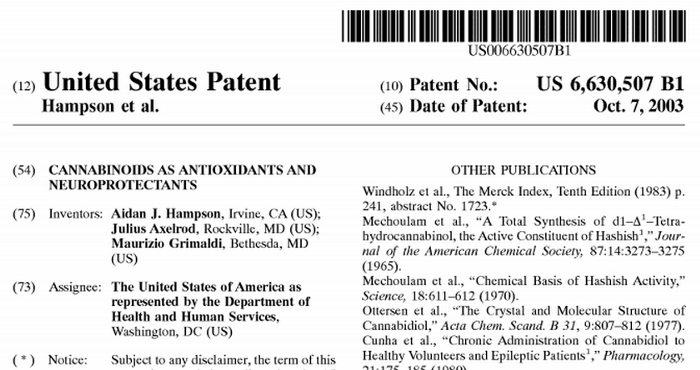
In 2003, patent No. 6630507 was granted to the Department of Health and Human Services. Cannabinoids have been found to have antioxidant properties. Patent No. 6630507 also references 12 other U.S. patents related to cannabis dating back to 1942. U.S. Patent No. 6630507 covers the potential use of non-psychoactive cannabinoids to protect the brain from damage or degeneration caused by certain diseases, such as cirrhosis.
The U.S cannabinoids patent lists the use of certain cannabinoids found in cannabis sativa plants as useful in the treatment of certain neurodegenerative diseases such as Parkinson’s, Alzheimer’s, and HIV dementia. The cannabinoids are found to have particular application as neuroprotectants, which is any substance that helps to shield nerve cells from damage or death. As such, said cannabinoids aid in limiting neurological damage following ischemic insults, such as stroke and trauma, or in the treatment of neurodegenerative diseases Moreover, this newly discovered property makes cannabinoids useful in the treatment and prophylaxis of wide variety of oxidation associated diseases, such as age-related, ischemic, inflammatory, and autoimmune diseases. One particular disclosed class of cannabinoids useful as neuroprotective antioxidants is formula (I) wherein the R group is independently selected from the group consisting of H, CH, and COCH.
If one cannot duplicate a phone number or street address, then why should one have the power to duplicate a domain name? Domain names, similar to words and symbols, can be used to identify a seller’s products and distinguish them from the products of another, and are thus viewed as trademarks. The Ninth Circuit U.S. Court of Appeals recently ruled that a business must use its domain name to sell goods or services in order to protect the name — even if a competitor starts to use the name after you registered the domain. In other words, merely reserving a domain name isn't enough. Thus, its important to register your domain name, because if your domain name has a trademark, the URL has protection under the USPTO.
The Trademark Act of 1946 (“Lanham Act”) prohibits uses of trademarks that are likely to cause confusion about the source of a product or service. 15 U.S.C. §§ 1114, 1125(a). Moreover, to establish a trademark infringement claim under the Lanham Act, a plaintiff must establish that defendant’s use of a mark is confusing similar to plaintiff’s. Id. The main area of inquiry in trademark infringement cases is whether the similarity of the marks is likely to confuse customers about the source of a product or service. ., 174 F.3d 1036, 1062 (1999).

One of the most difficult aspects of protecting your trademark in today's world is protecting it on an international level. Unfortunately, there is no tool that allows business owners to register a trademark "globally". Otherwise, trademark owners must register its trademark in each and every individual country where it seeks trademark protection. Starting October 1, 2017, the European Union trade mark regulation changes. The European Union Intellectual Property Office; among other things, has made a number of procedural changes, thus it is vital you speak to a Glendale trademark attorney in order to help protect your business. Here are three reasons why you should register your trademark internationally.
Once you begin selling your products in international markets, your business name and brand may become more attractive as your popularity grows. Registering your trademark in countries which your products are available can prevent other businesses from attempting to confuse consumers by using your businesses identical or similar name or profit from your business's popularity.
There are a few steps a trademark owner can take once discovered a competitor or a competitor offering similar goods or services uses a mark, such as a company logo, that is substantially similar to your trademark or service mark.
Trademark infringement is the unauthorized use of a trademark or service mark. A mark that is substantially similar to your trademark may also be considered a trademark infringement. A trademark owner who believes its trade market or service mark is being infringed may file a civil action for trademark infringement. Generally, a trademark owner must present evidence that the similarities of the trademark or service mark can cause a likelihood of confusion to the average consumer. Specific factors are considered and weighted when courts determine the likelihood of confusion thus each trademark infringement action varies from case to case.

Hiring a business startup lawyer in Los Angeles can get a costly. There is hope! Many firms, including KAASS Law understand the set-backs businesses and startups encounter, especially when it comes to capital. The good news is our business lawyers offer various fee options and try and work around the startup's budget.
Without sounding too bias, hiring an experienced attorney from the get-go may make a huge difference in any business, including startups. In doing so, but specifically early in the process may help in avoiding huge costs that may crop up down the line due to an unexpected turn of events. With any business or project it's safe to say, it is usually important to have a solid foundation before adding the other layers.
There are a plethora of business models including the corporation and corporate sub-types, limited liability companies (LLC), and partnerships, such as Limited Liability Partnerships, General Partnerships, and so forth.
If you created and own intellectual property, you’ll want to protect and profit from it. There are two primary ways of achieving that. One way is by making use of the intellectual property yourself; for example, you could manufacture a patented product or sell original copyrighted products you have ownership of. Alternatively, you can choose to license the intellectual property to another entity, effectively granting them the right to manufacture your patented product or make use of your copyrighted material in some way. That’s exactly where licenses come into play. They are basically contracts which help you regulate, manage, protect, and profit from your intellectual property and creations.
A licensing agreement permits an intellectual property rights holder (AKA the licensor) to make profit from an invention, creation, or novel work by charging a user (AKA the licensee) for the product’s use, distribution, or commercialization. Licenses also serve to protect proprietary rights in other related fields, like software development and other OS or virtual products. Importantly, you should know that you have the ability to use licenses to give someone permission to utilize your intellectual property in a certain way for a specific period of time for a particular price.
For the most part, all kinds of intellectual property that you will encounter fall nicely into one of the following four categories.
Since intellectual property law is one of the most complex areas of law, requiring tons of cross referencing with both state, federal and international law, it’s in your best interest to ensure you have an intellectual property lawyer in place to safeguard your rights and creations. Outside of that, the US Patent and Trademark Office (USPTO) and the US Copyright Office also offer invaluable information about the intellectual property registration process. A few intellectual property safety measures, such as copyrights, happen automatically in certain scenarios but even those should get formally registered with the government. Several other protective measures, like patents and trademarks, are granted by the USPTO and for those the application process is even more convoluted. As for trade secrets, those often don’t get “registered” formally at all, but they can still be subject to some protective measures in place through a variety of state and federal laws.
Despite all those intricacies, licensing agreements do not always have to be so long and hard to understand. If you think about it, an effective agreement is one that is upfront and transparent because it is more likely to be agreed upon and respected by both parties, and, ultimately, it’s more likely to be upheld and enforced by the courts. As such, there are certain terms, condition, and factors that you’ll always want to address in the majority of licensing agreements surrounding intellectual property.
The first major issue you’ll want to address is the scope of the license. For example, do you want the licensee to have unlimited use of your intellectual property, or do you want the licensee to only use your intellectual property in specific ways for a limited period of time? In this sense, you can think of licensing as assigning limited use rights for property to the leaser. The rights that the agreement provides should be broad enough so the buyer is interested in their stake in the deal, but narrow enough that you do not relinquish permanent, uncontrollable power over your valuable creation or asset. Imagine that you created a great song track that a company wants to use in the intro and outro of their latest ad campaign. You’d want to draft up a licensing agreement that limits the edits that the company can make to your original track, sets a time limit for how long the track can be utilized by the company, and ensures that the company provides credit to you somewhere in the ad or the website so that viewers can be aware of your work and your name.
Besides the scope, drafting up terms that describe and regulate the profits and revenue that your creation will generate is crucial. Some license agreements will simply work by having a one-time licensing fee, paid out in full. In this version of the deal, the licensor will immediately pay you some agreed upon amount and then they will be able to use your creation for a fixed period of time. Another way it could go down, is through recurring payments and profits such as royalties or monthly leases. In this scenario, the licensor has to pay you quarterly payments over over the course of the entire leasing period. It’s up to you to think about which of those arrangements would work best for your given needs and situation.
While the scope and revenue aspects are arguably the two most relevant parts of any licensing agreement, there is a plethora of other factors to consider mentioning as well. These can include:
Problems can always emerge in the realm of intellectual property and even after a licensing agreement is signed, sometimes the licensor may use your creation in a way that violates the terms of your agreement. They can breach the contract if they fail to compensate you fairly as per the agreed upon terms in the licensing agreement, by sub-licensing your property elsewhere against your agreement, or by any number of other means that can violate your terms. In these scenarios, you have the right to file a lawsuit against the party that committed the breach of your agreement in an attempt to enforce your intellectual property rights. You can seek remedies through damages, losses, or other harm that you may have sustained as a result of the licensee breaking your agreement.
As we have seen, intellectual property law is unfairly complex and tricky to navigate–especially on your own. This is because licensing agreements and intellectual property management requires specialized knowledge of state and federal laws pertaining to your rights as well as a strong awareness of business practices and judgements. To make sure you have the best experience with your new creation and to honor the integrity of your intellectual property, it is vital that you have access to skilled Glendale intellectual property lawyers in this particular field of law. We at KAASS LAW believe in your ability to produce meaningful novel works of art and innovation and we fight to ensure our clients receive the correct treatment and compensation for their intellectual and artistic property. If you or a loved one need legal counseling or help surrounding an issue regarding intellectual property, licensing, trademarking, or copyrighting, then do not hesitate to contact us. We invite you give us a call at (310) 943-1171 to speak to our Trademark and Patent lawyers today. KAASS LAW, 815 E Colorado St #220, Glendale, CA 91205, (310) 943-1171
KAASS LAW is authorized to practice law in California. The above content is intended for California residents only. This content provides only general information which may or may not reflect current legal developments. KAASS LAW expressly disclaims all liability in respect to actions taken or not taken based on any of the contents of this website. The above content DOES NOT create an attorney-client relationship. KAASS LAW does not represent you unless you have expressly retained KAASS LAW in person at the KAASS LAW office. KAASS LAW helps clients in: Los Angeles, Burbank, Hollywood, Glendale, Van Nuys, North Hollywood, Studio City, Highland Park, Eagle Rock, Sunland, Tujunga, Sylmar, San Bernardino, La Crescenta, La Canada, Beverly Hills, Westwood, Santa Monica, Brentwood. Pacoima, Montebello, Commerce, Alhambra, Downey, Bell, Maywood, Walnut Park, Vernon, Lynwood, Echo Park, Silverlake, Mission Hills, Northridge, Woodland Hills, Encino, Canoga Park, North Hills, Porter Ranch, Chatsworth, Reseda.
Publication does not actually mean that you are out of the woods just yet. Rather, it refers to a 30-day comment period which every aspiring trademark must undergo. Within that 30-day time frame, anyone from the public can voice their opposition to your trademark request. What that means is that even if the U.S. government has no issue with your trademark application, any person can theoretically state that your trademark may bring damages to their own brand and with that statement they could make their opposition to your trademark. However, once the 30-day window is over, the application gets sent back to the examining attorney for the final review stage. Once the application reaches this state, and provided that you correctly filed the paperwork indicating that your trademark is in use (meaning that your products and services were still being sold at the time the application got filed) then the examining attorney will issue your trademark registration and a certification will get sent out to you through the mail.
The entirety of this registration process for your trademark will take anywhere from 6-8 months time. It is a slow and steady process that involves a lot of down time while you wait for the next stages of the application to undergo final review but once it is all over, you will have successfully trademarked your product, brand, or service through the federal government. So, why would you want to go through that grueling process in the first place?
There are several major reasons why someone would want to obtain a federal trademark. Some of those important reasons include:
[video width="1280" height="720" mp4="https://kaass.com/wp-content/uploads/2019/11/output_HD7202-1.mp4"][/video]
At KAASS LAW, we believe in the spirit of individuality and in the power of originality. Your brand, your ideas, and your products deserve the protection and exclusivity that only a trademark registration can offer them, because it was your hard work and intellect that enabled you to create those ideas and services. Our team of experienced intellectual property and trademark lawyers will ensure the process is as quick and efficient as possible. We invite you to give us a toll free call at (310) 943-1171 to speak to our team today. Let us help you in this critical moment of your enterprise’s expansion.
Insofar as questions of jurisdiction, LLCs share many traits with corporations. Like corporations, LLCs are creatures of the state. As such, they are formed and operated in accordance with state laws. Furthermore, both corporations and LLCs are treated as legal entities separate and distinct from their owners, who are instead referred to as ‘members’. Given their status as a legal entity, LLCs can sue or be sued, enter into contracts and arrangements, and hold titles to property or estates.
Notably, the members of an LLC enjoy limited liability just like the shareholders of a corporation would. Members can also undertake actions on behalf of the LLC, and as with a corporation’s shareholders, any damages or charges recovered go to the LLC, not to the members themselves. However, just like how courts can, on occasion, determine that they ought to disregard a corporation as a legal entity and hold shareholders personally liable for damages, so too can the courts pierce the corporate veil of an LLC to hold individuals accountable for damages. These cases, however, are extremely rare and far and few between.
As previously alluded to, the advantages of LLCs are many and the drawbacks are relatively few. One such disadvantage to consider is that the management structure of an LLC is not clearly stated nor defined in the legal literature. More often than not, it is up to the members to create, agree upon, and sign off on articles of organization which outline the key rules and principles of operation of the company. While, this may seem inconvenient at first, it can actually be viewed as a major advantage of an LLC, speaking to its flexibility and the level of freedom and control it can offer to its members. Below is a chart that effectively sums up the potential pros and cons of an LLC. Things to Consider About LLCs:
Advantages
Disadvantages
As you can see, the benefits of an LLC generally outweigh the drawbacks. For further information, use the following chart as a reference; it provides answers to many common questions surrounding the details of how an LLC works.
Characteristics of
A Limited Liability Company
Method of Formation
It is formed by an agreement of the owner-members of the company. Articles of organization are filed. Charter has to be given by the state.
Legal Position
It is treated as a legal entity.
Liability
Member-owners liability is limited to the amount of capital contributions or investments.
Duration
Can have perpetual existence, unless there is only one member (like a corporation).
Interest Transferability
Member interests are freely transferable.
Management Scheme
Member-owners can fully participate in management, or they can designate managers to oversee the firm on their behalf.
Taxation
LLC does not get taxed, and members are taxed personally based on the profits that get “passed through” the LLC.
Fees and Annual Reports
Organizational fee is required, as well as a possible business privilege fee.
Foreign Business Transactions
Generally no limitations.
While an LLC can offer you and your business many powerful tools and advantages, getting it set up as an LLC can be a somewhat difficult process. That’s where we can help. We have helped many clients start up LLCs for their businesses as well as converting an already existing business into an LLC. We always look for ways to help our clients maximize their profits in the legal realm, and this is no exception. If you or a loved one wishes to open an LLC, or has any further questions, we invite you to give us a toll free call at (310) 943-1171 to speak to one of our Los Angeles business lawyers today.
KAASS LAW is authorized to practice law in California. The above content is intended for California residents only. This content provides only general information which may or may not reflect current legal developments. KAASS LAW expressly disclaims all liability in respect to actions taken or not taken based on any of the contents of this website. The above content DOES NOT create an attorney-client relationship. KAASS LAW does not represent you unless you have expressly retained KAASS LAW in person at the KAASS LAW office. KAASS LAW helps clients in: Los Angeles, Burbank, Hollywood, Glendale, Van Nuys, North Hollywood, Studio City, Highland Park, Eagle Rock, Sunland, Tujunga, Sylmar, San Bernardino, La Crescenta, La Canada, Beverly Hills, Westwood, Santa Monica, Brentwood. Pacoima, Montebello, Commerce, Alhambra, Downey, Bell, Maywood, Walnut Park, Vernon, Lynwood, Echo Park, Silverlake, Mission Hills, Northridge, Woodland Hills, Encino, Canoga Park, North Hills, Porter Ranch, Chatsworth, Reseda.
Recently, legal-marijuana pioneers have experienced a rising concern in retaining a marijuana intellectual property lawyer in order to protect their creations from imitators, as well as from multinational corporations in the agriculture, tobacco and pharmaceutical industries that appear to be keeping a close eye on the fast-growing marijuana industry from the sidelines. For instance, in 2013 the first marijuana strain patent containing significant amounts of THC ever granted, patent No. 9,095,554. Accordingly, the patent provides compositions and methods for the breeding, production, processing and use of specialty cannabis.
If you have questions regarding marijuana laws or or are seeking to start a recreational marijuana business in California, we invite you to call our office for a consultation with a Los Angeles recreational marijuana business lawyer today.
To protect your business or brand from infringement, you may want to trademark your domain name in addition to a logo, slogan, or design. Merely, registering a domain name does not give you trademark rights, rather it identifies your website and generally will not prevent others from using the name. If you trademark your domain name, you have legal protection if a third party uses your trademarked name. You can file a trademark infringement action against the infringing party and recover money damages, financial losses, and other damages you might have incurred.
The domain should function as a "source indicator." It must convey to whoever sees the URL what products or services are behind the name. A domain qualifies as a trademark when it is a "source indicator." Your domain must convey the products or services associated with the name to whoever sees the URL. Not all domain names can be registered as trademarks. The PTO is particular about what can be registered as a domain name.
Consumer confusion occurs when another company has a domain name close in spelling to your domain. The other company's name might different by one letter. Generally, consumer confusion matters only if a domain name that's similar to the one you want to use is a protected trademark. To be protected, a trademark must be distinctive. If the trademark owner has been able to register a name with the U.S. Patent and Trademark Office, it is probably distinctive. The dispositive question in trademark infringement cases is whether the similarity of the marks is likely to confuse customers about the source of a product or service. Interstellar Starship Services, Ltd. V. Epix, Inc., 304 F. 3d 936, 941 (2002).
Initial interest confusion occurs when the defendant’s use of plaintiff’s trademark sways consumers towards their own product or service by capturing “initial consumer attention.” Brookfield at 1045. In the context of website domain, the defendant’s unauthorized use of the trademark confuses consumers who expect to find the plaintiff’s product or service at that web address. Interstellar at 942. Although actual confusion is not required, plaintiff must prove a probability of confusion, as the mere possibility is not enough. Perfumebay.com Inc. v. eBay, Inc., 506 F.3d 1165, 1176.
To evaluate the likelihood of confusion, including initial interest confusion, the Sleekcraft factors considered are:
(1) the similarity of the marks;
(2) the relatedness or proximity of the two companies' products or services;
(3) the strength of the registered mark;
(4) the marketing channels used;
(5) the degree of care likely to be exercised by the purchaser in selecting goods;
(6) the accused infringers' intent in selecting its mark;
(7) evidence of actual confusion; and
(8) the likelihood of expansion in product lines.
Courts consider these factors within the totality of the circumstances through the eyes of the “reasonably prudent consumer” in the marketplace, not a person with a legally trained mind. Dreamwerks Production Group, Inc. v. SKG Studio, 142 F.3d 1127, 1129 (1998).
In the context of website domain, courts have held that the three most important Sleekcraft factors in evaluating a likelihood of confusion are (1) the similarity of the marks, (2) the relatedness of the goods or services, and (3) the parties’ simultaneous use of the Web as a marketing channel. Interstellar at 942.
No one factor is to be considered conclusive and the relative importance of each individual factor will be case-specific. Compare Brookfield, 174 F.3d at 1061 (holding that use of the domain name “moviebuff.com” violated plaintiff’s trademark rights in the mark “MovieBuff,” as consumer confusion is likely to result from the relatedness of the products and the companies’ simultaneous use of the Web as a marketing and advertising tool) with Interstellar at 943 (finding that domain name “epix.com” for website showcasing creator’s electronic pictures did not infringe the trademark “EPIX,” used in connection with printed circuit boards and computer programs, because there was a lack of relation between the products and both parties marketed to a different consumer base through the web).
The Federal Trademark Dilution Act (FDTA) allows a trademark owner to obtain an injunction against another’s “commercial use in commerce” of a mark or trade name” 15 U.S.C. § 1125(c)(1). “Commercial use in commerce” has been generally interpreted to mean use of mark in relation to any goods or services. Mattel, Inc. v. MCA Records, Inc., 296 F.3d 894, 903 (2002).
If you believe someone is infringing on your trademark or have questions regarding trademark registration, copyright, or any other intellectual property related question, we invite you to contact our office and speak to an experienced Los Angeles trademark lawyer at (310) 943-1171.
Foreign trademark filing is a big business decision, thus businesses should consider many factors when doing so. U.S. trademark law provides protection against businesses importing counterfeit goods. However, you may also register your trademark in a country where you believe counterfeit goods are originating from. This will not only help prevent counterfeit goods being exported to other countries.
If your business fails to register their trademark internationally, you bare the risk of allowing another party to "take" your trademark first in the foreign country. This can obviously create a lot of problems. For instance, this can disrupt the distribution of your products in or from the country. If you have questions regarding trademark applications or any other business law questions give us a call and receive a free consultation with one of our experienced Glendale business lawyers. KAASS LAW is authorized to practice law in California. The above content is intended for California residents only. This content provides only general information which may or may not reflect current legal developments. KAASS LAW expressly disclaims all liability in respect to actions taken or not taken based on any of the contents of this website. The above content DOES NOT create an attorney-client relationship. KAASS LAW does not represent you unless you have expressly retained KAASS LAW in person at the KAASS LAW office. KAASS LAW helps clients in: Los Angeles, Burbank, Hollywood, Glendale, Van Nuys, North Hollywood, Studio City, Highland Park, Eagle Rock, Sunland, Tujunga, Sylmar, San Bernardino, La Crescenta, La Canada, Beverly Hills, Westwood, Santa Monica, Brentwood. Pacoima, Montebello, Commerce, Alhambra, Downey, Bell, Maywood, Walnut Park, Vernon, Lynwood, Echo Park, Silverlake, Mission Hills, Northridge, Woodland Hills, Encino, Canoga Park, North Hills, Porter Ranch, Chatsworth, Reseda.
It is a good idea to speak with a trademark or intellectual property attorney to gain a better understanding of your rights and remedies. A California trademark attorney can help explain the process and evaluate whether or not you have a solid case. If you are unable to hire or consult with an attorney, there are also a few immediate steps you may take if you discovered that there has been a trademark infringement:
Absent of legal representation, you can also write a letter to the company or person requesting to stop the use of trademark activity. A cease and desist letter may cover a number of issues, including but not limited to:
If the infringing third party failed to cease and desist infringing activity, at this point it is recommended that you hire an intellectual property or Los Angeles business lawyer that specializes in trademark infringement in order to take appropriate legal action to protect your proprietary rights. KAASS Law may be able to provide you with legal assistance.
There are a wide variety of important legal documents and business decisions that an experienced business attorney may assist with including: incorporating or executing an operating agreement, choosing the state of incorporation, executing non-compete and non-disclosure agreements, hiring and classifying employees, independent contractors, and consultants, and other business transaction agreements.
Our business startup attorneys have years of experience in representing business clients with their operating needs. By hiring an expert attorney early in the process you plan for the unexpected and avoid the pitfalls of costly litigation.
Two or more partners are needed to form a partnership and it doesn’t require formalities. General partnership can be formed by a(n) written/oral partnership agreement or simply by partners' conducts. In contrast, in most states, the number of people needed to form a corporation varies. Limited Liability Companies require paying a fee and filing your business with the secretary of state. Choosing your startup's entity formation depends on, amongst other factors, what your objectives and goals are, liability concerns, and tax preferences.