
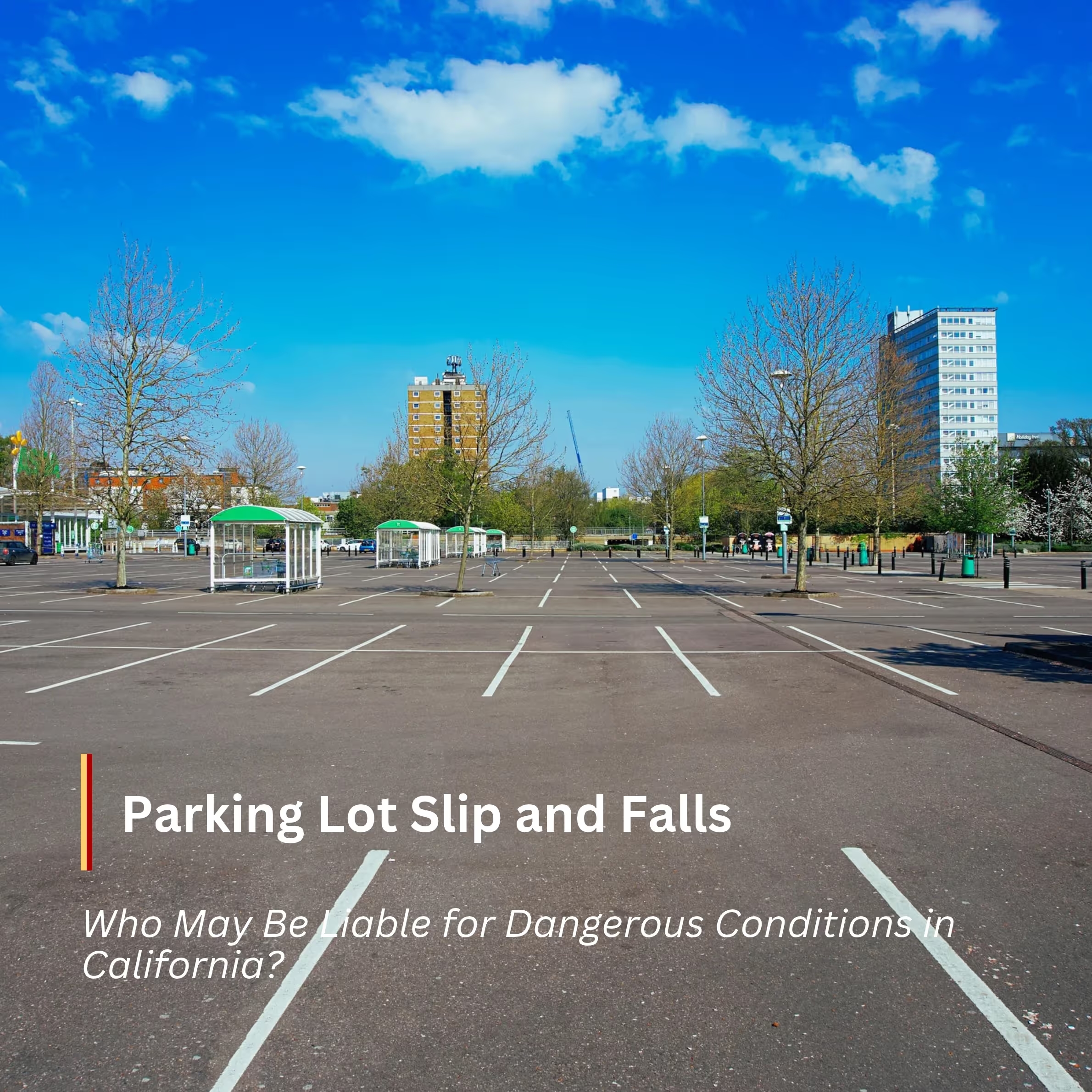
Parking lots are part of everyday life. Whether visiting a grocery store, shopping center, office building, or apartment complex, most people expect to walk safely from their vehicles to their destinations. However, poorly maintained parking lots can present serious hazards that may result in slip-and-fall accidents.
Cracked pavement, uneven surfaces, standing water, inadequate lighting, and neglected maintenance can create dangerous conditions for pedestrians. When someone suffers an injury because of these hazards, questions may arise about who was responsible for maintaining that property. Understanding these responsibilities can help injured individuals evaluate their legal options moving forward.
Parking lots are exposed to constant vehicle traffic, pedestrian activity, and changing weather conditions. Over time, these factors can contribute to hazardous conditions. Some common causes of parking lot accidents may include, but are not limited to, the following.
Not every accident involving these conditions establishes negligence. Liability often requires examining whether the responsible party failed to exercise reasonable care under the circumstances.
Several parties may share responsibility for maintaining a parking lot. Identifying the appropriate party often requires reviewing ownership records, lease agreements, maintenance contracts, and the circumstances surrounding the accident. The following parties may be held liable after a parking lot slip-and-fall accident occurs.
In California, a premises liability claim usually involves establishing four elements:
An important consideration is whether the responsible party knew or reasonably should have known about the dangerous condition. California courts evaluate these circumstances based on the available evidence rather than assuming that every fall results from negligence.
Evidence plays an important role in determining how an accident occurred and whether reasonable safety measures were taken. Relevant evidence may include but is not limited to the following.
Inspection logs may help establish whether the property was regularly monitored for potential hazards. Since parking lot conditions can change quickly, documenting the accident scene as soon as reasonably possible may be especially important.
Depending on the circumstances, more than one party may contribute to a parking lot accident. If several parties contributed to the hazardous condition, their respective responsibilities may need to be evaluated. California also follows comparative fault principles. An injured person's own behavior may affect the amount of recoverable damages without necessarily eliminating the claim.
Depending on the circumstances, an injured person may seek compensation for losses associated with a parking lot accident. Potential damages may include but are not limited to the following.
The availability and amount of damages depend on the evidence, the extent of the injuries, applicable law, and any comparative fault. It is important to understand that compensation is not automatic simply because an injury occurred on someone else's property.
After a parking lot slip and fall accident, victims should consider seeking legal guidance and support to better understand their rights while moving through the claims process. A legal professional may review the specific facts of your case, speak to insurance companies on your behalf, and preserve important details that may help you moving forward.
The qualified personal injury attorneys at KAASS LAW are ready to help those who have suffered injuries from a parking lot slip and fall accident. We want to make sure that victims understand their rights and the necessary steps they may need to take to recover from their injuries. If you have been involved in a parking lot slip and fall accident, you are not alone. Call the legal team at KAASS LAW today.
A shopping trip can unexpectedly result in an injury when a customer slips or trips on a hazardous condition inside a store. Grocery stores, department stores, pharmacies, shopping centers, and other retailers regularly experience spills, dropped merchandise, damaged flooring, and other conditions that may create risks for shoppers.
When a store slip and fall occurs, determining responsibility is not always as simple as showing that someone fell on the property. California premises liability law often requires considering the condition that caused the accident, whether the store knew or reasonably should have known about it, and whether reasonable measures were taken to address the hazard. Understanding these problems can help injured shoppers make informed decisions about what to do after an accident.
Stores can contain many potential slipping and tripping hazards. Some develop unexpectedly, while others may remain unnoticed until someone reports them or an employee discovers them during an inspection. Common conditions associated with store slip and falls may include, but are not limited to, the following.

Grocery store slip and fall accidents can cause serious injuries to individuals and their family members. Oftentimes, damaged or wet floors may create dangerous situations, causing individuals to become severely injured. Understanding grocery store slip and fall accidents and ways to recover from the damage is important in making sure you maintain the safety of yourself, your children, and those around you.
Grocery stores can contain many potential slipping and tripping hazards. Some are caused by customers, while others may result from store operations, equipment, or maintenance practices. Common examples may include, but are not limited to, the following.
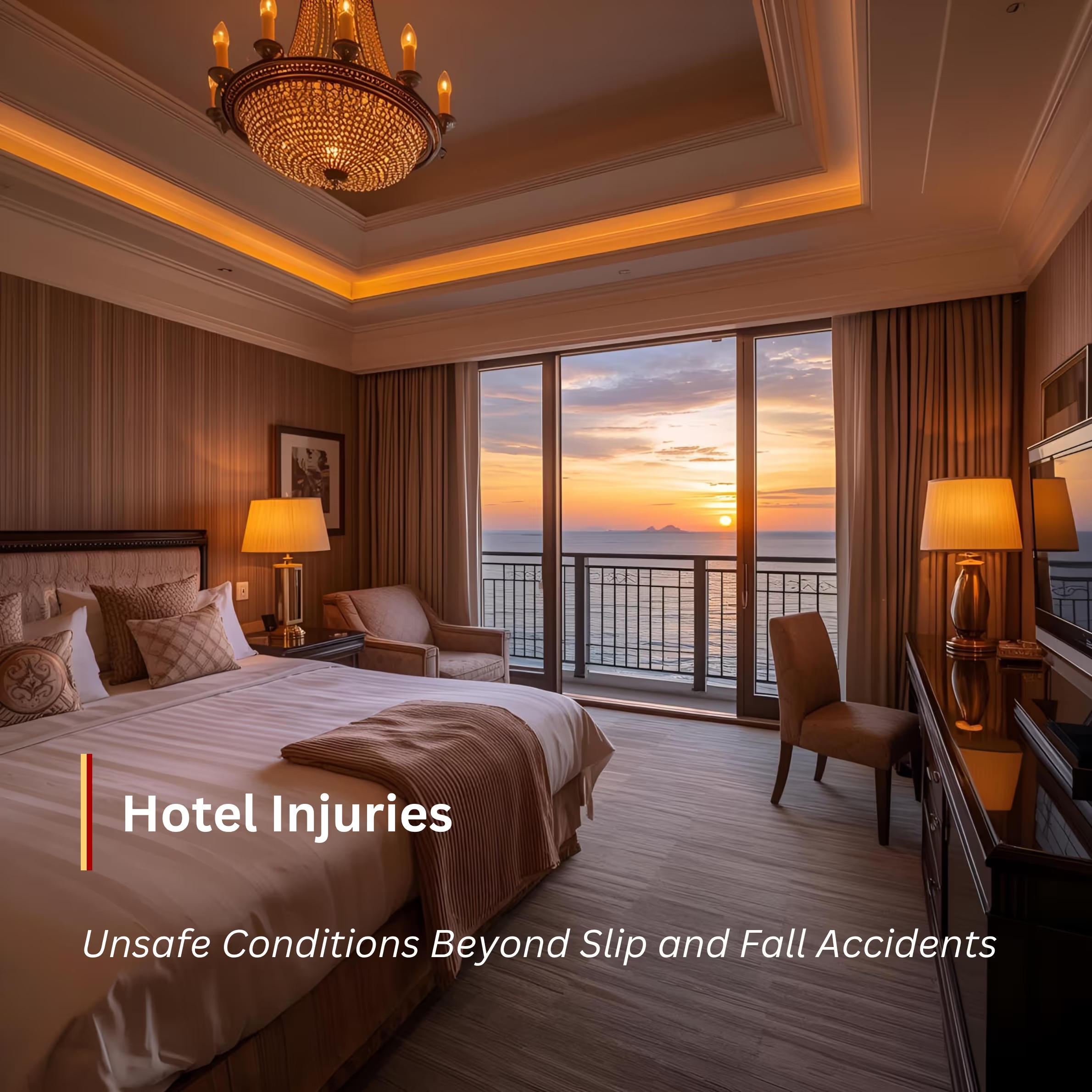
Traveling as a family and staying in a hotel has always been a luxury experience. It is a great way to bring people together and create a sense of community while being on vacation. However, when hotels are not adequately kept or maintained, hazards may occur. Injuries caused by unsafe hotel conditions can be dangerous and sometimes life-threatening. Understanding how these accidents happen and your legal considerations is important the next time you go on vacation.
Hotels contain many different areas that require regular inspection and maintenance. Guest rooms, hallways, elevators, stairways, parking structures, pools, gyms, balconies, restaurants, and common areas may each present different safety concerns. Hotel injuries may involve:

Slip and fall accidents are among the most common personal injury claims, but they can be surprisingly difficult to prove. Whether the incident occurred in a grocery store, restaurant, or on a public sidewalk, securing the proper injury evidence is critical to establishing liability and maximizing your compensation. In California, property owners have a legal obligation to maintain safe premises. However, simply being injured on someone's property does not automatically guarantee that you’ll win your case. To build a robust slip-and-fall claim, you need solid injury evidence to prove that the property owner was negligent. In this blog, we’ll explore the types of injury evidence that can help strengthen your case and give you the best chance of success.
The incident report is one of the most critical pieces of injury evidence in a slip-and-fall claim. If your accident occurred in a commercial setting, like a store or restaurant, it’s important to immediately report the incident to management. Most businesses have standard procedures for documenting accidents on their premises. Why it’s essential: Incident reports are often the first formal record of your accident. They may include details about the time, date, and location of your fall and statements from employees or witnesses. If you don’t report the fall immediately, the property owner may argue that your injuries aren’t as serious as claimed or that the accident didn’t happen at all. : After your fall, ask the manager or employee on duty to create an official incident report. Be sure to get a copy for your records.

For those seeking locally produced fruit, handcrafted goods, and a sense of community, the farmer's market industry has grown in popularity. These markets frequently provide a distinctive shopping experience where customers may speak with merchants, try out new goods, and take in the outdoors. Unfortunately, Farmer's market slip-and-fall accidents can occur because of the busy crowds and rough terrain, occasionally resulting in severe injuries. In this article, we'll look at one instance where a customer tripped and fell at a farmers market, suffering severe physical harm. We'll look at the potential reasons for these mishaps and discuss what farmers' markets may do to stop them. Farmer's markets may continue to give their customers a safe and happy experience. The key is being aware of the hazards and taking the necessary precautions to prevent accidents.
So, at farmer's markets, the following are the most frequent reasons for slip-and-fall incidents:

Anyone can experience a fatal slip-and-fall mishap at any moment. However, the results can be disastrous if they happen in slick, rainy circumstances. Unfortunately, slip-and-fall accidents in the rain can lead to serious injuries and even death. The risks of slipping and falling in the weather, their causes, and the precautions you can take to avoid them will all be covered in this blog article. Although slip-and-fall accidents caused by the weather can cause serious injuries, fatalities are relatively uncommon. However, it's still possible for a slip-and-fall event to result in death. especially when the person is hurt badly on the head or drops from a great height. People can also lose their lives in the weather by falling from slippery rooftops, sliding on wet stairs, falling down a flight of stairs, or having a pre-existing medical condition that makes falls deadly. The observation of death is important despite its scarcity. The injuries and long-term impairments that could arise from these accidents are still a possibility.
Slip and fall accidents in the rain can be especially dangerous because water can make surfaces slick and hard to navigate. When a person slips and falls, they can suffer serious injuries such as broken bones, head injuries, and even spinal cord injuries. However, in some cases, these injuries can lead to long-term disability or death.

Fatal slips and falls are not the most common occurrence, but can most definitely happen to anyone. Landlords have a responsibility for the safety of their property, but sometimes this does not hold true. If you are hurt in a slip-and-fall accident on your landlord's property, you may be entitled to compensation from them. If you or someone you know has been injured or wrongfully died because of a hazard created by a landlord, such as improper signage or wet floors at their business location, then they may be liable for your accident.
Some tenants find it difficult to receive many services from their landlords. For one reason or another, some landlords just won't take ownership of maintenance concerns that they should, without a doubt, take care of. Landlords that operate in this manner rely on tenants and visitors lacking the ability to take meaningful action to compel the landlord to act. However, the landlord can be responsible for paying medical expenses if a visitor or tenant is facing injuries due to bad upkeep or negligence. It is a landlord's duty to take reasonable precautions to prevent exposing guests to an unjustifiable risk of injury. If negligence contributed to the occurrence of an injury or death, landlords could face liability. The landlord's responsibility to remedy maintenance issues that pose safety risks depends on several factors.

Slip and fall compensation amount differs from case to case. For this reason, you should give legal help a seriously consideration in order to get the compensation you deserve. The following are three points to be aware of about the compensation amounts in slip-and-fall cases:
There are guidelines for situations where multiple parties are accountable for an accident in each state's personal injury legislation. In fact, if you contributed to your injuries in a slip-and-fall lawsuit, these shared fault guidelines will be applicable. However, they typically deduct your proportion of fault from the settlement amount. While there are laws of shared fault in every jurisdiction, there are three main groups:

Filing a lawsuit for a slip and fall accident is more common than you may believe. You have a right to compensation if another company's conduct or inaction caused injury to you or a loved one. These include rehabilitation fees, medical expenditures, missed income and earnings if you were unable to work, and emotional pain and grief. Filing a compensation case is often not difficult since the law company you select will do all of the legal work for your case. To begin, the statute of limitations in the jurisdiction where your accident occurred will govern how long you have after the accident to make a claim. If you do not file within the statutory deadline, you will immediately lose your entitlement to compensation for any of your losses. Regrettably, not everyone is aware of this. Furthermore, knowing the statute of limitations and how to initiate a slip and fall injury case in California would necessitate at least a rudimentary awareness of legal frameworks.
California's statute of limitations for slip and fall accidents and injuries may differ from your state's statute of limitations. These sorts of cases currently have a two-year statute of limitations. This implies that you must file your claim within two years of the date of the accident. However, the plaintiff has one year from the date of discovery to file a claim if the injury was not immediately discovered.
California property owners and businesses usually have a duty to use reasonable care in maintaining property under their control. In a premises liability case involving an unsafe condition, important questions may include whether the condition created an unreasonable risk of harm, whether the business knew or reasonably should have known about the condition, and whether reasonable steps were taken to repair the condition, protect customers, or provide an adequate warning.
If a store employee knew that liquid had spilled in an aisle but failed to clean the area or provide a warning within a reasonable period of time, those circumstances may be relevant when evaluating liability. Another important issue is constructive notice. A business may not have directly known about a dangerous condition, but the circumstances may indicate that the condition existed long enough that a reasonable inspection could have discovered it.
The moments following a fall can be confusing, especially when an injury is painful or unexpected. When possible, taking certain steps may help preserve information about what occurred. Victims should consider reporting the incident to a manager or a store employee. It may also be helpful to take photographs and videos.
If anyone witnessed the accident, consider obtaining their name and contact information. Witnesses may later be able to describe the condition of the area or the events surrounding the fall.
Many retail businesses use security cameras throughout their stores. Video footage may show the accident itself or provide information about how a hazardous condition developed. Surveillance footage could show when a spill occurred, whether employees walked past the area, whether an inspection took place, or how long the condition existed before the accident.
Other records may also be relevant, including inspection logs, cleaning schedules, maintenance records, employee reports, photographs, and incident reports.
A slip and fall can cause different types of injuries depending on how a person lands, the surface involved, age, and other circumstances. Potential injuries may include but are not limited to:
It is also important to note that some symptoms may appear immediately, while others may become more noticeable a few days after the initial accident.
Depending on the circumstances, recoverable damages may include but is not limited to the following.
The existence and amount of recoverable damages depend on the specific facts of a case. No specific outcome or amount of compensation can be guaranteed.
California follows comparative fault principles. This means a shopper's overall behavior may be considered when determining responsibility for an accident. In addition, the evidence surrounding the accident must also be considered, including the nature of the hazard, the store's actions, available warnings, witness testimony, photographs, and other relevant information.
Legal claims are subject to deadlines known as statutes of limitations. The applicable deadline can be different depending on the parties involved and the circumstances of the accident. Waiting too long can also make evidence more difficult to obtain. Surveillance footage may be overwritten, witnesses may become harder to locate, and records may become unavailable.
Premises liability cases may involve multiple questions about who controlled the property, how the hazardous condition developed, how long it existed, whether reasonable inspections occurred, and whether the business had enough notice to address the condition. A legal evaluation may include reviewing the following.
If you were injured in a slip and fall at a grocery store, retail store, shopping center, pharmacy, or another commercial property, KAASS LAW can review the circumstances surrounding the incident and discuss potential legal options. This may be important when proceeding through the legal process for both victims and their loved ones. Don’t wait! Call KAASS LAW today to learn more.
When one of these conditions occurs, it does not always establish that a grocery store was negligent. The circumstances surrounding the hazard, including how it developed and how long it existed, can be important when determining responsibility.
California premises liability law usually requires property owners and businesses that possess or control property to exercise reasonable care in maintaining their premises. For an unsafe property condition, an important issue is often whether the business knew or reasonably should have known about the condition and failed to repair it, protect customers from it, or provide an adequate warning.
Not every grocery store slip and fall case involves a spill caused by another customer. Sometimes the condition may result directly from store operations. An employee might leave water behind while cleaning, place merchandise in a walkway, improperly position a floor mat, or create another potentially hazardous condition while stocking shelves.
Evidence can disappear quickly after a slip and fall. Employees may clean a spill immediately, merchandise may be moved, and surveillance footage may eventually be overwritten or deleted according to a store's policies. When circumstances allow, an injured customer may want to document the area where the accident occurred.
Potential evidence may include, but is not limited to, the following.
Medical needs should usually come first after an accident. Some injuries may be immediately apparent, while symptoms associated with certain soft-tissue, head, neck, or back injuries may develop or become more noticeable later on.
If it is safe and appropriate, victims should document the condition that caused the fall before it is changed or removed. In addition, it may also be beneficial to obtain contact information from witnesses and report the incident to management. Keep relevant documents, including medical bills, receipts, photographs, correspondence from the store, and communications with insurance companies.
It may also be helpful to avoid making assumptions about fault immediately after the accident. Premises liability depends on the specific facts, and an investigation may reveal information that was not available to the injured customer at the scene.
When a business is legally responsible for a slip and fall accident, an injured person may be able to pursue damages associated with the harm caused by the incident. The particular damages available depend on the facts of the case. Potential damages can include medical expenses, future medical care, lost income, reduced earning capacity, and noneconomic damages such as pain and suffering.
The existence and amount of any recovery are not automatic. They depend on issues including liability, causation, the nature of the injuries, available evidence, comparative fault, insurance coverage, and other circumstances.
California follows comparative fault principles. As a result, responsibility for an accident may sometimes be divided among multiple parties. A grocery store or its insurer might argue that a customer was distracted, ignored a warning sign, failed to watch where they were walking, or otherwise contributed to the accident.
A legal professional may be able to help you understand the specific steps to take to recover from a grocery store slip and fall accident. Determining potentially responsible parties after an accident like this may be extremely difficult and challenging for victims to handle on their own. This is where legal support comes in. A qualified professional can help you throughout the legal process while making you feel supported and cared for.
The legal team at KAASS LAW is determined to help individuals suffering from a grocery store slip and fall accident. Oftentimes, severe injuries may occur, leaving victims and their family members fearful of the future. A qualified personal injury attorney from KAASS LAW can help you understand the necessary steps to take to work towards recovery. Call KAASS LAW today to discuss your potential options.
The existence of an injury does not automatically mean the hotel is legally responsible. Liability often depends on the facts surrounding the accident, including how the dangerous condition developed and whether the responsible party knew or reasonably should have known about it.
Hotel guests reasonably expect beds, chairs, dressers, televisions, mirrors, and other furnishings to be properly installed and maintained. A loose headboard, unstable dresser, improperly mounted television, defective chair, or unsecured fixture can potentially cause significant injuries. Furniture tip-over incidents may be especially dangerous when children are present.
Hotels may need to inspect rooms and repair or replace furnishings when problems are discovered. In some situations, responsibility could also involve a furniture manufacturer, installation company, maintenance contractor, or another third party.
Determining responsibility may require reviewing maintenance records, inspection procedures, prior complaints, and photographs.
Hotel balconies can present serious risks when railings, barriers, flooring, or structural components are defective. Loose railings, inadequate barriers, deteriorated materials, or structural problems may contribute to falls from elevated areas. Balcony accidents can result in fractures, head injuries, spinal injuries, and other significant harm.
After this type of incident, it may be important to determine when the balcony was last inspected, whether previous complaints were made, and whether repairs had been recommended. Building codes and safety requirements may also be relevant depending on the location and circumstances.
Hotels often rely heavily on elevators and, in larger properties, escalators. These systems often require inspection and maintenance. Potential elevator hazards can include sudden movements, doors closing unexpectedly, uneven leveling between the elevator and floor, mechanical failures, or other malfunctions.
Elevator maintenance companies, contractors, property managers, or equipment manufacturers may potentially be involved depending on what caused the incident. As a result, preserving maintenance and inspection records can be especially important when evaluating an elevator-related injury.
Pools, spas, and hot tubs are common hotel amenities, but they also create potential safety concerns. Accidents may involve inadequate barriers, defective drains, missing safety equipment, poor lighting, electrical hazards, and unsafe water conditions.
Children can be especially vulnerable around swimming pools. Hotels may be required to comply with applicable fencing, gate, signage, and safety requirements. Pool-related injury claims are highly fact-specific. An investigation may consider the design of the area, maintenance practices, warning signs, surveillance footage, witness statements, and applicable safety regulations.
Not every hotel injury results from a physical defect in the property. In some circumstances, injuries may involve criminal activity and questions about whether reasonable security precautions were provided. Potential concerns may include but are not limited to the following.
Whether a hotel may be legally responsible for an assault or other criminal act often depends on numerous factors. These may include prior incidents, the foreseeability of the event, the location of the property, existing security measures, and what the hotel knew or reasonably should have known. The fact that a crime occurred on hotel property does not by itself establish hotel liability.
Hotels must also address fire and electrical safety. Potential hazards may involve defective smoke detectors, damaged wiring, malfunctioning appliances, blocked exits, electrical equipment, or other unsafe conditions. Fires and electrical incidents can lead to burns, smoke inhalation, respiratory injuries, or evacuation-related injuries.
Depending on the cause, several parties may be responsible, including hotel operators, maintenance companies, contractors, equipment manufacturers, and property owners. Fire department reports, inspection records, surveillance footage, and maintenance documentation may provide important information about how an accident happened.
Hotel injury cases can involve more than one potentially responsible party. Depending on the circumstances, those parties may include but are not limited to the following individuals.
In addition, identifying the appropriate parties usually requires examining who controlled the area where the accident occurred and who was responsible for inspecting, maintaining, repairing, or securing it.
If you are injured at a hotel, getting the appropriate medical care and treatment should be the most important step. When possible and safe to do so, it may be beneficial to document the situation that caused the injury before it is repaired, removed, or changed. Photographs and videos may help preserve evidence of broken equipment, damaged furniture, unsafe railings, lighting problems, or other hazardous conditions.
The accident should then be reported to hotel management. Victims should ask whether an incident report will be prepared and keep copies of any documents provided to them. It may also be helpful to preserve receipts, reservation records, photographs, witness contact information, medical records, and communications with the hotel or its insurance providers. In addition, surveillance footage can sometimes be important because hotels may not keep video footage forever.
After experiencing a hotel accident, it may help to seek support from a legal professional who can explain the entire legal process. This may be important when your case becomes too complicated to handle on your own. Oftentimes, legal guidance and support may help victims understand their rights and responsibilities throughout their personal injury case. This is especially crucial after experiencing a traumatic accident while staying in a hotel on vacation.
At KAASS LAW, we understand the challenges and difficulties many individuals and families may face when on vacation. Oftentimes, hotel injuries are more common than people may think. These types of accidents may occur from slips, falls, or inadequate hotel maintenance. This is where KAASS LAW comes in. Our qualified personal injury attorneys are ready to handle the challenges that may follow a hotel accident. if you are a loved one has experienced injuries from an unsafe hotel condition, you are not alone. Call KAASS LAW today to learn more.
Visual evidence can be one of the most persuasive elements in a slip-and-fall case. Photographs and video footage capture the accident scene and show hazardous conditions, such as spills, broken stairs, or uneven surfaces, that may have caused your fall. Why it’s essential: Photographs and videos can provide indisputable injury evidence of unsafe conditions. They allow you to demonstrate the state of the property at the time of the accident, preventing the property owner from disputing the hazard's existence or claiming it was promptly addressed after your fall. What to do: Take photos or videos of the area where you fell immediately after the incident. Focus on capturing what caused the fall, such as a wet floor, clutter, or poor lighting. If the property has security cameras, request that footage be preserved before it’s overwritten or deleted.
After any slip and fall, seeking medical attention as soon as possible is crucial. Even if you think your injuries are minor, symptoms may worsen over time, and early medical intervention could prevent complications. Medical records are key injury evidence in showing the severity of your injuries and their connection to the fall. Why it’s essential: Medical records document the nature and extent of your injuries and the treatment you received. These records validate your claim and help quantify damages, such as medical bills and ongoing care needs. What to do: Visit a doctor or healthcare provider as soon as possible after your fall, and follow all recommended treatment plans. Keep detailed records of your medical visits, prescriptions, physical therapy, and any related expenses. These documents will be critical in proving your injuries and the costs of your recovery.
If there were any witnesses to your slip and fall, their testimony can significantly bolster your case. Witnesses provide an unbiased account of what happened. They may be able to corroborate your version of events, such as the presence of a hazardous condition or the property owner’s failure to address the problem. Why it’s important: Witnesses offer independent confirmation that the property was unsafe and that your actions didn’t cause your fall. In cases where there’s a dispute over liability, witness testimony can help clarify how the accident occurred. What to do: Get the names and contact information of anyone who saw your fall or noticed the hazardous condition. Ask them to provide a written or recorded statement describing what they saw.
Expert testimony can be precious in some slip-and-fall cases, particularly those involving complex safety issues or building codes. Experts in fields like safety, engineering, or medicine can offer professional opinions on whether the property owner acted negligently or if specific conditions contributed to your fall. Why it’s crucial: Experts lend credibility to your claim by providing objective, fact-based analyses of the hazard and its potential to cause injury. Their testimony can clarify technical issues, such as whether a surface was too slippery or a handrail was improperly installed. What to do: Your personal injury lawyer will help determine if expert testimony is necessary and coordinate with qualified professionals to strengthen your case.
A key aspect of proving negligence in a slip and fall claim is showing that the property owner either knew about the hazard or should have known about it but failed to take appropriate action. Maintenance and inspection records can reveal whether the property owner regularly checks the premises for hazards and promptly addresses any issues. Why it’s important: These records can demonstrate whether the property owner had a history of neglecting maintenance or was aware of a specific hazard before your fall. If the owner fails to take reasonable steps to prevent accidents, these records could help establish liability. What to do: Your attorney can request maintenance and inspection logs during the discovery phase of your case. This evidence is especially important if the hazardous condition was not immediately obvious or if the property owner claims they were unaware of the problem.
California follows a comparative negligence system in personal injury cases, meaning that your compensation may be reduced if you’re found partially responsible for the accident. The property owner’s legal team may argue that you were texting while walking, wearing inappropriate footwear, or not paying attention. Why it’s essential: The defendant’s legal team will likely try to shift some of the blame to you to reduce their liability. Strong injury evidence to counter these claims can help you receive fair compensation. What to do: Work with your attorney to gather evidence demonstrating you acted reasonably during the accident. Witness testimony, video footage, and a detailed account of the incident can help refute the comparative negligence defense.
Slip and fall cases can be complex, mainly when gathering and presenting evidence. An experienced personal injury lawyer can help you navigate the legal process, ensure crucial injury evidence is preserved, and advocate to maximize your settlement. Why it’s important: A skilled attorney can determine the best legal strategy for your case, from negotiating with insurance companies to taking the case to trial if necessary. Your lawyer will also be able to counter any arguments that the property owner’s legal team may present, such as claims of comparative negligence or disputing the severity of your injuries. If you’ve been injured in a slip-and-fall accident, don’t wait to seek legal advice. KAASS LAW can help you collect the required injury evidence to build a strong case and fight for the compensation you deserve. Contact us today for a free consultation and learn how we can assist with your slip and fall claim. For more details on maintaining a safe environment and preventing slip-and-fall accidents, check out the Occupational Safety and Health Administration (OSHA) website for valuable safety resources.
In February 2020, a woman in her mid-50s was walking in the parking lot at one of the oldest Farmers' Markets in Los Angeles. So, while passing the cars, she did not see there was something on the floor. She fell and hit her head, arm, and leg. She is having headaches, bruises, and bleeding. Also, her arm and leg hurt. She has to visit and be treated by multiple doctors and specialists. Those injuries cause plenty of inconvenience. That is not even taking into account the time and effort she has to spend during her treatment process.
Farmers' markets can take a number of precautions to avoid trip-and-fall incidents, such as:
Victims of these incidents often face not only physical pain but also emotional and financial stress. Medical expenses can pile up quickly, and time off work can lead to lost wages. When the fall occurs due to negligence—such as failure to maintain walkways or clean up spills—injured patrons may have grounds to file a premises liability claim. Legal action can help victims recover damages for their medical bills, pain and suffering, and other related costs.
Moreover, local governments and market organizers should consider implementing stricter safety guidelines for outdoor markets. Creating clear walkways, ensuring adequate drainage, and requiring stallholders to maintain tidy spaces can all contribute to a safer environment. For more detailed guidance on premises liability and how business owners can prevent injury claims, The National Safety Council offers resources on fall prevention in public spaces.
In conclusion, slip-and-fall incidents can have significant repercussions at farmers' markets, and farmers' markets have to safeguard the safety of their customers. Farmer's markets may considerably lower the risk of accidents by putting in place measures, including routine inspections, apparent signs, appropriate lighting, staff training, and liability insurance. So, farmers' markets must take these security measures to protect their standing as a fun and secure community meeting place. Also, as customers, we must be mindful of our surroundings and follow safety procedures to prevent any threats. Farmer's markets may live on as a cherished tradition in our communities with a shared dedication to safety. So, if a security guard has assaulted you or your loved one, contact experienced attorneys from KAASS Law. Give us a call at 310.943.1171 or visit our website for other practices.
Slip-and-fall mishaps in the weather can result from a variety of causes. Among the most frequent reasons are:
You can take several steps to prevent slip-and-fall accidents in the rain. Some of the most effective include:
Slip and fall accidents in the rain can have serious consequences, including death. By understanding the causes of these accidents, you can help keep yourself and others safe. Remember to walk slowly and carefully, wear appropriate shoes and clothing, and report any hazards or slippery areas to the appropriate authorities. With these simple steps, you can help reduce the risk of slip-and-fall accidents in the rain.
Please do not hesitate to contact us at the Kaass Law for a consultation if you have any concerns with slip and fall lawsuits, or wrongful death. Correspondingly, give us a call for a free consultation at 310.943.1171 Please click this link to visit our other practices.
It may not always be appropriate to hold a defendant responsible for issues that it was unaware of and hence powerless to resolve. On the other side, the risk of responsibility increases if a landlord is aware of a hazard but does nothing to address it. In that case, the landlord would be a negligent party. Examining issues of notice can be a crucial step in the process of obtaining information for potential litigants. It's possible that the landlord ignored many reports concerning a trip risk. The landlord may be deemed to have received notice in some situations, such as when a problem has persisted for a time even if it wasn't given any independent reports. It is more probable that a landlord will be accountable for harmful conditions they create and fail to address.
Many people who have suffered a slip-and-fall injury may not exactly know who is responsible. Is it their responsibility, the landlords, etc? It can be difficult to assess what constitutes negligence and how much of that negligence caused the accident. It becomes unreasonable for the landlord to ignore an issue the more likely it is to result in harm. Issues like a broken stair, cracked tile in the corridor, or torn carpets increase the risk of harm, hence an urgent need for upkeep on the issues. In any premises liability case involving landlords, the location of the hazard is an important consideration. If the landlord has no control over or knowledge of the hazard's location, responsibility may instead fall on the tenant. If the landlord was aware of the issue and disregarded the requirement under the lease to rectify it, this raises more significant issues.
The number of variables determines the amount for which the landlord is accountable. Improper maintenance or unreasonably dangerous conditions that contributed to the accident hold the landlord accountable. In general, a landlord is responsible if there are defects in their maintenance of the property that caused an injury. Find out more about your case and how to obtain the right compensation for your accident. Wrongful death cases are one of our many practices. Contact our office and speak to a specialized attorney for your case. Please reach us by phone at 310.943.1171.
Most states adhere to one of the criteria governing comparative negligence. Your compensation will have a reduction by your degree of blame under these criteria. The outcome when you are primarily at fault is the only distinction between the two categories of comparative negligence:
Some states that apply modified comparative negligence prohibit victims found to be 50% or more at fault from receiving compensation. Also, some people draw the line at 51 percent blame.
In a slip-and-fall lawsuit, the amount of compensation that may be awarded is nearly always restricted to your losses. Therefore, the purpose of compensation is to make you whole, not to improve your situation. The extent of such losses, though, goes beyond just your medical expenses. The usage of compensation money will be for:
Slip-and-fall accident victims extremely seldom receive punitive damages. These losses go beyond just paying you back. They demand restitution from the defendant for outrageous actions taken in connection with the case, such as willfully destroying proof of responsibility.
Trials in slip-and-fall instances are extremely rare. They are typically resolved outside of court. These agreements frequently represent a compromise between the case values determined by the attorneys for each party. The settlement sum is the outcome of protracted negotiations that were informed by the attorney's earlier, related cases. Typically, these driving forces for these colonies are:
The most important aspect of your claim is probably how serious your injuries were. To avoid a potentially huge verdict in the personal injury lawsuit, the defendant will probably be more interested in settling if you have catastrophic damage. The defendant and its insurance company might only provide a minimal compensation sum if you were obviously at least partially to blame. The result of the personal injury claim may significantly change if a personal injury attorney handles these negotiations.
Contact a Los Angeles Attorney today for a consultation on your case. Slip and fall accident cases is one of our many practices. Please dial 310.943.1171 to speak to our specialized attorneys.
Whether those being wronged are deemed minors, that is, under the age of 18, affects the statute of limitations. If so, they will have two years starting from the day they turned 18 to submit the claim. Naturally, if their parents or guardians have previously filed a claim on their behalf, they are not eligible to do so.
Different restrictions and regulations apply if a slip and fall happens in a government facility. The claim goes through an administrative hearing as the initial stage in this procedure. The administrative agency that oversees injuries caused by government institutions will consider the claim. In California, this is known as the Office of Administrative Law. This office must receive the claim within six months after the accident. The claim can thereafter be rejected or denied by the Office of Administrative Law. The plaintiff can then file a claim in their local civil court.
The activities you did immediately following the accident will have a significant impact on the outcome of your claim. Unfortunately, people frequently can't recall anything because they're too distraught or because they have mental or physical disabilities. To improve your chances of submitting a successful claim, it is always essential that you adhere to the steps listed below.
You will not be responsible for the actual legal process of submitting a claim. Simply select a legal firm to act on your behalf, and they will perform all of the necessary tasks on your behalf. However, if you have recorded proof as outlined in the preceding phases, it will be extremely beneficial to them.
One of our many practices is slip and fall accidents. Call our office if a slip and fall accident caused your injuries. We will assist in serving your needs as your attorney. Contact our office at 310.943.1171.