

One of the most frequently-charged drug crimes is possession of a controlled substance, under California Health and Safety Code 11350 Possession of a Controlled Substance. It is prohibited possessing certain controlled substances without a valid prescription. Controlled substance is a chemical or a drug whose possession, manufacture, and use are regulated by the United States "Controlled Substances Act".
Unlike Health and safety code 11365 which governs unlawful use of controlled substance, In order to being convicted of Health and Safety Code Section 11350 Possession of a Controlled Substance, the following elements must be established:
According to California Health and Safety Code a "controlled substance" can include a wide range of drugs, including, but not limited to stimulants, hallucinogens, depressants, opiates, cocaine, heroin, methamphetamine, PCP.
There are three types of controlled substance possession: actual possession, constructive possession and joint possession. Actual possession of a controlled substance means having drugs on person with immediate or direct physical control over it. Constructive possession means not having drugs on person but having the authority to control the possession of drugs. This means that the defendant does not need to be caught with drugs in his direct possession in order to be charged under HS 11350(a). Having joint possession means sharing actual or constructive possession with at least one other person.
The defendant is excused from violation of Health and Safety Code 11350 as long as he held valid prescription for the drug and the possession was consistent with the purpose of the prescription. A legal written prescription is given form physician, dentist, podiatrist, or veterinarian licensed to practice in state. This defense won’t apply if the defendant possessed a fraudulent prescription for the drug or was found in possession of more drugs than was prescribed.
Temporary possession will serve as a legal defense in case the defendant possessed the drugs with the aim to dispose or destroy them for terminating its unlawful possession. This defense won’t absolve the defendant from criminal culpability in case he exercise control over the drug but willingly dispose it.
Health & Safety Code section 11350 specifically punishes for the possession of something illegal. Therefore, in case the defendant did not actually or constructively possess the controlled substance then he can't be committed in violation under the essence of this law.
According to Health & Safety Code section 11350 the defendant must be aware of the presence of controlled substance and knew its nature or character as a controlled substance. Therefore, knowledge is an essential part of this crime. In case the defendant wasn’t aware that the possessed drugs were illegal, he must be acquitted of illegal possession
Possession of controlled substances under Health and Safety Code 11350 is misdemeanor. Penalties for conviction are the following:
If the defendant has prior convictions for especially serious felonies, gross vehicular manslaughter while intoxicated, sex crimes against a child under 14, or sexually violent offenses he will face felony penalties such as sixteen months, two or three 3years in prison. Additionally, in case the defendant is not a citizen of the United States, a conviction for possession of illegal drugs can lead to deportation, denial of reentry and denial of naturalization.
For answers to any other questions you may still have about California Health and Safety Code 11350, about being present while controlled substances are used, or to discuss your case confidentially with our team of experienced California criminal defense attorneys, give us a call at (310) 943-1171. Our lawyers in Glendale, Los Angeles County, CA, are highly dedicated to serving the needs of our clients.
[video width="1280" height="720" mp4="https://kaass.com/wp-content/uploads/2019/11/Possession-of-controlled-substance.mp4"][/video]

Health and safety code 11365 governs unlawful presence during unlawful controlled substance use. Getting arrested for HS 11365 can feel a lot like, being in the wrong place, at the wrong time.
Life is full of surprises, some good and some that just cause headaches. The law, on the other hand, is designed to be as unsurprising as possible. It has clear cut guidelines for what is, and what isn’t, legal. However, how the law gets used against you is another matter entirely. What could have been an honest mistake or an unfortunate coincidence can be damning in some respects of the law and California Health and Safety Code 11365 is one such law.
HS 11365 states that it is a misdemeanor to willingly and knowingly be somewhere that controlled substances are being used, given that you actually helped out or supported that usage. The law itself is sound, but many problems arise when this particular law is put into effect. This is because one can get charged with violating HS 11365 without ever having possessing any controlled substance or been under their influence. The way this typically works is that you may get arrested if you happened to be somewhere where controlled substance were being used; in practice this means that people can get charged with an HS 11365 violation for simply being in the wrong place, at the wrong time.

California Penal Code § 1000 indicates an arrangement commonly known as a pretrial diversion or a deferred entry of judgment, in which a qualifying drug defendant requests to get their case put on hold for a set period of time while the defendant completes a state-approved drug rehabilitation or educational program. Penal Code § 1000 is very important because it enables some defendants to avoid conviction entirely with the deferred entry of judgment, or DEJ for short (this is also referred to as a pretrial diversion).
Whether DEJ applies for any given case will depend on several factors, such as age, previous criminal history, and the crime in question. For instance, DEJ is more restricted for adults, applying only for certain types of drug offenses. On the other hand, for juveniles, deferred entry of judgment usually applies for most first-time felonies.
First, a defendant asks to complete an approved program in any county in California. The court determines the eligibility of the defendant and, once approved, provides the defendant with a set period of time in which to complete the program. California courts have both . A list of state-approved programs can be found at the courthouse in which the hearing took place. All of these programs will assess the defendant and must ensure a minimum of 20 hours of drug education or rehabilitation. At the end of the program, an assessment report must be provided to the court, detailing the defendant’s progress and successful completion of the program.
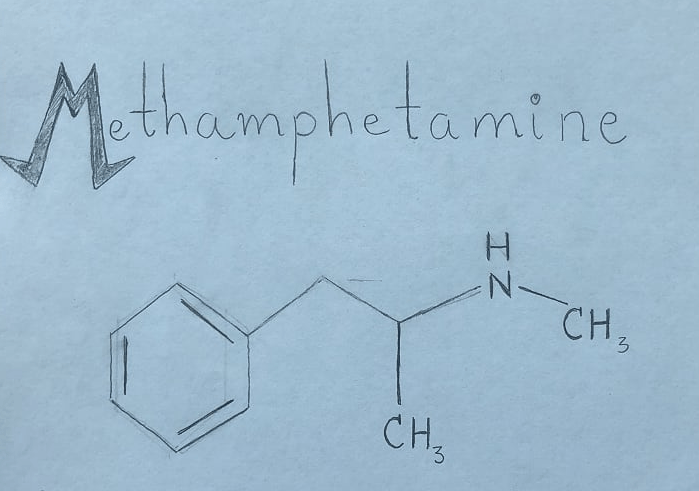
In California, there are many different health and safety codes and statutes in place to protect citizens. Some of these focus on illegal substances, such as methamphetamine, and the consequences one may face for possessing them.
Being accused of possessing meth is a serious crime because it is a controlled substance under the California Uniform Controlled Substances Act. Under California Health and Safety Code Section 11377, the mere possession of meth is considered a misdemeanor, which involves a penalty of up to $1,000 and a year in prison. However, these repercussions can be far more severe, depending on how the drug was found and whether or not the prosecutors determined if there was an intent to sell or distribute the drug. Therefore, it stands to reason that you should be aware of the ways in which a prosecutor can prove meth possession. So...
In order for a prosecutor to convict you of meth possession under Health and Safety Code Section 11377, they must be able to prove or show beyond reasonable doubt that: (1) you had actual possession of the drug in question; (2) you knew the drug was methamphetamine, a controlled substance, and (3) you had possession of usable amounts of the drug, i.e. more than just trace amounts of methamphetamine.
Technical elements constitute the legal definition of presence during unlawful use of controlled substances, which means that for the HS 11365 charges to hold, the following five elements must be true:
Therefore, while HS 11365 has wording that focuses primarily around the idea of someone being ‘present’ while the use is happening, there is actually to show than merely being at the scene of the crime. You would additionally have to take an action or say something that helps or abets the use of the controlled substance.
Lending a ‘Helping Hand’ isn’t Always a Good Thing
To understand what ‘helping’ or ‘encouraging’ use of a controlled substance means in legal terms, we must know that it entails these critical points:
Clearly, there are a lot of principles and points that a violator of this statute would have to meet. To better illustrate these in a more real-world situation, let’s consider to different scenarios which may end with two very different results.
The following are examples of HS 11365 charges and how they might play out in court.
In the first scenario, suppose you went to a party with some friends where some people were snorting coke. You notice and become aware that some people are doing coke, but you choose not to say or do anything about it. You are clearly uneasy and you walk away whenever someone offers you a chance to do a line yourself. Given this scenario, you would not be found guilty of violating HS 11365 because even though you were present at a venue where drugs were being used, you did nothing to help or encourage the use of those drugs, nor did you partake in it yourself.
Conversely, let’s say the scene played out a bit differently. You’re still at a party with your friends where some people are using coke. Throughout the night, you dance with someone and have a few drinks with them. You take a liking to them and want to see them after the party. One of their friends interrupts by offering some coke. The person you liked looks at you for approval and you, not wanting to be a buzzkill, encourage them to go ahead and have fun. If that person then goes ahead and takes a hit of coke, then you may later be found guilty of violating HS 11365 since you encouraged the use of a controlled substance while at a place where they were being used.
California Health and Safety Code 11365 applies solely to a select group of ‘controlled substance’. These substances are:
As you may have noticed, marijuana is ostentatiously absent from the list. This is because California’s HS 11365 law does not apply to marijuana and thus you cannot be guilty of violating HS 11365 if you are present and encourage marijuana use.
As we alluded to at the beginning, knowingly being in a place where controlled substances are used is considered a misdemeanor. As such, the potential consequences are:
It is imperative to keep in mind that even if you are convicted of being present at the time of controlled substance use under Health and Safety Code 11365, you may still be eligible for California’s ‘deferred entry of judgement’ or pretrial diversion program. In a nutshell, deferred entry of judgement suspends the charged placed against you while you complete a state-approved drug rehabilitation program. Upon successfully finishing it, the charges get dismissed. However, to qualify for this option, there are some requirements. For example, you typically will need to have no previous controlled substance related charges and the charges need to not have involved violence.
There are a few legal defenses to California Health and Safety Code 11365. Despite possibly having the option of drug diversion, sometimes it may be far more sensible to fight the charges that are posed against you directly. This is typically done by using some of the common legal defenses, such as lack of knowledge.
As an example, if you weren’t aware of the illegal controlled substance use, and/or had no knowledge that your actions or words may have indirectly encouraged use of those substance, then you are not guilty of helping or supporting the use of controlled substances, even if you were present at the location. Alternatively, another method is to argue that you flat did not say or do anything to aid or support someone in using the controlled substance. These are just two of the many possible ways of defending an HS 11365 case.
For answers to any other questions you may still have about California Health and Safety Code 11365, about being present while controlled substances are used, or to discuss your case confidentially with our team of experienced California criminal defense attorneys, give us a call at (310) 943-1171. Our lawyers in Glendale, Los Angeles County, CA, are highly dedicated to serving the needs of our clients.
KAASS LAW is authorized to practice law in California. The above content is intended for California residents only. This content provides only general information which may or may not reflect current legal developments. KAASS LAW expressly disclaims all liability in respect to actions taken or not taken based on any of the contents of this website. The above content DOES NOT create an attorney-client relationship. KAASS LAW does not represent you unless you have expressly retained KAASS LAW in person at the KAASS LAW office. KAASS LAW helps clients in: Los Angeles, Burbank, Hollywood, Glendale, Van Nuys, North Hollywood, Studio City, Highland Park, Eagle Rock, Sunland, Tujunga, Sylmar, San Bernardino, La Crescenta, La Canada, Beverly Hills, Westwood, Santa Monica, Brentwood. Pacoima, Montebello, Commerce, Alhambra, Downey, Bell, Maywood, Walnut Park, Vernon, Lynwood, Echo Park, Silverlake, Mission Hills, Northridge, Woodland Hills, Encino, Canoga Park, North Hills, Porter Ranch, Chatsworth, Reseda.
Upon finishing the DEJ program, the court has an obligation to dismiss the drug charges against you. As such, the benefits of completing the program are that:
Throughout your participation in the court-sanctioned program, the court may determine that your efforts or participation are not satisfactory, or that some other issue has come up. Any of these may disqualify your eligibility for the diversion program. Some of these reasons can include:
Basically, a defendant can be removed from the DEJ program if at any point they fail to complete the program satisfactorily or if they get convicted of a felony or a misdemeanor involving violence. In that case, the defendant will get dropped from the program and sentenced per the underlying charge(s).
There are two factors that are responsible for determining your eligibility for a DEJ. The first is the type of drug offense itself and the second is your previous criminal history.
According to California Penal Code § 1000, some drug offenses are eligible for deferred entry of judgment. Most often, these are:
*A ‘controlled substance’ refers most commonly to such drugs as Cocaine, Marijuana, Heroin, Methamphetamines, Ketamine, Ecstasy, Vicodin, Codeine, and GHB.
Your prior criminal history is the other major factor used to determine whether your case is eligible for a DEJ. The conditions are:
You should know that there are some strings attached with the deferred entry of judgment. It does require the defendant to plead guilty, with the condition that the court does not enter judgment. Thus, the final sentencing, or conviction, is never finalized. The case is therefore left in a limbo period, or deferment. During this period, the defendant must then successfully complete the appropriate, state-approved program. The court will look over the details of the case again and if everything was correctly done, the charge against the defendant will be dismissed.
The details surrounding the deferred entry of judgment can get complicated and murky. We can help you to assess if a pretrial diversion or a DEJ is possible given the details of your case. To speak to an Glendale criminal defense attorney, please call our firm at (310) 943-1171 or email us at [email protected].
KAASS LAW is authorized to practice law in California. The above content is intended for California residents only. This content provides only general information which may or may not reflect current legal developments. KAASS LAW expressly disclaims all liability in respect to actions taken or not taken based on any of the contents of this website. The above content DOES NOT create an attorney-client relationship. KAASS LAW does not represent you unless you have expressly retained KAASS LAW in person at the KAASS LAW office. KAASS LAW helps clients in: Los Angeles, Burbank, Hollywood, Glendale, Van Nuys, North Hollywood, Studio City, Highland Park, Eagle Rock, Sunland, Tujunga, Sylmar, San Bernardino, La Crescenta, La Canada, Beverly Hills, Westwood, Santa Monica, Brentwood. Pacoima, Montebello, Commerce, Alhambra, Downey, Bell, Maywood, Walnut Park, Vernon, Lynwood, Echo Park, Silverlake, Mission Hills, Northridge, Woodland Hills, Encino, Canoga Park, North Hills, Porter Ranch, Chatsworth, Reseda.
While the burden to prove these things falls on the State, you should be prepared with ample evidence to show otherwise, just in case they do manage to produce sufficient evidence in the courtroom. Bear in mind there are two different kinds of possession for which you may be convicted. The first kind is actual possession, which entails that the authorities discovered the drug on your person, meaning in your pocket, clothes, or bag. The second kind is constructive possession, which simply means that the authorities found the drug in a place that you have access to, such as your house, car, or office. If you did not expressly admit to having knowledge of the illegal substance of methamphetamine being in your possession, the prosecutor will have to meticulously prove that through evidence. Evidence can include the way you behaved or reacted during the search or arrest process. As an example, if you attempted to hide or get rid of the drug, then they could reasonably assume that you had knowledge of the drug and its illegality. However, assumptions can work against the prosecutor as well.
One of the first things your lawyer will do is to determine whether the police encounter that led up to the discovery of the meth was legal. In other words, the prosecutor cannot use evidence against you in a court of law if it was obtained illegally. Remember that the police must adhere to strict laws which are upheld by the United States Constitution, including when they stop and search vehicles, when they enter into private property, and even when they arrest or detain someone on suspicion of illegal substance possession. Should a law enforcement agent knowingly, or inadvertently, violate the suspect’s constitutional rights, then your lawyer can request to suppress the evidence being presented against you.
There are many different avenues and possibilities that a lawyer can explore with you in order to best gauge what your next optimal move will be. Getting charged with possession of a controlled substance may seem overwhelming and getting out of that situation even more so, but we will guide you through the criminal justice process and get you the best possible result. We invite you to give KAASS Law a toll free call at (310) 943-1171 to have a free consultation with our skilled defense attorneys.