

What Is a Court Judgment? Understanding Court Judgments in California Learn what a court judgment is, how it can impact you, and the steps you can take if a judgment is entered against you in California. Get expert legal help at KAASS LAW.
A court judgment is the formal decision made by a court to resolve legal disputes. Whether in a criminal or civil case, a court judgment determines the rights and obligations of each party involved. If a court judgment is entered against you, understanding your options and responding promptly is crucial, especially in California’s complex legal landscape. In California, court judgments are a key part of the legal system, and they can have a lasting impact on your life. The judgment may order you to pay money, stop a specific activity, or take a specific action. The judgment will become legally binding once issued, and failing to comply with it could result in further legal actions, such as wage garnishment, property liens, or even contempt of court charges.
Different cases lead to different types of court judgments. Here are some common types:
In criminal cases, court judgments often result in penalties like imprisonment, fines, or probation. These judgments can have serious long-term consequences, affecting not only your criminal record but also future employment prospects. For example, a conviction for a crime such as theft, assault, or driving under the influence (DUI) can lead to significant legal penalties and a permanent criminal record. A criminal court judgment typically includes sentencing, such as the length of prison time, probation, or a fine. These penalties can also include restitution, which requires the defendant to pay back the victim for any losses incurred as a result of the crime.
In civil cases, court judgments typically involve financial compensation or other remedies. For example, if you’re sued for a breach of contract, the court may order you to pay the plaintiff a certain amount of money. Civil court judgments can also apply in cases of personal injury claims, property disputes, or family law matters such as divorce and child custody. Monetary judgments in civil cases may include not only compensation for damages but also interest and court costs. If you lose a civil case, the court judgment may require you to pay these amounts, and failure to do so may result in further legal actions, such as asset seizure or wage garnishment.
If a court judgment is entered against you, it’s important to take action. Here’s how you can respond:
Unpaid court judgments can severely affect your credit score, making it more difficult to secure loans, credit, or rental housing. A judgment can remain on your credit report for up to seven years, which could influence potential lenders and landlords. Paying off the judgment or negotiating a settlement can help resolve the matter and improve your credit report. If you fail to pay the judgment, the creditor may take further steps to collect the debt, such as placing a lien on your property or garnishing your wages. This can complicate your financial situation and prevent you from obtaining new credit or loans.
Time is crucial when dealing with court judgments. Failing to act within the deadlines for filing appeals or requests may make the judgment final, limiting your ability to contest it. If you miss deadlines, you may lose the opportunity to appeal or challenge the judgment, and the debt may become much harder to resolve. If you fail to act, the judgment could also trigger more serious actions, such as wage garnishments, liens, or asset seizures. The earlier you seek legal assistance, the better your chances of resolving the matter in your favor. For more information on what to do after receiving a judgment, check out the California Courts website.
If you’ve received a court judgment in California, it’s essential to understand your rights and options. At KAASS LAW, our team of experienced attorneys is here to help you navigate the complexities of court judgments, whether you're filing an appeal, challenging a default judgment, or seeking a release of judgment. Time is critical, so contact us today to schedule a consultation.
People operating businesses or startups probably have so much on their plate that they don’t spend much time worrying about the legal issues they may face.
It would be wise to familiarize yourself with some of the common legal issues that small business owners are occasionally faced with.

Many people use UberX, a transportation service, to help them get around town. It is much cheaper than a traditional taxi and the cars tend to be nicer too.
What happens though if the driver is negligent and gets into an accident while on transporting a passenger? Even more interesting, what happens if the Uber driver gets into an accident without transporting a Uber passenger? Does Uber or Lyft provide insurance coverage for drivers injured due to a car accident? Does Uber driver's personal insurance policy cover the accident? Can injured passengers sue Uber/Lyft or their drivers? These are just a few questions many Uber, Lyft, and other TNC users are concerned about when involved in an accident while using these popular ride-sharing services.
On New Year’s Eve, a six-year-old girl was struck and killed by an UberX driver in San Francisco. The family sued Uber for wrongful death, but Uber denied liability. Since there were no passengers in the vehicle, the driver was not on duty and was not covered by Uber’s insurance. The family argued that since the driver was logged into the Uber app, he was on the job. At that time, Uber had very strict provisions as to what they are liable for. They only claimed liability between the times that a driver was requested and the fare was paid. This means that if a driver is driving around looking for a fare, they are not considered to be on the job; therefore, the driver will not be covered by.

Many tribal casinos have active insurance policies and have waived their immunity. In these situations, the liability insurer would pay monetary damages. However, it's important to note that Tribal/Indian lands are sovereign entities. Tribal/Indian laws must adjudicate all businesses within their jurisdiction. In summary, the businesses that operate solely on Tribal/Indian lands are not subject to many U.S. laws. Like any other sovereign nation, the Tribes have a right to self-governance.
Due to Tribal/Indian sovereign immunity, it is very difficult to pursue a legal matter against tribal Casinos.
Tribal casinos may be sued in U.S. courts if they willingly waive their immunity. In short, someone must obtain the Tribes' consent to sue them. It seems clear how undesirable it would be to do so. Yet some, like the Navajo, have done so in the past. Some of these tribal casinos have insurance and have waived their immunity in cases where their liability insurer would pay monetary damages. Many tribes have insurance but do not consent to waive their sovereign immunity. Usually, these tribes offer a minimum value for the only to make it disappear.

Dealing with a wrongful death case is undoubtedly one of the most emotionally challenging situations a person can face. Amidst the grief and loss, there comes a crucial decision: should you pursue negotiation or opt for litigation? Both paths have their merits and drawbacks, and understanding the nuances of each can help you make an informed choice that aligns with your goals and circumstances.
Negotiation is the process of obtaining an amicable agreement without going to court. It entails open discussion, compromise, and, in many cases, the advice of legal professionals.
Negotiation can aid in the preservation of relationships, especially if the persons involved have ongoing personal or professional ties. This strategy frequently results in less resentment and a faster settlement.
In general, negotiation tends to be less expensive than litigation. Legal fees, court costs, and the extensive time required for a trial can be avoided.

You must select a proper entity while structuring a business. Corporations and limited liability companies (LLCs) are two common options in the United States, each with a unique combination of benefits and drawbacks. Therefore, this blog strives to offer a thorough breakdown of the variations between corporations and LLCs in Delaware, USA, and how they contrast with those in other nations.
Corporations are well-known and frequently used business entities in every country. Here are a few essential traits of corporations:

Drunk driving collisions can cause severe injuries and even fatalities, mainly when they occur quickly. Because drunk driving accidents are so dangerous, the legislation imposes administrative, criminal, and civil penalties on violating drivers. If someone close to you died in a drunk driving accident, Kaass Law attorneys are here to help. We will examine the event's circumstances and evaluate whether you can file a claim. Although no amount of money will ever replace the loss of your family member, it can give you the sense of justice and closure you need.
A person will face severe convictions for drunk driving in California. A driver with a blood alcohol content (BAC) of 0.08 percent or more is frequently considered inebriated. Drivers of large rigs, tractor-trailers, and drivers under the age of 21 are subject to stricter regulatory requirements.
A wrongful death claim is a lawsuit that enables the surviving family members of the deceased to demand compensation from the person or entity who caused their loved one's passing. The damages obtained may be used to assist in covering funeral costs, medical expenditures, and other losses related to the death. These claims may be brought in civil court. Claims for wrongful death result from another person's careless, irresponsible, unlawful, or intentionally bad behavior. Establishing an estate for your departed loved one is the first step in bringing a The court will then choose a personal representative (PR) to manage that estate. The personal representative then files the wrongful death claim, usually with the negligent driver's auto insurance provider. Wrongful death lawsuits often proceed similarly to any other personal injury action. To prevail in a wrongful death lawsuit, the claimant must show that the other driver's negligent behavior caused the vehicle accident, which then caused the accident victim's premature death. A skilled attorney can assist you in establishing the legal aspects of your claim and recovering the damages.
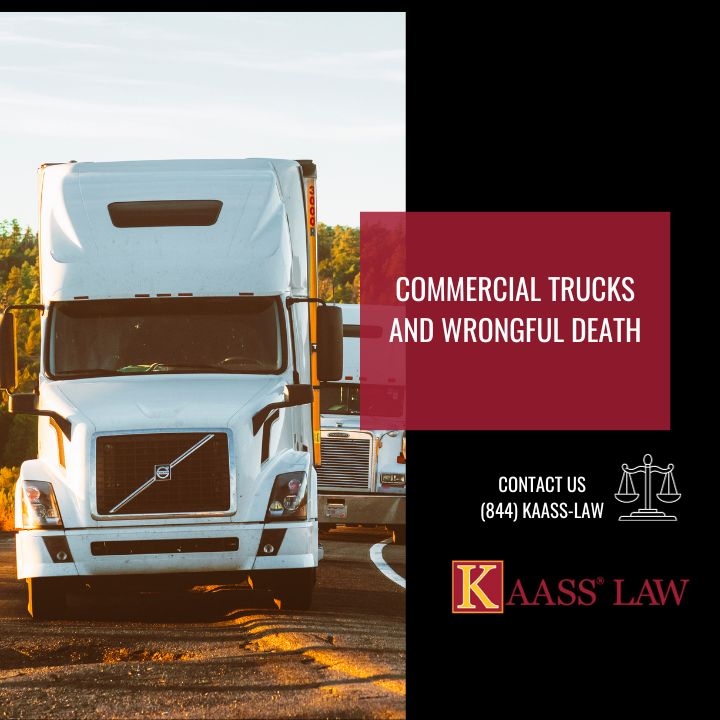
Commercial trucks, the backbone of our economy, are vital for transporting goods across the nation. Their towering presence on the highways is a testament to their significance, but it also masks a somber reality. Therefore, these behemoths are sometimes involved in tragic wrongful death cases. This blog delves into the heart-wrenching incidents where the might of commerce collides with personal loss.
Commercial trucks, with their imposing size, are both a blessing and a curse. Their ability to carry vast amounts of cargo ensures the smooth operation of industries. Also, keeps store shelves stocked, yet their colossal presence can lead to catastrophic accidents. These accidents, while not the norm, can be utterly devastating for the families who lose loved ones. Wrongful deaths caused by commercial truck accidents are sudden, shocking, and often avoidable.
Many wrongful deaths involving commercial trucks are a result of negligence. This negligence can manifest in various ways, but it frequently revolves around inadequate safety measures and violations of traffic regulations. One common form of negligence in trucking accidents is insufficient maintenance. Commercial trucks travel thousands of miles, and when proper maintenance is neglected, mechanical failures can occur, contributing to accidents and loss of life. Driver fatigue is another prevalent issue. Truck drivers often work long hours, and the pressure to meet delivery deadlines can lead to exhaustion. Fatigued drivers are more prone to accidents, posing a significant risk to others on the road. Overloaded trucks are a recipe for disaster. Carrying loads that exceed weight limits makes these vehicles harder to control, leading to accidents and, tragically, wrongful deaths. driving is a menace.
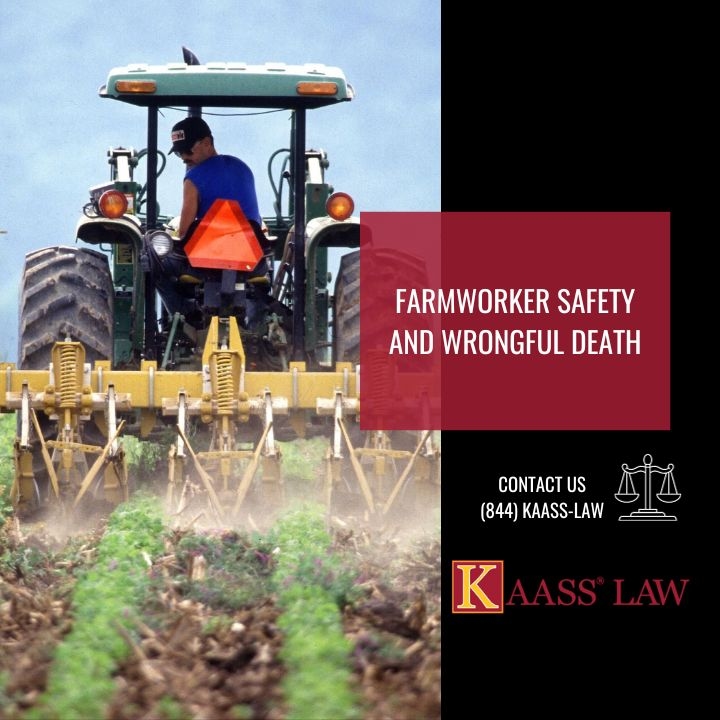
In the heart of rural America, amidst picturesque landscapes and fields of golden crops, lies a group of essential yet often overlooked individuals: farmworkers. These dedicated laborers toil under the sun, planting, tending, and harvesting the food that sustains us all. In this blog, we explore the often-overlooked issue of farmworker safety and the tragic cases of wrongful death in this vital sector.
Farmworkers are the backbone of agriculture, contributing to the production of food and other essential goods. Their work is physically demanding, often involving long hours of labor under diverse weather conditions. These dedicated individuals perform a wide range of tasks, from planting and weeding to operating heavy machinery and handling pesticides. Despite the fundamental role they play in our food supply, farmworkers face unique challenges and dangers that go unnoticed. Factors such as limited access to healthcare, language barriers, and inadequate legal protection make farmworkers vulnerable to accidents and injuries, including fatal ones. Working on a farm is more than just a job; it's a way of life. However, this way of life is not without its share of hazards:
Case Study The Valerius Family The following is a hypothetical case study into an everyday legal scenario that you may find yourself in. Lucas picks at his scrambled eggs, hardly even noticing the food he was eating that morning. His sister, Krystal wasn’t anymore present at breakfast either, absorbed as she was in her twitter feed. Logan looked from one end of the table to the other, rolling his eyes at each of his children’s absent-minded states. He couldn’t fathom what was so interesting about a social media site. He was already nearly done with his hearty breakfast and his newspaper was lying on the kitchen counter, ready for him to read on his morning commute to work. Everyone stopped what they were doing when a huge yawn broke the silence of the still morning as Katherine made her grand debut. She’d just woken up, clearly later than everyone else, and yet she looked the most stunning. Her eyes were already bright and shiny, her hair perfectly in place and glowing, and her skin was without blemishes and wrinkles. Her otherwise perfect appearance jarred so comically with the ridiculously huge yawn that accompanied her entrance into the room that Lucas and Logan burst into laughter, while Krystal scoffed. “Mom, if you can roll out of bed with more energy than all three of us combined, then you can find a way to yawn without the neighbors hearing.”, she said. “Oh come on, honey. You know I’m only making fun of the way your brother gets up in the morning. I swear that’s what woke me up in the first place today.” Katherine laughed, while Lucas flushed and Logan chuckled, “You know son, she has a point.”, he said, still smiling. He got up and kissed his wife, handed her a piece of toast and a cup of coffee, before snatching up the newspaper from the kitchen counter. “Alright kids, let’s finish up here. Lucas, it’s your first day as a college junior! Krystal, you have an exam and an audition after school today! I know you’ll both make us proud.” Logan didn’t really know how to end his little parental pep talk, so he finished with the typical ‘make us proud’ plug that every parent uses at some point. Katherine smiled as her husband said all of this while Krystal and Lucas groaned in unison. After that cringey breakfast, I was quick to get out of the house. I snagged the keys to my car before Krystal could, smirking at her annoyed face as I backed out the driveway. That forced her to have Mom drop her off at school. Good. I’m still pissed at her for eating the last of my Poptarts last week. On the way to my community college, I kept thinking back to the little speech Dad gave us today...I mean, yeah, I’m no dropout but clearly I’m not the favorite either. I couldn’t get in to a ‘legit’ four year university so I know my parents have been harboring some salt for awhile now. I was supposed to be their pride and joy...I guess I still am, though. Just not in the ways they thought or hoped. I always feel so weird whenever that topic comes up, because of Krystal. She’s never had an issue with school and studying. Which is super weird because I swear all I ever see her doing is refreshing her Instagram feed or debating which picture to post to her story. Somehow, she just manages to get it all done, homework, studies and all. For me, I couldn’t care any less. I knew since grade school that I didn’t like education. I hate where I’m going now, but I have to. It’s the first day and I can’t skip class today otherwise I might get dropped. Even our little community college is full of students now; it keeps getting harder to just enroll in the classes you need. I swear, with all these new students, you’d think it’s turning into a 4 year university...or, maybe that means more kids are realizing how stupid this all is and that they might as well save their money. Whatever. Not my problem. “Bro, where you been? You been ghosting your boys?” Shawn was never the brightest one in the group, but this kind of accusation just grinds on my nerves. “What the hell are you talking about man? I been the one trying to set this up for days now bro”. I shot back. “Yeah, clearly Shawn ain’t the brains here. That’d be me.” Trevor smirked as he said that last part, and I couldn’t help smiling either. Trevor and I had been best buddies since the early days of high school and it was good to see that he still had my back now too. “Listen, guys. I just had to go with my family on this lame retreat for the last couple of weeks before school started up again. You guys know I’m still in this.” And it was true. I didn’t want to back out. I wanted to see this through. Trevor, Shawn and I all turned and looked at Phil, who’d been dead quiet this whole time. His gaze was fixed on some random point past all of us. We were in some unused classroom on campus and I assumed he was looking at the clock in the back. When he noticed we were awaiting his response, he finally unfroze and spoke up, almost reluctantly. “I’m down to keep it going. I just need to know you’re in it for real. Can’t have you freaking out or backing out last second, now can we?” he said almost playfully. I took that less like an accusal and more like a request for proof of insurance. “Look, man, I don’t have to be involved. I just thought you wanted my help.” I said just as lightly back. “Course we do!” Trevor chuckled. “Here’s your share” he said, producing a small black bag. It was zipped up and very compact. Totally not ostentatious. Back in my car, I unzipped the little bag and found yet another little bag inside. I couldn’t help but laugh aloud. Leave it to Trevor to be so paranoid that he doubled up. Inside that one was the coke. The passenger seat door suddenly opened and I almost spilled the whole bag all over the car floor. “Haha! You should’ve seen your face!” Clair really must have thought she was being funny. “Damn it, Clair! I almost dropped the whole thing. Ever heard of knocking?” I yelled. “Jeez, calm down. What’s important is that you didn’t drop it. Anyway, it’s been way too long since I’ve seen you. I’m so happy you’re finally back.” She was being serious, and I could tell. Clair and I had been together the whole summer and we’d been dating since I met her at a kickback through Trevor’s girlfriend, Val. Honestly, I think Clair’s the most beautiful girl I’ve ever been with, which is why I couldn’t even believe she’d be down to do all the stupid and crazy stuff that my friends and I are into. Like the parties and the drugs. “Alright then. No worries. We’ll save this batch for a rainy day.” I winked, as I said that and she laughed. “I can hardly wait. In the meantime, hurry up. Let’s go to lunch. We can make it before my next class if we leave now.” I got a huge, goofy grin on my face, “Your wish is my command, princess.” “Ugh! Some things never change, huh?” she asked. And just like that, we laughed our way through lunch. “Honey, when are you coming home? Will you make it for dinner?” Mom asked her tone a little irritated. Doubtless she was about to scold Dad for nearly burning something. They’d been doing this thing where they cook dinner together after work, which to me feels like some sort of middle aged couple syndrome. “Yeah Mom, I’ll probably be there. I was just catching up with Clair.” I glanced over at Clair, and she covered her mouth and giggled. Her room was just as spotless and organized as ever. It almost seemed like nothing had changed in there at all since the summer. Except that she’d bought some more new shoes. She seems to want more of those for some reason. “Alright sweety, see you!” Mom’s voice was still a little annoyed so I’m sure I’ll get to hear all about what Dad burnt over dinner. We hung up and I leaned in to kiss Clair one last time before I left. “See you tomorrow babe.” The trip back home was really only supposed to take about ten or fifteen minutes, which was a good thing because I was starving and dinner actually sounded really good–even if Dad had burnt most of it to a crisp. But everything changed so fast. I was headed down a side street, no cars in sight, when a cop car suddenly turned its lights on behind me. Damn! He must’ve been parked by the curb with no lights on ‘cause I hadn’t even noticed he was there. With lights blaring right behind me and with no other cars on the road at this time, there was no mistaking that he was trying to get me to pull over. But what could I do? I couldn’t exactly lose him–I was only like three or four streets away from my house. And, why would he want to pull me over now? I couldn’t have been over the speed limit by anymore than like 5 or 10 mph. Reluctantly, I pulled over. “Son, do you know how fast you were going?” I gritted my teeth. I swear this cop was put here just to mess up my night. “Yes. I was going 50.” “No. You were nearly going 60 on a residential street.” He didn’t even seem to doubt his own words. Which just begs the question, why would he have even asked me then? Judging by his smirk, probably just to toy with me. “I’m going to ask you to step out of your vehicle.” “What?!” I couldn’t believe this type of police brutality was happening right now...And then I realized why he was smirking: his gaze was locked firmly onto the bong and empty beer bottles in the back seat. Damn it all. I guess I have no choice now. “Okay, officer. I’m getting out. Don’t shoot.” I added that last bit totally unironically: I’d seen one too many crazy cop videos. I opened the door and got out of the car. He brushed me aside and immediately started poking around in my car. I couldn’t help but feel so helpless...what if he finds it? But then again, I was probably already in trouble for the bong and the empty beer bottles. The thing is, I hadn’t even done anything! They were just there from earlier today when I got to Clair’s place. He immediately scooped up the bong and turned to look at me, his coy smile almost snarky now. “I didn’t do anything. I’m not on anything!” I said indignantly. How dare this guy play around with me in my own car like this? He didn’t even flinch at my shouting; he just calmly continued his search...until he popped open the glove compartment. “Hey! What gives?” I was stunned. Didn’t he need to ask permission before he went off and opened up different parts of my car like that? “What, kid? Got something to hide?” he asked casually, a little too comfortably for my liking. “No, but you will after I report you for violating my rights!” I wasn’t about to let myself get intimidated by some pushover cop like that. “Rights...what rights? You literally let me into your car and left a bong out. Or will you forget to include that part in your report?” His smirk had reached a new level of ire by this point. I could tell this wasn’t his first rodeo, but he was just flat-out playing a game of cat and mouse at this point...the thing that pissed me off so much was seeing just how much he enjoyed all of this. Like he just preys off of others’ misery. “What do you mean my son was arrested?!” Mom was furious. So was Dad. Duh. I mean I shouldn’t’ve expected anything less at this point. I hadn’t exactly made it easy for them by getting in heaps of trouble all at once. To be fair though, I still hadn’t exactly done anything too horrible. It’s not like I was driving under the influence of drugs. So there was a bong in the backseat. And maybe some coke in the glove compartment. Whatever. It could’ve been much worse. I guess I can’t expect everyone to see the situation as level-headed as me though. Especially not with my sister there. She was being extra. She basically just makes it worse with her horribly over dramatic reactions to the news of her brother being arrested on charges of possession. I can’t wait to get back at her somehow, someway. After the cop had retorted back on my smartass response, he’d just proceeded to calmly open the little bag until he saw the powdery, white substance inside. For him that was enough. He arrested and booked me on the spot. Never mind that I tried to explain that it wasn’t mine. Or that I wasn’t aware that it wasn’t there. He just seemed content to assume I was a lying drugie. It was a quiet Tuesday at the office. There really wasn’t too much hustle and bustle going on and for Maya that could only be a good thing. She sat on her chair, spinning slowly around. Being the receptionist, she was the first face clients saw when they walked into the lobby of the law firm. But right now, it was a peaceful moment, with no client in sight. Maya greatly appreciated that moment of reprieve because the last work week was just so chaotic and busy. Down the hall in the room across from the reception area, Ella was working diligently on a case. As case manager, she was basically the second person that the clients would get familiar with. She was simultaneously writing up a demand letter and speaking on the phone with an adjuster regarding another case. Walking down the hall, Kassandra couldn’t help but to smile lightly as she passed Ella’s office. Her workflow was on another level; the way Ella optimized her tasks made Kassandra almost envious of her ability to do so. Kassandra has other problems, though. She was still deep in thought about the meeting she had with her new clients at lunch. Their case was particularly tricky to approach and she was taking some time to figure out what the best way to proceed would be. As a lawyer, Kassandra always felt like it was vital to never lose sight of the fact that her clients and their opponents are all human beings, too. In that sense, the legal profession was entirely a human one to Kassandra. She took it upon herself to treat each interaction she had with her clients as a humanistic expression of problem solving and communication. At least these were the principles by which she approached what it means to be a lawyer. And so far, it was working out pretty darn well for her. Being just a year above thirty, she was one of the youngest lawyers with that much success to her name. “Hey, Kass. Is there anything else I can do besides prepping for the next appointment this afternoon? It’s a bit slow today.” Maya was always eager to help out and do more. Kassandra smiled and said, “Totally! Why don’t you pull up some research on these penal codes?” She produced a small list of some California statutes. “We need to look into these for our new clients’ case. Can you do that for me, Maya?” “Of course! I’ll work on it now.” Maya began to pull the penal codes up online as soon as Kassandra had turned back around to walk to her office. At about the exact same time, Katherine barged right into the office . Kassandra turned around and Maya looked up, both a little startled from the abrupt entrance. Following just behind Katherine was her husband, Logan. Both looked haggard and shaken. “Christ, Katherine! What’s happened? Is everything alright?” Kassandra had never seen Katherine so out of composure; she was a long time client with the firm, often seeking legal counseling and advice with her various business ventures. But to see her like this, distraught and distressed was something entirely new. “We need help. Our son’s been charged with meth possession.” It was Logan who spoke. Katherine was unable to say anything else. Maya’s eyes were moving between Katherine and Logan. She hadn’t ever seen them like this either. She eventually fixated on Katherine. A single tear from each eye was rolling down her face. “Please, come in. We’ll do what we can.” Kassandra’s voice was quiet, yet in the stillness of the room it was almost booming. “Tell me what happened. One more time. All the details.” Kassandra was in her element. She was like a sponge, soaking up all of the tidbits of information from Katherine and Lucas. She knew how important it was in these early moments to record every detail about the case and the events leading up to the arrest of Lucas, because she needed to be ready to catch any inconsistencies or breaches of conduct from the law enforcement. She knew all too well from experience that it would oftentimes be these tiny details that would end up proving extremely crucial later on down the line. “Of course. So…” As Katherine and Logan began to retell the story of their son’s arrest, Kassandra was listening intently and notating important details frequently. She couldn’t help but shake off this terrible, sinking feeling that she would not be able to help the Valerius’ son. Later that day, she was feeling worse and worse about the situation, as though there were larger and larger gaps that she wasn’t seeing. Kassandra was actually feeling almost overwhelmed by the details when suddenly–“Wait, I thought Lucas said that the bag was his girlfriend’s!” It was Harry who’d spoken. Harry was the creative at the firm, in charge of their marketing and branding. He’d been intrigued by this particular case because he saw how visibly distraught Kassandra was by it; he’d never seen her quite like that before. This had piqued his interest. After Logan and Katherine had left, he couldn’t help but to come sit by Kassandra to see her thought process as she went about putting the missing pieces together in this puzzle of a case. But he might just be on to something that Kassandra hasn’t seen yet. “Yes, that’s what his statement says. What about it?” Kassandra was a little irate from the interruption. “Well, the bag according to the cop had meth. Right? That’s what it says here in the arrest statement–that’s why Lucas was arrested.” Harry was beaming by this point. “Yes...and what?” Kassandra had no patience left. “And that’s just not true. The lab report here clearly shows that the substance was determined to be cocaine. Not meth.” Harry felt so proud of himself for putting that one together. It was a bombshell, that’s for sure. “What...ohh. No, that can’t be….no, wait. It is? It is! Oh my gosh, Harry you’re a genius!” Suddenly Kassandra was elated; Harry was just happy that he could be of help in hard times like these. He didn’t know exactly what it could do, but he did know enough about the situation to realize that Kassandra would know how to use that discrepancy to their advantage. “This is huge, Harry. We can definitely use this to get some momentum in our favor. This looks bad because the cop just assumed the substance was meth and issued the arrest under that excuse. As you pointed out though, the lab results don’t back that line of reasoning. The substance was not meth. The arrest isn’t warranted under the reasons the cop listed.” Kassandra was on a roll. “That’s great! So we can get the case thrown out?” Harry asked. He was so stoked now. Kassandra wasn’t smiling anymore though. That brief spout of happiness had passed by now. “No, Harry. We can’t do that.” She seemed serious. “Why not?” Harry was confused again. “Because if the D.A. finds out about this inconsistency first, she can just amend the charges. Currently, Lucas is potentially facing a California Health and Safety Code 11377 violation charge. Which is basically possession of a controlled substance. But since the police report singles out methamphetamine as the drug, and since the only drug found in Lucas’s car was cocaine, we can potentially work out a plea deal instead.” “What! You lost me, Kass. What do you mean plea deal? I thought we had this one in the bag with that flaw.” Harry was getting angry at the D.A. already, but Kassandra seemed resolved. “Well, we kind of do. They just need to not get the upper hand back. While we have them on this discrepancy, we can use it to build a DEJ or pretrial diversion case for Lucas. That way, within a year, he’s guaranteed to have a clean record as long as he completes the drug counseling classes. And he’ll be free the whole time...it’s our best bet for him. Otherwise, we risk the D.A. wising up to our plan and just amending the charges.” Harry nodded in assent. He knew that Kassandra would have to predict all possibilities and figure out which would be the best road to take based on the hypothetical outcomes. It’s a mentally exhausting game that all lawyers have to constantly play, with ever-shifting rules. Fortunately, Kass is great at that game. “Alright, so one more time, Lucas honey. Do you understand what we are going to do today at the stand?” Mom was freaking out as usual just before anything major was going to happen. I’d been through this before like four times with the lawyer, but clearly my parents can’t seem to trust that I’ll remember something this important. Which is actually at least a little insulting. “Yes, mom. Yes, dad. I only went over the plan like five times with Kass. We got this. Trust me.” I mumbled back, trying to sound reassuring. Truth be told, I absolutely hate this. I hate being in the courthouse and the thought of going up there freaks me out, despite having the calming presence of Kass by me. Speaking of her, she was standing a little bit to the side, pretending not to see that my parents were still totally smothering me. I wish she would say something more to calm them further. As though she’d read my mind, she walked up to me put her hand on my shoulder and said, “Hey, Lucas. This is no big deal. We got this. Just breathe and relax.” “I’m trying.” I really was. In the courtroom itself, the whole vibe was so weird. I kept picturing a scene like something straight out of a Law and Order rerun, but that just wasn’t how it was at all. The room was much smaller, first off. But more importantly, the people in there seemed so weirdly chilled out. Like, they were all so calm and collected. There wasn’t much drama going on at all. The security was even joking with the county clerk and the court reporter was nonchalantly discussing the good weather with the D.A. It all felt way too out of place in a courtroom for me, but then again I should probably have known that the movies never really depict things true to life. “Stay here. I’m going in.” Kassandra grabbed a file and headed right up to the D.A. I was really trying to keep it together on the inside at this point. This was it. The moment of truth as it were. I kept trying to lean in as much as possible from my seated position by the desk so that I could actually hear as much of their exchange as possible, but to little avail. I was only able to make out small bits and pieces here and there. I probably should just sit back and do myself a favor by relaxing. But it’s so hard not to get antsy in this place. A few minutes later, Kass walked back to where I was sitting. She had just the faintest hint of a smile. “Is it over?” I asked, rather stupidly. Of course it wasn’t over. It’s never over till the judge says it is. “Not yet. But the D.A. agreed to go ahead with the plea deal. The judge is going to give his answer shortly.” Kassandra said all this very matter-of-factly but I could tell she was relieved and happy underneath it all. The judge was looking right at me, I could feel it...this is really it. “I told you so! We didn’t have to worry!” Kassandra was trying to lighten the situation up a bit. The Valerius family was a bit somber but ultimately relieved. The plea deal went through and Lucas was granted a deferred entry of judgement. All he had to do now was to register and complete a drug counseling course and the charges would be cancelled. “Honestly, Kass, thank you! Thanks a ton!” Lucas was probably the most happy one out of the bunch. After all, he did get off very easy in this situation. Everything worked itself out in the best possible light for him. “It’s nothing. I just did my job, is all.” Kassandra was humble and she knew the value of staying grounded. But still, she did feel okay to smile freely now. “Yes, we can’t thank you enough.” Katherine said fervently. “Yeah, you got my dumb brother out of a hot mess. Thanks for that!” Krystal quipped. “Very amusing, Krystal.” Logan shot his daughter a disapproving look. “It’s fine, Dad. She just can’t get over the fact that I’m the one with the good sense of humor in this family!” Lucas wasn’t about to let her steal his thunder. “Fine, whatever. You got lucky this time. But there shouldn’t have been illegal stuff in your car in the first place, you idiot!” Krystal really was out for his thunder; Lucas hung his head sheepishly. “Speaking of which...where exactly is your girlfriend through all of this, Lucas? You’d think she would be more concerned about you. The nerve of her! To not even show up to support you on this difficult day.” Katherine was angry at Clair. And with good reason; she had never trusted her son’s new girlfriend. She believed Clair was not a good match for Lucas. “She’s just probably busy…” Lucas began to automatically defend his girlfriend but trailed off mid-sentence as the truth of his mother’s words began to sink in. Suddenly he began to ask himself a flood of questions as his doubts poured over: Where was Clair? Why wasn’t she here? How come she disappeared after the night Lucas got pulled over?...Why didn’t she come to court today?
A startup is a company in the early phases of its development, known for its innovative business model and potential for quick expansion. Often technology-driven, it encourages high levels of creativity and innovation. On the other hand, a small business is usually operated by its owner. They adhere to a more conventional business model, concentrating on offering products or services to a particular local market.
Startups aiming to disrupt the industry frequently look to alter the current situation. They emphasize creating new technologies or products that can be rapidly expanded. Conversely, small businesses usually stick to a more conventional business model, focusing on delivering products or services to a particular local market.
Startups typically have a greater capacity for growth compared to small businesses. They often concentrate on creating a product or service that can be expanded rapidly and has substantial market opportunities. Conversely, small businesses generally have restricted growth potential, focusing on a specific local market.
Startups and small businesses can have different legal structures. To protect liability and attract funding, startups are frequently organized as corporations or LLCs. In contrast, small businesses are commonly organized as sole proprietorships or partnerships.
Startups and small businesses should also consider taxes. Startups might qualify for tax incentives or credits to promote expansion and progress. While small businesses might have a simpler tax framework as they concentrate on a particular local market.
The number of team members in startups is usually smaller than that in small businesses. Startups tend to concentrate on creating innovative technologies or products, necessitating a compact group of highly proficient personnel. Conversely, small companies generally employ a larger workforce to deliver products or services to a local market.
Startups take longer to become profitable than small businesses because they are dedicated to developing new technologies or products, which may require longer to bring to market and expand. In contrast, small businesses generally achieve profitability more quickly because they concentrate on a specific local market and can generate revenue rapidly. Do not hesitate to contact KAASS LAW if you have questions about California Startup or Small Business laws or discuss your case confidentially with one of our experienced attorneys.
In March of this year, Uber announced that they would be changing their insurance coverage. They would now cover accidents as long as the Uber driver was at fault and logged into the Uber app, even if they were not transporting a passenger. Although this is a big step forward, there are still some provisions to be aware of. Uber’s insurance will only cover the accident if the driver’s personal insurance fails to do so. They will also only cover up to $100,000 in bodily injury and $25,000 in property damage.
UberX is a cheap way to get around town if you need transportation, but it is important to educate yourself on policies and provisions that may affect you. If you are an Uber passenger and are involved in a car accident, it is important to find an experienced personal injury attorney.
Make sure your rights are not violated! Don't settle for pursuing a court case without guidance. Our Glendale auto accident attorneys at KAASS LAW can provide you with any sort of legal assistance you require.
Tribes are also immune from other U.S. laws, including the Americans with Disabilities Act, Age Discrimination in Employment Act, and all other discrimination laws. Because of tribal immunity, any suit accusing a tribal business of discrimination under these laws will be thrown out of court.
Tribes have tribal courts. However, they do not provide the same level of protection and rights as one would get under the laws of the United States.
Second, authorities treat criminals on tribal lands a little differently. Unless we are dealing with a “major” crime, tribal courts have authority over all crimes committed in their jurisdiction. Thankfully, the “Major Crimes Act” states that any major felony on tribal lands is within the jurisdiction of the United States Federal Courts.
So next time you’re planning a trip to an Indian/Tribal Casino, remember to be careful and follow the laws of the sovereign state you are entering.
There are ways to go through the Tribal/Indian courts and maximize the case's value. You may do this by contacting an experienced attorney who has delivered such results. Contact your tribal personal injury lawyer to get more information.
This content serves educational purposes only. KAASS LAW's lawyers in Glendale, Los Angeles, CA, are authorized to practice law in California. We provide this information specifically for California residents. This content provides only general information, which may or may not reflect current legal developments. KAASS LAW expressly disclaims all liability for actions taken or not taken based on any of the contents of this website. The above content DOES NOT create an attorney-client relationship. KAASS LAW does not represent you unless you have expressly retained KAASS LAW in person at the KAASS LAW office.
KAASS LAW Personal Injury Attorneys help clients in Los Angeles, Burbank, Hollywood, Glendale, Van Nuys, North Hollywood, Studio City, Highland Park, Eagle Rock, Sunland, Tujunga, Sylmar, La Crescenta, La Canada, Beverly Hills, Westwood, Santa Monica, Brentwood. Pacoima, Montebello, Commerce, Alhambra, Downey, Bell, Maywood, Walnut Park, Vernon, Lynwood, Echo Park, Silverlake, Mission Hills, Northridge, North Hills, Porter Ranch, Chatsworth, Reseda, San Diego, La Jolla, El Cajon, Chula Visa, Del Mar
Negotiations are often held behind closed doors, which provides a level of privacy that litigation does not. This is certainly useful in sensitive instances.
Parties have more control over the terms of the settlement in negotiation. Both sides have the opportunity to shape the agreement, rather than leaving the decision solely in the hands of a judge or jury.
Negotiation is frequently faster than litigation, which might last months or even years. Therefore, this quickness can be advantageous for people looking for closure and a quick resolution.
Litigation, chiefly, entails taking a wrongful death matter to court, where a judge or jury will render a final judgement.
Some wrongful death cases are complicated, including several parties, complex legal difficulties, or liability disagreements. Litigation provides an organized method for dealing with these issues.
The litigation process requires for a precedent. By doing so, it plays an important role in maintaining guidelines for future cases.
In some situations, pursuing lawsuit may enable access to sorts of damages, such as punitive damages, that are not normally available through negotiation.
Litigation facilitates in-depth examination and discovery, a pivotal step in constructing a robust case and unearthing essential evidence.
Judges are able to establish a transparent conclusion to the claimant and defendant.
Reflect on what you hope to achieve through this process. Is it primarily financial compensation, or is there a broader goal, such as holding the responsible party accountable?
Evaluating the strength of your case can guide you in determining whether negotiation or litigation is the more appropriate route. A strong case may provide leverage in negotiations, while a weaker case may benefit from the structured process of litigation.
Recognize the emotional strain that accompanies both routes. Litigation can be a demanding and emotionally exhausting process, whereas negotiation might call for concessions and an acknowledgment of a settlement that may not be ideal.
Seek advice from an experienced attorney who specializes in wrongful death cases. Thereafter, they can provide valuable insight based on their expertise and knowledge of the legal landscape.
Ultimately, the decision between negotiation and litigation is a deeply personal one. There is no one-size-fits-all answer, and each case demands careful consideration. By weighing the advantages and drawbacks of both approaches and seeking the guidance of a qualified attorney, you can navigate this difficult terrain with confidence and make the choice that aligns with your unique circumstances and objectives. Remember, you are not alone, and there is support available to help you through this process. As a result, you can explore additional practice areas within our specialized field. Please follow this link for further information.
The popularity of restricted Liability Companies (LLCs) has grown recently as a result of their adaptability and restricted liability protection. Let's examine their main characteristics:
Furthermore, Delaware's relatively straightforward formation requirements, along with its greater flexibility in structuring stock classes and LLC ownership, the option for a single-member board of directors for corporations, the choice between member-managed and manager-managed LLCs, and the less formal requirements for corporate records and meetings, are some of the key differences that set Delaware apart from other nations in terms of corporations and LLCs. These distinguishing characteristics not only highlight Delaware's reputation for flexible and advantageous business regulations but also solidify its position as a highly desirable destination for companies seeking to incorporate in the United States. Therefore, to ensure compliance and make wise choices, it is crucial for business owners to take into account the particular laws and regulations of the nations in which they conduct business.
Despite the fact that this blog offers a broad overview of the distinctions between corporations and LLCs in Delaware, the USA, and other nations, it is essential to seek legal counsel from a licensed professional to get personalized legal advice. Additionally, an experienced lawyer can evaluate your particular business needs, assist with business formation, and guarantee adherence to all applicable rules and regulations. By consulting a qualified attorney, you can gain valuable insights, and receive personalized guidance. Also, make well-informed decisions that support your company's objectives and safeguard your interests. Therefore, we encourage you to contact us today at 310-943-1171 or visit our website to explore our range of services and areas of expertise.
Those who successfully establish the required legal aspects of their wrongful death claim may get compensation for various damages. Damages for wrongful death vary from case to case, and no two claimants will receive the same sum of money. The accident conditions and other significant elements will often affect the damages that a claimant may be able to receive. A wrongful death claimant may receive compensation for the costs of burying and funeral his loved one. The settlement could also cover the deceased person's pain and suffering between the time of the accident and the untimely passing. Moreover, the claimants can recover damages for losing the deceased's future earnings. This devastation is frequent when surviving family members rely on the decedent for financial support. Moreover, claimants can get compensation for losing the deceased's comfort, care, and company. Finally, claimants may pursue punitive damages because of the negligent driver's heinous actions. Punitive damages aim to punish the guilty motorist and deter others from driving after drinking.
You should contact a skilled California wrongful death attorney as soon as you can if a loved one died in an automobile accident brought on by a careless driver. Kaass Law's attorney can assist you in submitting the required claim or lawsuit and explain your legal alternatives for moving forward. Kaass Law is A reputable law firm with years of expertise guiding families through wrongful death cases in California. We will advocate for you during every stage of the proceedings. At Kaass Law, we will work to maximize the monetary recovery you receive through settlement. Give our office a call at 310.943.1171 and visit our other website for more information.
When wrongful deaths occur, affected families have legal recourse to seek justice. These legal actions are crucial for holding negligent parties accountable and providing a degree of closure to grieving families. Wrongful death claims are a means for families to seek compensation from those responsible for the accident. Trucking companies, drivers, or even manufacturers can be responsible if negligence leads to an accident. In these claims, the burden of proof lies with the plaintiffs. Families must demonstrate that the negligence of the truck driver, the trucking company, or other parties directly caused the accident and the subsequent wrongful death.
While no amount of money can fully compensate for the loss of a loved one, wrongful death claims can provide financial support to affected families. This compensation can cover medical expenses, funeral costs, lost income, and more, helping to ease the financial burden that often follows such tragedies.
One of the most significant impacts of wrongful death claims is their potential to prevent future tragedies. When trucking companies face legal consequences for negligence, they're incentivized to improve safety measures, enforce strict regulations for their drivers, and prioritize the well-being of all road users. In the wake of wrongful death cases, the trucking industry may adopt safer practices, such as better driver training, more rigorous enforcement of rest hours, and diligent maintenance schedules for their vehicles. This collective effort helps hold all responsible parties accountable and, ideally, makes our roads safer for everyone.
If you have questions or require legal assistance regarding wrongful death cases related to commercial trucks, please don't hesitate to contact us today at 310-943-1171. We are here to provide guidance and support, helping you navigate the complexities of these challenging situations and seek justice for your loved ones. Such cases are simply one of our many practices.
Wrongful deaths among farmworkers are, sadly, not uncommon. These cases involve the tragic loss of life due to preventable circumstances in the workplace. The agricultural sector is inherently dangerous, but there are instances where better safety measures could have saved lives. Let's explore a few notable examples:
The safety and well-being of farmworkers are essential aspects of the agricultural industry that deserve more attention. The wrongful deaths among these dedicated individuals highlight the need for safety measures, improved training, and better legal protections. Farmworker jobs play an indispensable role in putting food on our tables. It is our collective responsibility to ensure their safety and well-being while they do so. Additionally, view our other website for more information of other cases we can help in.