

It is always a drag being part of a motorcycle accident. Literally. An automobile is built to keep you safe and cozy from all the noise, smoke, and life threatening injuries. For Example the B-Pillar, which is the part of the automobile frame which your seat belt is usually attached to. This part of the car is a life saver from T-bone accidents and collision. See image. Now substitute the automobile with all its fine tuned standard protections against bodily injury and death with a 2 wheeler. A motorcycle, yes that thing that buzzes next to you on the 10, 405, and my favorite the 2 freeway. The machine we have all wanted to ride or learn how to ride, but more one reason or many opted to save more than a pretty penny. With a motorcyclist, whom we are all afraid of injuring or potentially even worse. I can honestly say that after years in the practice of representing motorcycle accident victims with massive traumatic and life changing injuries, I have more or less developed a sort of PTSD. Every time I hear the purring of the motorcycle’s engine in the back of my ear, I automatically remember 2 things. Do not even think about placing or answering a hands-free phone call of course and put down that country music. Post-Traumatic Stress you say? I say, my civil duty for the safety of my fellow man. Exactly. I feel as if I worry about these souls more than they. Whizzing, squeezing, cutting, splitting, and my favorite, all while stylishly popping a wheelie standing on the seat with one leg no hands or helmet, providing job security for the Highway Patrol. Oh, yes, slightly, the undiagnosed kind.
OTS has data that shows back in 2021, in Los Angeles, California, with an approximate population of 10 million people, 2,812 people died or were victims of a motorcycle accident. These types of numbers appear small, but these are real numbers and, nonetheless, real people who are no longer with us or cannot be the same due to a motorcycle accident.
Here at KAASS Law, as always, reminds everyone to be safe and extremely cautious out there! You have all given us so much business in the past and we have fearlessly advocated for your causes and brought in the big settlement bucks. However, as I hear our attorneys time and time again pragmatically and unsuccessfully advise--“Maybe you keep off that thing for a while.”

L-1 non-immigrant visa is for intracompany transferees who come to the United States to temporarily work for a U.S. company. If you are a foreign worker overseas, a U.S. company may qualify to transfer you with an L-1 visa, as an overseas employee, to the U.S. to work as a manager, executive, or specialized knowledge personnel.
“A manager generally refers to someone who supervises and controls the work of other supervisory, professional managerial employees. The L-1 visa classification also includes managers of an essential function within the organization or a department or subdivision of the organization.”
“An executive generally refers to someone who primarily directs the organization or a major component or function of the organization.”
“An individual with specialized knowledge is someone who possesses special knowledge, of the organization's product, service, research, equipment, techniques, management, or other interests and its application in international markets, or an advanced level of knowledge or expertise in the organization's processes and procedures.”
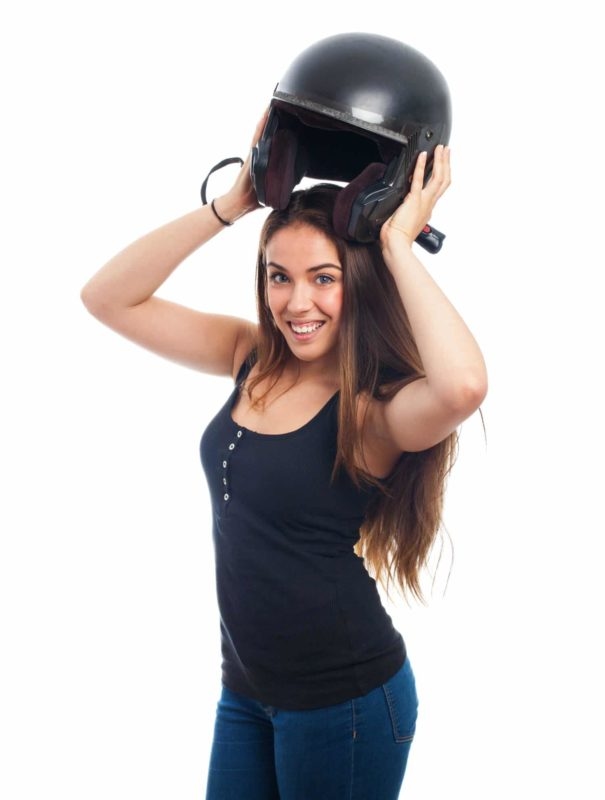
The most significant protective gear while riding a motorcycle is your helmet. Helmets that meet the Department of Transportation (DOT) standard are potentially the most effective way of reducing injury levels while riding a motorcycle. The DOT standards are for motorcycle helmets that usually hold a minimum standard of protection for riders. The most effective motorcycle helmets are the full-face helmets, protecting the face and chin. Helmets that are effective can protect the rider from acquiring a Traumatic Brain Injury, which is often the cause of motorcycle accident death. Helmets reduce the risk of head injury by 69%
Research shows that motorcycle helmets absorb the energy from the crash to protect the rider from experiencing the force of the collected injury on their head. Unhelmeted motorcycle riders are known to have more of a significant amount of severity in their injuries than helmeted motorcycle riders.

Many times, product liability lawsuits can arise out of a motorcycle accident. In Soule v. GM, “A manufacturer, distributor, or retailer is liable in tort if a defect in the manufacture or design of its product causes injury while the product is being used in a reasonably foreseeable way.” This is one of many that defines defective motorcycle gear and product liability laws. It's quite often that faulty tires, helmets, or jackets, can be a cause or worsen a motorcycle accident. Helmets and jackets alone can be exacerbate a motorcyclist’s injuries in the event of an accident. This is why we have defective motorcycle gear and product liability laws.
If a motorcycle manufacturer fails to warn or label the risk towards the consumer, the item is therefore defective.

Are you filing a lawsuit? Defending a lawsuit? If so, you are naturally—and, inevitably—thinking about the excessive expenses. Being involved in litigation is a burden on your pocket—not to mention a burden on your mind. You can minimize your mental burden concerning expenses by learning that there are in fact ways on recovering attorney fees.
The general “American Rule” places each party responsible for its own legal costs, including attorney fees. In other words, based on this rule even the prevailing party must pay his or her own attorney fees arising out of litigation. Surely, California follows this rule, regardless of what the cause of action may be and regardless of whether you win or lose the case. However, there are exceptions to this rule. The prevailing party may be awarded in two situations: (1) based on a written contract provision, (2) based on an applicable statute. These exceptions may hold the losing party responsible for paying the prevailing party’s attorney fees.
Signing a contract? Look out! There may be a clause in the contract you are about to sign, which provides the prevailing party in litigation to be awarded with most, if not all, of its reasonable fees. Generally, a contract that includes such provision is enforceable. A contract that entitles recovery of said expenses addresses the rights of the prevailing party to collect not only attorney fees, but also its reasonable costs incurred before and during litigation. Such costs include, but are not limited to, court filing fees, expert witness fees, preparation for deposition, pre-trial interviews, serving complaints, paying court reporters, photocopying, and travel expenses. On the other hand, reasonable attorney fees are the compensation for the legal services an attorney performs. While attorney fees and the legal costs are different, contract provisions may entitle the prevailing party to recover for both expenses.

California law allows consumers to bring bad faith tort action against their insurers for breaching the duty of good faith when refusing without proper cause to compensate its insured for a loss cover by the policy. Generally, every insurance policy has an implied obligation of good faith and fair dealing that neither the insurance company nor the insured will do anything to injure the right of the other party to receive the benefits of the agreement.
Insurance bad faith means to breach the implied obligation of good faith and fair dealing, an insurance company must, unreasonably or without proper cause, act or fail to act in a manner that deprives the insured of the benefits of the policy. It is not a mere failure to exercise reasonable care. However, it is not necessary for the insurer to intend to deprive the insured of the benefits of the policy.
Generally, the term bad faith for insurance purposes means an insurance company:
When a motorcyclist is injured due to another driver's negligence, the rider is entitled to seek compensation for not only their property damage and injuries, but are also entitled to seek loss of income, past and future medical expenses, pain, suffering, and other related expenses from the other drivers insurance company.
When a motorcyclist or motorcyclists passenger is killed in an motorcycle accident that was result of another parties fault or negligence the surviving heirs or relatives of the deceased party is entitled to pursue compensation for wrongful death. A civil lawsuit may be brought against the person that caused the death to recover monies.
There are a few things that should be noted that California law allows for two different types of lawsuits a and a suit brought based on a . Pursuant to Code of Civil Procedure § 377.60, a cause of of a person caused by the or may be asserted by any of the following persons or by the decedent’s personal representative on their behalf:
Asylum in the United States usually wonder how long they will have to wait for their asylum interview. Potential asylum applicants should know that they might have to wait for years until they get a chance to appear before an asylum officer.
Pursuant to the Immigration and Nationality Act, in the absence of exceptional circumstances, the initial interview or hearing on the asylum application must commence not later than 45 days after the date an application is filed. INA § 208(d)(5)(A)(ii). In the absence of exceptional circumstances, final administrative adjudication of the asylum application, not including administrative appeal, must be completed within 180 days after the date an application is filed. Id. § 208(d)(5)(A)(iii). According to INA, USCIS shall schedule the asylum interview within 45 days after filing the application which should be adjudicated within 180 days from the filing date, unless exceptional circumstances apply.
During the last years exceptional circumstances apply, and the actual waiting times are far from being close to the statutory deadlines. Asylum applicants have to wait for years until they get a chance to appear in front of an asylum officer. Depending on the asylum office that has jurisdiction over the application, applicants may wait from two to five years. For example, in December 2016, the Los Angeles asylum office was interviewing the applicants who filed their applications in August 2011. The waiting time is much shorter in Northern California where have to wait two year. The asylum application processing times for all asylum offices may be found on the USCIS website.

With the constant monopolization of large corporations taking over cities, it is important to know the regulations behind unfair competition, to protect yourself against corporate scrutiny.
Classifications of unfair competition include some of the following examples

Often times, bedsores are caused by nursing home negligence which causes injuries to the skin caused by prolonged pressure.
Bedsores, also known as pressure sores, are injuries to the skin caused by prolonged pressure. Bedsores are more prone to occur in locations on the body that have direct contact to the bone (i.e: the head, back, ankles, and hips). Bedsores have four different stages, increasing in severity throughout each stage and eventually resulting in damage of the bones itself. If not treated, bedsores can cause sepsis, bone/joint infection, and, ultimately, death. Patients are at risk of developing pressure sores if they have trouble moving and are unable to change position while seated or in bed. Immobility may be due to:
Requirements for obtaining L-1 visa status are:
Before being transferred to the U.S. company with an L-1 visa, the employee must have completed one continuous year of work outside the U.S. with the overseas company. However, if an employee works in the U.S. during that year, he or she will need to equally work for the overseas company in order to obtain a total of at least 12 months employment overseas.
The overseas company that the employee works for during the required period of one year must be related, such that it must be the same employer, subsidiary, or affiliate of the U.S. company. To prove the amount of time worked, the employee may include pay stubs, payroll records, or tax records.
In order for the company to be a qualifying organization, it must be doing regular, systematic, and continuous business in the U.S. and another country during the entire duration of the transfer.
The transferee must fill in at least one of the following three capacities: executive, manager, or specialized knowledge. There is no requirement for the employee being transferred to the U.S. to perform the same services as he or she did overseas; they may be employed in a different capacity in the U.S. For example, an individual with specialized knowledge overseas may be transferred to work in the U.S. as a manager. The same is possible with an employee working as a manager overseas and being transferred to the U.S. as an employee. Provided that the position held by the employee was for a period of one year before transferring with an L-1 visa.
As explained above, the employee must not fill in the same position as he or she did overseas. However, the employee must be working in a capacity involving duties of an executive, manager, or specialized knowledge personnel.
The employee must be qualified for the position he or she is transferring to occupy. United States Citizenship and Immigration Services (USCIS) require proof of such qualifications by showing prior education and experience. This proof must be presented with the L-1 petition.
The employee must intend to depart the U.S. after the completion of his authorized stay. However, an L-1 employee can seek permanent residency in the U.S. if he qualifies on another basis.
An individual, entering the United States in L-1 status, will stay for the time required by the U.S. company, up to three years maximum. However, up to two years of extension can be authorized in increments. A maximum stay for managers and executives (L-1A) is seven years, where as for specialized knowledge personnel (L-1B), it’s five years. An employee with specialized knowledge may later qualify for a managerial or executive position within the U.S. company only if the specialized knowledge employee has been performing managerial or executive duties for six months before requesting an extension of stay beyond what is permitted for the specialized knowledge employee, which is five-years. This distinction is important for two reasons. First, to determine the duration of the transferee’s stay. Second, because managers and executives have a potential route to obtaining permanent residency in the U.S.
Under L-2 nonimmigrant category, family members of the L-1 nonimmigrant are permitted to enter the United States. Family members only include the visa holder’s spouse or unmarried children under the age of 21. However, once children reach the age of 21, they may no longer remain in the U.S. The duration period for family members is the same as that of which the main working family member is admitted. Family members admitted in the L-2 nonimmigrant category may now be authorized to work and study while remaining in the U.S. Give us a call, our attorneys speak English, French, Spanish, Russian, Armenian, and Italian. KAASS LAW is authorized to practice law in California. The above content is intended for California residents only. This content provides only general information which may or may not reflect current legal developments. KAASS LAW expressly disclaims all liability in respect to actions taken or not taken based on any of the contents of this website. The above content DOES NOT create an attorney-client relationship. KAASS LAW does not represent you unless you have expressly retained KAASS LAW in person at the KAASS LAW office. KAASS LAW helps clients in: Los Angeles, Burbank, Hollywood, Glendale, Van Nuys, North Hollywood, Studio City, Highland Park, Eagle Rock, Sunland, Tujunga, Sylmar, La Crescenta, La Canada, Beverly Hills, Westwood, Santa Monica, Brentwood. Pacoima, Montebello, Commerce, Alhambra, Downey, Bell, Maywood, Walnut Park, Vernon, Lynwood, Echo Park, Silverlake, Mission Hills, Northridge, Woodland Hills, Encino, Canoga Park, North Hills, Porter Ranch, Chatsworth, Reseda.
Each state has their own helmet law. California has a Universal Helmet Law. Pursuant to California Vehicle Code, Division 12, Chapter 5, Article 7, Section 27803.
(a) A driver and any passenger shall wear a safety helmet meeting requirements established pursuant to Section 27802 when riding on a motorcycle, motor-driven cycle, or motorized bicycle.
(b) It is unlawful to operate a motorcycle, motor-driven cycle, or motorized bicycle if the driver or any passenger is not wearing a safety helmet as required by subdivision (a).
(c) It is unlawful to ride as a passenger on a motorcycle, motor-driven cycles, or motorized bicycle if the driver or any passenger is not wearing a safety helmet as required by subdivision (a).
(d) This section applies to persons who are riding on motorcycles, motor-driven cycles, or motorized bicycles operated on the highways.
(e) For the purposes of this section, 'wear a safety helmet' or 'wearing a safety helmet' means having a safety helmet meeting the requirements of Section 27802 (see :Standards" below) on the person's head that is fastened with the helmet straps and that is of a size that fits the wearing person's head securely without excessive lateral or vertical movement.
(f) In enacting this section, it is the intent of the Legislature to ensure that all persons are provided with an additional safety benefit while operating or riding a motorcycle, motor-driven cycle, or motorized bicycle."
In the United States, there are two types of motorcycle helmet laws:
Research shows that The Universal Helmet Law increased helmet use significantly. The opposite occurs when The Universal Helmet law is not active: helmet use is decreased, alongside with increasing injury and death levels. According to the Insurance Information Institute, the federal government estimates that helmet use while riding a motorcycle can reduces the risk of dying in an accident by 37 percent.
Under California Vehicle Code 27803, it is mandatory to wear a helmet as a rider or passenger while riding a motorcycle. It is even illegal for a helmeted rider to ride with an unhelmeted passenger. Wearing a helmet can help protect riders and passengers from excessive damages. Although it is the law in California, it is strongly suggested riders utilize DOT approved helmets.
Give us a call, our attorneys speak English, French, Spanish, Russian, Armenian, Hebrew, Farsi, and Arabic.
KAASS LAW is authorized to practice law in California. The above content is intended for California residents only. This content provides only general information which may or may not reflect current legal developments. KAASS LAW expressly disclaims all liability in respect to actions taken or not taken based on any of the contents of this website. The above content DOES NOT create an attorney-client relationship. KAASS LAW does not represent you unless you have expressly retained KAASS LAW in person at the KAASS LAW office.
KAASS LAW helps clients in: Los Angeles, Burbank, Hollywood, Glendale, Van Nuys, North Hollywood, Studio City, Highland Park, Eagle Rock, Sunland, Tujunga, Sylmar, La Crescenta, La Canada, Beverly Hills, Westwood, Santa Monica, Brentwood. Pacoima, Montebello, Commerce, Alhambra, Downey, Bell, Maywood, Walnut Park, Vernon, Lynwood, Echo Park, Silverlake, Mission Hills, Northridge, Woodland Hills, Encino, Canoga Park, North Hills, Porter Ranch, Chatsworth, Reseda.
Under state law, product liability in California is "strict liability". A Plaintiff does not have to prove negligence by the manufacturer or any in the chain of distribution. However, the Plaintiff must meet the burden of proof in order to recover monies for injuries sustained. In Anderson v. Owens- Corning Fiberglas Corp, “Strict liability has been invoked for three types of defects—manufacturing defects, design defects, and ‘warning defects,’ i.e., inadequate warnings or failures to warn.”
Also, in Greenman v. Yuba Power Products, Inc., “A manufacturer is strictly liable in tort when an article he places on the market, knowing that it is to be used without inspection for defects, proves to have a defect that causes injury to a human being… The purpose of such liability is to insure that the costs of injuries resulting from defective products are borne by the manufacturers that put such products on the market rather than by the injured persons who are powerless to protect themselves.”
In the case of Elmore v. American Motors Corp., “[T]he doctrine of strict liability may not be restricted on a theory of privity of contract. Since the doctrine applies even where the manufacturer has attempted to limit liability, they further make it clear that the doctrine may not be limited on the theory that no representation of safety is made to the bystander...." Going further on the case, "If anything, bystanders should be entitled to greater protection than the consumer or user where injury to bystanders from the defect is reasonably foreseeable. Consumers and users, at least, have the opportunity to inspect for defects and to limit their purchases to articles manufactured by reputable manufacturers and sold by reputable retailers, whereas the bystander ordinarily has no such opportunities. In short, the bystander is in greater need of protection from defective products which are dangerous, and if any distinction should be made between bystanders and users, it should be made, contrary to the position of defendants, to extend greater liability in favor of the bystanders.”
In most motorcycle products liability cases, an expert witness testimony is a requirement to prove any defective products.
In California civil lawsuits, jurors are given jury instructions in order to help them determine whether the Defendant(s) should be held liable for injuries caused to the Plaintiff(s). A list of jury instructions can be found on the CACI Series 1200 Products Liability Section.
Give us a call! Speak to a experienced motorcycle accident attorney and motorcycle product liability attorney. We are located in Glendale, Los Angeles County, CA. Our attorneys speak English, French, Spanish, Russian, Armenian, Hebrew, Farsi, and Arabic. [video width="1280" height="720" mp4="https://kaass.com/wp-content/uploads/2019/12/output_HD7204.mp4"][/video]
Additionally, if an applicable statute authorizes, the prevailing party in litigation can seek to recover attorney fees. Some California statutes are discretionary; such that the court “may” award attorney fees to the prevailing party, whereas other statutes provide mandatory language and “shall” award the prevailing party with its attorney fees. Some statues that allow the prevailing party to recover is when the losing party files a lawsuit based on no grounds, such that there was no reason to bring forth the lawsuit; instead, it was a waste of court’s time and resources. Other statues allow recovery of fees from a case that substantially benefits or influences the public. Give us a call, we speak English, French, Spanish, Russian, Armenian, Hebrew, Farsi, and Arabic. KAASS LAW is authorized to practice law in California. The above content is intended for California residents only. This content provides only general information which may or may not reflect current legal developments. KAASS LAW expressly disclaims all liability in respect to actions taken or not taken based on any of the contents of this website. The above content DOES NOT create an attorney-client relationship. KAASS LAW does not represent you unless you have expressly retained KAASS LAW in person at the KAASS LAW office. KAASS LAW helps clients in: Los Angeles, Burbank, Hollywood, Glendale, Van Nuys, North Hollywood, Studio City, Highland Park, Eagle Rock, Sunland, Tujunga, Sylmar, La Crescenta, La Canada, Beverly Hills, Westwood, Santa Monica, Brentwood. Pacoima, Montebello, Commerce, Alhambra, Downey, Bell, Maywood, Walnut Park, Vernon, Lynwood, Echo Park, Silverlake, Mission Hills, Northridge, Woodland Hills, Encino, Canoga Park, North Hills, Porter Ranch, Chatsworth, Reseda.
Location: 701 North Brand Blvd. Suite 100 Glendale, CA 91203 Telephone: (310) 943-1171 Email: [email protected]
Both first and third party can bring suit for insurance bad faith.
First party claims are made between its policyholder or insured and the insurance company. These type of claims are contractual by nature and are contingent on the language of the insurance policy. For the insurer to fulfill its obligation not to impair the right of the insured to receive the benefits of the agreement, it again must give at least as much consideration to the latter’s interests as it does to its own.” (Egan v. Mutual of Omaha Insurance Co. (1979) 24 Cal.3d 809, 818—819 [169 Cal.Rptr. 691, 620 P.2d 141].)
Third party insurance claim is made by a party that is not a named policyholder or insured. The most common type of third party insurance claim would be a liability claim i.e, you were rear-ended up by another driver and filed a claim with his/her insurance company.
California Insurance Code §790.3 underlines what insurance companies are prohibited from doing:
Insured must show that the insurer has:
The actionable withholding of benefits may consist of the denial of benefits due; paying less than due; and/or unreasonably delaying payments due.” (Major v. Western Home Ins. Co. (2009) 169 Cal.App.4th 1197, 1209 [87 Cal.Rptr.3d 556], internal citations omitted.)
If an insurance company is successfully found to have acted in bad faith, they may be liable to pay for:
[video width="1280" height="720" mp4="https://kaass.com/wp-content/uploads/2019/12/output_HD72010.mp4"][/video]
If you believe that your insurance company may be acting in bad faith, speak to a Los Angeles insurance attorney for a free consultation. Call our office at (310) 943-1171, our attorneys speak English, French, Spanish, Russian, Armenian, and Italian.
Location: 701 North Brand Blvd. Suite 100 Glendale, CA 91203 Telephone: (310) 943-1171 Email: [email protected]
KAASS LAW is authorized to practice law in California. The above content is intended for California residents only. This content provides only general information which may or may not reflect current legal developments. KAASS LAW expressly disclaims all liability in respect to actions taken or not taken based on any of the contents of this website. The above content DOES NOT create an attorney-client relationship. KAASS LAW does not represent you unless you have expressly retained KAASS LAW in person at the KAASS LAW office. KAASS LAW helps clients in: Los Angeles, Burbank, Hollywood, Glendale, Van Nuys, North Hollywood, Studio City, Highland Park, Eagle Rock, Sunland, Tujunga, Sylmar, La Crescenta, La Canada, Beverly Hills, Westwood, Santa Monica, Brentwood. Pacoima, Montebello, Commerce, Alhambra, Downey, Bell, Maywood, Walnut Park, Vernon, Lynwood, Echo Park, Silverlake, Mission Hills, Northridge, Woodland Hills, Encino, Canoga Park, North Hills, Porter Ranch, Chatsworth, Reseda.
(a) The decedent’s surviving spouse, domestic partner, children, and issue of deceased children, or, if there is no surviving issue of the decedent, the persons, including the surviving spouse or domestic partner, who would be entitled to the property of the decedent by intestate succession.
(b) Whether or not qualified under subdivision (a), if they were dependent on the decedent, the putative spouse, children of the putative spouse, stepchildren, or parents. As used in this subdivision, “putative spouse” means the surviving spouse of a void or voidable marriage who is found by the court to have believed in good faith that the marriage to the decedent was valid…”
Minors can also bring a cause of action for wrongful death, IF the minor(s)
Damages for wrongful death include:
We provide 24/7 motorcycle accident hot line available for victims involved in motorcycle accidents. Speak to a Los Angeles motorcycle accident attorney and find out if you qualify as a relative under California law. Our motorcycle accident lawyers charge our clients' zero upfront legal fees. That’s right – you pay nothing until and unless we make a recovery. Our attorneys speak English, Spanish, Russian, Armenian, and French.
KAASS LAW is authorized to practice law in California. The above content is intended for California residents only. This content provides only general information which may or may not reflect current legal developments. KAASS LAW expressly disclaims all liability in respect to actions taken or not taken based on any of the contents of this website. The above content DOES NOT create an attorney-client relationship. KAASS LAW does not represent you unless you have expressly retained KAASS LAW in person at the KAASS LAW office.
KAASS LAW helps clients in: Los Angeles, Burbank, Hollywood, Glendale, Van Nuys, North Hollywood, Studio City, Highland Park, Eagle Rock, Sunland, Tujunga, Sylmar, La Crescenta, La Canada, Beverly Hills, Westwood, Santa Monica, Brentwood. Pacoima, Montebello, Commerce, Alhambra, Downey, Bell, Maywood, Walnut Park, Vernon, Lynwood, Echo Park, Silverlake, Mission Hills, Northridge, Woodland Hills, Encino, Canoga Park, North Hills, Porter Ranch, Chatsworth, Reseda.
It should be noted that USCIS prioritizes asylum applications for interview scheduling as follows:
Generally, the applicants in the first and second categories are scheduled promptly.
Although asylum applicants have to wait for years for their interview, they do not have to wait until the interview to obtain employment authorization. Simply filing an application for asylum does not entitle the applicant to employment authorization. However, an applicant may request a permission to work if the application is still pending, and 150 have passed since the application was accepted by USCIS. 8 C.F.R. § 208.7(a)(1). If the asylum application is not denied, the USCIS has 30 days from the date of filing of the application for employment authorization to grant or deny that application except that no employment authorization will be issued to an asylum applicant prior to the expiration of the 180-day period following the filing of the asylum application. Id. The employment authorization document is valid for two years, and can be extended after the expiration date if the asylum application is still pending.
To sum up, asylum applicants may have to wait for years until their asylum interview. In some regions of the United States applicants have to wait for more than five years. However, foreigners with pending asylum applications may apply for employment authorization five months after filing the application with USCIS.
We invite you to contact our office and speak to our Glendale immigration attorney for a free consultation. Our immigration attorney speaks English, French, Spanish, Russian, Armenian, and Italian.
It is hard to determine what actions violate the unfair competition laws, however if you are ever in doubt the first step would be to call a lawyer. There are several legal routes to take when a business entity are opressing by unfair competition. Filing a lawsuit against an unfair competitor would be the most effective route, in which the plaintiff collects money for every violation. According to BPC 17206, any person who engages in unfair competition will be liable for a civil penalty not exceeding $2500 for each violation.
The court asses each violation made by the Defendant and determines whether it is worthy of a violation. Numerous circumstances are considered when making the final decision, including: the number of violations, seriousness of misconduct, persistence of misconduct, liability, net worth, and defendant’s asset’s.
The industrialization of most cities in the United States puts small business owners at risk of being intimidated or bought out by larger corporations. Business owners can file a lawsuit as a countermeasure to corporation’s intimidation strategies, if they cross the lines of unfair competition. If any business owner is in fear of being a target by other corporations, make sure to contact an attorney to see whether you are a victim of unfair competition.
Give us a call, our litigation and trial attorneys speak English, French, Spanish, Russian, Armenian, Hebrew, Farsi, and Arabic.
The primary cause of bedsores may be caused due to the negligent care of nursing home. Nurses and staff members are strictly trained to care for the patient. It is necessary for nursing home staff to follow procedures intended to limit the risk of developing bedsore, as well as treating those who already have bedsores.
The customary method used to avoid bedsores is re-positioning, which aid to alleviate constant pressure in common high-pressure areas of the body. Nursing home staff has the duty to help patients reposition themselves every hour. For those patients that are restricted to a hospital bed should be re-positioned by staff at least every two hours.
If your loved one that is in a nursing home has bedsores, you may be eligible to file a negligence lawsuit on the nursing home. Documentation that proves the patient acquired the bedsores as a result of negligence of the nursing home is important. Filing a lawsuit is a productive way to handle negligence in a nursing home and it can ensure later care for the other patients. For it is crucial that the patients are taken care of properly.
Give us a call, our attorneys speak English, French, Spanish, Russian, Armenian, Hebrew, Farsi, and Arabic.
Location: 701 North Brand Blvd. Suite 100 Glendale, CA 91203 Telephone: (310) 943-1171 Email: [email protected]