

Many people who consider filing a trademark application wonder what information or documents they need for submitting the application. Title 37 of the Code of Federal Regulations sets forth the requirements for a complete trademark or service mark application. Pursuant to this regulation, the application must be in English and shall include all of the following:
First of all, a trademark or service mark application shall include the name, the citizenship and the address of the applicant. 37 C.F.R § 2.32(a). It should be noted that only the owner of the mark can apply for the registration of the mark. 15 U.S.C. 1051(a). This is a statutory requirement and cannot be waived. Chien Ming Huang v. Tzu Wei Chen Food Co. Ltd. (Fed. Cir. 1988) 849 F.2d 1458, 1460. A license to use a trademark does not make the licensee an owner of the mark. Norden Restaurant Corp. v. Sons of Revolution in State of N.Y. (1980) 51 N.Y.2d 518, 522. Hence, even a licensee cannot file a trademark application.
To be considered complete, a trademark or service mark application shall include the drawing of the mark. 37 C.F.R § 2.32(c). The drawing is a clear depiction of the mark which shows how the registered mark will look like. The drawing can be (a) in standard characters without claim to any particular font style, size or color, or (b) a special form drawing when the mark includes a two or three dimensional design, or characters in a particular font style or size. If the mark is not in standard characters the application shall also include a description of the mark. Id. § 2.32(a)(8).
In the application for registration the applicant must identify the goods or services in connection to which the applicant uses or intends to use the mark. Id. § 2.32(a)(6). The application shall also state the international class of good or services, if known. Id. § 2.32(a)(6). It should be noted that the classification of goods and services is only for the United States Patent and Trademark Office administration and cannot prejudice the rights of the applicant. Mobil Oil Corp. v. Walter Kidde & Co. (T.T.A.B. 1970) 167 U.S.P.Q. 478. The list of the classes of goods and services can be found in the Section 6.1 of the Title 37 of the Code of Federal Regulations.
The application must include one or more bases for filing the application. 37 C.F.R § 2.32(a)(5). The application must be based on one of the following grounds: (a) Use in commerce, in which case the applicant must state that the mark is in use in commerce, must state the first date the mark was used anywhere in connection to goods or services, the first date of the use of the mark in commerce, and must attach one specimen showing how the applicant uses the mark in commerce; (b) Intent to use, in which case the applicant must verify that he has a bona fide intention to use the mark in commerce; (c) Registration of the mark in a foreign applicant’s country of origin, in which case the applicant must state that he has a bona fide intent to use the mark in commerce and must attach a copy of the registration of the mark in applicant’s home country; (d) Claim of priority based upon an earlier filed foreign application; (e) Extension of protection of an international registration. Id. § 2.34(a).
The application must include a verified statement. Id. § 2.32(b). The main purpose of the verified statement is to certify that the facts set forth in the application are true. The application shall be signed by the applicant or by someone who is properly authorized to sign on behalf of the applicant. The applicant shall also pay the filing fee for each class of goods and services. Id. § 2.32(d). The application fee varies depending on filing the application on paper or through Trademark Electronic Application System. A trademark application will be complete only if the United States Patent and Trademark Office receives all the items mentioned above. If you have questions regarding trademark applications or any other business law questions give us a call and receive a free consultation with one of our experienced Glendale business lawyers.
KAASS LAW is authorized to practice law in California. The above content is intended for California residents only. This content provides only general information which may or may not reflect current legal developments. KAASS LAW expressly disclaims all liability in respect to actions taken or not taken based on any of the contents of this website. The above content DOES NOT create an attorney-client relationship. KAASS LAW does not represent you unless you have expressly retained KAASS LAW in person at the KAASS LAW office.
KAASS LAW helps clients in: Los Angeles, Burbank, Hollywood, Glendale, Van Nuys, North Hollywood, Studio City, Highland Park, Eagle Rock, Sunland, Tujunga, Sylmar, San Bernardino, La Crescenta, La Canada, Beverly Hills, Westwood, Santa Monica, Brentwood. Pacoima, Montebello, Commerce, Alhambra, Downey, Bell, Maywood, Walnut Park, Vernon, Lynwood, Echo Park, Silverlake, Mission Hills, Northridge, Woodland Hills, Encino, Canoga Park, North Hills, Porter Ranch, Chatsworth, Reseda.

If you are an individual or a business entity that is using or is willing to use a mark in relation to your business you have probably thought about registering the mark with the United States Patent and Trademark Office. An application to register a trademark can be made only if the applicant’s situation falls under one of the grounds for registration specified by the Lanham Act, also known as the Trademark Act of 1946. The Lanham Act provides four different bases for registering a trademark.
Pursuant to the Lanham Act, the owner of a trademark used in commerce may request registration of its trademark on the principal register. 15 U.S.C. 1051(a)(1). This section of the Lanham Act gives a right to individuals and business entities to register a trademark if they have actually used it in commerce.
The Section 45 of the Lanham Act defines “use in commerce” as a “…bona fide use of a mark in the ordinary course of trade and not merely to reserve a right in the mark.” . For goods, the use in commerce requires (a) placement of the mark on the goods, their containers, the displays associated with goods, the tags or labels affixed to goods or, if such placement is impracticable because of the nature of the goods, on documents associated with goods or their sale, and (b) that the goods be sold or transported in commerce. . For services, the use in commerce requires that the mark be used or displayed in the sale or advertising of services and that the services be rendered in commerce. .

Are you filing a lawsuit? Defending a lawsuit? If so, you are naturally—and, inevitably—thinking about the excessive expenses. Being involved in litigation is a burden on your pocket—not to mention a burden on your mind. You can minimize your mental burden concerning expenses by learning that there are in fact ways on recovering attorney fees.
The general “American Rule” places each party responsible for its own legal costs, including attorney fees. In other words, based on this rule even the prevailing party must pay his or her own attorney fees arising out of litigation. Surely, California follows this rule, regardless of what the cause of action may be and regardless of whether you win or lose the case. However, there are exceptions to this rule. The prevailing party may be awarded in two situations: (1) based on a written contract provision, (2) based on an applicable statute. These exceptions may hold the losing party responsible for paying the prevailing party’s attorney fees.
Signing a contract? Look out! There may be a clause in the contract you are about to sign, which provides the prevailing party in litigation to be awarded with most, if not all, of its reasonable fees. Generally, a contract that includes such provision is enforceable. A contract that entitles recovery of said expenses addresses the rights of the prevailing party to collect not only attorney fees, but also its reasonable costs incurred before and during litigation. Such costs include, but are not limited to, court filing fees, expert witness fees, preparation for deposition, pre-trial interviews, serving complaints, paying court reporters, photocopying, and travel expenses. On the other hand, reasonable attorney fees are the compensation for the legal services an attorney performs. While attorney fees and the legal costs are different, contract provisions may entitle the prevailing party to recover for both expenses.

Protecting your brand through California trademark registration is vital in today’s competitive market. This process establishes your brand identity and prevents others from using similar marks. In this guide, we will explore key aspects of the registration process under Business and Professions Code (BP) 14205 and BP 1407.
Business and Professions Code 14205 outlines criteria that can lead to the rejection of a trademark application. Knowing these criteria is essential for a successful application:
Prior to preparing the H-1B petition for a foreign employee, US employers shall determine whether the specific occupation falls under the H-1B category or not. Currently, the H-1B category covers only foreign employees who come to US to perform services in a specialty occupation or are models of distinguished merit and ability.
A specialty occupation is an occupation that requires theoretical and practical application of a body of highly specialized knowledge, and attainment of a bachelor's or higher degree in the specific specialty as a minimum for entry into the occupation. To qualify as a specialty occupation, the position must meet one of the following criteria: (1) A baccalaureate or higher degree or its equivalent is normally the minimum requirement for entry into the particular position; (2) The degree requirement is common to the industry in parallel positions among similar organizations or, in the alternative, an employer may show that its particular position is so complex or unique that it can be performed only by an individual with a degree; (3) The employer normally requires a degree or its equivalent for the position; or (4) The nature of the specific duties are so specialized and complex that knowledge required to perform the duties is usually associated with the attainment of a baccalaureate or higher degree. INA § 214.2(h)(4)(iii)(A). Some occupations clearly fall under the specialty occupation for H-1B purposes, and employers do not have to do much to show that the offered position is in a specialty occupation. The list of these occupations includes, but is not limited to, lawyers, accountants, engineers, architects, psychologists, scientists, and financial analysts. For these occupations, employers do not need to submit extensive evidence to show that the position is in a specialty occupation. For other occupations, which do not clearly fall under the specialty occupation category, employers will have to demonstrate that the position is in a specialty occupation. Employers can demonstrate that the position is in a specialty occupation by showing that it meets one of the criteria specified in the Immigration and Nationality Act. The adjudicators at USCIS rely on the Department of Labor’s Occupational Outlook Handbook to determine whether the position is in a specialty occupation or not. This handbook specifies the duties and requirements for different positions, including the requirements for entry into the specific occupation. The Handbook can serve as a comprehensive guide for employers to determine whether the specific position will qualify as a specialty occupation or not. Employers shall keep in mind that the H-1B category does not cover all the occupations, but only specialty occupations. Hence, employers shall determine whether the specific position is in a specialty occupation, and only after that shall start working on the H-1B petition. If the position is not in a specialty occupation the H-1B petition will not be successful, and employers should think about alternatives.

Only certain number of H-1B petitions can be approved each year. There is an annual limit for new admissions in the H-1B category. An H-1B number must be available at the time of adjudicating a new petition, and USCIS will not approve an H-1B petition once the annual cap has been reached.
Only 65,000 new H-1B petitions can be approved each fiscal year. However, it should be noted that this number is reduced under the US-Singapore and US-Chile Free Trade Agreements. Under these agreements, 6,800 H-1B numbers shall be available for citizens of Chile and Singapore each fiscal year. Hence, the actual annual cap is not 65,000 but 58,200. If any part of the number set aside for Chile and Singapore is not used during a fiscal year that number is added to the general annual cap for the next fiscal year. It is also worthy to mention that only initial H-1B petitions are subject to the annual cap. Petitions for sequential employment, concurrent employment, extensions of stay, and amended petitions are not counted against the gap.
There is an exemption from H-1B annual cap for 20,000 foreign employees with advanced degrees from US universities. To fall under this exemption, the foreign employee must have a master’s or higher degree from a US university. A master’s degree is a degree for which a bachelor’s degree in any field is required. The place of the specific degree in the academic hierarchy of degrees should be considered in order to determine whether it qualifies as a master’s or higher degree or not. If the petition qualifies for another exemption, in addition to the advanced degree exemption, officers shall apply the exemption that does not include numerical limitations before applying the advanced degree exemption.
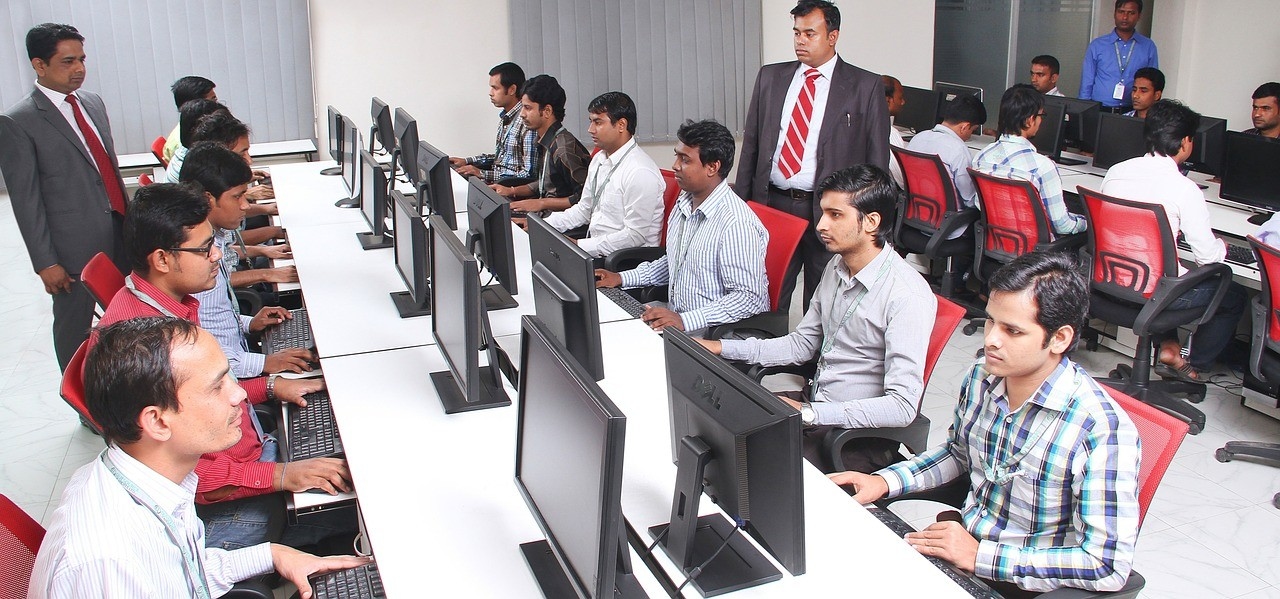
US employers willing to sponsor foreign employees for H-1B visa must understand all the steps involved in the process of preparing and filing the petition for a nonimmigrant worker. Generally, H-1B petitions are filed in the beginning of April for employment that shall start on October 1 of the same year. However, in order to be able to file the petition in April employers must comply with certain preliminary requirements.
First, the employer must determine the prevailing wage they have to pay the H-1B employee for the specific occupation in the geographic area. Employers can request the prevailing wage from the Department of Labor by submitting an Application for Prevailing Wage Determination. Alternatively, employers can obtain the prevailing wage from the Foreign Labor Certification Data Center Online Wage Library (www.flcdatacenter.com). This database includes four wage levels for each listed occupation in all geographic areas.
After obtaining the prevailing wage, employers have to file the labor condition application (LCA) with the Department of Labor. Employers cannot file the H-1B petition without a certified LCA. The United States Citizenship and Immigration Services and the Department of Labor require US employers to file the LCA in order to ensure that the employment of the H-1B employee will not adversely affect the wages and working conditions of US workers.

Most people recognize the term Initial Public Offering (IPO), but few truly understand its significance. An IPO occurs when a private company, for the first time, offers shares to investors and issues stock in exchange. At this moment, the company transitions from a private entity to a public one. This change is crucial for companies looking to raise capital for growth, pay off debt, or make strategic acquisitions. The IPO process involves several complex steps. Companies usually engage an investment bank to handle the underwriting process, which includes assessing the company’s value, determining the optimal price per share, and creating the means to offer these shares to the public. An IPO allows companies to tap into a broader pool of investors, enabling them to raise substantial capital to fuel operations and expansion plans.
Most startups aspire to go public, but several hurdles must be cleared before they are ready for an IPO. First and foremost, the company must prove that it operates smoothly, remains financially stable, and generates profits. Investors require assurance that the company has a , a strong management team, and a clear growth strategy. To prepare for an IPO, companies often undergo a thorough internal audit and restructuring to enhance their appeal to potential investors. This preparation may include improving corporate governance, optimizing financial reporting systems, and establishing a strong marketing strategy to effectively communicate the company’s value proposition.

Whether you are a foreign citizen willing to work in the US or an US employer that wants to hire a foreign employee, below are a number of questions our business startup attorneys encounter regarding H-1B visa:
H-1B visa allows US employers to hire foreign employees on a temporary basis. Please keep in mind that H-1B visa is a non-immigrant visa and does not bring to Green Card unless the employer files separate employment based petition for the employee during his H-1B stay.
The H-1B category is limited to workers coming to US to perform services in a specialty occupation. A specialty occupation is an occupation that requires attainment of a bachelor’s or higher degree in the specific specialty as a minimum requirement for entry into the occupation in US.

There are a few steps a trademark owner can take once discovered a competitor or a competitor offering similar goods or services uses a mark, such as a company logo, that is substantially similar to your trademark or service mark.
Trademark infringement is the unauthorized use of a trademark or service mark. A mark that is substantially similar to your trademark may also be considered a trademark infringement. A trademark owner who believes its trade market or service mark is being infringed may file a civil action for trademark infringement. Generally, a trademark owner must present evidence that the similarities of the trademark or service mark can cause a likelihood of confusion to the average consumer. Specific factors are considered and weighted when courts determine the likelihood of confusion thus each trademark infringement action varies from case to case.
Pursuant to this basis for registration, the applicant must first use the mark in commerce. Once the mark is used in commerce the applicant can file the application to register the trademark.
The Lanham Act also allows filing an application for registration if the applicant has a bona fide intention to use the mark in commerce. 15 U.S.C. 1051(a)(2). Here, the applicant has not used the mark in commerce yet, however, he has a bona fide intention to make such use in future. The bona fide intent requirement means that there must be an actual intent to use a mark and evidence objectively demonstrating such intent. Aktieselskabet AF 21. November 2001 v. Fame Jeans Inc. (2008) 525 F.3d 8, 21.
It should be noted, that although the Lanham Act allows to file the intent to use application before using the mark in commerce, the registration of the mark will not be granted unless the applicant files a proof that he has used the mark in commerce. After filing the statement of use application, if the mark is registrable and no successful opposition is filed, the US Patent and Trademark Office will issue a notice of allowance which will give the applicant time to file a statement showing that the mark was used in commerce.
The applicant has a maximum of thirty six month after the date of issuance of the notice of allowance to show the actual use of the mark in commerce. The applicant shall comply with this requirement by filing the statement of use application with evidence showing the use of the mark in commerce. Only after filing the proper statement of use application the applicant can obtain the actual registration of the trademark.
Pursuant to the Section 44 of the Lanham Act, if a foreign national’s country of origin is a party to an international trademark treaty signed by the United States, and if he has or has applied for trademark registration in the foreign country, the foreign national with a bona fide intent to use the trademark in US can file an application with the United States Patent and Trademark Office to register the same trademark. 15 U.S.C. 1126.
This section of the Lanham Act is intended to give privilege to nationals of foreign countries who have entered the same international trademark treaties with the US. This basis gives an opportunity to foreign nationals to register a trademark if they already have a registration or application in their home country. It should also be noted that in this case the applicant does not have to show the actual use of the mark in the US in order to obtain registration of the mark. If the applicant has bona fide intent to use the trademark in the US and he already has a registration or application in his home country that will suffice for registering the mark in the US.
“[T]he holder of an international registration shall be entitled to the benefits of extension of protection of that international registration to the United States to the extent necessary to give effect to any provision of the Madrid Protocol.” 15 U.S.C. 1141E(a). This section of the Lanham Act is intended to enforce the provisions of the Madrid Protocol which is designed to facilitate the registration of trademarks in several nations.
This basis gives an opportunity to applicants who have international registration pursuant to the Madrid protocol to extend the protection of the mark to the US. It should be noted that the applicant does not have to show actual use of the mark in the US for the extension of protection. The international registration of the mark and the applicant’s bona fide intent to use the mark in the US will be enough for registering the mark with the United States Patent and Trademark Office.
If your situation falls under one of the four bases for registration described above you can consider registering your trademark with the United States Patent and Trademark Office.
If you have questions regarding trademarks or even trademark infringement, give us a call and speak to one of our experienced Glendale business law attorneys.
KAASS LAW is authorized to practice law in California. The above content is intended for California residents only. This content provides only general information which may or may not reflect current legal developments. KAASS LAW expressly disclaims all liability in respect to actions taken or not taken based on any of the contents of this website. The above content DOES NOT create an attorney-client relationship. KAASS LAW does not represent you unless you have expressly retained KAASS LAW in person at the KAASS LAW office.
KAASS LAW helps clients in: Los Angeles, Burbank, Hollywood, Glendale, Van Nuys, North Hollywood, Studio City, Highland Park, Eagle Rock, Sunland, Tujunga, Sylmar, San Bernardino, La Crescenta, La Canada, Beverly Hills, Westwood, Santa Monica, Brentwood. Pacoima, Montebello, Commerce, Alhambra, Downey, Bell, Maywood, Walnut Park, Vernon, Lynwood, Echo Park, Silverlake, Mission Hills, Northridge, Woodland Hills, Encino, Canoga Park, North Hills, Porter Ranch, Chatsworth, Reseda.
Additionally, if an applicable statute authorizes, the prevailing party in litigation can seek to recover attorney fees. Some California statutes are discretionary; such that the court “may” award attorney fees to the prevailing party, whereas other statutes provide mandatory language and “shall” award the prevailing party with its attorney fees. Some statues that allow the prevailing party to recover is when the losing party files a lawsuit based on no grounds, such that there was no reason to bring forth the lawsuit; instead, it was a waste of court’s time and resources. Other statues allow recovery of fees from a case that substantially benefits or influences the public. Give us a call, we speak English, French, Spanish, Russian, Armenian, Hebrew, Farsi, and Arabic. KAASS LAW is authorized to practice law in California. The above content is intended for California residents only. This content provides only general information which may or may not reflect current legal developments. KAASS LAW expressly disclaims all liability in respect to actions taken or not taken based on any of the contents of this website. The above content DOES NOT create an attorney-client relationship. KAASS LAW does not represent you unless you have expressly retained KAASS LAW in person at the KAASS LAW office. KAASS LAW helps clients in: Los Angeles, Burbank, Hollywood, Glendale, Van Nuys, North Hollywood, Studio City, Highland Park, Eagle Rock, Sunland, Tujunga, Sylmar, La Crescenta, La Canada, Beverly Hills, Westwood, Santa Monica, Brentwood. Pacoima, Montebello, Commerce, Alhambra, Downey, Bell, Maywood, Walnut Park, Vernon, Lynwood, Echo Park, Silverlake, Mission Hills, Northridge, Woodland Hills, Encino, Canoga Park, North Hills, Porter Ranch, Chatsworth, Reseda.
Location: 701 North Brand Blvd. Suite 100 Glendale, CA 91203 Telephone: (310) 943-1171 Email: [email protected]
Understanding these restrictions is crucial for anyone seeking California trademark registration.
To apply for trademark registration under BP 1407, you must provide specific information as required by the Secretary of State:
After submission, your application will undergo an examination as outlined in BP 14209. Here’s what to expect during the review:
Understanding this process can significantly improve your chances of successfully registering your trademark.
Given the complexities of California trademark registration, seeking legal advice is highly recommended. An experienced attorney can guide you through the application process, ensuring compliance with all requirements and protecting your rights. For comprehensive guidance on trademark law, visit the American Bar Association's section on trademarks for valuable insights and resources. At KAASS LAW, our team of dedicated attorneys is ready to assist you in navigating the intricacies of trademark registration and safeguarding your intellectual property. We speak multiple languages, including English, Spanish, Russian, Armenian, French, and Italian, so you can communicate comfortably. If you are considering California trademark registration, don’t go through this process alone. Contact KAASS LAW today for a consultation. Our knowledgeable attorneys will help you understand your rights and responsibilities, ensuring your brand is effectively protected. Your brand deserves the best defense—let us help you secure it!
Do you need more specific information? A Glendale immigration lawyer at KAASS LAW can provide you with any sort of legal assistance you may need. Give us a call, our attorneys speak English, French, Spanish, Russian, Armenian, Hebrew, Farsi, and Arabic.
During the recent years the annual H-1B cap is usually reached within a few days after the start of the filing season. USCIS decides which H-1B petitions will be approved by conducting a lottery. The petitions received within 5 business days after the start of the filing season can participate in the lottery. USCIS first conducts lottery for petitions subject to the advanced degree exemption. After that USCIS conducts lottery for petitions subject to the regular cap. Petitions not selected during the first lottery participate in the second lottery as well.
In addition to the US advanced degree exemption, there is also an exemption for employees of certain organizations. Particularly, petitions filed by institutions of higher education, affiliated or related nonprofit entities, nonprofit research organizations, or government research organizations are exempt from the annual cap. Third party petitioners can also claim this exemption if the H-1B employee will perform job duties at the qualifying organization and directly and predominantly further the essential purposes of the qualifying institution.
As it can be seen, the annual number of available H-1B visas is very limited, and there are just a few exemptions from the general cap. During the recent years the annual cap was reached within a few days after the start of the filing season. Hence, employers, willing to hire foreign workers, must have their H-1B petitions ready by the beginning of the filing season in order to get a chance to participate in the H-1B lottery.
An immigration attorney can provide you with additional information regarding such matters.
The LCA is filed online through an electronic filing system (www.icert.doleta.gov). If the LCA is complete and there are no obvious inaccuracies, the Department of Labor has to certify the LCA within seven days from the date of filing the application. Employers shall file the LCA at least three or four week before filing the H-1B petition because sometimes the online system does not recognize certain information submitted by employers, and employers have to send additional verifying documents. For example, sometimes the online system does not recognize the Federal Employer Identification Number, and employers have to submit additional proof showing that the number is a real one.
After obtaining the certified LCA, employers can file the H-1B petition and supporting documents with USCIS. The filing period for H-1B petitions starts on April 1 of each year for employment starting in October of the same year. Generally the annual cap on H-1B visas is met within a few days after the start of the filing period. Hence, employers shall file the H-1B petition as soon as possible after the start of the filing period. The petitions received within the first five business days will participate in the lottery, and the winners will get the H-1B visa. Even if the applicant meets all the requirements and the employer has filed the H-1B petition on time, it is not guaranteed that the applicant will get the H-1B visa as the winners are selected during a lottery conducted by USCIS.
The H-1B petitions are usually processed within a couple of months after the lottery. If employer requests premium processing, the cases are processed within fifteen calendar days. Sometimes USCIS may request additional evidence before making the final decision on the petition. Additional evidence is usually requested when the employer is a newly established company, the employer has not submitted sufficient evidence to show that the occupation is a specialty occupation or the employee does not have sufficient qualifications for the position.
In order to file the H-1B petition without complications employers shall start the preparation several months before the filing season. This will ensure that the petition is ready by the filing deadline and will increase the chances of the final approval of the petition.
Call our office at (310) 943-1171 or contact us via email at [email protected] to schedule a free consultation with a Los Angeles immigration attorney.
KAASS LAW is authorized to practice law in California. The above content is intended for California residents only. This content provides only general information which may or may not reflect current legal developments. KAASS LAW expressly disclaims all liability in respect to actions taken or not taken based on any of the contents of this website. The above content DOES NOT create an attorney-client relationship. KAASS LAW does not represent you unless you have expressly retained KAASS LAW in person at the KAASS LAW office.
KAASS LAW helps clients in: Los Angeles, Burbank, Hollywood, Glendale, Van Nuys, North Hollywood, Studio City, Highland Park, Eagle Rock, Sunland, Tujunga, Sylmar, San Bernardino, La Crescenta, La Canada, Beverly Hills, Westwood, Santa Monica, Brentwood. Pacoima, Montebello, Commerce, Alhambra, Downey, Bell, Maywood, Walnut Park, Vernon, Lynwood, Echo Park, Silverlake, Mission Hills, Northridge, Woodland Hills, Encino, Canoga Park, North Hills, Porter Ranch, Chatsworth, Reseda.
Investment banks play a crucial role in the IPO process by providing a range of services:
Does a business need to comply with specific regulations during the IPO process? Absolutely. An IPO is more than a financial transaction; it falls under strict regulations to protect investors and maintain fair and efficient markets. In the United States, the Securities and Exchange Commission (SEC) oversees the IPO process. Companies seeking to go public must adhere to SEC regulations, which include:
Understanding and complying with SEC regulations is vital for businesses considering an IPO. Noncompliance can lead to significant legal and financial consequences, including fines, legal action, and reputational damage. Therefore, companies must grasp the regulations governing their industry and the IPO process thoroughly.
If you are considering an Initial Public Offering, seek professional guidance to navigate this complex process. Consulting with a Los Angeles Business Startup Attorney can provide you with essential insights and expertise. At KAASS LAW, our attorneys understand the various regulations and steps required to achieve your business objectives. Whether you are preparing to go public for the first time or need assistance with compliance issues, we are here to help you maximize your potential for success.
The annual H-1B cap is set at 65,000. There are additional 20,000 spots for foreign citizens with advanced degrees from US universities. However, certain organizations are exempt from the annual cap. Exempt organizations include institutions of higher education or related nonprofit entities, nonprofit research organizations, and governmental research organizations.
The H-1B petition may be approved for an initial maximum three-year period. Petition extensions may be obtained up to additional three years, for a total maximum period of stay of six years. When the employee reaches the limit, he must reside abroad for a period of one year before he can reenter US in the H-1B category.
Employers who are bringing workers in H-1B category must pay the employees the prevailing wage for the specialty occupation in the territory where the employment will take place. For instance, an Los Angeles Startup company is looking to hire a foreign software developer on H-1B visa basis. The company will have to pay the foreign worker the prevailing wage for software developers in Los Angeles. Information about prevailing wages for all the occupations in all the states can be obtained from the Foreign Labor Certification Data Center Online Wage Library.
If your company is seeking to sponsor an employee for an H-1B and is unfamiliar with the H-1B process, give our Business Startup attorneys a call. They will advise you on the requirements, help you decide what job title would be appropriate for the employee, and guide you through the process. Our attorneys specialize in other types of employment law matters as well.
Generally H-1B petitions can be filed up to six months before the intended commencement of employment. For cap purposes, the filing season for a given fiscal year starts on April 1 for employment starting on October 1. The annual cap is usually reached within a few days after April 1, therefore, employers willing to hire H-1B workers must have their H-1B petitions ready by April 1. In order to send the H-1B petition on April 1, employers must plan ahead to fulfill all the procedural requirements and to have all the supporting documents ready.
KAASS LAW Locations: Glendale: 815 East Colorado Street, Suite 220, Glendale, CA 91205 Los Angeles: 633 W 5th St 26th Floor, Los Angeles, CA 90071 San Bernardino: 570 West 4th Street Suite 300, San Bernardino, CA 92401
It is a good idea to speak with a trademark or intellectual property attorney to gain a better understanding of your rights and remedies. A California trademark attorney can help explain the process and evaluate whether or not you have a solid case. If you are unable to hire or consult with an attorney, there are also a few immediate steps you may take if you discovered that there has been a trademark infringement:
Absent of legal representation, you can also write a letter to the company or person requesting to stop the use of trademark activity. A cease and desist letter may cover a number of issues, including but not limited to:
If the infringing third party failed to cease and desist infringing activity, at this point it is recommended that you hire an intellectual property or Los Angeles business lawyer that specializes in trademark infringement in order to take appropriate legal action to protect your proprietary rights. KAASS Law may be able to provide you with legal assistance.