

The California law that makes it unlawful to conceal a controlled substance in a fake compartment is Health and Safety Code 11366.8 HS. The crime is punishable by up to 3 years in prison and may be tried as a misdemeanor or felony. According to this law, it is unlawful for someone to:
Any box or enclosure that is intended or created to conceal a prohibited substance is referred to as a "false compartment."
Regarding the use of fictitious compartments to conceal drugs, see California Health and Safety Code 11366.8. The relevant code section forbids two acts. First, a violation of Health and Safety Code 11366.8(a) includes:
Second, a violation of Health and Safety Code 11366.8(b) includes:
A "false compartment" is any box, container, space, or enclosure contain or built to conceal any drug inside of it. However, a "vehicle" may be personal or professional in nature. Common vehicles include, for instance: vehicles such as automobiles, trucks, buses, airplanes, boats, ships, and yachts.
A suspect of hiding drugs in a false compartment may contest the accusation by raising a legal defense. A charge is frequently withdrawn or decreased as a result of a successful defense. Please be aware, however, that in order to mount the strongest defense possible, a defendant must hire representation. Three typical countermeasures against HSC 11366.8 allegations include:
A wobbler is a person who hides narcotics in a false compartment; as a result, the offense is punishable as either a misdemeanor or a felony. Overall an individual who breaches Health and Safety Code 11366.8(a) may get a maximum penalty of one year in the county jail. According to Health and Safety Code 11366.8(b), the following offenses may result in a sentence of incarceration in the county jail:
Please be aware that a judge may impose criminal probation instead of jail time. This kind of probation is also referred to as "summary" or "informal" probation.
The hiding of drugs in a phony compartment is a criminal in three different ways. Which are: HSC 11351, HSC 11366, HSC 11379.
California Health and Safety Code 11351 HS forbids the possession of some illegal substances with the aim to resale them. These include illicit narcotics like cocaine, heroin, and LSD. HSC 11351 also provides coverage for widely use prescription drugs like codeine, hydrocodone (Vicodin), and oxycodone (Oxycontin).
Operating a drug house is against California Health & Safety Code 11366 HS. "Drug houses" are any establishments that specialize in the distribution or sale of unlawful controlled narcotics. In California, operating a drug house is a wobbler offense, which means it can result in either a misdemeanor or a felony prosecution.
Without a license, it is illegal to produce drugs, narcotics, or restricted substances, according to California Health and Safety Code 11379.6 HS. More particularly, it forbids production. As a result, a felony accusation will be brought for violating Health and Safety Code 11379.6.
If you or someone you know has been guilty of a felony under California Health and Safety Code 11366.8, we encourage you to contact our attorneys for a consultation. Please feel free to give our office a call at 310.943.1171.

Yes, under Health and Safety Code 11351, it is considered a felony in the state of California to possess controlled substances with the intent to sell them.
For purposes of Health and Safety Code 11351, a controlled substance is any drug or chemical whose manufacturing, possession, and use are regulated by the government under the Controlled Substances Act.
The Controlled Substance Act is a federal statute that enables the federal government to regulate the manufacturing, importation, possession, use, and distribution of certain substances. Additionally, controlled substances are placed under one of five schedules under this act. The placement is based on the following:
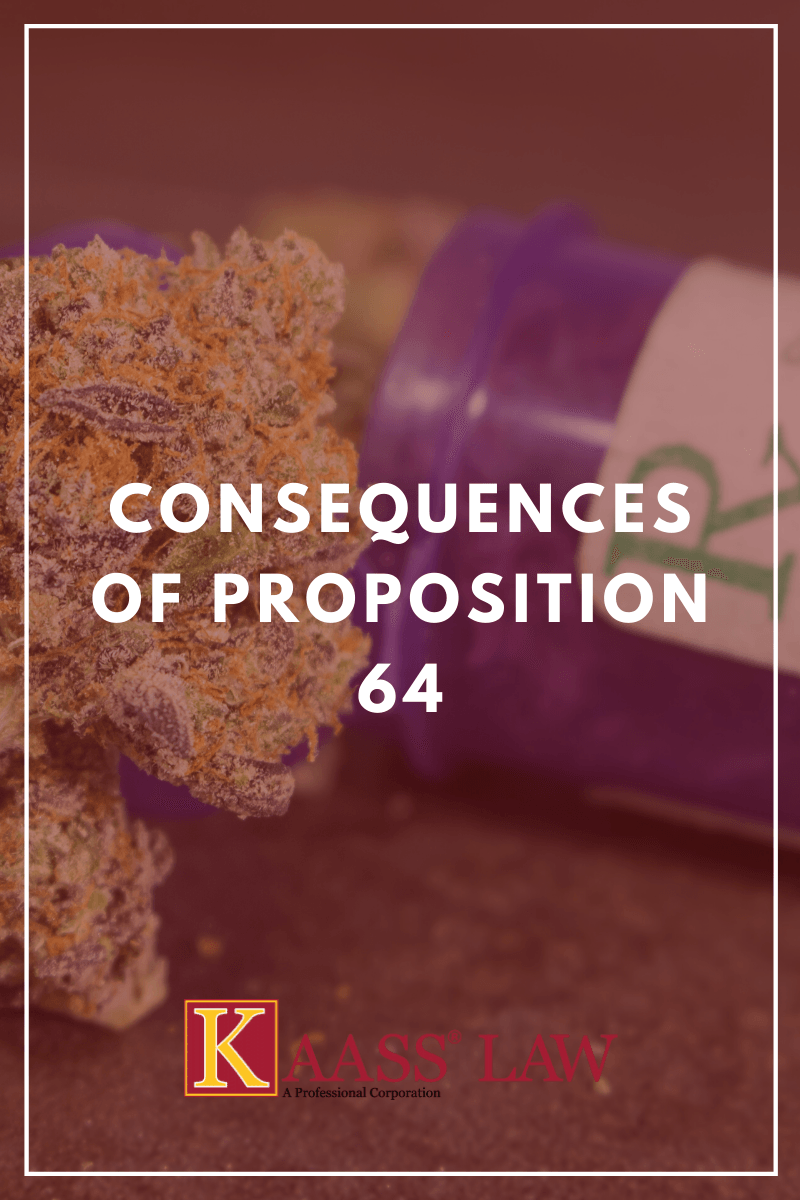
Cultivating marijuana in California was treated as a felony offense under Health and Safety Code Section 11358 before Proposition 64. A felony is a criminal offense punishable by serving one year or longer in prison.
Proposition 64 went into effect on January 1, 2018, making it legal for individuals 21 years or older to grow marijuana for recreational purposes. Additionally, the sale of marijuana has also been legalized for those business entities that have been licensed to do so.
The following is a list of crimes related to marijuana that has been affected by Prop 64 Adult Use of Marijuana Act:

California is a state that has been at the forefront of the marijuana legalization movement. The passing of Proposition 64 has led to some new changes that may impact those who grow marijuana there. If you are looking to grow marijuana and have been wondering what your options are now, read on.
Yes, it is legal to grow marijuana in the state of California as per the passing of Proposition 64.
Proposition 64 is formerly known as the Control, Regulate, and Tax Adult Use of Marijuana Act. Per Proposition 64, adults ages 21 years or older may possess and grow a specified amount of marijuana for recreational use only. Under Prop 64, individuals are only allowed to grow up to only six (6) marijuana plants for recreational use. It is important to keep in mind, however, that possession of recreational marijuana is still a crime if it violates the Health and Safety Code Section.
Health and Safety Code 11358 HS is one of the associated codes associated with growing marijuana. Specifically, this code section defines the crime of illegal cultivation of marijuana if someone aged between 18 to 20 years old cultivates marijuana. This crime is considered an infraction that is punishable by a maximum fine of $100. An infraction is a violation of the law but is it is not considered to be a crime, unlike a felony or misdemeanor.
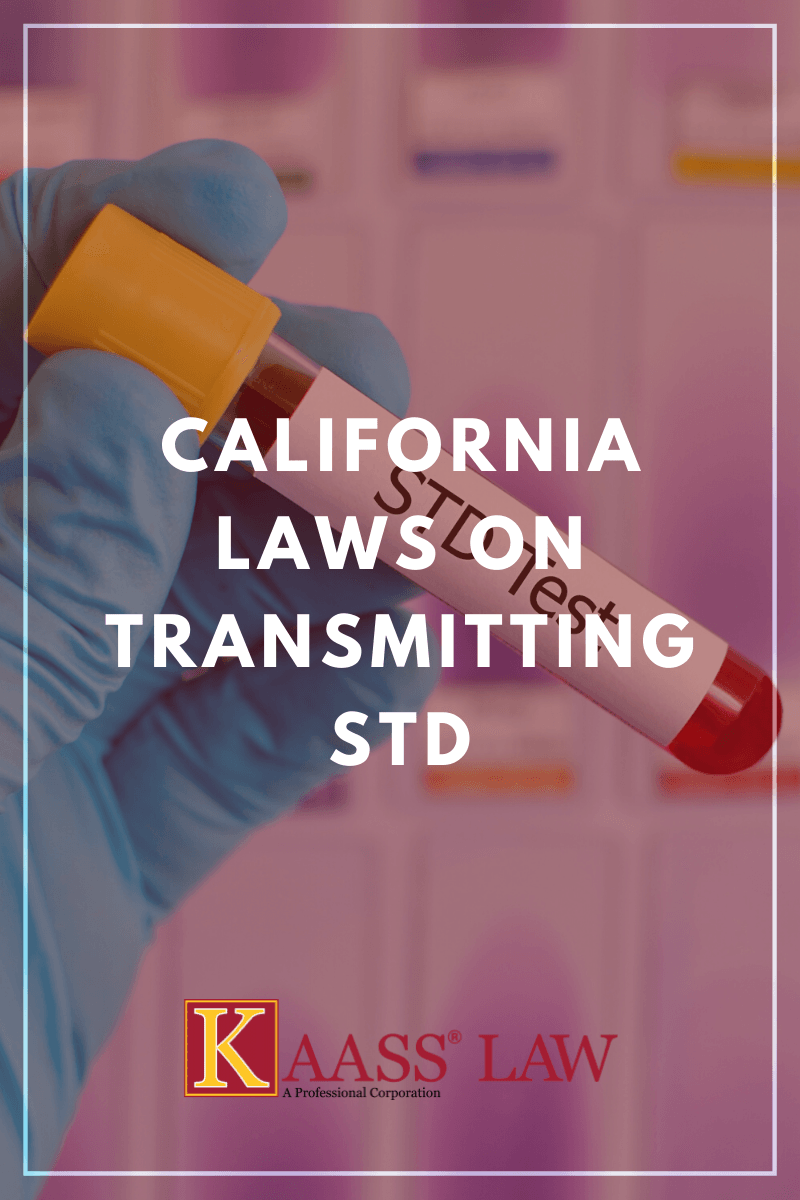
According to California Health and Safety Code Section 120290 it a crime to willfully transmitting a communicable, infectious, or contagious disease. According to California Health and Safety Code Section 120290(a)(2), it is illegal to ignore the instructions of a health professional regarding transmitting an infectious disease.
One potential cause of action is negligence. With this type of claim, the plaintiff must be able to prove that
The keystone of a negligence claim is that the defendant owed the plaintiff a duty to disclose information about the STD, allowing the plaintiff to decide on exposure. In some cases, liability for negligence lies if the defendant exposed the plaintiff to a sexually transmitted disease, even if the transmission didn’t occur. Usually, damages in this situation are based on the mental anguish and emotional distress.
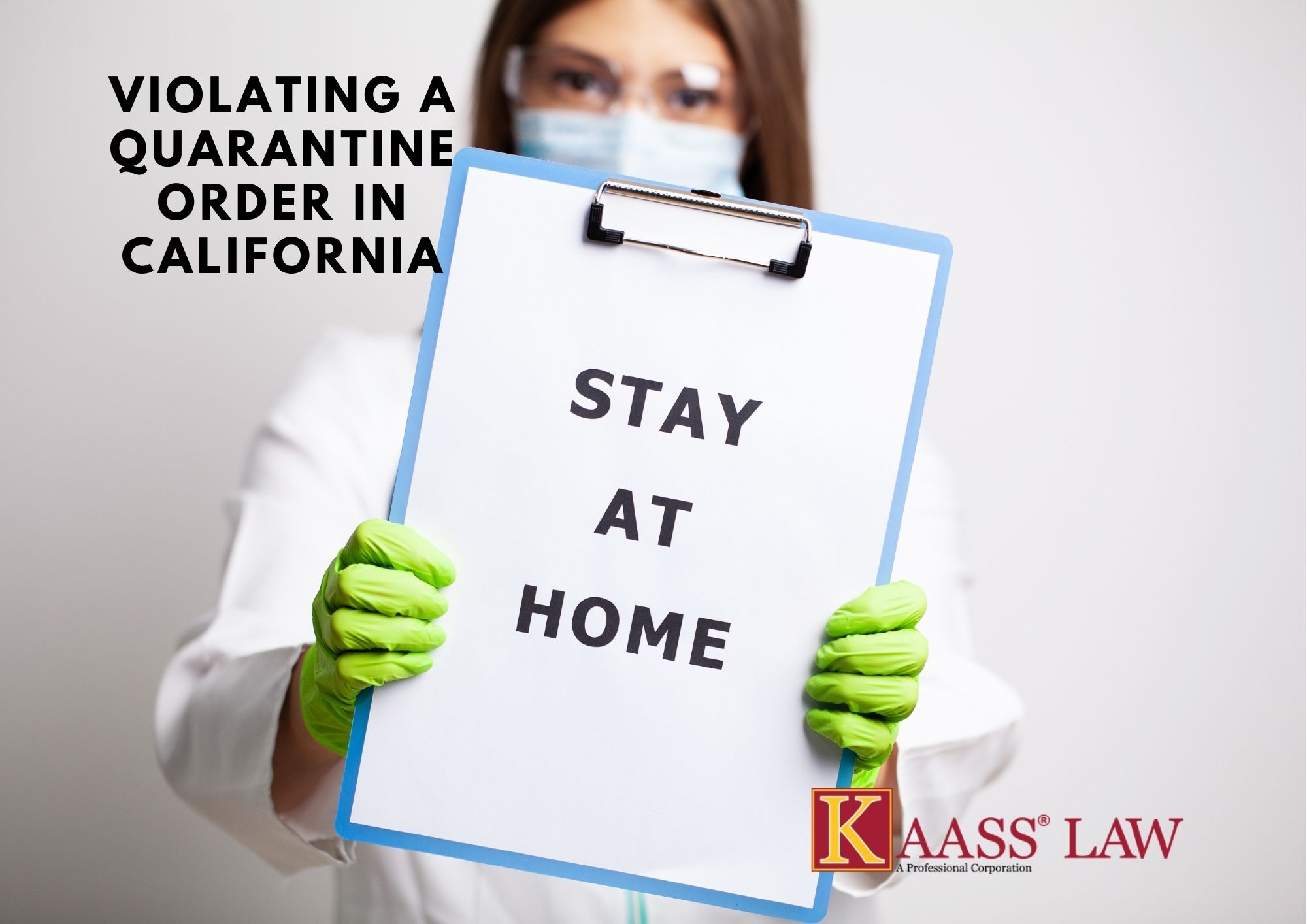
This statute makes it a crime to violate a quarantine order placed due to a communicable disease or infection. This law directly applies to the current COVID-19 pandemic and stay-at-home orders passed by many leaders of the states. Any person who, after notice, violates, or who, upon the demand of any health officer refuses or neglects to conform to, any rule, order, or regulation prescribed by the department respecting a quarantine of disinfection of persons, animals, thing, or places, is guilty of a misdemeanor.
Violating HS 120275 is a misdemeanor as opposed to an infraction or felony. May result in:
In order to be convicted for violating this health and safety code, a prosecutor must prove that the defendant had notice of an order or rule regarding the quarantine from an infectious disease and that they wilfully disregarded the order. The purpose of quarantine is to achieve a certain level of disinfection. Under 120275, “disinfection” can include people, animals, things, or places.
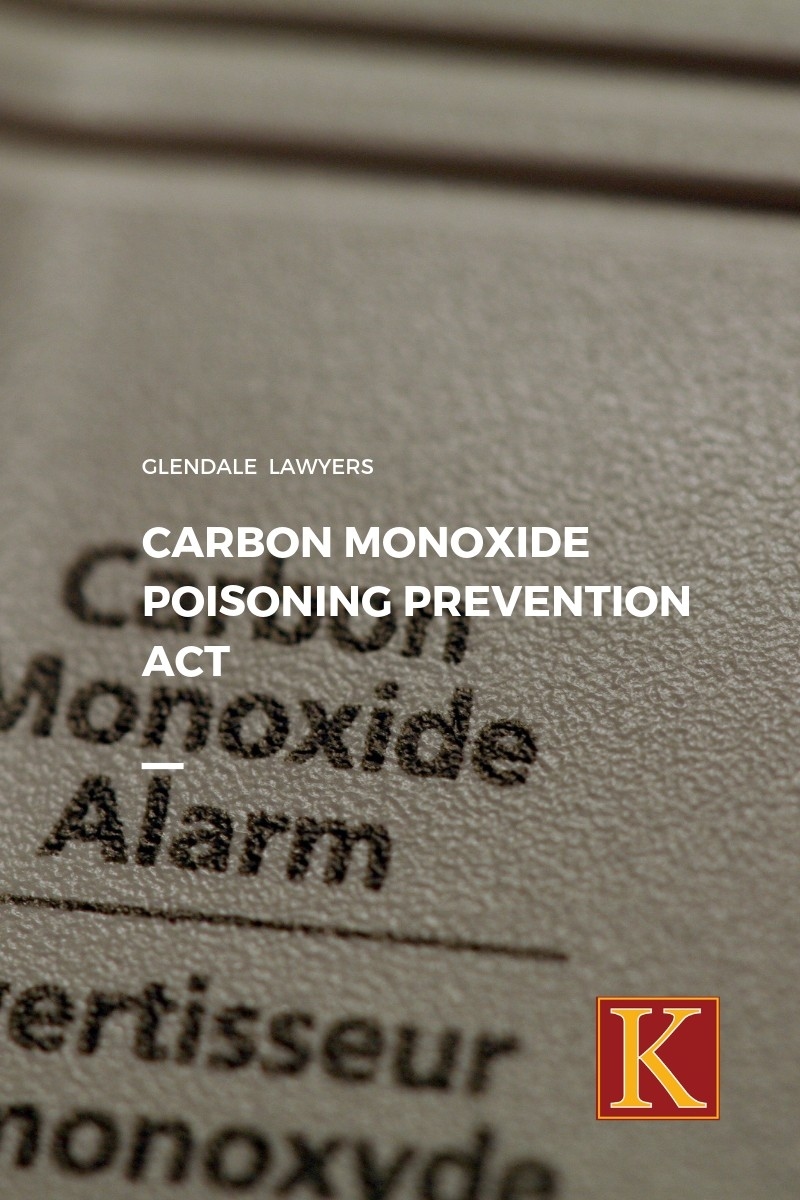
Carbon Monoxide, also known by its chemical abbreviation (CO), is a gas comprised of one part carbon and another part oxide. Carbon monoxide is a colorless and odorless gas which exposure can lead to serious illness or death. The most common causes of the wrongful death from Carbon Monoxide poisoning are improperly ventilated generators, stoves, fireplaces and water heaters. According to the California Air Resources Board carbon monoxide poisoning causes death from thirty to forty people each year
The primary law in California which protects victims from Carbon Monoxide Poisoning is California's Carbon Monoxide Poisoning Prevention Act of 2010, which requires carbon monoxide detectors to be installed in every dwelling unit intended for human occupancy. According to the Act all residential property that have a non-electric heater, non-electric appliance or have a fireplace, are required to install carbon monoxide detectors.

One of the most frequently-charged drug crimes is possession of a controlled substance, under California Health and Safety Code 11350 Possession of a Controlled Substance. It is prohibited possessing certain controlled substances without a valid prescription. Controlled substance is a chemical or a drug whose possession, manufacture, and use are regulated by the United States "Controlled Substances Act".
Unlike Health and safety code 11365 which governs unlawful use of controlled substance, In order to being convicted of Health and Safety Code Section 11350 Possession of a Controlled Substance, the following elements must be established:
Under California Penal Code 186.10 money laundering is a financial crime referring to transactions intended to promote or facilitate criminal activities, or transactions knowingly made with proceeds from criminal activity.
To prove money laundering under Penal Code 186.10 the prosecutor must prove the following elements:
Money laundering is the act of using stolen funds to conduct a transaction through a bank or some other financial institution. California law lists the types of activities which can qualify as transactions, those are: withdrawals, bank deposits, wire transfers, fund transfers, payments, and other financial activities. Attempts to conduct business can also qualify as money laundering even if the transaction isn’t finished. In case the funds are used for making purchase or for any other reason, they won’t be considered to have been laundered under California law.

Health and safety code 11365 governs unlawful presence during unlawful controlled substance use. Getting arrested for HS 11365 can feel a lot like, being in the wrong place, at the wrong time.
Life is full of surprises, some good and some that just cause headaches. The law, on the other hand, is designed to be as unsurprising as possible. It has clear cut guidelines for what is, and what isn’t, legal. However, how the law gets used against you is another matter entirely. What could have been an honest mistake or an unfortunate coincidence can be damning in some respects of the law and California Health and Safety Code 11365 is one such law.
HS 11365 states that it is a misdemeanor to willingly and knowingly be somewhere that controlled substances are being used, given that you actually helped out or supported that usage. The law itself is sound, but many problems arise when this particular law is put into effect. This is because one can get charged with violating HS 11365 without ever having possessing any controlled substance or been under their influence. The way this typically works is that you may get arrested if you happened to be somewhere where controlled substance were being used; in practice this means that people can get charged with an HS 11365 violation for simply being in the wrong place, at the wrong time.
Controlled substances for purposes of Health and Safety Code 11351 include the following:
Keep in mind that possession of controlled substances such as marijuana and methamphetamine for purposes of sale are considered separate offenses not covered under Health and Safety Code 11351.
For purposes of Health and Safety Code 11351, possession is established when an individual has direct and/or immediate control over the controlled substance. Typically, this is established when the individual possesses the controlled substance if they are carrying it on them. Possession can also be established if an individual has personal control over the substance such that the controlled substance was found near or around an area that the individual exercises control over, such as in the individual’s car or garage.
Under Health and Safety Code 11351, intent to sell can be established by showing the following:
As mentioned above, violating Health and Safety Code 11351 is considered a felony. Penalties include the following:
If you or someone you know has been charged with Health and Safety Code 11351, we invite you contact KAASS LAW today at (310) 943-1171 to speak to our criminal defense attorney for a free consultation.
Individuals convicted prior to the passing of Proposition 64 may apply for resentencing. Resentencing under Proposition 64 may lead to an immediate release from jail. However, this may be contigent on how much time you have served.
An individual can make an application to the court to have their sentence reduced. This is true for individuals who are currently serving time related to marijuana crimes they were convicted of before the passing of Proposition 64. Typically, judges presume that individuals applying for such a request have met the criteria for Proposition 64 resentencing. However, this may not be the case should the prosecutor oppose the petition by proving clear and convincing evidence that the individual does not meet the criteria for resentencing. However, judges are supposed to resent individuals so long as the individual does not pose an unreasonable risk of danger to public safety.
Are you in need of legal advice or services from an attorney? We invite you to contact our Los Angeles criminal defense attorney at (310) 943-1171 for assistance. KAASS Law is always standing by and ready to provide legal assistance.
Some of the restrictions associated with growing marijuana pertain to the individual’s age who decides to grow marijuana. As previously mentioned, individuals aged between 18 to 20 years old may be cited with an infraction. Additionally, an individual is not permitted to grow more than six (6) hash plants. This would lead to county jail time of up to six (6) months as well as possibly being fined up to $500. Further, an individual must grow the hash plant indoors or on the premises of their own private property, lock the space efficiently, and grow the plants in an area that is not visible from a public place.
If you or someone you know is interested in growing marijuana for recreational use, contact our KAASS LAW firm at (310) 943-1171. Our attorneys can provide you with a consultation on your case and provide legal assistance to make sure you are in compliance.
A battery cause of action for transmission of a sexually transmitted disease involves the defendant’s intentional, unconsented and harmful contact with the plaintiff. In an STD case, while the plaintiff may consent to sexual contact, he is not consenting to a contact accompanied by the known risk of contracting an STD. Moreover, it is not necessary that the defendant had a specific intent to transmit the STD - going forward with sexual contact with the knowledge that transmission could occur is enough. For a civil battery claim, the victim must prove that the defendant knew he infected with an STD or was likely to have one.
In order to prove fraud, the plaintiff must establish the following:
A person who knowingly and intentionally fails to disclose their sexually transmitted disease to a sexual partner can face liability for any injuries the partner sustains.
A person who contracts an STD experience suffers emotional distress, including guilt, depression, anxiety, humiliation, or even self-destructive thoughts. An injured person can recover damages for such emotional distress and hold the person with STD legally liable. A claim for intentional infliction of emotional distress for transmitting an STD often accompanies another legal theory, such as negligence. This is because demonstrating the elements of emotional distress and determining damages is usually very difficult.
Generally, the law strictly prohibits disclosing another person's HIV status, except in limited situations such as court cases or medical procedures. A violation of the statute can provide grounds for a civil lawsuit.
To better understand the complexities of STI liability in California, it is important to consider additional legal considerations. One possible defense in STI transmission cases is that the defendant did not know he or she was infected. Under California law, a person cannot be prosecuted for STI transmission if he or she did not know that he or she was infected. This is especially true in cases where a person carries the infection unknowingly or has no symptoms. However, it is worth noting that even if the defendant did not know they were infected, they can still be held liable. If the facts show that he or she should have been aware of the risk of transmitting the disease. In such situations, the key point is that the defendant should have taken all possible steps. to ensure that he or she was healthy before engaging in sexual intercourse.
In some cases, the court can establish liability for transmitting an STD even without intent to infect a partner. California law allows liability even in situations where the infected person did not intend to transmit the infection. But was aware of the risk of infection and continued sexual relations anyway. This is an important consideration in understanding how the law may interpret the actions of individuals who have sex despite the potential risk.
Medical evidence and test results play a key role in STI transmission cases. If the defendant or victim tests positive for an STI, the court can use this as evidence. It is also important to keep in mind that refusing to undergo medical testing can be perceived as strengthening the evidence against the accused. This can seriously affect the outcome of the case, as the court will consider whether a party concealed or withheld information. This may lead to additional charges of fraud or negligence. If you are a victim of STI transmission, contact KAASS LAW for counseling on this issue.
In civil lawsuits, the plaintiff may claim the following damages, including:
If you have been accused of violating a quarantine order, it is important to seek legal counsel as soon as possible. Although the law classifies the violation as a misdemeanor, it can lead to serious consequences. For example:
First. A criminal record under this article remains on the database. Even if the punishment is limited to a fine or probation. But it can be expunged later, and the mere presence of the record can affect getting a job or renting an apartment. Second. Although a violation of HS 120275 does not result in deportation, in certain cases it may be grounds for denial of entry into the United States. It may also be grounds for denial of visa renewal. This is especially important for international students, visa workers, and those seeking citizenship. Third. A conviction under this article may affect the right to own firearms. In some cases, especially repeat offenders, additional restrictions may be imposed.
Therefore, even if the charge seems minor, the consequences can be significant. It is important not to ignore the situation and not to try to understand the law on your own. On the contrary, it is necessary to consult with an attorney who will help you determine a defense strategy based on all the circumstances. KAASS LAW is ready to protect your rights and minimize possible consequences.
Anytime an order of quarantine is placed in effect, people’s constitutional rights are always brought into question. Depending on the reason for violating a quarantine, the misdemeanor charge could violate a number of constitutional rights.
Another possible defense would be the “necessity” defense. The defendant violated the quarantine due to a necessity like going to the hospital, going to the grocery store, being an essential worker and overall any necessary reason to break the quarantine will give grounds for defense. These circumstances may cause a judge or prosecutor to dismiss charges. A defense that may work, but is less likely to be successful is the defense of no intent. The defendant had no knowledge of the quarantine order and was not aware they were violating it. The only time a constitutional rights defense would work, is if the quarantine is due to a communicable disease. Only then is it not a violation of constitutional rights because it is an order that seeks to protect citizens.
In California, law enforcement usually doesn’t arrest someone for violating HS 120275 alone; the person typically breaks additional laws as well, such as:
Are you in need of legal assistance for violating HS 120275? Get in touch with KAASS Law by calling us at (310) 943-1173 or by using the contact form below! [contact-form-7 id="5673" title="KAASS LAW Contact Form"]
CO device is designed to detect carbon monoxide and produce a distinct audible alarm. Carbon monoxide device provides a vital, low-cost and highly effective protection against carbon monoxide poisoning. It can be battery powered or plug-in devices with battery backup. The detector must be certified pursuant to the requirements of Underwriters Laboratories Inc. (UL) and the American National standards Institute (ANSI).
According to California’s Building Code Carbon Monoxide devices are required be installed outside of each separate sleeping area, however for maximum security the State Fire Marshal’s Office recommends to have a CO detector in each sleeping room. CO devices are also required to be installed in garages, basements and on each level of a multi-level home. In hotels, motels, and boarding houses the device must be placed in a sleeping unit that has a fuel-burning appliance. Because Carbon Monoxide is lighter than air and can be found with warm, rising air, detectors must be placed on a wall about five feet above the floor. The detectors can be placed on the ceiling far from a fireplace or flame-producing appliance.
Health and Safety Code Section 17926.1 particularly applies the requirements of the Act to landlords who rent dwelling units to tenants. According to the Act, CO devices shall be operable when the tenant takes possession of the unit. Landlords can enter units for purposes of maintaining or installing CO detectors with notice pursuant to California Civil Code Section 1954. Tenants are required to inform the landlords if the CO device is deactivate or is not operating properly. In case CO device or its batteries were unplugged or removed and the owner was not informed, the owner is not in violation of the law.
Violations of Carbon Monoxide Poisoning Prevention Act can lead to a maximum fine of $200. However property owners will be given a thirty-day notice to correct as a chance to avoid the fine.
According to California Health and Safety Code a "controlled substance" can include a wide range of drugs, including, but not limited to stimulants, hallucinogens, depressants, opiates, cocaine, heroin, methamphetamine, PCP.
There are three types of controlled substance possession: actual possession, constructive possession and joint possession. Actual possession of a controlled substance means having drugs on person with immediate or direct physical control over it. Constructive possession means not having drugs on person but having the authority to control the possession of drugs. This means that the defendant does not need to be caught with drugs in his direct possession in order to be charged under HS 11350(a). Having joint possession means sharing actual or constructive possession with at least one other person.
The defendant is excused from violation of Health and Safety Code 11350 as long as he held valid prescription for the drug and the possession was consistent with the purpose of the prescription. A legal written prescription is given form physician, dentist, podiatrist, or veterinarian licensed to practice in state. This defense won’t apply if the defendant possessed a fraudulent prescription for the drug or was found in possession of more drugs than was prescribed.
Temporary possession will serve as a legal defense in case the defendant possessed the drugs with the aim to dispose or destroy them for terminating its unlawful possession. This defense won’t absolve the defendant from criminal culpability in case he exercise control over the drug but willingly dispose it.
Health & Safety Code section 11350 specifically punishes for the possession of something illegal. Therefore, in case the defendant did not actually or constructively possess the controlled substance then he can't be committed in violation under the essence of this law.
According to Health & Safety Code section 11350 the defendant must be aware of the presence of controlled substance and knew its nature or character as a controlled substance. Therefore, knowledge is an essential part of this crime. In case the defendant wasn’t aware that the possessed drugs were illegal, he must be acquitted of illegal possession
Possession of controlled substances under Health and Safety Code 11350 is misdemeanor. Penalties for conviction are the following:
If the defendant has prior convictions for especially serious felonies, gross vehicular manslaughter while intoxicated, sex crimes against a child under 14, or sexually violent offenses he will face felony penalties such as sixteen months, two or three 3years in prison. Additionally, in case the defendant is not a citizen of the United States, a conviction for possession of illegal drugs can lead to deportation, denial of reentry and denial of naturalization.
For answers to any other questions you may still have about California Health and Safety Code 11350, about being present while controlled substances are used, or to discuss your case confidentially with our team of experienced California criminal defense attorneys, give us a call at (310) 943-1171. Our lawyers in Glendale, Los Angeles County, CA, are highly dedicated to serving the needs of our clients.
[video width="1280" height="720" mp4="https://kaass.com/wp-content/uploads/2019/11/Possession-of-controlled-substance.mp4"][/video]
In California there are two specific laws that relate to money laundering: California Penal Code Section 186.10 and California Health and Safety Code Section 11370.9. Penal Code Section 186.10 deals with money that is related to any type of criminal activity, California Health & Safety Code covers money earned from drug crimes.
In order to be convicted of Health & Safety Code Section 11370.9 money laundering in connection with drug crimes, the prosecutor needs to prove the following elements:
In contrast Health & Safety Code doesn’t require the money to pass through a bank or other financial institution. A person can be charged with money laundering of drug proceeds even if the money was never converted from cash.
In California law both forms of money laundering are considered wobblers. Penalties for misdemeanor money laundering include:
Penalties for felony money laundering under Penal Code 186.10 include:
Penalties for felony Health & Safety Code 11370.9 criminal charges include:
[video width="1280" height="720" mp4="https://kaass.com/wp-content/uploads/2019/11/Money-Laundering.mp4"][/video]
Hire the most dedicated California money laundering defense lawyer to help defend and fight your Penal Code 186.10 charges. Our attorneys at KAASS LAW are highly dedicated to help our clients in every way possible. You can rely on our experienced lawyers in Glendale, Los Angeles, California, to carefully analyze the facts of your case to prove the facts necessary. We back all of our clients and we invite you to give us a toll free call at (310) 943-1171 to speak to our experienced Glendale criminal battery attorney today. Get in touch with us at KAASS LAW, 815 E Colorado St #220, Glendale, CA 91205, (310) 943-1171 at any time.
Technical elements constitute the legal definition of presence during unlawful use of controlled substances, which means that for the HS 11365 charges to hold, the following five elements must be true:
Therefore, while HS 11365 has wording that focuses primarily around the idea of someone being ‘present’ while the use is happening, there is actually to show than merely being at the scene of the crime. You would additionally have to take an action or say something that helps or abets the use of the controlled substance.
Lending a ‘Helping Hand’ isn’t Always a Good Thing
To understand what ‘helping’ or ‘encouraging’ use of a controlled substance means in legal terms, we must know that it entails these critical points:
Clearly, there are a lot of principles and points that a violator of this statute would have to meet. To better illustrate these in a more real-world situation, let’s consider to different scenarios which may end with two very different results.
The following are examples of HS 11365 charges and how they might play out in court.
In the first scenario, suppose you went to a party with some friends where some people were snorting coke. You notice and become aware that some people are doing coke, but you choose not to say or do anything about it. You are clearly uneasy and you walk away whenever someone offers you a chance to do a line yourself. Given this scenario, you would not be found guilty of violating HS 11365 because even though you were present at a venue where drugs were being used, you did nothing to help or encourage the use of those drugs, nor did you partake in it yourself.
Conversely, let’s say the scene played out a bit differently. You’re still at a party with your friends where some people are using coke. Throughout the night, you dance with someone and have a few drinks with them. You take a liking to them and want to see them after the party. One of their friends interrupts by offering some coke. The person you liked looks at you for approval and you, not wanting to be a buzzkill, encourage them to go ahead and have fun. If that person then goes ahead and takes a hit of coke, then you may later be found guilty of violating HS 11365 since you encouraged the use of a controlled substance while at a place where they were being used.
California Health and Safety Code 11365 applies solely to a select group of ‘controlled substance’. These substances are:
As you may have noticed, marijuana is ostentatiously absent from the list. This is because California’s HS 11365 law does not apply to marijuana and thus you cannot be guilty of violating HS 11365 if you are present and encourage marijuana use.
As we alluded to at the beginning, knowingly being in a place where controlled substances are used is considered a misdemeanor. As such, the potential consequences are:
It is imperative to keep in mind that even if you are convicted of being present at the time of controlled substance use under Health and Safety Code 11365, you may still be eligible for California’s ‘deferred entry of judgement’ or pretrial diversion program. In a nutshell, deferred entry of judgement suspends the charged placed against you while you complete a state-approved drug rehabilitation program. Upon successfully finishing it, the charges get dismissed. However, to qualify for this option, there are some requirements. For example, you typically will need to have no previous controlled substance related charges and the charges need to not have involved violence.
There are a few legal defenses to California Health and Safety Code 11365. Despite possibly having the option of drug diversion, sometimes it may be far more sensible to fight the charges that are posed against you directly. This is typically done by using some of the common legal defenses, such as lack of knowledge.
As an example, if you weren’t aware of the illegal controlled substance use, and/or had no knowledge that your actions or words may have indirectly encouraged use of those substance, then you are not guilty of helping or supporting the use of controlled substances, even if you were present at the location. Alternatively, another method is to argue that you flat did not say or do anything to aid or support someone in using the controlled substance. These are just two of the many possible ways of defending an HS 11365 case.
For answers to any other questions you may still have about California Health and Safety Code 11365, about being present while controlled substances are used, or to discuss your case confidentially with our team of experienced California criminal defense attorneys, give us a call at (310) 943-1171. Our lawyers in Glendale, Los Angeles County, CA, are highly dedicated to serving the needs of our clients.
KAASS LAW is authorized to practice law in California. The above content is intended for California residents only. This content provides only general information which may or may not reflect current legal developments. KAASS LAW expressly disclaims all liability in respect to actions taken or not taken based on any of the contents of this website. The above content DOES NOT create an attorney-client relationship. KAASS LAW does not represent you unless you have expressly retained KAASS LAW in person at the KAASS LAW office. KAASS LAW helps clients in: Los Angeles, Burbank, Hollywood, Glendale, Van Nuys, North Hollywood, Studio City, Highland Park, Eagle Rock, Sunland, Tujunga, Sylmar, San Bernardino, La Crescenta, La Canada, Beverly Hills, Westwood, Santa Monica, Brentwood. Pacoima, Montebello, Commerce, Alhambra, Downey, Bell, Maywood, Walnut Park, Vernon, Lynwood, Echo Park, Silverlake, Mission Hills, Northridge, Woodland Hills, Encino, Canoga Park, North Hills, Porter Ranch, Chatsworth, Reseda.