

The gradual process of legalizing marijuana in California reached its climax in January of 2018, when marijuana became legalized. Once this new law came into effect, it changed the ways that some laws apply and affect cases surrounding the possession, utilization, and acquisition of marijuana. On the other hand, many procedures and statutes have not changed despite the legalization of marijuana. One such instance is the penalty one may accrue if they are caught with marijuana in their car while driving, which is detailed by the California Vehicle Code 23222(b) Driving In Possession of Marijuana.
California Vehicle Code 23222(b) maintains that it is illegal to possess marijuana while conducting a vehicle. In order to be charged with this, a law enforcement agent must be able to prove that you were in illegal possession of marijuana while driving. Thus, there are three primary components at play in this code. The keywords here are illegal, possession and driving. If even one of those three things does not apply, then you cannot be charged with violating California Vehicle Code 23222(b). However, it should be noted that just because one of those three elements may not apply, does not mean that you cannot be charged with violating another statute or law. For instance, California Health and Safety Code 11357(b) may still apply to you. Also, if it is determined that you were driving under the influence of marijuana, you can also be charged with a DUI pursuant to California Vehicle Code Section 23152(a)(b).
An experienced Glendale marijuana lawyer will understand that there are several powerful avenues that may be explored in order to demonstrate your innocence before the law. Some of those possible options are:
The consequences of being convicted of violating California Vehicle Code Section 23222(b) include a fee of up to $100 plus court costs. We can help you avoid all of those. Give us a toll free call today to speak to one of our attorneys at (310) 943-1171 or email us at [email protected]
KAASS LAW is authorized to practice law in California. The above content is intended for California residents only. This content provides only general information which may or may not reflect current legal developments. KAASS LAW expressly disclaims all liability in respect to actions taken or not taken based on any of the contents of this website. The above content DOES NOT create an attorney-client relationship. KAASS LAW does not represent you unless you have expressly retained KAASS LAW in person at the KAASS LAW office. KAASS LAW helps clients in: Los Angeles, Burbank, Hollywood, Glendale, Van Nuys, North Hollywood, Studio City, Highland Park, Eagle Rock, Sunland, Tujunga, Sylmar, San Bernardino, La Crescenta, La Canada, Beverly Hills, Westwood, Santa Monica, Brentwood. Pacoima, Montebello, Commerce, Alhambra, Downey, Bell, Maywood, Walnut Park, Vernon, Lynwood, Echo Park, Silverlake, Mission Hills, Northridge, Woodland Hills, Encino, Canoga Park, North Hills, Porter Ranch, Chatsworth, Reseda.

California Penal Code § 1000 indicates an arrangement commonly known as a pretrial diversion or a deferred entry of judgment, in which a qualifying drug defendant requests to get their case put on hold for a set period of time while the defendant completes a state-approved drug rehabilitation or educational program. Penal Code § 1000 is very important because it enables some defendants to avoid conviction entirely with the deferred entry of judgment, or DEJ for short (this is also referred to as a pretrial diversion).
Whether DEJ applies for any given case will depend on several factors, such as age, previous criminal history, and the crime in question. For instance, DEJ is more restricted for adults, applying only for certain types of drug offenses. On the other hand, for juveniles, deferred entry of judgment usually applies for most first-time felonies.
First, a defendant asks to complete an approved program in any county in California. The court determines the eligibility of the defendant and, once approved, provides the defendant with a set period of time in which to complete the program. California courts have both . A list of state-approved programs can be found at the courthouse in which the hearing took place. All of these programs will assess the defendant and must ensure a minimum of 20 hours of drug education or rehabilitation. At the end of the program, an assessment report must be provided to the court, detailing the defendant’s progress and successful completion of the program.

In California, anyone who owns property has a legal obligation to keep it safe from hazards. When determining who is liable in a premises liability or slip and fall case, the plaintiff must show that the defendant(s) had ownership, possession, and control of the premises. The individual(s) who owns, possesses, or controls the premises is the one responsible for any injuries arising from a hazardous or dangerous condition of the premises. Therefore, without the crucial element of "control over the premises", no duty to exercise reasonable care to prevent injury on the property can be found.
In California, the owner, operator, and/or lessor of property owe a duty to visitors to ensure that the property is in a reasonably safe condition. Furthermore, another crucial element in premises liability cases is the element of "foreseeability" .The foreseeability of harm is a prerequisite for the recovery of damages. The foreseeability of the danger establishes the duty owed.

The Elder Abuse Protection Acts focuses on protecting older adults by punishing perpetrators who exploit, abuse, and harm vulnerable seniors.
Elder abuse can occur in various forms such as, physical, mental, emotional, financial and even sexual. Often, the abuse is physical or results from neglect. The law recognizes that factors which contribute to abuse, neglect, or abandonment of elders and dependent adults are economic instability of the family, resentment of caretaker responsibilities, stress on the caretaker, and abuse by the caretaker of drugs or alcohol. Elder abuse can occur in cases involving nursing home negligence. Some of the type of injuries that may appear as:

If one cannot duplicate a phone number or street address, then why should one have the power to duplicate a domain name? Domain names, similar to words and symbols, can be used to identify a seller’s products and distinguish them from the products of another, and are thus viewed as trademarks. The Ninth Circuit U.S. Court of Appeals recently ruled that a business must use its domain name to sell goods or services in order to protect the name — even if a competitor starts to use the name after you registered the domain. In other words, merely reserving a domain name isn't enough. Thus, its important to register your domain name, because if your domain name has a trademark, the URL has protection under the USPTO.
The Trademark Act of 1946 (“Lanham Act”) prohibits uses of trademarks that are likely to cause confusion about the source of a product or service. 15 U.S.C. §§ 1114, 1125(a). Moreover, to establish a trademark infringement claim under the Lanham Act, a plaintiff must establish that defendant’s use of a mark is confusing similar to plaintiff’s. Id. The main area of inquiry in trademark infringement cases is whether the similarity of the marks is likely to confuse customers about the source of a product or service. ., 174 F.3d 1036, 1062 (1999).

The impact a motorcycle accident can have on a rider or passenger often times inflict damage, ranging from a road rash, broken elbows, hairline fracture, brain hemorrhaging, or a crushed pelvic girdle. It is important to treat your injury and to take immediate action to protect both your legal rights and compensation.
There are many types of injuries involving broken bones caused by a motorcycle accident. Its important to remember that there are different classifications of "broken bones", such as the following:
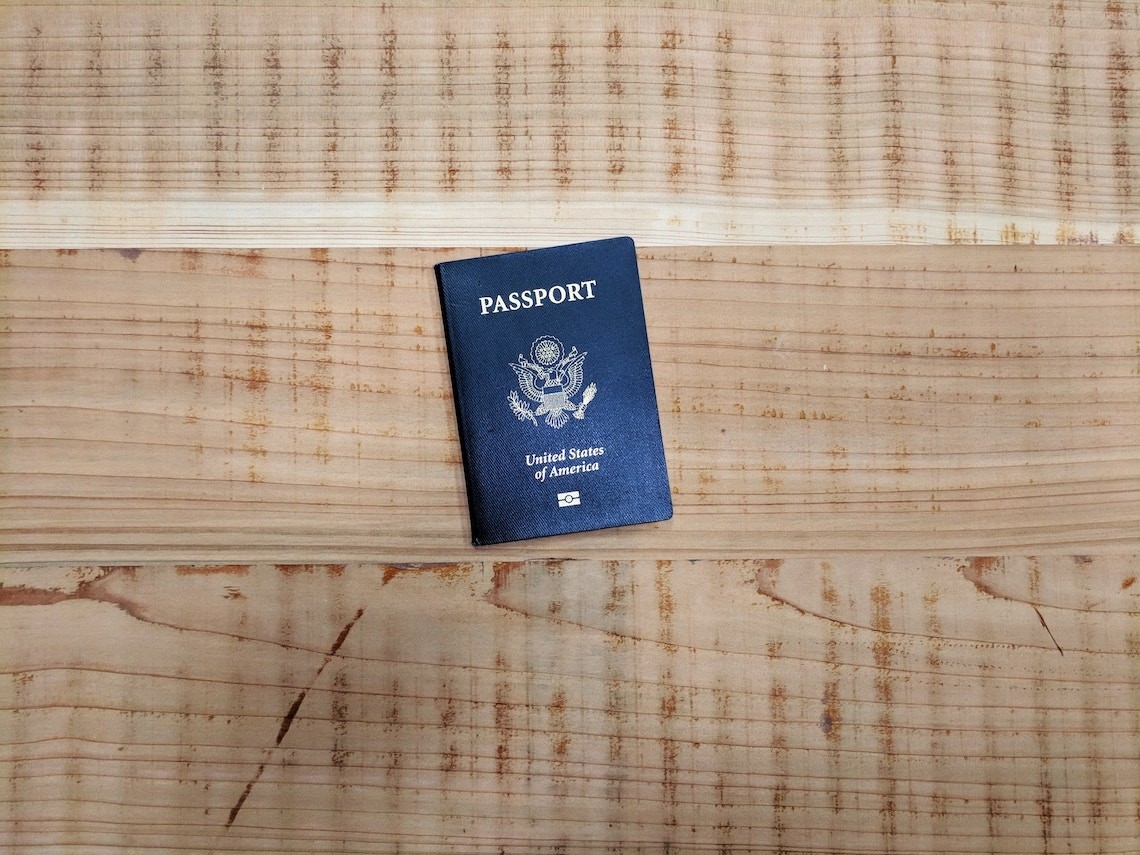
Starting from January 29, 2018, U.S. Citizenship and Immigration Services (“USCIS”) gives priority to most recent affirmative asylum applications when scheduling asylum interviews. This interview scheduling approach is known as “last in, first out” interview scheduling.
The “last in, first out” interview scheduling approach was introduced in 1995 and was in place until 2014 when USCIS switched to the “first in, first out” approach. Pursuant to the “first in, first out” approach, USCIS was giving priority to oldest asylum applications. This approach turned out to be not very efficient and resulted in an unprecedented backlog of asylum cases. In the majority of asylum offices new asylum applicants had to wait for years for their asylum interviews. As a result, many frivolous asylum applications were filed because the applicants were able to obtain employment authorization within six (6) months from filing their applications and to legally work for years until the scheduling of their asylum interviews.

When a loved one passes away due to the negligence of another party, California law allows for two different types of lawsuits that can be against the negligent party. A California wrongful death lawsuit may be filed by the representative of the deceased’s estate, or by the decedent’s surviving spouse, children or other dependent family members. While, a survival cause of action can be filed by the estate’s personal representative, or if none has been appointed, by the decedent’s successor-in-interest. A survival cause of action can only be brought if the decedent did not immediately die from his injuries. The survival statute allows one to “step into the shoes” of the deceased and recover the damages the had they lived, including and , such as:

A contract is an agreement to do or not to do a certain thing. Recovering damages for breach of contract, the plaintiff must prove all of the following:
If you entered into a contract and you fail to abide by the terms of the agreement. Consequently, you may face the likelihood of having a lawsuit against you. If a party contracts with you and does not fulfill the terms of the agreement. In return you may also have the right to seek legal remedy and likewise file suit against the breaching party.

Regardless of whether you own an business with a family member, a friend, or hold a position on the board of a large corporation, you know that business and contract disputes can often times cause major problems. Specifically, business owners that face contract disputes with other companies and even more so, between their own ownership structure. For instance, a business contract dispute may arise between two or more partners, when one partner fails to fulfill his responsibilities. Often times business owners do not anticipate disputes until they arise. As a result, income might be lost due to contract breaches; ownership might be in the limbo due to outside lawsuits and claims; and tensions amongst business owners may rise. Lastly, a California business that is facing a lawsuit must be represented by an attorney. As such, a business owner cannot represent themselves in pro per.
As a matter of course, each general partner has an equal right to take part in the . Disputes in the ordinary course of business are decided by a of the . While, disputes or disagreements of or any to the . Be that as it may, in an partnership of any size the will provide for certain electees to manage the partnership along the lines of a company board. Generally, unless otherwise provided in the , no one can become a partner of the However, an existing partner may transfer partnership interests and assign his share of the profits and losses and right to receive distributions.
Upon finishing the DEJ program, the court has an obligation to dismiss the drug charges against you. As such, the benefits of completing the program are that:
Throughout your participation in the court-sanctioned program, the court may determine that your efforts or participation are not satisfactory, or that some other issue has come up. Any of these may disqualify your eligibility for the diversion program. Some of these reasons can include:
Basically, a defendant can be removed from the DEJ program if at any point they fail to complete the program satisfactorily or if they get convicted of a felony or a misdemeanor involving violence. In that case, the defendant will get dropped from the program and sentenced per the underlying charge(s).
There are two factors that are responsible for determining your eligibility for a DEJ. The first is the type of drug offense itself and the second is your previous criminal history.
According to California Penal Code § 1000, some drug offenses are eligible for deferred entry of judgment. Most often, these are:
*A ‘controlled substance’ refers most commonly to such drugs as Cocaine, Marijuana, Heroin, Methamphetamines, Ketamine, Ecstasy, Vicodin, Codeine, and GHB.
Your prior criminal history is the other major factor used to determine whether your case is eligible for a DEJ. The conditions are:
You should know that there are some strings attached with the deferred entry of judgment. It does require the defendant to plead guilty, with the condition that the court does not enter judgment. Thus, the final sentencing, or conviction, is never finalized. The case is therefore left in a limbo period, or deferment. During this period, the defendant must then successfully complete the appropriate, state-approved program. The court will look over the details of the case again and if everything was correctly done, the charge against the defendant will be dismissed.
The details surrounding the deferred entry of judgment can get complicated and murky. We can help you to assess if a pretrial diversion or a DEJ is possible given the details of your case. To speak to an Glendale criminal defense attorney, please call our firm at (310) 943-1171 or email us at [email protected].
KAASS LAW is authorized to practice law in California. The above content is intended for California residents only. This content provides only general information which may or may not reflect current legal developments. KAASS LAW expressly disclaims all liability in respect to actions taken or not taken based on any of the contents of this website. The above content DOES NOT create an attorney-client relationship. KAASS LAW does not represent you unless you have expressly retained KAASS LAW in person at the KAASS LAW office. KAASS LAW helps clients in: Los Angeles, Burbank, Hollywood, Glendale, Van Nuys, North Hollywood, Studio City, Highland Park, Eagle Rock, Sunland, Tujunga, Sylmar, San Bernardino, La Crescenta, La Canada, Beverly Hills, Westwood, Santa Monica, Brentwood. Pacoima, Montebello, Commerce, Alhambra, Downey, Bell, Maywood, Walnut Park, Vernon, Lynwood, Echo Park, Silverlake, Mission Hills, Northridge, Woodland Hills, Encino, Canoga Park, North Hills, Porter Ranch, Chatsworth, Reseda.
If property owner(s) fail to properly maintain the premises and someone suffers injury as a result, they may be liable for damages under premise liability law. As in any other negligence action, the injured person must establish the following: (1) the existence of a duty on the part of the defendant to use due care; (2) a breach of this legal duty; and (3) the breach as the proximate or legal cause of the resulting injury. If you or a loved one suffered damages associated with an accident which occurred on someone else’s property, you may be entitled to compensation for your injuries. We invite you to contact our Glendale personal injury attorneys at (310) 943-1171, for a free consultation.
Common causes of slip and fall accidents occur when property owners fail to exercise reasonable care in preventing slip or fall hazards, such as:
Property owners are legally responsible to inspect the property for any hazard risks and maintain the property in a safe manner. If there are any latent or concealed perils on the land, the possessor is under a duty to exercise ordinary care either to make the condition reasonably safe for those coming onto the land or to give such persons a warning adequate to enable them to avoid injury. Failure to repair or fix a slip hazard, resulting in a preventable invitee or customer injury, is an act of negligence.
Premises liability claims against government entities, due to injuries sustained on public property are often very challenging to litigate. Government entities enjoy greater protections against premises liability claims than do ordinary private persons and businesses. In California, to bring a successful premises liability claim against a government entity, one must prove an additional element that does not exist in premises liability claims against private entities - under Government Code section 835, the injured party must prove either: (a) a negligent or wrongful act or omission of an employee of the public entity within the scope of his employment created the dangerous condition; or (b) the public entity had actual or constructive notice of the dangerous condition under Section 835.2 a sufficient time prior to the injury to have taken measures to protect against the dangerous condition. Are you wondering how to prepare for a slip and fall claim? If you were injured due to a slip and fall accident, our knowledgeable Los Angeles personal injury attorneys can help you get the compensation you deserve. Call us at (310) 943-1171, 24 hours a day, 7 days a week for a free consultation tailored to the specifics of your case, our attorneys speak English, French, Spanish, Russian, Armenian, and Italian.
Common types of physical abuse include any unwarranted or unwelcome physical touching including:
California Welfare And Institutions Code §15600 provides legal protection and recourse for elderly who have suffered abuse under the Elder Abuse And Dependent Adult Civil Protection Act. The law recognizes that many elders and dependent adults who are at the greatest risk of abuse, neglect, or abandonment by their families or caretakers suffer physical impairments and other poor health that place them in a dependent and vulnerable position. Elder is defined in the statutes as any person 65 years of age or older who is residing in California at the time of the alleged abuse. The term “abuse” is interpreted broadly and includes any of the following:
Neglect means that the care giver acted unreasonably by failing to exercise that degree of skill or render that level of care for which a reasonable person would exercise or render under similar circumstances. Under the Elder Abuse Protection Act, you or a loved one are entitled to compensation for any type of abuse, negligence or recklessness on the part of the nursing home facilities caregivers. Further, you or a loved one are entitled to file for damages against each healthcare provider who was involved in the abuse. It is best to seek assistance from an experienced California nursing home attorney. Often times obtaining evidence of abuse and bringing charges against the company or corporation which operates the nursing home can be almost impossible without specialized and experienced legal representation. If you believe that a loved one may be subjected to elder abuse and wish to file a claim, it is imperative to act quickly. There is only a certain amount of time during which you can file a case. The time limits are complicated and strictly enforced by the courts. If you think you have a valid claim, consult with one of our Glendale elder care abuse attorney as soon as possible.
An Glendale elder care abuse attorney can help you review your case and explain the steps that must be taken in order to bring action against the person, nursing home, rehabilitation center, or elder care facility. Speak to one of our Los Angeles personal injury lawyers experienced with elder abuse and nursing home negligence cases. We offer a free consultation and case review. Call our office at (310) 943-1171, our attorneys speak English, French, Spanish, Russian, Armenian, and Italian.
The California Welfare And Institutions Code §15600 provides legal protection and recourse for elderly who have suffered abuse under the Elder Abuse And Dependent Adult Civil Protection Act and provides that: (a) The Legislature recognizes that elders and dependent adults may be subjected to abuse, neglect, or abandonment and that this state has a responsibility to protect these persons. (b) The Legislature further recognizes that a significant number of these persons are elderly. The Legislature desires to direct special attention to the needs and problems of elderly persons, recognizing that these persons constitute a significant and identifiable segment of the population and that they are more subject to risks of abuse, neglect, and abandonment. (c) The Legislature further recognizes that a significant number of these persons have developmental disabilities and that mental and verbal limitations often leave them vulnerable to abuse and incapable of asking for help and protection. (d) The Legislature recognizes that most elders and dependent adults who are at the greatest risk of abuse, neglect, or abandonment by their families or caretakers suffer physical impairments and other poor health that place them in a dependent and vulnerable position. (e) The Legislature further recognizes that factors which contribute to abuse, neglect, or abandonment of elders and dependent adults are economic instability of the family, resentment of caretaker responsibilities, stress on the caretaker, and abuse by the caretaker of drugs or alcohol. (f) The Legislature declares that this state shall foster and promote community services for the economic, social, and personal well-being of its citizens in order to protect those persons described in this section. (g) The Legislature further declares that uniform state guidelines, which specify when county adult protective service agencies are to investigate allegations of abuse of elders and dependent adults and the appropriate role of local law enforcement is necessary in order to ensure that a minimum level of protection is provided to elders and dependent adults in each county.
To protect your business or brand from infringement, you may want to trademark your domain name in addition to a logo, slogan, or design. Merely, registering a domain name does not give you trademark rights, rather it identifies your website and generally will not prevent others from using the name. If you trademark your domain name, you have legal protection if a third party uses your trademarked name. You can file a trademark infringement action against the infringing party and recover money damages, financial losses, and other damages you might have incurred.
The domain should function as a "source indicator." It must convey to whoever sees the URL what products or services are behind the name. A domain qualifies as a trademark when it is a "source indicator." Your domain must convey the products or services associated with the name to whoever sees the URL. Not all domain names can be registered as trademarks. The PTO is particular about what can be registered as a domain name.
Consumer confusion occurs when another company has a domain name close in spelling to your domain. The other company's name might different by one letter. Generally, consumer confusion matters only if a domain name that's similar to the one you want to use is a protected trademark. To be protected, a trademark must be distinctive. If the trademark owner has been able to register a name with the U.S. Patent and Trademark Office, it is probably distinctive. The dispositive question in trademark infringement cases is whether the similarity of the marks is likely to confuse customers about the source of a product or service. Interstellar Starship Services, Ltd. V. Epix, Inc., 304 F. 3d 936, 941 (2002).
Initial interest confusion occurs when the defendant’s use of plaintiff’s trademark sways consumers towards their own product or service by capturing “initial consumer attention.” Brookfield at 1045. In the context of website domain, the defendant’s unauthorized use of the trademark confuses consumers who expect to find the plaintiff’s product or service at that web address. Interstellar at 942. Although actual confusion is not required, plaintiff must prove a probability of confusion, as the mere possibility is not enough. Perfumebay.com Inc. v. eBay, Inc., 506 F.3d 1165, 1176.
To evaluate the likelihood of confusion, including initial interest confusion, the Sleekcraft factors considered are:
(1) the similarity of the marks;
(2) the relatedness or proximity of the two companies' products or services;
(3) the strength of the registered mark;
(4) the marketing channels used;
(5) the degree of care likely to be exercised by the purchaser in selecting goods;
(6) the accused infringers' intent in selecting its mark;
(7) evidence of actual confusion; and
(8) the likelihood of expansion in product lines.
Courts consider these factors within the totality of the circumstances through the eyes of the “reasonably prudent consumer” in the marketplace, not a person with a legally trained mind. Dreamwerks Production Group, Inc. v. SKG Studio, 142 F.3d 1127, 1129 (1998).
In the context of website domain, courts have held that the three most important Sleekcraft factors in evaluating a likelihood of confusion are (1) the similarity of the marks, (2) the relatedness of the goods or services, and (3) the parties’ simultaneous use of the Web as a marketing channel. Interstellar at 942.
No one factor is to be considered conclusive and the relative importance of each individual factor will be case-specific. Compare Brookfield, 174 F.3d at 1061 (holding that use of the domain name “moviebuff.com” violated plaintiff’s trademark rights in the mark “MovieBuff,” as consumer confusion is likely to result from the relatedness of the products and the companies’ simultaneous use of the Web as a marketing and advertising tool) with Interstellar at 943 (finding that domain name “epix.com” for website showcasing creator’s electronic pictures did not infringe the trademark “EPIX,” used in connection with printed circuit boards and computer programs, because there was a lack of relation between the products and both parties marketed to a different consumer base through the web).
The Federal Trademark Dilution Act (FDTA) allows a trademark owner to obtain an injunction against another’s “commercial use in commerce” of a mark or trade name” 15 U.S.C. § 1125(c)(1). “Commercial use in commerce” has been generally interpreted to mean use of mark in relation to any goods or services. Mattel, Inc. v. MCA Records, Inc., 296 F.3d 894, 903 (2002).
If you believe someone is infringing on your trademark or have questions regarding trademark registration, copyright, or any other intellectual property related question, we invite you to contact our office and speak to an experienced Los Angeles trademark lawyer at (310) 943-1171.
It is highly recommend that you speak to a Los Angeles motorcycle accident attorney before doing or speaking to anyone., including insurance companies. If you or a loved one was suffered a motorcycle accident injury, then you have a limited time to take action. Please contact us online or call our 24/7 motorcycle accident attorney help line directly at (310) 943-1171 to schedule your free, no-obligation consultation.
KAASS LAW is authorized to practice law in California. The above content is intended for California residents only. This content provides only general information which may or may not reflect current legal developments. KAASS LAW expressly disclaims all liability in respect to actions taken or not taken based on any of the contents of this website. The above content DOES NOT create an attorney-client relationship. KAASS LAW does not represent you unless you have expressly retained KAASS LAW in person at the KAASS LAW office. KAASS LAW criminal defense attorneys help clients in: Los Angeles, Burbank, Hollywood, Glendale, Van Nuys, North Hollywood, Studio City, Highland Park, Eagle Rock, Sunland, Tujunga, Sylmar, San Bernardino, La Crescenta, La Canada, Beverly Hills, Westwood, Santa Monica, Brentwood. Pacoima, Montebello, Commerce, Alhambra, Downey, Bell, Maywood, Walnut Park, Vernon, Lynwood, Echo Park, Silverlake, Mission Hills, Northridge, Woodland Hills, Encino, Canoga Park, North Hills, Porter Ranch, Chatsworth, Reseda.
The major reason for returning to the “last in, first out” approach is to deter the filing of frivolous asylum applications just for obtaining employment authorization. According to the new policy, USCIS will give priority to the most recently filed affirmative asylum applications. This approach will allow USCIS to identify non-meritorious asylum applicants and to place them in removal proceedings. The risk of being placed in removal proceeding might discourage people from filing a frivolous asylum application.
According to the website of USCIS affirmative asylum interviews will be scheduled in the following order of priority:
If you or someone you know has questions with respects to seeking for asylum or filing for an asylum application, please feel free to give our office a call. Our Los Angeles immigration attorney provide a free no obligation immigration consultation. speak English, French, Spanish, Russian, Armenian, and Italian.
Recently arrived foreigners with fear to return to their home countries shall definitely be happy with the “last in, first out” policy as they will not have to wait for years in order to have their cases heard by an immigration officer. On the other side, applicants with already filed cases might have to wait for several years until their asylum interviews. Only time will show the effectiveness of the new policy for scheduling affirmative asylum interviews.
KAASS LAW is authorized to practice law in California. The above content is intended for California residents only. This content provides only general information which may or may not reflect current legal developments. KAASS LAW expressly disclaims all liability in respect to actions taken or not taken based on any of the contents of this website. The above content DOES NOT create an attorney-client relationship. KAASS LAW does not represent you unless you have expressly retained KAASS LAW in person at the KAASS LAW office. KAASS LAW helps clients in: Los Angeles, Burbank, Hollywood, Glendale, Van Nuys, North Hollywood, Studio City, Highland Park, Eagle Rock, Sunland, Tujunga, Sylmar, La Crescenta, La Canada, Beverly Hills, Westwood, Santa Monica, Brentwood. Pacoima, Montebello, Commerce, Alhambra, Downey, Bell, Maywood, Walnut Park, Vernon, Lynwood, Echo Park, Silverlake, Mission Hills, Northridge, Woodland Hills, Encino, Canoga Park, North Hills, Porter Ranch, Chatsworth, Reseda.
In wrongful death cases, plaintiffs are the surviving family members of the decedent and can seek to recover economic damages. This includes financial support the decedent would have contributed to the family during the lifetime of the decedent or plaintiff. Also, loss of gifts or benefits that plaintiff would have expected to receive from decedent. Lastly, funeral/burial expenses reasonable value of household services that decedent would have provided to his or her loved ones. Additionally, the surviving family members may also seek non-economic damages. This includes loss of decedent’s love, companionship, loss of services, loss of support, comfort, care, assistance, protection, and moral support. Loss of the enjoyment of sexual relations and loss of decedent’s training and guidance are also real factors.
A survival cause of action in California can only be brought if the decedent did not pass from the injuries. If the deceased lived for a period between the accident and death, considering to file under survival cause of action. The representative of decedent's estate may seek to recover damages. This includes, “the loss or damage that the decedent sustained or incurred before death, including any penalties or punitive or exemplary damages that the decedent would have been entitled to recover had the decedent lived, and do not include damages for pain, suffering, or disfigurement". If you and your family are considering filing either a wrongful death or survival action lawsuit, or both if the circumstances permit, we invite you to contact one of our Los Angeles personal injury attorneys today for a free consultation and case review. KAASS LAW has successfully represented victims in wrongful death and survival cause of actions.
This content is intended for educational purposes only. KAASS LAW is authorized to practice law in California. The above content is intended for California residents only. This content provides only general information, which may or may not reflect current legal developments. KAASS LAW expressly disclaims all liability in respect to actions taken or not taken based on any of this website. The above content DOES NOT create an attorney-client relationship. KAASS LAW does not represent you unless you have expressly retained KAASS LAW in person at the KAASS LAW office. KAASS LAW helps clients in: Los Angeles, Burbank, Hollywood, Glendale, Van Nuys, North Hollywood, Studio City, Highland Park, Eagle Rock, Sunland, Tujunga, Sylmar, La Crescenta, La Canada, Beverly Hills, Westwood, Santa Monica, Brentwood. Pacoima, Montebello, Commerce, Alhambra, Downey, Bell, Maywood, Walnut Park, Vernon, Lynwood, Echo Park, Silverlake, Mission Hills, Northridge, North Hills, Porter Ranch, Chatsworth, Reseda, San Diego, La Jolla, El Cajon, Chula Vista, Del Mar
It is important to remember that a California business owner cannot represent themselves in a lawsuit as pro per, this is because in California, a California business that is facing a suit or wish to file a lawsuit against another must be represented by an attorney. Please review all the provisions in the contract to ensure you don't file a frivolous lawsuit against the other party. Often times contracts can be confusing and thus require the assistance of a business law or contract attorney. Breach of contract can occur in many different ways, such in business service contracts, employment contracts, or business partnership contracts. If you believe that another party did a breach in their terms or didn't fulfill the terms under a contract it is important to speak to a experienced business lawyer, to ensure you rights and remedies are protected.
Businesses can dissolve the entire or part of a company by engaging in the "winding up" or "dissolution" process. The winding up process is subject to a strict legal rights of its partners, as well as creditors and claimants. Terminating a California business, often times involves a "liquidation process", where the company begins to wind-up affairs, pay debts, and dissolve. Furthermore, there are special procedures for dissolving corporations that are undergoing Chapter 7 bankruptcy, or have disposed of all assets, and not conducted any business for the last five years.
During the winding-up process is subject to strict legal rights of the shareholders, thus must be both "just and equitable" Thus, to ensure that all issues are considered and addressed appropriately, its is recommend to that you consult with California corporate attorney prior to submitting termination documents to the California Secretary of State. If you wish to dissolve or terminate your corporation, we invite you to contact our Glendale business corporate lawyers and discuss the proper legal steps you must take in order to property terminate your California corporation. Under California’s General Corporation law (“GCL”) shareholders holding shares with at least 50 percent of the voting power can voluntary elect to dissolve the corporation. It is important that you review your articles of incorporation and bylaws, and speak to a experienced Glendale business lawyer, to ensure that you are following the proper dissolution procedures specifically for your corporation. If a all members have approved that dissolution, your corporation continues to exist only for the purpose of taking care of final matters. As such, all board members have full power to wind up and settle the affairs of the corporation, including paying all known corporation debts and liabilities, and then distributing remaining assets, if any, to persons entitled to those assets.