
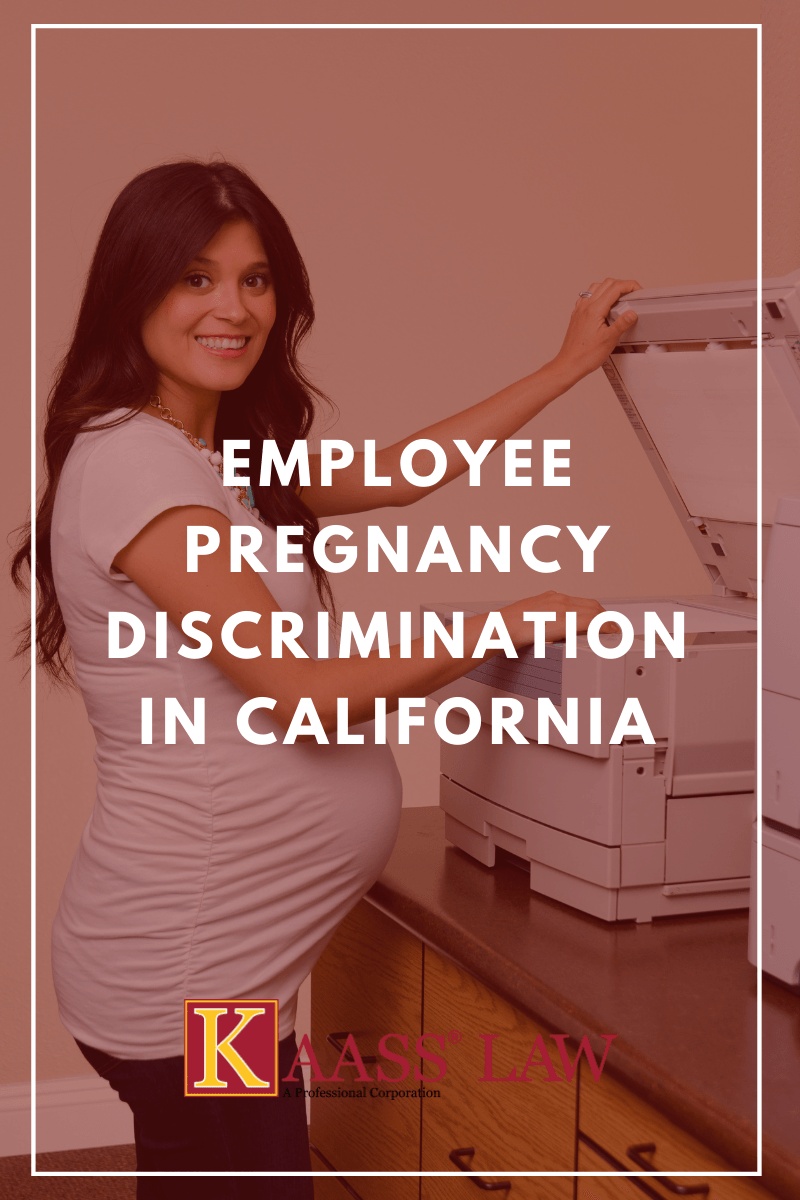
Employment pregnancy discrimination occurs when an employee or job applicant receives less favorable treatment because due to her pregnancy or on the basis that she may someday become pregnant.
Examples of employment pregnancy discrimination include:
An employee or job applicant will have to prove the following elements to establish that the employer engaged in unlawful discrimination:
The five main laws which provide leave rights to pregnant employees and new mothers:
Each of the above-mentioned laws has its own eligibility requirements, each of them provides leave under different circumstances and for different lengths of time,
In addition to requiring 4 months of pregnancy leave employers are also required to:
If you believe that your employer has discriminated against you on the basis of your pregnancy, we invite you to contact our employment law attorney at (310) 943-1171, for a free consultation.
California has long been at the forefront of protecting the rights of LGBTQ+ individuals, and the workplace is no exception. The Fair Employment and Housing Act (FEHA) prohibits discrimination and harassment based on sexual orientation and gender identity. This is guaranteeing that all employees have the right to a safe and inclusive work environment. At KAASS Law, we are dedicated to upholding these rights and fighting for justice when they are violated. The following will explore the issue of workplace discrimination and harassment based on sexual orientation and gender identity in California. As a result, we are attempting to explain your rights and how we can help.
The Fair Employment and Housing Act apply to employers with five or more employees. The exception is the cases of harassment, where there is no minimum employer size. The FEHA also applies to labor unions, employment agencies, state licensing boards, and state and local governments. Though, the FEHA doesn’t provide protection for federal employees. According to the California Fair Employment and Housing Act, (), it is illegal for an employer to fire, fail to hire, or discriminate in any way against a person on the basis of their sexual orientation. Sexual orientation can mean homosexuality, bisexuality, and heterosexuality. Furthermore, includes the perception that a person has some characteristics or in case a person actually has the characteristics of a type of sexual orientation.

The California workplace is destine to be a safe and fair environment where employees can contribute their skills and talents without fear of reprisal. However, the unfortunate reality is that workplace retaliation remains a pervasive issue, affecting individuals across various industries and professions. Retaliation can take many forms, from subtle acts of intimidation to outright termination, and it can have devastating consequences for those who dare to speak out against wrongdoing or assert their legal rights.
At KAASS Law, we believe that everyone deserves a workplace free from fear and intimidation. We dedicated in empowering employees with knowledge about their rights. Additionally, we strive for fearless legal representation to those who are victims to unlawful retaliation from unjust employers. The following will explore the issues of workplace retaliation in California. Importantly, we attempting to navigate our clients by explaining their rights and how we can help if you are a victim in the workplace. First, we need to uncover what workplace retaliation really is and then take steps on resolving this issue.
Workplace retaliation occurs when an employer takes adverse action against an employee because the employee has engaged in a protected activity. California law prohibits retaliation against employees who. Workplace retaliation can include any of the following actions:
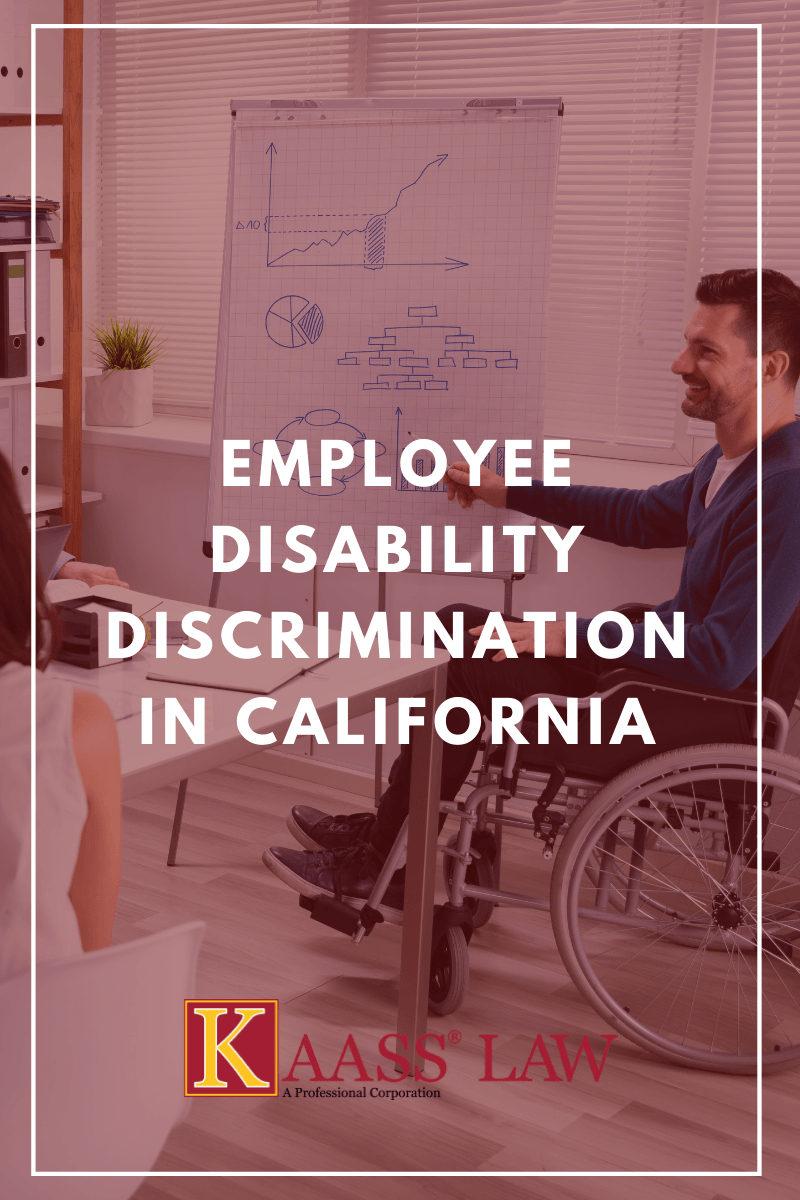
Are you wondering if you have been a victim of employee disability discrimination in California? According to California Fair Employment and Housing Act (FEHA), it is unlawful for the employer to discriminate against any person based on mental or physical disability. Americans with Disabilities Act (ADA) protects qualified employees and applicants from employment discrimination based on disability.
According to CACI 2540 to establish the claim of employment discrimination based on disability the plaintiff must be able to establish the following elements:
Sexual orientation discrimination occurs when an employer treats an employee or applicant unfairly because of their actual or perceived sexual orientation. This includes discrimination against individuals who are lesbian, gay, bisexual, heterosexual, or asexual.
Gender identity discrimination occurs when an employer treats an employee or applicant unfairly because of their gender identity, including transgender individuals, those who identify as non-binary, or those who do not conform to traditional gender norms.
Examples of sexual orientation discrimination in the workplace include the following:
A discriminated employee can file a complaint with the Department of Fair Employment and Housing (DFEH). DFEH will either investigate the complaint or issue a "right-to-sue notice. In case the DFEH finds evidence of discrimination based on sexual orientation and is not able to reach a settlement between the employer and employee, the agency can “prosecute” the case by holding a formal hearing or filing a lawsuit on behalf of the employee. In case the agency decides not to prosecute the case, the employee will receive a “right to sue” notice from the Department of Fair Employment and Housing.
A person will have one year from the date of the sexual orientation discriminatory act to get a right-to-sue notice from the Department of Fair Employment and Housing.
In case a person wins a discrimination lawsuit he may be eligible to recover the income that was lost as a result of the discrimination. The person can particularly recover:
At KAASS Law, we commit to protecting the rights of LGBTQ+ employees and creating workplaces free from discrimination and harassment. If you have experienced discrimination or harassment based on your sexual orientation or gender identity, contact us today for a free consultation. We can help you understand your legal options, navigate the legal process, and fight for the justice you deserve
If you believe that your employer has discriminated against you on the basis of sexual orientation, we invite you to contact our employment law attorney at (310) 943-1171, for a free consultation.
In California, workplace retaliation is considered illegal when the employer punishes his employees for the following actions:
The employee, who engaged in protected activity and was demoted or terminated as a result can file a claim with DFEH under the Fair Employment and Housing Act("FEHA"). In order to preserve your right, the employee must file a claim with DFEH within 1 year from the time of the retaliation. The department will investigate the claim and if there is enough evidence, proceeds with the claim. If not, the claim will be closed. Then the employee will be able to file a lawsuit against his employer. By filing a lawsuit, an employee can recover compensation for:
An employee is also protected from workplace retaliation under federal law in case he files a harassment or discrimination complaint at work either internally or to an outside body like the Equal Employment Opportunity Commission. Federal law also protects an employee who cooperates in Equal Employment Opportunity Commission investigations or serves as witnesses in EEOC litigation or investigations.
According to California Labor Code Section 1102.5, an employee can sue his employer for retaliation in case:
It is important to mention, that the employee is not required to prove the employer’s action was illegal to establish the claim. To prove a retaliation claim in California, an employee must show the following:
Very often retaliation and whistleblowing claims are discussed interchangeably however, they are not identical. Whistleblowing typically involves complaints or claims which focus on activities prohibited by law and activities that compromise public safety. A retaliation claim is more connected with individual employee rights, such as the right to speak up against harassment, the right to be paid overtime, etc.
Under California law there are the following types of retaliation claims:
At KAASS Law, we are dedicated to protecting employees from unlawful retaliation and ensuring that they can exercise their rights without fear of reprisal. If you have experienced retaliation in the workplace, contact us today for a free consultation. We can help you understand your legal options and fight for the justice you deserve. There are laws that protect you from you employment discrimination. If you believe that you are a victim of employment retaliation, from your employer, we invite you to contact our Los Angeles employment law attorney California Employee Relation Attorney today at (310) 943-1171.
Plaintiff does not need to prove that the defendant held any ill will or animosity toward him personally because he was perceived to be disabled.
Examples of employment disability discrimination include:
A reasonable accommodation is any change to the application or hiring process, that way perform the main functions or the work environment that allows a person with a disability who is qualified for the job to perform the essential functions of that job and enjoy equal employment opportunities.
Depending on the type of the case and the jurisdiction and type of discrimination case, a person can file with either the EEOC or DFEH. Claims must be filled in accordance with the statute of limitations. The employer can file the claim as soon as he became aware of the discriminatory conduct. After the agency receives a complaint from the employer, an investigation takes place. During this investigation, the agency will obtain relevant evidence of the employer’s unlawful conduct and in case it determines that workplace discrimination occurred. The agency can undertake one of the following steps:
If you believe that your employer has discriminated against you on the basis of a disability, we invite you to contact our employment law attorney at (310) 943-1171, for a free consultation.