
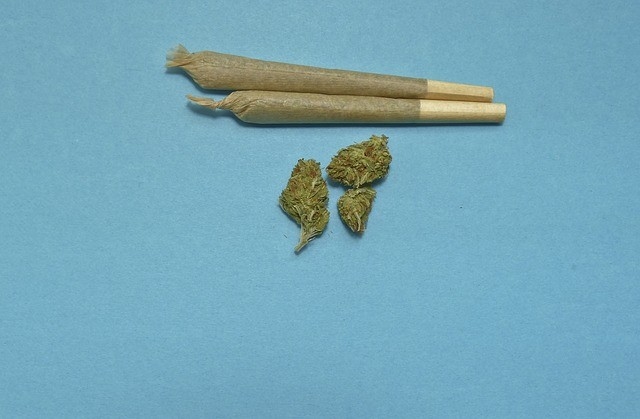
The gradual process of legalizing marijuana in California reached its climax in January of 2018, when marijuana became legalized. Once this new law came into effect, it changed the ways that some laws apply and affect cases surrounding the possession, utilization, and acquisition of marijuana. On the other hand, many procedures and statutes have not changed despite the legalization of marijuana. One such instance is the penalty one may accrue if they are caught with marijuana in their car while driving, which is detailed by the California Vehicle Code 23222(b) Driving In Possession of Marijuana.
California Vehicle Code 23222(b) maintains that it is illegal to possess marijuana while conducting a vehicle. In order to be charged with this, a law enforcement agent must be able to prove that you were in illegal possession of marijuana while driving. Thus, there are three primary components at play in this code. The keywords here are illegal, possession and driving. If even one of those three things does not apply, then you cannot be charged with violating California Vehicle Code 23222(b). However, it should be noted that just because one of those three elements may not apply, does not mean that you cannot be charged with violating another statute or law. For instance, California Health and Safety Code 11357(b) may still apply to you. Also, if it is determined that you were driving under the influence of marijuana, you can also be charged with a DUI pursuant to California Vehicle Code Section 23152(a)(b).
An experienced Glendale marijuana lawyer will understand that there are several powerful avenues that may be explored in order to demonstrate your innocence before the law. Some of those possible options are:
The consequences of being convicted of violating California Vehicle Code Section 23222(b) include a fee of up to $100 plus court costs. We can help you avoid all of those. Give us a toll free call today to speak to one of our attorneys at (310) 943-1171 or email us at [email protected]
KAASS LAW is authorized to practice law in California. The above content is intended for California residents only. This content provides only general information which may or may not reflect current legal developments. KAASS LAW expressly disclaims all liability in respect to actions taken or not taken based on any of the contents of this website. The above content DOES NOT create an attorney-client relationship. KAASS LAW does not represent you unless you have expressly retained KAASS LAW in person at the KAASS LAW office. KAASS LAW helps clients in: Los Angeles, Burbank, Hollywood, Glendale, Van Nuys, North Hollywood, Studio City, Highland Park, Eagle Rock, Sunland, Tujunga, Sylmar, San Bernardino, La Crescenta, La Canada, Beverly Hills, Westwood, Santa Monica, Brentwood. Pacoima, Montebello, Commerce, Alhambra, Downey, Bell, Maywood, Walnut Park, Vernon, Lynwood, Echo Park, Silverlake, Mission Hills, Northridge, Woodland Hills, Encino, Canoga Park, North Hills, Porter Ranch, Chatsworth, Reseda.

California Penal Code § 1000 indicates an arrangement commonly known as a pretrial diversion or a deferred entry of judgment, in which a qualifying drug defendant requests to get their case put on hold for a set period of time while the defendant completes a state-approved drug rehabilitation or educational program. Penal Code § 1000 is very important because it enables some defendants to avoid conviction entirely with the deferred entry of judgment, or DEJ for short (this is also referred to as a pretrial diversion).
Whether DEJ applies for any given case will depend on several factors, such as age, previous criminal history, and the crime in question. For instance, DEJ is more restricted for adults, applying only for certain types of drug offenses. On the other hand, for juveniles, deferred entry of judgment usually applies for most first-time felonies.
First, a defendant asks to complete an approved program in any county in California. The court determines the eligibility of the defendant and, once approved, provides the defendant with a set period of time in which to complete the program. California courts have both . A list of state-approved programs can be found at the courthouse in which the hearing took place. All of these programs will assess the defendant and must ensure a minimum of 20 hours of drug education or rehabilitation. At the end of the program, an assessment report must be provided to the court, detailing the defendant’s progress and successful completion of the program.
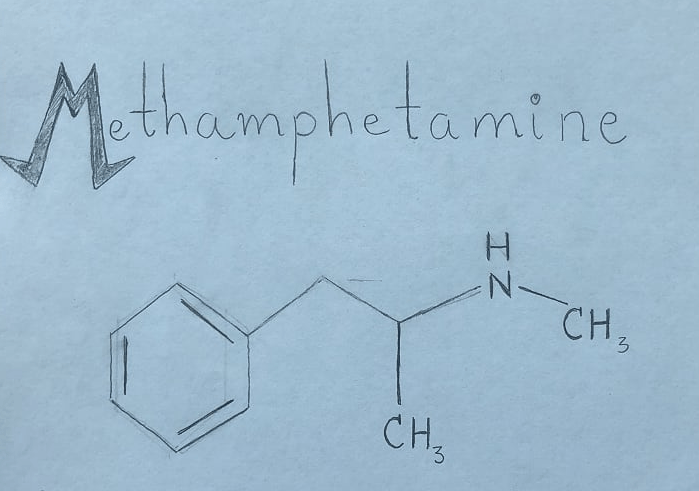
In California, there are many different health and safety codes and statutes in place to protect citizens. Some of these focus on illegal substances, such as methamphetamine, and the consequences one may face for possessing them.
Being accused of possessing meth is a serious crime because it is a controlled substance under the California Uniform Controlled Substances Act. Under California Health and Safety Code Section 11377, the mere possession of meth is considered a misdemeanor, which involves a penalty of up to $1,000 and a year in prison. However, these repercussions can be far more severe, depending on how the drug was found and whether or not the prosecutors determined if there was an intent to sell or distribute the drug. Therefore, it stands to reason that you should be aware of the ways in which a prosecutor can prove meth possession. So...
In order for a prosecutor to convict you of meth possession under Health and Safety Code Section 11377, they must be able to prove or show beyond reasonable doubt that: (1) you had actual possession of the drug in question; (2) you knew the drug was methamphetamine, a controlled substance, and (3) you had possession of usable amounts of the drug, i.e. more than just trace amounts of methamphetamine.
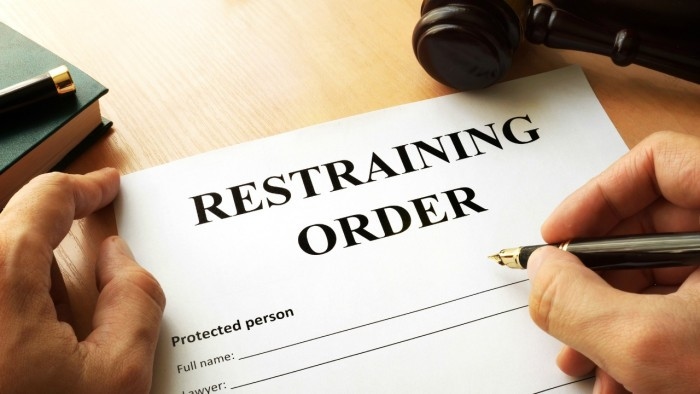
Restraining orders are commonly referred to as "RTO"s. Being served with a restraining order can be stressful, especially if it is a domestic violence restraining order. In California, there are a few different types of restraining orders such as civil harassment, domestic violence restraining orders, restraining orders involving elder abuse, workplace violence, emergency protective orders, and criminal protective orders. Each type of restraining order has various components of which the person who filed the restraining order has the "burden of proof" in order to obtain the restraining order, the duration of the restraining order, and the legal elements required to prove in order to obtain that restraining order. The following tips may help you successfully defend a California restraining order action.
The first essential preparation for an effective restraining order defense is to carefully review the allegations made against you order to determine if those allegations do or do not apply to each element required for the particular order of protection being requested.

California Identity Theft , under Penal Code 530 PC usually occurs when: a defendant unlawfully gained unauthorized access to a computer’s information or someone else’s sensitive personal information and used that information for financial or personal gain. This can be achieved by creating a credit card or opening up an account under someone else’s identity in order to obtain money or items which they are not entitled to.
As discussed above, identity theft under California Penal Code Section 530 occurs when a person unlawfully and intentionally acquires and retains possession of personal identifying information of another person. In other words, identity theft occurs when a person uses your personal identifying information without permission to commit fraud or other theft related crimes. Identity theft crimes can include obtaining a consumers:

Major proposed key changes for Assembly Bill 729, marijuana licensee in California should know about! Accordingly, the bill allows its licensee or employees to "refuse to sell marijuana to a person who is unable to produce adequate personal identification showing that he or she is 21 years of age or older and to seize any personal identification presented by a person that shows the person to be under 21 years of age or that is false, as specified.
No. Assembly Bill 729, prohibits the sale, offer for sale, or distribution of marijuana or marijuana products in a vending machine or appliance, or any other coin- or token-operated mechanical device designed or used for vending purposes.
Assembly Bill 729 require a licensee to post a sign, , and a that reads “” and to include language on the sign that reads “” In other words, if you are an licensed dispensary and an authorized licensee, than you must also include language on the sign that reads without

The new law will make it illegal for Uber drivers to drive with a BAC (blood alcohol content) of 0.04 or higher. Effective July 1, 2018, California ride-sharing drivers, like Uber and Lyft , and other commercial-for-hire vehicles will have stringent DUI laws.
The AB 2687 bill will amend the Vehicle Code Section 23152 (e): Commencing July 1, 2018, it shall be unlawful for a person who has 0.04 percent or more, by weight, of alcohol in his or her blood to drive a motor vehicle when a passenger for hire is a passenger in the vehicle at the time of the offense, and concurrently to do any act forbidden by law or neglect any duty imposed by law in driving the vehicle, which act or neglect proximately causes bodily injury to any person other than the driver. For purposes of this subdivision, “ means a passenger for whom consideration is of carriage in the vehicle.

California Vehicle Code § 12500 It is illegal in California to drive a motorcycle or any motor-driven or motorized cycle. You would need to have a valid driver's license to do so. However, a driver's license doesn't need to be the only thing that is applicable in California. Nonresidents of California can drive in California as long as they are over the age of 18. Also in their possession is a valid driver's license from the jurisdiction in which they reside. According to California Vehicle Code § 12503, if the jurisdiction in which the individual resides does not require a driver's license, then the individual can drive in California without a driver's license, but not to exceed 30 days.
According to California Vehicle Code § 12505, an individual’s place of residence can be a determination by their “,” which is the state where a person can show a fixed, and permanent home and principal residence and to which he or she can return when absent. An individual is domiciled in the state in which they intend to live for an indefinite amount of time. If the individual came to California from Nevada with the intent to stay for a month and then return back to their home in Nevada, then their domicile, and residency, is in Nevada. Courts will typically look at evidence such as: where an individual can register to vote; where an individual pays taxes; and whether the individual pays resident tuition at a university in order to establish an individual’s state of residency.

Under Penal Code 17(b) PC, felony reductions to misdemeanors are available if defendants
In California, you must satisfy both elements to reduce your felony conviction to a misdemeanor. Serving time in state prison after a conviction for a "wobbler" offense makes you ineligible for relief under Penal Code 17(b).
(a)A felony is a crime which is punishable with death or by imprisonment in the state prison. Every other crime or public offense is a misdemeanor except those offenses that are classified as infractions. (b)When a crime is punishable, in the discretion of the court, by imprisonment in the state prison or by fine or imprisonment in the county jail, it is a misdemeanor for all purposes under the following circumstances: (1)After a judgment imposing a punishment other than imprisonment in the state prison. (2)When the court, upon committing the defendant to the Youth Authority, designates the offense to be a misdemeanor. (3)When the court grants probation to a defendant without imposition of sentence and at the time of granting probation, or on application of the defendant or probation officer thereafter, the court declares the offense to be a misdemeanor. (4)The prosecuting attorney files a complaint in a misdemeanor court, stating the offense is a misdemeanor. If the defendant objects during arraignment or plea, the attorney amends the complaint to charge the felony, and the case proceeds on the felony charge. (5) If the magistrate decides the offense is a misdemeanor before the preliminary examination or before filing an order under Section 872, the court will treat the case as a misdemeanor complaint. (c) When the court commits a defendant to the Youth Authority for a crime punishable by imprisonment in the state prison or by fine or imprisonment in the county jail, the court deems the offense a misdemeanor for all purposes upon the defendant's discharge from the Youth Authority. (d)A violation of any code section listed in Section 19.8 is an infraction subject to the procedures described in Sections 19.6 and 19.7 when: (1)The prosecutor files a complaint charging the offense as an infraction unless the defendant, at the time he or she is arraigned, after being informed of his or her rights, elects to have the case proceed as a misdemeanor, or; (2)The defendant consents, and the court determines that the offense is an infraction. The case then proceeds as if the defendant had been arraigned on an infraction complaint. (e)This section does not permit a judge to relieve a defendant of the duty to register as a sex offender under Section 290 if the charge requires registration and the trier of fact finds the defendant guilty.

An appeal is a request sent by a party in a lower court to a higher appellate court, in order to review and change the decision of the lower court. If a defendant is found guilty on a criminal charge, they have the right to file an appeal to the appellate court. In an appeal review, no new evidence can be shown; the court will only review the error that was shed light on by the defendant. However, the prosecutor cannot appeal the case if the defendant is found not guilty; this term is better known as “double jeopardy”.
Rules and Regulations of the Appellate Court
Federal appellate courts follow the Federal Rules of Appellate Procedure, as their set of regulations. On the other hand, state appellate courts follow their own state rules of appellate procedure. Both the state and federal appellate court share the power of having the final judgment on the case that is being reviewed. Although, there are exceptions to the courts final judgment rule, regarding an error in the trial court or an unconstitutional judgment.
Upon finishing the DEJ program, the court has an obligation to dismiss the drug charges against you. As such, the benefits of completing the program are that:
Throughout your participation in the court-sanctioned program, the court may determine that your efforts or participation are not satisfactory, or that some other issue has come up. Any of these may disqualify your eligibility for the diversion program. Some of these reasons can include:
Basically, a defendant can be removed from the DEJ program if at any point they fail to complete the program satisfactorily or if they get convicted of a felony or a misdemeanor involving violence. In that case, the defendant will get dropped from the program and sentenced per the underlying charge(s).
There are two factors that are responsible for determining your eligibility for a DEJ. The first is the type of drug offense itself and the second is your previous criminal history.
According to California Penal Code § 1000, some drug offenses are eligible for deferred entry of judgment. Most often, these are:
*A ‘controlled substance’ refers most commonly to such drugs as Cocaine, Marijuana, Heroin, Methamphetamines, Ketamine, Ecstasy, Vicodin, Codeine, and GHB.
Your prior criminal history is the other major factor used to determine whether your case is eligible for a DEJ. The conditions are:
You should know that there are some strings attached with the deferred entry of judgment. It does require the defendant to plead guilty, with the condition that the court does not enter judgment. Thus, the final sentencing, or conviction, is never finalized. The case is therefore left in a limbo period, or deferment. During this period, the defendant must then successfully complete the appropriate, state-approved program. The court will look over the details of the case again and if everything was correctly done, the charge against the defendant will be dismissed.
The details surrounding the deferred entry of judgment can get complicated and murky. We can help you to assess if a pretrial diversion or a DEJ is possible given the details of your case. To speak to an Glendale criminal defense attorney, please call our firm at (310) 943-1171 or email us at [email protected].
KAASS LAW is authorized to practice law in California. The above content is intended for California residents only. This content provides only general information which may or may not reflect current legal developments. KAASS LAW expressly disclaims all liability in respect to actions taken or not taken based on any of the contents of this website. The above content DOES NOT create an attorney-client relationship. KAASS LAW does not represent you unless you have expressly retained KAASS LAW in person at the KAASS LAW office. KAASS LAW helps clients in: Los Angeles, Burbank, Hollywood, Glendale, Van Nuys, North Hollywood, Studio City, Highland Park, Eagle Rock, Sunland, Tujunga, Sylmar, San Bernardino, La Crescenta, La Canada, Beverly Hills, Westwood, Santa Monica, Brentwood. Pacoima, Montebello, Commerce, Alhambra, Downey, Bell, Maywood, Walnut Park, Vernon, Lynwood, Echo Park, Silverlake, Mission Hills, Northridge, Woodland Hills, Encino, Canoga Park, North Hills, Porter Ranch, Chatsworth, Reseda.
While the burden to prove these things falls on the State, you should be prepared with ample evidence to show otherwise, just in case they do manage to produce sufficient evidence in the courtroom. Bear in mind there are two different kinds of possession for which you may be convicted. The first kind is actual possession, which entails that the authorities discovered the drug on your person, meaning in your pocket, clothes, or bag. The second kind is constructive possession, which simply means that the authorities found the drug in a place that you have access to, such as your house, car, or office. If you did not expressly admit to having knowledge of the illegal substance of methamphetamine being in your possession, the prosecutor will have to meticulously prove that through evidence. Evidence can include the way you behaved or reacted during the search or arrest process. As an example, if you attempted to hide or get rid of the drug, then they could reasonably assume that you had knowledge of the drug and its illegality. However, assumptions can work against the prosecutor as well.
One of the first things your lawyer will do is to determine whether the police encounter that led up to the discovery of the meth was legal. In other words, the prosecutor cannot use evidence against you in a court of law if it was obtained illegally. Remember that the police must adhere to strict laws which are upheld by the United States Constitution, including when they stop and search vehicles, when they enter into private property, and even when they arrest or detain someone on suspicion of illegal substance possession. Should a law enforcement agent knowingly, or inadvertently, violate the suspect’s constitutional rights, then your lawyer can request to suppress the evidence being presented against you.
There are many different avenues and possibilities that a lawyer can explore with you in order to best gauge what your next optimal move will be. Getting charged with possession of a controlled substance may seem overwhelming and getting out of that situation even more so, but we will guide you through the criminal justice process and get you the best possible result. We invite you to give KAASS Law a toll free call at (310) 943-1171 to have a free consultation with our skilled defense attorneys.
If you are defending against a restraining order, you have to keep in mind that the court doesn't have all day to listen to your case and thus you must be prepared when you come into court. First, it is important that you prepare your evidence and bring them with you to court. You may bring declarations from other people that have personal knowledge of the facts that surround that basis of your restraining order, your own declaration, along with any photographs, videos, text messages, emails, or any other piece of evidence you intend to show to the court.
If you are also facing criminal charges which stem from the matter of which is the basis for the restraining order, keep in mind of your Fifth Amendment right against self-incrimination. This means, if you testify during a restraining order trial, your testimony may and most likely will be used against you in the pending criminal case. Therefore, being mindful of the statements you make during court is very important. The prosecutors can request the transcript of your testimony from the restraining order hearing from the court, which may aid them in building their case against you in the pending criminal case. If you are in a situation where you face both criminal charges and a restraining order action, it is imperative that you seek legal help in order to insure the best possible outcome, as these types of criminal matters become extremely tricky.
Keep in mind that if the person that intends to file a restraining order against you, they are further legally obligated to have you personally served with the restraining order.
It is always wise to consult with an experienced local attorney who has vast experience in defending against restraining orders to discuss your various options. In order to ensure you have the best possible outcome and an effective defense is to have an experienced restraining order lawyer handle your case for you. Your restraining order lawyer will prepare a solid defense and attempt to persuade the court that the allegations asserted by the other party do not fit the definition of abuse.
Often times, defendants are not properly prepared for these type of hearings and almost immediately make damaging admissions that necessitate a restraining order be issued, even if the admitted activity was in fact innocent. Defending yourself against a restraining order can be difficult if all that you have are the statements made by the victim against your own word where there are no pictures or witnesses to support your side of the story. Further, if the person who filed the restraining order against you is represented by an attorney, it is even more imperative for you consider hiring a restraining order attorney immediately, as opposed to defending yourself If you were served with an restraining order or temporary restraining order, our knowledgeable restraining order attorney in Los Angeles, CA with KAASS LAW can help defend you. We are highly dedicating to serving the needs of all our clients. Call us at (310) 943-1171, 24 hours a day, 7 days a week for a free consultation tailored to the specifics of your case, our attorneys speak English, French, Spanish, Russian, Armenian, and Italian. You may also get directions to our law firm on Google Maps fast and easy.
Felony identity theft charges in California carry punishment of 3 years in state prison, court order to pay compensatory damages to the victim(s) that suffered damages, other fines, parole, and/or probation. Call now for a free consultation and case review at (310) 943-1171. If you or someone you love got these accusations of identity theft in California, it is important to understand the penalties that accompany a identity theft conviction. We invite you to contact our Glendale criminal lawyers for a free consultation and case review. Call our office at (310) 943-1171, our attorneys at KAASS Law speak English, French, Spanish, Russian, Armenian, and Italian.
KAASS LAW is authorized to practice law in California. The above content is for California residents only. This content provides only general information which may or may not reflect current legal developments. KAASS LAW expressly disclaims all liability in respect to actions taken or not taken based on any of the contents of this website. The above content DOES NOT create an attorney-client relationship. KAASS LAW does not represent you unless you have expressly retained KAASS LAW in person at the KAASS LAW office.
KAASS LAW helps clients in: Los Angeles, Burbank, Hollywood, Glendale, Van Nuys, North Hollywood, Studio City, Highland Park, Eagle Rock. Sunland, Tujunga, Sylmar, La Crescenta, La Canada, Beverly Hills, Westwood, Santa Monica, Brentwood. Pacoima, Montebello, Commerce, Alhambra, Downey, Bell, Maywood, Walnut Park, Vernon, Lynwood, Echo Park, Silverlake, Mission Hills, Northridge, Woodland Hills, Encino, Canoga Park, North Hills, Porter Ranch, Chatsworth, Reseda.
Under Assembly Bill 729, would authorize a peace officer, or an employee of a licensing authority or a state or local agency granted limited peace officer status, to enter and conduct inspections, as specified, of any place at which nonmedical marijuana or nonmedical marijuana products are
Accordingly, AUMA also prohibits a marijuana licensee from being located within a 600-foot radius of a school providing instruction in kindergarten or any grades 1 to 12, inclusive, day care center, or youth center, as specified, unless a licensing authority or local agency specifies a different radius". The bill also prohibits a licensee from being located within a 600-foot radius of the following
However, the exception that a licensing authority or local agency specifies a different radius.
Yes, bill allows law enforcement to inspect all recreational marijuana businesses, including anywhere they might find evidence of tax evasion. The bill also allows law enforcement to engage in operations involving person under 21 years of age is to be used in random inspections, including having pictures taken prior to inspections to verify appearance and requiring the person under 21 years of age to present a true and correct personal identification if verbally requested.
If you have questions regarding marijuana laws or or are seeking to start a recreational marijuana business in California, we invite you to call our office at (310) 943-1171 for a consultation with a Los Angeles marijuana business attorney from KAASS Law at any time.
Moreover, this considers to the owner, operator, agent, or any other person having an interest in the vehicle. In a prosecution under this subdivision, there is a rebuttable presumption of this matter. If a person had 0.04 percent or more, by weight, of alcohol in his or her blood at the time of driving the vehicle if the person had 0.04 percent or more, by weight, of alcohol in his or her blood at the time of the performance of a chemical test within three hours after the driving.
For questions about your Los Angeles Uber accident case or any Uber or Lyft related accidents, we invite you to call our office and speak to our Los Angeles uber accident attorney for free consultation. We speak English, Spanish, Armenian, Russian, French, and Italian.
KAASS LAW is authorized to practice law in California. The above content is intended for California residents only. This content provides only general information which may or may not reflect current legal developments. KAASS LAW expressly disclaims all liability in respect to actions or inactions based on contents of this website. The above content DOES NOT create an attorney-client relationship. KAASS LAW does not represent you unless you have expressly retained KAASS LAW in person.
KAASS LAW helps clients in: Los Angeles, Burbank, Hollywood, Glendale, Van Nuys, North Hollywood, Studio City, Highland Park, Eagle Rock, Sunland, Tujunga, Sylmar, La Crescenta, La Canada, Beverly Hills, Westwood, Santa Monica, Brentwood. Pacoima, Montebello, Commerce, Alhambra, Downey, Bell, Maywood, Walnut Park, Vernon, Lynwood, Echo Park, Silverlake, Mission Hills, Northridge, Woodland Hills, Encino, Canoga Park, North Hills, Porter Ranch, Chatsworth, Reseda.
Under California Vehicle Code 12500(a), a person may not drive a motor vehicle upon a highway, unless the person then holds a valid driver's license issued under this code, except those persons who are expressly exempted under this code.
VC 12500(a) driving without a valid license can be charged as either a California infraction or a California misdemeanor. The misdemeanor penalties for driving without a license can include:
In order for the court to prove that you are guilty of driving without a valid license, they must establish two elements:
Under California law, it is a requirement for drivers to carry liability insurance when operating a motor vehicle on a public road. If you got into an accident, due to the fault of another, while operating a motor vehicle without liability insurance, you likely fall under “Proposition 213”.Under California law, uninsured motorists involved in traffic collisions within the State of California, whether or not the collision was the cause by the uninsured motorist, they cannot recover general damages such as pain and suffering. KAASS Law may be able to help you either dismiss or reduce your VC 12500 charges to a less-serious infraction. If you were involved in a motorcycle accident you were both unlicensed and uninsured at the time of the collision, we further invite you to call our Los Angeles Motorcycle accident lawyer at (310) 943-1171 any time! Our law firm is dedicated to getting our clients the compensation they deserve. Get in touch with our law firm now or sign up online for a free consultation and case review. We speak English, French, Spanish, Russian, and Armenian. [contact-form-7 id="5673" title="KAASS LAW Contact Form"]
The chance vary from case to case. Generally the court considered a variety of factors when deciding whether to grant a PC 17(b) felony reduction motion. For instance
Speak to a experienced Glendale criminal defense attorney and find out how you can reduce a felony to a misdemeanor under Penal Code 17(b) PC. Our criminal defense attorneys speak English, French, Spanish, Russian, Armenian, and Italian.
The defendant can only file an appeal to the court system directly one above the court they were tried at. For example, if you were tried at a state trial court, than you may file an appeal only at the state intermediate appellate court. If one of the appeals reaches the Supreme Court, than the Supreme Court Justices have the final judgment on the case without question.
Depending on how complex the Appeal is or how many issues need to be reviewed, the cost to appeal can vary. It can range anywhere from $20,000-$50,000 and take as long as 1-2 years depending on how backed up the court is. The cost could be even lower than $20,000 depending on the cost of the services of each level of the court. The higher the level of the court, the more expensive the appeal is going to be, with the Supreme Court being the most expensive. Along with the cost, the chances of filing an appeal successfully are around 15%-25% also depending on the level of the court and complexity of the case.
Location: 701 North Brand Blvd. Suite 100 Glendale, CA 91203 Telephone: (310) 943-1171 Email: [email protected]