

Penal Code 21810 PC is a California law that prohibits the possession of brass knuckles. Penal Code section 21810 PC and may result in jail time and/ or significant fines.
A brass knuckle is a metal instrument with finger holes that a person inserts their fingers into. Such as rings with spikes on their outer surface and ball bearings inside those holes.
Under Penal Code 21810 PC, it is illegal in California to make, import, sell, give, or possess metal knuckles or brass knuckles ("BKs"). This, therefore, constitutes a wobbler offense. In other words, prosecutors can, depending on the circumstances, elect to file the charge as either a misdemeanor or a felony.
The penalties for a misdemeanor 21810 PC violation is punishable by:
Penalties for a PC 21810 violation is punishable by:
There are three related offenses to brass knuckles. These include:
If you or a loved one faces charges under Penal Code 21810 PC, call our Los Angeles criminal defense attorney at (310) 943-1171 for a free consultation and case review.
There are a number of legal defense strategies that can be used depending on the circumstances of the case. A criminal defense attorney can evaluate the situation and choose the best line of defense for their client.
One possible defense is lack of intent to possess or lack of knowledge of the presence of brass knuckles. The law requires the prosecution to prove that the defendant knowingly possessed the prohibited item. For example, if a person was using someone else's car and was unaware of the presence of brass knuckles inside, this could be a defense argument.
There may also be a possible defense based on a violation of the Fourth Amendment to the U.S. Constitution, which prohibits unreasonable searches and seizures. If brass knuckles were discovered during a search conducted without a proper warrant, an attorney can file a motion. If the court grants the motion, the charges may be reduced or dismissed altogether.
Another defense argues that the item does not qualify as a weapon. For example, the defendant may show that the item was designed as:
And the defendant did not intend to use it to commit an assault. This may be a circumstance in his favor.
It is important to note that in some cases, the law allows the possession of brass knuckles if it is related to:
However, such cases require special permits. An attorney can use the existence of such a permit as an element of the defense.
If police charged you with unlawful possession of brass knuckles under California Penal Code Section 21810, contact a qualified attorney immediately. Violating the law can have serious consequences, including fines and jail time. KAASS LAW has the experience and knowledge necessary to protect your rights. Call 844-522-77-52 for a free consultation with an attorney.

California Vehicle Code does not have any limitations with regards to the age of drivers, that's why it is easy to notice both young and old drivers on roads. However, senior-aged drivers can have more problems while driving and can cause more car accidents. The reasons for the above mentioned are very simple-the physical conditions of the elderly drivers do not let to drive more carefully. For example, a driver of a senior age can suffer from problems with eyesight, thus can fail to notice any marks and signs on the roads. Not hearing the traffic can also become a problem and lead to car accidents.
California law requires drivers that are 70 years or older to renew their drivers license.
As mentioned above, you must complete the driving license renewal process in person to allow the DMV to evaluate your condition before deciding. The DMV may require the elderly driver to undergo a medical evaluation to assess their physical and mental condition. The medical evaluation shall include:

It is a common issue both for ordinary citizens and public figures, as well as companies to suffer harm to their reputation. California law allows them to sue for compensation of such damages. The law classifies the damages to reputation into several groups, which include:
Defamation is the spread of false statements, which is done to cause damage to one's reputation. Slander is the disclosure of such statements verbally and libel is such disclosure, which is done in writing.
The elements a plaintiff must establish to successfully sue a third party for defamation are the following:

Car accidents, unfortunately, happen every day and cause damages to both the vehicle leading to negative economic consequences to drivers but also their life and health. Car accidents are caused by different reasons such as hydroplane car accidents, accidents involving elderly drivers, and ordinary accidents happening because of the negligence of the drivers. One of the types of car accidents is defective tire accidents.
Manufacturing defects are related to such issues, which, arising during production, make the tire differ from particular specifications.
Design defects are considered to be in place if the tire doesn't perform as safely as it can be expected by an ordinary customer and place risk of danger on the latter.
In the case of the manufacturer, the designer does not provide instructions, safety warnings to the use of the tires and lead them to cause damages, it is considered that the tire had a warning defect.
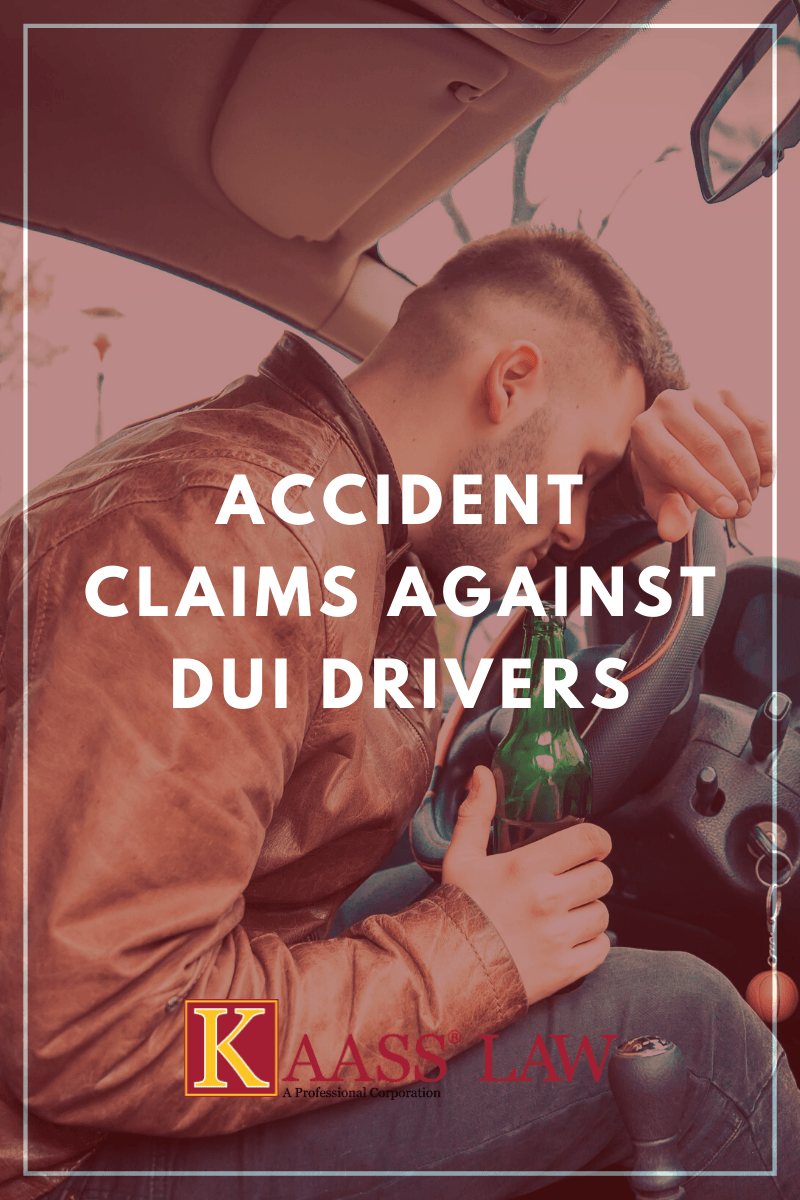
California Vehicle Code forbids driving under the influence of drugs and alcohol. The law considers a driver intoxicated if drugs or alcohol impair their ability to drive. If you have a driving accident by the fault of the DUI driver, you are entitled to seek compensation for damages as well as filing a civil lawsuit against the at fault party.
Any driver has a duty of care towards other drivers and pedestrians. This duty is also the basis of all restrictions under California law regarding intoxicated driving. Thus, if this duty of care is violated and one is injured because of such violation, the driver can be held liable. Furthermore, the DUI driver may be liable under the "negligence per se" legal theroy. In other words, if the driver violates a statute, such as driving under the influence of alcohol or drugs or exceeding the BAC limit, and causes a car accident, the driver will be liable for the injuries to the victim. To seek compensation for damages for DUI accidents, you shall prove that the driver was drunk or under the influence of drugs at the time of the accident, and this fact acted as a direct reason for the accident to happen. You do not need to wait for the drunk driver’s conviction to file a civil lawsuit. If you can present evidence of damages caused by the DUI car accident, you can seek compensation without waiting for the driver’s conviction.

Getting compensation for medical bills and expenses is the first thing that comes to anyone's mind after an suffering injuries from an auto accident. Usually, the at fault party responsible for the accident or the injuries should be liable for your medical expenses. However, they do not usually pay compensation immediately after the accident. To better understand the medical bill's compensation process, let's examine it part by part.
As discussed, the liable party or their insurer is responsible for your medical bills, but they typically don't compensate immediately. If you're waiting for a settlement or trial, your insurance company—private or government—can pay your bills. However, there are also common causes, when the injured party does not have health insurance.
The legal regulations allow giving discount or payment plans to uninsured parties or to any person "whose income does not exceed 350% of federal poverty level" Another option is "medical lien". It lets the healthcare provider receive payment from the personal injury case's judgment or settlement. This mechanism lets the patient pay after resolving the case. However, few hospitals or medical organizations will agree to this scheme, as they risk not receiving payment if the case fails. This scheme can also be risky for you as if you do not succeed with your case, you shall be liable for the remaining part of the expenses. If you have insurance but doubt whether you should use it or give a medical lien, it is recommended to use the insurance. If you use it, the medical help providers cannot charge you in full rate, exceeding your contract rate. Also, in the case of insurance, you have more options for healthcare providers to choose from. To sum up, choose your insurance unless you lack it or your insurance doesn't cover the services you need.

A corporation registered with the State of California can cease its corporate existence in two ways:
Each way of dissolution has its grounds and specific legal procedure. While a corporation may be involuntarily dissolved under a court decree, the voluntary dissolution is carried out by a corporation’s shareholders, as well as in special cases by the Board of Directors. This article will address voluntary dissolution, leaving involuntary dissolution for a separate discussion.
The Corporations Code of California, chapter 19, sections 1900-1907, covers the legal regulations pertaining to the procedure of voluntary dissolution. These rules help an interested person to comply with the requirements of the law in the process of voluntary dissolution.
In general, someone may initiate voluntary dissolution by:
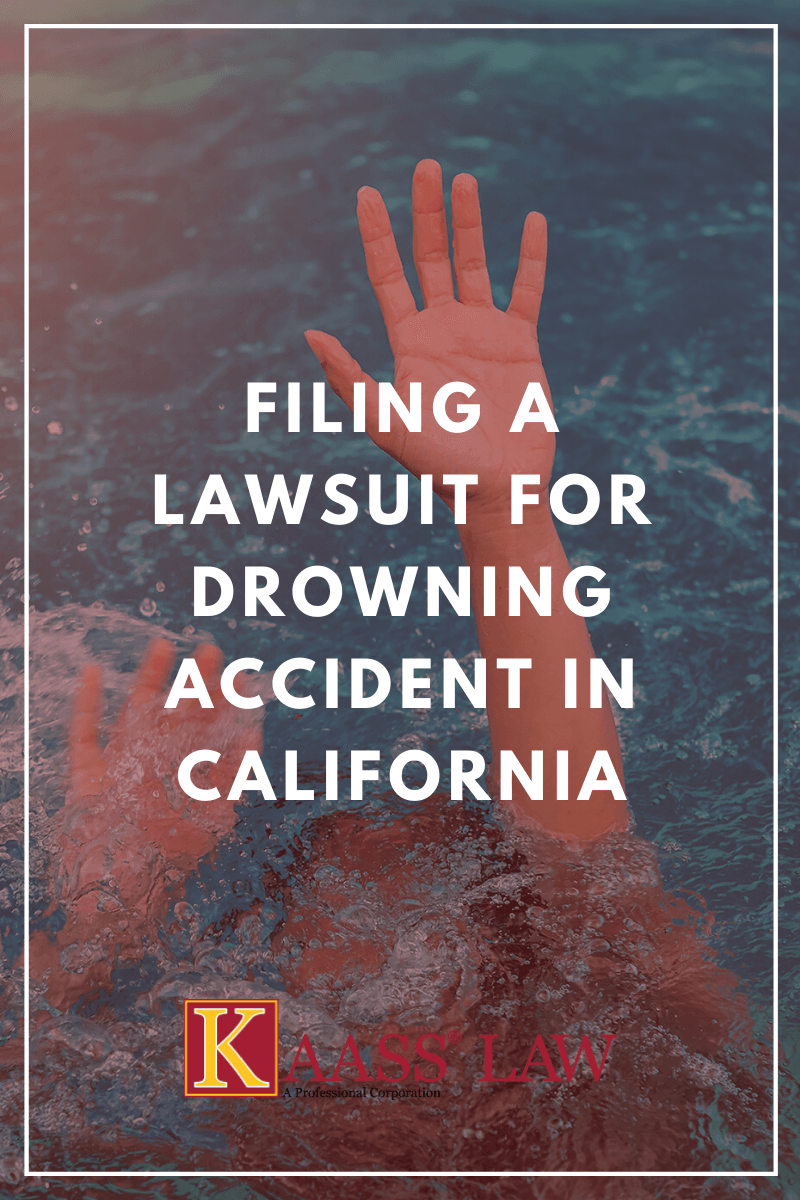
While a swimming pool is one of the best places to enjoy your weekend, it can become a risk for you and also the owner of the pool if an drowning accident happens.
You can file a lawsuit for the drowning accident in case the swimming pool does not comply with the safety requirements of the state or in case the lifeguards were negligent and, as the result of such negligence, the accident happened. The owner of the pool can also be liable in case the lifeguard it hired was not qualified for the performance of job duties.
Upon filing a lawsuit for negligence arising out of a drowning accident in California the Plaintiff is required to prove the following:

California law criminalizes the act of conducting "assault" and defines it as an unlawful attempt of a person to commit a violent injury to someone when there was a high ability to commit this injury. Teachers and other school employees enjoy high protection under state legislation. As such, California Penal Code section 245.5 PC is makes it a crime to assault of a school employee.
Under Penal Code section 245.5 PC the victim is the "school employee". A victim qualifies as a school employee if they are a permanent or probationary employee. This includes both full-time or part-time, including teachers, substitute teachers, and other administrative employees. For example, school bust drivers also fall under "school employees".
To be found guilty under PC 245.5, the prosecution must prove that:
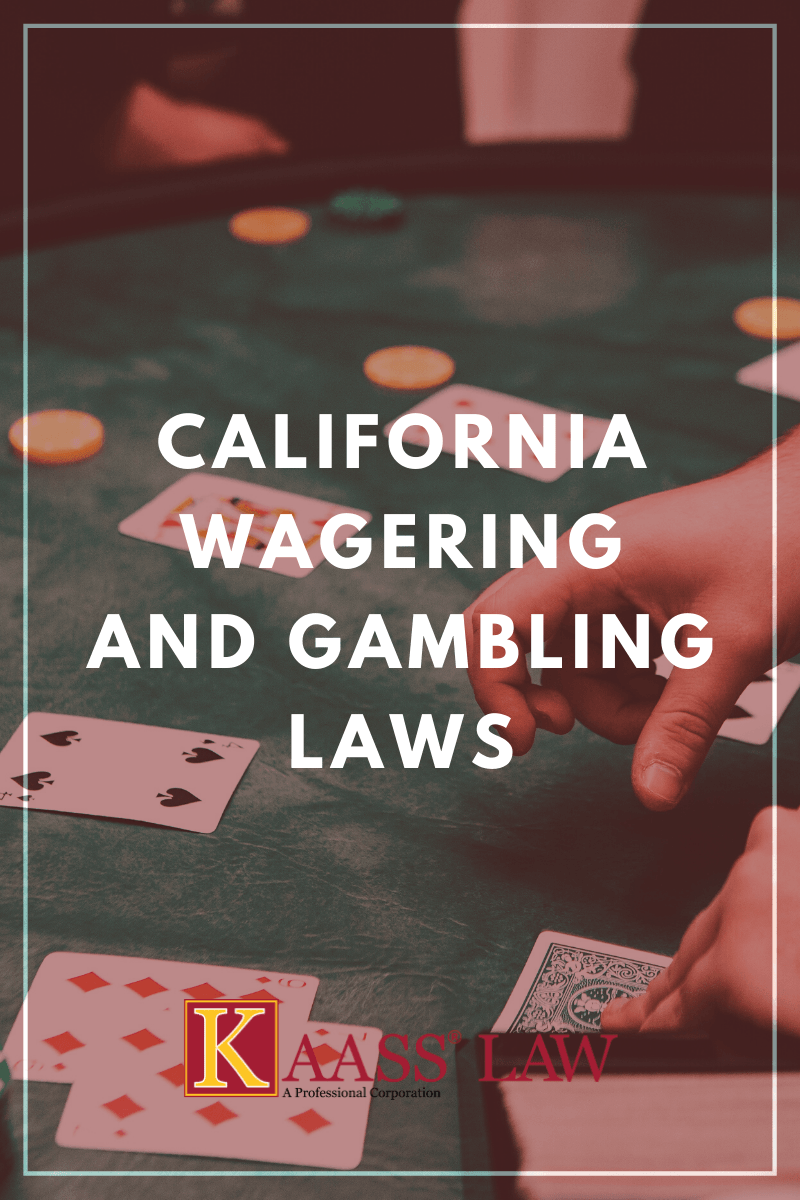
Have you ever heard of card rooms; state-run lotteries? Have you ever wondered whether California considers horse race wagering legal? This article will provide an overview of existing gambling regulations.
Though there is no certain definition for gambling under California State Law, the practice shows that the following elements shall be present to qualify the actions as gambling:
The California State Constitution considers gambling illegal in California. However, some types of gambling are exceptions to the general rule. Particularly, California law permits:
The main legislative act regulating gambling in California is called Gambling Control Act. This act sets out the relevant licensing terms for the entities, which are involved in the gambling market. California Gambling Control Commission issues particular regulations for gaming licenses. Besides, it also issues licenses to owners, supervisors, players, and employees of gambling institutions. It is considered that licenses shall be renewed bi-annually and they may not be assigned or transferred in whole or in part under California Business and Profession Code. This means that a separate application for receiving a license must be submitted for there to be a change in corporate control of the licensed entity. California allows tribal casinos, and the state and the tribe negotiate their regulations. The regulations will cover revenue sharing details, licensing terms, and other related matters.
The following medical conditions can be a reason to suspend your driving license:
The DMV also considers the medications elderly people use to treat illnesses, as their side effects can cause drowsiness and dizziness, impairing driving.
The common sources which DMV has to assess driving conditions of the elderly person can be:
In the event there are threatening physical or mental conditions, the DMV can ask you to submit a DMV driver medical evaluation regarding your medical history with your doctor. Another option is to ask for re-examination (including a driving performance test).
Pursuant to California Vehicle Code 14100, you can challenge the revocation at DMV administrative hearings. The period for such a request is 10 days after receiving the notice of revocation. If the hearing result is unsatisfactory and the license does not renew, the next step involves the department reviewing the case. The period for submitting for this review is 15 days after receiving the decision. In any case, you have the right to challenge the decision in court if neither the 14100 hearing nor the department review gives any result. The period is:
There are a number of steps older drivers can take to keep their license. First and foremost:
This will allow you to monitor your health and identify potential problems early. Older drivers are also advised to have their vision checked in a timely manner. Be sure to wear corrective lenses if necessary. In addition, it is important to avoid taking medications while driving that cause:
To successfully pass a DMV recertification, a driver should prepare in advance. You can take additional training at a driving school or take a few lessons with an instructor. It's also a good idea to study the current rules of the road and take practice tests.
In some cases, the DMV may impose restricted driving conditions instead of suspending a driver's license altogether. For example, a driver may only be allowed to drive during daylight hours. Such restrictions allow you to maintain your mobility while minimizing the risk to public safety. Contact KAASS LAW for advice and representation.
Experienced and professional legal assistance can help you to challenge the DMV decisions and renew your license-restoring your right of driving. We invite you to contact KAASS LAW at (310) 943-1171 for a free consultation on your case and further assistance.
Under California law defamation is "per se" is statements that are damaging on its face without the need of further explanations. An example of defamation per se includes for instance a false accusation that someone committed a crime or is unfit to practice in their particular profession. In case defamation is "per quod", the victim shall prove that the spread of a false statement causes damages. Examples of such damages can include lost profits, employment, negative consequences, a decrease of customers for a business, etc.
Under California law, public disclosure of private facts is a form of invasion of privacy. To get compensation for damages, the plaintiff must prove the following:
An example of public disclosure of private facts include publishing statements of your best friend's diagnosis or some intimate content to public media without his/her consent. The court decides the existence of a "private act" on a case-by-case basis, based on what an ordinary person considers private and offensive if disclosed. Physical persons have the right to sue for such kind of harm in one year from the date of disclosure.
Business disparagement refers to:
For example, a supermarket publishes information in a public newspaper that its competitor’s products do not comply with the applicable governmental standards.
A corporation has 2 years to file an action for compensation of disparagement after the statements' publishing and dissemination. The plaintiff shall prove the existence of the following elements to seek compensation of damages:
The dissemination of such statements can be conducted both orally and in writing. You can prove the loss of income in business disparagement by showing invoices, tax returns, and bank account statements of the company. For harm to reputation victims mostly recover such damages as:
California law provides victims of defamation not only the right to recover damages, but also other remedies. In addition to economic damages, plaintiffs may seek compensation for emotional distress. This includes:
In some cases, punitive damages may be awarded. These are awarded to punish the guilty party and to deter similar actions in the future. However, in order for the court to grant such a claim, the plaintiff must prove malice on the part of the defendant. In addition to monetary damages, the court may award injunctive relief. This means that the defendant must stop spreading false information. It is important to note that defamation is especially important in the digital media age. Lies posted on the Internet can spread quickly and cause significant damage. Therefore, if such publications are identified, it is important to contact a qualified attorney immediately.
If your or a loved one's believe that you have suffered defamation by a third party we invite you to contact our Los Angeles Personal Injury attorneys at KAASS LAW (310) 943-1171 for a free consultation.
As discussed above, if it is believed that the case of an accident arose out of a defective tire, the liable party of said accident may include:
Generally, to prove that the defect of a tire was the reason for the accident, an qualified expert would testify in the form of expert testimony. Common examples that the expert would need to testify to includes:
You shall also prove that you used the tire in a foreseeable manner and the defects occurred before your use of the vehicle. Expert's opinion shall also assist you with this evidence.
Family members are entitled to file such lawsuits and receive compensation. The family members having such rights are:
Other common losses
Compensation in a defective tire lawsuit can include the following:
The defendant can bring different arguments supporting his position, such as that the tires were affected not by his fault but by your negligent use. For this reason, it is essential to receive professional assistance and consult an experienced attorney.
If you or a loved one has been in a defective tire accident, contact our Los Angeles Personal Injury attorney at (310) 943-1171 for a free consultation and case review. Our attorneys will evaluate the details of your case and let you know what to expect and how you can proceed.
You can seek compensation for the following damages caused to you as the result of a DUI accident:
To receive the compensation, you shall prove that you suffered from the mentioned damages and shall show the direct link between the negligence of the driver and your damages.
Most insurance policies cover compensatory damages if the policyholder injures someone while driving under the influence. In case the driver does not have insurance or the aggregate policy doesn't cover the damages, you shall sue the driver directly to receive compensation.
If you or a loved one has been in an accident with a DUI driver, contact KAASS LAW at (310) 943-1171 for a free consultation. Our attorneys will evaluate the details of your case and let you know what to expect and how you can proceed.
Medical expenses after a car accident can include a wide range of services. For example, they may include not only the initial hospitalization, but also subsequent recovery:
In the case of serious injuries, there may also be long-term costs, including:
In a personal injury case, it is possible to seek compensation for anticipated future medical needs. To do this, you will need to provide a doctor's opinion as to the length and cost of treatment. For example, if the injured person will need surgery six months after the accident, his or her attorney can include that amount in the claim.
In such a case, the injured person has the right to file a civil lawsuit against the driver or other responsible parties personally. Alternatively, you can use your underinsured motorist coverage, if available. However, this can be difficult in practice if the defendant does not have enough assets to cover the claim.
The statute of limitations in California personal injury cases is two years from the date of the accident. If you miss this deadline, you may lose your right to compensation. It is important to start the process early in order to preserve all evidence and file a timely claim.
Insurance companies have subrogation rights for a personal injury claim. Subrogation right means that your insurance company can recover your medical expenses from the party who was liable for the injuries. Your insurer shall also have the right to sue the liable party on your behalf.
Claiming compensation for medical expenses is not an easy process. You still need a professional attorney to assist you with evaluations of your case, negotiations for a larger settlement. Professional legal assistance is crucial if you seek compensation for pre-existing injuries that worsened as a result of the accident.
The attorneys at KAASS LAW have extensive experience handling auto accident and medical expense cases. We can help you accurately calculate all of your costs and properly file a claim for compensation. Call us at (310) 943-1171 to schedule a free consultation and start protecting your rights.
Shareholders may dissolve their corporation for a variety of reasons. In this regard, they are not accountable to anyone else. Shareholders holding shares representing 50% or more of the voting power should vote to wind up and dissolve the corporation, unless the articles of incorporation prescribe a higher threshold. Whereas, the board of directors may approve to wind up and dissolve a corporation which comes within one of the following descriptions:
Once the resolution on a voluntary dissolution is in place, the corporation steps into the stage known as “winding up”. This aims to finalize the debt-clearance process. It assumes paying outstanding debts and discharging pending liabilities. Afterwards, the corporation resolves the issue of distributing the remaining assets to the shareholders entitled thereto.
The corporation must notify its creditors about the commencement of dissolution, allowing them to submit their claims. Such notification shall include all the relevant information necessary for sending claims, for instance the mailing address, the deadlines for submission etc.
Further, you need to file a certificate of dissolution with the Secretary of State (SOS). The certificate of dissolution shall include the following information:
The official website of SOS provides the form of the certificate. You must submit the certificate via email or in person. Thereupon the corporate powers, rights, and privileges of the corporation ceases. The Secretary of State notifies the Franchise Tax Board of the dissolution.
However, in addition to the above actions, the corporation must consider a number of additional legal obligations. For example, the corporation must file a final tax return with the California Franchise Tax Board. Also, all applicable taxes must be paid before or at the time the Certificate of Dissolution is filed. In addition, if the corporation had employees, all requirements under the California Labor Code must be met. These include:
Failure to meet these obligations can result in civil liability and penalties. In addition, if the company holds any licenses or permits, they must be formally revoked or transferred. This is especially important for businesses in regulated industries. Such as:
Corporations are advised to retain accounting and corporate records for at least three years after liquidation. This may be necessary in the event of an IRS audit or creditor lawsuit. Contact KAASS LAW for legal assistance in all stages of liquidation.
If you need to initiate and finalize the process of a voluntary dissolution of your corporation, we invite you to contact an attorney at KAASS LAW at (310) 943-1171 and speak to our Glendale business attorney to assist with the process.
Family members can file a lawsuit, such as:
The above-mentioned family members can sue if the accident does not kill the victim but leaves him unable to protect his rights.
While filing the lawsuit, you can seek compensation of:
In case you file a lawsuit for the wrongful death of a family member, you can seek compensation of:
In case you had a drowning accident, try to gather evidence, as:
In California, pool owners are required by law to keep their facilities safe. This means installing:
And other items required by law. For example, the California Swimming Pool Safety Act requires residential properties with swimming pools to install safety barriers. Failure to do so can make the owner liable for damages. Especially if the victim is a child. Failure to comply with safety standards may be considered a failure to exercise due care. This opens up the possibility of a lawsuit.
In legal terms, negligence means that the defendant failed to exercise reasonable care under the circumstances. In a drowning case, this could mean that:
Even if the victim was on private property without permission, the owner can be held liable. But only if it is proven that he or she knew of the danger and failed to take appropriate action.
If the drowning occurred at a municipal pool or on property managed by a government entity, special procedures may apply. In California, to file a lawsuit against a public entity, you must first file a government claim. Within six months of the accident. Failure to meet this deadline may result in the loss of your right to sue.
Even in case you signed a waiver for liabilities, or the defendant argued that there is the "assumption of risk"-an inherent risk present while swimming, you can still expect to receive compensation if you have an experienced attorney. We invite you to contact KAASS LAW firm at (310) 943-1171 for a free consultation and case review by a Glendale personal injury attorney.
To be charged and convicted under this offense, the school employee must be performing their employment duties at the time of the offense. Thus, if the assault occurs in the evening while the teacher is walking in the park with his dog, the defendant cannot face charges under Penal Code section 245.5.
Penal Code 245.5 PC makes it a crime to assault a school employee with a deadly weapon, a firearm, or a stun gun or taser or by any other means likely to produce great bodily injury upon the person of a school employee. Penal Code 245.5 PC can result in either a misdemeanor or a felony charge.
Penalties for a 245.5 PC conviction vary based on the type of weapon used during the assault.
If the defendant used a deadly weapon, other than a firearm, the penalties include imprisonment in the state prison for 3, 4 or a maximum of 5 years of imprisonment in jail for up to one year.
If the defendant used a firearm while conducting the assault, the penalties include imprisonment in state prison for 4,6 or 8 years of imprisonment in jail for up to one year.
In the event the defendant used a stun gun or a taser, the penalties include imprisonment in state prison for 2, 3, or 4 years of imprisonment in a country jail for up to one year.
Defendants charged under section 245.5 may have several defenses. One such defense is lack of intent. If the defendant:
The defense can argue that the assault was not intentional. In addition, the defense of necessity may be used. If the defendant acted in response to an immediate threat to his or her health or life.
If the defendant accused of assaulting a school employee pleads guilty, or if there are mitigating circumstances, the defense may request a reduced sentence. This may include suggestions for alternative action. Such as:
It is important to note that the court's decision will largely depend on:
Punishment for the crime of assaulting a school employee can have a significant impact on the defendant's career. Especially if he or she works in education. A charge under Section 245.5 may result in:
And other professional consequences that may limit future employment opportunities.
It is important to contact an experienced attorney who specializes in criminal cases. A defense attorney will be able to:
If you or a loved one is facing charges under California Penal Code Section 245.5, do not delay in consulting with a qualified attorney.
It is essential to consult with a Los Angeles criminal defense attorney to try to mitigate the punishment for the commitment of the assault. We invite you to contact our criminal defense attorney today at (310) 943-1171 for a free consultation and case review.
Horse wagering, including pari-mutuel wagering, falls under California Horse Racing Law and the California Business and Professions Code. The Californian Lottery runs the only authorized lottery in the state of California.
Under Penal Code 330 PC it is a misdemeanor offense to:
The minimum age to gamble in California is 18 years, though some casinos have a minimum age of entry which is 21 years.
California does not separately regulate online gambling. Thus, there is no special licensing regime for online gambling.
Businesses and individuals engaged in gambling activities in California are subject to strict state regulation. The California Gambling Control Commission has the authority to impose administrative sanctions for violations of the Gambling Control Act. Such sanctions include:
Liability applies to both licensees and employees of gambling establishments. Individuals involved in illegal gambling activities may also be subject to criminal penalties. Under California Penal Code Section 330 PC, it is a misdemeanor to:
This offense is classified as a misdemeanor and may result in a fine, arrest, or other sanction as determined by the court.
It is also important to note that third parties, including landlords who provide the premises, can be held liable. The California Business and Professions Code considers advertising illegal gambling a misdemeanor. While advertising for legal gambling activities is not prohibited, it must comply with general advertising requirements. These include a prohibition against misleading information. Authorities may impose fines and take civil action if parties fail to meet these standards.
The California Gambling Control Commission, Horse Racing Board, and Lottery Commission have not issued separate acts regarding gambling advertisements. Thus, the California Business and Professions Code regulates gambling advertisements under its general advertising regime. If you or a loved one would like more information on California wagering and gambling laws we invite you to contact KAASS LAW (310) 943-1171 today. The sooner you come forward, the better chance you have of successfully resolving your case.