

Running a business comes with countless responsibilities, and dealing with unexpected property damage is one of the most challenging. Fire, vandalism, water damage, and natural disasters can severely impact business operations, leading to financial loss. In these situations, having a reliable business property damage attorney is crucial. KAASS LAW, based in Los Angeles, has extensive experience in handling property damage claims. Our legal team works with business owners to navigate the complex insurance claim process and ensures they receive the compensation they deserve. We successfully negotiated and recovered $130,000 for a local business's property damage claim. This outcome shows our expertise in securing favorable settlements. Our clients can expect personalized attention and tailored legal solutions to protect their interests. This guide will show how our attorneys can assist you in safeguarding your business after property damage and guide you through dealing with insurance companies.
Time is crucial when dealing with property damage. You must juggle documenting the damages, communicating with adjusters, and resuming business operations. KAASS LAW's attorneys understand these challenges and the specific local regulations that affect property damage claims in Los Angeles and Glendale. We focus on offering high-quality legal services to every client. Our aim is to maximize your recovery so you can get your business back to full strength.
Our experience means we know the common tactics used by insurance companies to minimize payouts. We thoroughly understand insurance policy language, which allows us to fight for your rights.
Business property insurance is a crucial part of any company’s risk management plan. It covers your business's physical assets, including the building, equipment, inventory, and furnishings. When your property suffers damage, insurance should help cover repairs or replacements. Unfortunately, insurance companies sometimes undervalue or deny claims, making it difficult for business owners to get what they need. An experienced property damage attorney can make a big difference. At KAASS LAW, we know the tactics insurance companies use. We understand the language in business insurance policies and fight to get you the benefits you deserve.
Insurance claims can be full of loopholes and technicalities. Our attorneys know how to identify and counter these tactics, ensuring your claims are handled fairly. We are on your side.
Property damage can happen in many ways, and each type of damage requires a different approach. Here are the most common types of business property damage claims we handle:
Fire damage is among the most devastating for businesses. Even if the building remains intact, smoke can destroy inventory, equipment, and documents. Fires often lead to long business interruptions. Recovering your losses fully requires proper legal assistance.
Water damage occurs due to natural disasters, plumbing failures, or leaks. It can harm the building, electronics, inventory, and documents. Insurance companies may claim that the damages were pre-existing or preventable. We ensure that your claim is handled fairly.
Vandalism or theft can lead to serious financial loss. Recovering from these acts is often costly, especially when critical operations are affected. Filing an insurance claim for vandalism or theft requires strong evidence to prove the losses. We assist in compiling the needed proof to get you a fair evaluation.
Natural disasters like earthquakes, floods, and windstorms can cause severe damage. In Los Angeles, earthquakes and wildfires are common risks. Insurance policies can be tricky regarding natural disasters. KAASS LAW attorneys understand these policies and advocate for a fair claim resolution.
Property damage can disrupt normal business operations, causing financial losses. Business interruption insurance aims to cover these losses, but calculating lost income can be difficult. Insurance companies may dispute the amounts. Our attorneys work to calculate the losses and secure fair compensation.
If your business property is damaged, acting quickly is vital. Here’s what you should do:
Contact your insurance company immediately. They must be notified to begin the claims process. Delays in reporting could lead to problems later on.
Take photos and videos of all the damage. Make sure to capture everything, even minor issues. Accurate documentation is essential for filing an insurance claim.
Take steps to prevent further damage. For example, tarp a damaged roof to prevent additional issues. Insurance companies may refuse coverage for preventable subsequent damages.
Before speaking with insurance adjusters or signing paperwork, contact KAASS LAW. We will review your policy, guide you on what to do next, and help protect your rights.
KAASS LAW provides full support to business owners dealing with property damage—from filing the initial claim to final negotiations or litigation. Here’s what we do for you:
Business insurance policies are often complicated, with clauses and exclusions that impact your claim. We help you understand what your policy covers and identify recovery opportunities.
We assist with preparing all documents for the claim, ensuring deadlines are met and evidence is thorough and accurate.
Insurance companies prioritize profit, which often means minimizing payouts. Our attorneys negotiate aggressively for a fair settlement, ensuring you get the financial support to repair your property.
If negotiations do not lead to a satisfactory settlement, we are prepared to take your case to court. Our attorneys will fight for the compensation you deserve.
Recently, KAASS LAW helped a business recover $130,000 for a property damage claim. We are proud of this outcome, as it demonstrates our commitment to getting results for our clients. Although each case is different, our experience gives us an advantage in helping business owners secure the compensation they need.
We understand how stressful property damage is for business owners. Balancing the uncertainty of insurance claims with keeping your business running is difficult. Our lawyers in Glendale, Los Angeles, are experienced and dedicated to providing top-quality legal services. We focus on supporting your business during a crisis and providing legal representation that meets your needs.
If your business has suffered property damage, reach out to KAASS LAW. An experienced attorney will take care of your legal needs and guide you through the claims process. Don’t settle for less than you deserve. Contact KAASS LAW at (310) 943-1171 or email [email protected] for assistance. Let us help you recover and rebuild.

The Ongoing Wildfire Crisis in San Bernardino County The ongoing wildfire crisis in San Bernardino County continues to devastate homes due to the intensity of the brush fire across the Cajon Pass. This destructive blaze has consumed over 30,000 acres, forcing more than 80,000 residents to evacuate. At Kaass Law, our experienced attorneys support and assist homeowners in navigating their fire insurance claims effectively.
Homeowners in California, particularly in high-risk areas like San Bernardino County, must understand their rights and options regarding insurance coverage for fire damages. If the Cajon Pass fire has affected you, you may qualify for compensation through your homeowner's insurance policy. Coverage might include damages caused by the fire and the impact of smoke, soot, and ash, which can pose long-term health risks if left unaddressed.
Residents in fire-prone areas must maintain sufficient insurance coverage for wildfires. Reviewing your policy regularly ensures that it stays up-to-date and adequate to protect against potential fire-related damages and health risks from pollutants.

Did you know you can become a permanent United States resident by investing money into a US business?
If you are interested in becoming a US permanent resident via EB-5, below are a few things you should now about EB-5 investment program:
The immigrant investor must invest or be actively in the process of investing $1.000.000.
The qualifying amount of investment is $500.000 for targeted employment areas which are rural areas and areas with high unemployment rate. A mere intent to invest or prospective investment arrangements without present commitment will not suffice.
The investment must take the form of contribution of capital that has been placed at risk for the purpose of generating income.
The USCIS rules define capital to include cash, cash equivalents, equipment, inventory, other tangible property, and indebtedness secured by assets owned by the investor. The required investment cannot be made in the form of a loan to the company. The foreign investor also has to show that the invested capital was obtained through lawful means.

Business insurance is a agreement between an insurance company and a business and/or business owner.
In the event of a covered loss, a business and or business owner files a claim with their insurance company for any damages, financial losses, and other losses the business has sustained. Depending on your insurance policy limits your business may recover all losses. Thus, your business will only obtain the applicable amount of compensation for the loss(es).
However, many times, adjusters may give business owners the round around and offer to pay a compensation amount below actual damages sustained. For example, say your business property damage has policy limits of $50,000.00, but your business actually incurred $100,000.00 in damages, you may be out of luck.
When a loss occurs, the business will usually file a claim with their insurance company and an adjuster will open up a claim. Let's assume for example, that a faulty pipe burst causing water damage and destroys a portion of your business’ premises, your insurance company will repay you for the damages incurred as well as aiding in the restoration process.

A left turn collision is when a vehicle turning left at an intersection is involved in a collision with another vehicle on the opposite side of the road that is going straight through the intersection.
Under the reasonable person standard, the driver turning left is usually at fault for the accident. This is because a vehicle turning left turning must wait until it is safe to turn.
However, the driver going straight through the intersection may be partially at fault if s/he was speeding or ran a red light. This may also reduce recovery, but not completely. Usually, speeding makes it difficult for the ‘left turning’ driver to judge when it is safe to turn. More commonly, when the light turns red, most drivers will assume it is safe to proceed in making a left turn. This is not the case if a driver runs a red light. However, many times even in these instances, the driver determined “mostly at fault”, is usually the driver turning left.
Under the reasonable person standard, a driver that rear-ended another will almost always be found at fault. One of the main factors insurance adjusters consider during rear end collisions is vehicles must maintain a safe distance behind the cars in front of them at all times. However, if you were breaking and one or more of your brake or tail light bulbs were out or broken, fault can be split between drivers. For instance an adjuster may find the drivers partially at fault or 50/50. If an driver can prove that due to the broken tail light, the driver did not have enough time to respond or had a difficult time stopping. In this situation the amount of money you can recover will be reduced, however, you will probably still be able to get something.
If you are an officer, president, or owner of California corporations and have been served with legal papers for a lawsuit or pending legal proceedings, it is crucial to hire a business lawyer to represent you in court. This is not just a recommendation—it’s the law. According to Paradise v. Nowlin (1948) 86 C.A.2d 897 and Code of Civil Procedure § 116.540(b), California law prohibits anyone other than a licensed California attorney from representing a corporation or LLC in court proceedings, except in small claims cases.
California law treats corporations as separate legal entities from their owners, officers, and directors. This means that even if you are the CEO of a corporation, you cannot represent the corporation in court unless you are a licensed attorney in California. Courts recognize corporations as distinct "persons" under the law and require them to have representation by a licensed professional. Attempting to represent your corporation without an attorney risks case dismissal or sanctions.
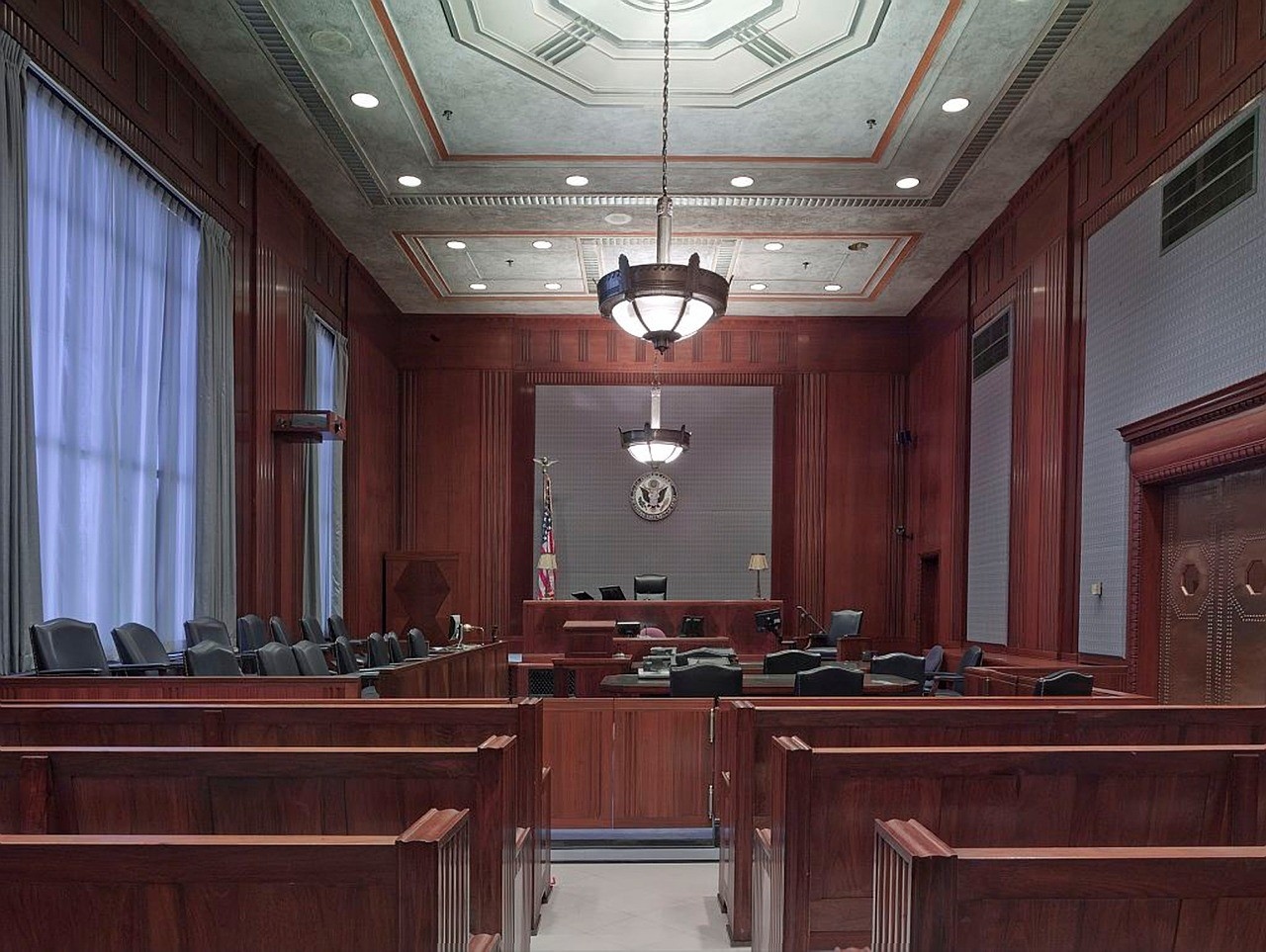
On August 27, 2015 KAASS LAW filed docket number D.C. No. 2:12-cv-08356-RGK-JC with the United States Court of Appeals for the Ninth Circuit and challenged the district court's decision in granting Wells Fargo's motion for sanctions under 28 U.S.C. 1927.
This issue was raised for the first time in history on appeal by KAASS LAW. On appeal KAASS LAW made two principal arguments, however before hearing the second argument, the panel held that § 1927 does not permit the imposition of sanctions against a law firm. The 9th Circuit Court reversed and vacated the district court's order, holding that § 1927 does not permit sanctions against a law firm. Thus, the panel reversed the district court’s decision in granting Well Fargo’s motion for sanctions against KAASS LAW pursuant to 28 U.S.C. § 1927, and vacated the order imposing sanctions on KAASS LAW.

Most people recognize the term Initial Public Offering (IPO), but few truly understand its significance. An IPO occurs when a private company, for the first time, offers shares to investors and issues stock in exchange. At this moment, the company transitions from a private entity to a public one. This change is crucial for companies looking to raise capital for growth, pay off debt, or make strategic acquisitions. The IPO process involves several complex steps. Companies usually engage an investment bank to handle the underwriting process, which includes assessing the company’s value, determining the optimal price per share, and creating the means to offer these shares to the public. An IPO allows companies to tap into a broader pool of investors, enabling them to raise substantial capital to fuel operations and expansion plans.
Most startups aspire to go public, but several hurdles must be cleared before they are ready for an IPO. First and foremost, the company must prove that it operates smoothly, remains financially stable, and generates profits. Investors require assurance that the company has a , a strong management team, and a clear growth strategy. To prepare for an IPO, companies often undergo a thorough internal audit and restructuring to enhance their appeal to potential investors. This preparation may include improving corporate governance, optimizing financial reporting systems, and establishing a strong marketing strategy to effectively communicate the company’s value proposition.

Whether you are a foreign citizen willing to work in the US or an US employer that wants to hire a foreign employee, below are a number of questions our business startup attorneys encounter regarding H-1B visa:
H-1B visa allows US employers to hire foreign employees on a temporary basis. Please keep in mind that H-1B visa is a non-immigrant visa and does not bring to Green Card unless the employer files separate employment based petition for the employee during his H-1B stay.
The H-1B category is limited to workers coming to US to perform services in a specialty occupation. A specialty occupation is an occupation that requires attainment of a bachelor’s or higher degree in the specific specialty as a minimum requirement for entry into the occupation in US.

There are a few steps a trademark owner can take once discovered a competitor or a competitor offering similar goods or services uses a mark, such as a company logo, that is substantially similar to your trademark or service mark.
Trademark infringement is the unauthorized use of a trademark or service mark. A mark that is substantially similar to your trademark may also be considered a trademark infringement. A trademark owner who believes its trade market or service mark is being infringed may file a civil action for trademark infringement. Generally, a trademark owner must present evidence that the similarities of the trademark or service mark can cause a likelihood of confusion to the average consumer. Specific factors are considered and weighted when courts determine the likelihood of confusion thus each trademark infringement action varies from case to case.
What Does Your Insurance Policy Cover? Many homeowners ask, "What does my insurance cover if there is a wildfire?" Coverage depends on your policy, but most homeowner insurance policies include:
Extreme heat or smoke can compromise your property even if there is no visible damage. A professional inspection after a wildfire is crucial. Smoke and ash can penetrate surfaces, leaving residues invisible to the naked eye but potentially harmful over time. Qualified inspectors can determine the extent of damage and recommend effective remediation techniques.
Insurance companies often send their vendors to assess fire damage, determine the cause, and decide on repairs. This inspection is critical to initiating your claim. If the inspection is inadequate or you disagree with its findings, consulting an attorney may be wise. At Kaass Law, we connect homeowners with experts who evaluate damage thoroughly, identify the true cause, and provide accurate repair estimates. This helps you recover the full compensation entitled under your policy.
Your homeowner’s policy likely includes coverage for your personal belongings. It is essential to maintain an inventory of your possessions, using photos, receipts, or videos. Keeping a record offsite or in cloud storage ensures you don't lose documentation if your home is damaged. Updating your insurance company on major purchases helps maintain an accurate reflection of the value of your belongings.
If a wildfire forces you out of your home, you might wonder, "Will my insurance cover temporary living costs?" Fortunately, most policies cover "Additional Living Expenses" (ALE). ALE coverage includes costs like rent for temporary housing, meal expenses, and storage fees while your home is under repair.
To ensure fair compensation after a wildfire, follow these steps:
At Kaass Law, we help property owners understand their insurance coverage and claim fair compensation after wildfire damage. We guide you through the process of filing and managing fire insurance claims, ensuring your rights remain protected. Contact Us Today If you need help navigating an insurance claim after the Cajon Pass fire, contact Kaass Law today. We assist residents of San Bernardino County in getting the support they need during these challenging times. Contact Information: Please call our office at (844) 522-7752 or at [email protected]. Let our experienced team help you receive the justice and compensation you deserve.
The qualifying investment must be in a new commercial enterprise.
An enterprise established after November 29, 1990 is considered a new enterprise even if the investor did not participate in its establishment. When a person makes investment in a business established on or before November 29, 1990 the investment will qualify for E-B5 purposes if the investor establishes one of the following: (1) the investment will result in a substantial change in the business; or (2) the business will be restructured or reorganized.
The investor must be engaged in the management of the company where he invests.
This can be done either through managerial control or through policy formulation. This requirement can be satisfied by becoming a corporate officer or being a member of the board of directors. Maintaining a purely passive role towards the investment cannot satisfy the requirement of USCIS rules.
The enterprise must benefit the US economy by creating full-time jobs for at least 10 qualifying employees.
There is an exception to this rule for troubled businesses where the investment does not have to create 10 new jobs but the investor has to show that the number of existing employees is or will be maintained at no less than the pre-investment level for at least two years.
There is an annual limit of 10000 E-B5 visas per year. Until now the annual E-B5 cap has never been reached.
The investor is initially granted conditional residence for two years.
Prior to the expiration of two years the investor must file a petition requesting removal of the conditional basis of the residence. The investor must show that he still meets the conditions for participation in the program.
Do you need help deciding on what steps to take next? A Glendale immigration lawyer at KAASS LAW can help you out with any sort of legal assistance you require.
It’s important to remember, however, your insurance policy may only cover the type of coverage included in your insurance policy. If your business has inured loss or damages and you are unsure if you have coverage, call our office and schedule a consultation with one of our business insurance attorneys.
Business insurance includes a broad range of policy options designed to protect a business from financial loss. Each commercial operation faces unique risks, requiring the tailoring of a commercial insurance policy to fit the business. Many factors, from the size of your company, to the number of workers you employ, the materials they handle and whether you have business vehicles, will determine the specific coverage you need to mitigate risk and protect your company’s financials. A business lawyer at KAASS LAW can provide you with the specific legal assistance that you may need.
Business insurance includes a comprehensive range of policy options intended to defend and protect a business from various financial and property damage losses. In order to alleviate risks and safeguard your businesses livelihood it is vital to weigh out the types of coverage and policy limits your business needs.
Business operations vary, and each one faces its own unique set of risks. Therefore, you must specifically tailor commercial insurance policies to your business operations.
Business insurance policy may include coverage such as, general liability insurance, which covers injuries sustained by third parties for reasons such as, negligent maintenance, slip and fall accidents, various premises liability accidents, and other personal injury claims. For instance if a patron or consumer was injured due to liquid substance, a claim with you may file a claim with your general liability insurance.
Property insurance coverage protects your business’ property in the event your business sustained loss and damages arising out of water damage, fire, flood, storms, faulty pipes that caused a burst, or vandalism due to a break-in.
Loss of income coverage protects your business and business owners in the event that your business was non-cooperation during times of cleanup & restoration. For instance, your business sustained water damage due to a faulty pipe that burst and you were unable to operate while damages were being repaired. Loss of income may be able to cover the losses you incurred during the clean up and restoration costs.
Business lawyers at KAASS LAW can provide you with any sort of legal assistance required with insurance companies.
Insurance companies will often classify a rear-end collision as a low impact accident and will attempt to argue that the due to the impact bodily injury damages are minimal, thus offering low ball offers, even if medical reports prove otherwise. However, a typically injury one may sustain from a rear-end collision is whiplash or an neck injury, which may sometimes cause serious soft tissue damage. Some soft tissue damage includes, muscle tissue, ligaments and tendons. These types of damages frequently results in pain, swelling, tightness, bruising, or inflammation. However, these injuries are not always immediately apparent. Thus, injured parties may be offered a low settlement amount. Don't be that guy. Contact our office and receive free no obligation consultation with our Glendale personal injury attorneys specializing in auto accidents.
Address: 701 North Brand Blvd. Suite 100 Glendale, CA 91203 Phone: (310) 943-1171 Email: [email protected]
Failing to hire an attorney to represent your corporation in court can lead to serious legal and financial consequences. Improperly appearing in court on behalf of your corporation without legal representation can delay or dismiss your case, or result in a default judgment for the other party. A default judgment means the opposing party could win the case without the court ever hearing your defense, leaving your corporation liable for damages, penalties, or other legal consequences. In addition to court-imposed penalties, failing to secure representation can result in missed opportunities to negotiate or settle disputes out of court. Experienced business lawyers often possess the strategic insight and negotiation skills to shorten the legal process or even prevent cases from going to trial. This could save your corporation significant time, money, and reputational harm.
A qualified business attorney guides you through complex court procedures, ensures you meet all deadlines, and protects your corporation's rights. Once served with a summons and complaint, your corporation typically has 30 days to file an answer with the court. Missing this deadline can result in a default judgment, leaving your corporation with no legal recourse. Moreover, business lawyers evaluate the strengths and weaknesses of your case and develop strategies tailored to your specific situation. Whether it's negotiating settlements, filing motions to dismiss, or representing your corporation in a full trial, having an experienced legal team by your side is invaluable. In many cases, having a business defense attorney involved early can lead to quicker, more favorable outcomes. Some attorneys may be able to negotiate settlements that avoid lengthy court proceedings altogether. Even if litigation is inevitable, a skilled attorney can work to expedite the process. Thus, reduce costs, and minimize the impact on your business.
One of the common concerns for corporations facing lawsuits is the cost of hiring an attorney. However, business defense doesn’t have to break the bank. Many law firms, including ours, offer various fee structures to accommodate the financial constraints of small and medium-sized businesses. These fee arrangements can include flat fees, hybrid fee agreements, traditional hourly rates, discounted fees, and capped fees. At KAASS LAW, we understand that the legal system can be both intimidating and costly. That’s why we strive to provide affordable and transparent legal services that fit your needs. Our goal is to offer high-quality legal representation while ensuring that our clients feel comfortable with the financial aspect of hiring an attorney.
Our attorneys are licensed to practice law in California. They have years of experience handling business litigation, corporate disputes, and defense cases. Whether your corporation is facing a breach of contract claim or other business-related litigation, our team is prepared to represent your corporation with professionalism and dedication. We have a deep understanding of California corporate law, and we take pride in defending businesses across various industries.
If your California corporation is facing a lawsuit, don’t wait to get legal help. Schedule a consultation with one of our experienced business law attorneys today. Remember, your corporation’s legal interests matter, and with KAASS LAW, you’re in capable hands. Contact us today to learn more about how we can help your business.
Our attorneys at KAASS LAW are authorized to practice law in California.
KAASS LAW argued the district court abused its discretion by imposing sanctions pursuant to 28 U.S.C. § 1927 because sanctions under that statute can only be made against an individual attorney, and not against a law firm.
KAASS LAW's second argument opposed the district court’s finding of bad faith. However, the 9th Circuit agreed with KAASS LAW’s first argument that the district court abused its discretion when it imposed sanctions against a law firm pursuant to 28 U.S.C. § 1927. Thus, the court did not reach the second argument.
KAASS LAW is authorized to practice law in California. The above content is intended for California residents only. This content provides only general information which may or may not reflect current legal developments. KAASS LAW expressly disclaims all liability in respect to actions taken or not taken based on any of the contents of this website. The above content DOES NOT create an attorney-client relationship. KAASS LAW does not represent you unless you have expressly retained KAASS LAW in person at the KAASS LAW office.
KAASS LAW helps clients in: Los Angeles, Burbank, Hollywood, Glendale, Van Nuys, North Hollywood, Studio City, Highland Park, Eagle Rock, Sunland, Tujunga, Sylmar, San Bernardino, La Crescenta, La Canada, Beverly Hills, Westwood, Santa Monica, Brentwood. Pacoima, Montebello, Commerce, Alhambra, Downey, Bell, Maywood, Walnut Park, Vernon, Lynwood, Echo Park, Silverlake, Mission Hills, Northridge, Woodland Hills, Encino, Canoga Park, North Hills, Porter Ranch, Chatsworth, Reseda.
Investment banks play a crucial role in the IPO process by providing a range of services:
Does a business need to comply with specific regulations during the IPO process? Absolutely. An IPO is more than a financial transaction; it falls under strict regulations to protect investors and maintain fair and efficient markets. In the United States, the Securities and Exchange Commission (SEC) oversees the IPO process. Companies seeking to go public must adhere to SEC regulations, which include:
Understanding and complying with SEC regulations is vital for businesses considering an IPO. Noncompliance can lead to significant legal and financial consequences, including fines, legal action, and reputational damage. Therefore, companies must grasp the regulations governing their industry and the IPO process thoroughly.
If you are considering an Initial Public Offering, seek professional guidance to navigate this complex process. Consulting with a Los Angeles Business Startup Attorney can provide you with essential insights and expertise. At KAASS LAW, our attorneys understand the various regulations and steps required to achieve your business objectives. Whether you are preparing to go public for the first time or need assistance with compliance issues, we are here to help you maximize your potential for success.
The annual H-1B cap is set at 65,000. There are additional 20,000 spots for foreign citizens with advanced degrees from US universities. However, certain organizations are exempt from the annual cap. Exempt organizations include institutions of higher education or related nonprofit entities, nonprofit research organizations, and governmental research organizations.
The H-1B petition may be approved for an initial maximum three-year period. Petition extensions may be obtained up to additional three years, for a total maximum period of stay of six years. When the employee reaches the limit, he must reside abroad for a period of one year before he can reenter US in the H-1B category.
Employers who are bringing workers in H-1B category must pay the employees the prevailing wage for the specialty occupation in the territory where the employment will take place. For instance, an Los Angeles Startup company is looking to hire a foreign software developer on H-1B visa basis. The company will have to pay the foreign worker the prevailing wage for software developers in Los Angeles. Information about prevailing wages for all the occupations in all the states can be obtained from the Foreign Labor Certification Data Center Online Wage Library.
If your company is seeking to sponsor an employee for an H-1B and is unfamiliar with the H-1B process, give our Business Startup attorneys a call. They will advise you on the requirements, help you decide what job title would be appropriate for the employee, and guide you through the process. Our attorneys specialize in other types of employment law matters as well.
Generally H-1B petitions can be filed up to six months before the intended commencement of employment. For cap purposes, the filing season for a given fiscal year starts on April 1 for employment starting on October 1. The annual cap is usually reached within a few days after April 1, therefore, employers willing to hire H-1B workers must have their H-1B petitions ready by April 1. In order to send the H-1B petition on April 1, employers must plan ahead to fulfill all the procedural requirements and to have all the supporting documents ready.
KAASS LAW Locations: Glendale: 815 East Colorado Street, Suite 220, Glendale, CA 91205 Los Angeles: 633 W 5th St 26th Floor, Los Angeles, CA 90071 San Bernardino: 570 West 4th Street Suite 300, San Bernardino, CA 92401
It is a good idea to speak with a trademark or intellectual property attorney to gain a better understanding of your rights and remedies. A California trademark attorney can help explain the process and evaluate whether or not you have a solid case. If you are unable to hire or consult with an attorney, there are also a few immediate steps you may take if you discovered that there has been a trademark infringement:
Absent of legal representation, you can also write a letter to the company or person requesting to stop the use of trademark activity. A cease and desist letter may cover a number of issues, including but not limited to:
If the infringing third party failed to cease and desist infringing activity, at this point it is recommended that you hire an intellectual property or Los Angeles business lawyer that specializes in trademark infringement in order to take appropriate legal action to protect your proprietary rights. KAASS Law may be able to provide you with legal assistance.