

California Penal Code § 1000 indicates an arrangement commonly known as a pretrial diversion or a deferred entry of judgment, in which a qualifying drug defendant requests to get their case put on hold for a set period of time while the defendant completes a state-approved drug rehabilitation or educational program. Penal Code § 1000 is very important because it enables some defendants to avoid conviction entirely with the deferred entry of judgment, or DEJ for short (this is also referred to as a pretrial diversion).
Whether DEJ applies for any given case will depend on several factors, such as age, previous criminal history, and the crime in question. For instance, DEJ is more restricted for adults, applying only for certain types of drug offenses. On the other hand, for juveniles, deferred entry of judgment usually applies for most first-time felonies.
First, a defendant asks to complete an approved program in any county in California. The court determines the eligibility of the defendant and, once approved, provides the defendant with a set period of time in which to complete the program. California courts have both formal and informal diversion. A list of state-approved programs can be found at the courthouse in which the hearing took place. All of these programs will assess the defendant and must ensure a minimum of 20 hours of drug education or rehabilitation. At the end of the program, an assessment report must be provided to the court, detailing the defendant’s progress and successful completion of the program.
Upon finishing the DEJ program, the court has an obligation to dismiss the drug charges against you. As such, the benefits of completing the program are that:
Throughout your participation in the court-sanctioned program, the court may determine that your efforts or participation are not satisfactory, or that some other issue has come up. Any of these may disqualify your eligibility for the diversion program. Some of these reasons can include:
Basically, a defendant can be removed from the DEJ program if at any point they fail to complete the program satisfactorily or if they get convicted of a felony or a misdemeanor involving violence. In that case, the defendant will get dropped from the program and sentenced per the underlying charge(s).
There are two factors that are responsible for determining your eligibility for a DEJ. The first is the type of drug offense itself and the second is your previous criminal history.
According to California Penal Code § 1000, some drug offenses are eligible for deferred entry of judgment. Most often, these are:
*A ‘controlled substance’ refers most commonly to such drugs as Cocaine, Marijuana, Heroin, Methamphetamines, Ketamine, Ecstasy, Vicodin, Codeine, and GHB.
Your prior criminal history is the other major factor used to determine whether your case is eligible for a DEJ. The conditions are:
You should know that there are some strings attached with the deferred entry of judgment. It does require the defendant to plead guilty, with the condition that the court does not enter judgment. Thus, the final sentencing, or conviction, is never finalized. The case is therefore left in a limbo period, or deferment. During this period, the defendant must then successfully complete the appropriate, state-approved program. The court will look over the details of the case again and if everything was correctly done, the charge against the defendant will be dismissed.
The details surrounding the deferred entry of judgment can get complicated and murky. We can help you to assess if a pretrial diversion or a DEJ is possible given the details of your case. To speak to an Glendale criminal defense attorney, please call our firm at (310) 943-1171 or email us at [email protected].
KAASS LAW is authorized to practice law in California. The above content is intended for California residents only. This content provides only general information which may or may not reflect current legal developments. KAASS LAW expressly disclaims all liability in respect to actions taken or not taken based on any of the contents of this website. The above content DOES NOT create an attorney-client relationship. KAASS LAW does not represent you unless you have expressly retained KAASS LAW in person at the KAASS LAW office. KAASS LAW helps clients in: Los Angeles, Burbank, Hollywood, Glendale, Van Nuys, North Hollywood, Studio City, Highland Park, Eagle Rock, Sunland, Tujunga, Sylmar, San Bernardino, La Crescenta, La Canada, Beverly Hills, Westwood, Santa Monica, Brentwood. Pacoima, Montebello, Commerce, Alhambra, Downey, Bell, Maywood, Walnut Park, Vernon, Lynwood, Echo Park, Silverlake, Mission Hills, Northridge, Woodland Hills, Encino, Canoga Park, North Hills, Porter Ranch, Chatsworth, Reseda.
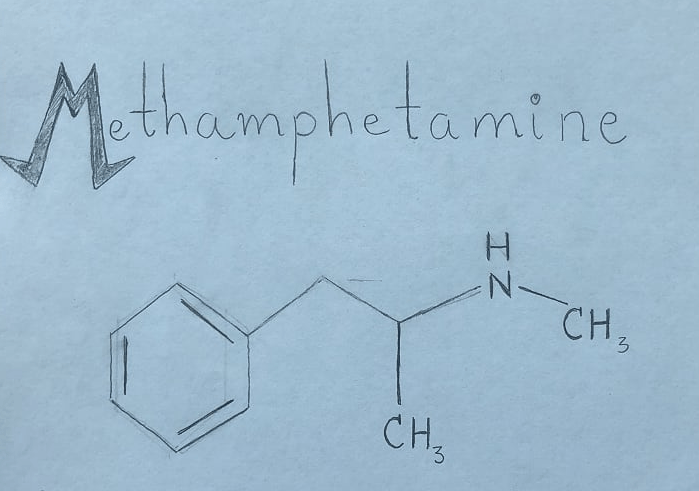
In California, there are many different health and safety codes and statutes in place to protect citizens. Some of these focus on illegal substances, such as methamphetamine, and the consequences one may face for possessing them.
Being accused of possessing meth is a serious crime because it is a controlled substance under the California Uniform Controlled Substances Act. Under California Health and Safety Code Section 11377, the mere possession of meth is considered a misdemeanor, which involves a penalty of up to $1,000 and a year in prison. However, these repercussions can be far more severe, depending on how the drug was found and whether or not the prosecutors determined if there was an intent to sell or distribute the drug. Therefore, it stands to reason that you should be aware of the ways in which a prosecutor can prove meth possession. So...
In order for a prosecutor to convict you of meth possession under Health and Safety Code Section 11377, they must be able to prove or show beyond reasonable doubt that: (1) you had actual possession of the drug in question; (2) you knew the drug was methamphetamine, a controlled substance, and (3) you had possession of usable amounts of the drug, i.e. more than just trace amounts of methamphetamine.

Some common personal injury cases include:
There are two types of damages that are recoverable in California personal injury cases, which include special damages and general damages. Special damages are those damages that are financial in nature, such as hospital and medical bills or lost wages. On the other hand, general damages are those that are non-financial losses, including pain and suffering, loss of consortium, and emotional distress.

California Identity Theft , under Penal Code 530 PC usually occurs when: a defendant unlawfully gained unauthorized access to a computer’s information or someone else’s sensitive personal information and used that information for financial or personal gain. This can be achieved by creating a credit card or opening up an account under someone else’s identity in order to obtain money or items which they are not entitled to.
As discussed above, identity theft under California Penal Code Section 530 occurs when a person unlawfully and intentionally acquires and retains possession of personal identifying information of another person. In other words, identity theft occurs when a person uses your personal identifying information without permission to commit fraud or other theft related crimes. Identity theft crimes can include obtaining a consumers:

If one cannot duplicate a phone number or street address, then why should one have the power to duplicate a domain name? Domain names, similar to words and symbols, can be used to identify a seller’s products and distinguish them from the products of another, and are thus viewed as trademarks. The Ninth Circuit U.S. Court of Appeals recently ruled that a business must use its domain name to sell goods or services in order to protect the name — even if a competitor starts to use the name after you registered the domain. In other words, merely reserving a domain name isn't enough. Thus, its important to register your domain name, because if your domain name has a trademark, the URL has protection under the USPTO.
The Trademark Act of 1946 (“Lanham Act”) prohibits uses of trademarks that are likely to cause confusion about the source of a product or service. 15 U.S.C. §§ 1114, 1125(a). Moreover, to establish a trademark infringement claim under the Lanham Act, a plaintiff must establish that defendant’s use of a mark is confusing similar to plaintiff’s. Id. The main area of inquiry in trademark infringement cases is whether the similarity of the marks is likely to confuse customers about the source of a product or service. ., 174 F.3d 1036, 1062 (1999).

Judgement or settlement which exceeds policy limits after denying a settlement offer within policy limits and the excess settlement rule. California Court of Appeals ruled that primary insurance companies are responsible for paying all losses in excess of policy limits after denying a within-limits settlement offer, regardless of whether the excess loss arises out of a verdict, judgment or a settlement.
The Second District California Court of Appeal’s August 5, 2016 opinion in Ace American Ins. Co. v. Fireman’s Fund Ins. Co. found that “where the insured or excess insurer has actually contributed to an excess settlement, [the insured or excess insurer] may allege that the primary insurer’s breach of the duty to accept reasonable settlement offers resulted in damages in the form of the excess settlement.” The lack of a final judgment was immaterial, as there was “no persuasive reason to hold that the [policyholder] or its assignee, [the excess insurance company], must suffer that loss with no remedy simply because the case reached an eventual settlement instead of being litigated through trial.”

The impact a motorcycle accident can have on a rider or passenger often times inflict damage, ranging from a road rash, broken elbows, hairline fracture, brain hemorrhaging, or a crushed pelvic girdle. It is important to treat your injury and to take immediate action to protect both your legal rights and compensation.
There are many types of injuries involving broken bones caused by a motorcycle accident. Its important to remember that there are different classifications of "broken bones", such as the following:

Motorcycles are more likely to get into accidents than any other motor vehicle. According to the Insurance Information Institute, in 2015, there were 88,000 motorcycle accidents injuries. In motorcycle accidents, knowing your options as a passenger on a motorcycle involved in an accident is important. It is critical for the rider of a motorcycle to have proper motorcycle insurance. Most biker clubs have discounts for motorcycle insurance to avoid being denied damages under California Proposition 213.
Under California law, riders of motorcycles must have insurance with liability coverage. This means that the passengers in a motorcycle accident would have coverage for property damage and bodily injury caused by the rider. This coverage does not cover the damages of the rider unless it has comprehensive coverage, usually coverage for property damages only. Thus, if a rider is at-fault and has liability and comprehensive insurance coverage, then the rider's insurance will cover passengers' personal injuries and rider's property damages only. Coverage. This coverage applies when the rider is not-at-fault and the at-fault opposing driver's coverage is nonexistent or insufficient. In this scenario, the rider and the passenger can make a claim for injuries towards the rider's (in case of no coverage) or (in case of insufficient coverage) motorist coverage. Are you wondering about ? The rider's insurance company will cover for medical expenses irrespective of fault up to the Medical Payments coverage limit, which is usually anywhere from $1000-$10,000.
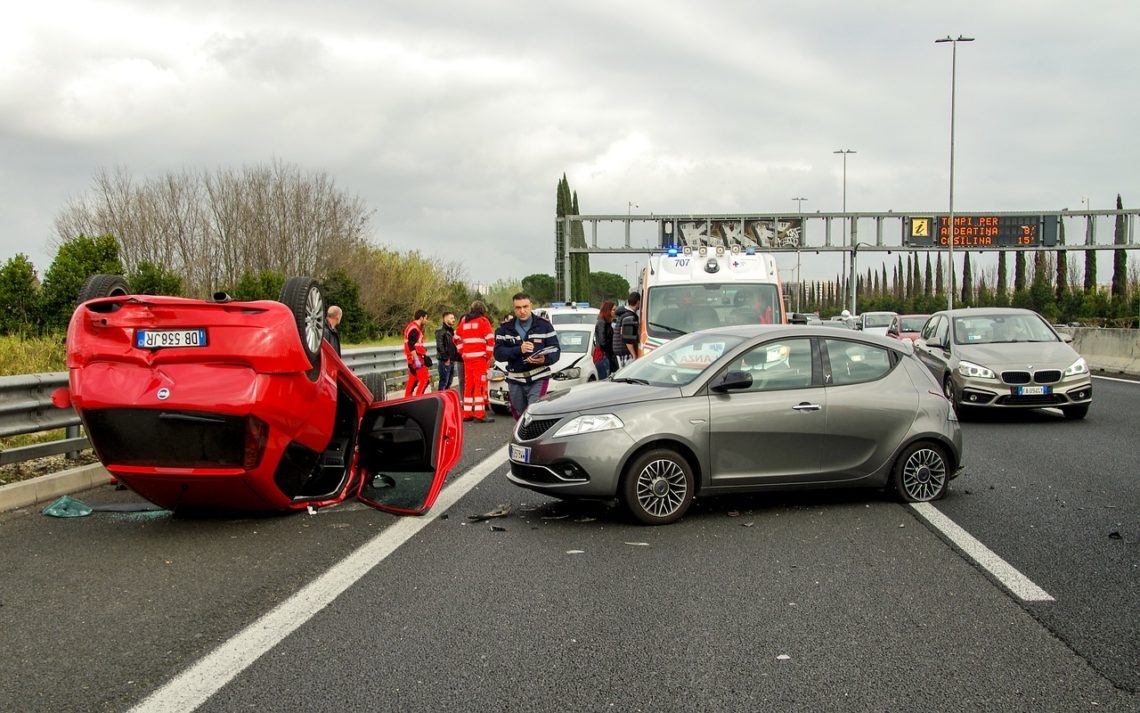
Multiple vehicle auto accidents are fairly common on California’s congested freeways, which begins with one driver rear ending another driver, resulting in a chain reaction that involves 3 or more vehicles. Alternatively, an accident may occur when a driver runs a red light and hits another car broadside, setting the stage for a multiple car pileup accident. Multi-vehicle car accidents create an added challenge for determining liability for injuries that vehicle occupants suffer. If you are involved in a multi car accident, it is vital you exchange insurance information with all the drivers involved, obtain witness contact information and contact the police to come to the scene and create a police report. It is also absolutely vital you take photographs of the scene, including skid marks, vehicle debris and property damage from multiple angles. If you suffer injury due to pile up accident in our area, you can contact our experienced Glendale auto accident attorney soon after the accident in order to ensure that all pertinent evidence is immediately identified and documented. If you or a loved one has been involved in a multi-car accident, we invite you to contact a car accident attorney in Glendale, CA for a and . Our office will handle your car accident claim, set you up with health care professionals for any needed treatment. We don't charge you any upfront legal fees, as we charge a contingency fee, meaning you don't pay, unless we are able to recover money damages from the responsible parties.

When a loved one passes away due to the negligence of another party, California law allows for two different types of lawsuits that can be against the negligent party. A California wrongful death lawsuit may be filed by the representative of the deceased’s estate, or by the decedent’s surviving spouse, children or other dependent family members. While, a survival cause of action can be filed by the estate’s personal representative, or if none has been appointed, by the decedent’s successor-in-interest. A survival cause of action can only be brought if the decedent did not immediately die from his injuries. The survival statute allows one to “step into the shoes” of the deceased and recover the damages the had they lived, including and , such as:
While the burden to prove these things falls on the State, you should be prepared with ample evidence to show otherwise, just in case they do manage to produce sufficient evidence in the courtroom. Bear in mind there are two different kinds of possession for which you may be convicted. The first kind is actual possession, which entails that the authorities discovered the drug on your person, meaning in your pocket, clothes, or bag. The second kind is constructive possession, which simply means that the authorities found the drug in a place that you have access to, such as your house, car, or office. If you did not expressly admit to having knowledge of the illegal substance of methamphetamine being in your possession, the prosecutor will have to meticulously prove that through evidence. Evidence can include the way you behaved or reacted during the search or arrest process. As an example, if you attempted to hide or get rid of the drug, then they could reasonably assume that you had knowledge of the drug and its illegality. However, assumptions can work against the prosecutor as well.
One of the first things your lawyer will do is to determine whether the police encounter that led up to the discovery of the meth was legal. In other words, the prosecutor cannot use evidence against you in a court of law if it was obtained illegally. Remember that the police must adhere to strict laws which are upheld by the United States Constitution, including when they stop and search vehicles, when they enter into private property, and even when they arrest or detain someone on suspicion of illegal substance possession. Should a law enforcement agent knowingly, or inadvertently, violate the suspect’s constitutional rights, then your lawyer can request to suppress the evidence being presented against you.
There are many different avenues and possibilities that a lawyer can explore with you in order to best gauge what your next optimal move will be. Getting charged with possession of a controlled substance may seem overwhelming and getting out of that situation even more so, but we will guide you through the criminal justice process and get you the best possible result. We invite you to give KAASS Law a toll free call at (310) 943-1171 to have a free consultation with our skilled defense attorneys.
Loss of consortium is a claim for damages suffered by the spouse or children of a person who has been injured or killed as a result of the defendant's negligent or wrongful acts. Generally, claims for loss of consortium are not awarded unless the person injured dies or suffers a severe and enduring injury. The suing party must show that the injured or deceased family member cannot provide his or her spouse or family member with the same love, affection, companionship, comfort, society, or sexual relations that were provided before the accident.
Statute of limitations is the period of time you have to file a claim or suit. Personal injury cases have a statute of limitations varies depending on the type of case, but generally, the time limit usually starts on the day the accident or injury occurred and can last anywhere from 1 to 2 years. However, in claims involving government tort or injury involving government entity, such as an car accident with a government city vehicle, requires the injured party to first file a claim with the appropriate governmental agency within 6 months from the date of the accident. Finally, depending on the outcome of the claim, the injured party will then have either 6 months or two years to file suit. If you fail to follow the guidelines for the statute of limitations, you may lose your right to file a claim. Thus, it is vital you speak to a Los Angeles personal injury lawyer immediately to preserve your claim! Our lawyers in Glendale, Los Angeles, California, will be happy to help you through every step of your personal injury case.
Our personal injury attorneys specialize in various personal injury matters including complex personal injury cases, government torts specifically related to auto accidents, motorcycle accidents, left turn motorcycle accidents, truck accident, multi-car accidents, which involve a government vehicle such as Metro Bus, fire truck, U.S Postal Service, and Water & Power Truck. If you have been in an accident involving an Government vehicle, give our office a call at (310) 943-1171 for a free consultation! This content is for educational purposes only. KAASS LAW is authorized to practice law in California. The above content is for California residents only. This content provides only general information, which may or may not reflect current legal developments. KAASS LAW expressly disclaims all liability in respect to actions taken or not taken based on any of the contents of this website. The above content DOES NOT create an attorney-client relationship. KAASS LAW does not represent you unless you have expressly retained KAASS LAW in person at the KAASS LAW office. KAASS LAW helps clients in: Los Angeles, Burbank, Hollywood, Glendale, Van Nuys, North Hollywood, Studio City, Highland Park, Eagle Rock, Sunland, Tujunga, Sylmar, La Crescenta, La Canada, Beverly Hills, Westwood, Santa Monica, Brentwood. Pacoima, Montebello, Commerce, Alhambra, Downey, Bell, Maywood, Walnut Park, Vernon, Lynwood, Echo Park, Silverlake, Mission Hills, Northridge, North Hills, Porter Ranch, Chatsworth, Reseda, San Diego, La Jolla, El Cajon, Chula Visa, Del Mar
Felony identity theft charges in California carry punishment of 3 years in state prison, court order to pay compensatory damages to the victim(s) that suffered damages, other fines, parole, and/or probation. Call now for a free consultation and case review at (310) 943-1171. If you or someone you love got these accusations of identity theft in California, it is important to understand the penalties that accompany a identity theft conviction. We invite you to contact our Glendale criminal lawyers for a free consultation and case review. Call our office at (310) 943-1171, our attorneys at KAASS Law speak English, French, Spanish, Russian, Armenian, and Italian.
KAASS LAW is authorized to practice law in California. The above content is for California residents only. This content provides only general information which may or may not reflect current legal developments. KAASS LAW expressly disclaims all liability in respect to actions taken or not taken based on any of the contents of this website. The above content DOES NOT create an attorney-client relationship. KAASS LAW does not represent you unless you have expressly retained KAASS LAW in person at the KAASS LAW office.
KAASS LAW helps clients in: Los Angeles, Burbank, Hollywood, Glendale, Van Nuys, North Hollywood, Studio City, Highland Park, Eagle Rock. Sunland, Tujunga, Sylmar, La Crescenta, La Canada, Beverly Hills, Westwood, Santa Monica, Brentwood. Pacoima, Montebello, Commerce, Alhambra, Downey, Bell, Maywood, Walnut Park, Vernon, Lynwood, Echo Park, Silverlake, Mission Hills, Northridge, Woodland Hills, Encino, Canoga Park, North Hills, Porter Ranch, Chatsworth, Reseda.
To protect your business or brand from infringement, you may want to trademark your domain name in addition to a logo, slogan, or design. Merely, registering a domain name does not give you trademark rights, rather it identifies your website and generally will not prevent others from using the name. If you trademark your domain name, you have legal protection if a third party uses your trademarked name. You can file a trademark infringement action against the infringing party and recover money damages, financial losses, and other damages you might have incurred.
The domain should function as a "source indicator." It must convey to whoever sees the URL what products or services are behind the name. A domain qualifies as a trademark when it is a "source indicator." Your domain must convey the products or services associated with the name to whoever sees the URL. Not all domain names can be registered as trademarks. The PTO is particular about what can be registered as a domain name.
Consumer confusion occurs when another company has a domain name close in spelling to your domain. The other company's name might different by one letter. Generally, consumer confusion matters only if a domain name that's similar to the one you want to use is a protected trademark. To be protected, a trademark must be distinctive. If the trademark owner has been able to register a name with the U.S. Patent and Trademark Office, it is probably distinctive. The dispositive question in trademark infringement cases is whether the similarity of the marks is likely to confuse customers about the source of a product or service. Interstellar Starship Services, Ltd. V. Epix, Inc., 304 F. 3d 936, 941 (2002).
Initial interest confusion occurs when the defendant’s use of plaintiff’s trademark sways consumers towards their own product or service by capturing “initial consumer attention.” Brookfield at 1045. In the context of website domain, the defendant’s unauthorized use of the trademark confuses consumers who expect to find the plaintiff’s product or service at that web address. Interstellar at 942. Although actual confusion is not required, plaintiff must prove a probability of confusion, as the mere possibility is not enough. Perfumebay.com Inc. v. eBay, Inc., 506 F.3d 1165, 1176.
To evaluate the likelihood of confusion, including initial interest confusion, the Sleekcraft factors considered are:
(1) the similarity of the marks;
(2) the relatedness or proximity of the two companies' products or services;
(3) the strength of the registered mark;
(4) the marketing channels used;
(5) the degree of care likely to be exercised by the purchaser in selecting goods;
(6) the accused infringers' intent in selecting its mark;
(7) evidence of actual confusion; and
(8) the likelihood of expansion in product lines.
Courts consider these factors within the totality of the circumstances through the eyes of the “reasonably prudent consumer” in the marketplace, not a person with a legally trained mind. Dreamwerks Production Group, Inc. v. SKG Studio, 142 F.3d 1127, 1129 (1998).
In the context of website domain, courts have held that the three most important Sleekcraft factors in evaluating a likelihood of confusion are (1) the similarity of the marks, (2) the relatedness of the goods or services, and (3) the parties’ simultaneous use of the Web as a marketing channel. Interstellar at 942.
No one factor is to be considered conclusive and the relative importance of each individual factor will be case-specific. Compare Brookfield, 174 F.3d at 1061 (holding that use of the domain name “moviebuff.com” violated plaintiff’s trademark rights in the mark “MovieBuff,” as consumer confusion is likely to result from the relatedness of the products and the companies’ simultaneous use of the Web as a marketing and advertising tool) with Interstellar at 943 (finding that domain name “epix.com” for website showcasing creator’s electronic pictures did not infringe the trademark “EPIX,” used in connection with printed circuit boards and computer programs, because there was a lack of relation between the products and both parties marketed to a different consumer base through the web).
The Federal Trademark Dilution Act (FDTA) allows a trademark owner to obtain an injunction against another’s “commercial use in commerce” of a mark or trade name” 15 U.S.C. § 1125(c)(1). “Commercial use in commerce” has been generally interpreted to mean use of mark in relation to any goods or services. Mattel, Inc. v. MCA Records, Inc., 296 F.3d 894, 903 (2002).
If you believe someone is infringing on your trademark or have questions regarding trademark registration, copyright, or any other intellectual property related question, we invite you to contact our office and speak to an experienced Los Angeles trademark lawyer at (310) 943-1171.
In order words, in the event that a policyholder(s) do not have excess insurance, policyholders should argue that their first party insurance company or primary insurer who rejected a within-limits settlement offer is obligated to pay the full amount of any subsequent settlement which exceeds that insured's policy limits. There is no reason why the first party insured should be forced to contribute or pay a settlement of which first party insured could recover by filing at first party bad faith action against their primary insurance company.
California insurance bad faith actions arise when insurance company breaches the implied obligation of good faith and fair dealing. Insurance companies must, unreasonably or without proper cause, act or fail to act in a manner that deprives the insured of the benefits of the policy. It is not a mere failure to exercise reasonable care. However, it is not necessary for the insurer to intend to deprive the insured of the benefits of the policy. Generally, the term bad faith for insurance purposes means an insurance company:
The court found that when an insurer's failure to reasonably settle a claim within policy limits, after primary or "first party" insurance rejected a within-limits settlement offer and there is a judgement against their insured/policyholder, whether by settlement or verdict, the first party insurance company must pay any excess monies, whether through jury verdict, settlement, or judgment. Policy limits demands can be a powerful tool for plaintiffs' insurance lawyers and can cause headaches for claims adjusters. While, it all depends on the circumstances surrounding the claim or issue, an insurer that misses an opportunity for a reasonable settlement of a claim against its insured can now be liable for the full amount of a later judgment, regardless of the policy limits. If you believe that your primary insurance company rejected a within-limits settlement offer and an later there was a subsequent settlement or judgement which exceeds your policy limits or you believe that your insurance company may be acting in bad faith, speak to one of our Los Angeles insurance lawyers for a free consultation and case review. Call our office at (310) 943-1171, our attorneys speak English, French, Spanish, Russian, Armenian, and Italian.
It is highly recommend that you speak to a Los Angeles motorcycle accident attorney before doing or speaking to anyone., including insurance companies. If you or a loved one was suffered a motorcycle accident injury, then you have a limited time to take action. Please contact us online or call our 24/7 motorcycle accident attorney help line directly at (310) 943-1171 to schedule your free, no-obligation consultation.
KAASS LAW is authorized to practice law in California. The above content is intended for California residents only. This content provides only general information which may or may not reflect current legal developments. KAASS LAW expressly disclaims all liability in respect to actions taken or not taken based on any of the contents of this website. The above content DOES NOT create an attorney-client relationship. KAASS LAW does not represent you unless you have expressly retained KAASS LAW in person at the KAASS LAW office. KAASS LAW criminal defense attorneys help clients in: Los Angeles, Burbank, Hollywood, Glendale, Van Nuys, North Hollywood, Studio City, Highland Park, Eagle Rock, Sunland, Tujunga, Sylmar, San Bernardino, La Crescenta, La Canada, Beverly Hills, Westwood, Santa Monica, Brentwood. Pacoima, Montebello, Commerce, Alhambra, Downey, Bell, Maywood, Walnut Park, Vernon, Lynwood, Echo Park, Silverlake, Mission Hills, Northridge, Woodland Hills, Encino, Canoga Park, North Hills, Porter Ranch, Chatsworth, Reseda.
The motorcycle passenger, or urban for "b&tch seat" or "riding b&tch" can claim for compensation for injuries sustained as a result of the motorcycle crash from any and all responsible parties by proving fault. This is why riders have a requirement to have an insurance policy that will cover the passengers' injuries. Although claiming injuries against someone you know, possibly a BFF or sweetheart, may or may not be ideal, it is important to understand that you are not going after their piggy bank, as their insurance company will "indemnify" and pay for the injuries up to the coverage limit and save the day! And hopefully, you never have to find out, but if you are reading this, we highly recommend speaking to a motorcycle accident attorney before speaking to anyone else. Whatever you say or do will be used against you and your sweetheart no matter what seat you're riding.
Would you like a free consultation from our personal injury lawyers at KAASS Law? Give us a call now (310) 943-1171 for more information on motorcycle accidents. You will not have to pay us upfront or out of pocket for our services! We get paid when you get paid. [embed]https://www.youtube.com/watch?v=cmYyFUF-XQg[/embed]
Determining fault in a multi-car accident is the biggest barrier to overcome in these types of accidents. From a factual perspective, determining causation can be tricky. In a case where a driver admits to being distracted and being the first car to rear-end another car in a line of cars, it may be appropriate to assign that driver 100% liability. Often times however, there are other factors at play including, bad weather conditions, driving to close to another vehicle, road construction, drunk driving, or aggressive driving. Thus, it is vital to speak with a car accident attorney that has experience with handling multi-car accident insurance claims.
When tailgating contributes to a multiple vehicle auto accident, all drivers who tailgated potentially shares some liability for causing injuries of occupants in vehicles that are ahead of the tailgating driver. The driver of the vehicle that collides with the car at the end of the chain likely has the greatest fault. On the other hand, if the driver of the car at the end had followed the next car at a greater distance, perhaps that driver’s car would not have been pushed into the car that he or she was following. Chain reaction accidents or multi car accident in a “stop and go” traffic scenario also create issues of comparative negligence. Generally, drivers are not held responsible for following another vehicle too closely when the vehicles in traffic are stopped, but if the chain reaction collision occurs while the cars are in motion, the legal notion of "comparative negligence"comes into play. If some cars are in motion but others are not, sorting out responsibility becomes a difficult task. If you were involved in an chain reaction or multi-auto accident call or contact our Glendale personal injury attorneys for a free consultation. We will fully review your case, answer any questions you may have, and explain the process as you move forward.
[video width="1280" height="720" mp4="https://kaass.com/wp-content/uploads/2019/12/output_HD72018.mp4"][/video]
In wrongful death cases, plaintiffs are the surviving family members of the decedent and can seek to recover economic damages. This includes financial support the decedent would have contributed to the family during the lifetime of the decedent or plaintiff. Also, loss of gifts or benefits that plaintiff would have expected to receive from decedent. Lastly, funeral/burial expenses reasonable value of household services that decedent would have provided to his or her loved ones. Additionally, the surviving family members may also seek non-economic damages. This includes loss of decedent’s love, companionship, loss of services, loss of support, comfort, care, assistance, protection, and moral support. Loss of the enjoyment of sexual relations and loss of decedent’s training and guidance are also real factors.
A survival cause of action in California can only be brought if the decedent did not pass from the injuries. If the deceased lived for a period between the accident and death, considering to file under survival cause of action. The representative of decedent's estate may seek to recover damages. This includes, “the loss or damage that the decedent sustained or incurred before death, including any penalties or punitive or exemplary damages that the decedent would have been entitled to recover had the decedent lived, and do not include damages for pain, suffering, or disfigurement". If you and your family are considering filing either a wrongful death or survival action lawsuit, or both if the circumstances permit, we invite you to contact one of our Los Angeles personal injury attorneys today for a free consultation and case review. KAASS LAW has successfully represented victims in wrongful death and survival cause of actions.
This content is intended for educational purposes only. KAASS LAW is authorized to practice law in California. The above content is intended for California residents only. This content provides only general information, which may or may not reflect current legal developments. KAASS LAW expressly disclaims all liability in respect to actions taken or not taken based on any of this website. The above content DOES NOT create an attorney-client relationship. KAASS LAW does not represent you unless you have expressly retained KAASS LAW in person at the KAASS LAW office. KAASS LAW helps clients in: Los Angeles, Burbank, Hollywood, Glendale, Van Nuys, North Hollywood, Studio City, Highland Park, Eagle Rock, Sunland, Tujunga, Sylmar, La Crescenta, La Canada, Beverly Hills, Westwood, Santa Monica, Brentwood. Pacoima, Montebello, Commerce, Alhambra, Downey, Bell, Maywood, Walnut Park, Vernon, Lynwood, Echo Park, Silverlake, Mission Hills, Northridge, North Hills, Porter Ranch, Chatsworth, Reseda, San Diego, La Jolla, El Cajon, Chula Vista, Del Mar