

Many foreigners who are in the US and face problems while extending their legal status decide to apply for asylum. However, not everyone is eligible for asylum. Only people who meet the statutory definition of “refugee” can file an application for asylum.
People who are already in the US or who seek admission into the US and meet the statutory definition of “refugee” are eligible for applying for asylum. The Immigration and Nationality act defines refugee as “any person who is outside any country of such person’s nationality or, in the case of a person having no nationality, is outside any country in which such person last habitually resided, and who is unable or unwilling to return to, and is unable or unwilling to avail himself or herself of the protection of, that country because of persecution or a well-founded fear of persecution on account of race, religion, nationality, membership in a particular social group, or political opinion…” INA § 101(a)(42).
In Matter of Acosta, the Board of Immigration Appeals broke down the statutory definition of “refugee” into four elements: (a) the foreigner must have a fear of persecution; (b) the fear must be well-founded; (c) the fear must be on account of one of the grounds specified in INA § 101(a)(42); and (d) the foreigner must be unable or unwilling to go back to his home country or the country of his last habitual residence because of persecution or his well-founded fear of persecution. Matter of Acosta, 19 I. & N. Dec. 211, 219 (BIA 1985). Basically, the alien must show that he is unable or unwilling to return to his home country because of his well-founded fear of persecution and that the fear is on account of one of the grounds specified in INA § 101(a)(42).
In order to show a well-founded fear of persecution, the applicant does not have to prove that it is more likely than not that he will be persecuted in his home country. I.N.S. v. Cordoza-Fonseca, 480 U.S. 42, 449 (1987). An applicant may meet the requirement of having a well-founded fear of persecution if he is able to show that a reasonable person in his place would fear persecution. Bastanipour v. I.N.S., 980 F.2d 1129, 1133 (7th Cir. 1992).
The applicant must demonstrate both objective and subjective fear. Acewicz v. U.S. I.N.S., 984 F.2d 1056, 1061 (9th Cir. 1993) (internal citations omitted). The applicant may satisfy the subjective component by his own credible testimony that he genuinely fears persecution. Id. (internal citations omitted). The objective component may be satisfied by credible, direct and specific evidence of facts supporting reasonable fear of persecution. Id. (internal citations omitted). Potential asylum applicants shall also keep in mind that past persecution creates a presumption of future persecution which can only be overcome by a change in country conditions. In re Kasinga, 21 I. & N. Dec. 357, 371 (BIA 1996).
The applicant’s well-founded fear of persecution must be on account of one of the grounds specified in INA § 101(a)(42). These grounds include race, religion, nationality, membership in a particular social group, and political opinion. INA § 101(a)(42). If the alien’s fear of persecution is not based on one of these grounds, the alien is not eligible for applying for asylum. All the grounds specified in INA § 101(a)(42) are self-explanatory, except the membership in a particular social group.
A particular social group must be defined by an immutable characteristic which the members of the group either cannot change or shall not be forced to change because it is fundamental to their individual identities or consciences. Matter of Acosta, 19 I&N Dec 211, 233 (BIA 1985). A group can be considered to be a particular social group only if it meets the requirements of “particularity” and “social distinction.” The “particularity” requires that a particular social group is defined by characteristics that provide a clear benchmark for determining who is a member of the group. Matter of W-G-R-, 26 I. & N. Dec. 208, 213 (BIA 2014) (internal citation omitted). On the other hand, the “social distinction” requires that society in general perceive, consider or recognize persons sharing the particular characteristic to be a group. Id. at 217.
To sum up, only aliens who meet the statutory definition of “refugee” can apply for asylum in the US. The applicant will have to show that he has a well-founded fear of persecution on account of one of the grounds specified in INA if he goes back to his home country.
Give us a call, our immigration attorney for a free no obligation immigration consultation. speak English, French, Spanish, Russian, Armenian, Hebrew, Farsi, and Arabic.

An appeal is a request sent by a party in a lower court to a higher appellate court, in order to review and change the decision of the lower court. If a defendant is found guilty on a criminal charge, they have the right to file an appeal to the appellate court. In an appeal review, no new evidence can be shown; the court will only review the error that was shed light on by the defendant. However, the prosecutor cannot appeal the case if the defendant is found not guilty; this term is better known as “double jeopardy”.
Rules and Regulations of the Appellate Court
Federal appellate courts follow the Federal Rules of Appellate Procedure, as their set of regulations. On the other hand, state appellate courts follow their own state rules of appellate procedure. Both the state and federal appellate court share the power of having the final judgment on the case that is being reviewed. Although, there are exceptions to the courts final judgment rule, regarding an error in the trial court or an unconstitutional judgment.

Being arrested in California can be a stressful and frightening experience. However, it’s crucial to remember that you still retain certain rights as a citizen of the United States. Understanding these rights can help you navigate the legal system more effectively. This blog outlines your rights during an arrest, the procedures that follow, and important deadlines related to appeals for those arrested in California.
One of the key components of your rights when arrested in California is the reading of your Miranda rights. These rights must be communicated to you by law enforcement officers at the time of your arrest. If the police fail to read your Miranda rights, any information or evidence gathered during the arrest may be inadmissible in court.
Upon your arrest, you have the following rights:
Prior to preparing the H-1B petition for a foreign employee, US employers shall determine whether the specific occupation falls under the H-1B category or not. Currently, the H-1B category covers only foreign employees who come to US to perform services in a specialty occupation or are models of distinguished merit and ability.
A specialty occupation is an occupation that requires theoretical and practical application of a body of highly specialized knowledge, and attainment of a bachelor's or higher degree in the specific specialty as a minimum for entry into the occupation. To qualify as a specialty occupation, the position must meet one of the following criteria: (1) A baccalaureate or higher degree or its equivalent is normally the minimum requirement for entry into the particular position; (2) The degree requirement is common to the industry in parallel positions among similar organizations or, in the alternative, an employer may show that its particular position is so complex or unique that it can be performed only by an individual with a degree; (3) The employer normally requires a degree or its equivalent for the position; or (4) The nature of the specific duties are so specialized and complex that knowledge required to perform the duties is usually associated with the attainment of a baccalaureate or higher degree. INA § 214.2(h)(4)(iii)(A). Some occupations clearly fall under the specialty occupation for H-1B purposes, and employers do not have to do much to show that the offered position is in a specialty occupation. The list of these occupations includes, but is not limited to, lawyers, accountants, engineers, architects, psychologists, scientists, and financial analysts. For these occupations, employers do not need to submit extensive evidence to show that the position is in a specialty occupation. For other occupations, which do not clearly fall under the specialty occupation category, employers will have to demonstrate that the position is in a specialty occupation. Employers can demonstrate that the position is in a specialty occupation by showing that it meets one of the criteria specified in the Immigration and Nationality Act. The adjudicators at USCIS rely on the Department of Labor’s Occupational Outlook Handbook to determine whether the position is in a specialty occupation or not. This handbook specifies the duties and requirements for different positions, including the requirements for entry into the specific occupation. The Handbook can serve as a comprehensive guide for employers to determine whether the specific position will qualify as a specialty occupation or not. Employers shall keep in mind that the H-1B category does not cover all the occupations, but only specialty occupations. Hence, employers shall determine whether the specific position is in a specialty occupation, and only after that shall start working on the H-1B petition. If the position is not in a specialty occupation the H-1B petition will not be successful, and employers should think about alternatives.
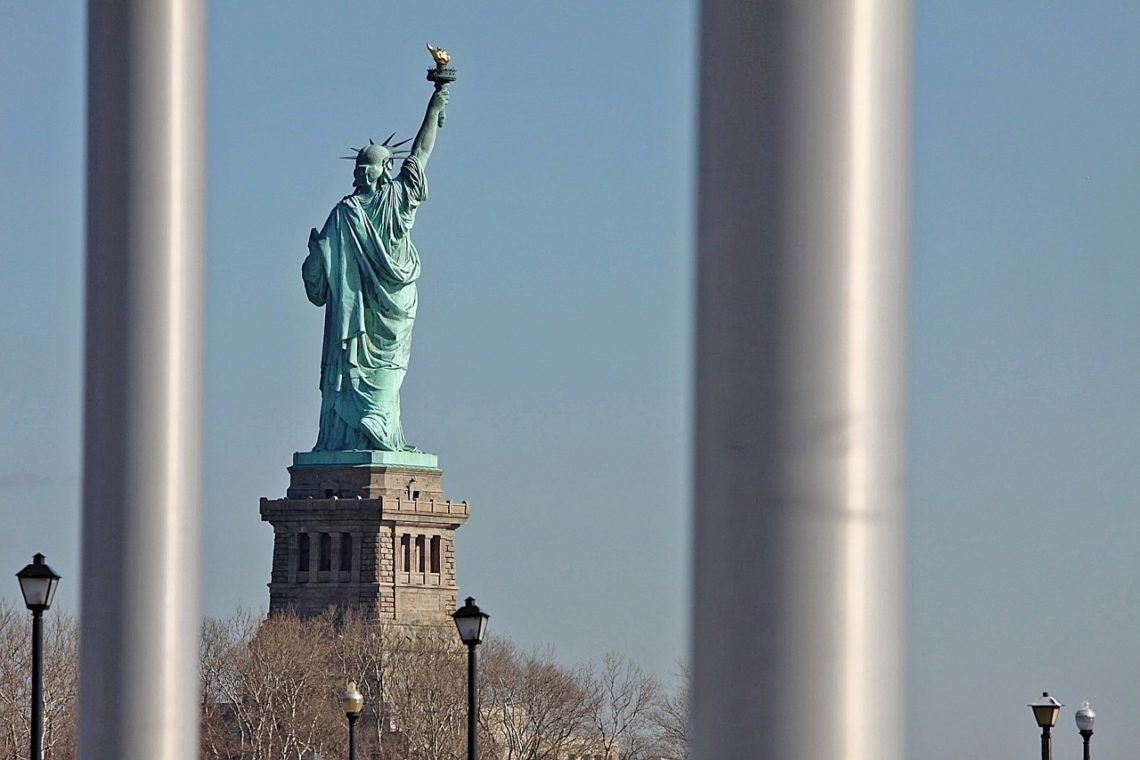
Generally, in order to be eligible for asylum or refugee status, one must prove that they are either:
If you were a passed victim of ill treatment, you must prove that you were mistreated, abused, or discriminated against in your home country or last country you lived in. The abuse, mistreatment, hostility or harassment must have been based on one of the following:
In some cases, ones gender may also be a reason for the abuse, harassment, hostility or ill treatment. Generally, in these type of circumstances relate to cultures that generally practice female genital cutting or forced marriage. If you want to apply for asylum or refuge in the U.S. consult with an experienced U.S. immigration attorney in Los Angeles for free. Contact our immigration attorneys at (310) 943-1171.

Only certain number of H-1B petitions can be approved each year. There is an annual limit for new admissions in the H-1B category. An H-1B number must be available at the time of adjudicating a new petition, and USCIS will not approve an H-1B petition once the annual cap has been reached.
Only 65,000 new H-1B petitions can be approved each fiscal year. However, it should be noted that this number is reduced under the US-Singapore and US-Chile Free Trade Agreements. Under these agreements, 6,800 H-1B numbers shall be available for citizens of Chile and Singapore each fiscal year. Hence, the actual annual cap is not 65,000 but 58,200. If any part of the number set aside for Chile and Singapore is not used during a fiscal year that number is added to the general annual cap for the next fiscal year. It is also worthy to mention that only initial H-1B petitions are subject to the annual cap. Petitions for sequential employment, concurrent employment, extensions of stay, and amended petitions are not counted against the gap.
There is an exemption from H-1B annual cap for 20,000 foreign employees with advanced degrees from US universities. To fall under this exemption, the foreign employee must have a master’s or higher degree from a US university. A master’s degree is a degree for which a bachelor’s degree in any field is required. The place of the specific degree in the academic hierarchy of degrees should be considered in order to determine whether it qualifies as a master’s or higher degree or not. If the petition qualifies for another exemption, in addition to the advanced degree exemption, officers shall apply the exemption that does not include numerical limitations before applying the advanced degree exemption.

heAll US employers willing to sponsor foreign citizens for H-1B visa must submit the labor condition application (LCA) first. Employers must submit a certified LCA with the Department of Labor before filing an H-1B petition, ensuring the H-1B employee's job does not negatively impact the wages and working conditions of US workers.
Form ETA 9035/9035E is a document that a prospective H-1B employer files with ETA when it seeks to employ nonimmigrant workers at a specific job occupation in an area of intended employment for not more than three years.
Many people often confuse the LCA with the labor certification application that US employers must file with the Department of Labor for most employment-based immigrant visas. However, these two applications are different.
Before filing the labor certification application, US employers must conduct specific recruitment steps and can only submit the application if they cannot find a qualified US employee. In contrast, employers can file the LCA without conducting any recruitment steps, making it a much simpler application compared to the labor certification application. LCA’s only purpose is to ensure that the employment of the H-1B worker will not negatively affect the wages and working conditions of US employees.

US employers willing to sponsor foreign employees for H-1B visa must understand all the steps involved in the process of preparing and filing the petition for a nonimmigrant worker. Generally, H-1B petitions are filed in the beginning of April for employment that shall start on October 1 of the same year. However, in order to be able to file the petition in April employers must comply with certain preliminary requirements.
First, the employer must determine the prevailing wage they have to pay the H-1B employee for the specific occupation in the geographic area. Employers can request the prevailing wage from the Department of Labor by submitting an Application for Prevailing Wage Determination. Alternatively, employers can obtain the prevailing wage from the Foreign Labor Certification Data Center Online Wage Library (www.flcdatacenter.com). This database includes four wage levels for each listed occupation in all geographic areas.
After obtaining the prevailing wage, employers have to file the labor condition application (LCA) with the Department of Labor. Employers cannot file the H-1B petition without a certified LCA. The United States Citizenship and Immigration Services and the Department of Labor require US employers to file the LCA in order to ensure that the employment of the H-1B employee will not adversely affect the wages and working conditions of US workers.

California voters approved the legalization of the recreational use of marijuana under Proposition 64. Accordingly, Proposition 64 would allow anyone 21 and older to possess, transport, buy and use up to 1 ounce of marijuana for recreational purposes. Further, this will also allow anyone 21 and older to grow up to six cannabis plants.
Theoretically, federal authorities would be able to enforce marijuana laws because the recreational use of marijuana is illegal under federal law. However, federal officials have noted that they do not plan to enforce many marijuana laws that have legalized the recreational use of marijuana.
Are you in need of legal advice or services from an attorney? is always standing by and ready to help.

In order to be found guilty of extortion, the prosecutor must be able to prove all 4 elements of Extortion by threat or force under Penal Code 518 PC. There elements are:
The defendant can only file an appeal to the court system directly one above the court they were tried at. For example, if you were tried at a state trial court, than you may file an appeal only at the state intermediate appellate court. If one of the appeals reaches the Supreme Court, than the Supreme Court Justices have the final judgment on the case without question.
Depending on how complex the Appeal is or how many issues need to be reviewed, the cost to appeal can vary. It can range anywhere from $20,000-$50,000 and take as long as 1-2 years depending on how backed up the court is. The cost could be even lower than $20,000 depending on the cost of the services of each level of the court. The higher the level of the court, the more expensive the appeal is going to be, with the Supreme Court being the most expensive. Along with the cost, the chances of filing an appeal successfully are around 15%-25% also depending on the level of the court and complexity of the case.
Location: 701 North Brand Blvd. Suite 100 Glendale, CA 91203 Telephone: (310) 943-1171 Email: [email protected]
After being arrested in California, several legal procedures take place. Familiarizing yourself with these steps can help you understand what to expect. The typical process includes:
During the arraignment, the judge reads the charges against you. You will be asked to enter a plea—guilty, not guilty, or no contest. This initial court appearance is crucial as it sets the stage for the legal proceedings to follow.
At the preliminary hearing, the prosecutor presents evidence to a judge to demonstrate that there is enough suspicion to continue with the case. If the judge finds sufficient evidence, they will hold you to answer, allowing the prosecution to move the case to the trial court.
If the case moves forward, a second arraignment occurs approximately 14 days after the court holds you to answer. This hearing is typically held in a higher court (the Superior Court) where the charges will be formally reiterated, and further proceedings will be scheduled.
The pretrial hearing is a critical stage in which both the prosecution and defense may resolve outstanding issues before the trial. During this phase, motions may be filed by either side requesting the judge to rule on specific legal matters.
Finally, if the case proceeds to a jury trial, both the prosecution and defense will present their witnesses and evidence. A jury will analyze the information presented and ultimately deliver a verdict. The judge will then interpret this verdict and determine the appropriate sentencing.
Understanding the deadlines related to your case is essential for protecting your rights after being arrested in California:
If you wish to appeal a misdemeanor conviction, you must file a Notice of Appeal within 30 days of the judgment or order you are appealing.
If you are appealing, you need to file a notice regarding the record of oral proceedings within:
Understanding your rights when arrested in California is vital. These rights are designed to protect you and ensure a fair legal process. If you face legal challenges, it’s crucial to consult with an experienced attorney who can guide you through the complexities of the legal system. At KAASS LAW, our dedicated team is here to help you navigate your legal rights and options. Whether you need assistance understanding your Miranda rights or navigating the court process after being arrested in California, we are committed to providing you with expert legal counsel. Don’t hesitate to reach out to us for a consultation. Your rights matter, and we are here to protect them.
Do you need more specific information? A Glendale immigration lawyer at KAASS LAW can provide you with any sort of legal assistance you may need. Give us a call, our attorneys speak English, French, Spanish, Russian, Armenian, Hebrew, Farsi, and Arabic.
If you suffered severe persecution in the past, you are presumed to face future persecution as well. If the U.S. government tries to argue that your country is considered safe for you to return, but you still fear future abuse, mistreatment, harassment because of how severe your passed persecution, Under 8 C.F.R. § 208.13(b)(iii)(A), you may qualify for something called humanitarian asylum, which grants receive asylum if you are able to demonstrate “compelling reasons for being unwilling or unable to return to the country arising out of the severity of the past persecution” or “there is a reasonable possibility that [you] may suffer other serious harm upon removal to that country.” For instance, if you were forced to go back to your home country or the last country you lived in, you might qualify for humanitarian asylum because you fear that you may become a social outcast. Or for instance, if everything you owned back home was destroyed, burned down, boomed, or you may potentially face extreme emotional trauma if you return to your home country or the country where you last lived, you might qualify for humanitarian asylum. If you want to apply for asylum in the U.S. consult with an experienced U.S. immigration attorney in Los Angeles for free. Contact our immigration attorneys at (310) 943-1171.
During the recent years the annual H-1B cap is usually reached within a few days after the start of the filing season. USCIS decides which H-1B petitions will be approved by conducting a lottery. The petitions received within 5 business days after the start of the filing season can participate in the lottery. USCIS first conducts lottery for petitions subject to the advanced degree exemption. After that USCIS conducts lottery for petitions subject to the regular cap. Petitions not selected during the first lottery participate in the second lottery as well.
In addition to the US advanced degree exemption, there is also an exemption for employees of certain organizations. Particularly, petitions filed by institutions of higher education, affiliated or related nonprofit entities, nonprofit research organizations, or government research organizations are exempt from the annual cap. Third party petitioners can also claim this exemption if the H-1B employee will perform job duties at the qualifying organization and directly and predominantly further the essential purposes of the qualifying institution.
As it can be seen, the annual number of available H-1B visas is very limited, and there are just a few exemptions from the general cap. During the recent years the annual cap was reached within a few days after the start of the filing season. Hence, employers, willing to hire foreign workers, must have their H-1B petitions ready by the beginning of the filing season in order to get a chance to participate in the H-1B lottery.
An immigration attorney can provide you with additional information regarding such matters.
By submitting the LCA employers make several attestations required by law before the Department of Labor may certify the LCA: That the employer will pay the employee at least the prevailing wage for the specific occupation in the geographic area.
Most employers file LCAs online through an electronic system, and you can find the LCA link here. Employers must create an employer account in order to file the LCA. Alternatively, the employer’s counsel can file the LCA through their attorney account. Employers can submit LCAs to the Department of Labor by mail if they obtain prior approval for this method. They must file the LCA no more than six months before the employment begins. There is no fee for filing the LCA with the Department of Labor.
The Department of Labor usually approves the LCA within seven (7) business days from the filing date. They reject the LCA only if it is incomplete or contains obvious inaccuracies. The Department of Labor may approve the LCA for a maximum period of three (3) years. After receiving certification, the employer must print and sign the LCA. The employer must maintain the original in its files. Additionally, the employer must keep a copy of the signed LCA in the public access file created for the specific H-1B case. Another copy of the LCA shall be sent to USCIS with the H-1B petition.
Employers shall file the LCA about a month before submitting the H-1B petition, taking into account that it takes the Department of Labor seven (7) business days to certify the LCA. Employers should be aware that sometimes the online electronic system does not recognize the information submitted by the employer, and employers have to send additional verifying information. This usually happens with the Federal Employment Identification Number, and employers have to send additional documents to verify that the EIN number is a real one. If employers prepare for the submission of the LCA beforehand even in case of such complications they will have the certified LCA by the deadline for filing the H-1B petition.
Certification of the LCA is an important part of the process of filing the H-1B petition. Employers shall keep in mind that they must have a certified LCA by the deadline for filing the H-1B petition and shall prepare and submit the LCA beforehand to avoid any complications during the filing season.
KAASS LAW is authorized to practice law in California. Practice areas of our attorneys include employment law, immigration law, and more.
The LCA is filed online through an electronic filing system (www.icert.doleta.gov). If the LCA is complete and there are no obvious inaccuracies, the Department of Labor has to certify the LCA within seven days from the date of filing the application. Employers shall file the LCA at least three or four week before filing the H-1B petition because sometimes the online system does not recognize certain information submitted by employers, and employers have to send additional verifying documents. For example, sometimes the online system does not recognize the Federal Employer Identification Number, and employers have to submit additional proof showing that the number is a real one.
After obtaining the certified LCA, employers can file the H-1B petition and supporting documents with USCIS. The filing period for H-1B petitions starts on April 1 of each year for employment starting in October of the same year. Generally the annual cap on H-1B visas is met within a few days after the start of the filing period. Hence, employers shall file the H-1B petition as soon as possible after the start of the filing period. The petitions received within the first five business days will participate in the lottery, and the winners will get the H-1B visa. Even if the applicant meets all the requirements and the employer has filed the H-1B petition on time, it is not guaranteed that the applicant will get the H-1B visa as the winners are selected during a lottery conducted by USCIS.
The H-1B petitions are usually processed within a couple of months after the lottery. If employer requests premium processing, the cases are processed within fifteen calendar days. Sometimes USCIS may request additional evidence before making the final decision on the petition. Additional evidence is usually requested when the employer is a newly established company, the employer has not submitted sufficient evidence to show that the occupation is a specialty occupation or the employee does not have sufficient qualifications for the position.
In order to file the H-1B petition without complications employers shall start the preparation several months before the filing season. This will ensure that the petition is ready by the filing deadline and will increase the chances of the final approval of the petition.
Call our office at (310) 943-1171 or contact us via email at [email protected] to schedule a free consultation with a Los Angeles immigration attorney.
KAASS LAW is authorized to practice law in California. The above content is intended for California residents only. This content provides only general information which may or may not reflect current legal developments. KAASS LAW expressly disclaims all liability in respect to actions taken or not taken based on any of the contents of this website. The above content DOES NOT create an attorney-client relationship. KAASS LAW does not represent you unless you have expressly retained KAASS LAW in person at the KAASS LAW office.
KAASS LAW helps clients in: Los Angeles, Burbank, Hollywood, Glendale, Van Nuys, North Hollywood, Studio City, Highland Park, Eagle Rock, Sunland, Tujunga, Sylmar, San Bernardino, La Crescenta, La Canada, Beverly Hills, Westwood, Santa Monica, Brentwood. Pacoima, Montebello, Commerce, Alhambra, Downey, Bell, Maywood, Walnut Park, Vernon, Lynwood, Echo Park, Silverlake, Mission Hills, Northridge, Woodland Hills, Encino, Canoga Park, North Hills, Porter Ranch, Chatsworth, Reseda.
Our experienced criminal defense attorneys in Los Angeles, CA, will help you fight the charges if authorities have falsely accused and wrongfully arrested you for blackmail or extortion. Request a criminal defense consultation with one of our defense attorneys in Los Angeles.
In California, extortion is generally treated as a felony. The penalties include:
If you or someone you know has been charged with Penal Code 518 PC extortion and you are looking to hire an attorney for representation, get in touch KAASS LAW. We can provide a consultation in office or by phone at (310) 943-1171. Our main office is in Glendale, CA, with additional locations in Los Angeles, Woodland Hills, and San Bernardino.