

A minors' compromise and release hearing is required by California law if a child under the age of eighteen is injured and receives a monetary settlement from the at-fault party. This means that a guardian must be appointed by the court unless the child is legally emancipated, a judge must approve the settlement for your injured child, and the settlement funds must generally be deposited into a blocked account in any FDIC-insured bank, trust company, savings and loan associate, or similar financial institution located in the state of California, until the child is eighteen years of age. The settlement funds can also be invested in a vehicle like an insurance annuity contract (single-premium deferred annuity). Alternatively, you can have a portion of the funds deposited in a bank and a portion of the funds deposited in an investment vehicle. Please see other articles on this website for more information, or your child's injury lawyer can explain which method is best for depositing settlement funds.
According to California Probate Code Sections 2504,90 3500,91 3600,92 and California Code of Civil Procedure Section 372.93, an enforceable settlement of a child's injury case can only be consummated with California court approval. The whole point of a court-supervised settlement for injured minors in California is to: Appoint a guardian to assist the minor child in monitoring his or her settlement funds.
In California, the court process is the best way to approve and monitor a bodily injury settlement for a minor. After the court approved their child’s injury settlement and deposited the funds into a bank account, parents approached me to petition the judge for an early release of part of the funds that didn’t directly benefit the minor. Some parents forget that California’s court process exists to protect the child’s interests because the settlement funds belong to the child. Courts will allow an early release of funds, but they closely scrutinize such requests and require that the money benefit the minor directly.
Courts supervise minor settlements in California to ensure that children receive full protection under the law. Judges appoint guardians, evaluate the fairness of settlement terms, and oversee fund distribution. This process ensures that parents, insurance companies, or other parties do not misuse the minor’s funds. The courts take an active role in protecting a child’s financial interests until they turn eighteen. Without this safeguard, many minors could lose access to money that was rightfully theirs. The legal system prioritizes the child’s well-being above all else and aims to prevent financial exploitation or irresponsible use of settlement proceeds.
At a minor’s compromise hearing, the court reviews all settlement documents and hears from the guardian and attorneys involved. The judge examines the proposed settlement amount, attorney fees, and any medical liens or expenses. If the judge finds the settlement fair and in the best interest of the child, they approve it. Once approved, the funds move into a blocked account or annuity. Parents and guardians must present clear justification for any early withdrawal requests. Judges often ask questions to ensure that the settlement truly benefits the minor. They also check that the agreement complies with California Probate Code and Civil Procedure requirements.
Parents must gather key documents and understand the legal steps before attending a minor’s settlement hearing. They should consult with a personal injury attorney to file the proper paperwork, including a petition for approval and financial documentation. Courts expect parents or guardians to fully explain how they will use and safeguard the funds. Parents should also discuss blocked account options or annuity investments with financial advisors. Courts want to see responsible planning to protect the minor’s future. Preparing thoroughly not only helps ensure a smooth court process but also builds trust with the judge, increasing the likelihood of approval.
For more information on California’s court procedures for minor settlements, visit the California Courts Self-Help Center on Minor's Compromise.
If the monetary settlement is less than $5,000, California Probate Code Sections 3611(d), 94, and 340195 have routinely allowed custodial parents to manage the settlement funds directly on behalf of their minor children, avoiding the need for court approval. In fact, all of California's major insurance carriers routinely waive minors' compromise and release hearings when the settlement amount to the injured child is less than $5,000.
Judges do not require court approval for settlements under $5,000. Judges can choose to place the minor child's funds in a blocked account with court-approved withdrawals. They may also order direct payment to the custodial parent(s).
Are you looking for an attorney to help you with your case? Look no further, Kaass Law will be able to provide you great experience, knowledge and satisfaction. Fell free to call our office at 310.943.1171.

The number of uninsured drivers in the United States is believed to be around 32 million. This figure varies a lot depending on where you are in the country. This is sometimes determined by the cost of auto insurance. Other times, it's due to a lack of knowledge about which vehicle insurance company to choose.
A variety of factors go into determining the cost of car insurance. It's also not uncommon to receive different quotes from different businesses. These can include the following:
When looking for vehicle insurance, there are a few terms you should be aware of. The phrase "premium" is one that you may come across. Simply put, this is the amount you must pay the insurance company to cover your vehicle. Deductible is another phrase for the same thing. You must pay this amount before the insurance company will pay out. You can reduce the overall cost of your insurance by increasing your deductible.
One of the more confusing policies is comprehensive insurance. This sort of insurance appears to cover all parts of an accident, however, it doesn't. In actuality, it only protects a vehicle against harm caused by something other than another vehicle. This includes the following:

California is one of many states that are considered car-dependent. The kind of offer of lending your vehicle to another person is quite common. However, such an innocent act may result in accidents and injuries, given the circumstances. A typical question always pops up when you're in this situation: am I liable for this, even though I wasn't the driver? The state of California also recognizes a legal doctrine called negligent entrustment. Applying to the law, this can potentially hold the vehicle owner liable for damages due to permitting someone else to drive their vehicle. At KAASS LAW, we understand and help resolve these complex cases with our expert team. The following will aim to shed light on negligent entrustment in California, and we can offer legal services, given the opportunity.
Negligent entrustment means that you can be liable and legally responsible if you lend your var to someone you knew or should have known potentially driving negligent and or recklessly. Usually negligence falls under the person that initiated the act. However, this will go against your negligent decision to entrust the vehicle to an unfit driver.
In California all drivers of TNCs (transportation network companies), such as Uber, are required to have a rideshare insurance at all times when the app is on. When the app is switched on, the Uber driver’s time is divided into three periods. Uber then decides when its insurance is applicable based on the period the accident happened. Uber's insurance coverages work different ways depending on which "period" the coverage falls under as it may impact your Uber accident claim. The rideshare app is off: The driver's personal insurance is active, which must meet California's minimum auto insurance requirements.
California law has the following minimum auto insurance requirements while rideshare app is on but the driver hasn’t been paired with a passenger.

The rise of the app-based sharing economy has led to many insurance challenges. States like California have taken steps to protect consumers. From homesharing to ridesharing, the U.S. population is embracing the sharing economy. People frequently rent cars through platforms like Turo or use ridesharing services such as Uber and Lyft.
California Public Utilities Commission Regulating Ridesharing
California was the first state to regulate ridesharing services. It requires companies to obtain a license from the California Public Utilities Commission, provide a minimum of $1 million in insurance, conduct vehicle inspections, and offer driver training programs.
Liability Issues with Rental Sharing Economy Apps
When an accident occurs involving a vehicle rented through an app like Turo, liability issues may arise. California's AB 1871 bill specifically addresses liability for car-sharing. Under this law, Turo is considered the vehicle owner during the rental period. The law also prevents your insurance company from canceling your policy due to participation in car sharing.
Is Turo Liable for Insurance Purposes During the Rental Period?

Peer-to-peer car rental sharing apps and services, such as Turo or Gertaround which allows you to rent another person’s vehicle. There are a few things to keep in mind when using such service, such as insurance covered and P2P car sharing liability issues.
If you are wondering if your personal auto insurance will cover your auto damage in the event the you rented a car and were involved in an accident you will have to check the language in your own policy. Many auto insurance companies included language which specifically excludes coverage if you’re using a P2P vehicle. While your personal car insurance covers traditional rentals, it may not cover peer-to-peer car sharing.
Often, car sharing companies such as Turn, generally provided basic insurance plans, however they carry very low limits, thus it’s worth spending more to get top-tier plans to increase coverage in the event the renter of your car is involved in an auto accident. Therefore, you will need to purchase the car-sharing company’s auto insurance to be sufficiently covered
KAASS Law fights hard to help victims involved in Uber and Lyft accidents, including both drivers and passengers, as well as third-party drivers and pedestrians who were injured, to get the compensation they deserve.
Under California law, Transportation Network Companies, including Uber and Lyft, must provide primary third-party liability insurance. They must maintain $200,000 of excess liability coverage during "Period 1". Period 1 occurs when the Uber or Lyft app is on but still waiting for a passenger. Therefore, you’ll still want rideshare insurance to cover you during Period 1 when your App is on driver mode. Period 2 Match Notification begins when you accept a ride request, as such Auto Liability Coverage and Uninsured/Underinsured Motorist Coverage, as well as Contingent Collision and Comprehensive Coverage, is in effect. Likewise, during period 3, when you're dropping off your passenger(s), the same coverage applies.
Lyft’s third-party automobile liability policy will be your primary policy during Period 1. Lyft will also maintain $200,000 of excess liability coverage during Period 1. The rideshare app is on, but you haven't been paired with a passenger. California law has the following minimum requirements.
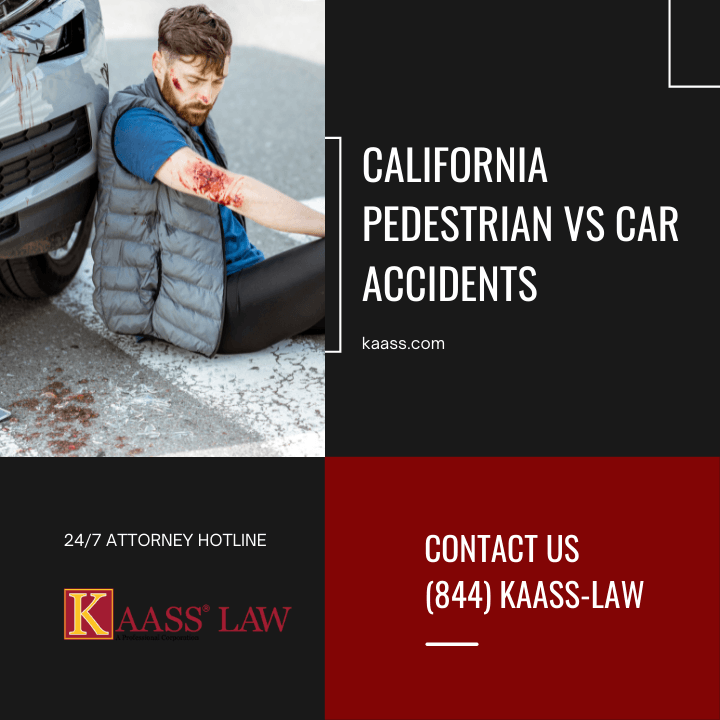
Pedestrian vs vehicle accidents occurs far often than one may believe, especially in Los Angeles. California has several right-of-way laws designed to protect pedestrians and may serve to show that a driver is liable for an accident.
CVC 21950(a) provides that "the driver of a vehicle shall yield the right-of-way to a pedestrian crossing the roadway within any marked crosswalk or within any unmarked crosswalk at an intersection, except as otherwise provided..."
In order for an injured pedestrian to recover in a personal injury lawsuit they must prove:
An experienced Glendale personal injury lawyer can evaluate the facts and circumstances of a case and help recover for damages such as:

Car accident claims involving left turn in California often involve numerous factors in determining fault or liability. Under California Vehicle Code § 21801 (a) The driver of a vehicle intending to turn to the left or to complete a U-turn . . . shall yield the right-of-way to all vehicles approaching from the opposite direction which are close enough to constitute a hazard at any time during the turning movement, and shall continue to yield the right-of-way to the approaching vehicles until the left turn or U-turn can be made with reasonable safety. Vehicle Code 21801 (a) also applies to left turn motorcycle accidents. Accordingly, California Civil Jury Instructions (CACI) outlines a “hazard” exists if: "any approaching vehicle is so near or is approaching so fast that a reasonably careful person would realize that there is a danger of a collision [or accident]." In other words, the driver who is attempting to make a left turn must ensure that no oncoming vehicles are close enough to be a hazard before he or she proceeds across each lane the driver of a vehicle will yield the right of way, until the turn may be made with reasonable safety.
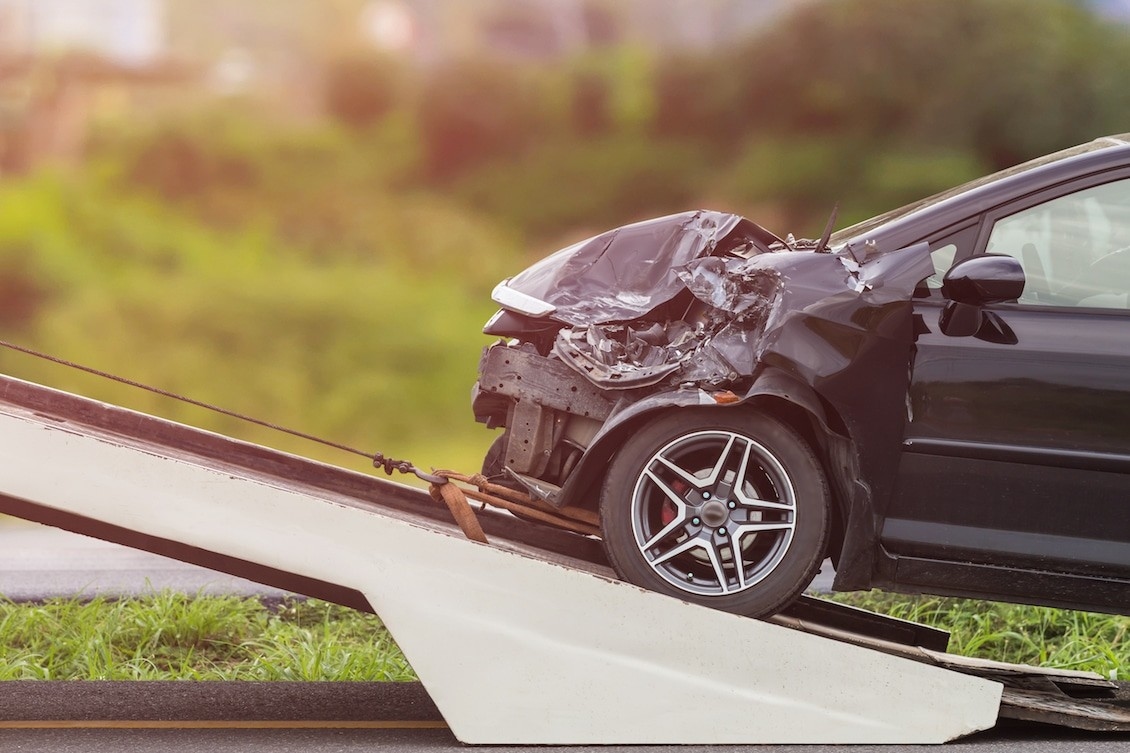
Some common personal injury cases include:
There are two types of damages that are recoverable in California personal injury cases, which include special damages and general damages. Special damages are those damages that are financial in nature, such as hospital and medical bills or lost wages. On the other hand, general damages are those that are non-financial losses, including pain and suffering, loss of consortium, and emotional distress.
Nothing covered by liability insurance is covered by comprehensive insurance. As a result, no medical expenses or car repairs incurred as a result of a traffic accident are covered. It also doesn't cover you if you collide with a stationary item like a mailbox or a wall. This form of coverage is optional for car owners. Comprehensive insurance is required for people who leased an automobile or took out a loan to buy one. In fact, it is frequently required by the lease or loan agreement's terms.
You are liable if you are the cause of a car collision. In terms of money, this implies you'll have to pay for the victim's vehicle repairs and medical expenses. It is also known as minimum coverage and is the most basic type of affordable vehicle insurance. There are two types of liability insurance. Depending on the laws of your state, you may be required to obtain both. These two sections address the following topics:
Keep in mind that your responsibility only extends to the victim(s) and not to you. Furthermore, you will be responsible for paying for your own medical expenses and car repairs out of pocket.
Collision coverage can be considered as an extension of comprehensive coverage. It covers your vehicle even if you are not driving at the time of the collision. If your friend is driving at the time of the accident, collision insurance would cover the damage. This motor insurance, unlike comprehensive, covers collisions with unmovable object. Collision coverage, on the other hand, does not cover any damage to other vehicles involved in the accident, nor does it cover medical expenses.
Even if you have complete coverage, there are some things your policy won't cover. Wear and tear is an example of coverage that is often not covered. You will have to pay for it out of pocket if your car is experiencing general age-related difficulties or breakdowns. If you wish to add people aside from yourself to the policy, you'll have to do it separately. That implies your policy won't cover other passengers in your car or if you're driving someone else's car. Finally, if you work for a ridesharing firm as a contracted driver, you will not be insured. Uber and Lyft, for example, have extremely stringent insurance requirements. For this, you'll need specialized company insurance.
It is always preferable to get legal assistance if you are in an accident or are involved in a car insurance claim. In the event of an automobile accident, insurance firms are instructed to decrease payments. This may result in you not receiving the compensation you deserve. Give KAASS Law a call at 310.943.1171.
CCPC 193.8 states that: "An adult, who is the registered owner of a motor vehicle or in possession of a motor vehicle, shall not relinquish possession of the vehicle to a minor for the purpose of driving if the following conditions exist: (1) The adult owner or person in possession of the vehicle knew or reasonably should have known that the minor was intoxicated at the time possession was relinquished. (2) A petition was sustained, or the minor was convicted of a violation of Section 23103 as specified in Section 23103.5, 23140, 23152, or 23153 of the Vehicle Code or a violation of Section 191.5 or subdivision (a) of Section 192.5. (3) The minor does not otherwise have a lawful right to possession of the vehicle."
Some possible defenses to negligent entrustment include:
Additionally, one can argue that the car owner was not aware that the driver (who allegedly caused the accident) was not a reasonably safe driver due to having a clean driving record and possessing a valid driver's license.
While you can't control the actions of every driver on the road, you can take steps to protect yourself from potential negligent entrustment claims:
If you have been injured in an accident caused by someone driving a vehicle they were negligently entrusted with, or if you are a vehicle owner facing a negligent entrustment claim, it is crucial to seek experienced legal counsel. At KAASS LAW, our skilled attorneys can:
The concept and doctrine of negligent entrustment show a big key in the responsibility of the vehicle owner. By understanding this legal concept and taking action towards safety, both vehicle owners and those injured by negligently entrusted vehicles can navigate the complexities of California law. Contact KAASS LAW today for a consultation to discuss your specific situation and learn how we can help. Alternatively, to know more about negligence, especially gross negligence in California, KAASS LAW can offer guidance.
Uber’s rideshare policy isn’t applicable for accidents that take place before a driver accepts a passenger, since Uber considers drivers contractors rather than employees. Consequently, they are not responsible for what happens while the driver isn’t on duty.
Once there is a ride request from a passenger and the driver accepts it, this puts the driver in “on duty” status and Uber’s insurance coverage starts. But in case the driver gets in an accident before he picked up the passenger, it follows that the passenger would have to cancel the ride. This adds a layer of difficulty when claiming the insurance coverage.
The third period is the easiest one to claim insurance coverage from Uber. The passenger is in the Uber car, the driver is “on duty” and the Company must cover whatever happens during this period. Consequently once the driver has been paired with a passenger and after the passenger has entered the Uber car, the company is required to carry a $1 million liability insurance policy. Uber provides its drivers with $1 million of uninsured and underinsured motorist bodily injury coverage. It also provides comprehensive and collision coverage with a $1,000 deductible as long as the driver has collision coverage on his personal auto insurance policy. California law requires the driver to be covered by an auto insurance policy at all times. But since the TNC can help meet that requirement, not all rideshare drivers in California need to purchase rideshare insurance for driving legally. But, the driver may want to purchase an individual rideshare policy which will let to maintain some coverage, such as comprehensive, collision and medical payments, during the First period. Otherwise, the driver would have to pay the costs himself if he is injured or the vehicle is damaged in that period.
It is in your best interest to consult with a Los Angeles Uber accident lawyer about your claim before speaking with Uber or an insurance adjuster. This way you will have more leverage in settlement negotiations with Uber and Uber's insurance adjusters to get the compensation you deserve rather than getting lowball settlement offers. If you or a loved one have been injured in an Uber or Lyft accident we invite you to get in touch with our office. We are available 24 hours a day, 7 days a week.
[video width="1280" height="720" mp4="https://kaass.com/wp-content/uploads/2019/12/Uber-auto-insurance-coverege.mp4"][/video]
The AB 1871 bill makes Turo liable for insurance instead of your personal coverage. Once the $1M insurance limit is exceeded, Turo becomes responsible. Turo must also indemnify you in any civil action, replacing your personal insurance unless the incident results from willful negligence. Turo’s Third-Party Automobile Liability Insurance includes property damage claims and Uninsured/Underinsured Motorist (UIM/UM) coverage.
California Turo Car Rental Accident Lawyer
If you’re involved in a peer-to-peer car rental accident in California, contact our experienced Turo car rental accident lawyer. Our attorneys have extensive experience securing significant settlements from insurance companies known for denying claims. We’ll thoroughly review your case to gather the necessary evidence. To schedule a free consultation, call KAASS LAW at (310) 943-1171 or contact us via our online appointment form.
If you were involved in an auto accident using a Turo peer-to-peer rental car, you will be charged a deductible, typically from $1,000 to $3,000 if the company needs to file a claim.
Participation in any peer-to-peer sharing apps comes with risks, especially in your renting your car out. The most obvious risks is potential damages to your vehicle, fighting with the insurance companies to receive a fair market value for your car in the event. Further, if you don’t notify your insurance company that you’re renting out your car and or your participation in a P2P car-sharing you may potentially be at risk of having your policy canceled. Thus, its best to check with your insurer before placing your car for rent on a car-sharing app.
If you rent your car through a PTP car sharing App such as Turo, generally your car will not be covered unless you have a commercial auto insurance police. Personal auto insurance policies are now being written to specifically exclude peer car-sharing apps from coverage. While, companies such as Uber or Lyft provide liability insurance coverage to accommodate peer-to-peer car sharing it is best you check if the P2P car sharing company you are participating offers such coverage. Turo, works a bit different than Uber and Lyft liability insurance claims.
Turo's Primary liability insurance coverage covers the car owner up to $1,000,000; protection for physical damage to your car is provided without deductible for the Premium and Standard host protection plans, and with a $3,000 deductible for the Basic plan.
Under Turo's premium and standard liability insurance plans, car owners receive the actual cash value of their car or up to $125,000, in the even the vehicle is deemed as totaled. Coverage is not available for hosts who are not utilizing a Turo protection plan. More over, primary liability coverage up to $1,000,000; no protection for physical damage to your car.
Per Turos Premium Plan haves insurance liability coverage up to to $1,000,000. Physical damage to the car covered up to the actual cash value of the car. No deductible for the supplemental liability coverage. Turo's premium liability insurance insurance is secondary to any other insurance the renter may have, however as mentioned, often times your own insurance will exclude coverage for car-sharing services. Lastly, once you’ve exhausted your own insurance for physical damage, your out-of-pocket expense is limited to $500.
Liability coverage for owners who rent their car out using Turo are covered up to a combined single limit of $1,000,000 for liability. Coverage includes personal liability for the renter, third-party liability for passengers and other affected parties, and third-party property damage arising from a car accident. Comprehensive and collision coverage The collision coverage provided protects the owner's vehicle in the event of an accident. Liability insurance coverage applies for the duration of each rental, from start to finish, and includes liability, collision and comprehensive.
If you were involved in an peer-to-peer sharing auto accident in California we invite you to hire our dedicated Los Angeles Peer-to-peer accident lawyers today. Our skilled accident attorneys leverage their considerable experience into obtaining significant settlements from insurance companies who are known for being reluctant to pay out on claims. You can rely on our experienced lawyer to carefully analyze the facts of your case to prove the facts necessary.
To schedule a free consultation with one of our peer-to-peer sharing app lawyers, call Kaass law today at (310) 943-1171 or send us an email through our online appointment form.
KAASS LAW, 815 E Colorado St #220, Glendale, CA 91205, (310) 943-1171
Periods 2 and 3: Once you've been paired with a passenger and after they've entered your vehicle, the rideshare company, such as Uber or Lyft, are required to carry a $1 million liability insurance policy in California. This covers you and your passengers during Periods 2 and 3. Depending on the company, it may offer additional coverage during these periods as well.
If an Uber driver is involved in an accident with a passenger in the car, Uber and Lyft’s insurance will provide liability and collision coverage. However, they often won’t cover things like rental cars, lost wages, and medical expenses. Thus, It is in your best interest to consult with a Los Angeles Uber accident lawyer about your case before speaking with Uber or an insurance adjuster. With professional legal assistance, you will have more leverage in settlement negotiations with Uber and get the compensation you deserve.
A Los Angeles Uber accident lawyer can help Uber drivers recover damages for the following:
If you were involved in an Uber or Lyft accident in California, we invite you to hire our dedicated Los Angeles Uber and Lyft accident lawyer today. Our skilled Uber and Lyft accident attorneys leverage their considerable experience into obtaining significant settlements from insurance companies that are known for being reluctant to pay out on claims. You can rely on our experienced lawyer to carefully analyze the facts of your case to prove the facts necessary. To schedule a free consultation with one of our rideshare lawyers, call Kaass law today at (310) 943-1171 or send us an email through our online appointment form.
There are two types of damages that are recoverable in California personal injury cases, which include special damages and general damages. Special damages are those damages that are financial in nature, such as hospital and medical bills or lost wages. On the other hand, general damages are those that are non-financial losses, including pain and suffering, loss of consortium, and emotional distress.
The statute of limitation for bringing a pedestrian vs car accident is 2 years from the date of the accident. However, claims involving government tort or injury involving a government entity, such as a car accident with a government city vehicle, requires the injured party to first file a claim with the appropriate governmental agency within 6 months from the date of the accident. Finally, depending on the outcome of the claim, the claimant will then have either 6 months or two years to file suit. If you fail to follow the guidelines for the statute of limitations, you may lose your right to file a claim.
California Code of Civil Procedure section 335.1 provides, an injured pedestrian has two years to file a claim against those who may be liable for their accident.
Our personal injury attorneys specialize in various personal injury matters including complex personal injury cases, government torts specifically related to auto accidents, motorcycle accidents, left turn motorcycle accidents, truck accidents, multi-car accidents, which involve a government vehicle such as Metro Bus, fire truck, U.S Postal Service, and Water & Power Truck. If you have been involved in an accident involving a Government vehicle, give our office a call at (310) 943-1171 for a free consultation. [contact-form][contact-field label="Name" type="name" required="true" /][contact-field label="Email" type="email" required="true" /][contact-field label="Website" type="url" /][contact-field label="Message" type="textarea" /][/contact-form]
[video width="1280" height="720" mp4="https://kaass.com/wp-content/uploads/2020/02/California-Pedastrian-Vehicle-Accident.mp4"][/video]
The location of the property damage to the vehicles involved in an accident can help determine how the accident may have occurred, as well as which driver was at fault. Below is an example of determining fault in left turn accidents by assessing property damage.
The you're driving straight and someone made a left turn in front of you scenarios, often times the driver going straight will attempt to swerve to the right to avoid a collision. In this instance, if the damage is located on your left front corner or left front side, that can indicate that you tried to avoid the accident by swerving away. Finally, if the property damage to the other vehicle is located to the right front corner, this likely evidences that the other driver was not paying attention and disregarded and or cut off oncoming traffic. However, if the property damage to the turning car is to the right rear corner, that is evidence that it may have been the fault of the driver going straight and likely may have not been paying attention.
While, every driver is required to yield before making a left, if the person hanging the left made a reasonable right of way yield before turning. Therefore, approaching on-coming traffic then can not speed up, run a red light, or otherwise allow the left turning driver to pass safely. It should be noted that the further the left turning car gets across the oncoming traffic lane, the more likely the driver that is going straight will be found at least partially at fault for not slowing down, and attempting to avoid the collision.
The term "Negligence" is a term used to characterize conduct that creates an unreasonable risk of harm to others. In order to prove negligence you must prove:
In theory both drivers can potentially be partially responsible for causing the left turn collision. For instance under the comparative negligence theory a party may contribute to an act of negligence or be comparatively negligent for his or her own injuries.
Recovery for damages in comparative negligence auto accident claims are reduced by the percentage of fault of each party. If you were found 30% at fault for causing the left turn accident, your settlement and or judgement will be reduced by 30% of the entire dollar amount settled or awarded. If you are in need of legal assistance, our Glendale auto accident attorneys at KAASS LAW can help you through every step of the way.
We provide 24/7 auto accident accident hotline available for victims involved in various accidents including truck accidents, pedestrian accidents, accidents with government vehicle, and more. Our auto accident attorneys in Glendale, CA, charge our clients' zero upfront legal fees. You pay nothing until and unless we successfully secure a settlement or judgement. Our attorneys speak English, Spanish, Russian, Armenian, and French.
[video width="1280" height="720" mp4="https://kaass.com/wp-content/uploads/2018/09/Left-Turn-Auto-Accidents-California.mp4"][/video]
Address: 701 North Brand Blvd. Suite 100 Glendale, CA 91203 Telephone: (310) 943-1171 Email: [email protected] Get Directions on Google MapsOur lawyers in Glendale, Los Angeles, California, are dedicating to providing the highest quality legal services for all of our clients.
KAASS LAW, 815 E Colorado St #220, Glendale, CA 91205, (310) 943-1171
KAASS LAW is authorized to practice law in California. The above content is intended for California residents only. This content provides only general information which may or may not reflect current legal developments. KAASS LAW expressly disclaims all liability in respect to actions taken or not taken based on any of the contents of this website. The above content DOES NOT create an attorney-client relationship. KAASS LAW does not represent you unless you have expressly retained KAASS LAW in person at the KAASS LAW office. KAASS LAW helps clients in: Los Angeles, Burbank, Hollywood, Glendale, Van Nuys, North Hollywood, Studio City, Highland Park, Eagle Rock, Sunland, Tujunga, Sylmar, San Bernardino, La Crescenta, La Canada, Beverly Hills, Westwood, Santa Monica, Brentwood. Pacoima, Montebello, Commerce, Alhambra, Downey, Bell, Maywood, Walnut Park, Vernon, Lynwood, Echo Park, Silverlake, Mission Hills, Northridge, Woodland Hills, Encino, Canoga Park, North Hills, Porter Ranch, Chatsworth, Reseda.
Loss of consortium is a claim for damages suffered by the spouse or children of a person who has been injured or killed as a result of the defendant's negligent or wrongful acts. Generally, claims for loss of consortium are not awarded unless the person injured dies or suffers a severe and enduring injury. The suing party must show that the injured or deceased family member cannot provide his or her spouse or family member with the same love, affection, companionship, comfort, society, or sexual relations that were provided before the accident.
Statute of limitations is the period of time you have to file a claim or suit. Personal injury cases have a statute of limitations varies depending on the type of case, but generally, the time limit usually starts on the day the accident or injury occurred and can last anywhere from 1 to 2 years. However, in claims involving government tort or injury involving government entity, such as an car accident with a government city vehicle, requires the injured party to first file a claim with the appropriate governmental agency within 6 months from the date of the accident. Finally, depending on the outcome of the claim, the injured party will then have either 6 months or two years to file suit. If you fail to follow the guidelines for the statute of limitations, you may lose your right to file a claim. Thus, it is vital you speak to a Los Angeles personal injury lawyer immediately to preserve your claim! Our lawyers in Glendale, Los Angeles, California, will be happy to help you through every step of your personal injury case.
Our personal injury attorneys specialize in various personal injury matters including complex personal injury cases, government torts specifically related to auto accidents, motorcycle accidents, left turn motorcycle accidents, truck accident, multi-car accidents, which involve a government vehicle such as Metro Bus, fire truck, U.S Postal Service, and Water & Power Truck. If you have been in an accident involving an Government vehicle, give our office a call at (310) 943-1171 for a free consultation! This content is for educational purposes only. KAASS LAW is authorized to practice law in California. The above content is for California residents only. This content provides only general information, which may or may not reflect current legal developments. KAASS LAW expressly disclaims all liability in respect to actions taken or not taken based on any of the contents of this website. The above content DOES NOT create an attorney-client relationship. KAASS LAW does not represent you unless you have expressly retained KAASS LAW in person at the KAASS LAW office. KAASS LAW helps clients in: Los Angeles, Burbank, Hollywood, Glendale, Van Nuys, North Hollywood, Studio City, Highland Park, Eagle Rock, Sunland, Tujunga, Sylmar, La Crescenta, La Canada, Beverly Hills, Westwood, Santa Monica, Brentwood. Pacoima, Montebello, Commerce, Alhambra, Downey, Bell, Maywood, Walnut Park, Vernon, Lynwood, Echo Park, Silverlake, Mission Hills, Northridge, North Hills, Porter Ranch, Chatsworth, Reseda, San Diego, La Jolla, El Cajon, Chula Visa, Del Mar