You may be able to file a civil lawsuit against your sexual partner if you have been infected with a sexually transmitted disease (STD). You may be able to hold the other person responsible for the emotional distress even if you were not infected. In some cases, the threat of exposure is the cause. In bringing a civil lawsuit for STD infection, you may be able to rely on a number of different legal theories. The most appropriate legal theory will depend on the facts of your case. However, the most common theories are negligence and civil battery.
Negligence
One potential cause of action is negligence. With this type of claim, the plaintiff must be able to prove that
Defendant knew or should have known that he was a carrier of a disease
Owed the plaintiff the duty to disclose this information
Infected the plaintiff with a sexually transmitted disease
Defendant’s action caused harm to the plaintiff
The keystone of a negligence claim is that the defendant must have disclose the information about STD so that the plaintiff could make a decision about his wish or lack to have an intercourse with defendant. In some cases, liability for negligence lies if the defendant exposed the plaintiff to a sexually transmitted disease, even if the transmission didn’t occur. Usually, damages in this situation are based on the mental anguish and emotional distress.
Civil Battery
A battery cause of action for transmission of a sexually transmitted disease involves the defendant’s intentional, unconsented, and harmful contact with the plaintiff. In an STD case, while the plaintiff may consent to sexual contact, he is not consenting to a contact accompanied by the known risk of contracting an STD. Furthermore, the defendant does not have to have intended to transmit the STD. It's enough to proceed with sexual contact despite the possibility of transmission. For a civil battery claim, the victim must prove that the defendant has actual knowledge that he is a carrier of an STD or is likely to have one.
Fraud
The person who infected you could face criminal charges under the laws of your state. Even in states where it is illegal to intentionally transmit an STD. You'll have to prove more than just that the person was aware of his or her HIV status and intended to have sexual contact with you. In order to prove fraud, the plaintiff must establish the following:
Defendant knew that he had a sexually transmitted disease.
Defendant hide, concealed, or otherwise failed in his duty to disclose that knowledge with the intention to have sexual intercourse
Plaintiff contracted the disease as a result of sexual intercourse
Accordingly, a person who knowingly and intentionally fails to disclose knowledge of his sexually transmitted disease to a sexual partner can be liable for any injuries that the partner suffered from.
Intentional Infliction of Emotional Distress
A person who contracts an STD experience suffers emotional distress, including guilt, depression, anxiety, humiliation, or even self-destructive thoughts. An injured person can recover damages for such emotional distress and hold the person with STD legally liable. Frequently, a claim for intentional infliction of emotional distress for transmitting an STD is brought along with another legal theory, such as negligence. This is because demonstrating the elements of emotional distress and determining damages is usually very difficult.
Liability for Disclosing Another Person’s STD
Generally, disclosure of another’s person’s HIV status may be illegal, with narrow exceptions like court cases and medical procedures and. A violation of the statute can provide grounds for a civil lawsuit. Remember that you're looking for monetary compensation for the harm you've experienced as a result of your STD infection. Compensation will include the costs of your medical treatment and your emotional. A civil lawsuit does not, at least not in terms of criminal penalties, punish the person who infected you.
Damages
In lawsuits involving the transmission of an STD, the same types of injury compensation that are available in other personal injury cases are usually available. The emotional distress a plaintiff experiences after contracting an STD would account for the majority of damages. If there were no severe physical symptoms or medical costs, along with the change in lifestyle. In civil lawsuits, the plaintiff may be eligible to the following damages, including:
The medical costs to treat the condition and costs of receiving psychological counseling after being receiving an STD
Pain and suffering
Emotional distress and mental anguish
A jury may also award punitive damages to deter similar conduct in the future.
The damages in the case of STD exposure without infection would be based on the plaintiff's fear and extreme anxiety after learning that they may have contracted an STD. Damages for STD disclosure would be based primarily on the emotional distress caused by embarrassment, stigmatization, and/or discriminatory treatment that can occur when an STD is made public.
Glendale Personal Injury Lawyer
If you or a loved one has been harmed as the result of being infected with a sexually transmitted disease, then you may be entitled to compensation. If that is the case, contact our Glendale personal injury lawyer today for a consultation and case review. Please feel free to give our office a call at 310.943.1171.
California Penal Code section 148.5 PC states, “Every person who reports to any peace officer listed in Section 830.1 or 830.2, or subdivision (a) of Section 830.33, the Attorney General, or a deputy attorney general, or a district attorney, or a deputy district attorney that a felony or misdemeanor has been committed, knowing the report to be false, is guilty of a misdemeanor.”
What Constitutes a Violation of Penal Code Section 148.5 PC?
In order to be criminally charged with making a false report of a crime, you must have satisfied the three elements. These elements constitute a violation of Penal Code 148.5 PC. The three elements are the following:
You or a third party made a report of a misdemeanor or felony
You or a third party made the report to an “authority”
You either:
Made the report based on false information OR
Supported a criminal report made by a third party with false information
Penal Code section 330 outlines the crime of “gaming,” or illegal gambling. It states that, “Every person who deals, plays, or carries on…any banking or percentage game played with cards, dice, or any device, for money, and every person who plays or bets at or against any of those prohibited games, is guilty of a misdemeanor.”
What Is Gaming or Illegal Gambling?
Gaming refers to the act of gambling illegally. It is a crime to participate in a game that involves gambling or to run a gambling operation in the state of California. For gambling to constitute a crime, you must have illegally participated in some way, and the game itself must have violated the law. You do not necessarily have to play in the illegal game in order to be charged with a PC 330 violation. The law specifies that it is illegal to deal, play, run, or oversee a gambling operation. This means that participating in gaming is not only illegal but if you conduct an illegal gambling operation on your property and collect some of the profit, you are guilty of a gaming crime. The other requirement is that the game in question must be a “prohibited game” under California law. This means that the game involves a bank, house, or dealer that collects money from losers and gives it to the winners and/or itself. There are 2 main categories this creates: “banking” and “percentage” games. Banking games involve a 3rd party “bank” that distributes money from the loser to the winners. A percentage game means that the bank collects a percentage of the winnings or the total amount of bets.
California Penal Code Section 303 prohibits the following conduct: “It shall be unlawful, in any place of business where alcoholic beverages are sold.No person shall loiter there to beg solicit any patron, customer or visitor to purchase any alcoholic beverage for them.”
What Constitutes the Criminal Act of Loitering to Solicit the Purchase of Alcohol?
A violation of Penal Code section 303 requires 2 parts:
The defendant loitered in a place that sells alcohol for the purposes of consuming it on the premises.
The defendant was loitering with the purpose of soliciting patrons or other bystanders to buy alcohol for them.
“Loitering” The law defines loitering as staying in a place without a legal reason to be there. This can take place in both public and private property. It’s important to note that the first element requires the defendant to loiter in a place where alcohol can be consumed. This means the premises must allow alcohol consumption on site. Liquor stores are a good example of somewhere that would not qualify. People may loiter on the premises of a liquor store and ask others to buy them alcohol, and this is allowed. Since liquor do not permit drinking on the premises, this would not be sufficient to violate PC 303. The second element requires that the defendant ask others to buy them or give them alcohol. This is fairly straightforward. Important to note that law does not necessarily require the defendant to solicit alcohol from the place that they loiter. It only require that they ask in some form to buy them alcohol.
An exhibition of speed or otherwise known as “speed ex”, “flooring it”, “street racing” is the amusement of car and bicycle lovers, meanwhile it is spectacular for bystanders. Most people don’t realize that California law criminalizes the adrenaline-filled, attention-grabbing act. It considered as one of the driving offenses.
The Statutory Definition of Exhibition of Speed in California
According to California Vehicle Code 23109(c), a person shall not engage in a motor vehicle exhibition of speed on a highway, and a person shall not aid or abet in a motor vehicle exhibition of speed on any highway. From the statutory provision emanates that this offense includes 2 indispensable elements:
Exhibition of speed in a motor vehicle
Committal of the act on a highway
Unlike element 2 when it is clear what the highway is and how it differs from other roads, element 1 may not be precise for most people, therefore it needs to be clarified.
Legal Definition of Exhibition of Speed
The concept of “an exhibition of speed” is described as illegally accelerating or driving at a rate of speed that is dangerous and unsafe in order to show off or make an impression on someone else. Thus, the mere concept of “an exhibition of speed”, in its turn, has distinctive components, which may be summarized as:
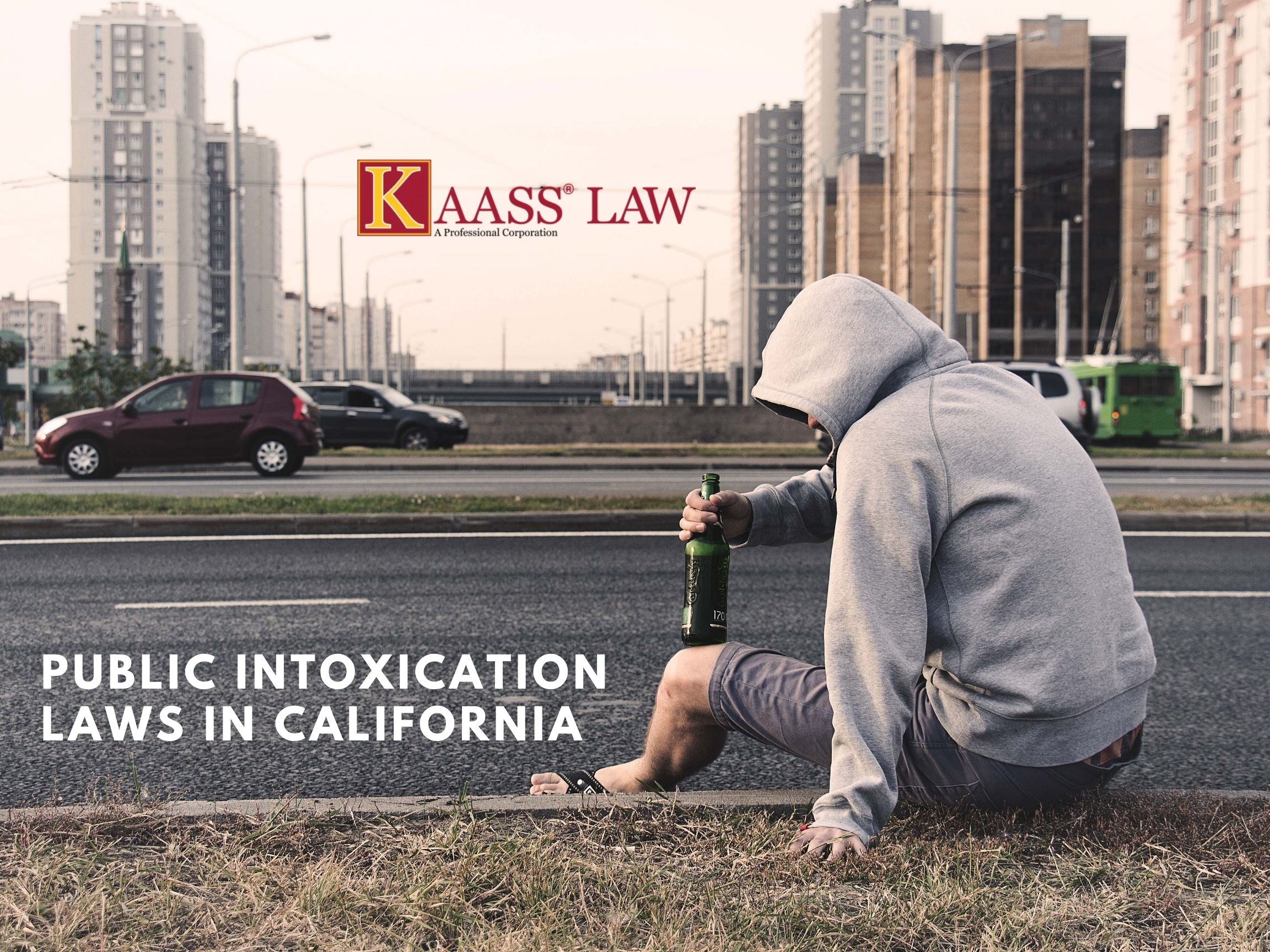
Outlaws public intoxication (public drunkenness). California Penal Code section 647f describes the crime as follows: “[An individual] found in any public place under the influence. "This includes intoxicating liquor, any drug, controlled substance, toluene, or any combination of these, in a condition that they are unable to exercise care. This is applies to their safety of others, or if their intoxication interferes with the free use of any public way.”
What Constitutes Public Intoxication in the State of California?
There are three elements to a public intoxication charge. The defendant must:
Was willfully under the influence of alcohol, drugs, or any other controlled substance.
The authorities must prove that the defendant intoxicated in a public place.
They became so intoxicated that they could not care for their own safety or the safety of others. Or obstructed/prevented the free use of a sidewalk, road, or other public entity.
Keep in mind that “intoxication” refers to a delirious state caused by any drug or controlled substance, not just alcohol. The statute also requires the accused individual to have willingly taken the substance.
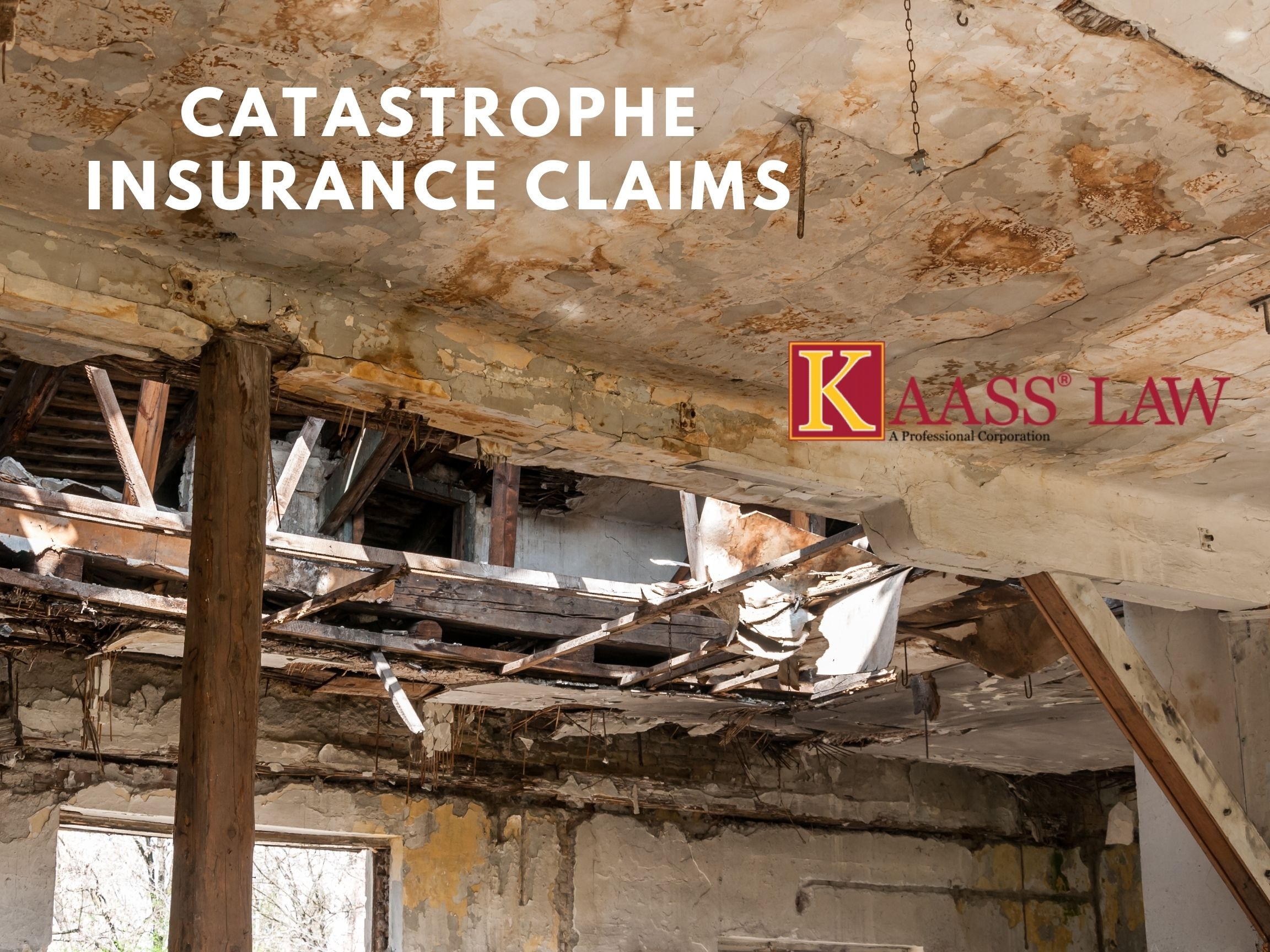
What Is Catastrophe Insurance and What Does It Cover?
Catastrophe insurance covers a wide array of natural and man-made disasters. The rare events covered in these insurance policies are generally not common enough to be included in homeowners' insurance. However, these low-probability disasters can and tend to cause extremely devastating amounts of damage to many people at once. Catastrophe insurance claims can cover a variety of things. A general catastrophe insurance policy could include coverage for the following:
Tornadoes
Hurricanes
Snow and hail storms
Earthquakes and other land-related events (sinkholes, mudslides)
Floods
Lightning
Volcanic eruptions
Man-made disasters (Terrorism, riots)
Someone looking to purchase a catastrophe insurance policy could choose to get one that covers a variety of catastrophic events or specific ones. Some common types of specific-catastrophe policies are flood insurance and earthquake insurance. Hazard Insurance is also similar to catastrophe insurance, but it excludes man-made disasters such as terrorist attacks and riots. It may cover all or only some natural disasters.
What Are the Elements Required to Win a Premises Liability Case?
California Civil Code section 1714 outlines the requirements to prove that a defendant is liable for your accident on their premises. The four elements required to win a premises liability case are, therefore, the following:
The defendant is the rightful owner (or lessee, occupant, etc.) of the property in which the accident took place
The defendant was negligent in their maintenance of the property
The plaintiff was harmed
The defendant’s negligence was a significant factor in causing harm to the plaintiff
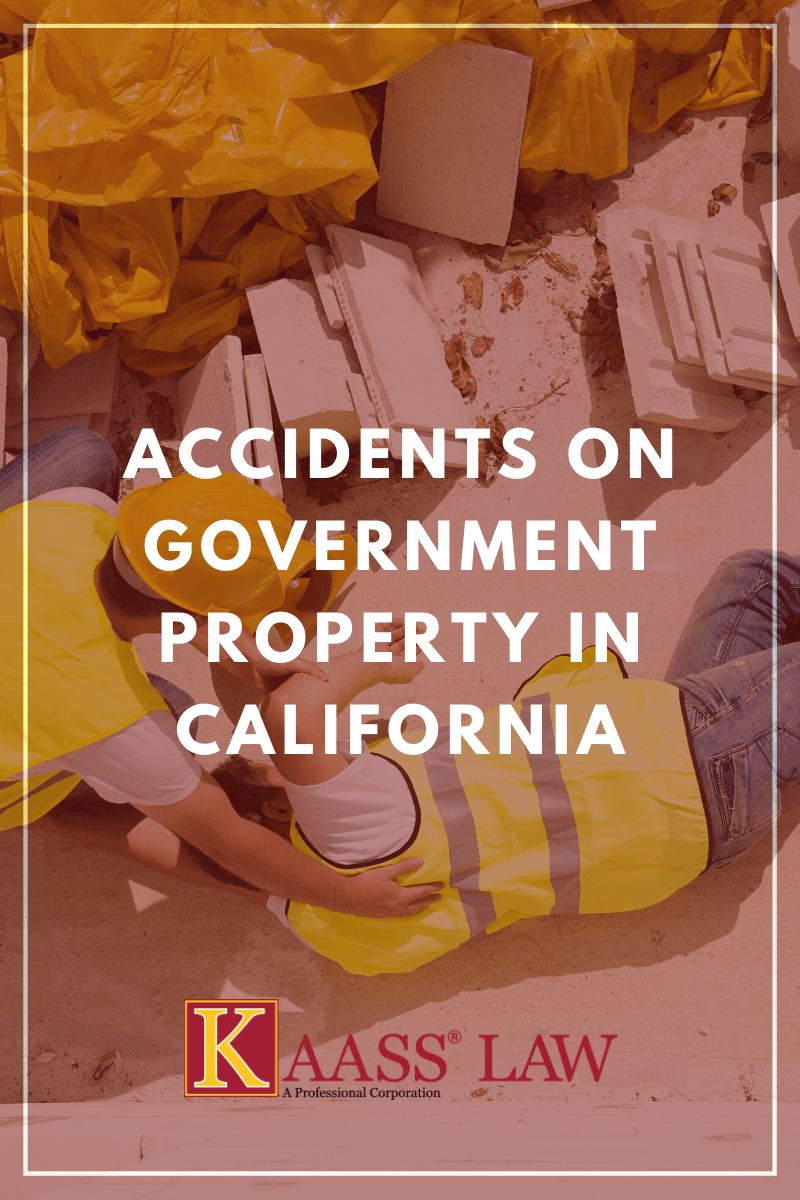
What Counts as Government Property?
Government buildings are not the only premises that would fall under the definition of government property. Nearly all public spaces are considered government-owned and, as a result, will require a different claim process than those within privately-owned premises. Some examples of government property include:
The California Transportation Commission adopts a resolution of necessity (RON), a formal document. Accordingly, an RON provides Caltrans with the authority to move forward with a condemnation action to obtain privately owned property for public use. Condemnation is the legal proceeding that exercises the authority of the eminent domain. According to the California Code of Civil Procedure, before a public entity can begin an eminent domain proceeding, its governing body must first adopt a necessity resolution that fulfills the demands of the article of the law The State Highway System acquires the required right-of-way at fair market value. Caltrans may request a condemnation action from the California Transportation Commission under California Streets and Highway Code, Section 102, and California Code of Civil Procedure, Section 1245.230, if it cannot reach an agreement with a property owner on the value or quantity of land to acquire. A necessity resolution would authorize Caltrans to take condemnation action to obtain assets.
California Code of Civil Procedure: Section 1245.230
Specifically, California Code of Civil Procedure Section 1245.230 states that a necessity resolution can only apply if:
Officials consider the project requiring the property necessary.
California Penal Code Section 191.5 PC Gross Vehicular Manslaughter While Intoxicated (DUI)
California Penal Code Section 191.5 (PC §191.5) classifies gross vehicular manslaughter while intoxicated as a felony.
What are the Elements the Prosecutor Must Prove to Be Found Guilty of Gross Vehicular Manslaughter While Intoxicated?
To charge a person for this vehicular manslaughter while intoxicated per Penal Code §191.5 PC, the prosecutor must prove the following elements exist:
The driver unlawfully kills a human being while operating a vehicle.
The killing is committed without malice aforethought;
The driver operates the vehicle while intoxicated, violating §§ 23140, 23152, or 23153 of the Vehicle Code (alcohol or drug influence).
The killing is the proximate result of an unlawful act, which does not amount a felony or the killing is the proximate result of a lawful act that has the potential to cause death; and
The acts described in the previous point are committed through gross negligence
Penal Code section 148.5 PC only encompasses misdemeanors and felonies, meaning that making a report of these offenses is illegal. However, reporting an infraction would not violate this law. You must know that the misdemeanor or felony was based on false information, meaning that merely making a mistake and reporting a crime you truly thought occurred would not violate PC 148.5. The law defines a 'figure of authority' as anyone delegated by the state to accept criminal reports. This includes police officers, emergency line operators, prosecutors, a grand jury, etc. Keep in mind that the law can charge you with the crime even if you didn’t make the false report yourself. If a third party makes a criminal report, whether it actually happened or not, you could face charges for violating PC 148.5 if you made a false statement at any point during the investigation. EX:Your neighbor’s car is not at their house one day so they report it as stolen. When the police investigate, they ask you if you saw who stole it. Because you really dislike the landlord of your building, you falsely tell the police that you witnessed the landlord steal the car. You would be guilty of violating PC 148.5 because your statements are inherently reporting your landlord as the culprit even if you didn’t make the initial report.
What are the Penalties and Punishments for Making a False Report of a Crime?
California considers making a false report of a crime a misdemeanor offense. This means that you can spend up to 6 months in county jail, and/or pay a maximum fine of $1,000. You can expunge this crime from your criminal record upon completion of probation or a jail sentence. However, it is important to realize that being charged under PC 148.5 can have other consequences. For example, having a criminal history of false reporting can have a negative impact on a person's reputation. Moreover, such charges can make it more difficult to obtain certain licenses or participate in government assistance programs. In addition, in some cases, the court may impose additional punishment in the form of community service or special courses. This is especially true for young people facing the criminal justice system for the first time. It should be noted that even if you gave false testimony out of fear, the court can still qualify your actions as willful provision of false information. Therefore, it is important to contact an attorney as soon as possible who can assess the situation and suggest the most effective defense strategy. Finally, although many people believe that false reporting, is a "frivolous" crime, law enforcement takes such charges quite seriously. The reason is that false reports divert police resources and can lead to the unfair prosecution of innocent individuals. This is why having qualified legal support is crucial to protecting your rights. The lawyers at KAASS LAW are here to help you if you find yourself in a similar situation.
How Can I Defend Myself If I Am Accused of Violating PC 148.5?
There are several common defenses to a violation of PC 148.5. They include:
You did not know the report or the information that you gave was false
You did not make the report to a figure of 'authority.
The crime reported was not a misdemeanor or felony offense
Even if you gave false information in a criminal report, you must have known that your statements were false. Mistakenly giving a false statement is not a crime. The statute also specifies that you must make the false report to someone delegated by the state to accept reports of crimes. For instance, if say you made a false report to a security guard at a night club, not to an actual police officer. You would not consider this a violation of PC 148.5. Lastly, you must ensure that the crime in question was a misdemeanor or felony, meaning that minor infractions do not count. Falsely reporting a nearby car of failing to signal when changing lanes would not constitute breaking this law. This is because the traffic violation was not a misdemeanor or felony. If you are facing charges for making a false report under PC 148.5, KAASS LAW can provide legal support.
Gaming is considered a misdemeanor crime in the state of California. The punishments for gaming may include up to 6 months in a county jail or a fine ranging from $100 to $1,000. Given that it is only a misdemeanor offense, a judge may choose to waive jail time and opt for probation instead.
How Can I Defend Myself If I Am Accused of Illegal Gambling?
There are quite a few legitimate defenses if you are accused of violating PC 330. Some of these are:
You did not participate in the game in a way that was illegal
The game was not a “prohibited game”
The game is legal due to an exception in the law, such as a charity bingo game
If you can prove that you did not participate in the game in question in a way that constitutes illegal activity, then you will successfully defend yourself against this charge. For example, say you own a club and some patrons start independently playing a game of poker. Even though it happened in your establishment, you did not collect any winnings from anyone nor permit the game to be played. This would be a legitimate defense against a gaming violation. You can also prove that the game was not prohibited, meaning that it was not a banking or percentage game. You could show that the game didn’t involve money at all, or if it did, there was no house that collected a part of the earnings. Lastly, there are a couple of exceptions to California gaming laws, most notably charitable games. Penal code section 326.5 specifies that bingo games held by certain charitable organizations are legal.
As mentioned before, the defendant must loiter in a place where people consume alcohol on the premises. One may think that the main example of a PC 303 violation is an individual under the age of 21 asking people outside of a liquor store/grocery store to buy them alcohol, however, this is not the case, given that these stores almost always do not permit drinking on the premises. Here are some examples that would constitute a crime under PC 303:
A bar kicks a man out for being too intoxicated. Before leaving, he asks patrons waiting in line outside to buy him one last drink and bring it to him before he returns home.
A group of minors loiters outside of a club an offer to buy unfinished drinks from patrons.
What can affect the court's decision in a PC 303 violation case?
In some cases, the court may take into account mitigating circumstances. Such as:
no prior offenses
clear evidence that the defendant did not intend to violate the law.
Also important is exactly how the request to purchase alcohol was made. If someone did it in a non-intrusive manner or in a different context, it might affect the decision. In addition, the defense may cite the lack of alcohol consumption at the scene. Also the fact that the defendant did not show any intention to break the law.
How Can I Defend Myself If Accused of Loitering to Solicit the Purchase of Alcohol?
Many defenses exist against allegations of violating PC 303 because people often misunderstand the crime to include more offenses than it does. Here are common defenses against loitering to solicit the purchase of alcohol:
Your actions did not meet the definition of loitering
You did not solicit the purchase of alcohol
Your actions took place in an area that does not sell alcohol for the purpose of consumption on its premises
To violate PC 303, you must loiter with the intent to engage in lewd conduct. This means that even if you blatantly solicited alcohol in a place that sells it and allows drinking on the premises, if you had a legal reason to be on the premises (meaning you weren’t loitering), you would not be violating the statute in question. Here is an example:
A group of minors eat at a restaurant that serves alcohol and want to purchase despite being too young. They ask people at other tables to purchase alcoholic beverages for them. While they did solicit alcohol in an area that sells it for consumption on its premises, they were eating there. This means they had a legal reason to be there and therefore were not loitering. While the authorities could charge them with other crimes, their actions do not violate PC 303.
Other defenses include that you did not solicit the purchase of alcohol or you did so in an area that does not permit alcohol consumption on its premises. Say someone bought you a drink without you asking, and you accepted it. Even if you were loitering, you did not actually solicit the purchase of alcohol, you merely accepted the offer from someone else. Also, as previously stated, soliciting alcohol on the premises of a liquor store or supermarket would not qualify as a violation of PC 303, because these locations do not permit the consumption of alcohol on their premises. If someone accuses you of soliciting alcohol, but you did not ask for it, KAASS LAW will investigate all the circumstances. Call (844)-522-7752
To exceed the permitted rate of speed to the extent it becomes dangerous and unsafe
To do it exclusively for showing off or trying to impress on someone else
Example of Exhibition of Speed
Suppose driver X drives his car on the highway at a normal rate. Suddenly he notices a pretty woman driving next to him. He accelerates the car to the dangerous speed to make an impression on her.
What Are The Other Consequences Of A Speeding Charge?
In addition to the potential for fine and jail time, a speeding charge can have other serious consequences. For instance, the court has the authority to suspend or restrict a driver's license for a specified duration. Furthermore, it should be noted that a misdemeanor of this nature is documented in the offender's history, which can have implications for the cost of automobile insurance. Many insurance companies consider drivers with such infractions to be high-risk, which can result in significantly higher insurance premiums. If the driver endangered other road users at the time of the offense, this can be considered an aggravating factor. In such cases, the court may impose a stiffer penalty or require the driver to take a safe driving course.
At What Point Can "Ostentatious Driving" Be Considered An Offense?
In some cases, a driver may be accused of demonstrating speed unfairly. For instance, if he were to accelerate sharply to avoid a dangerous situation on the road. Similarly, when another person drives aggressively and forces a driver to speed up, the driver may have grounds to file a claim. In such cases, the defense can argue that the defendant took action to ensure safety.
Do I Need The Help Of An Attorney?
Even if you believe the incident was minor, it is important to note that a Section 23109(c) charge can have implications for your driver's license. KAASS LAW attorneys are equipped to assist you in evaluating your case, gathering evidence, building a defense, and protecting your rights in court.
What Is the Penalty for Exhibition of Speed?
Dependent upon the severity of an offense and circumstances of the case, the punishment varies. In particular, the exhibition of speed leads to one of the following penalties
Imprisonment in a county jail for up to 90 days
Fine of up to five hundred dollars ($500)
Both that fine and imprisonment
As the perpetrator, the abettor of this offense is also subject to liability.
Legal Defense Against an Accusation of Exhibition of Speed
To convict a person for this crime, the prosecution must successfully prove all the elements discussed above. In this sense, the position of the defense is much more favorable, since the offense includes a special purpose- to show off or to make an impression on someone else. So in the concrete case, the legal question is- whether the offender has acted with that purpose in mind or not? In practice, weighty facts and arguments are necessary to prove the presence of a particular purpose. The defense may easily challenge the latter. Although the burden of proof is not on the defense, but they may argue that the offender was not trying to boast or impress someone, but was rushing to the hospital or hurrying up to the work, for example. KAASS LAW can help if you're facing charges related to the exhibition of speed in California. Call (844)-522-7752 to speak with our attorney.
Can A Public Intoxication Charge Affect Your Reputation And Future?
Yes, a public intoxication charge can affect your criminal record. Even though it is only a misdemeanor, information about it may come up in an employer or landlord's background check. This could affect:
employment opportunities
rental housing
enrollment in an educational institution
In some cases, having even one conviction can be perceived as a risk. Particularly if the profession requires a high degree of trust.
Can Public Intoxication Lead To Other Legal Consequences?
Yes, if the intoxicated behavior led to other offenses. Such as:
assault
vandalism
resisting arrest.
In these cases, the penalties may be harsher and will include longer jail time or large fines.
Should I Contact An Attorney When Facing A Public Intoxication Charge?
Definitely yes. Even if the charge seems minor, an attorney can help avoid a criminal record or reduce the risk of consequences. KAASS LAW firm is available for consultation and defense.
What Defines A Public Place?
A “public place” does not just refer to publicly owned property, such as a road. This definition includes all places that anyone can gain access to, even if it is private property. In addition to parks, sidewalks, and roads, being intoxicated in a mall, restaurant, or club could lead to a charge. Even in places that are permitted to sell alcohol, one can become intoxicated enough to be arrested for public intoxication. Lastly, even your own property can be classified as public in some instances where it is easily visible to others. Some examples of this would be one’s car parked in a parking lot or even one’s own front yard in some cases. The third requirement of PC 647f makes it clear that being under the influence in public alone is not a crime. One requirement of being convicted for public intoxication is that a person must be so intoxicated that they cannot take care of themselves. They must also be unable to care for others. Additionally, the person must interfere or block a public entity.
What Are the Criminal Punishments for Public Intoxication?
Public intoxication is classified as a misdemeanor in California and is punishable by up to 6 months in county jail and/or a fine up to $1000. In many cases, the court can substitute jail time with other alternatives, such as probation with mandatory rehabilitation or community service. Penal Code section 647g authorizes a police officer or other peace officer to place someone in violation of public intoxication laws in civil protective custody (drunk tank) until it is safe and reasonable for the defendant to leave.
Some Ways To Defend You
Involuntary intoxication is one potential defense. If someone forcefully or unknowingly received substances that led to intoxication, this would disqualify them from facing charges for public intoxication. Some examples include:
Someone slipped a drug in your drink at a club and you passed out in public later
You took medication that gave you a rare, unforeseeable side effect of intoxication/delusion
One can also defend themselves by trying to establish that they were not in a public place at the time of intoxication. This is a very grey area with different rules depending on the state you live in. If authorities charged you with public intoxication on your property or a friend's property, you may want to consider this defense Lastly, you can establish that your intoxication was not extreme enough to have warranted a violation of public intoxication laws. Being under the influence in public or being 'buzzed' does not count as a crime. You can prove that you were not intoxicated to the point where you couldn't care for yourself or others. If you can show that you did not obstruct sidewalks, roads, or other public areas, authorities cannot charge you. Are you in need of additional information regarding public intoxication laws in California? Feel free to give KAASS Law a call anytime at (310) 943-1171 in order to speak with our legal team.
How Is Catastrophe Insurance Different From Traditional Homeowners' Insurance?
Homeowners insurance generally does not cover any of the disasters in the list of catastrophic disasters above. Most notably, homeowners' insurance policies rarely cover earthquakes and floods, which leaves many victims uninsured each year. The reason homeowners insurance policies do not include these events is because they are hard to predict and the damages are hard to estimate. There aren’t very many people who would invest to protect themselves from events that are rare.
Additional Aspects That Are Important To Consider
When choosing a catastrophe insurance policy, it is important to carefully consider what types of losses it does and does not cover. Not all policies are created equal. Some may limit coverage based on region or type of loss. For example, earthquake insurance is more relevant to homeowners in California. Therefore, it is prudent to tailor coverage to regional risks. It is also important to consider the policy's deductible structure. Unlike standard fixed policies, catastrophe policies are typically calculated as a percentage of the insurable value of the property. For example, if the insured value of a home is $500,000 and the deductible is 5%, in the event of a loss you will pay $25,000 before the insurance kicks in. This is a very important financial consideration when planning your disaster budget.
Government Programs and Their Role in Catastrophe Insurance
In most cases, catastrophe insurance can be supplemented or replaced by government programs. One of the best known is the National Flood Insurance Program (NFIP). The NFIP is administered by the Federal Emergency Management Agency (FEMA). This program offers insurance policies against:
1. floods 2. for homeowners 3. for renters 4. for business owners in communities participating in the program. Given that standard policies do not cover flood damage, participation in the NFIP is important for residents of coastal or low-lying areas. Similarly, some states have specialized programs or public-private partnerships. These provide catastrophe insurance in high-risk regions. For example, California has the California Earthquake Authority (CEA). This organization offers earthquake insurance through participating insurance companies.
Typical Mistakes When Filing an Insurance Claim
The process of filing an insurance claim after a disaster can be stressful. To avoid delays in payment or denial, it is important not to make strict mistakes. Often, people forget to document damages or lose checks and receipts related to temporary repairs and moving expenses. Which is one of the biggest problems. Here's what you should prepare in advance: 1. photo documentation of the damage 2. start a separate folder with copies of all documents 3. save every detail related to home restoration. You should also notify the insurance company as soon as possible and review the filing requirements. Incomplete information or missed deadlines can make it very difficult to receive compensation. If you are facing difficulties filing a claim or would like advice on catastrophic insurance claims, the legal team at KAASS LAW is here to help.
What to Keep in Mind When Filing a Catastrophic Insurance Claim
When a catastrophic disaster hits, it is imperative that you keep all of your receipts and bills in order to gain the most complete financial compensation from your catastrophe insurance claim. These events typically require several immediate/temporary repairs and may even cause you to relocate. The catastrophe insurance claims typically cover for moving and living costs if the disaster prevents you from living at home. Make sure that you keep all records of any repairs and moving costs, however, keep in mind that spending more money on temporary repairs will come out of your final settlement. You will need to record all specific damages to your property and all possessions that were damaged or destroyed. The more documentation that you can provide for your claim on losses, the faster and more accurately you will be compensated. Your compensation will partly depend on whether your policy gives people new replacements for lost items or gives the estimated value of the lost item in cash. Are you in need of additional information regarding catastrophe insurance claims? Our legal team at KAASS Law would be happy to answer any questions that you have. Give us a call now at (310) 943-1171 for more information.
Considerations For Filing A Lawsuit Against Government Agencies
Filing a lawsuit against government agencies is a process that requires special preparation and precise adherence to deadlines. Even a minor mistake in the paperwork or a missed filing deadline can result in an automatic dismissal of the claim. It is important to note that victims are often unaware that six months is the deadline for filing a claim. After this period, the opportunity to file a claim is completely lost. Government agencies generally possess robust legal defenses. In certain situations, they can invoke "immunity" from liability. This means that they can argue that they are not obliged to compensate for damages.
Which Types Of Injuries Occur Most Often On Public Property?
The most common incidents include: 1. Slips 2. Falls on uneven sidewalks 3. Injuries in poorly lit parks 4. Accidents on unmaintained stairs in courtyards of state buildings
There are also incidents of falling tree branches in public parks and accidents on unimproved roads.
What Evidence Can Be Presented To Strengthen This Claim?
To pursue compensation, it is essential to gather all the evidence you can. For example: 1. Photographs of the accident scene are required. 2. Eyewitness testimonies 3. Medical documents proving the seriousness of your injuries 4. Evidence that the government agency knew of the danger and failed to take action
What is the California Tort Claims Act?
Before the California Tort Claims Act and Federal Tort Claims Act, it was very difficult to sue the government for any premises liability related issues. These laws established guidelines that allowed people to gain compensation for injuries that occurred on government property. They are very similar to those of a private premises liability cases. The CTCA outlines the elements as follows:
The government was negligent in maintaining the property
The plaintiff suffered harm.
The government’s negligence substantially contributed to the plaintiff’s harm
What Should You Do Immediately After An Incident On Public Property?
First important step. First of all, it is important to seek medical attention right away, even if the injury does not appear serious. This is necessary for your health and to document the fact that you have been injured. In addition, you should document the scene of the accident with a photo or video: 1. condition of the sidewalk 2. lack of warning signs 3. puddles 4. debris or any other unsafe conditions. This video or photo will serve as evidence.
Second important step. Timely notification of the incident to the government agency. According to the California Tort Claims Act, you must file a written notice within 6 months of the incident. In other words, missing this deadline could completely disqualify you from compensation. In addition, keep in mind that the government may deny your claim on technical grounds. for example: 1. the accident is not accurately described 2. lack of necessary documents Therefore, it is extremely important to contact a lawyer who will help you prepare a competent claim. Unlike private claims, where you file a complaint in court, cases involving public property first go through the administrative stage. Therefore, patience and accuracy in this procedure play an important role. Even if the insurance company rejected your claim, you can still take the case to court.
However, this is only possible after following all the steps of procedures. The KAASS LAW team will guide you through the process step by step. We understand how difficult it can be to deal with the aftermath of an injury, and we are ready to protect your interests. Contact us, a consultation may be the first step to getting justice.
How Is the Legal Process Different When the Accident Happened on Government Property?
The main difference in filing a CTCA claim vs. a private claim is that the statute of limitations (amount of time one has to file the claim after the injury) is much shorter. Premises liability claims on private property are typically 2 years, though they can sometimes be longer. In contrast, a CTCA claim requires one to file the claim no later than 6 months after the accident occurred. After filing a CTCA claim, the government has 45 days to respond, in which they can reject the claim, accept the offer in full, or compromise with the plaintiff in the form of a settlement. They also have the option to reject the claim based on a violation of the time constraints for claims or for a lack of information included in the claim.
Why Should You Seek Help From KAASS LAW Attorneys?
The process of initiating legal action against government agencies necessitates a comprehensive understanding of specialized legal principles. At KAASS LAW our attorneys possess the necessary experience to assist you in properly filing a claim and gathering evidence.
The project is located where it will provide the greatest public benefit with the least personal detriment.
The company has made an offer to buy the property.
The organization must also hold a government hearing to address the resolution of necessity and the suggested eminent domain action after meeting these four criteria. The agency must notify the present owners of the property of the hearing. Property owners may attend the hearing themselves or seek representation of an eminent domain lawyer from California.
The Review Standard for Resolution of Necessity
Most eminent professionals of the domain can rapidly state the fundamental rule on results for a Necessity Resolution. Under section 1245.250 of the Code of Civil Procedure, subdivision (a), the findings of public use by a public agency. Additionally, it needs to establish those things in a conclusive manner. This means that the property owner cannot usually dispute the finding once the company concludes that the project is planned and placed in a position that best serves the largest public good and minimizes personal injury. However, most people rarely mention a possible twist. On the other hand, when gross abuse of discretion impacts the agency’s findings, the conclusive presumption under section 1245.250, subdivision (a), does not apply (CCP 1245.225, subdivision (b).
What Rights Does A Property Owner Have When A (RON) Is Issued?
Although a Resolution of Necessity (RON) grants Caltrans authority as a public body, it does not eliminate the property owner's rights. On the contrary, owners retain a number of important legal protections. First and foremost, an owner has the right to be notified of an upcoming hearing. This includes the opportunity to familiarize himself or herself with the documents in the case, as well as to submit objections. Moreover, at the hearing, the owner has the right to be represented by an eminent domain lawyer, which can significantly affect the outcome of the case. In addition, it is worth understanding that the resolution of necessity procedure itself can take a long time. During this period it is important to:
save documents
keep correspondence
record all contacts with representatives of state authorities
It is also sometimes useful to unite with other owners whose plots are located in the exclusion zone. To jointly hire a lawyer or initiate collective defense of interests. In some cases, discussion of other project options can influence the final decision of the commission. Therefore, owner activism, awareness, and legal support greatly increase the chances of a fair outcome.
How You Can Challenge a Resolution
Although California Code of Civil Procedure Section 1245.250 states that the agency’s findings of need for a project are final, an exception exists. Specifically, if evidence shows that the agency committed a gross abuse of authority. In that case, the presumption of finality may be rebutted (CCP 1245.225 (b). Thus, upon a showing of good cause, such as:
the project does not have a significant public benefit
someone violated the requirement to minimize personal injury.
The court may hear the case in favor of the owner. This plays a role when there are alternatives to siting the facility that do not affect private property.
Estimating Fair Market Value
Even if a resolution of necessity takes effect, disposition is only possible with compensation. The law requires Caltrans to make a formal offer to the owner based on the market value of the property. However, the owner has the right to disagree with the appraisal and initiate a separate proceeding to establish value through the courts. A resolution of necessity gives the authority considerable power, but it does not override the basic rights of the owner.
Consequently, if you are facing the threat of a forced taking of your property, it is critical to consult with an attorney as early as possible. The attorneys at KAASS LAW have the experience you need and are ready to help you protect your interests. Call us at (310) 943-1171 for a free consultation.
In other words, we may speak of gross vehicular homicide when the driver being under the influence of alcohol or drugs has killed another person without an intent to kill, but the driver has manifested gross recklessness in that situation.
An Example of Gross Vehicular Manslaughter While Intoxicated
Suppose driver X drives under the influence of alcohol. He tries to make a drift in the motorway. Suddenly the vehicle goes out of his control and flips over. As a result of the accident a passenger dies.
What Is the Penalty for Gross Vehicular Manslaughter?
The penalty for gross vehicular manslaughter leads to both criminal and administrative punishment.
Criminal liability- imprisonment in the state prison for 4, 6, or 10 years (PC §191.5 (c)(1))
Administrative liability- revocation of driving license (Vehicle Code VC §13351)
Legal Defense Against an Accusation of Gross Vehicular Manslaughter
For the conviction of an accused under this crime, the prosecutor has to prove all the circumstances mentioned above. Exhibits and expert conclusions can prove points 1 to 4, but point 5 involves a subjective evaluation. So the tactic of legal defense may be constructed over this factor- whether the accused acted negligently? If yes, whether the negligence was gross or not.
Difference Between Vehicular Homicide And Aggravated Vehicular Homicide
It is important to distinguish between vehicular homicide and aggravated vehicular homicide. As a simple example, if a person accidentally hits a pedestrian because he or she didn't see a stop sign, that is classified as vehicular manslaughter. But if a person drives drunk, at a high rate of speed, and breaks the rules for fun - that's PC §191.5. Some cases involving deaths caused by a drunk driver can be classified as Watson murder - that's second-degree murder. The main difference is intent or deliberate disregard of the risk of death. If a driver has already been charged with DUI and has been educated about the risks, a second DUI may result in a Watson murder charge. In such cases, the court finds that the defendant intentionally disregarded the risk of death.
What Can Affect Sentencing?
The court looks at many factors:
The defendant's history of impairment
Whether the crash was accidental or predictable
Blood alcohol level
Whether the defendant was remorseful and cooperated with the investigation
In addition, if the defendant stayed at the scene of the accident, summoned help and actively assisted the investigation - this may be considered as a mitigating factor.
Additional Possible Penalties
While the main penalty is imprisonment for 4, 6 or 10 years, there are other consequences:
Compensation to victims' families
Mandatory attendance at alcohol/drug rehabilitation programs
Restrictions on future employment
"dangerous driver" status with the DMV
It's also worth keeping in mind that penalties can be increased for repeat offenses.
Possible Lines of Defense
Attorneys can use several strategies: - Challenging the presence of gross negligence - Challenging the level of intoxication - Pointing to other causes of the accident - Insufficient evidence of causation A PC §191.5 charge is an extremely serious offense that requires a skilled legal defense. If you or a loved one has been in this situation, it is crucial that you don't waste any time! Contact KAASS LAW.
What Does Gross Negligence Mean?
Black’s Law Dictionary defines the legal concept of ‘gross negligence’ as a “lack of slight diligence or care.” Thus in every concrete case question is whether the slight amount of diligence or care was sufficient in the given situation to prevent the accident. If the required diligence or care was beyond slight, then it amounts to another felony (vehicular manslaughter) leading to a relatively lenient penalty. Facing charges for intoxication manslaughter? KAASS LAW will analyze your case thoroughly and offer the necessary expertise. Call (844)-522-7752 to speak with our experienced attorney.