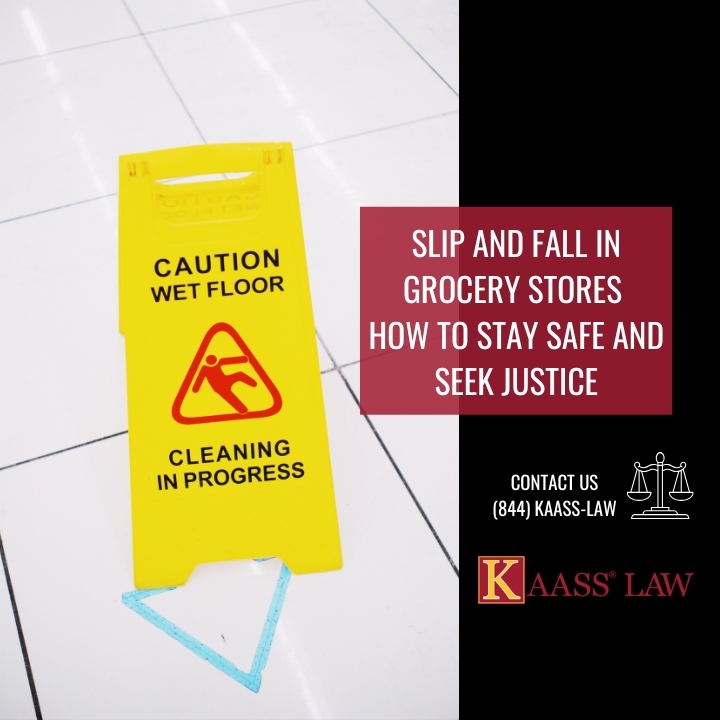
Slip and fall accidents are among the most common personal injury claims, but they can be surprisingly difficult to prove. Whether the incident occurred in a grocery store, restaurant, or on a public sidewalk, securing the proper injury evidence is critical to establishing liability and maximizing your compensation. In California, property owners have a legal obligation to maintain safe premises. However, simply being injured on someone's property does not automatically guarantee that you’ll win your case. To build a robust slip-and-fall claim, you need solid injury evidence to prove that the property owner was negligent. In this blog, we’ll explore the types of injury evidence that can help strengthen your case and give you the best chance of success.
1. Incident Reports: Crucial Injury Evidence
The incident report is one of the most critical pieces of injury evidence in a slip-and-fall claim. If your accident occurred in a commercial setting, like a store or restaurant, it’s important to immediately report the incident to management. Most businesses have standard procedures for documenting accidents on their premises. Why it’s essential: Incident reports are often the first formal record of your accident. They may include details about the time, date, and location of your fall and statements from employees or witnesses. If you don’t report the fall immediately, the property owner may argue that your injuries aren’t as serious as claimed or that the accident didn’t happen at all. What to do: After your fall, ask the manager or employee on duty to create an official incident report. Be sure to get a copy for your records.
2. Photographs and Video Footage as Strong Injury Evidence
Visual evidence can be one of the most persuasive elements in a slip-and-fall case. Photographs and video footage capture the accident scene and show hazardous conditions, such as spills, broken stairs, or uneven surfaces, that may have caused your fall. Why it’s essential: Photographs and videos can provide indisputable injury evidence of unsafe conditions. They allow you to demonstrate the state of the property at the time of the accident, preventing the property owner from disputing the hazard's existence or claiming it was promptly addressed after your fall. What to do: Take photos or videos of the area where you fell immediately after the incident. Focus on capturing what caused the fall, such as a wet floor, clutter, or poor lighting. If the property has security cameras, request that footage be preserved before it’s overwritten or deleted.
3. Medical Records: Key Injury Evidence
After any slip and fall, seeking medical attention as soon as possible is crucial. Even if you think your injuries are minor, symptoms may worsen over time, and early medical intervention could prevent complications. Medical records are key injury evidence in showing the severity of your injuries and their connection to the fall. Why it’s essential: Medical records document the nature and extent of your injuries and the treatment you received. These records validate your claim and help quantify damages, such as medical bills and ongoing care needs. What to do: Visit a doctor or healthcare provider as soon as possible after your fall, and follow all recommended treatment plans. Keep detailed records of your medical visits, prescriptions, physical therapy, and any related expenses. These documents will be critical in proving your injuries and the costs of your recovery.
4. Witness Statements: Supporting Injury Evidence
If there were any witnesses to your slip and fall, their testimony can significantly bolster your case. Witnesses provide an unbiased account of what happened. They may be able to corroborate your version of events, such as the presence of a hazardous condition or the property owner’s failure to address the problem. Why it’s important: Witnesses offer independent confirmation that the property was unsafe and that your actions didn’t cause your fall. In cases where there’s a dispute over liability, witness testimony can help clarify how the accident occurred. What to do: Get the names and contact information of anyone who saw your fall or noticed the hazardous condition. Ask them to provide a written or recorded statement describing what they saw.
5. Expert Testimony: Strengthening Your Case with Injury Evidence
Expert testimony can be precious in some slip-and-fall cases, particularly those involving complex safety issues or building codes. Experts in fields like safety, engineering, or medicine can offer professional opinions on whether the property owner acted negligently or if specific conditions contributed to your fall. Why it’s crucial: Experts lend credibility to your claim by providing objective, fact-based analyses of the hazard and its potential to cause injury. Their testimony can clarify technical issues, such as whether a surface was too slippery or a handrail was improperly installed. What to do: Your personal injury lawyer will help determine if expert testimony is necessary and coordinate with qualified professionals to strengthen your case.
6. Maintenance and Inspection Records: Additional Injury Evidence
A key aspect of proving negligence in a slip and fall claim is showing that the property owner either knew about the hazard or should have known about it but failed to take appropriate action. Maintenance and inspection records can reveal whether the property owner regularly checks the premises for hazards and promptly addresses any issues. Why it’s important: These records can demonstrate whether the property owner had a history of neglecting maintenance or was aware of a specific hazard before your fall. If the owner fails to take reasonable steps to prevent accidents, these records could help establish liability. What to do: Your attorney can request maintenance and inspection logs during the discovery phase of your case. This evidence is especially important if the hazardous condition was not immediately obvious or if the property owner claims they were unaware of the problem.
7. Comparative Negligence Defense: Countering Claims with Injury Evidence
California follows a comparative negligence system in personal injury cases, meaning that your compensation may be reduced if you’re found partially responsible for the accident. The property owner’s legal team may argue that you were texting while walking, wearing inappropriate footwear, or not paying attention. Why it’s essential: The defendant’s legal team will likely try to shift some of the blame to you to reduce their liability. Strong injury evidence to counter these claims can help you receive fair compensation. What to do: Work with your attorney to gather evidence demonstrating you acted reasonably during the accident. Witness testimony, video footage, and a detailed account of the incident can help refute the comparative negligence defense.
8. Legal Guidance: Why You Need an Experienced Attorney
Slip and fall cases can be complex, mainly when gathering and presenting evidence. An experienced personal injury lawyer can help you navigate the legal process, ensure crucial injury evidence is preserved, and advocate to maximize your settlement. Why it’s important: A skilled attorney can determine the best legal strategy for your case, from negotiating with insurance companies to taking the case to trial if necessary. Your lawyer will also be able to counter any arguments that the property owner’s legal team may present, such as claims of comparative negligence or disputing the severity of your injuries. If you’ve been injured in a slip-and-fall accident, don’t wait to seek legal advice. KAASS LAW can help you collect the required injury evidence to build a strong case and fight for the compensation you deserve. Contact us today for a free consultation and learn how we can assist with your slip and fall claim. For more details on maintaining a safe environment and preventing slip-and-fall accidents, check out the Occupational Safety and Health Administration (OSHA) website for valuable safety resources.
PACCAR Recalls Over 220,000 Trucks for Safety System Issue
Trucking is another level of safety and maintenance. Constant repairs and up-to-date systems are top priorities in the motor vehicles industry. When safety systems is the problem, the consequences are dire and can be far more dangerous than the problems of a normal car. PACCAR Inc., one of the largest manufacturers of big rig trucks, issued a recall for over 220,000 trucks due to a number of issues. “The commercial truck manufacturer is recalling 220,972 of its trucks for a loss of anti-lock braking systems (ABS) and electronic stability control. In the National Highway Traffic Safety Administration (NHTSA) recall report, PACCAR said the electrical noise and low signal to the power line carrier may cause the Electronic Control Units (ECU) to not process commands correctly and stop functioning.” Some of the safety systems are automatic traction control, anti-lock braking systems, electronic stability control, active cruise control, and collision mitigation systems. Here is the list of the following trucks in the question of the recall:
Albertson has claimed that it had backed out of, "its $25 billion merger with Kroger and sued its rival for failing to adequately push for regulatory approval…”. This could have been the deal of the century in the supermarket industry in U.S. history. However, someone spilled some water on the floor, and the deal became a victim of a slip & fall, which is extremely common in grocery store environments. Studies have shown that consumers visit grocery stores almost once to three times a week. With such high frequencies of customers coming and going into supermarkets, the risk of potential cases of slip & fall increases. Grocery shopping is a routine activity for the most part of regular life, but it can be a nightmare if you fall victim to slipping, tripping, or, ultimately, falling while on supermarket property. While it's goal is to protect its customers and provide awareness if the floor is hazardous, failing to do so can lead to serious injuries.
Common Causes of Slip & Fall
These things can happen for a variety of reasons, often to unsafe conditions that are unchecked by staff or management. Common causes include:
On December 4, 2024, outside New York Hilton Midtown in Manhattan, New York, NY, CEO of UnitedHealthcare Brian Thompson, shot to death. Through sources and videos, it appears the shooter targeted Brian from behind when least expected. In Brian's obituary, he was well-liked by his peers, friends, family, and anyone surrounded in his life before his fatal tragedy. Aged 50, a father of two, "Brian was an incredibly loving, generous, talented man who truly lived life to the fullest and touched so many lives," said his wife, Paulette Thompson. A Nation Man Hunt was dispatched and found a person of interest, Luigi Mangione. This 26-year-old, born and raised in Maryland, was at a McDonald's in Altoona, Pennsylvania. One of the workers called in, and officers questioned Luigi Mangione. They found multiple fraudulent IDs, a 3D-printed gun with a silencer, and a U.S. passport. Police matched one of the fake IDs that the suspect used to check into a Manhattan Hostel before the shooting. Afterwards, they the suspect with charges of five counts in Pennsylvania for, forgery, unlicensed firearm, tampering with records or ID, and false identification to law enforcement. New York later charged him with murder on the night of his arrest.
Explore the Adjustment Process for U.S. immigration, including timelines, fees, eligibility, and common challenges. Learn how to navigate the Green Card application efficiently.
What is Adjustment of Status?
Adjustment of status is a process through which individuals in the U.S. on a temporary visa can become lawful permanent residents without needing to return to their home country for visa processing. This option is typically available to individuals who qualify through family, employment, or humanitarian programs like asylum.
Timeline for Adjustment of Status
The timeline for adjustment of status varies depending on factors such as processing backlogs and the applicant’s eligibility. Here's a typical overview:
Filing Form I-485: Once eligibility is established, the applicant files Form I-485, Application to Register Permanent Residence or Adjust Status. This is the first formal step.
Biometrics Appointment: Scheduled about 1-2 months after filing, this appointment involves fingerprinting and photographing the applicant for security checks.
Interview: USCIS may schedule an in-person interview, typically within 8-14 months of filing, depending on the local office and caseload.
Is this a comeback for Vine? Jokes aside, in the recent years, TikTok is currently one of the most worldwide social media platforms. With billions of active users, the app alone has allowed connections and shared creativity, and is the source of current viral trends that target audiences from the early youth, to the older generation demographic. However, TikTok's influence has also been under hot water with the U.S. Government. As of January 19, 2025, the U.S. government is going to impose a nationwide ban on TikTok. This social media platform will likely disrupt countless American users, content creators, and actual businesses that use its channel to help promote and or connect with their current or future customers. The following section will dive further into how this transpired and what the possible future looks like for the rest of the social media platforms.
Why The Ban?
The ban on TikTok in the U.S. is not an all of a sudden decision. The app itself, being owned by a Chinese company called ByteDance, has been under scrutiny and has raised several problems that need resolution on national security for several years. The United States Government has summoned the CEO of the social media platform to a hearing and made it clear that there is a question of trust and concerns with their possible connection with the Chinese government on a private date being given and or sold to the wrong hands. Here are key points on the matter:
DATE: November 26, 2024 RE: Rent Increase for Tenant in Burbank, California
Overview
This memorandum outlines the permissible rent increase for a residential property in Burbank, Los Angeles County, California, under the Tenant Protection Act of 2019 (AB 1482) and Burbank Ordinance No. 24-4,014. It also addresses whether tenant characteristics (e.g., having minor children) or tenant hardship affect the landlord’s ability to raise rent and provides guidance on compliance with notice requirements.
Issue
Can the landlord legally raise the rent for a tenant residing in a 4-unit residential building in Burbank, CA, who has lived there for 2 years with three minor children, and by how much? Does Burbank’s local ordinance or tenant characteristics (e.g., minor children or financial hardship) impose any additional restrictions on rent increases?
Background
The landlord intends to raise the rent for a tenant who has continuously occupied a unit for 2 years. The property is subject to the and , which govern permissible rent increases and tenant protections. Under AB 1482:
This analysis outlines a structured approach to addressing royalty mismanagement issues involving ASCAP, BMI, and the publisher, Evolving Sound. Below is a concise action plan based on your points: Action Plan for Royalty Mismanagement1. Issues Identified • Unauthorized Registration with ASCAP: Challenge ASCAP’s registration of works without explicit authorization, especially as CLIENT is a BMI member. • Royalty Discrepancies: Investigate minimal royalties reported by ASCAP and limited payments for international performances via BMI. • Publisher Breach of Fiduciary Duty: Address Evolving Sound’s potential unauthorized registrations and mismanagement. • Pending Registrations: Push BMI to expedite “Pending Society Review” cases. • Non-Responsiveness: Demand accountability from ASCAP and the publisher. 2. Immediate Actions • Send Demand Letters: • ASCAP: • Request detailed royalty accounts and challenge unauthorized registrations. • BMI: • Request updates on pending registrations and support for international royalties. • Evolving Sound: • Demand full accounting and address breaches of fiduciary duties. • : • Gather BMI royalty statements (2021–2024). • Consolidate ASCAP Work IDs and royalty records. • Collect communications with ASCAP, BMI, and Evolving Sound. • : • Request audits of ASCAP’s and BMI’s royalty collections. • Examine Evolving Sound’s records for discrepancies. • : • Pursue claims against Evolving Sound for unauthorized ASCAP registrations and negligence. • : • Address unauthorized registrations by ASCAP as potential infringement. • : • Seek repayment of improperly retained royalties from ASCAP. • : • File claims against Evolving Sound for mismanagement of registrations. • : • Proceed to arbitration or litigation if preliminary demands fail. • : • Ensure all works are registered and managed exclusively under BMI. • : • Terminate agreements with Evolving Sound if breaches are confirmed. • Implement stricter agreements for future publishing relationships. • : • Define clear terms for ownership, registration, royalty reporting, and dispute resolution. • : • Hire a professional for ongoing monitoring and management of royalty collections. Legal counsel specializing in entertainment law should: • Draft and issue formal demand letters. • Negotiate with ASCAP, BMI, and Evolving Sound. • File claims for contract breaches, copyright infringement, and unjust enrichment. • Represent CLIENT in arbitration or court proceedings if necessary. This approach emphasizes evidence-based advocacy, structured legal action, and long-term preventive measures. By holding ASCAP and Evolving Sound accountable and streamlining processes under BMI, CLIENT can mitigate future risks and recover lost royalties effectively.
A federal judge has issued a nationwide preliminary injunction temporarily blocking enforcement of certain provisions of Corporate Transparency Act. The Corporate Transparency Act was enacted in 2021 and aimed at combating money laundering and illicit financial activities by requiring most companies to disclose their beneficial owners to the Financial Crimes Enforcement Network. The law aimed to increase transparency by targeting anonymous shell companies. These are ongoing legal challenges from business groups, including sole proprietors and small business owners. They argued that this violated privacy rights. The court agreed, ruling that the plaintiffs were likely to succeed in their arguments that certain provisions of the CTA might be unconstitutional.
Texas Top Cop Shop, Inc. v. Garland (Docket No. 4:24-CV-478)
The plaintiffs in this case, an individual, three small businesses, the Liberation Party of Mississippi, and the National Federation of Independent Business (NFIB), fought and argued in court that the CTA is unconstitutional. The court determined that a nationwide ban on the Corporate Transparency Act’s enforcement would be applicable. FinCEN has not yet made any public statements on this matter. The government may decide to appeal this preliminary injunction to the US Court of Appeals for the Fifth Circuit. However, there is no determination as of yet. Companies and or businesses that have not yet filed their BOI reports under CTA may possibly delay their submission. The deadline is originally on for January 1, 2025
Learn how to avoid common workers' compensation mistakes that can affect your claim. Get expert advice from KAASS LAW to ensure you receive the benefits you deserve. Workers’ compensation is an essential program designed to protect employees who suffer injuries or illnesses due to their jobs. However, many workers make avoidable workers' compensation mistakes that can hinder their claims. At KAASS LAW, we are committed to helping you navigate the complexities of workers’ compensation. In this blog, we will outline five familiar workers' compensation mistakes to avoid to ensure you receive the benefits you deserve.
1. Workers' Compensation Mistake: Failing to Report the Injury Promptly
One of the most significant workers' compensation mistakes is not reporting an injury immediately. Most states require employees to notify their employers of a workplace injury within a specific timeframe, often 30 days. Delaying this can lead to complications or even the denial of your claim.
Why Timely Reporting Matters
When you report your injury promptly, it creates a crucial record for your claim. It also allows your employer to begin filing a workers' compensation claim on your behalf. If you wait too long, your employer may dispute your claim, arguing that your injury did not occur at work or that you failed to follow proper protocols. This is one of the easiest to avoid with timely action.
2023-2025 Kenworth T280
2022-2023 Kenworth T370
2021-2025 Kenworth T380
2021-2023 Kenworth T440
2022-2025 Kenworth T480
2021-2025 Kenworth T680
2021-2025 Kenworth T800b
2021-2025 Kenworth T880
2021-2025 Kenworth W900b
2021-2025 Kenworth W990
2021-2023 Peterbilt 337
2021-2023 Peterbilt 348
2022-2025 Peterbilt 365
2022-2025 Peterbilt 367
2021-2025 Peterbilt 389
2022-2025 Peterbilt 520
2024-2025 Peterbilt 536
2023-2025 Peterbilt 537
2021-2025 Peterbilt 548
2021-2025 Peterbilt 567
2021-2025 Peterbilt 579
2024-2025 Peterbilt 589
At KAASS LAW, we understand how important it is for businesses and individuals to be informed about product recalls and the legal implications they may face as a result. In the following, we explore further the recall and bring awareness to fleet owners and how affected these parties can take steps to protect themselves legally.
The Impact on Truck Recalls
When manufacturers issue a recall for a vehicle, it can have a wide range of effects on both truck drivers and businesses that rely on this equipment. For drivers alone, a malfunctioning braking system can lead to major disasters such as accidents, injuries, and or fatalities. From a business standpoint, the recall may create a line of logistical and financial challenges. Here are some key points to consider:
Risk of Accidents: The most important factor in recalls is the potential risk of accidents. If a malfunctioning braking system compromises the truck, it limits the truck’s ability to stop effectively, which increases the chance of getting into an accident, particularly in high-stress-driving conditions like emergency braking situations or when the truck is at a steep decline.
Financial and Logistical for Business: Operations that depend on PACCAR trucks, recalls can create major setbacks and challenges. People who own fleets or solo owner operators would have to adapt or prepare to afford any expenses while they’re dealing with delays on repairs on their trucks.
Legal Consequences & Liability: When safety defects like this are identified, there are potential legal matters for both manufacturers and businesses that use the vehicle in question. Producers of the vehicle have a legal responsibility to ensure that their products are safe to the community and defects are taken care of in a timely manner. If a company continues to operate trucks with known safety issues, it may face legal actions from injured parties such as truck drivers, passengers, or others involved in a collision caused by the malfunction.
What Should You Do?
Firstly, it is important to check if your equipment is part of the recall order. If the manufacturer announces a notice, you can verify with your dealership if your truck needs to be a recall. There is also a possibility to check through an online portal if applicable. Secondly, scheduling repairs should always be something that needs to be done regardless of the situation. PACCAR can provide free software updates and or repairs if relevant to the recall. Thirdly, in the event of a truck being a recall, you have to notify the insurance company. This can be a game changer if you ever have to go through an insurance claim with them. Lastly, for business purposes, it never hurts to seek legal consultation. If you need to cover some grounds for protecting your operations, seek legal help. This also applies to personal injury claims as well.
Why is this Important?
With the recent recalls being announced from PACCAR of over 220,000 trucks, it is important to spread awareness on safety and vigilance in the trucking industry. Where you are a truck driver, fleet owner, or stakeholder in the industry, taking prompt action to address this matter is key to further avoiding any accidents and minimizing legal or financial risks. KASS LAW understands the importance of the complexities surrounding product recalls and potential consequences. If you have been impacted by this and/or any other relevant recall, please feel free to contact us right away! We can do our best to provide some type of consultation or legal representation!
Wet or Slippery Floor: One of the most common causes of slip and fall accidents in stores is wet or slippery floors. Spills of liquids, such as milk, juice, water, cooking oil, beverages, grease, bleach, and are many examples of spillage at a grocery store that haven’t been cleaned up or brought awareness to customers if a wet floor sign isn’t shown.
Damaged or Uneven Floor: wear and tear on floors, over time, can occur if there is a high volume of foot traffic. Cracked tiles, uneven floorboards, or loose mats can create tripping hazards. When these issues aren’t taken care of, they can be a major risk factor for shoppers.
Cluttered Aisles: Aisles in grocery stores can be cluttered at times with misplaced items or displays that offer promotional sales. Boxes, sometimes fallen products, or other obstacles are examples of potential tripping hazards.
Unpaved Parking Lots: Even outside the supermarket, improperly maintained parking lots can also be a risk factor. Potholes, cracks in the pavements, and wet conditions caused by rain or snow can all create tripping and or failing hazards. Poorly lit parking areas can also play a role in causing accidents, especially in the dark hours of operation.
Ice/Snow Covered Areas: During the cold season of the year, winter time can make it difficult for grocery store entrances.
Negligence
In slip & fall cases in grocery stores, there must be proof that there was negligence behind the matter. Proper owners and or businesses, including supermarkets, have a legal obligation to maintain a safe environment for their customers. They should be accountable if they fail in doing so. Here are four elements that needs to check out in order to prove negligence in a slip-and-fall case:
Duty of Care: Grocery stores owe a duty of care to anyone inside their establishment. This means they must maintain safe conditions and take responsibility for their place.
Breach of Duty: The next step is to show that the store breached its duty of care. For example, the store might have failed to clean up a spill in a timely manner or failed to repair any flooring.
Causation: There needs to be a connection between the store being negligent and causing your fall. There needs to be proof that the store had sufficient time to clean it up but failed to do so.
Damages: Lastly, it needs to show that you have suffered due to this incident as a result of the fall. Such as medical expenses, pain and suffering, loss of work or wages, and even emotional distress. The more evidence you have, the bigger the case.
What to do After a Slip & Fall
Firstly, seek medical help and or attention. Your health is the most important in this matter. If you sustained injuries and have significant pain, it is best for you to reach the emergency or some type of urgent care right away. Secondly, if possible, document the scene once you fell. Try to get security footage or take pictures and videos after the fall as soon as possible. Please keep this in mind: make sure you have a witness, and don’t give out any statements to anyone! Sometimes, but not all the time, people will use your words against you. Lastly, contact an attorney. Here at KAASS LAW, our firm specializes in these matters and know how to go about and make sure we secure your financial recovery on slip and falls, especially if it in a grocery store. Contact us right away if you have any questions or are seeking legal representation!
People from across the internet are already considering Luigi as a vigilante or a hero to the community on TikTok, Instagram, X (Twitter), and Facebook. Massive Yelp reviews are dropping 1 star, AI or edited pictures, and bomb threats due to one of the employees calling the cops on the suspected shooter. One of the comments wrote, "Too many Rats. Unacceptable Rats should not be here. Will never go again and not impressed." A book published in 2010 that criticizes the U.S. insurance industry has risen to number two on Amazon's nonfiction best sellers list. The book called, "Delay, Deny, Defend: Why Insurance Companies Don't Pay Claims and What You Can Do About It." by legal scholar Jay Feinman, the book has gained the spotlight with communities on the internet. At the scene of the crime, police found the words "deny, defend, and depose", on the shell casings. There are reports through social media platforms of health insurance CEOs taking down their profile pictures or information from Linkedin and their own websites. The Daily Mail has a video of "Wanted Posters" of other Health Insurance CEOs in New York City streets.
Current Situation in Court
The arrest of Luigi Mangione is still developing, so the results of the matter is inconclusive. By law, any arrest or held accused of a crime, a person is innocent until proven guilty through the court system. As of now, the suspect shooter is held without bail at the hearing, fighting extradition. Currently held in Pennsylvania, New York is attempting to extradite him to process the murder charge of the CEO. However, Luigi Mangione and his defense attorney, Thomas Dickey, argued: "that the state of New York did not provide the defense with the official second-degree murder charges in documents they were given, and now the defense has 14 days to request a writ of habeas corpus for those." The speculation is that the defense is attempting to buy more time and build their case for the court. It appears his defense is willing to fight tooth and nail on any of the charges. However, the evidence against the defense doesn't appear to look good. The development of this case is still unfolding.
How Can We Reflect On This?
Living in a civilized society, law and order are extremely important. We don't sway into chaos and destruction in our communities. Everyone has the right to have their opinions, but acting upon them into radical violent behavior doesn't justify anything. We have rules of law, or else everything we have fought for and believed in would be in vain. Granted, there have been numbers of people who argue that the healthcare industries have been maximizing their greed and profits. They conduct this by taking advantage of American citizens and their poor health conditions. Studies have shown that the U.S. "continues to be in a class by itself in the underperformance of its health care sector." Taking that into account, there is a rise of opinions that favor Luigi Mangione. His actions, allegedly, are justifiable, from what people claim. However, let this be a good opportunity to reflect on this matter. Our goal is how we can better ourselves as people within civility. For any further questions and or seeking legal representation, please contact KAASS LAW today!
Approval or Request for Evidence (RFE): After the interview, USCIS will either approve the application or issue an RFE for further documentation, which can delay the process.
Green Card Issuance: The applicant will receive the Green Card by mail, usually within a few weeks of approval.
Fees for Adjustment of Status
Several fees are associated with the adjustment of status process, including:
Form I-485 Filing Fee: $1,140
Biometrics Fee: $85 (for applicants aged 14 to 78)
Medical Examination: Fees for medical exams vary by provider.
Additional fees may apply if the applicant needs to file forms for work authorization (Form I-765) or travel authorization (Form I-131). The full breakdown of USCIS fees can be found on their official fee schedule.
Eligibility and Requirements for Adjustment of Status
To qualify for adjustment of status, applicants must meet several key requirements:
Lawful Entry: Applicants must have entered the U.S. legally, typically on a visa or through visa waiver programs.
Eligibility Category: Individuals must qualify under a specific immigration category, such as family-based (spouse of a U.S. citizen), employment-based, or humanitarian (e.g., asylum).
No Grounds of Inadmissibility: Certain criminal convictions, health issues, or prior immigration violations may prevent eligibility. In some cases, a waiver of inadmissibility may be available.
If you're unsure whether you meet the eligibility criteria, it's best to consult an immigration attorney. Our blog on waivers of inadmissibility explains eligibility issues and inadmissibility.
Common Challenges in the Adjustment of Status Process
Several challenges can arise when applying for an adjustment of status:
Inadmissibility Issues: Applicants with certain criminal records, prior immigration violations, or health concerns may face challenges. However, waivers are sometimes available, and KAASS LAW can help navigate these complexities.
Incomplete Documentation: It is crucial to provide all required documents, including proof of legal entry, medical exams, and supporting financial documentation, to avoid delays or denials.
Background Checks: All applicants must pass background checks, which can sometimes uncover issues that delay the process.
We have detailed more about potential challenges in our blog on U.S. immigration interviews and what to expect.
Preparing for the Adjustment of Status Interview
USCIS may require an interview as part of the adjustment process, especially in family-based cases. This is a crucial step, and the immigration officer will verify the information provided in your application. Preparation tips include:
Review Your Application: Make sure you are familiar with everything you submitted.
Bring Original Documents: Bring original copies of key documents, such as marriage certificates, tax returns, and other supporting materials.
Practice Answering Questions: Prepare for questions about your relationship or situation, especially in family-based cases.
For more tips on preparing for your interview, check out our blog post on U.S. immigration interviews.
Can I Work or Travel While My Adjustment Application is Pending?
Applicants often ask whether they can work or travel while their Form I-485 is pending. To work legally, you can apply for employment authorization (Form I-765); to travel outside the U.S., you will need advance parole (Form I-131). It’s important not to leave the U.S. without advance parole, as it may result in your application being considered abandoned. Our blog on advance parole and work permits during pending Green Card applications covers this topic more fully. Adjusting your immigration status is a significant step toward permanent residency in the U.S. At KAASS LAW; we offer personalized legal guidance to ensure you understand every aspect of this process, from eligibility to interview preparation. Our team is ready to help you avoid pitfalls and confidently move forward with your application. For personalized assistance with your adjustment of status or any other immigration matters, contact KAASS LAW to schedule a consultation.
TikTok's data collection has raised red flags over how much personal info it has been gathering over the years and has stored its data. They have assured this data from the U.S. is safe and secured.
National Risk
U.S. Lawmakers worry that TikTok could be a method for the Chinese government to infiltrate Americans and its citizens. TikTok has denied this claim, but knowing China, "Chinese national security requires that all Chinese companies…acquiesce to Beijing's demands for intelligence".
Influence on Public Opinion
TikTok could potentially be a tool to spread disinformation, i.e., sensitive political events and or elections. The U.S. Government speculates Chinese Government's involvement. They claim that China is spreading fake news into the U.S. through TikTok as a tool to mislead American citizens. Stating the obvious, but propaganda is a real thing. With the constant algorithms being thrown at your face, there's no way of telling who is attempting to manipulate. These micro reels and small videos can have a big impact on everyday users. This can potentially lead to unnecessary distrust within the government and its functions.
International Pressure
The United States isn't the only country that is scrutinizing TikTok. Plenty of countries, such as India and other European nations, have taken matters into their own hands against the app. The U.S. ban reflects a wider trend of other nations taking a firm position on foreign technological, social media platforms that compromise data security.
Legal and Political Implications
This nationwide TikTok ban may potentially face legal challenges from international to domestic. ByteDance, the parent company, has already filed a lawsuit in several countries to protect its interests. Legal experts speculate that the U.S. ban will result in possible violations of free speech and digital rights. Additionally, this will likely increase political turmoil between the States and China. The two global powers, given the current affairs, will further distance themselves from each other and are less likely to find any resolutions in any other future matters and or problems.
Conclusion
The ban on TikTok is also a pivotal moment for social media, technology, and national security overall. The app has made milestone history and successfully brought people from all over the world together. Countless shares of insights regarding culture, humor, dance routines, viral pranks, news, businesses, family, and friends. It undeniably broke through all types of barriers but still raises concerns regarding data privacy, disinformation, and foreign influence that cannot be ignored. As the ban gets closer to its date, people and businesses may have to adapt to a new digital landscape. Whether the ban will happen as scheduled or change remains unclear. The U.S. has offered to buy the social media platform from them and allow it to remain within the States, but that offer seems unrealistic for TikTok.
Contact KAASS LAW
If you believe that this matter may hurt you and or your business financially, or you believe that your private data has been compromised and your personal information has been stolen through TikTok, contact us today! If any possible financial and or emotional distress occurs due to these events mentioned above, you might potentially have a case. For any further questions or seeking legal advice, representation, and or preparation for any legal documents, reach out to us at any given time! KAASS LAW
1. Applicability of AB 1482 and Burbank Ordinance No. 24-4,014
Tenant Protection Act (AB 1482):
AB 1482 applies to most residential rental properties in California except:
Units built within the last 15 years.
Certain owner-occupied properties (e.g., duplexes where the owner resides in one unit).
Single-family homes not owned by a corporation or REIT (Civil Code § 1947.12(d)).
In this case, a 4-unit residential building in Burbank is subject to AB 1482, as it does not fall under the exemptions.
Burbank Ordinance No. 24-4,014:
This ordinance aligns with AB 1482 rent caps but provides additional protections for tenants, including:
Relocation Assistance: For "no-fault just cause" evictions, landlords must provide three months’ rent as relocation assistance (Ordinance No. 24-4,014, §5-4-104(A)).
Anti-Retaliation Protections: Landlords cannot evict or retaliate against tenants for exercising their rights (Ordinance No. 24-4,014, §5-4-105).
The rent increase cap of 8.9% under AB 1482 remains applicable and is not altered by Burbank’s ordinance.
The landlord cannot increase rent by 10% as it exceeds the AB 1482 cap.
3. Impact of Tenant Characteristics (Minor Children and Financial Hardship)
Minor Children: Neither AB 1482 nor Burbank’s ordinance imposes restrictions on rent increases based on the number of children in a household. The presence of minors does not affect the landlord’s ability to raise rent.
Financial Hardship:
AB 1482 does not provide exemptions or restrictions on rent increases due to tenant hardship.
Tenants may seek assistance from local housing programs or negotiate with landlords for a phased increase.
4. Notice Requirements
Per Civil Code § 827(b)(2):
30-Day Notice: Required for rent increases of 10% or less.
Delivery Method: Notice must be delivered personally or by mail under Code of Civil Procedure § 1013.
The notice must include:
The new rental amount.
The effective date of the increase.
A clear explanation of the rent increase.
The landlord must serve a compliant written notice at least 30 days before the increase takes effect.
What "Compliant Written Notice" Implies:
Compliant:
The notice must meet all legal requirements, including:
Timing: Served at least 30 days before the rent increase takes effect (or 35 days if mailed).
Content: Clearly state the:
Amount of the rent increase.
Effective date of the new rent.
Total new rent amount after the increase.
Delivery Method: Served either:
Personally (30 days apply), or
By mail, in which case 5 additional calendar days are added.
Written:
The notice must be in writing (verbal notice is insufficient).
It must clearly explain all required details of the rent increase.
Statutory Compliance:
The notice must follow Civil Code § 827, which governs how and when rent increases can be communicated to tenants.
If AB 1482 applies, the notice must also comply with its rent cap provisions.
However, if the lease agreement is silent on how rent increases are handled, Civil Code § 827 automatically applies to govern the process. The landlord must provide:
A 30-day written notice for increases of 10% or less.
A 90-day written notice for increases greater than 10%.
The notice period is 30 days, but when the notice is served by mail, an additional 5 calendar days are added to the required notice period under Code of Civil Procedure § 1013(a). This effectively means:
If delivered in person: The notice period is exactly 30 days from the date the tenant receives the notice.
If served by mail: The notice period becomes 35 days from the date the notice is mailed.
5. Just Cause Protections
Tenants in occupancy for more than 12 months are protected under AB 1482’s just cause eviction provisions (Civil Code § 1946.2) and Burbank’s ordinance. The landlord cannot evict tenants without a valid reason, and raising rent beyond the legal limit could be seen as a retaliatory act.
Conclusion
The landlord may legally raise the rent by up to 8.9% in compliance with AB 1482 and Burbank’s ordinance. To proceed:
Serve a 30-day written notice to the tenant before implementing the increase.
Ensure the notice complies with Civil Code § 827 and includes all required information.
Do not attempt to raise the rent by 10%, as it exceeds the legal limit.
Tenant characteristics, including the presence of minors, do not impose additional restrictions on the rent increase. If hardship issues arise, tenants may seek assistance from local housing programs or negotiate for phased increases.
Citations and References
California Tenant Protection Act of 2019 (AB 1482):
Always inform your supervisor or HR department about your injury as soon as it happens. Document the details of the incident, including the date, time, and any witnesses.
2. Not Seeking Medical Attention: Common Worker's Compensation Mistake
Failing to seek immediate medical attention is another common workers' compensation mistake. Even if your injury seems minor, getting a professional evaluation is essential. A timely medical examination ensures your health and safety and creates documentation crucial for your claim.
Importance of Medical Documentation
Medical records serve as key evidence in your workers' compensation case. They establish the extent of your injuries and the necessary treatment. Delaying medical treatment can worsen your condition and may be interpreted as a lack of seriousness regarding your injury, which could lead to complications in your claim.
Recommended Actions
Visit an approved medical provider as soon as possible. Follow their recommendations and maintain thorough records of all visits, treatments, and medications.
3. Underreporting the Severity of the Injury
Another mistake that can jeopardize your claim is underreporting the severity of your injury. Some workers may downplay their symptoms, thinking it will expedite the process or make them seem less problematic. However, this can lead to inadequate benefits and insufficient support during recovery.
The Consequences of Underreporting
When you fail to describe your injuries accurately, you risk receiving less compensation than you deserve. Workers' compensation covers medical expenses, lost wages, and rehabilitation costs. Not being forthright about your condition may result in medical bills or other expenses that could have been covered. This is one of the more serious workers' compensation mistakes that can cost you.
How to Accurately Report Your Injury
Be honest and comprehensive when detailing your symptoms. Document all aspects of your injury, including pain levels and limitations in daily activities. Accurate reporting ensures you receive the full range of benefits available.
4. Missing Deadlines for Filing Claims
Every workers’ compensation claim has specific deadlines that must be adhered to. These can include the deadline for reporting the injury and filing your claim. Missing these deadlines is a common workers' compensation mistake that can result in losing your right to benefits.
Understanding Deadlines
Each state has its own set of regulations for filing workers' compensation claims. For instance, California generally allows you to file a claim within one year from the date of the injury or within five years for cumulative trauma injuries. However, some deadlines may be shorter depending on your situation.
Staying Organized
To avoid missing critical deadlines, maintain a calendar to track important dates related to your claim. It’s advisable to consult with a workers' compensation attorney to ensure you are aware of all applicable timelines and avoid this frequent workers' compensation mistake.
5. Not Consulting a Workers’ Compensation Attorney
Many injured workers attempt to handle their workers' compensation claims without legal assistance, believing they can manage the process themselves. However, the system can be complex, and missteps can be costly.
Benefits of Legal Representation
A skilled workers' compensation attorney can help you navigate the intricacies of your claim. They can assist in gathering evidence, completing paperwork, and representing you in negotiations with insurance companies. An attorney can also provide valuable advice regarding your rights and options. Avoiding the mistake of not seeking legal counsel can make a significant difference in the outcome of your claim.
When to Seek Help
If you experience complications with your claim, such as a denial or insufficient benefits, it's crucial to consult an attorney as soon as possible. This ensures you don’t fall into one of the most critical workers' compensation mistakes of handling the process alone. Avoiding these common workers' compensation mistakes can significantly improve your chances of obtaining the benefits you deserve. If you have been injured on the job, KAASS LAW is here to assist you through every step of the claims process, ensuring your rights are protected. For more resources on workers' compensation and related topics, contact KAASS LAW to schedule a consultation. For more information on workers' compensation regulations and requirements, visit the U.S. Department of Labor's Workers' Compensation page.