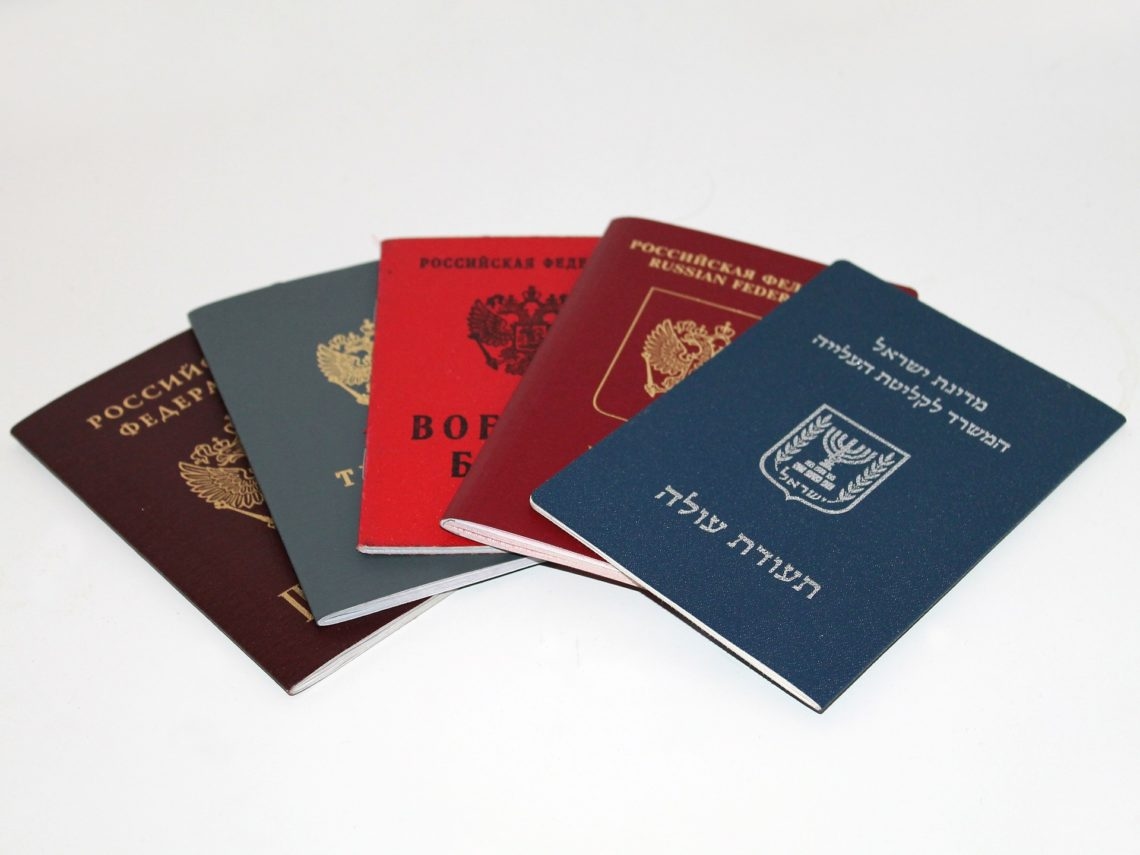
The Immigration and Nationality Act (“INA”) gives an opportunity to US citizens to bring their foreign fiancé(e)s to the United States to get married here. In order to obtain the K-1 fiancé(e) visa, the petitioning US citizen and his/her fiancé(e) must meet certain requirements. The Petitioner Must Be A US Citizen First of all, it should be noted that only US citizens can file K-1 petitions for their foreign fiancé(e)s. Lawful permanent residents cannot bring their fiancé(e)s to the US with a K-1 visa. The petitioning US citizen must submit a proof of his citizenship with the petition for alien fiancé(e). The acceptable evidence of US citizenship includes, but is not limited to, a copy of birth certificate issued by a US civil authority, a copy of certificate of naturalization, and a copy of unexpired US passport. The Petitioner And Fiancé(e) Must Intend To Marry After Fiancé(e)’s Entry To The United States The US citizen petitioner and his/her fiancé(e) must intend to marry within ninety (90) days after fiancé(e)’s entry to the US. Both the petitioner and his/her fiancé(e) shall submit statements of their intent to marry within ninety (90) days after fiancé(e)’s entry to the US. In addition to the statements, the petitioner shall submit any other evidence showing the mutual intention to marry. Once the petitioner and fiancé(e) marry within ninety (90) days after fiancé(e)’s entry to the US, the fiancé(e) may apply for adjustment of status to obtain his/her green card. If the petitioner and fiancé(e) fail to marry within ninety (90) days after fiancé(e)’s entry to the US, the fiancé(e) shall leave the country. The Petitioner AndFiancé(e) Must Have Met In Person Within Two Years Before Filing The Petition A US citizen can file a petition for alien fiancé(e) only if the petitioner and his/her fiancé(e) have met in person within two (2) years prior to filing the petition. The petitioner shall submit evidence of the meeting with his/her fiancé(e) with the petition. Such evidence may include photographs, airplane tickets, stamps in passports, receipts or anything else showing that the petitioner and fiancé(e) have met in person. The requirement of in person meeting can be waived only in two (2) circumstances: (1) if the petitioner can establish that the requirement to meet his/her fiancé(e) in person would result in extreme hardship to the petitioner; or (2) the requirement to meet the fiancé(e) in person would violate strict and long established customs of the petitioner’s or fiancé(e)’s foreign culture or social practice. The Petitioner AndFiancé(e) Must Have Legal Capacity to Marry Both the petitioner and his/her fiancé(e) must be of legal age to marry. Additionally, if the petitioner and/or fiancé(e) have been married before, all prior marriages must be terminated. The petitioner shall submit proof that all previous marriages were legally terminated. Evidence of termination of previous marriages may include judgments of divorce or annulment of marriage or a death certificate issued by a civil authority. If the US citizen petitioner and his/her fiancé(e) meet the requirements outlined above, the US citizen can submit a petition for the fiancé(e). Once the petition is approved, the fiancé(e) can enter the US to marry the petitioner. KAASS LAW is authorized to practice law in California. The above content is intended for California residents only. This content provides only general information on immigration law which may or may not reflect current legal developments. KAASS LAW expressly disclaims all liability in respect to actions taken or not taken based on any of the contents of this website. The above content DOES NOT create an attorney-client relationship. KAASS LAW does not represent you unless you have expressly retained KAASS LAW in person at the KAASS LAW office. KAASS LAW helps clients in: Los Angeles, Burbank, Hollywood, Glendale, Van Nuys, North Hollywood, Studio City, Highland Park, Eagle Rock, Sunland, Tujunga, Sylmar, San Bernardino, La Crescenta, La Canada, Beverly Hills, Westwood, Santa Monica, Brentwood. Pacoima, Montebello, Commerce, Alhambra, Downey, Bell, Maywood, Walnut Park, Vernon, Lynwood, Echo Park, Silverlake, Mission Hills, Northridge, Woodland Hills, Encino, Canoga Park, North Hills, Porter Ranch, Chatsworth, Reseda. FOR A FREECONSULTATION PLEASE FILL OUT THE FORM BELOW FOR A CALL BACK FROM KAASS LAW: [contact-form to='[email protected]' subject='NEW CLIENT INQUIRY'][contact-field label='Name' type='name' required='1'/][contact-field label='Email' type='email' required='1'/][contact-field label='Phone' type='url' required='1'/][contact-field label='Case Information' type='textarea' required='1'/][/contact-form] https://kaass.com/happens-immigration-visa/https://kaass.com/happens-child-turns-21-filing-immigration-petition-behalf/
While, there are many benefits of incorporating a business, choosing to register your business under the form of a Limited Liability Company, or "LLC" is one of the more common and better choices. Here are four (4) reasons why forming an LLC in California is the best decision:
1. Flexible Management Structure
An LLC can be organized in various ways. The beauty of an LLC is that the structure of the firm is virtually entirely up to founders' imagination! This is in stark contrast to the rigid, formal structure of a corporation.
2. No Mandatory Rules
Unlike a corporation, which mandates board meetings and shareholder votes along with other burdensome default rules, an LLC has virtually no mandatory rules. Rather, the statutes in your jurisdiction will provide default rules which can be contracted around in the Operating Agreement.
One of the most difficult aspects of protecting your trademark in today's world is protecting it on an international level. Unfortunately, there is no tool that allows business owners to register a trademark "globally". Otherwise, trademark owners must register its trademark in each and every individual country where it seeks trademark protection. Starting October 1, 2017, the European Union trade mark regulation changes. The European Union Intellectual Property Office; among other things, has made a number of procedural changes, thus it is vital you speak to a Glendale trademark attorney in order to help protect your business. Here are three reasons why you should register your trademark internationally.
1. Prevent International Businesses from Using Your Brand's Popularity
Once you begin selling your products in international markets, your business name and brand may become more attractive as your popularity grows. Registering your trademark in countries which your products are available can prevent other businesses from attempting to confuse consumers by using your businesses identical or similar name or profit from your business's popularity.
Advantages of Incorporating/Registering a Business in California
Many business owners believe that incorporating a business is too costly and time consuming. On the other hand, you may be wondering if you truly need to incorporate your business. Quiet frankly, business owners' may find themselves facing personal debts and liabilities in the event of a business dispute or lawsuit. Consequently, business owners then find themselves racking up far more legal fees, costs, stress, and lengthy lawsuits.
Incorporating a Business in California
There are number of ways California business owners can benefits from incorporating their business. Likewise, California offers a number of different business forms which a business owner may file under. The California Corporations Code outlines minimum filing requirements for incorporating businesses in California. Not all business structure are alike, each offer different benefits and posses disadvantages. Choosing the business structure that best fits your needs its probably the most vital questions any business owners should ask themselves. After all, the foundation and structure of which you build your business will play a major role in your success. Thus, it is a good idea to contact a that can consult you on your options and help you fill in the gaps. We invite you to contact our office and schedule a consultation with a Los Angeles business attorney with strong background in business and economics. Our , near Los Angeles is committed to provide a balanced approach to your legal needs, sound advice and assistance to prevent and or resolve problems.
Some common causes of motorcycle accidents, Los Angeles County:
Left Turns In Front of Motorcyclists: Left turn motorcycle accidents generally occur at an intersection. Often times a motorist proceeds to complete a left turn in front of oncoming traffic and collide with a motorcyclist riding in the opposing lane. Pursuant to Vehicle Code 21801 The driver of a vehicle intending to turn to the left or to complete a U-turn upon a highway, or to turn left into public or private property, or an alley, shall yield the right-of-way to all vehicles approaching from the opposite direction which is close enough to constitute a hazard at any time during the turning movement, and shall continue to yield the right-of-way to the approaching vehicles until the left turn or U-turn can be made with reasonable safety.
Unsafe Lane Changes: Unsafe lane changes, generally occur more frequently on freeways, but also on surface streets. The large majority of motorist fail to check their rear and side view mirrors. Many times motorists will abruptly change lanes without checking blind spots. We have seen this far too many times when a motorist fails to put their turn signal on and check blind spots, which ultimately results in colliding with the motorcyclist. who doesn’t have time to react or has nowhere to escape. Pursuant to VC §22107 drivers must use reasonable care when turning [or moving to the right or to the left].
Traumatic brain injury is divided into two categories -- mild and severe. A traumatic brain injury is considered mild if a loss of consciousness lasts for less than 30 minutes. On the other hand, traumatic brain injury is considered severe, if a loss of consciousness lasts for more than an hour.
Common Signs of Mild Traumatic Brain Injury
Signs of a mild traumatic brain injury include,
Excessive sleep or depression
Issues with coordination
Mood changes, such as violent outbursts
Memory Loss
Difficulty expressing thoughts or sentences
Nausea
Seizers
Sensory problems, such as bad taste in mouth, loss of smell, sensitivity to lights or sounds
Common Signs of Moderate to Severe Traumatic Brain Injury
Signs of a moderate to severe brain injury may begin within days and symptoms include:
As an owner of a registered trademark or service, you probably wonder when others are responsible for infringing your mark. You should know that the test for trademark infringement is the likelihood of confusion as a result of the similarity of the marks.
What is Likelihood of Confusion for Trademark Infringement?
A person may be liable for infringement of a federally registered mark if his use of a mark in relation to any goods of services is likely to cause confusion, mistake or to deceive. 15 U.S.C.A. § 1114(1). This test to determine whether a registered mark is being infringed is known as the test of likelihood of confusion.
Likelihood of Confusion as to Source, Affiliation, Connection or Sponsorship
The test of likelihood of confusion includes not only the confusion as to source but also as to affiliation, connection or sponsorship. Champions Golf Club v. Champions Golf Club, 78 F.3d 1111, 1121 (6th Cir. 1996) (internal citations omitted). This means that a user of a mark may be liable for trademark infringement if the use creates a likelihood of confusion that the goods are affiliated to, connected with or sponsored by the owner of the registered mark.
Likelihood of Confusion Means Probability of Confusion
The Immigration and Nationality Act (“INA”) gives an opportunity to US Citizens and lawful permanent residents to bring their children to the United States. US citizens can sponsor both their married and unmarried children. However, the unmarried children under twenty-one (21) fall under the category of immediate relatives who are exempt from numerical quotas applicable to other family based preference categories. The question whether the child falls under the category of immediate relatives is extremely important because if immediate relatives can obtain their green cards within less than a year, children of US citizens, falling under one of the preference categories, will have to wait at least seven (7) years depending on their country of citizenship and marital status. Lawful permanent residents can only sponsor their unmarried children who fall under the Second Preference – spouses and unmarried sons and daughters of permanent residents. However, children under twenty-one (21) of permanent residents have certain privileges compared to children who are twenty-one (21) or older. First of all, seventy-seven percent (77%) of available visas in the second preference category is allocated to spouses and unmarried sons and daughters under twenty-one (21) of permanent residents. § 203(a)(2). Additionally, seventy-five percent (75%) of visas issued to spouses and unmarried children under twenty-one (21) of permanent residents are not subject to the per country limitations. . § 202(a)(4)(A). As a result, if children under twenty-one (21) of permanent residents can obtain their green cards within less than two (2) years, children who are twenty-one (21) or older will have to wait at least seven (7) years depending on their country of citizenship. As it can be seen, the age of the child is crucial for both the petitions filed by US citizens and permanent residents. There is a possibility that although the petition is filed while the child beneficiary is under twenty-one (21) he will be twenty-one (21) or older at the time of adjudication of the petition. In 2002, the Congress enacted the Child Status Protection Act to protect children beneficiaries who turned twenty-one (21) after the immigration petition was filed on their behalf. These provisions of the Child Status Protection Act are known as “age-out protection” provisions.
(a) The owner of any dog is liable for the damages suffered by any person who is bitten by the dog while in a public place or lawfully in a private place, including the property of the owner of the dog, regardless of the former viciousness of the dog or the owner’s knowledge of such viciousness. A person is lawfully upon the private property of such owner within the meaning of this section when he is on such property in the performance of any duty imposed upon him by the laws of this state or by the laws or postal regulations of the United States, or when he is on such property upon the invitation, express or implied, of the owner. (b) Nothing in this section shall authorize the bringing of an action pursuant to subdivision (a) against any governmental agency using a dog in military or police work if the bite or bites occurred while the dog was defending itself from an annoying, harassing, or provoking act, or assisting an employee of the agency in any of the following: (1) In the apprehension or holding of a suspect where the employee has a reasonable suspicion of the suspect’s involvement in criminal activity. (2) In the investigation of a crime or possible crime. (3) In the execution of a warrant. (4) In the defense of a peace officer or another person. (c) Subdivision (b) shall not apply in any case where the victim of the bite or bites was not a party to, nor a participant in, nor suspected to be a party to or a participant in, the act or acts that prompted the use of the dog in the military or police work. (d) Subdivision (b) shall apply only where a governmental agency using a dog in military or police work has adopted a written policy on the necessary and appropriate use of a dog for the police or military work enumerated in subdivision (b). Although, the owner(s)' of a for damages in There is a defense to this rule known as “” Assumption of risk can be used as a defense when the victim of a is working in the capacity of a veterinarian, or some other contracted dog handler. , 16 Cal. App. 4th 650 (Cal. App. 1st Dist. June 15, 1993); , 140 P.3d 848 (Cal. Aug. 28, 2006). “, which is generally applicable in strict liability actions has long been recognized as a defense to a action brought pursuant to the dog bite statute (§ 3342) under appropriate facts.” 140 P.3d 848, 853.
In California, a corporation is formed by filing the articles of incorporation with the Secretary of State. The incorporators may either file the articles of incorporation by using the form articles of incorporation developed by the Secretary of State, or they can draft their own articles of incorporation with specific provisions. The second option is common for corporations with complex organizational and financial structures. The articles of incorporation filed with the Secretary of State must contain all the information required by Section 202 of California Corporations Code.
The Articles of Incorporation Must State the Name of the Corporation
First of all, the articles of incorporation must state the name of the corporation. Corps. C. § 202(a). The name of the corporation cannot be the same as or closely resemble the name of a domestic corporation or a name of a foreign corporation qualified to do business in California. Id. 201(b). Before filing the articles of incorporation the incorporators should conduct a research on the website of the Secretary of State to see if the particular name is available or not. The incorporators also have the option to reserve a particular name before filing the articles of incorporation.
An LLC has even more limited liability than a corporation or limited liability partnership! The founders can execute an Operating Agreement that vacates most of their fiduciary responsibility. This is extremely important as it shields owners from being personally financially responsible for the liabilities of the LLC should things go wrong. This means that creditors cannot go after the personal assets of the owners to pay business debts.
4. Flow-Through Taxation
Unlike a corporation which is subject to "double taxation" (i.e. a corporation pays taxes on its annual earnings while shareholders must also make tax payments on dividend payments), an LLC is eligible for flow-through (aka pass-through) taxation under IRS rules. A Flow-Through entity, such as an LLC, is not subject to taxation. Rather, taxes are only paid once the income passes to the owners. Ultimately, the beauty of an LLC is that it offers the limited liability of a corporation with the freedom and tax advantages of a partnership. Owners of an LLC are shielded from personal liability, avoid double-taxation, and have the flexibility to organize the LLC management structure in any way they see fit. Our Glendale business attorneys will help you make the right decision as each entity has its own significant consequences in matters pertaining to issues of liability, management, ownership, and control; business succession matters such as transfer, assignment, and dissolution; as well as business taxation.
For further question regarding incorporating your business, feel free to contact our office at (310) 943-1172. Our attorneys speak English, French, Spanish, Russian, Armenian, and Italian.
KAASS LAW is authorized to practice law in California. The above content is intended for California residents only. This content provides only general information which may or may not reflect current legal developments. KAASS LAW expressly disclaims all liability in respect to actions taken or not taken based on any of the contents of this website. The above content DOES NOT create an attorney-client relationship. KAASS LAW does not represent you unless you have expressly retained KAASS LAW in person at the KAASS LAW office.
KAASS LAW immigration attorneys helps clients in: Los Angeles, Burbank, Hollywood, Glendale, Van Nuys, North Hollywood, Studio City, Highland Park, Eagle Rock, Sunland, Tujunga, Sylmar, La Crescenta, La Canada, Beverly Hills, Westwood, Santa Monica, Brentwood. Pacoima, Montebello, Commerce, Alhambra, Downey, Bell, Maywood, Walnut Park, Vernon, Lynwood, Echo Park, Silverlake, Mission Hills, Northridge, Woodland Hills, Encino, Canoga Park, North Hills, Porter Ranch, Chatsworth, Reseda.
2. As Populatirty of Your Brand Increases, the Likelihood of International Counterfeiters Increases
Foreign trademark filing is a big business decision, thus businesses should consider many factors when doing so. U.S. trademark law provides protection against businesses importing counterfeit goods. However, you may also register your trademark in a country where you believe counterfeit goods are originating from. This will not only help prevent counterfeit goods being exported to other countries.
3. Prevents Other Businesses from Registering Your Businesses Brand Name, Logo, or Tagline
Prior to starting a business, a business name must be selected that is not already in use. You can find out if the fictitious business name you choose is available for use by going to the Los Angeles County Registrar-Recorder website. If the business name you selected is available, you may then register with the Registrar-Recorder/County Clerk's Office. Likewise, fictitiousbusiness name statements must also be filed with the Registrar-Recorder/County Clerk's Office.
Starting a business is no small task and you should be confident in your abilities to successfully form your business. California offers a number of business structures you can utilize to accomplish certain things. Choose the business structure that best fits your needs.
What is a Sole Proprietorship?
Sole proprietorships are the basic business form under which a business owner can operate a business. It is important to remember that sole proprietorships are not legal entity. It simply refers to a person who owns the business and is personally responsible for its debts. In other words, a sole proprietorship is owned by one individual, of which is personally taxed on income and is personally liable for debts of the business. Thus, if you are a sole proprietorship, consider registering a sole proprietorship into a corporation. This way you not only protects your personal assets and personal liability, but you also tell the world that you take your business seriously.
What is a Corporation?
A corporation, in its legal form, is an entity separately from you, the business owner. In California, corporations are considered to be an “entity”, you can think of it as a separate “person”. One benefit of registering and filing your business under a corporation is it can shield business owners from personal liability and debits. A corporation is also taxed and so are its shareholders.
What is a liability company (LLC)?
A limited liability company, commonly referred to as an “LLC”, offers liability protection like a corporation, but is not taxed as an entity. Instead, the LLC's income is usually taxed through the individual on their income. Corporations provide limited liability protection to their owners. Typically, the owners are not personally responsible for the debts and liabilities of the business; thus, creditors cannot pursue owners’ personal assets.
Other Incorporation Benefits
Tax Advantages – Corporations often gain tax advantages, such as the deductibility of health insurance premiums paid on behalf of an owner-employee; savings on self-employment taxes, as corporate income is not subject to Social Security, Workers Compensation and Medicare taxes.
Establishing Credibility-Incorporating may help new business establish credibility with potential customers, employees, vendors and partners.
Unlimited Life – A corporation’s life is not dependent upon its owners. A corporation possesses the feature of unlimited life, meaning if an owner dies or wishes to sell his or her interest, the corporation will continue to exist and do business.
Transferability of Ownership – Typically an easy process.
Raising Capital – Capital can be raised more easily through the sale of stock. Additionally, many banks, when providing a small business loans, want the borrower to be an incorporated business.
Retirement plans – Plans such as 401 (k) may be established more easily.
Vehicle Pulling Out of Side Streets or Parking Lot Colliding with a Motorcyclist Rider: These types of motorcycle collisions occur when a car, truck or SUV pull out in front of the motorcyclists from a side street or parking lot without looking both ways or reasonable care. These types of accidents generally cause a T-bone type or broadside collision. Under VC 21804, (a) The driver of any vehicle about to enter or cross a highway from any public or private property, or from an alley, shall yield the right-of-way to all traffic, as defined in Section 620, approaching on the highway close enough to constitute an immediate hazard, and shall continue to yield the right-of-way to that traffic until he or she can proceed with reasonable safety. (b) A driver having yielded as prescribed in subdivision (a) may proceed to enter or cross the highway, and the drivers of all other vehicles approaching on the highway shall yield the right-of-way to the vehicle entering or crossing the intersection.
Why Should You Hire A California Motorcycle Accident Attorney?
Hiring a motorcycle accident attorney can help preserve your claim, increase compensation, and deal with the difficulties of dealing with insurance companies and insurance adjusters. Many times the adjusters will try to blame the motorcyclist by saying you were not riding at a safe speed during the collision or perhaps riding at excessive speed. Your motorcycle accident attorney will have Neurologists, Orthopedists, and other doctors to help treat you for your injuries. Many of these specialists take cases on a lien basis. This means that you will not have to pay out of pocket for the treatment you receive until you recover monies. to determine the full extent of the injuries. A quality motorcycle lawyer will hire experts, if necessary, to reconstruct the accident and/or speak to the forces exerted on the human body of the motorcycle rider. If you or a loved one has been involved in a motorcycle accident in Glendale near Los Angeles, CA we invite you to contact our office for a free confidential consultation and case evaluation with an experienced Glendale personal injury attorneys and Los Angeles motorcycle accident lawyers at (310) 943-1171. Give us a call, our attorneys speak English, French, Spanish, Russian, Armenian, and Italian.
How Long Does it Take for Traumatic Brain Injury Symptoms to Show Up?
Often times, common traumatic brain injury symptoms are not immediately apparent. It may take several days or weeks for traumatic brain injury symptoms to surface. This depends on a number of factors including how severe was the incident. It is important to speak to your physician's if you begin to notice physical or behavioral changes. You should also consider receiving an MRI of your brain. A thorough neurological examination or a brain imaging scan should reveal any damage to the brain's surface.
How to Proceed with a Personal Injury Claim for a Traumatic Brain Injury?
It is important to collect all the documentation and medical records that are related to the injury. Also, it is a good idea to keep a journal and keeping track of the time and effects the injury has on your daily life. Consult with an experienced traumatic brain injury lawyer. Your attorney will consult with out on your options, whether there was any potential negligence that can be asserted against the third party. You may be able to collect monetary compensation, the cost of therapy, medical expenses, loss of income, reduced quality of life, and more for a traumatic brain injury cases. Have you or a loved one suffered a traumatic brain injury due to the negligence of another? A Los Angeles personal injury attorney from KAASS Law may be able to provide you with legal assistance.
In order to show likelihood of confusion, there must be a probability of confusion; mere possibility of confusion is not enough. Nora Beverages, Inc. v. The Perrier Group of America, Inc., 269 F.3d 114, 121 (2d Cir. 2001) (internal citations omitted). It should also be noted that plaintiff does not have to prove actual confusion in order to show that the defendant is liable for trademark infringement. Perfumebay.com Inc. v. eBay, Inc., 506 F.3d 1165, 1176 (9th Cir. 2007) (internal citations omitted). If the plaintiff is able to show likelihood of confusion the defendant will still be liable for trademark infringement even if the plaintiff shows no instances of actual confusion.
There Should Be a Likelihood of Confusion of an Appreciable Number of Reasonably Prudent Consumers
The test for likelihood of confusion is whether a reasonably prudent consumer is likely to be confused as a result of the similarity of the marks. Dreamwerks Production Group, Inc. v. SKG Studio, 142 F.3d 1127, 1129 (9th Cir. 1998) (internal citations omitted). The likelihood of confusion exists when there is a likelihood that an appreciable number of reasonably prudent consumers is likely to be misled or confused because of the similarity of the marks. McGregor-Doniger, Inc. v. Drizzle, Inc., 599 F.2d 1126, 1130 (2d Cir. 1979) (internal citations omitted). To sum up, there is a likelihood of confusion when there is a probability that an appreciable number of reasonably prudent consumers will be confused as to the source, affiliation, connection or sponsorship of goods or services because of the similarity of the two marks.
What Factors Determine if There is a Likelihood of Confusion?
The Sleekcraft Test for Likelihood of Confusion
Federal courts in different federal circuits have come up with multi-factor tests in order to determine whether there is a likelihood of confusion or not. The test in the 9th Circuit, which includes the State of California, is the eight-factor Sleekcraft test pursuant to which the court shall consider the following factors to determine if there is a likelihood of confusion or not:
strength of the mark;
proximity of the goods;
similarity of the marks;
evidence of actual confusion;
marketing channels used;
type of goods and the degree of care likely to be exercised by the purchaser;
defendant’s intent in selecting the mark; and
likelihood of expansion of the product lines.” AMF, Inc. v. Sleekcraft Boats, 599 F.2d 341, 348-49 (9th Cir. 1979) (internal citations omitted).
These factors are not requirements but are helpful guidelines for courts in order to determine whether there is a likelihood of confusion or not. Eclipse Ass’n, Ltd. v. Data General Corp., 894 F.2d 1114, 1118 (9th Cir. 1990). The application of the text shall be flexible, and there is no specific formula setting forth how the factors included in the text shall be considered. Nautilus Group, Inc. v. ICON Health and Fitness, Inc., 372 F.3d 1330, 1346 (Fed. Cir. 2004) (internal citations omitted). The important question is what the analysis as a whole reveals about the issue of likelihood of confusion. Entrepreneur Media, Inc. v. Smith, 279 F.3d 1135, 1141 (9th Cir. 2002). This means that none of the factors is determinative but the analysis as a whole shall answer the question whether there is a likelihood of confusion or not.
The Degree of Similarity of Marks Necessary to Prove Likelihood of Confusion Varies Depending on the Similarity of Goods or Services
It should be noted that the degree of similarity of marks necessary to show likelihood of confusion varies depending on the competitiveness of goods and services. The more similar the goods or services the less similar marks need to be in order to prove likelihood of confusion. Century 21 Real Estate Corp. v. Century Life of America, 970 F.2d 874, 877 (internal citations omitted). Conversely, “… the greater the degree of similarity between the marks, the lesser the degree of similarity between the goods is necessary to support a finding of likelihood of confusion.” The Board of Regents, University of Texas System v. Southern Illinois Miners, LLC, 110 U.S.P.Q.2d 1182, 1189 (internal citations omitted). Hence, if the marks are very similar the court may find a likelihood of confusion even if the goods or services at issue are not very similar. To summarize, your trademark or service mark is being infringed if a use of another mark creates a likelihood of confusion among consumers. If the other mark is very similar to your trademark or service mark you might have a cause of action for trademark infringement even if the goods or services are not very similar. If you believe someone is infringing on your trademark or have questions regarding trademark registration, copyright, or any other intellectual property related question, we invite you to contact our office and speak to one of our experienced business attorneys at (310) 943-1171.
Adjudicators must determine whether the beneficiary qualifies as an immediate relative child based on his age on the date of filing the immigrantion visa petition on his behalf. Id. § 201(f)(1). As such, the date when the US citizen parent files the immigration petition for his child, the Form I-130, determines whether the child falls under the category of immediate relatives or not. This means that although the child may turn twenty-one (21) after filing the immigration petition on his behalf, he will always qualify as an immediate relative as long as he is not married. The date of filing the petition is the date when the Form I-130 is filed with the United States Citizenship and Immigration Services.
Age-Out Protection for Children of Lawful Permanent Residents
Adjudicators shall determine whether the beneficiary qualifies as a child under twenty-one (21) of a lawful permanent resident by using the following formula: the age of the child on the date on which an immigrant visa number becomes available minus the number of days during which the petition for the child was pending. Id. § 203(h)(1). If the child is under 21 after using this formula he will benefit from the age-out protection provision of INA. The immigration petition is considered to be pending from the date of filing the petition until the date of approval. It should be noted that the beneficiary may benefit from the age-out protection only if he seeks to acquire a status of a lawful permanent resident within one (1) year after the availability of an immigrant visa number. Id. The age-out protection provisions of the INA are intended to protect the children of US citizens and lawful permanent residents who turn twenty-one (21) after filing the immigration petition on their behalf. Hence, if the child of a US citizen or a lawful permanent resident will turn twenty-one (21) soon they should try to file the immigration petition before the child turns twenty-one (21) in order to benefit from the age-out protection provisions. If you have questions regarding an immigration matter, we invite you to contact our immigration attorney for a free consultation at (310) 943-1171. KAASS LAW is authorized to practice law in California. The above content is intended for California residents only. This content provides only general information which may or may not reflect current legal developments. KAASS LAW expressly disclaims all liability in respect to actions taken or not taken based on any of the contents of this website. The above content DOES NOT create an attorney-client relationship. KAASS LAW does not represent you unless you have expressly retained KAASS LAW in person at the KAASS LAW office. KAASS LAW helps clients in Los Angeles, Burbank, Hollywood, Glendale, Van Nuys, North Hollywood, Studio City, Highland Park, Eagle Rock, Sunland, Tujunga, Sylmar, La Crescenta, La Canada, Beverly Hills, Westwood, Santa Monica, Brentwood. Pacoima, Montebello, Commerce, Alhambra, Downey, Bell, Maywood, Walnut Park, Vernon, Lynwood, Echo Park, Silverlake, Mission Hills, Northridge, Woodland Hills, Encino, Canoga Park, North Hills, Porter Ranch, Chatsworth, Reseda.
Can I Still Be Sued If The Dog Bite Did Not Result in Any Lacerations?
While many may be under the impression that you can only be sued if your dog bit someone which resulted in scarring or breaking of the skin; "it is not necessary that the skin be broken in order for the statute to apply". (Johnson v. McMahan (1998) 68 Cal.App.4th 173, 176 [80 Cal.Rptr.2d 173].) In Priebe, the Supreme Court of California held that the defendant dog owner was not strictly liable when his dog bit the plaintiff kennel worker. Id. at 861. The court reasoned, “Priebe, by virtue of the nature of her occupation as a kennel worker, assumed the risk of being bitten or otherwise injured by the dogs under her care and control while in the custody of the commercial kennel where she worked pursuant to a contractual boarding agreement.” Id. Similarly, the court in Cohen, held that the plaintiff veterinarian assumed the risk of being bitten by the defendant’s dog, and therefore was barred from recovery. Cohen, 16 Cal. App. 4th 650, 657. However, the court in Davis v. Gaschler, held that the assumption of risk did not apply when the plaintiff stopped to help a dog that was hit by a car and was bitten by the dog. Davis v. Gaschler, 11 Cal. App. 4th 1392, 1402 (Cal. App. 3d Dist. Dec. 23, 1992). The court reasoned, “plaintiff was not employed or otherwise compensated for helping injured dogs. Nor was there an employment relationship or any relationship between plaintiff and defendants.” Id. at 1401.
Essential Elements You Must Prove in Dog Bite Statute Civ. Code, § 3342
In California, dog owners can be held responsible for the harm from a dog bite, no matter how carefully they guard or restrain their dogs.
In Order to Establish a Claim, Plaintiff Must Prove All of the following:
That defendant owned a dog;
That the dog bit Plaintiff while [he/she] was in a public place or lawfully on private property;
That Plaintiff was harmed; and
That Defendant’s dog was a substantial factor in causing Plaintiff harm.
The plaintiff bit by the dog was lawfully on the private property of the owner if [he/ she] was performing any duty required by law or was on the property at the invitation, express or implied, of the owner.
Los Angeles Dog Bite Attorney
Are you in need of a dog bite lawyer in California? A Los Angeles dog bite attorney can provide you with the services you need. KAASS Law can help you out with various types of personal injury and dog bite cases. If you have questions regarding dog bite laws in California, we invite you to contact our experienced Glendale personal injury attorneys for a free consultation at (310) 943-1171 or our Los Angeles branch at (310) 943-1173.
The Articles of Incorporation Must Include a Statement of Corporate Purpose
The California Corporations Code requires the incorporators to include a statement of corporate purpose in the articles of organization. To form an ordinary business corporation the articles of incorporation must state that “[t]hat the corporation is to engage in any lawful act or activity for which a corporation may be organized under the General Corporation Law of California other than the banking business, the trust company business or the practice of a profession permitted to be incorporated by the California Corporations Code.” Id. § 202(b)(1)(A). The California Corporations Code has specific requirements for professional corporations, corporations subject to the Banking Law and corporations subject to the Insurance Code.
The Articles of Incorporation Must Designate the Agent for Service of Process
The articles of incorporation must include the name and the address of the corporation’s initial agent for service of process. Id. § 202(c). The address of the agent for service of process shall be in the State of California. Both individuals and corporations can serve as agents for service of process. Corporations can serve as agents for service of process only if they are registered by the Secretary of State as corporations with such authority.
The Articles of Incorporation Must Include the Initial Street and Mailing Address of the Corporation
The articles of incorporation shall state the initial street address of the corporation. Id. § 202(d). The incorporators cannot list a P.O. Box as a street address of the corporation. The articles of incorporation shall also include the initial mailing address of the corporation. Id. § 202(e). The incorporators do not have to state a mailing address if it is the same as the street address of the corporation.
The Articles of Incorporation Must Include the Share Structure of the Corporation
The articles of incorporation shall also specify the share structure of the corporation. If the corporation is authorized to issue only one class of shares the articles of incorporation must state the total number of shares that the corporation is authorized to issue. Id. § 202(f). If the corporation will issue more than one class of shares or if any class will have two or more series, the articles of incorporation must state: 1) “The total number of shares of each class the corporation is authorized to issue, and the total number of shares of each series which the corporation is authorized to issue or that the board is authorized to fix the number of shares of any such series; 2) The designation of each class, and the designation of each series or that the board may determine the designation of any such series; and 3) The rights, preferences, privileges, and restrictions granted to or imposed upon the respective classes or series of shares or the holders thereof, or that the board, within any limits and restrictions stated, may determine or alter the rights, preferences, privileges, and restrictions granted to or imposed upon any wholly unissued class of shares or any wholly unissued series of any class of shares….” Id. § 202(g). The articles of incorporation must include all the above mentioned information in order to be complete. The form articles of incorporations developed by the Secretary of State include all the required information. However, in some cases the incorporators will have to draft their own articles of incorporations because the forms do not contain specific provisions for some situations described in the Section 202 of California Corporations Code. If you or someone you know is seeking to register a California corporation and need assistance feel free to contact our experienced Glendale business lawyer today!
KAASS LAW is authorized to practice law in California. The above content is intended for California residents only. This content provides only general information which may or may not reflect current legal developments. KAASS LAW expressly disclaims all liability in respect to actions taken or not taken based on any of the contents of this website. The above content DOES NOT create an attorney-client relationship. KAASS LAW does not represent you unless you have expressly retained KAASS LAW in person at the KAASS LAW office. KAASS LAW helps clients in: Los Angeles, Burbank, Hollywood, Glendale, Van Nuys, North Hollywood, Studio City, Highland Park, Eagle Rock, Sunland, Tujunga, Sylmar, La Crescenta, La Canada, Beverly Hills, Westwood, Santa Monica, Brentwood. Pacoima, Montebello, Commerce, Alhambra, Downey, Bell, Maywood, Walnut Park, Vernon, Lynwood, Echo Park, Silverlake, Mission Hills, Northridge, Woodland Hills, Encino, Canoga Park, North Hills, Porter Ranch, Chatsworth, Reseda,