What Are the Four Most Common Causes of Construction Accidents?

What Are the Four Most Common Causes of Construction Accidents?
Construction accidents are common and highly risky. Fatalities among construction workers include falls, electrocutions, being hit by equipment, and becoming tangled in or between objects. With high risk of accidents in a construction workplace, chances are high for wrongful death incidents to occur. The article below provides a brief rundown of the four common causes of construction accidents.
Falling Accidents
On construction sites, workers frequently have to perform activities hundreds of feet above the ground. When the proper measures to safeguard the safety of construction personnel are not taken, everyone on the working site is at risk of experiencing a serious mishap. These accidents are known to be the leading cause of death in a construction work environment. To avoid construction site falls, construction companies must provide harnesses, safe stairways, secure scaffolding, and other safety equipment. Injured employees have the right to seek compensation from the construction business and any complicit parties when suitable equipment is not available. Falls on construction sites can occur for a variety of causes, including:
- Unmarked ditches and excavation sites
- Shafts of elevators that are not protected
- Weather conditions when undertaking roof work
- Slip and fall injuries caused by debris
- Faulty ladders
- Unmarked or exposed ledges, wall gaps, or holes on the floor
- Improperly constructed or secured scaffolding
On construction sites, the potential dangers that cause fall injuries are unavoidable. Construction businesses are responsible for providing proper safety equipment and educating their employees on fall prevention safety. It is common practice to deny employees the training and tools they need to complete their duties effectively, leaving them to bear the costs of another person's negligence.
Struck-By Accidents
In events involving struck-by objects, workers are struck by objects that are falling, rolling, swinging, or flying. A struck-by accident might result in a slight bruise or a life-threatening, even deadly, mishap depending on the nature and size of the object as well as the speed at which it is going when it impacts a worker. The following are some common examples of struck-by accidents:
- Heavy equipment or vehicle accidents
- High-pressure hoses and pipes that have failed
- Suspended weights that are falling
- Nuts and bolts flying
- Scaffolding, pipes, or lumber that has fallen
- Dropped tools
Construction contractors must take reasonable care to avoid being hit by a vehicle. Companies who fail to take necessary precautions to guarantee the safety of their employees may be held accountable for injuries and consequent damages.
Caught-In and Between Accidents
Employees may become stuck, crushed, pinched, or squeezed between two items or components of two objects, resulting in a trapped-between mishap. These incidents also include burying a worker, such as in a collapsing trench or structure. These kinds of accidents can occur when:
- Workers are not given enough instruction on how to operate machines and equipment safely.
- There is no maintenance or repair of equipment.
- Scaffolds are not properly constructed or braced.
- The walls are not well supported.
- There is inadequate support for trenches and excavation zones.
- Heavy machinery is not properly secured or used.
- Machinery is not properly secured or guarded when not in use or undergoing repairs.
Construction workers are particularly vulnerable to caught-in and caught-between accidents. These incidents can result in a variety of incapacitating job injuries, such as torn ligaments, muscular tension, and fractured bones. Such accidents can result in severe brain injury, permanent limb impairment, or even death, depending on the severity of the injury.
Electrocution Injuries
Construction workers are routinely exposed to live wires or electricity when working on structures or dwellings. Workers in a range of vocations are required to handle actively energized devices. Any construction site, whether commercial or residential, may expose employees to a variety of electrical risks. The following are examples of common electrical dangers that endanger worker safety:
- Underground electrical wires are damaged during excavation by metal tools or equipment
- Inadequately insulated overhead electrical cables
- Extension cord wires that are either illegal or have an excessive load
- A ground fault circuit interrupter is lacking
- Wet surroundings
- Circuits that lack adequate breakers or fuses
- Faulty polarization in electrical wiring (neutral to neutral, hot to hot)
- Inadequately grounded electrical equipment
- Electrical equipment that plugs into an improperly grounded or insulated wire
Contact a Los Angeles Attorney Today
If you or someone you know was injured, or possibly has a wrongful death case at a construction site on the job, contact our office today at 310.943.1171.
Related Articles
View All Posts
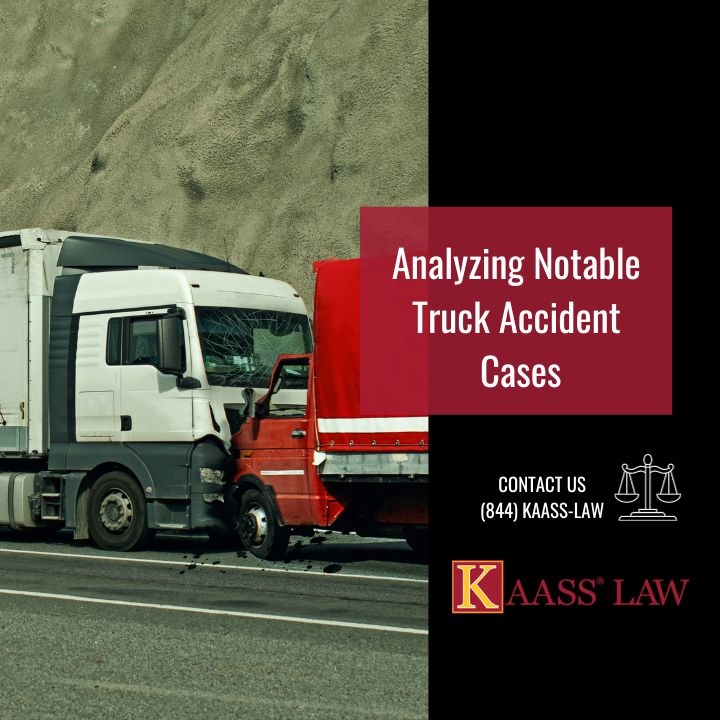
Truck accidents can have horrific results, including serious injuries, fatalities, and substantial legal repercussions. A number of well-known truck accident cases in recent years have illuminated the intricacies of these situations. We will be analyzing notable truck accident cases in this blog post, noting the salient features, ramifications for the law, and lessons discovered.
The Tracy Morgan Case: The Impact of Driver Fatigue
Tracy Morgan was a part of one of the most well reported truck accident incidents in the past few years. In 2014, a Walmart truck and Morgan's limousine collided, killing one passenger and gravely injuring several more. The fact that the truck driver had slept for more than twenty-four hours at the time of the collision highlights the problem of driver fatigue in the trucking industry. This case showed how important it is to properly enforce the hours of service restrictions in order to control driver weariness. It also emphasized how important it is for trucking businesses to ensure that their drivers can drive safely.
The Coca-Cola Truck Accident: Exploring Mechanical Failures
Yet another recognized incident featured a Coca-Cola truck that lost its brakes, resulting in a multi-vehicle collision. The question in the subsequent litigation was whether the trucking company had given its cars the necessary care and inspections. The tragedy demonstrated how important regular servicing is to avoid mechanical malfunctions that may cause disasters. This case serves as a reminder of the trucking industry's necessity for strict inspection procedures as well as the possible legal consequences for businesses that fail to maintain their fleet in a safe operational state.
Punitive Damages in the Schneider National Case
Punitive damages in truck accident claims became a topic of discussion after the Schneider National case. Because of evidence of deliberate negligence and disregard for safety concerns, the jury in this case awarded punitive damages against the trucking firm. This case highlighted the financial ramifications that businesses that consistently disregard safety procedures may face. The significance of an industry-wide proactive approach to safety is shown by the analysis of instances. For example Schneider National, which sheds light on the legal requirements for punitive damages in truck accident cases.
The Role of Technology in the FedEx Truck Accident Case
Technology was a factor in determining who was at fault in a well-known FedEx truck case. A lawsuit was brought to find out if the truck's safety features—like its collision avoidance technology—were functioning as intended following the collision between the truck and the passenger car. This case demonstrates the ways in which the trucking industry is evolving and the potential legal repercussions of over-reliance on technology. It sparks discussions about how much of an obligation automakers have to maintain and update the state-of-the-art safety technologies in their cars.
Contact Kaass Law Attorneys Today
These case studies provide insightful information on the intricacies of truck accident claims. Moreover, they illuminate topics including driver weariness, technical malfunctions, punitive damages, and the function of technology. It is critical that businesses and drivers prioritize safety, follow the law, and adopt new technologies. In order to hold negligent parties accountable and encourage systemic reforms that would improve general road safety, are vital. Analyzing notable truck accident cases give an opportunity to be able to comprehend the difficulties and the significance of ongoing efforts to avert similar occurrences in the future by looking at these situations. Be sure to visit our other website for more information regarding potential cases you may have.

In the world of transportation, the trucking industry serves as a backbone for the movement of goods across the country. However, with the sheer volume of trucks on the road, safety concerns have always been paramount. The good news is that technology is playing a pivotal role in making trucking safer and reducing accidents. In this blog, we'll explore the innovative technologies that are transforming the trucking industry and contributing to a safer road environment.
Collision Avoidance Systems
One of the most significant advancements in trucking safety technology is the implementation of collision avoidance systems. These systems use sensors and cameras to monitor the space around a truck, detecting potential collisions and warning the driver in real-time. Some advanced systems can even automatically apply the brakes to prevent or mitigate a collision. By providing an extra layer of protection, collision avoidance systems are instrumental in reducing rear-end collisions, a common type of trucking accident.
Electronic Logging Devices (ELDs)
The implementation of Electronic Logging Devices (ELDs) has brought about a fundamental shift in the trucking industry. ELDs electronically record a driver's hours of service, ensuring compliance with federal regulations. By replacing traditional paper logbooks, ELDs not only improve accuracy but also help prevent driver fatigue, a leading cause of accidents. This technology ensures that drivers adhere to mandatory rest periods, promoting safer driving practices.
Telematics and Fleet Management Systems
Telematics and fleet management systems use GPS and onboard sensors to collect and transmit real-time data about a truck's location, speed, and various mechanical parameters. Fleet managers can monitor driver behavior, vehicle maintenance needs, and adherence to safety protocols. This technology allows for proactive intervention, addressing potential issues before they escalate into safety hazards. By promoting responsible driving habits and regular maintenance, telematics contribute to overall road safety.
Advanced Driver Assistance Systems (ADAS)
Advanced Driver Assistance Systems encompass a range of technologies designed to assist drivers and enhance overall safety. These systems may include lane departure warnings, adaptive cruise control, and automatic emergency braking. ADAS technologies work together to create a safer driving environment, reducing the likelihood of accidents caused by human error. They serve as an extra set of eyes and tools for drivers, particularly in challenging driving conditions.
Blind Spot Detection
Trucks have notorious blind spots that can make lane changes and merging hazardous. Blind spot detection systems use sensors to monitor these blind spots and alert drivers when there is a vehicle in their vicinity. This technology is invaluable in preventing accidents caused by a lack of visibility, especially during lane changes on highways.
Load Monitoring and Weight Distribution Systems
Proper load monitoring and weight distribution are critical for truck safety. Overloaded or improperly loaded trucks are more prone to accidents, especially during braking or turns. Load monitoring systems use sensors to ensure that the weight is distributed evenly and within legal limits. By preventing issues related to imbalanced loads, these systems contribute to safer driving conditions.
Emergency Braking Systems
Emergency braking systems are designed to automatically engage the brakes in the event of an imminent collision. This technology helps mitigate the severity of accidents or, in some cases, prevent them altogether. By providing an additional layer of protection, emergency braking systems are reducing the impact of rear-end collisions, a common occurrence in the trucking industry.
Predictive Analytics for Maintenance
Predictive analytics leverage data from sensors and monitoring systems to predict when a truck or its components are likely to require maintenance. By identifying potential issues before they cause a breakdown or failure, trucking companies can proactively address maintenance needs. This not only prevents unexpected roadside breakdowns but also reduces the likelihood of accidents caused by mechanical failures.
Driver Monitoring Systems
Driver monitoring systems use cameras and sensors to assess driver behavior and attention levels. These systems can detect signs of fatigue, distraction, or impairment, providing real-time alerts to the driver and, in some cases, to the fleet manager. By addressing potential safety hazards related to driver behavior, these systems contribute to accident prevention.
The Future of Autonomous Trucks
While still in the early stages of development and testing, autonomous trucks represent a potential revolution in the trucking industry. These vehicles use advanced sensors, cameras, and artificial intelligence to navigate the roads without human intervention. While fully autonomous trucks are not yet commonplace, the technology holds promise for reducing accidents caused by human error, fatigue, and distraction in the future.
Contact An Attorney
Technology is undeniably transforming the trucking industry, making it safer and more efficient than ever before. From collision avoidance systems to predictive analytics for maintenance, these advancements are addressing longstanding safety concerns and contributing to a reduction in trucking accidents. As technology continues to evolve, the trucking industry can look forward to an even safer and more streamlined future on the roads. Additionally, please be sure to visit our other website for more information on other potential cases we may be of assistance for.

With its ability to move cargo over long distances and maintain the flow of the supply chain, the trucking industry is pivotal to the modern economy. The tragic reality of truck driver wrongful death, however, is hidden behind this vital sector of the economy. When these people get into accidents, the repercussions can be catastrophic for their loved ones. They also face a lot of risks when driving. In this blog, we will examine the distressing problem of truck driver wrongful deaths, including its causes, effects, and possible remedies.
The Hazards of the Trucking Industry
Truck drivers work some of the riskiest jobs in the country because of the many obstacles they must overcome. Fatigue and stress can result from long driving days, frequently in bad weather, and the pressure to fulfill delivery deadlines. Commercial trucks pose a major risk to other drivers as well as truck drivers on the road because of their massive size and weight.
Causes of Truck Driver Wrongful Death
Wrongful deaths among truck drivers can be attributed to a variety of factors, many of which can be preventable. Some common causes include:
- Distracted Driving: With the increasing use of smartphones and other electronic devices, distracted driving has become a leading cause of accidents. Even a momentary lapse of attention can lead to catastrophic consequences.
- Fatigue: Long hours on the road can lead to driver fatigue, impairing a trucker's ability to react quickly and make sound judgments. The pressure to meet demanding delivery schedules can exacerbate this issue.
- Mechanical Failures: Neglected maintenance and mechanical failures can result in accidents. Regular inspections and repairs are essential to prevent these tragic incidents.
- Inadequate Training: Some trucking companies may cut corners on training, resulting in inexperienced drivers who are ill-prepared for the complexities of their job.
- Impaired Driving: Substance abuse, whether it involves alcohol or drugs, can impair a driver's ability to operate their vehicle safely.
Consequences of Truck Driver Wrongful Death
When truck drivers die in a situation that could have been prevented, the consequences are profound and far-reaching Those are:
- Devastation: The family of the deceased experiences emotional, psychological, and financial devastation. The loss of a loved one often leaves them with grief, trauma, and financial hardship.
- Legal Challenges: Wrongful death cases in the trucking industry are complex, as many parties like trucking companies, insurers, and other drivers, are involved.
Seeking Solutions
To reduce the occurrence of wrongful deaths among truck drivers, we need a multi-faceted approach:
- Better Training. To make sure that their drivers are ready for the demands of the job, trucking companies should offer their staff extensive training programs.
- Stricter Law. To guarantee that trucking companies follow safety standards, such as obligatory rest periods, vehicle maintenance and other government regulations;
- Technology Integration. By lowering accident rates and raising industry standards for general safety, new safety innovations can improve safety. Collision avoidance systems and electronic logging devices are two examples of these innovations.
- Support. Families of truck drivers who have lost a loved one have to get material and emotional support.
What to Do?
The grave issue of truck drivers passing away at work highlights how quickly the trucking industry needs to change. If we address the underlying causes, pass stricter legislation, and support the families of those lost in these collisions, truck drivers and everyone else who shares the road with them can have a safer future. This preserves the interests of justice while also safeguarding the welfare of those who keep our supply chains operating efficiently. If you lost your loved one in this type of accident, call KAASS Law to get help from experienced wrongful death attorneys.