Rear-End Collisions: Common Injuries and Legal Options
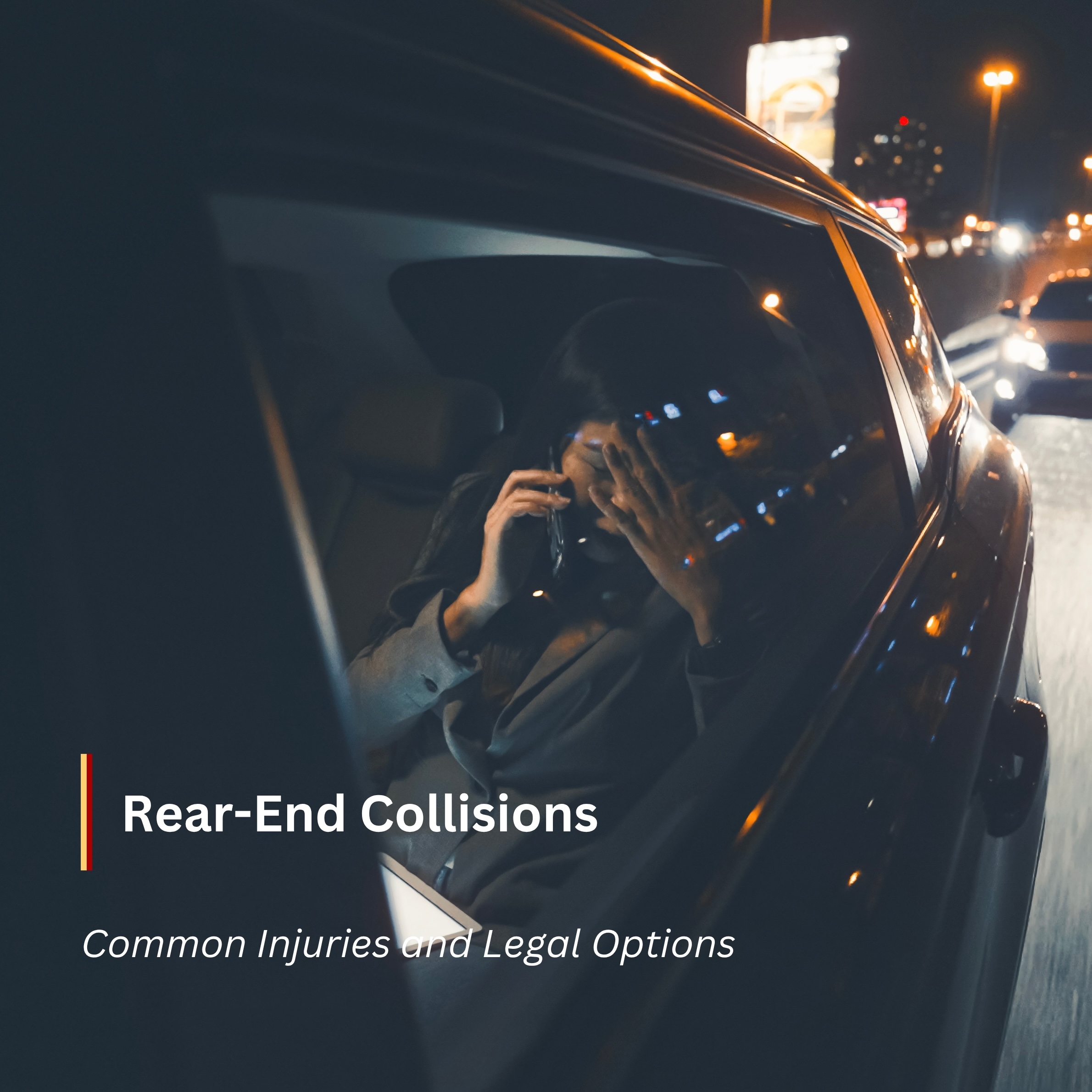
Rear-end collisions are one of the most common types of traffic accidents. They occur when one vehicle strikes the back of another vehicle and can happen on freeways, residential streets, intersections, parking areas, and in stop-and-go traffic. Although some rear-end accidents occur at relatively low speeds, the sudden impact can still cause injuries and property damage. Understanding common injuries and the legal issues that may arise after a collision can help accident victims make informed decisions about their next steps.
Common Causes of Rear-End Collisions
Rear-end crashes can happen for many reasons. Distracted driving is one common factor. A driver who is texting, adjusting a navigation system, eating, or otherwise looking away from the road may not notice that traffic ahead has slowed or stopped. Following too closely can also contribute to a collision. Other circumstances that may contribute to rear-end accidents include the following.
- Speeding or driving too fast for existing conditions
- Sudden traffic congestion
- Impaired driving
- Driver fatigue
- Poor weather or visibility
- Mechanical problems, including brake failure
- Unsafe lane changes
- Failing to pay attention at intersections
- Road construction or unexpected roadway hazards
Determining why a collision occurred may require reviewing more than the location of damage to the vehicles. Photographs, witness statements, police reports, vehicle information, video footage, and other evidence may help clarify what happened.
Types of Injuries
The type and severity of an injury can vary depending on the speed of the vehicles, angle of impact, seat position, use of restraints, and other circumstances. Whiplash and neck injuries are commonly associated with rear-end crashes. Whiplash occurs when the neck moves quickly backward and forward. Symptoms may include neck pain, stiffness, headaches, reduced range of motion, and discomfort in the shoulders or upper back. A collision can affect muscles, ligaments, discs, or other structures of the spine. Head injuries are also common. A person's head may strike a steering wheel, window, or another part of the vehicle. Depending on the circumstances, this can result in a concussion or other traumatic brain injury. Other possible injuries may include the following.
- Shoulder injuries
- Soft-tissue injuries
- Brusing
- Fractures
- Knee injuries
- Injuries involving the arms or wrists
Since symptoms are not always apparent immediately after an accident, individuals who develop pain or other concerning symptoms should consider seeking appropriate medical attention.
Who is Liable?
People sometimes think that the rear driver is automatically responsible for every rear-end accident. While the actions of the following driver are often an important part, responsibility depends on the facts of the specific collision. Multi-vehicle accidents can be especially complicated because the conduct of several drivers may have contributed to the crash. As a result, evidence from the accident scene can be important when evaluating how the collision occurred.
Evidence and Documentation
Evidence may become more difficult to obtain as time passes. When circumstances permit, documenting the accident scene can help preserve information about the collision. Useful evidence may include photographs of the vehicles and roadway, insurance information, contact information for witnesses, medical records, repair estimates, police reports, and correspondence with insurance companies.
Dash-camera recordings and surveillance footage from nearby businesses or properties may also provide useful information in some cases. Maintaining records of medical expenses and other accident-related costs can help document the effects of the collision.
Legal Options that may be Important
Depending on the circumstances, a person injured in a rear-end accident may have the option to pursue an insurance claim or personal injury claim. Potential damages in a California personal injury matter may include medical expenses, lost income, property damage, and other losses recognized under applicable law. The damages available depend on the facts of the case, available evidence, insurance coverage, and applicable legal requirements. California follows comparative-fault principles. This means responsibility may be distributed among multiple individuals when more than one person's behavior contributed to an accident.
Seeking Legal Support
Seeking legal support and guidance after a rear-end car accident may be important for keeping yourself and others safe. Oftentimes, legal and insurance questions may create confusion for victims going through an already difficult time. That is why it may be important to seek legal counsel. Depending on the circumstances, our legal team can review available accident information, examine relevant records and evidence, communicate with insurance companies, and evaluate potential legal claims.
The Legal Team at KAASS LAW
KAASS LAW may assist individuals with personal injury matters, including claims arising from motor vehicle accidents and rear-end collisions. Our qualified personal injury attorneys may also explain applicable procedures and legal considerations so that victims can better understand the options available to them. If you have suffered injuries from a rear-end collision, you are not alone. Call KAASS LAW today to understand your rights and options moving forward.
Related Articles
View All Posts
Learn how cell phone use and texting can contribute to distracted driving accidents, liability, evidence, and injury claims in California.

Car accidents are stressful, and amidst the chaos, you must be aware of the specific timeframes within which you must report the incident to your insurance company. Failure to do so could have significant repercussions, including denying your claim or losing coverage. Here, KAASS LAW explains the critical timelines and procedures for reporting a car accident in California.
The Importance of Timely Reporting
When involved in a car accident, reporting it to your insurance company promptly is crucial. Insurance policies generally stipulate a specific timeframe for notifying them about an accident. Ignoring these timelines can lead to various negative outcomes, such as denying your claim or losing coverage. KAASS LAW emphasizes the importance of understanding and adhering to these deadlines to protect your rights and interests.
Typical Timeframes for Reporting a Car Accident
While the exact time limits can vary depending on your insurance provider and policy, most insurers in California require you to report an accident within a few days. Generally, you should notify your insurance company as soon as possible, ideally within 24 to 72 hours of the accident. KAASS LAW advises checking your specific insurance policy for the exact reporting timeframe and contacting your insurer immediately to avoid potential issues.
Understanding the Consequences of Delayed Reporting
Delaying the report of an accident can have severe consequences. If you wait too long, your insurance company might deny your claim because of non-compliance with the policy terms. This denial can leave you responsible for all expenses related to the accident, including vehicle repairs, medical bills, and any legal liabilities. Timely reporting is about following rules and ensuring you receive the coverage and protection your policy offers.
What to Include in Your Accident Report?
When you report an accident to your insurance company, provide as much detail as possible. This should include the accident's date, time, location, all parties' contact information, and a description of the incident. You can also include weather conditions, potential witnesses, and any injuries sustained. Providing a comprehensive report helps streamline the claims process and ensures that your insurance company has all the necessary information to process your claim effectively.
The Role of Police Reports in Insurance Claims
A police report can play a significant role in your insurance claim. In California, it is advisable to call the police at the accident scene, especially if there are injuries or significant damage. The police report provides an official account of the incident, which can be crucial when filing a claim. KAASS LAW highlights that having a police report can substantiate your version of events and help expedite the claims process.
Dealing with Insurance Companies After an Accident
Navigating the aftermath of a car accident can be overwhelming, particularly when dealing with insurance companies. KAASS LAW recommends contacting a professional car accident attorney to help manage communications with insurers. Attorneys can ensure you do not unintentionally say something that could jeopardize your claim. They also assist in negotiating with the insurance company to ensure you receive fair compensation for your damages and injuries.
Statutory Requirements for Reporting Accidents in California
California has statutory requirements for reporting car accidents to law enforcement if certain conditions are met. For instance, if injuries, fatalities, or significant property damage exceed $1,000, you must report the accident to the California Department of Motor Vehicles (DMV) within ten days. KAASS LAW advises that even if you report the accident to your insurance company, you must comply with state reporting requirements to avoid penalties or issues with your driving record.
Why Timely Reporting Benefits You
Reporting an accident promptly ensures compliance with your insurance policy and benefits you in other ways. Early reporting can help preserve evidence, such as witness statements and accident scene details, which can degrade or become less reliable. KAASS LAW emphasizes that quick action helps protect your interests and strengthens your position when negotiating a settlement or pursuing legal action if necessary. Understanding the time limits for reporting a car accident to your insurance company is crucial for safeguarding your rights and financial well-being. KAASS LAW advises that being proactive and informed can significantly affect your insurance claim's outcome and overall recovery process. Always review your insurance policy for specific reporting requirements and consult with a professional attorney to navigate the complexities of post-accident procedures effectively.
Should You Hire a Lawyer for Your Car Accident Claim?
In situations where you’ve been involved in a minor car accident with no significant injuries or property damage, you might be able to handle the claim yourself. However, consulting with a skilled car accident attorney is advisable if any of the following circumstances apply to your case:
- The accident resulted in severe injuries or fatalities.
- Your injuries have impacted your ability to return to work.
- There is a dispute or uncertainty about who is at fault.
- The accident occurred in a construction zone, school zone, work zone, or government-owned property.
- The other driver involved was uninsured or underinsured.
- You struggle to find, collect, or preserve the necessary evidence for your claim.
- The insurance company is trying to minimize or deny your claim.
- You have been asked to give a statement by the other driver, their insurance provider, or their lawyer.
- You are unsure about your legal rights, options, or negotiating for the compensation you deserve.
If you have doubts about your car accident case, it is prudent to seek legal advice immediately. KAASS LAW recommends that you never deal directly with insurance companies if you have sustained injuries. These companies primarily look out for their financial interests.
Contact a Car Accident Lawyer in California
At KAASS LAW, our attorneys bring years of experience handling various car accident claims across California. If you or a loved one has been injured, we will craft a robust legal strategy to hold the negligent party accountable, ensuring your financial and emotional security is restored. Contact us today to discover how we can significantly improve your car accident claim in California.

Not only are personal injury cases legal disputes, but they also tell stories of human suffering, resiliency, and the pursuit of fairness. Pain and suffering are complex phenomena. They extend beyond physical harm to include emotional distress, mental anguish, and a reduction in one's quality of life. These cases revolve around the idea of pain and suffering. In-depth analysis of the complexities surrounding pain and suffering in personal injury cases is provided in this thorough examination. It also sheds light on the difficulties associated with measuring it and the quest for justice for those who have suffered the consequences.
Loss of Earnings
Fractures, cuts, or traumatic brain injuries are frequently the physical signs of pain within personal injury cases. Examples of chronic pain conditions that can seriously impair a person's quality of life and ability to perform daily tasks are back injuries and nerve damage. Constant physical discomfort can have an impact on one's wellbeing and quality of life. It is experienced at times other than right after an injury.
Subjective and Objective Aspects
Because it is subjective, calculating pain and suffering in personal injury cases can be very difficult. While lost wages and medical costs have a clear financial value, pain and suffering involve intangible losses that are challenging to measure precisely. A nuanced approach that takes into account medical evidence, expert testimony, and qualitative assessments of the individual's experiences is necessary due to the subjective nature of pain and suffering.
Legal Aspects
Cuts, fractures, and traumatic brain injuries are examples of physical pain symptoms that are common in personal injury cases. Back injuries and nerve damage are two examples of chronic pain conditions that can significantly reduce a person's quality of life and capacity to carry out daily tasks. Persistent physical discomfort can have a negative effect on one's overall health and quality of life. One does not always feel it immediately following an injury.
Cultural and Societal Factors
Culture and society's perceptions of suffering and pain can affect the process of quantification. That in turn affects attitudes toward justice and compensation. Depending on cultural differences in the expression and interpretation of pain, there may be differences in the understanding and valuation of pain and suffering in legal contexts. Pain and suffering calculations are complicated because of societal perceptions of frivolous claims, litigiousness, and attitudes toward personal injury litigation.
Legal Recourse and Representation
People who have suffered personal injuries have the right to file a lawsuit. They can get compensation for their losses, and hold those responsible for their actions accountable. Competent personal injury attorneys tirelessly pursue equitable and proper compensation for their clients as their advocates. Through legal representation, victims of personal injury have access to information, resources, and support that empower them to fight for justice and stand up for their rights.
Comprehensive Compensation
Damages for pain and suffering in personal injury cases can include a variety of items. That includes medical expenses, lost wages, psychological distress, and a decline in quality of life. Courts consider both the long-term consequences of the injury and the entirety of the plaintiff's losses when determining the appropriate amount of compensation. Acknowledging the full extent of the individual's suffering, just and comprehensive compensation provides them with the means to rebuild their lives and proceed with honor and resiliency.
The Human Dimension
There is a human story, a tale of suffering, pain, and resiliency behind every personal injury case. Victims of personal injury are people with hopes, dreams, and aspirations; they are not just cases or statistics. An appreciation of the human aspect of personal injury cases leads to the development of empathy, compassion, and understanding; these qualities in turn motivate efforts to guarantee that victims receive the assistance and recompense to which they are legally entitled, as well as due process. It is imperative to recognize that every case has a human element. It requires our undivided attention and thoughtfulness since it represents an individual with a unique background and experience. The stories of people who have suffered personal injuries frequently include overcoming great challenges, enduring agony on both a physical and mental level, and navigating intricate legal systems. These are not merely legal battle stories; they are tales of survival and fortitude. It's important to recognize the bravery and strength of those who endure under such trying conditions. In addition, the effects of a personal injury go beyond the victim to include their friends, family, and community. An injury can have far-reaching consequences on relationships, financial security, and general well-being. We respect the interdependence of human experiences and the value of empathy and support by acknowledging the human aspect of personal injury cases.
Contact Personal Injury Attorneys
In cases of personal injury, pain and suffering are actual experiences. They have an impact on the lives of the injured parties. Also, it affects their loved ones. Let us endeavor to guarantee that every individual receives the proper degree of decency and respect. By doing this, we uphold the principles of justice and ensure that those who have suffered receive the support and recognition they need in their pursuit of healing and closure. We preserve justice and uphold the inherent worth and dignity of each and every person affected by these situations. We achieve it by appreciating the human stories told in personal injury cases. Call KAASS Law at 844.522.7752