Pressure Cooker Explosions: Product Defects That Cause Severe Burns
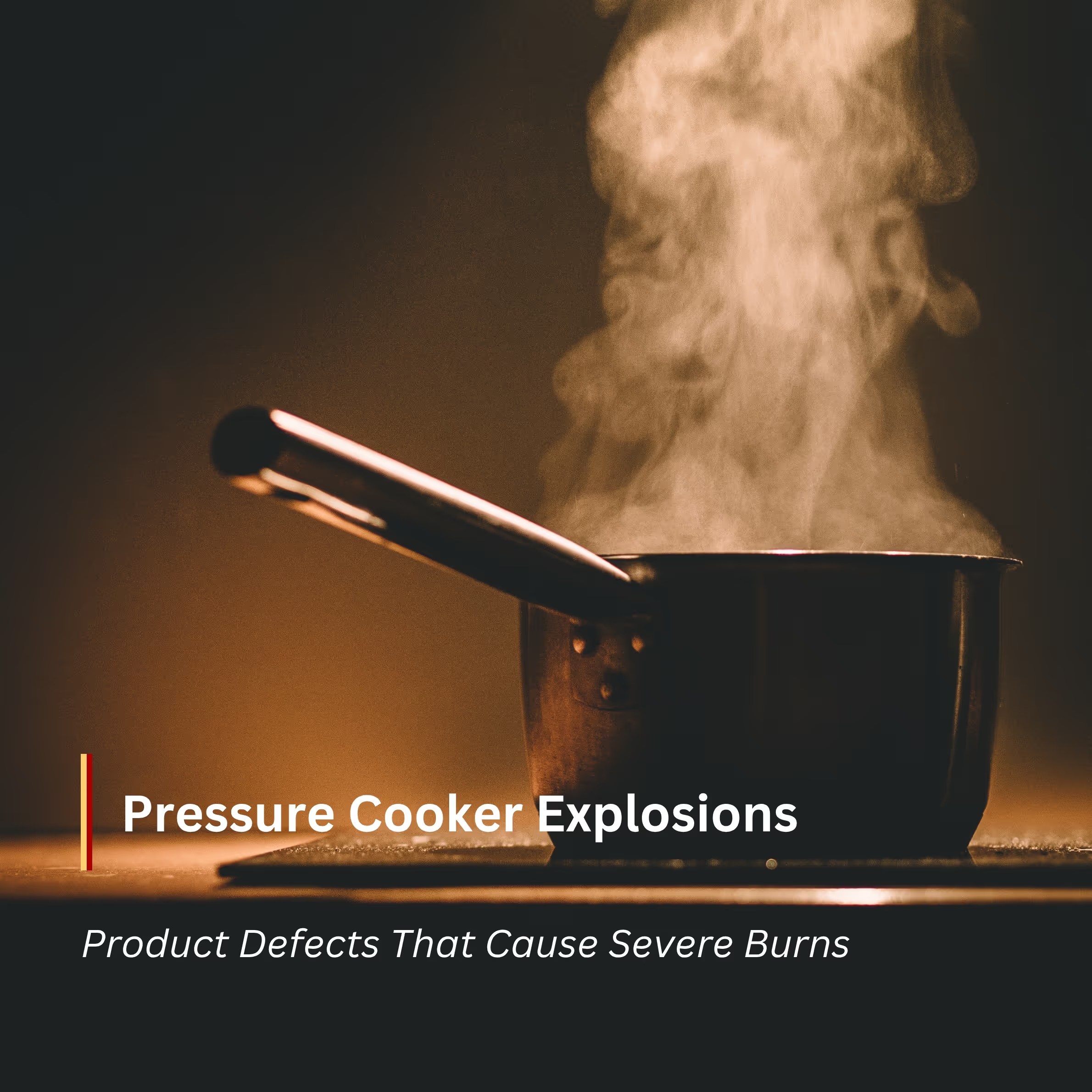
Pressure cooker explosions may cause serious injuries that can leave victims feeling unsafe and unsure about their future and the necessary steps to take to work towards recovery. Oftentimes, family members are unaware of their rights and responsibilities when pursuing a personal injury case after a pressure cooker explosion accident. Understanding these types of accidents and the safety precautions to take moving forward is crucial to maintaining your health and well-being.
Operation: Pressure Cookers
Pressure cookers operate by trapping steam inside a sealed cooking chamber. As steam accumulates, internal pressure increases, allowing water and food to reach temperatures higher than they would during normal cooking. As a result of this pressure, safety mechanisms are important. Depending on the model, a pressure cooker may contain the following components.
- A locking lid
- Sealing ring or gasket
- Pressure-release valve
- Pressure indicator
- Backup pressure-release system
- Electronic sensors or controls
It is important to note that these components work together to maintain appropriate force and prevent the pressure cooker from being opened before pressure has been released. A flaw affecting one or more of these components may create a risk of hot contents escaping unexpectedly.
Defective Products
Not every pressure cooker accident is caused by a defective product. The circumstances surrounding each incident must be evaluated individually. However, several types of alleged defects may be relevant after an unexpected pressure release.
Defective Lid-Locking Mechanisms
One significant concern involves a lid that can potentially be opened or removed while the cooker remains pressurized. A properly functioning locking mechanism is meant to prevent this from happening. If the locking system fails, hot liquid, food, and steam may escape as the lid is moved. This is especially dangerous since the user may believe the cooker is safe to open.
Faulty Pressure-Release Valves
Pressure-release valves regulate the steam inside a pressure cooker. If a valve becomes blocked or fails to function properly, pressure may potentially rise beyond the appliance's planned operating conditions. In addition, a defective valve could release steam or liquid unexpectedly. Determining whether a valve malfunctioned may require examination of the appliance and its components.
Defective Sealing Rings or Gaskets
The gasket creates a seal between the lid and cooking pot. If it is defective, improperly manufactured, or fails, pressure may not remain properly managed. A seal that is compromised could potentially contribute to unexpected steam leakage or hot-liquid release.
Inadequate Safety Features
Pressure cookers may include multiple safety features so that another mechanism can react if one part fails. A product liability investigation may examine the overall design of the appliance, the feasibility of alternative safety mechanisms, and whether the product operated in a reasonably safe manner.
Inadequate Warnings or Instructions
Some cases may involve allegations that instructions or warnings did not adequately explain a particular hazard. It is important to note that California recognizes failure-to-warn theories in product liability cases.
Injuries that may occur
Pressure cooker incidents may cause thermal or scald burns when hot steam, liquid, or food contacts the skin. Injuries may affect the hands, arms, chest, neck, or face, especially when an individual is standing directly over or near the appliance. Depending on the severity of the injury, treatment may include, but is not limited to, the following.
- Emergency care
- Wound management
- Follow-up appointments
- Hospitilization
- Surgical treatment
Some burn injuries may also result in scarring or longer-term health concerns. As a result, prompt medical evaluation can be important both for treating the injury and documenting the side effects.
The Necessary Steps to Take After a Pressure Cooker Explosion
After addressing immediate medical needs, preserving evidence may be important. An injured individual should usually avoid throwing away the following after a pressure cooker explosion.
- Pressure cooker
- Lid
- Gasket
- Valve
- Packaging
- Instructions
- Receipts
- Other components associated with the appliance
Photographs of the cooker and surrounding area may also help document the condition of the product after the incident. Information identifying the manufacturer, model, serial number, and purchase date can be useful.
Speaking to a Legal Professional
Families may benefit from seeking legal care and support after suffering injuries from a pressure cooker explosion. Oftentimes, these types of accidents may cause serious legal considerations for families and their loved ones. As a result, seeking guidance from a professional attorney may help you understand your rights throughout the claims process.
Our Legal Team at KAASS LAW
A qualified personal injury attorney may be able to explain applicable laws, review the specific facts surrounding your accident, and preserve necessary pieces of evidence that may be useful later on in the investigation. If you have suffered injuries from a pressure cooker explosion, you are not alone. Call KAASS LAW today for a confidential consultation and to learn more about your options.
Related Articles
View All Posts
Learn how defective helmets can contribute to serious injuries, common product defects, liability issues, and legal options after an accident.
Learn how operator negligence and equipment failures may cause boating accidents and how liability may be evaluated under California law.
Product liability is a common cause of wrongful death. The loss of a child can be a tragedy beyond comprehension for the parents who must go through it. Toys for kids are a constant source of damage and health concerns. The carelessness of toy producers, distributors, and retailers results in kids' injuries every year. No matter how old your child is, an accident brought on by a hazardous or defective toy can have long-lasting effects. According to a child psychologist, such an encounter may negatively affect a youngster's behavior and associations with various things and situations.
What Injuries Can A Kid Suffer From Defective Toys?
Among the injuries brought on by product liability are:
- Eye damage
- Choking accidents
- Discoloration and scarring
- Head trauma
- Fractures and broken bones
- Asphyxiation
- Psychological harm
- Wrongful death
What Are The Safety Standards For Children's Products And Toys?
Kids regularly throw toys, stuff them in their mouths, and mistreat them in general. Because of this, toy producers and merchants need to handle children's toys carefully. Unfortunately, businesses produce dangerous toys all too frequently, which can lead to lead paint exposure and choking concerns. Then they fail to give parents enough caution. Children may consequently sustain critical injuries or possibly pass away.
Product Liability the Reason of Wrongful Death
In general, three types of flaws can result in a product liability claim:
- Defects in product design. Mass product recalls of defective products can occasionally result from design flaws.
- Manufacturing defects are mistakes during the assembly or production of a particular product. An error in manufacturing suggests that other items with the same design did not cause malfunction.
- Marketing defects are those that occur from a user not receiving adequate instructions on how to use a product safely, which causes a fatal accident.
How To Determine Whether The Product Is Defective Or Not?
Compliance With Safety Testing Guidelines And Procedures
Toy designers and producers must abide by industry guidelines while creating new toys. These parties may be held accountable for injuries caused when they fall short of acceptable standards.
Defective History of the Business or Product Line
Allegations of present flaws may be supported by documentation of past defects and injuries. This data can also demonstrate that the manufacturer was aware of potential issues and risks.
Age-Appropriate Recommendations
Age recommendations help consumers to determine when they should use them. When buying toys for their children, parents rely on these rules. Improper categorization can put younger children at risk. Types of paints and chemicals used in manufacturing Younger kids, in particular, frequently put items in their mouths.
Adequate Instructions and Warnings
Toys come with warning labels, instructions, and age designations to help parents. When these guidelines are insufficient, kids could damage themselves by using the toy in an unsafe way.
Easily Disassembled Toys
Some toys that are simple to disassemble can be hazardous. The toy's little bits pose a risk of choking. Electric burns or shocks can also result from small electronic components.
Who Can Be Liable for a Wrongful Death Caused by a Defective Toy?
A toy may have a flaw at any point during its development, production, or marketing. Anyone involved in the supply chain could potentially be held accountable if a child is killed in an accident brought on by a defective product, including:
- The product's creator
- The company that makes any component of the product, such as the brakes on a car,
- The one who put the item together The wholesaler
- The store where the consumer actually purchased the good
Financial Compensation for a Wrongful Death
Our wrongful death lawyers at KAASS Law are devoted to ensuring that you get the compensation you deserve. You might be entitled to compensation for the following damages if you file a claim with our legal firm:
- Future and Past Medical Expenses
- Lost Salary
- Loss of Potential Future Wages
- Distress and Suffering
- Emotional distress (such as PTSD, depression, and anxiety)
- Punitive Damages
Contact KAASS Law Experienced Wrongful Death Attorneys Today!
Helping our clients acquire the financial means required to pay for medical care and rehabilitation services is a top concern for our lawyers. Through conversations with your child's doctor or other medical experts, we will learn about your child's medical requirements and pursue financial compensation for all additional economic and noneconomic damages in addition to medical costs. Call us now at (310) 943-1171
