
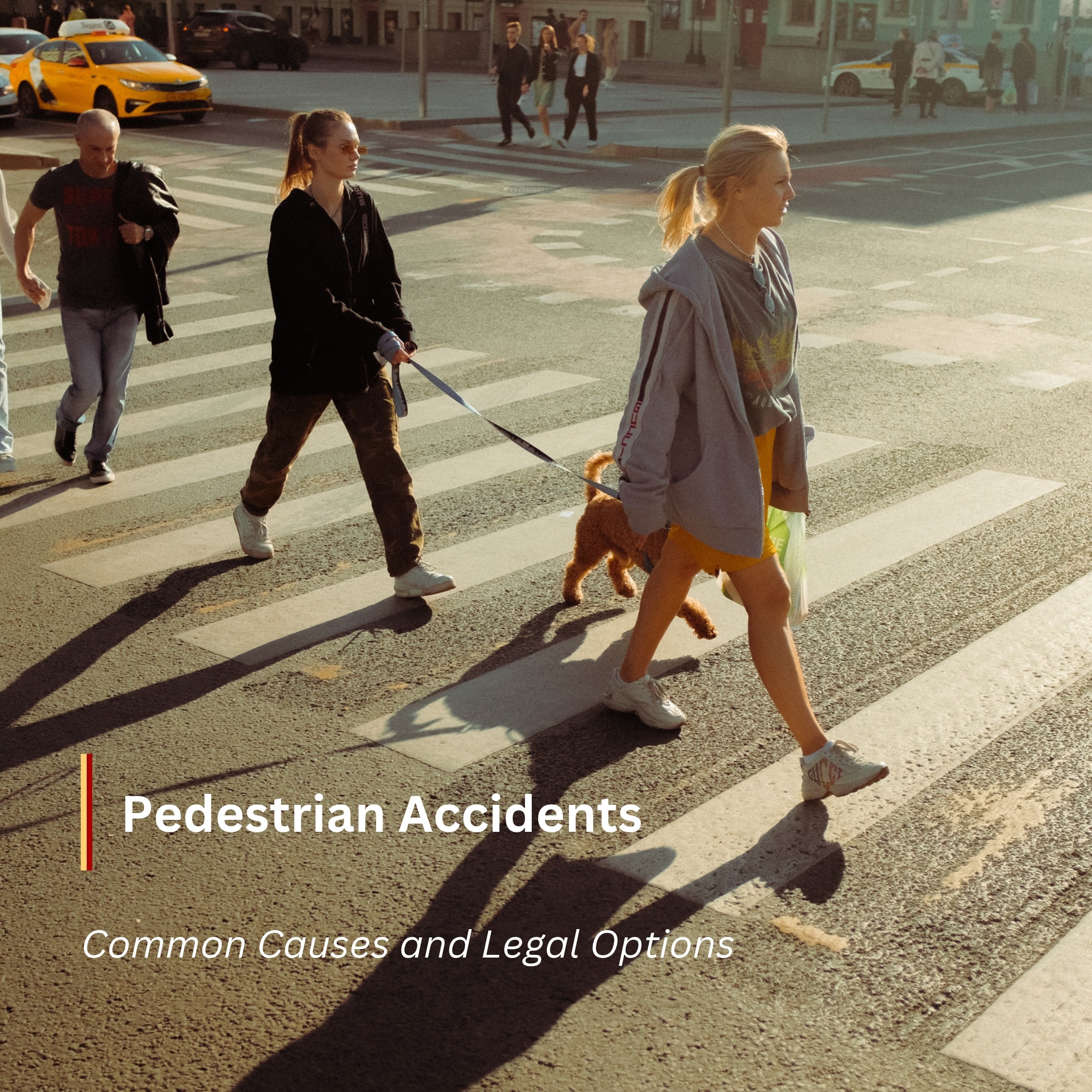
Walking is an everyday activity for many California residents. Whether commuting to work, walking to school, visiting local businesses, or exercising, pedestrians usually share roads and intersections with motor vehicles. Unfortunately, a driver's negligent behavior or failure to follow traffic laws can result in a serious accident.
Unlike drivers, pedestrians lack the physical protection provided by seat belts, airbags, and vehicle frames. As a result, even a relatively low-speed collision can cause significant injuries and long-term medical complications.
Pedestrian accidents can occur in residential neighborhoods, commercial areas, parking lots, and busy intersections throughout Los Angeles, Glendale, Pasadena, and surrounding Southern California communities.
Drivers who take their attention away from the road may fail to notice pedestrians crossing the street or approaching an intersection. Common driving distractions may include the following:
California Vehicle Code Section 23123.5 generally prohibits drivers from holding and operating handheld wireless communication devices while driving, subject to statutory exceptions. Evidence of distracted driving may be relevant when determining liability.
Crosswalks provide designated areas for pedestrians to cross roadways. However, some drivers fail to slow down or yield when pedestrians are crossing. Under California Vehicle Code Section 21950, drivers generally must yield to pedestrians crossing within marked crosswalks or unmarked crosswalks at intersections.
Excessive speed reduces a driver's ability to react to unexpected hazards. It may also increase the severity of injuries when a vehicle strikes a pedestrian. California Vehicle Code Section 22350 stops drivers from traveling at speeds that are unsafe considering existing road, traffic, visibility, and weather conditions.
Pedestrian collisions usually occur when drivers make turns at intersections, exit driveways, or reverse out of parking spaces. Drivers may focus on approaching traffic without checking for individuals walking nearby. Larger vehicles may also have blind spots that make pedestrians more difficult to see.
Common pedestrian accident injuries may include, but are not limited to, the following.
Some injuries may not produce noticeable symptoms immediately after an accident. Seeking medical evaluation as soon as possible can help identify potential complications and document injuries associated with the collision.
California generally requires individuals to exercise reasonable care to avoid causing harm to others. Under California Civil Code Section 1714, a person may be held responsible for injuries resulting from negligent conduct. Establishing negligence in a pedestrian accident generally requires demonstrating four elements:
Depending on the evidence, potentially liable parties may include drivers, commercial vehicle operators, employers, property owners, government entities, or vehicle manufacturers. Identifying responsible parties requires an examination of the individual circumstances surrounding the accident.
California follows a pure comparative negligence system. Under this legal principle, an injured pedestrian may still be eligible to recover damages even if they contributed to the accident. However, any recovery may be reduced according to their percentage of responsibility.
Depending on the circumstances, injured pedestrians may pursue compensation for economic and non-economic damages, including:
The availability and amount of compensation depend on the evidence, applicable law, insurance coverage, and other case-specific factors.
Taking appropriate steps following a pedestrian accident can protect your health and help preserve important evidence. Individuals should consider the following.
Recovering from a pedestrian accident can involve physical, emotional, and financial challenges. Navigating insurance requirements and legal procedures while receiving medical treatment may create additional difficulties. As a result, it may be beneficial to speak to a legal professional to better understand your rights, responsibilities, and the necessary steps to take to get back on the road to recovery.
At KAASS LAW, our qualified personal injury attorneys may help victims and their loved ones by reviewing the specific facts of their case, speaking to insurance companies on their behalf, and determining potentially responsible parties moving forward. Contact KAASS LAW today for a confidential consultation and to learn more about your options.
Injured in a pedestrian hit-and-run accident? Learn what steps to take, how to preserve evidence, and what legal options may be available.
Learn how distracted walking may affect comparative negligence, pedestrian accident liability, and potential compensation after an injury.
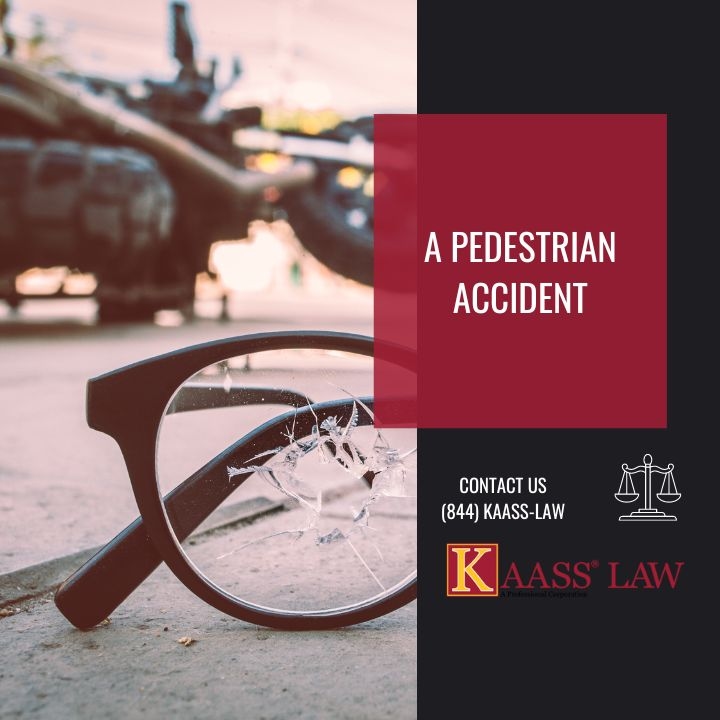
The identity of a 58-year-old man involved and killed on October 18 in Bellflower in a pedestrian accident has been made public by the coroner's office. Known as Luis Reynoso by the medical examiner's office, he was struck by a car near the intersection of Rosecrans and Woodruff avenues at 6:48 in the morning. Blunt-force trauma immediately killed Reynoso. Officials withheld any other details on the incident.
Even though it is virtually always the driver's responsibility to yield to pedestrians, they still face dangers on a daily basis in this nation. GHSA estimates that there will be 6,721 pedestrian fatalities in 2020. Also, an increase of 4.8% from the 6,412 fatalities reported in 2019. Most of the time, whether or not they are at a designated crosswalk, pedestrians have the right of way when crossing a street or an intersection. Now, it's essential to have an impartial investigation carried out by an experienced attorney. It is crucial to have the right tools when trying to establish fault in a pedestrian accident investigation.
The family of Luis Reynoso may be eligible to file a wrongful death claim for the loss of companionship and love, depending on the findings of the investigation. The outcome of a civil action is a wrongful death lawsuit for a pedestrian accident. This indicates that the victim's family or estate filed the wrongful death action because the defendant was responsible for the victim's death as a result of a willful or negligent act. Most wrongful death lawsuits in California can be settled. This entails discussions between the insurance provider and the claimant to negotiate a fair compensation amount.
Wrongful death is a legal term that refers to a situation in which a person dies as the result of the negligent or intentional actions of another person or entity. Thus, the surviving family members may be able to bring a lawsuit against the responsible party. That's how they can seek the compensation they deserve. In order to succeed in a wrongful death claim, the plaintiff must prove that the defendant's actions caused the death. On the other hand, the plaintiff must prove that the death resulted in damages to the plaintiff. Damages in a wrongful death case may include financial losses such as lost wages and medical expenses. As well as non-economic losses such as pain and suffering and loss of consortium.
If you are part of a vehicle-pedestrian accident that ends in death, it is important to follow these steps:
It is important to remember that every accident is different, and the specific steps you should take will depend on the case. If you have any doubts about what to do, it is a good idea to consult with an attorney.
Wrongful death claims can arise in a variety of contexts, including motor vehicle accidents, medical malpractice, workplace accidents, and criminal behavior. The specific laws governing wrongful death claims vary by state. So, it is important to consult with an attorney who is familiar with the laws. Call us today at 310.943.1171.