How to Legally Open a Marijuana Cultivation Facility in California?

Legally Opening a Marijuana Cultivation Facility in California
The State of California requires cultivators to gain local approval before they consider giving them a license. Local ordinances can vary by municipality, and some areas do not permit marijuana cultivation at all, such as Fresno. While the process different depending on the area one wants to grow in, the city will generally ask that a cultivator provide a business plan, security plan, finance plan. Additionally they may request any other general information about the cultivation premises. This also includes the following environmental codes, which also can vary by city. Wastewater management, conservation regulations, and other environmental issues all fall under this.
Business and Professions Code 26050
According to Business and Professions Code 26050, there are 16 different types of cultivation/manufacturing licenses. Some of these must held simultaneously, depending on a variety of factors. The size of the space, number of plants, type of lighting and cannabis product will determine the licensing requirements. For bigger operations, the state grants limited in number. It is also possible for the state to limit the number of licenses in an area. This is occurs if the concentration of cannabis-related businesses becomes too high.
Requirements for Obtaining a Marijuana Cultivation License
Business and Professions Code 26051.5 outlines the requirements for obtaining a license. One must provide fingerprint information and pass a background check. Documentation of the legal right to occupy the land, evidence that the operation follows local and statewide zoning ordinances, and a detailed description of the growing methods, business practice, quality control, and security. Lastly, given that the cultivation operation is meant for selling cannabis, not just for personal use, the cultivator will need to obtain a seller’s permit, which is outlined in Business and Professions Code 6001. The seller’s permit ID must be provided before obtaining any cultivation license. Choosing the type of cultivation/manufacturing license(s) one must obtain is dependent on the size of the cultivation project, whether the plants are grown inside or outside, and the type of cannabis product being made. For example, if a grower has a 7,500 square foot indoor operation, and also makes cannabis concentrates and hash, they must get a type 2a cultivation license, and also get a type 7 manufacturer’s license to make the concentrated products. When the type of license is chosen, the steps to obtain it are fairly consistent between them all. It requires one to follow all local ordinances, pass a background check, provide a business, security, and financial plan, and obtain a seller’s license. In addition to obtaining a license, it is important to comply with environmental, labor, and tax regulations. These issues are often underestimated, but they determine the legality and stability of a business.
Environmental Compliance And CEQA Law
Cannabis businesses are governed by the California Environmental Quality Act (CEQA). This law requires projects that may impact the environment to undergo a special environmental review. This includes: 1. water use analysis 2. changes to the landscape 3. pesticide use 4. electricity consumption All product must be tracked through the Metrc system, which provides transparency at all stages of product movement. Marijuana Cultivation companies must also hire environmental consultants to prepare reports. These reports are then submitted to the local authorities. In addition, if the farm uses natural bodies of water, it must register with the California State Water Resources Control Board. Violations in water use or waste disposal can result in heavy fines or denial of a license. It will also be required to install the following control systems for: 1. odor 2. energy use 3. wastewater
Labor Laws And Hiring Employees
All growers and businesses are required to comply with state labor laws. This includes: 1. proper classification of employees 2. Payment of legal wages 3. compliance with occupational health and safety regulations 4. Carrying insurance for work-related injuries. If a company has more than 5 employees, it must also sign a labor peace agreement. This ensures that there is no opposition to unionization.
Taxation And Registration
Cannabis producers are required to register with the California Department of Tax and Fee Administration (CDTFA). And, of course, pay all taxes on time, such as: 1. cultivation tax 2. excise tax 3. sales tax Failure to pay or pay on time can result in penalties, interest, and license suspension. To avoid such mistakes, it is advisable to work with an accountant. But be careful, an accountant should definitely have experience in the cannabis industry.
Produce Safety and Transportation
The State of California requires strict safety regulations to be followed at growing facilities. These include: 1. 24-hour video surveillance 2. fencing 3. alarm systems 4. access control If a company plans to transport cannabis between facilities, it must obtain a permit. All products must go through the Metrc system, which ensures transparency at every stage of product movement.
Legal support and licensing strategy
KAASS LAW FIRM provides legal services related to obtaining licenses and resolving zoning disputes. Timely referral to legal counsel helps avoid mistakes that can cost licenses and large fines.
Related Articles
View All Posts
In the current economic climate, many corporations, both public and private, face financial insolvency or liquidity issues. Insolvency can have significant consequences for businesses, their shareholders, and, most notably, their employees. Understanding the legal framework surrounding insolvency is crucial for both corporate leaders and workers, especially when it comes to safeguarding employee rights.
What is Corporate Insolvency?
Corporate insolvency happens when a company cannot pay its debts or meet its financial obligations on time. It can result from various factors, including poor cash flow management, a small capital base, or mismanagement of liabilities. Insolvency often stems from long-term financial mismanagement or unforeseen economic challenges that significantly reduce a corporation's profits.
Corporations facing this may undergo bankruptcy filings or liquidation proceedings. These legal processes allow the company to restructure its debts or liquidate assets to satisfy creditors. To assess insolvency, courts typically use several tests:
- The Balance Sheet Test: This test checks whether the company’s assets exceed its liabilities. If liabilities surpass assets, the corporation may be insolvent.
- The Cash Flow Test: This examines whether the company has enough cash flow to meet its financial obligations as they come due. A lack of funds to cover short-term debts may indicate insolvency.
- The Unreasonably Small Capital Test: This test checks if the company has enough capital to operate and meet future financial obligations. If not, the company may be insolvent.
Consequences of Corporate Insolvency
Corporate insolvency can negatively impact employees, as the company might not meet obligations such as paying wages and benefits or providing job security. Under Section §300 of the Delaware General Corporation Law, employees have specific rights to protect their financial interests if a corporation becomes insolvent. Employees are entitled to a secured lien on the corporation’s assets for wages owed to them—up to two months’ salary. This lien takes priority over other debts.
However, officers of the corporation do not have the same rights. The law excludes officers from this protection. The secured lien only applies to regular employees, not executives like the CEO or CFO. Learn more about corporate insolvency laws.
Guarantees for Employees in the Case of Insolvency
Employees enjoy protection in several cases, as they can claim unpaid wages through the secured lien. This protection helps employees when the company faces liquidation or bankruptcy, ensuring they receive compensation before creditors. However, this protection does not apply to corporate officers, who are legally excluded from claiming unpaid wages.
To avoid confusion, corporations must clearly define roles like "employee," "officer," and "director" in their bylaws. This ensures everyone understands their rights and responsibilities and helps prevent legal disputes during proceedings.
Differences Between Officers, Directors, and Employees
Officers, directors, and employees all play different roles in a corporation. Officers manage day-to-day operations, while directors oversee governance and strategic decisions. Employees provide regular services and receive wages in exchange. When this occurs, only employees have a right to the secured lien. Officers and directors, despite their compensation, do not.
Corporations should ensure their bylaws clearly define these roles. This helps avoid confusion, especially when determining who can claim unpaid wages in these situations. A person holding a title such as "Chief Technology Officer" may be treated as an employee if not formally appointed as an officer.
Legal Support for Corporate Insolvency Issues
Navigating corporate insolvency can be complicated. Understanding your rights during insolvency is essential whether you are a shareholder, employee, officer, or director. If your corporation faces financial difficulties, consulting a corporate law attorney is a wise decision.
An experienced attorney can help navigate laws and protect the interests of employees and shareholders. They can also advise on potential legal actions, such as bankruptcy filings or debt restructuring.
For professional legal advice on corporate insolvency, contact KAASS Law today. Our team is ready to assist with any insolvency-related concerns and guide you through the process.
KAASS LAW Attorneys are Here to Help You!
Financial difficulties can have significant effects on both businesses and employees. When a company struggles to meet its obligations, it risks shutting down and jeopardizing the livelihoods of its workers. It’s crucial for business owners and employees to understand the legal framework surrounding financial distress, especially the various tests used to evaluate a company’s ability to continue operations.
Employees also have specific protections if a company becomes financially unstable. Under Delaware law, employees may be entitled to a secured claim on the company’s assets for up to two months of unpaid wages, with priority over other debts. However, officers of the company are not included in this protection. In cases of financial hardship, understanding the legal distinctions between employees and officers is vital.
For expert legal guidance and advice, reach out to KAASS Law. Our team can help navigate the complexities of these situations. Contact us at 310-943-1171 or visit our website for more information.

Copyright laws are in place to safeguard people's intellectual property and prevent unauthorized use of their works. Under the authority of the Constitution's copyright clause, the federal government in the United States is responsible for enforcing copyright laws. The US Copyright Act of 1976, which grants creators exclusive rights over their works, controls copyright protection in the US. However, copyright rules range from one nation to the next. Therefore, it's crucial to comprehend the parallels and distinctions between US and foreign regulations.
Similarities Between US and Foreign Copyright Laws
Universally recognized fundamental rights for creators exist in several states. The creator does not need to register the work or do any additional actions to acquire protection in the majority of nations, including the United States. Instead, the result is covered by copyright as soon as it is produced and fixed in a tangible form. The owner of the copyright may impose limitations on the use of their work. This includes the rights to copy, distribute, perform, and show it. One similarity between US and foreign copyright rules is the concept of fair use. For particular purposes, such as criticism, commentary, news reporting, teaching, scholarship, or research, copyrighted content may be used without a license under this exception to the copyright law. Although the acceptable range of fair use varies from country to country. However, it is an essential part of copyright law in many jurisdictions.
Differences Between US and Foreign Copyright Laws
Although US and foreign copyright rules are similar, there are still important variations that creators should be aware of. The duration of copyright protection is one of the most important variances. In the US, copyright protection is valid for the lifetime of the creator plus an additional 70 years. The Copyright protection in some foreign countries is valid for the creator's lifetime plus an additional 100 years. Other nations have varied protection periods that range from 50 to 95 years following the creator's passing. The treatment of moral rights is another important distinction between copyright laws in the US and those of other countries. The creator's moral rights are their legal entitlement to credit for their creations and the right to forbid any alterations that would harm their reputation. Moral rights are an important part of copyright law in many other countries, especially in Europe, despite the fact that US copyright law doesn't recognize them. For instance, in France, authors must maintain the integrity of their works. Furthermore, no modifications or changes may be made without the author's permission. Along with variations in the length of copyright protection and the recognition of moral rights, there are several approaches to fair use. Even if fair use exists in the US, it is not in many other countries. Instead, the idea of "fair dealing," which exists in many nations, permits the unlawful use of intellectual property in certain situations. However, the definition of fair dealing varies from country to country. Therefore, it's important for creators to be familiar with the legal framework of the nations where they are doing business.
Contact an Attorney for a Consultation
In summary, copyright laws play a significant role in safeguarding intellectual property all around the world. Despite the similarities between US and international copyright laws, there are still significant differences that creators need to be aware of. Artists working worldwide or considering distributing their works abroad must be aware of these variances. Creators may protect their intellectual property and make sure that others don't use their works without permission by being aware of the legal framework for copyright protection in various jurisdictions. Feel free to give us a call for a consultation at 310.943.1171. If your business is located outside of the US visit the website for more information.
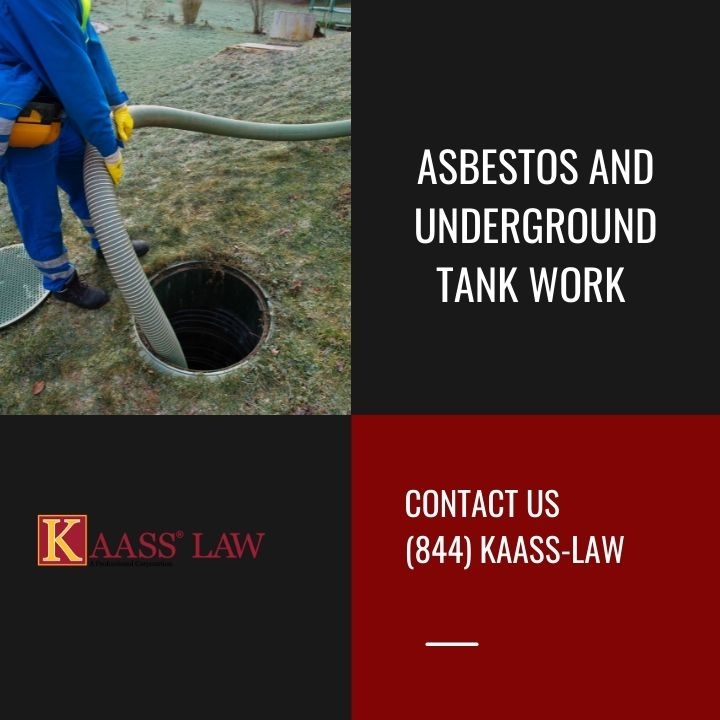
It is highly dangerous work to deal with asbestos and underground tank works, which can cause big property damages and serious health injuries if not done correctly. A person (including a licensed contractor) who performs asbestos-related work without certification, or who installs or removes an underground storage tank without certification, is in violation of California's Business and Professions Code 7028.1 BPC.
What are Asbestos and Underground Tanks?
Asbestos is a high heat resistant fibrous silicate mineral. An underground tank is "a tank and or any underground piping which is connected to the tank, and at least 90 percent of the combined volume of which is underground." Such tanks are usually used to store petroleum and other similar materials. California Business and Professional Code, with its section 7028.1, makes it a crime for a contractor to perform the following actions:
- to perform or hire to perform asbestos-related works without certification
- to install or hire to install underground storage tanks without certification
- to remove or hire a contractor to remove underground storage tanks without certification
- to bid for the installation or removal of underground storage tanks without certification
According to the text of the law, it does not matter whether you are a licensed or a non-licensed contractor; you shall be certified to conduct the works mentioned above, as your license does not automatically enable you to conduct asbestos-related or underground tank works.
What are the Penalties for Violation of Section 7208.1 of the California Business and Professional Code?
The above-mentioned section is a misdemeanor. In case you commit the violation for the first time, it can result in:
- imposing a penalty in the amount of 1000-3000$
If you violate the relevant section for the second or subsequent time, this can lead to:
- imposing a penalty in the amount of 3000-5000$
- imprisonment in a county jail for a term up to 1 year
In accordance with the aforementioned sanctions, the judge has the authority to grant probation to the defendant.
What are Related Offenses to Violation of Section 7028.1?
Under the California Business and Professional Code, among the related offenses is contracting without a license under section 7028 of the Code. The relevant section makes it a crime for the person to:
- serve as a contractor without a license from the Contractors State License Board
- operate with a license that has previously been suspended because of a failure to pay a civil penalty or to comply with an order of correction
The offense is a misdemeanor offense and has these charges:
- imprisonment in a county jail for a term up to 6 months
- imposing a fine in the amount of up to 5000$
What are Legal Defenses Against Violation of Section 7028.1 of the California Business and Professional Code?
There are several defenses you can raise to protect yourself from further penalties under the relevant section. Examples of such defenses will be if you were not a contractor while performing the forbidden actions. This means you have not entered into a contract to perform these activities. This defense may work as section 7028.1 applies only to contractors. It can also be if you have not committed the actions knowingly. For example, you touched upon asbestos in the middle of the performance of other types of work, you performed actions not understanding that you are currently dealing with the mentioned material. You can also use types of such defenses as proving that the police applied overbearing measures to coerce you into confession, with the help of which the judge may exclude the confession from other evidence. It is also possible to try to prove that you are falsely accused of violating section 7208.1 of the California Business and Professional Code.
The Importance of Proper Certification for Asbestos and Underground Tank Work
When dealing with hazardous materials such as asbestos and underground storage tanks, it’s critical to understand the legal requirements in California. The certification ensures that workers have the knowledge and skills necessary to handle these dangerous substances safely, preventing health risks and property damage. Certification also guarantees compliance with state laws, which aim to protect workers, property owners, and the environment. Without proper certification, individuals may face legal penalties, including fines or jail time. Thus, obtaining proper certification is not just a legal necessity but also an ethical responsibility to ensure safety.
Learn more about California’s Contractor Certification
How to Avoid Violations Under California Business and Professions Code 7028.1
To avoid violations under Section 7028.1, contractors must prioritize staying informed about certification requirements for asbestos and underground tank work. Ensure all employees involved in such projects are properly certified and meet the necessary safety standards. Contractors should regularly review the latest regulations and training opportunities to maintain compliance. Additionally, it’s crucial to avoid unlicensed work, as operating outside of these boundaries can lead to severe legal consequences. A proactive approach can help prevent penalties, fines, and potential jail time while ensuring safety and legal integrity in all projects.
Glendale Personal Injury Lawyer
Note that it is essential to have a good defense to mitigate or even dismiss a charge against you. Contact our Glendale personal injury lawyer today for a consultation and case review. Please feel free to give our office a call at 310.943.1171.