Elder Abuse in California: When Nursing Home Neglect, Unsafe Care, and Financial Exploitation Lead to Legal Claims
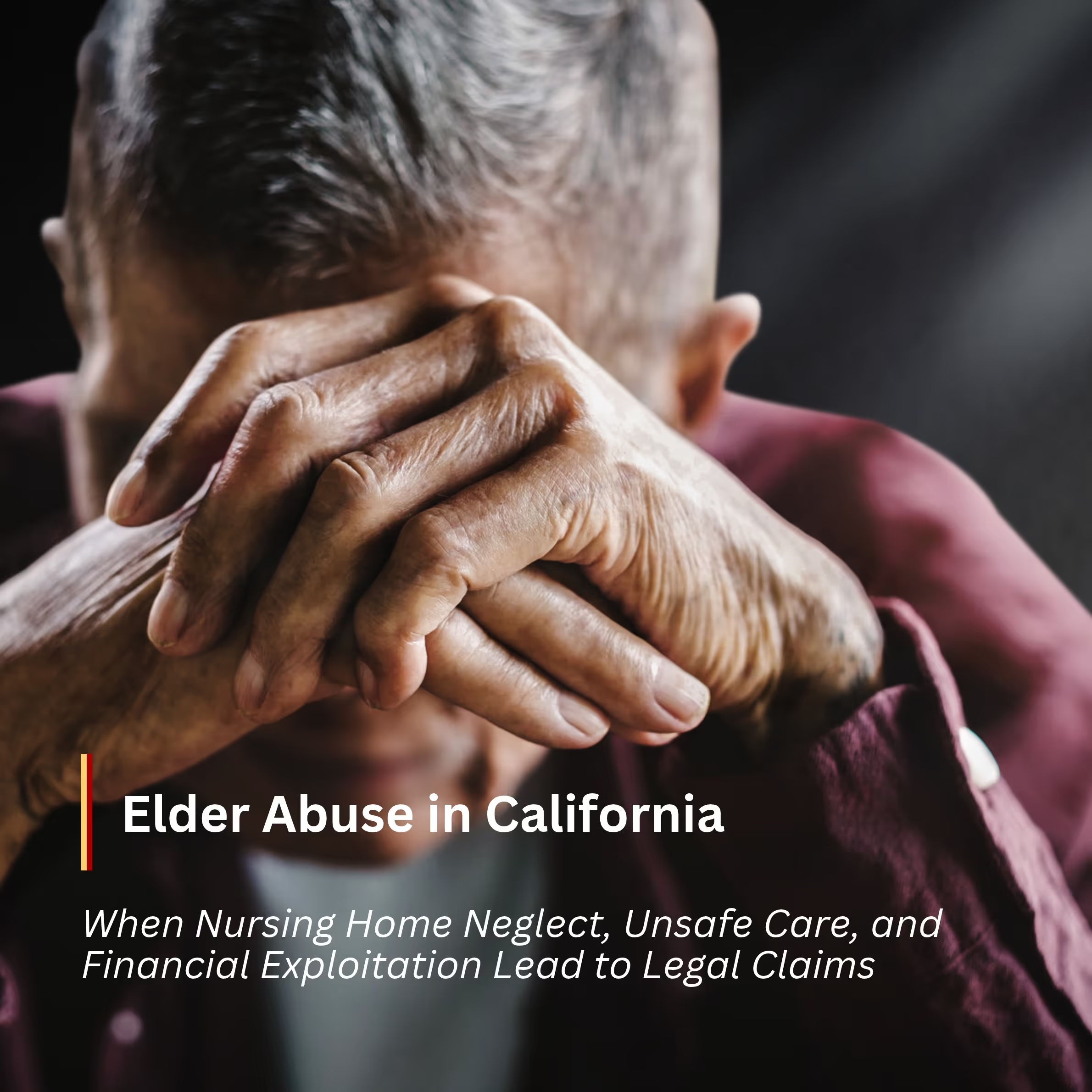
Choosing a nursing home, assisted living community, or rehabilitation facility for an individual or loved one is usually a very difficult decision. Families trust these establishments to provide appropriate supervision, assistance, and protection, especially when individuals can no longer care for themselves on their own. California law provides protections for older adults who experience abuse, neglect, or financial exploitation. Understanding these protections can help families recognize potential misconduct and determine when legal action may be needed moving forward.
When Does Poor Nursing Home Care Become Elder Abuse?
It is important to understand that repeated failures to provide the necessary care may raise concerns about neglect, especially when staff members or facility administrators know that an individual faces serious risks. Under California's Elder Abuse and Dependent Adult Civil Protection Act, neglect may involve the failure of a person responsible for an elder's care to exercise the degree of care that a reasonable person in a similar position would provide.
Examples of this may include, but are not limited to, failing to provide adequate nutrition, hydration, hygiene, medical assistance, or protection from health and safety hazards.
Unsafe Facilities and Preventable Wandering Accidents
Older adults living with Alzheimer's disease, dementia, or other cognitive impairments may experience confusion, disorientation, and wandering behaviors. These conditions can make everyday surroundings dangerous when the necessary safety precautions are not taken. Assisted living facilities and nursing homes should evaluate the needs and requests of every resident to ensure they are receiving the proper treatment moving forward. Potential safety concerns may include, but are not limited to, the following.
- Malfunctioning exit alarms
- Unsecured doors
- Inadequate nighttime supervision
- Failure to document changes in a resident's behavior
When a resident with a known risk leaves a facility without notice, the consequences may include falls, exposure to extreme temperatures, serious injuries, or death. A legal investigation may examine whether the facility knew about the resident's condition, whether appropriate safety measures were taken, and whether staff members followed applicable rules.
Bedsores and Pressure Ulcers: Warning Signs of Possible Neglect
Pressure ulcers or bedsores, are a significant concern for older adults with limited mobility. Residents recovering from strokes, fractures, or serious illnesses may require assistance changing positions, maintaining hygiene, and protecting vulnerable areas of skin. Although pressure injuries can develop despite appropriate care, severe or rapidly worsening wounds may need closer examination.
Repeated Falls and Failure to Follow Safety Plans
Falls are another major concern in nursing homes and rehabilitation facilities. It is important to understand that older residents may face serious risks and harm when repeated falls occur in these types of establishments. These may include, but are not limited to, the following.
- Mobility limitations
- Medications
- Cognitive impairment
- Recent surgery
Facilities usually evaluate fall risks and develop individualized prevention plans. These plans may involve accessible call buttons, assistance with toileting, mobility devices, bed alarms when appropriate, and regular supervision. Problems can occur when residents repeatedly request help but receive delayed responses, or when safety equipment is missing, malfunctioning, or inaccessible.
When a resident suffers fractures or other injuries, an investigation may consider whether the facility adequately responded to earlier incidents and whether reasonable precautions were implemented.
Understaffing in Nursing Homes
The amount of staff in a facility can affect the quality of care provided to vulnerable residents. When facilities lack sufficient qualified personnel, employees may struggle to respond promptly to call lights, assist residents with meals, provide hygiene care, or monitor individuals at risk of falling.
Can Nursing Home Owners and Management Companies Be Held Responsible?
When serious neglect occurs, responsibility may extend beyond the employees directly involved in a resident's care. Depending on the circumstances, a legal investigation may examine the conduct of the following individuals.
- Facility operators
- Management companies
- Other entities involved in staffing, safety policies, budgets, or operational decisions
It is important to understand that determining liability requires examining each individual's role, applicable duties, behavior, and relationship to the involved harm.
Financial Elder Abuse: Exploitation Beyond Nursing Homes
Financial exploitation can occur when someone improperly takes, retains, or obtains an older person's money, property, or financial interests.
Under California Welfare and Institutions Code Section 15610.30, financial elder abuse may involve wrongful conduct or certain circumstances in which a person knew or should have known their behavior was likely to harm an elder.
Potential warning signs may include unexplained withdrawals, suspicious transfers, unauthorized transactions, sudden changes in financial arrangements, or pressure to surrender control over assets.
Medical Malpractice Versus Elder Neglect: Why the Difference Matters
California law distinguishes certain failures involving professional medical treatment from failures involving custodial care. Medical malpractice usually involves professional negligence in providing healthcare services. Custodial neglect may involve failures to provide basic supervision, hygiene, nutrition, assistance, or protection. Some situations involve overlapping medical and custodial issues, making careful legal analysis particularly important.
Wrongful Death and Available Remedies in California Elder Abuse Cases
When suspected neglect contributes to an older adult's death, surviving family members may have questions about wrongful death and survival claims. A wrongful death claim often addresses certain losses suffered by eligible surviving relatives. A survival claim concerns a cause of action that belonged to the deceased person.
California law places different restrictions on these claims, including rules concerning recovery for a deceased person's pain and suffering. It is important to understand that no particular recovery is automatic, and the outcome of one case does not establish what another family may receive.
Legal Guidance: What Families Can Do When They Suspect Elder Abuse
Seeking legal guidance and support after your loved one suffers injuries from elder neglect is important to protect their rights moving forward. A legal professional may explain applicable laws, review the specific facts of your case, and determine potentially responsible parties. This is crucial when serious injuries occur due to inadequate staff or medical malpractice situations.
How KAASS LAW Can Help
The qualified personal injury attorneys at KAASS LAW are determined to help victims who have suffered injuries from elder neglect at nursing home facilities. Oftentimes, these types of cases may cause serious or life-threatening injuries that can leave families in a state of fear. If you or someone you love has experienced nursing home neglect, don’t wait. Call KAASS LAW today to learn more.
Related Articles
View All Posts
Residents in nursing homes should be under the supervision of staff. Wrongful death in nursing homes is a growing concern, especially in cases where the death is caused by another resident. Patient-on-patient incidents can include physical or sexual abuse, neglect, or assaults, and can lead to serious injury or death. In this blog, we'll explore the issue of wrongful death in nursing homes caused by another patient, the responsibilities of the nursing home, and what you can do if your loved one has suffered harm or death in these circumstances.
What is Patient-on-Patient Incident in a Nursing Home?
A patient-on-patient incident in a nursing home occurs when one resident causes harm or injury to another resident. For example, these incidents can involve physical or sexual abuse, neglect, or assaults, and can result in serious injury or death. In many cases, the residents involved have cognitive or physical disabilities that make them vulnerable to harm, and they are dependent on the nursing home staff for protection and care.
Responsibilities of the Nursing Home in Patient-on-Patient Incidents
The nursing home has a legal obligation to provide a safe and secure environment for all residents, including protecting them from harm by other residents. For example:
- Screening and assessing new residents for potential safety risks
- Providing adequate staffing to ensure proper supervision and protection of residents
- Implementing policies and procedures to prevent and respond to patient-on-patient incidents
- Providing adequate training and resources to staff to respond to and report incidents
- Taking action to address and prevent incidents from recurring
If the nursing home fails to fulfill these responsibilities and a resident is harmed or killed as a result, the nursing home may be liable for wrongful death.
Proving a Residents in Nursing Homes Wrongful Death Case
To prove a wrongful death case in a patient-on-patient incident, you must show that the nursing home was at fault for the death of the resident. This typically involves proving that:
- The nursing home failed to provide adequate care, such as failing to screen new residents for safety risks or providing adequate staffing to ensure proper supervision
- The failure to provide adequate care caused or contributed to the death of the resident
- The family of the deceased suffered damages as a result of the death
Gathering Evidence in Patient-on-Patient Incidents
Gathering evidence is crucial in proving a wrongful death case in a patient-on-patient incident. Evidence may include:
- Medical records, including nursing home records, hospital records, and doctor's notes
- Eyewitness accounts from staff, other residents, and family members
- Expert testimony from healthcare professionals, such as a doctor or nurse, to establish the standard of care in a nursing home and how the nursing home or staff deviated from that standard
- Police report and criminal charges, if applicable
Steps in Filing a Nursing Home Wrongful Death Lawsuit
The steps involved in filing a wrongful death lawsuit in a nursing home vary by state but generally include:
- Retaining an attorney specializing in elder law or wrongful death
- Conducting an investigation, including gathering evidence and interviewing witnesses
- Filing a complaint in the appropriate court
- Participating in discovery, where both parties exchange information and documents
- Negotiating a settlement or going to trial
Contact Attorney Today
Wrongful death in nursing homes caused by another resident is a serious issue that requires prompt attention and action. If your loved one has suffered harm or death as a result of a patient-on-patient incident, it's essential to understand your legal rights and seek the guidance of an experienced attorney. Call us at 310.943.1171 or visit our website for other practices.

Wrongful death in nursing homes is a big issue that we need to solve. Nursing homes are supposed to be places where the elderly and disabled can receive the care they need to live comfortably and safely. However, this is not always the case. For example, elderly residents suffer from abuse or neglect that leads to wrongful death. Understanding the causes of wrongful death in nursing homes can help prevent future incidents.
Neglect and Abuse by Staff
One of the most common causes of wrongful death in nursing homes is neglect and abuse by staff. Neglect can involve failing to meet residents' basic needs such as food, water, and hygiene. Abuse can include physical, emotional, or financial mistreatment of residents. Therefore, family members should be vigilant and report any signs of neglect or abuse to the nursing home administration. For example, if a resident has a change in mobility or is unable to feed themselves, staff members should be trained to provide adequate assistance to prevent neglect. Physical abuse is another cause of wrongful death in nursing homes. This can occur when staff members use excessive force or engage in rough handling of residents. This can cause serious injuries or even death. Physical abuse can also take the form of restraints, which can limit residents' movement and cause harm. Staff members must pass the training to handle residents with care and respect and to only use restraints as a last resort.
Medical Malpractice
Medical errors can also lead to wrongful death in nursing homes. This can occur when staff members administer the wrong medication, dosages, or treatments. It can also occur when staff members fail to properly monitor residents' health and respond to changes in their condition. Medical errors can have serious consequences, especially for residents with complex medical conditions. It is crucial that staff members receive proper training in administering medications and monitoring residents' health.
Unsafe Living Conditions
Unsafe living conditions can also lead to wrongful deaths in nursing homes. This includes issues such as insufficient lighting, inadequate fire safety measures, and unsanitary conditions. Nursing homes must comply with safety regulations and provide a secure environment for residents. Family members should check the nursing home for any signs of unsafe conditions.
Lack of Proper Supervision
Lack of proper supervision can result in accidents or falls, leading to wrongful death in nursing homes. Therefore, nursing homes should have adequate staffing to provide constant supervision and assist residents with mobility. Family members should ensure that their loved ones are receiving proper supervision and report any concerns to the nursing home administration.
Improper Administration of Medication
Incorrect administration of medication is another cause of wrongful death in nursing homes. This can involve incorrect dosages, incorrect medications, or failure to administer medication as prescribed. Nursing homes should have trained and licensed staff to administer medication correctly. Family members should monitor their loved ones' medication and report any concerns to the nursing home administration.
Prevention
Preventing wrongful death in nursing homes is crucial to ensure that residents receive the care they need and deserve. There are several steps that can be taken to prevent wrongful death in nursing homes, including:
- Selecting a Reputable Facility. Choosing a nursing home with a good reputation and a history of providing good care is crucial. It is important to thoroughly research the background of the nursing home and staff before making a decision.
- Monitoring Care. Regularly monitoring the care of residents is important to ensure that they receive the assistance they need. Staff can do it by visiting residents regularly and monitoring their health and behavior.
- Reporting Suspected Abuse. If abuse or neglect is suspected, it is important to report it immediately to the appropriate authorities. The quicker abuse is reported, the quicker it can be stopped and residents can receive the care they need.
- Employee Training. Staff members must pass the training in providing adequate care, administering medications, and responding to changes in residents' health. This training can help prevent neglect, medical errors, and abuse.
- Adequate Staffing. Having enough staff
Contact Attorney Today
Wrongful deaths in nursing homes are preventable occurrences. By understanding the causes, family members can take steps to ensure their loved ones receive proper care and avoid tragic outcomes. Call us at 310.943.1171 or visit our website for other practices.
