Defective Tires: How Manufacturing Defects Can Cause Serious Highway Crashes
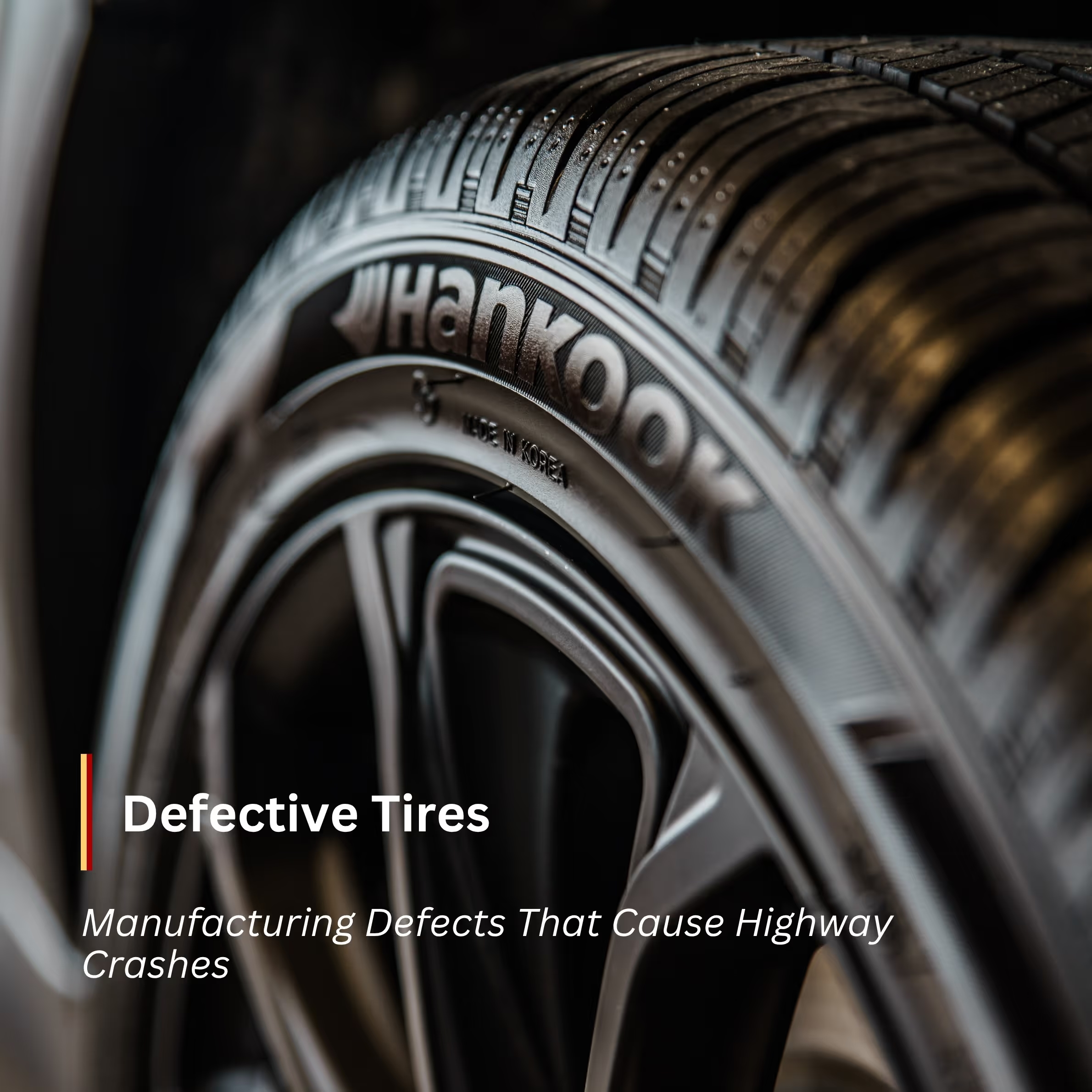
A tire failure on the highway can turn an ordinary drive into a dangerous situation within seconds. When a tire suddenly separates, bursts, or loses its structural integrity, a driver may struggle to maintain control of the vehicle. At highway speeds, these incidents can lead to rollovers, collisions with surrounding traffic, and serious injuries. Understanding how defective tires contribute to highway accidents, who may be responsible, and what legal options are available can help injured individuals make informed decisions after a vehicle collision.
Understanding Inadequate or Defective Tires
A defective tire is one that has a flaw affecting its safety or performance. Tire defects often fall into three categories. These may include the following.
- Manufacturing defects
- Defects in the tire's overall design
- Inadequate warnings or instruction labels
A manufacturing defect occurs when something goes wrong during production, causing a specific tire to be different from its planned design. Even when the overall tire design meets applicable safety standards, errors in materials and production can create weaknesses. Examples of potential manufacturing defects may include, but are not limited to, the following.
- Improper bonding between tire components
- Defective steel belts or reinforcing materials
- Uneven application of rubber layers
- Weaknesses in the tire's sidewall or internal structure
These problems may not be visible during routine inspections. A tire can appear to be in acceptable condition while containing internal weaknesses that increase the risk of failure.
How a Highway Accident May Occur
Several types of tire failures can contribute to highway crashes. These may include, but are not limited to, the following.
Tread Separation
Tread separation occurs when the outer tread begins separating from the underlying tire structure. This can happen when internal bonding fails or when other conditions weaken the tire. A sudden tread separation may cause severe vibration, reduced traction, or difficulty steering. In some instances, the driver may lose control and hit another vehicle or object on the road.
Vehicle Rollovers
Tire failures can be especially dangerous in vehicles with higher centers of gravity, including certain SUVs, vans, and trucks. An abrupt tire failure, combined with steering corrections or changes in vehicle direction, may cause a rollover. However, determining whether a defective tire caused the accident usually requires an investigation of the tire, vehicle, and surrounding circumstances.
Who is Responsible for the Damage?
Determining liability requires examining how the tire was manufactured, distributed, installed, and maintained. Depending on the circumstances, potentially responsible parties may include but are not limited to the following.
- Tire manufacturers: A manufacturer may face liability when a defect introduced during production contributes to an accident.
- Distributors and retailers: Businesses involved in supplying or selling defective tires may also be subject to product liability claims under California law.
- Tire installation or maintenance providers: A service provider may be responsible if negligent installation, improper repairs, or other maintenance errors contributed to the failure.
- Other drivers: If another driver’s negligent behavior contributed to the accident, that driver may share responsibility.
Individuals should also understand that more than one party may be involved. Identifying the cause of the tire failure is important before determining who may be held responsible.
Understanding California’s Product Liability Laws and Regulations
California law recognizes product liability claims involving manufacturing defects, defective designs, and inadequate warnings. Under California's strict product liability regulations, an injured individual may pursue a personal injury claim without necessarily proving that the manufacturer acted poorly. A manufacturing defect may exist when a product is significantly different from the manufacturer's intended specifications or other similar products in the same line. However, a tire failure alone does not automatically establish a manufacturing defect. Evidence must support the alleged defect and the injuries that occurred afterward.
Important Pieces of Evidence after A Vehicle Collision from a Malfunctioning Tire
Investigating a defective tire accident may involve reviewing physical evidence, maintenance records, and crash circumstances. Important evidence may include but is not limited to the following.
- The damaged tire and any separated components
- Photographs of the accident scene and vehicle damage
- Tire purchase, installation, and maintenance records
- Tire identification numbers and manufacturing information
- Available recall notices and manufacturer communications
- Witness statements, police reports, and relevant vehicle data
Preserving the failed tire can be especially important. Its condition may help investigators distinguish between a manufacturing defect, road damage, improper inflation, or ordinary wear. The National Highway Traffic Safety Administration (NHTSA) includes helpful information about tire recalls and safety concerns.
The Necessary Steps to Take After a Vehicle Collision
Following a highway accident involving a suspected defective tire, personal safety and medical attention should come first. If possible and safe to do so, victims should consider the following steps to recover from their injuries.
- Moving to a safe location
- Contacting emergency services
- Obtaining medical evaluation and care for their injuries
- Documenting the scene of the accident
- Getting information from nearby witnesses
- Keeping relevant vehicle and tire records
The Importance of Seeking Legal Guidance and Support
After a vehicle collision resulting from a defective tire, it may be important to seek the help of a legal professional to better understand your rights and responsibilities moving forward. A qualified attorney may be able to explain applicable laws, preserve important pieces of evidence, and speak to insurance companies on your behalf. This is crucial when dealing with serious injuries from a highway crash.
The Legal Team at KAASS LAW
The qualified personal injury attorneys at KAASS LAW are determined to help victims and their loved ones understand their rights after being involved in a serious vehicle collision from a malfunctioning tire. We may review the specific facts of your case, determine potentially liable parties, and help maintain important pieces of documentation. Call KAASS LAW today for a confidential consultation and to discuss your potential options moving forward.
Related Articles
View All Posts
Learn who may be liable for intersection accidents in California, how fault is determined, and what legal options may be available.

Learn who may be responsible for rear-end accidents in California, when fault may be shared, and what injured drivers should know about liability.
Learn who may be responsible for parking lot accidents in California, how fault is determined, and what evidence may help after a collision.
