Brake Failure Accidents: Product Liability Versus Driver Negligence
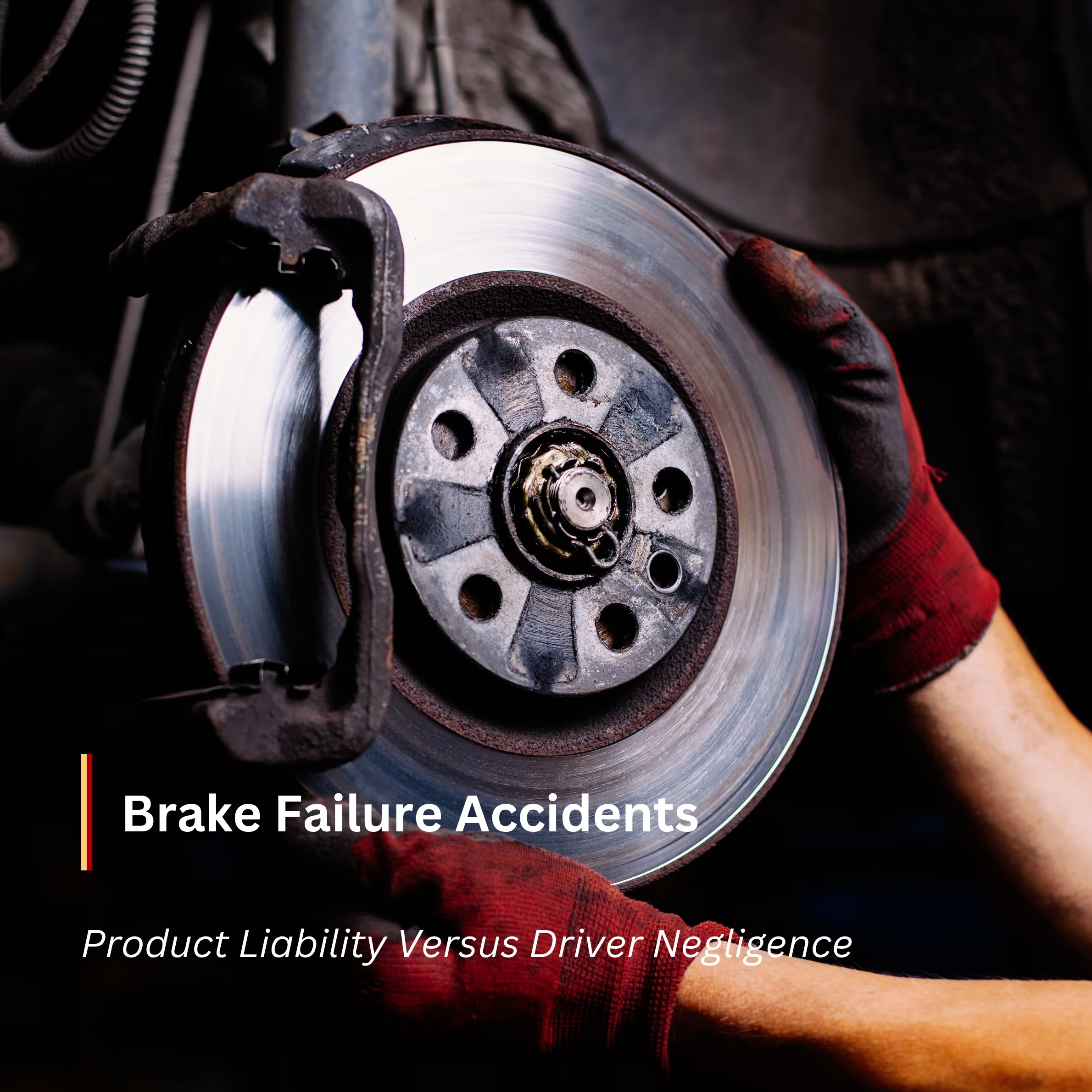
Brake failure accidents may cause severe or sometimes life-threatening injuries to individuals and other drivers on the road. Inadequate maintenance, improper installation, and defective brake parts may all contribute to brake failure accidents. Understanding product liability laws and what to do to determine potentially responsible parties is crucial the next time you get behind the wheel.
Brake Failures: Dangers
Modern braking systems contain numerous components that must work together properly. A problem with one component may reduce braking performance or, in some circumstances, contribute to a more serious failure. Potential causes of brake-related accidents may include but are not limited to the following.
- Worn brake pads or shoes
- Damaged brake rotors
- Brake fluid leaks
- Defective master cylinders
- Faulty brake lines or hoses
- Problems with anti-lock braking systems
- Defective electronic braking components
- Improperly installed replacement parts
- Poor repair or maintenance work
- Failure to respond to brake warning lights
- Continued driving after noticing braking problems
Identifying the cause of the braking problem is an important part of determining which individual or company may be held liable.
Negligent Behavior
California drivers usually have a duty to use reasonable care when operating their vehicles. A driver may potentially be considered negligent when the evidence shows that the driver knew, or reasonably should have known, that the brakes required attention but continued operating the vehicle without addressing the problem. Maintenance records may also be important. If brake pads were severely worn or a mechanic previously recommended repairs that the vehicle owner declined, those facts could affect how liability is evaluated.
However, brake failure does not automatically mean the driver was negligent. Some defects may occur suddenly without reasonable warning. The specific facts and available evidence matter.
Product Liability
In some accidents, the braking problem may originate with the vehicle or one of its components rather than the driver's conduct. A product liability claim may potentially involve a vehicle manufacturer, brake component manufacturer, distributor, supplier, or another company involved in placing the product into the marketplace. Brake-related product claims can involve several different types of alleged defects. These may include but are not limited to the following.
- Manufacturing defects
- Design defects
- Failure to provide adequate warnings
Responsibility?
Manufacturers and drivers are not the only parties that may be examined after a brake-related collision. The following parties may also be a part of the overall investigation.
- A repair facility
- A mechanic
- An installer
- Or other service provider
As a result, service invoices, inspection reports, communications with the repair facility, and the damaged components themselves may help clarify what occurred.
Important Pieces of Evidence
Preserving evidence can be especially important in a brake failure case because the vehicle itself may contain information about what happened. Relevant evidence may include the following.
- The damaged vehicle
- Brake components
- Electronic data
- Photographs of the scene
- Maintenance records
- Police reports
- Witness statements
- Recall information
- Communication with mechanics or dealerships
In some cases, an engineer or other qualified professional may inspect the braking system to evaluate whether a mechanical or component failure occurred. The vehicle should generally not be repaired, dismantled, sold, or destroyed before potentially relevant evidence has been evaluated. Once a critical component is discarded or altered, determining why it failed may become more difficult.
Types of Injuries
A vehicle that cannot stop may collide with another vehicle, pedestrian, cyclist, building, or other object at significant speed. Depending on the circumstances, injuries may range from relatively minor to severe.
Potential damages in a personal injury claim may include medical expenses, future medical care when supported by the evidence, lost income, reduced earning capacity, property damage, and noneconomic damages such as pain and suffering. The damages available in any specific matter depend on the evidence, applicable law, insurance coverage, and facts of the case. No specific result or amount of compensation can be predicted or guaranteed.
Seeking Legal Support
Brake failure accidents may cause severe injuries, leaving individuals and their families in a state of fear and worry about the future. Seeking legal guidance and support after suffering the consequences of a brake failure accident is important in making sure you maintain your safety moving forward. A qualified professional may be able to explain applicable California laws, speak with insurance companies on your behalf, and review the specific facts of your case.
KAASS LAW: How We Can Help
KAASS LAW is ready to help victims who have suffered the aftermath of a brake failure accident. Our legal team is determined to assist you with your personal injury matter, especially when it comes to an accident dealing with a brake failure. Don't wait. Call KAASS LAW today to learn more and to receive a confidential consultation.
