

As of recently, a traumatic accident in downtown Los Angeles involved a fatal stabbing and a vehicle incident. These types of serious crimes can cause many legal and insurance questions. Families affected by violent crimes, including stabbings, are often left extremely fearful and unsure of their future. After these types of accidents, it may be best to speak to a legal professional who can provide you with the support and guidance you may need to move forward.
According to a recent KTLA report, authorities investigated a fatal incident in downtown Los Angeles involving a stabbing and a vehicle. When someone intentionally attacks another person, prosecutors may pursue criminal charges based on the available evidence.
A victim who survives an attack, or certain surviving family members when an individual dies, may have the ability to pursue a civil claim. In cases like these, individuals may be able to seek compensation for legally recognized losses resulting from another person's conduct. It is important to note that these losses may be different in every case.
Vehicles are usually associated with ordinary traffic accidents, but they can also become involved in intentional acts. For example, a person might use a vehicle while attempting to flee after an assault, strike someone during an argument, or intentionally use a vehicle to cause injury. Each scenario presents different questions about negligence and intentional misconduct.
California law may allow certain surviving family members or other eligible individuals to bring a wrongful death action when a person's death was caused by another party's wrongful conduct.
Depending on the circumstances, potentially recoverable damages may include, but are not limited to, the following:
Wrongful death claims may be difficult to understand without the help of a legal professional. These types of cases present various challenges and complications to victims and their loved ones while leaving them in a state of fear and worry about the future. A qualified attorney can help victims understand wrongful death claims and the necessary evidence that may be needed for the future.
One of the most important questions after a violent accident is whether responsibility goes beyond the individual accused of committing the attack. California premises liability law may become relevant when violence occurs at an apartment complex, hotel, nightclub, restaurant, parking structure, shopping center, workplace, or another property.
Property owners and operators usually have responsibilities involving reasonably foreseeable dangerous conditions. Whether inadequate security creates liability is highly fact-specific.
Questions may include whether there had been prior violent incidents at the location, whether management knew about recurring security problems, whether locks or gates were functioning, whether security personnel were provided, and whether reasonable precautions could have reduced the risk. The fact that a crime happened on someone's property does not automatically make the property owner liable.
Preserving the necessary records and documentation after an accident is important to ensure you can access them later. This may be crucial during the claims process and may become essential for investigators.
Evidence can disappear quickly following a violent event. Vehicles may be repaired or released. Witnesses can become difficult to locate, and physical conditions at a property can change.
As a result, families considering their legal options may want to preserve relevant records as soon as possible or as soon as it is safe to do so. Potential evidence can include but is not limited to the following.
Specific pieces of evidence may also help investigators and the court determine what happened before, during, and after the accident. This can help families and individuals have peace of mind moving forward.
It may be important to seek legal guidance and support after being involved in a severe accident such as the one that happened in downtown Los Angeles. Oftentimes, these types of incidents require important deadlines, the preservation of evidence, and various legal questions. A qualified attorney may be able to help you understand your rights and responsibilities throughout your personal injury case and help you move towards recovery.
The legal team at KAASS LAW may be able to review the circumstances surrounding a fatal or serious injury and discuss potential options moving forward. This may be crucial when dealing with wrongful death claims, premises liability claims, or negligence. A qualified KAASS LAW attorney is ready and determined to help victims feel supported throughout the claims process and help them understand their rights. Call KAASS LAW today to discuss your potential options.
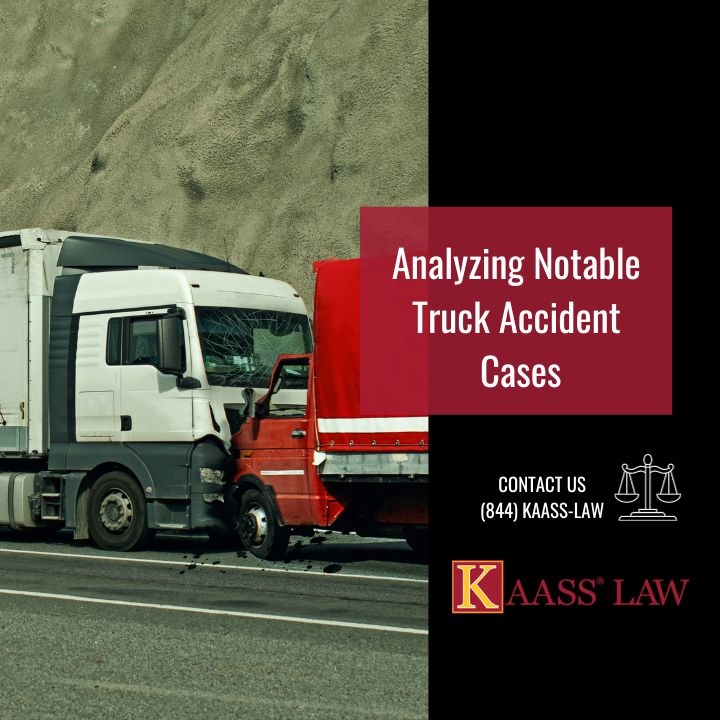
Truck accidents can have horrific results, including serious injuries, fatalities, and substantial legal repercussions. A number of well-known truck accident cases in recent years have illuminated the intricacies of these situations. We will be analyzing notable truck accident cases in this blog post, noting the salient features, ramifications for the law, and lessons discovered.
Tracy Morgan was a part of one of the most well reported truck accident incidents in the past few years. In 2014, a Walmart truck and Morgan's limousine collided, killing one passenger and gravely injuring several more. The fact that the truck driver had slept for more than twenty-four hours at the time of the collision highlights the problem of driver fatigue in the trucking industry. This case showed how important it is to properly enforce the hours of service restrictions in order to control driver weariness. It also emphasized how important it is for trucking businesses to ensure that their drivers can drive safely.
Yet another recognized incident featured a Coca-Cola truck that lost its brakes, resulting in a multi-vehicle collision. The question in the subsequent was whether the trucking company had given its cars the necessary care and inspections. The tragedy demonstrated how important regular servicing is to avoid mechanical malfunctions that may cause disasters. This case serves as a reminder of the trucking industry's necessity for strict inspection procedures as well as the possible legal consequences for businesses that fail to maintain their fleet in a safe operational state.

In the world of transportation, the trucking industry serves as a backbone for the movement of goods across the country. However, with the sheer volume of trucks on the road, safety concerns have always been paramount. The good news is that technology is playing a pivotal role in making trucking safer and reducing accidents. In this blog, we'll explore the innovative technologies that are transforming the trucking industry and contributing to a safer road environment.
One of the most significant advancements in trucking safety technology is the implementation of collision avoidance systems. These systems use sensors and cameras to monitor the space around a truck, detecting potential collisions and warning the driver in real-time. Some advanced systems can even automatically apply the brakes to prevent or mitigate a collision. By providing an extra layer of protection, collision avoidance systems are instrumental in reducing rear-end collisions, a common type of trucking accident.
With its ability to move cargo over long distances and maintain the flow of the supply chain, the trucking industry is pivotal to the modern economy. The tragic reality of truck driver wrongful death, however, is hidden behind this vital sector of the economy. When these people get into accidents, the repercussions can be catastrophic for their loved ones. They also face a lot of risks when driving. In this blog, we will examine the distressing problem of truck driver wrongful deaths, including its causes, effects, and possible remedies.
Truck drivers work some of the riskiest jobs in the country because of the many obstacles they must overcome. Fatigue and stress can result from long driving days, frequently in bad weather, and the pressure to fulfill delivery deadlines. Commercial trucks pose a major risk to other drivers as well as truck drivers on the road because of their massive size and weight.
Wrongful deaths among truck drivers can be attributed to a variety of factors, many of which can be preventable. Some common causes include:

Since we share the road with an increasing number of commercial trucks, it becomes imperative to understand the challenges faced by truck drivers. One critical aspect that often goes unnoticed is the existence of blind spots around large trucks. In this blog post, we will delve into the importance of educating the public about truck blind spots and promoting awareness to enhance road safety.
Trucks, especially large commercial vehicles, have substantial blind spots, also known as "no-zones." These are areas around the truck where the driver's line of sight is limited or completely obstructed. The size and location of blind spots can vary depending on the type and size of the truck, but they typically include areas directly behind the truck, along its sides.
Serious accidents can occur if one does not acknowledge and honor a truck's blind areas. It might be difficult for truck drivers to recognize smaller cars, motorcycles, and even people when they are in these no-zones. These blind zones are frequently the site of serious accidents that have fatalities as well as serious injuries.

After a tragic truck accident resulting in wrongful death, families grapple with an overwhelming mix of grief and loss. During these profoundly challenging times, pursuing compensation and accountability becomes a legal necessity and a crucial step. Wrongful death in truck accidents is legally defined as the occurrence of negligence or misconduct leading to untimely demise.
The process of seeking compensation begins with a detailed examination of the accident's circumstances. Families can establish a basis for their wrongful death claims by demonstrating that the truck driver, the company, or other involved parties were negligent or acted recklessly, thereby directly contributing to the fatal incident.
In the realm of compensation, families may find relief for tangible losses, encompassing medical expenses, funeral costs, and the void left by the loss of financial support. Families seek relief from financial burdens, covering , funeral costs, and the practical challenges of sudden loss. In cases of extreme , families may pursue punitive damages as both a form of punishment and a deterrent. However, the scope extends beyond the tangible to include intangible losses, like emotional pain, suffering, and the void of companionship. In cases of extreme negligence or misconduct, seeking punitive damages serves not only to compensate but also to penalize the responsible party and act as a deterrent against future wrongdoing.

The roads that wind across our countries are essential to trade, making moving products and services easier. The people who drive large trucks across great distances to transport goods are the backbone of this transportation system. But driving these enormous vehicles comes with the responsibility of maintaining road safety. Truck accidents can have devastating consequences, not only affecting the lives of those involved but also the safety of everyone on the road. In this blog, we will explore the crucial role driver training plays in reducing truck accidents and promoting safer driving practices.
Operating a truck is significantly more complex than driving a standard passenger vehicle. The sheer size and weight of trucks require specialized Driver Training to manage them safely, especially when transporting heavy cargo. Due to their size, trucks have longer stopping distances, wider turning radii, and larger blind spots compared to smaller vehicles. This makes it crucial for truck drivers to possess a deep understanding of how to handle these challenges effectively.
Effective Driver Training programs teach drivers how to manage these operational complexities, such as knowing the vehicle's limitations and how to anticipate and react to potential road hazards. Additionally, trucks often encounter different road conditions, from highways to rural roads, each demanding unique driving skills. equips truck operators with the necessary tools to adjust to these varying conditions and to drive safely, reducing the likelihood of accidents.

In our interconnected world, where the movement of goods is the lifeblood of the global economy, the role of trucking cannot be overstated. However, with the vital importance of truck transportation comes the critical issue of safety on the roads. The prevention of truck accidents is a multifaceted challenge that varies across countries due to differences in landscapes, regulatory frameworks, and technological capabilities. In this blog, we embark on a journey to explore the global perspectives on truck accident prevention, shedding light on the diverse approaches that nations employ to enhance safety and mitigate the risks associated with trucking.
One of the defining features of global perspectives on truck accident prevention is the diversity in regulatory landscapes. Different nations approach truck safety through a range of rules and standards, reflecting the unique challenges they face. For example, some countries prioritize stringent licensing requirements for truck drivers, ensuring that only well-trained and experienced individuals operate these heavy vehicles. Others focus on comprehensive vehicle inspections and stringent maintenance protocols, aiming to keep trucks in optimal condition. To gain a deeper understanding of these regulatory nuances is to recognize that there is no one-size-fits-all solution to truck safety. Rather, it requires a tailored approach that considers the specific challenges and priorities of each region.

In the wake of a truck accident, the road to recovery extends beyond physical and emotional healing—it requires adept navigation of the intricate legal terrain that follows such incidents. Grasping the legal intricacies of a truck accident is paramount for individuals seeking recompense and justice. In this blog, we will delve into the essential components of the legal landscape surrounding truck accidents, shedding light on necessary actions, potential hurdles, and the significance of legal counsel.
The moments immediately succeeding a truck accident are pivotal, and taking appropriate measures can profoundly influence the legal trajectory. From ensuring the safety of all involved parties to seeking medical assistance and alerting law enforcement, thorough documentation of the scene is paramount. Collecting contact information from witnesses and exchanging details with the truck driver lays the foundation for a comprehensive legal case.
Post addressing immediate safety concerns, promptly reporting the truck accident to relevant authorities is imperative. Law enforcement's investigation and subsequent official report serve as invaluable documentation for legal proceedings. Swift reporting enhances the accuracy and dependability of the information presented in legal contexts.

Families affected by truck accidents face unimaginably terrible experiences. Managing bereavement and loss during court procedures can be challenging. Families must understand they are not alone during these trying times. Services and support networks are available to assist folks in getting through this trying period.
The first step for families affected by a truck accident wrongful death is to seek legal guidance. An experienced attorney specializing in wrongful death cases can provide invaluable support. They can help the family understand their rights, navigate the legal process, and pursue compensation for their loss. A skilled attorney can also ensure that all necessary evidence is collected and that the family's interests are protected.
Grieving families often find solace in connecting with others who have experienced similar losses. There are numerous support groups, both online and in-person, dedicated to helping those affected by wrongful death accidents. These groups provide a safe space for sharing feelings, experiences, and coping strategies. Talking to people who have gone through similar situations can offer comfort and a sense of understanding that may be hard to find elsewhere.
Punitive damages in truck accident claims became a topic of discussion after the Schneider National case. Because of evidence of deliberate negligence and disregard for safety concerns, the jury in this case awarded punitive damages against the trucking firm. This case highlighted the financial ramifications that businesses that consistently disregard safety procedures may face. The significance of an industry-wide proactive approach to safety is shown by the analysis of instances. For example Schneider National, which sheds light on the legal requirements for punitive damages in truck accident cases.
Technology was a factor in determining who was at fault in a well-known FedEx truck case. A lawsuit was brought to find out if the truck's safety features—like its collision avoidance technology—were functioning as intended following the collision between the truck and the passenger car. This case demonstrates the ways in which the trucking industry is evolving and the potential legal repercussions of over-reliance on technology. It sparks discussions about how much of an obligation automakers have to maintain and update the state-of-the-art safety technologies in their cars.
These case studies provide insightful information on the intricacies of truck accident claims. Moreover, they illuminate topics including driver weariness, technical malfunctions, punitive damages, and the function of technology. It is critical that businesses and drivers prioritize safety, follow the law, and adopt new technologies. In order to hold negligent parties accountable and encourage systemic reforms that would improve general road safety, are vital. Analyzing notable truck accident cases give an opportunity to be able to comprehend the difficulties and the significance of ongoing efforts to avert similar occurrences in the future by looking at these situations. Be sure to visit our other website for more information regarding potential cases you may have.
The implementation of Electronic Logging Devices (ELDs) has brought about a fundamental shift in the trucking industry. ELDs electronically record a driver's hours of service, ensuring compliance with federal regulations. By replacing traditional paper logbooks, ELDs not only improve accuracy but also help prevent driver fatigue, a leading cause of accidents. This technology ensures that drivers adhere to mandatory rest periods, promoting safer driving practices.
Telematics and fleet management systems use GPS and onboard sensors to collect and transmit real-time data about a truck's location, speed, and various mechanical parameters. Fleet managers can monitor driver behavior, vehicle maintenance needs, and adherence to safety protocols. This technology allows for proactive intervention, addressing potential issues before they escalate into safety hazards. By promoting responsible driving habits and regular maintenance, telematics contribute to overall road safety.
Advanced Driver Assistance Systems encompass a range of technologies designed to assist drivers and enhance overall safety. These systems may include lane departure warnings, adaptive cruise control, and automatic emergency braking. ADAS technologies work together to create a safer driving environment, reducing the likelihood of accidents caused by human error. They serve as an extra set of eyes and tools for drivers, particularly in challenging driving conditions.
Trucks have notorious blind spots that can make lane changes and merging hazardous. Blind spot detection systems use sensors to monitor these blind spots and alert drivers when there is a vehicle in their vicinity. This technology is invaluable in preventing accidents caused by a lack of visibility, especially during lane changes on highways.
Proper load monitoring and weight distribution are critical for truck safety. Overloaded or improperly loaded trucks are more prone to accidents, especially during braking or turns. Load monitoring systems use sensors to ensure that the weight is distributed evenly and within legal limits. By preventing issues related to imbalanced loads, these systems contribute to safer driving conditions.
Emergency braking systems are designed to automatically engage the brakes in the event of an imminent collision. This technology helps mitigate the severity of accidents or, in some cases, prevent them altogether. By providing an additional layer of protection, emergency braking systems are reducing the impact of rear-end collisions, a common occurrence in the trucking industry.
Predictive analytics leverage data from sensors and monitoring systems to predict when a truck or its components are likely to require maintenance. By identifying potential issues before they cause a breakdown or failure, trucking companies can proactively address maintenance needs. This not only prevents unexpected roadside breakdowns but also reduces the likelihood of accidents caused by mechanical failures.
Driver monitoring systems use cameras and sensors to assess driver behavior and attention levels. These systems can detect signs of fatigue, distraction, or impairment, providing real-time alerts to the driver and, in some cases, to the fleet manager. By addressing potential safety hazards related to driver behavior, these systems contribute to accident prevention.
While still in the early stages of development and testing, autonomous trucks represent a potential revolution in the trucking industry. These vehicles use advanced sensors, cameras, and artificial intelligence to navigate the roads without human intervention. While fully autonomous trucks are not yet commonplace, the technology holds promise for reducing accidents caused by human error, fatigue, and distraction in the future.
Technology is undeniably transforming the trucking industry, making it safer and more efficient than ever before. From collision avoidance systems to predictive analytics for maintenance, these advancements are addressing longstanding safety concerns and contributing to a reduction in trucking accidents. As technology continues to evolve, the trucking industry can look forward to an even safer and more streamlined future on the roads. Additionally, please be sure to visit our other website for more information on other potential cases we may be of assistance for.
When truck drivers die in a situation that could have been prevented, the consequences are profound and far-reaching Those are:
To reduce the occurrence of wrongful deaths among truck drivers, we need a multi-faceted approach:
The grave issue of truck drivers passing away at work highlights how quickly the trucking industry needs to change. If we address the underlying causes, pass stricter legislation, and support the families of those lost in these collisions, truck drivers and everyone else who shares the road with them can have a safer future. This preserves the interests of justice while also safeguarding the welfare of those who keep our supply chains operating efficiently. If you lost your loved one in this type of accident, call KAASS Law to get help from experienced wrongful death attorneys.
One useful strategy for reaching a large audience is to start public service campaigns using a variety of media platforms. These advertisements can highlight the value of remaining visible to truck drivers using educational videos, graphics, and first-hand accounts.
By including instruction on truck blind spots in driving education programs, driving schools can make sure that aspiring drivers understand the dangers and how to properly coexist on the road with big trucks. Having a better understanding of the constraints faced by truck drivers can help them drive more sensibly.
Placing road signs and markings in key locations such as rest stops and crossroads can act as regular reminders to drivers of the presence of blind spots. Visual signals can increase awareness and promote safer driving habits.
Individuals can benefit from interactive learning experiences by hosting workshops and seminars in their communities, schools, and workplaces. These sessions may include truck simulations, allowing participants to firsthand experience the visibility problems that truck drivers encounter.
Collaborating with trucking companies to promote awareness can have a significant impact. Trucking companies can participate in educational initiatives, share safety tips on their websites, and even place informational brochures in the cabs of their trucks.
Leveraging the power of social media platforms to disseminate information about truck blind spots is an effective way to reach a wide audience. Engaging content, shareable graphics, and targeted messaging can create a ripple effect of awareness.
Engaging in community outreach programs, such as safety fairs and events, allows for direct interaction with the public. Distributing pamphlets, conducting demonstrations, and offering educational materials can contribute to building a safer road environment.
Including questions or scenarios related to blind spots in driver's license tests can ensure that individuals seeking a license are knowledgeable about the risks associated with driving near large trucks.
Accidents are dramatically reduced when the general public is taught about the existence and risks of truck blind zones. Accordingly, we can make all road users safer by establishing a culture of understanding and respect for the issues that truck drivers encounter. Pedestrians, cyclists, and motorists who are aware of their blind spots can make deliberate attempts to avoid them.
Promoting awareness of truck blind spots is not just a responsibility; it's a shared commitment to road safety. As our roads become more congested, understanding and respecting the limitations of large trucks is crucial for preventing accidents. Through educational initiatives, collaborative efforts, and a collective commitment to safer driving practices, we can work towards creating a road environment where every user, regardless of the size of their vehicle, can travel with confidence and security. Remember, being aware of blind spots today can save lives tomorrow. Call us now at (310) 943-1171 and visit our website for other practices.
Ensuring accountability involves a multifaceted approach. Examining the truck driver's actions, such as fatigue, intoxication, or reckless driving, is crucial to holding them responsible. Entities overseeing drivers, such as trucking companies, can be held accountable for factors like inadequate training, negligent hiring practices, or failure to properly maintain and inspect their vehicles. Additionally, if a defective truck part contributed to the accident, the manufacturer may bear responsibility for the wrongful death.
Navigating the intricate legal landscape requires the expertise of seasoned wrongful death attorneys specializing in truck accidents. These legal professionals are pivotal in building a robust case involving meticulous evidence collection. It also includes accident reports, witness statements, and expert opinions. Skilled attorneys also negotiate with insurance companies on behalf of the family, ensuring fair compensation and safeguarding their rights. Families navigate with the expertise of wrongful death attorneys, ensuring a clear understanding of legal complexities. Attorneys provide comprehensive support, offering clarity in a complex legal landscape and assisting families at every crucial juncture.
Confronting the aftermath of a wrongful death resulting from a truck accident necessitates the simultaneous pursuit of compensation and accountability. This process is undeniably challenging but is a vital pathway for families seeking justice. If a truck accident resulting in wrongful death has affected you or your family, our compassionate legal team is here to provide support and guidance. We understand the challenges you are facing, and we are committed to helping you seek the justice and compensation you deserve. Please contact us at 310-943-1171 for a confidential consultation, and let us assist you during this difficult time. Visit our other website for details on how we can help you with other potential cases.
By emphasizing the importance of Driver Training, these programs ensure that drivers are well-prepared to navigate the specific challenges of truck operation and mitigate the risks that come with driving such large vehicles.
Comprehensive Driver Training programs are essential for addressing the complexities of operating large vehicles and reducing the risks associated with truck driving. Truck drivers must undergo rigorous Driver Training to acquire the skills needed for safe and efficient operation. These programs cover a wide range of crucial topics, such as load securement, defensive driving strategies, vehicle operation, and understanding the limitations of large trucks.
It is also vital for drivers to be familiar with the regulations governing the trucking industry. Adhering to weight limits, hours-of-service regulations, and other safety protocols is critical to preventing accidents. Beyond knowing these rules, experienced drivers understand how important it is to follow them, ensuring their own safety and that of others on the road. Effective Driver Training instills these regulations into drivers' minds, ensuring compliance and reducing the chances of accidents.
In addition to traditional classroom Driver Training, truck drivers can now prepare for real-world situations using advanced simulators. These simulators allow drivers to practice handling a variety of challenging scenarios in a controlled environment, such as inclement weather, mechanical failures, and emergency maneuvers. This hands-on experience is crucial for drivers to remain calm and make decisive actions under stressful conditions.
Simulator-based Driver Training helps drivers master skills like braking, navigating tough terrain, and maneuvering in tight spaces. By simulating real-world scenarios in a safe environment, it boosts preparedness and confidence, enabling drivers to handle on-the-road challenges more effectively.
Obtaining a commercial driver's license (CDL) is only the beginning of a truck driver’s educational journey. To stay informed about industry changes, new laws, and evolving safety standards, truck drivers must continue their education. Many trucking companies offer regular training sessions and updates to ensure their drivers are up-to-date.
Driver wellness programs are also becoming more important. These programs focus on mental and physical health. Fatigue and stress can significantly affect a driver’s ability to operate safely. Drivers who are trained to recognize the signs of stress or exhaustion are more likely to prioritize their health and take the necessary breaks to stay alert on the road.
As technology evolves, so should driver training programs. Incorporating advanced technologies such as driver-assistance systems and collision-avoidance tools can further enhance safety. By providing drivers with the knowledge and tools to use these technologies effectively, we can prevent accidents and reduce risks on the road. Trucking companies should prioritize integrating these technologies into training programs, helping drivers navigate increasingly complex transportation environments. For more information, visit the Federal Motor Carrier Safety Administration (FMCSA).
Truck accidents are a serious issue that affects everyone on the road. Drivers must possess the skills to operate safely, and effective driver training is the key to providing them with these skills. With comprehensive training programs, simulator exercises, and continuous education, drivers can better manage the challenges of operating a truck.
Investing in cutting-edge training technologies and programs ensures that truck drivers are well-equipped to navigate the complexities of their jobs. In turn, these programs help improve road safety for all users. By focusing on robust training initiatives, we take a significant step toward preventing truck accidents and creating a safer transportation system for everyone.
For more information on potential cases we can assist with, be sure to visit our website.
Culture plays a pivotal role in shaping driving practices and attitudes towards safety. In some regions, there exists a strong cultural emphasis on collective responsibility and strict adherence to traffic rules. This cultural mindset can contribute significantly to safer road conditions and responsible driving behavior. Understanding these cultural influences is crucial for devising effective safety strategies that resonate with the local population.
Advancements in technology are revolutionizing the landscape of trucking safety. Some countries are at the forefront of implementing cutting-edge technologies, such as collision avoidance systems, telematics, and real-time monitoring. These technologies not only enhance the safety of truck operations but also contribute to the efficiency and reliability of supply chains. Studying tech advances in different countries shows how we can use advanced systems in trucking. Smart sensors spot driver fatigue, while advanced navigation optimizes safe routes. Sharing global tech best practices boosts truck safety standards.
The state of road infrastructure is a critical factor influencing the frequency and severity of truck accidents. Countries with well-maintained roads and advanced transportation systems generally experience fewer accidents. Investing in intelligent transportation systems, safer road designs, and regular maintenance can create an environment where trucks can operate safely and efficiently.
The complexity of the global supply chain demands international collaboration to share best practices in truck accident prevention. Initiatives such as international forums, joint research projects, and knowledge exchange programs facilitate the transfer of successful strategies between nations. By learning from each other's experiences and pooling resources, countries can collectively work towards a safer and more efficient global transportation network. International collaboration is not only about sharing success stories but also addressing shared challenges. For instance, countries facing similar issues, such as high rates of driver fatigue or inadequate infrastructure, can collaborate on research projects to develop targeted solutions. This collaborative approach ensures that the lessons learned in one part of the world can benefit others facing similar challenges.
As we navigate the complex terrain of global trucking, it becomes evident that preventing truck accidents requires a nuanced understanding of the diverse factors at play. A one-size-fits-all approach is insufficient in a world where cultures, regulations, and technological capabilities vary widely. The journey towards global truck accident prevention involves understanding and respecting the unique challenges faced by each country. It requires a commitment to cultural sensitivity, technological innovation, and international collaboration. By embracing these principles, the global community can work together to create a safer road network. It t can facilitate the efficient movement of goods while prioritizing the well-being of all road users. In the pursuit of a safer future for truck transportation, let us learn from the experiences of different nations, celebrate successes, and collaboratively address the challenges that lie ahead. Through shared knowledge and collective efforts, we can pave the way for a global road network where accidents are minimized, and the benefits of truck transportation are realized sustainably and safely. If you have any further questions, please visit this link.
Even seemingly minor injuries can have enduring consequences. Immediate medical attention is imperative not only for health reasons but also for establishing a causal link between the accident and resulting injuries. Thorough medical records, encompassing diagnoses, treatments, and prognoses, establish the groundwork for claims seeking compensation for medical expenses and damages.
Determining liability is a central aspect of any legal case arising from a truck accident. This involves examining the circumstances leading to the accident, assessing the actions of all parties involved, and identifying any contributing factors such as driver negligence, faulty equipment, or inadequate training. Establishing liability is foundational to pursuing a successful legal claim.
Engagement with insurance companies is an inevitable facet of the post-accident process. Understanding your rights, effective communication, and furnishing accurate information are pivotal when interacting with insurance adjusters. Seeking legal counsel before engaging with insurers helps safeguard your interests and ensures fair compensation.
Navigating the legal intricacies of a truck accident can be convoluted, and proficient legal representation is often indispensable. An adept attorney specializing in personal injury and truck accidents can shepherd you through the legal process, negotiate with insurers on your behalf, and advocate for you in court if required. Their expertise proves particularly crucial when contending with the complexities inherent in truck accident cases.
Truck accident cases may present distinct challenges, including dealing with multiple parties, corporate entities, and intricate regulations. Overcoming these obstacles necessitates a nuanced comprehension of the legal system and a proactive approach to building a robust case. Anticipating potential challenges and addressing them early in the legal process is pivotal for a favorable outcome.
Time is of the essence when it comes to filing a legal claim after a truck accident. Each jurisdiction has a statute of limitations, specifying the time within which a lawsuit must be filed. Adhering to these timelines is critical, as failing to file within the specified period may result in the loss of the right to seek legal recourse.
Traversing the legal landscape following a truck accident is demanding but intrinsic to the recovery process. By taking prompt and informed action, understanding your rights, and securing adept legal representation, you empower yourself to pursue the compensation and justice you merit. Amidst the aftermath of impact, the legal terrain may seem formidable, but with the right guidance, successful navigation is attainable, marking the commencement of your journey toward recovery. If you have any further questions please visit this link.
Grief counseling can be immensely beneficial for families struggling to cope with the loss of a loved one in a truck accident. Professional counselors are trained to help individuals and families affected by truck accident. They provide a safe and confidential environment for expressing grief, anger, and sadness. Seeking counseling can help families work through their emotions and develop healthy coping mechanisms.
Many states have victim compensation programs in place to assist families affected by wrongful death incidents. These programs provide financial support to cover medical and funeral expenses, loss of income, and other related costs. Understanding the eligibility criteria and application process for these programs can help families access the resources they need during this challenging time.
Coping with grief and loss can take a toll on mental health. It's important for families to be aware of available mental health resources, such as hotlines, crisis intervention services, and therapy options. These resources can offer immediate support in times of crisis and ongoing assistance for managing mental health challenges.
Numerous non-profit organizations are dedicated to assisting families affected by wrongful death incidents. These organizations may offer a range of services, including financial assistance, legal support, grief counseling, and community outreach programs. Connecting with reputable non-profit organizations can provide families with additional resources and a network of people who understand their situation.
In addition to local services, families should explore national resources that offer comprehensive support in the aftermath of a fatal truck accident. One such resource is the National Center for Victims of Crime (NCVC), which provides access to advocacy programs, legal assistance referrals, and trauma recovery support. This organization helps families connect with professionals and networks dedicated to protecting victims’ rights and promoting justice. The NCVC also offers tools to help families better understand the legal and emotional processes following a wrongful death, ensuring that they are empowered with knowledge during this difficult time.
Families can benefit from publications, webinars, and hotlines that offer critical information and emotional support. The NCVC also works closely with policymakers to improve resources and protections for victims nationwide. By leveraging such national support systems, families gain access to a broader network of help and can take steps toward healing in a more informed and supported manner. Emotional recovery and legal justice often go hand in hand, and accessing a national organization can strengthen both efforts. Remember, even in the face of overwhelming grief, families do not have to navigate the process alone—there is help every step of the way.
It's easy for families to neglect their own well-being during legal proceedings and emotional turmoil. However, self-care is crucial for maintaining physical and mental health during this difficult time. Eating well, getting regular exercise, and getting enough rest can help families navigate the challenges they face with greater resilience.
Dealing with the aftermath of a truck accident wrongful death is an incredibly difficult process for any family. However, knowing that there are resources and support available can provide some comfort and relief. Seeking legal guidance, joining support groups, utilizing counseling services, and accessing victim compensation programs are all important steps towards finding the support needed to move forward. Additionally, connecting with non-profit organizations and prioritizing self-care are crucial aspects of the healing process. By taking advantage of these resources, families can find the strength and support they need to navigate the complex journey of grieving and seeking justice for their loved ones. Remember, no family should have to go through this alone, and help is available for those who seek it. Call us now at (310) 943-1171 and visit our website for other practices.