

Understanding how to patent your creations is crucial because patents protect your ideas from others imitating and profiting off of your original work. The only downside to patenting your work is that the process of registering for a patent is arduous. Taking your idea from conception to patent requires a huge investment of time and energy to research and submit all of the necessary materials. However, to begin the process in the first place, you must first know what exactly a patent entails.
Put simply, a patent is a grant issued by the U.S. government which gives the creator or inventor the right to prevent all others from producing, utilizing, or selling their invention. In order to acquire a patent, either the inventor or the business for which the invention was produced must file a patent application with the U.S. Patent and Trademark Office, or USPTO for short. The exact cost of the filing fees varies depending on the type of patent application. But even before thinking of filing a patent with the USPTO, you should research already existing patents at the Trademark Depository Library and the California State Library Patent to determine whether your invention is already patented.
If the invention is not patented, your next move should be to determine which type of application to file for your creation. There are three types of patents available and they are:
Prototyping an Invention While each of the aforementioned types of patents have their distinct uses, unless your innovation has to do with plants or ornamental designs, you will most likely end up filing for a utility patent as that is by far the most common type of patent to apply for. It’s also extremely beneficial for you to keep an accurate record of how you came up with the idea of your invention along with an outline of the step by step process. Those pieces of evidence will prove invaluable during the patent application process. Further, if you happen to have a prototype of your invention on hand, then you should also submit that along with the other records.
This is where it gets a bit murky, but technically, no. Ideas by themselves cannot be patented. You can only patent an invention or creation that was developed from an idea. The invention must be produced or a description of the creation must be included with your patent application for the consideration to hold any weight. It also goes without saying that in order to file for a patent, you must be the original inventor or creator, or have been assigned the invention by another person or serve as the legal representative of the original inventor. Ultimately, you may patent inventions, designs, and even plants so long as your inventions is:
How Our Los Angeles Patent Registration Attorney Can Help In order to obtain the actual patent that protects your invention or design, you need to file a non-provisional application, known as a Regular Patent Application (RPA). To get this patent approved, you will have to submit an application that demonstrates how to make and use the invention, why it is different from all other inventions, and describe what exact aspects of the invention or design should be patented. That process will require many hours of research and preparation in order to avoid having your application delayed or outright denied, both of which would significantly impede your chances of protecting your creation. We can help you to ensure your patent application has all of the necessary elements to get your creations under protection as quickly as possible. At KAASS LAW, we value originality and individuality above all else and we invite you to contact our firm to see just how easy we can make obtaining your patents and protections for your inventions and designs. Give us a toll free call at (310) 943-1171 to speak to our Trademark and Patent lawyers today. Our lawyers in Glendale, Los Angeles, CA, are fully dedicated to help you with any legal matters you may need assistance with. KAASS LAW, 815 E Colorado St #220, Glendale, CA 91205, (310) 943-1171
KAASS LAW is authorized to practice law in California. The above content is intended for California residents only. This content provides only general information which may or may not reflect current legal developments. KAASS LAW expressly disclaims all liability in respect to actions taken or not taken based on any of the contents of this website. The above content DOES NOT create an attorney-client relationship. KAASS LAW does not represent you unless you have expressly retained KAASS LAW in person at the KAASS LAW office. KAASS LAW helps clients in: Los Angeles, Burbank, Hollywood, Glendale, Van Nuys, North Hollywood, Studio City, Highland Park, Eagle Rock, Sunland, Tujunga, Sylmar, San Bernardino, La Crescenta, La Canada, Beverly Hills, Westwood, Santa Monica, Brentwood. Pacoima, Montebello, Commerce, Alhambra, Downey, Bell, Maywood, Walnut Park, Vernon, Lynwood, Echo Park, Silverlake, Mission Hills, Northridge, Woodland Hills, Encino, Canoga Park, North Hills, Porter Ranch, Chatsworth, Reseda.
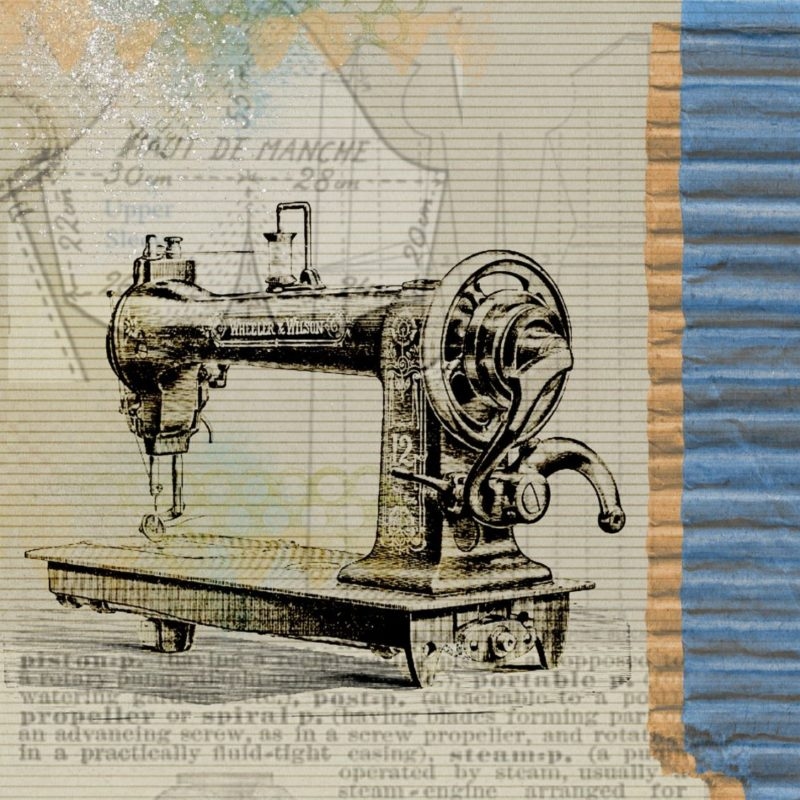
A design patent acts as a form of legal protection given to an ornamental design of a functional item. In practice, what this means is that a design patent prevents others from using, selling, or copying an object with a design that is substantially similar to the design you claimed in the patent. As a result, you have exclusive rights over ownership and distribution of the design. This is a tremendous right to have, particularly since you put in a lot of hard work and effort into creating the design. Some examples of patentable designs include jewelry, furniture, containers, and computer icons.
It goes without saying that there exist different categories, or types, of patents. In the United States, there are three which occur most frequently and which offer the most utility and practicality. The first type is a utility patent, which covers new inventions and creations. The second is a plant patent, which enables an applicant to patent new strains of plants, and finally, the last type of patent is for design. This is the one you will want to apply for if what you created is a style, form factor, or design that has a practical utility to it. Fortunately, due to the vague wording regarding US patent law, there are lots of design creations that can be covered.
Another way that U.S. design patents stand out from others, is that they allow for the applicant’s work to remain hidden or secret. This can be particularly vital if the design is for a new, revolutionary product or software. With more and more emphasis being placed on smart technology, innovation in the field is going to rely more and more on intelligently designed products to captive consumer interest and to garner positive feedback to an ever-increasing amount of press outlets. For the competitive edge alone, having a guarantee that a design patent application will remain secret and not be published until after it is granted can be massive for both large companies and small, independent businesses and startups.
A great example of design patents playing a huge role in modern day product placement and marketing is how it can be a decisive factor in lawsuits. For example, in Apple v. Samsung, the pre-emptive design patents that Apple had applied for turned out to be the huge ace card in the dilemma, winning Apple the lawsuit and millions of dollars from Samsung. A great of relating utility and design patents is by considering Apple’s iPhone: the way it works is the result of many utility patents and the way it looks and displays information is the result of many design patents. As technology changes and adapts, the role of product design will continue to blur function and ergonomics, making novel designs more and more valuable.
Prior to thinking about how to file your design patent application, you’ll want to ensure that your design is, indeed, novel. For this, you’ll have to search through prior art and this step is one of the most grueling as the archive is very expansive and it can feel overwhelming to search through such a huge amount of patents. You’ll want to look closely for the combination of design elements that you wish to protect with your patent to make sure it hasn’t already been claimed. Even down to the font that you use can be subject to a design patent.
This is where you will need to put together all of your findings to present to the USPTO in your application. Here, you’ll want to mention what sets your design apart from others, highlighting its novel features. Further, you should include drawings and diagrams demonstrating this. Putting everything together, you’ll have everything you need to file your design patent application...but why go through all of that headache alone? At KAASS LAW, we are constantly inspired by the beautiful and innovative designs and creations of artists and visionaries. We have years of experience in filing for design patents. We work directly with you to document, record, gather, and showcase all of the novel features of your product design so that the application process is quick and successful. We invite you to give us a call at (310) 943-1171 to speak to our Trademark and Patent lawyers today. KAASS LAW, 815 E Colorado St #220, Glendale, CA 91205, (310) 943-1171
KAASS LAW is authorized to practice law in California. The above content is intended for California residents only. This content provides only general information which may or may not reflect current legal developments. KAASS LAW expressly disclaims all liability in respect to actions taken or not taken based on any of the contents of this website. The above content DOES NOT create an attorney-client relationship. KAASS LAW does not represent you unless you have expressly retained KAASS LAW in person at the KAASS LAW office. KAASS LAW helps clients in: Los Angeles, Burbank, Hollywood, Glendale, Van Nuys, North Hollywood, Studio City, Highland Park, Eagle Rock, Sunland, Tujunga, Sylmar, San Bernardino, La Crescenta, La Canada, Beverly Hills, Westwood, Santa Monica, Brentwood. Pacoima, Montebello, Commerce, Alhambra, Downey, Bell, Maywood, Walnut Park, Vernon, Lynwood, Echo Park, Silverlake, Mission Hills, Northridge, Woodland Hills, Encino, Canoga Park, North Hills, Porter Ranch, Chatsworth, Reseda.