

In California, when a spouse dies, the surviving spouse generally has the right to transfer assets and property in their name but there are exceptions. First, the surviving spouse would need a certified copy of your spouse's death certificate and certificates of marriage to show that you married the deceased.
California is a community property state, as such upon the death of a spouse, the surviving spouse is entitled to one-half of the community property. Pursuant to California Family Code section 760, community property is defined as “all property, real or personal, wherever situated, acquired by a married person during the marriage while domiciled in the state.” At the end of a divorce, community property is generally split 50/50.
In California, if a spouse dies intestate, meaning there is no will or trust, then surviving spouses may inherit half of the community property, as well as, one-half of the deceased spouse's separate property.
In California you generally cannot disinherit a spouse unless, your spouse waived such rights to inherit from you in a valid, signed agreement, known as a "pre-marital agreement".
For more information regarding the rights of a surviving spouse or probate in California, we invite you to contact a California probate attorney at KAASS LAW today at (310) 943-1171.
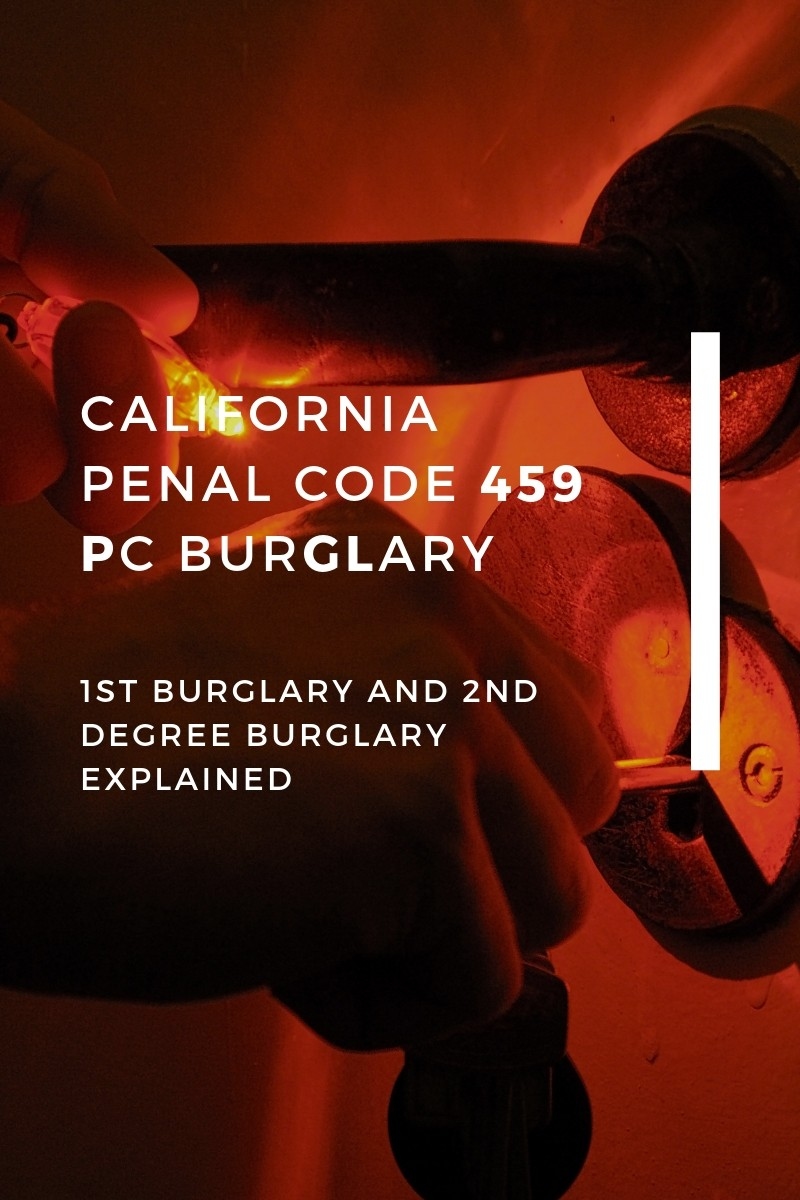
According to California Penal Code Section 459, burglary is the act of entering into a residential or commercial structure with the intent to commit either a theft crime or felony.
To be convicted of burglary the prosecution must prove the following elements:
California burglary law also differentiates between two forms of burglary charges which are categorized as first-degree burglary and second-degree burglary.
California first-degree burglary is burglary of a residence. A “residence” can be any of the following: inhabited house, a room within an inhabited house, inhabited floating home, inhabited hotel or motel room, inhabited trailer coach, inhabited floating home. Residence will still be considered inhabited even if the occupants left it because of a natural disaster or other type of disaster.
California Penal Code Section 242 (PC-242) outlines the crime of battery as "any intentional and unlawful use of force or violence upon the person of another."
The following elements must be established in order to prove a charge of battery:
Battery is often discussed in connection with the criminal offense of assault. Although battery and assault are considered two completely different offenses.
Assault is described in Penal Code Section 240 as an action that may impose physical harm or unwanted touching on someone else. While, on the other hand, pursuant to Penal Code 242 battery is the actual infliction of force or violence on someone else.
In case of assault, any actual physical contact is not necessary to be present, whereas a battery cannot be accomplished without a touching of the victim. A person can be charged with battery even if no injury or pain is caused to the victim. The slightest touch is enough for a battery charge if it is done in an annoying, disrespectful or rude manner.
California law allows persons to recover damages for intentional fraud as well as negligent misrepresentations if certain elements are sufficiently plead and proved.
There are specific elements that a party is required to prove in order to successfully recover damages suffered due to the fraud or misrepresentation. A false misrepresentation lawyer near you should be able to provide you with legal assistance for your situation.
Fraud is using deceit or dishonest means for the purpose of depriving another of money, property or a legal right.
Intentional Fraud/ Deceit occurs when the defrauder uses deceit or false important facts to convince the victim to rely on the false facts. Then the victim reasonably relied on and was harmed by the deceit.
Promissory Fraud occurs when the defrauded makes a promise that is important to the transaction that he or she never intends to, nor never performs, in order to induce the victim to rely victim rely on the promise. Then the victim must reasonably rely on and be harmed by the false promise. “An action for promissory fraud may lie where a defendant fraudulently induces the plaintiff to enter into a contract.” ( (1997) 15 Cal.4th 951, 973-974; (1985) 39 Cal.3d 18, 30.)

California Penal Code Section 187 (a) defines murder as “the unlawful killing of a human being, or a fetus with malice aforethought.”
To prove murder, the following must be present:
Under California murder law, Penal Code 187 (a), malice can be expressed or implied.
Proof of malice is enough to establish the state of mind necessary for murder. The defendant acted with express malice if there was an unlawful intention to kill the victim.
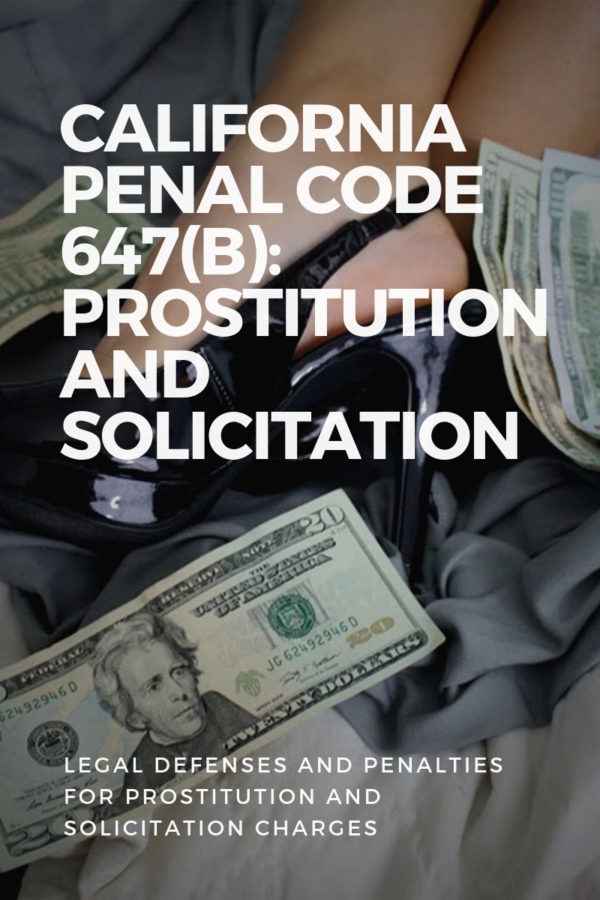
California’s Penal Code 647(b) defines prostitution as: engaging in a sexual act in exchange for money or other consideration, and makes it a misdemeanor for anyone 18 or older to:
It is important to mention that all people involved in facilitating the crime can be arrested and face prostitution charges. This includes the supposed prostitute, customer, and any other person that knowingly facilitates the encounter.
Some prostitutes also have middlemen, known generally as “pimps.” Pimps are more likely to be arrested for violating:

KAASS Law fights hard to help victims involved in Uber and Lyft accidents, including both drivers and passengers, as well as third-party drivers and pedestrians who were injured, to get the compensation they deserve.
Under California law, Transportation Network Companies, including Uber and Lyft, must provide primary third-party liability insurance. They must maintain $200,000 of excess liability coverage during "Period 1". Period 1 occurs when the Uber or Lyft app is on but still waiting for a passenger. Therefore, you’ll still want rideshare insurance to cover you during Period 1 when your App is on driver mode. Period 2 Match Notification begins when you accept a ride request, as such Auto Liability Coverage and Uninsured/Underinsured Motorist Coverage, as well as Contingent Collision and Comprehensive Coverage, is in effect. Likewise, during period 3, when you're dropping off your passenger(s), the same coverage applies.
Lyft’s third-party automobile liability policy will be your primary policy during Period 1. Lyft will also maintain $200,000 of excess liability coverage during Period 1. The rideshare app is on, but you haven't been paired with a passenger. California law has the following minimum requirements.
California Penal Code Section 273.5 Corporal Injury on a Spouse also referred to as "domestic violence" outlines the specific elements the prosecution is required to prove in order to be found guilty of domestic violence.
California Penal Code Section 243(e), domestic battery is similar to PC 273.5. The primary difference between the two domestic violence laws is the level of injuries sustained by the victim. Penal Code 243(e)(1) is the least serious of California domestic violence laws and is always considered to be a misdemeanor offense. One key aspect to consider is you can be convicted of domestic abuse under California Penal Code 243 (e) even if there was no physical injury.

A stock purchase agreement, or an SPA for short, is an agreement that a company or its shareholders and buyers sign whenever shares of a company or corporation get bought or sold. Stock Purchase Agreements are used most often by smaller corporations when selling their stock publicly to create a certain amount of trust and security between buyer and seller. Both the company itself or its respective shareholders can sell stock to potential buyers. That’s where Stock Purchase Agreements come in very handy as their purpose is to protect you, regardless of whether you’re the buyer or the seller.
It’s important to know that a stock purchase agreement is not the same things as an asset purchase agreement, or an APG. The main difference is that stock purchase agreements only sell shares of a company in order to raise money or to transfer ownership of shares while asset purchase agreements aim to finalize company asset sales. Namely, the stock purchase agreement will outline several key points:

When establishing a company, one of the first and most important decisions you will have to make is whether to form the company as a corporation, an LLC, or any of the other common forms of business organization. Each of them offer various advantages and drawbacks to their ownership and, as such, it is up to you to look into which one will most effectively fit the needs of your business. To help with that crucial decision, we have several articles which go over the different pros and cons of each method of business organization.
Should you choose to go with making a corporation, you will then be faced with having to more rigorously document certain proceedings as a result of how California law interacts with corporations. Some view these more specific details as a nuisance that corporations simply must contend with. We, however, believe that many aspects of the extra bookkeeping that you must track and report are actually very strong indicators of the strength of corporations. By viewing these requirements from that perspective, we can greatly simplify and empower the role that the bookkeeping tasks serve.
California second-degree burglary occurs when if the burglary involved a commercial break in and other type of structure including stores and businesses.
Lack of Intent is a legal defense to Penal Code 459 Burglary If the defendant did not have intent to commit a theft or a felony at the time of entering the structure, he can’t be found guilty of burglary.
Factual innocence is also a legal defense to California burglary charge and occurs when an innocent defendant is accused for a charge which may include the following:
In California, first-degree burglary or residential burglary is always considered a felony. The punishment for first-degree burglary can include:
Under Penal Code Section 459 second-degree or commercial burglary is considered a wobbler. Conviction for commercial burglary carries a less harsh penalty than a conviction for first degree burglary. Depending on specific circumstances and the defendant’s criminal history this type of burglary can be charged as either a felony or a misdemeanor. Penalties for second-degree felony burglary are:
Hire the most dedicated Glendale criminal defense lawyer to the legal services you require! Our attorneys at KAASS LAW are highly dedicated to help our clients in every way possible. You can rely on our experienced lawyers in Glendale, Los Angeles, California, to carefully analyze the facts of your case to prove the facts necessary. We back all of our clients and we invite you to give us a toll free call at (310) 943-1171 to speak to our experienced Glendale criminal battery attorney today. Get in touch with us at KAASS LAW, 815 E Colorado St #220, Glendale, CA 91205, (310) 943-1171 at any time!
You acted in self-defense or defense of another person: You cannot be convicted of battery in case you reasonably thought that you or someone else was in danger of bodily injury or death and you reasonably used force to defend against that danger.
You did not act willfully or intentionally when committing the harmful touching: You cannot be found guilty of the offense, if the battery was the result of an accident or the outcome of events.
Under California PC 242 simple battery is prosecuted as a misdemeanor.
The potential penalties for a criminal battery conviction include:
Battery causing serious bodily injury under Penal Code Section 243(d)
A defendant can be charged under California Penal Code section 243(d) if the victim of a battery suffers serious bodily injury. Battery under this section is also known as “aggravated battery.” A serious bodily injury is any serious impairment of physical condition. Aggravated battery in California law is considered a wobbler and it may be charged as either a felony or a misdemeanor, depending on the specific circumstances of criminal offense.
If convicted of a misdemeanor charge for this offense you can face up to one year in a California county jail. If it is charged as a felony you can face two, three, or four years in a California state prison.
In case the victim of a battery is a family or household member you can be charged with domestic battery. Under Penal Code section 243(e)(1) you are considered guilty of domestic battery if alleged victim is a:
Domestic battery is considered a misdemeanor and is punishable by up to one year in a California county jail and/or a fine of up to $2,000.
According to California Penal Code Section 187 the defendant faces 25-years-to-life in the California State Prison for a first-degree murder. In case the conviction is based on a “hate crime,” the defendant faces life in prison without any possibility of parole or early release. Factors that can lead to a conviction for a hate crime murder include the victim's race, sexual orientation, disability, or nationality.
Hire the most dedicated Glendale criminal defense lawyer to the legal services you require! Our attorneys at KAASS LAW are highly dedicated to help our clients in every way possible. You can rely on us to carefully analyze the facts of your case to prove the facts necessary. We back all of our clients and we invite you to give us a toll free call at (310) 943-1171 to speak to our experienced Glendale criminal battery attorney today. Get in touch with us at KAASS LAW, 815 E Colorado St #220, Glendale, CA 91205, (310) 943-1171 at any time!
Concealment Fraud occurs when there is a fiduciary or other relationship between the parties where there is a duty of full disclosure. The concealing person, with an intention to deceive, does not disclose important facts that the concealing person knows but the victim does not and could not know. Further, the victim reasonably relied on and was harmed by the concealment.
Constructive Fraud or Negligent Misrepresentation occurs when the perpetrator misrepresents to the victim that an important false fact is true. However, the defrauder may have honestly believed that the false representation is true. Yet, the defrauder had no reasonable grounds for believing the representation was true when he or she made it; and he or she intends that victim rely on the representation. The victim must reasonably rely on and be harmed by the false representation.
In proving intentional fraud in California it requires all of the following elements be proved:
“An action for promissory fraud may lie where a defendant fraudulently induces the plaintiff to enter into a contract.” (Engalla v. Permanente Medical Group, Inc. (1997) 15 Cal.4th 951, 973-974; Tenzer v. Superscope, Inc. (1985) 39 Cal.3d 18, 30.)
Negligent misrepresentation often times referred to as constructive fraud requires that all of the following elements be proved:
California Fraud and Misrepresentation Laws Video
Our misrepresentation and fraud attorney in Los Angeles has experience in complex fraud and misrepresentation cases. If you are an individual victimized by a corporation's commercial deception we welcome you to call to us at (310) 943-1171. Our proven litigators and investigators at KAASS Law will help you with your corporate fraud case.
According to California’s Penal Code a defendant can be convicted of first-degree murder if:
According to California Penal Code Section 187 the defendant faces 25-years-to-life in the California State Prison for a first-degree murder.
In case the conviction is based on a “hate crime,” the defendant faces life in prison without any possibility of parole or early release. Factors that can lead to a conviction for a hate crime murder include the victim's race, sexual orientation, disability, or nationality.
According to California Penal Code Section 187 the defendant faces 15 years-to-life in State prison for a second-degree murder. This sentence can increase to:
Felony murder occurs during the commission of inherently dangerous felony.
Inherently dangerous felonies are felonies that are so dangerous to human life that the likelihood of death during the commission of the crime is very high. California's felony murder rule refers to both first- and second-degree murders.
Actually it is not required that the defendant kill the victim in furtherance of the underlying felony. Any death that is reasonably connected to the felony is enough, regardless of whether it was intentional or accidental.
So, for prosecution under the felony murder rule, the following elements must be shown:
The list of such felonies includes but is not limited to the following: Burglary, Torture, Arson, Carjacking, Robbery, Rape, Kidnapping, Mayhem.
Hire a dedicated Glendale criminal defense lawyer to provide you with the legal services you require!
Our attorneys at KAASS LAW are highly dedicated to help our clients in every way possible. You can rely on our experienced lawyers in Glendale, Los Angeles, California, to carefully analyze the facts of your case to prove the facts necessary. We invite you to get in touch with us at KAASS LAW, 815 E Colorado St #220, Glendale, CA 91205, (310) 943-1171 any time!
Entrapment is when a government agency originates the idea of the illegal act, persuades a person to commit a crime and then allows a crime to happen. A person is not considered guilty of a crime if he was coerced or harassed to commit a crime that he was not predisposed to commit. In California’s law system entrapment is considered an affirmative defense, so the defendant has the burden of proving in case he or she was entrapped.
Lack of Evidence is a common defense under California Penal Code 647(b). In many cases prosecution lacks substantial evidence to prove that the defendant committed a crime punishable by conviction.
Misunderstanding: While the defendant may have performed sexual activity but did not have the specific intent to engage in prostitution, he or she cannot be convicted under section 647.
Engagements in prostitution, soliciting prostitution or agreement to engage in prostitution are considered misdemeanors under California Penal Code section 647(b).
Usually the court places a defendant on a period of probation and orders to perform community service. Moreover, in all prostitution cases, the court orders the defendant to obtain an HIV test.
Subsequent convictions: According to Penal Code 647(b) prostitution is a "priorable" offense, meaning that punishment for prostitution/solicitation increases with each subsequent conviction:
For second offense a court may sentence mandatory minimum a minimum of 45 days in county jail, and a minimum of 90 days for third or subsequent offense:
Additional penalty if committed in a car
If the offense was committed while using an automobile and within 1,000 feet of a residence, the defendant can face additional penalty:
There are a few legal defenses to penal code section 273.5 and are as follows:
Hire the most dedicated Glendale criminal defense lawyer to the legal services you require! Our attorneys at KAASS LAW are highly dedicated to help our clients in every way possible. You can rely on our experienced lawyers in Glendale, Los Angeles, California, to carefully analyze the facts of your case to prove the facts necessary. We back all of our clients and we invite you to give us a toll free call at (310) 943-1171 to speak to our experienced Glendale domestic violence attorney today. Get in touch with us at KAASS LAW, 815 E Colorado St #220, Glendale, CA 91205, (310) 943-1171 at any time!
KAASS LAW is authorized to practice law in California. The above content is intended for California residents only. This content provides only general information which may or may not reflect current legal developments. KAASS LAW expressly disclaims all liability in respect to actions taken or not taken based on any of the contents of this website. The above content DOES NOT create an attorney-client relationship. KAASS LAW does not represent you unless you have expressly retained KAASS LAW in person at the KAASS LAW office.
KAASS LAW helps clients in: Los Angeles, Burbank, Hollywood, Glendale, Van Nuys, North Hollywood, Studio City, Highland Park, Eagle Rock, Sunland, Tujunga, Sylmar, San Bernardino, La Crescenta, La Canada, Beverly Hills, Westwood, Santa Monica, Brentwood. Pacoima, Montebello, Commerce, Alhambra, Downey, Bell, Maywood, Walnut Park, Vernon, Lynwood, Echo Park, Silverlake, Mission Hills, Northridge, Woodland Hills, Encino, Canoga Park, North Hills, Porter Ranch, Chatsworth, Reseda.
Periods 2 and 3: Once you've been paired with a passenger and after they've entered your vehicle, the rideshare company, such as Uber or Lyft, are required to carry a $1 million liability insurance policy in California. This covers you and your passengers during Periods 2 and 3. Depending on the company, it may offer additional coverage during these periods as well.
If an Uber driver is involved in an accident with a passenger in the car, Uber and Lyft’s insurance will provide liability and collision coverage. However, they often won’t cover things like rental cars, lost wages, and medical expenses. Thus, It is in your best interest to consult with a Los Angeles Uber accident lawyer about your case before speaking with Uber or an insurance adjuster. With professional legal assistance, you will have more leverage in settlement negotiations with Uber and get the compensation you deserve.
A Los Angeles Uber accident lawyer can help Uber drivers recover damages for the following:
If you were involved in an Uber or Lyft accident in California, we invite you to hire our dedicated Los Angeles Uber and Lyft accident lawyer today. Our skilled Uber and Lyft accident attorneys leverage their considerable experience into obtaining significant settlements from insurance companies that are known for being reluctant to pay out on claims. You can rely on our experienced lawyer to carefully analyze the facts of your case to prove the facts necessary. To schedule a free consultation with one of our rideshare lawyers, call Kaass law today at (310) 943-1171 or send us an email through our online appointment form.
There are a few legal defenses to penal code section 273.5 and are as follows:
People have the legal right of self-defense when they are attacked. The most common legal defense strategy is to make the argument you were acting in self-defense or defense of another person. Injuries caused while acting defensively should not lead to a conviction under PC 273.5(a). The amount of force one can legally use to defend him or herself depends upon the circumstances of each case. Under Judicial Council of California Criminal Jury Instructions 505 and 506, you are considered to have used reasonable self-defense if:
In order for this defense to be successful, it must be proved that you did not have the intent to strike or injure the victim. Individuals charged with PC 273.5(a) must willfully harm an intimate partner to be convicted. If you accidentally inflicted corporal injury on someone this should not lead to fines and incarceration.
There are plenty reasons you might be facing a false accusations of Penal Code 273.5 PC violations. It is common for individuals to be mistakenly accused for corporal injury. In these cases, the accusation is characteristically grounded on false allegations instigated out of a desire for revenge, anger or jealousy
Corporal injury to spouse under California Penal Code Section 273.5 is known as a “wobbler, and can be filed as either a felony or a misdemeanor. Their decision is typically based on the facts and circumstances of the case and your prior criminal record. If the victim sustained serious injuries or you have a history of domestic violence incidents, the case will normally be filed as a felony crime. If you are convicted of a misdemeanor case for PC 273.5 inflicting corporal injury on a spouse, you will face:
If convicted of a felony spousal abuse case, you will face:
Additionally, the legal penalties for a felony conviction can be increased if you have a prior conviction within the past 7 years for corporal injury on a spouse, domestic battery, assault causing serious bodily injury, assault with a deadly weapon, or sexual battery.
The penalties of a misdemeanor or felony corporal injury conviction will probably include a protective or restraining order stopping you from getting into any contact with the victim, for a maximum of ten years. Furthermore, a conviction under PC 273.5(a) can lead to additional punishments. Individuals in Los Angeles convicted of corporal injury to a spouse may lose their right to Firearm Ownership and Professional Licenses.
Often times the victim may file a domestic violence restraining order which is a court order which directs the abuser to not contact and abuse the victim. Furthermore, it regulates and restricts the behavior of the abuser. To obtain a domestic violence restraining order the victim must prove by a preponderance of the evidence that the victim has suffered some type of abuse which could include bodily injury, including causing or attempted to cause bodily injury, sexual assault, or show that the victim has been placed in reasonable apprehension of receiving imminent serious bodily injury.
Hire the most dedicated Glendale criminal defense and Los Angeles restraining order attorney. Our attorneys at KAASS LAW are highly dedicated to help our clients in every way possible. You can rely on our experienced lawyer to carefully analyze the facts of your case to prove the facts necessary. We back all of our clients and we invite you to give us a toll free call at (310) 943-1171 to speak to our experienced Glendale domestic violence attorney today.
KAASS LAW, 815 E Colorado St #220, Glendale, CA 91205, (310) 943-1171
See Stalking
See our Criminal Law Page for Further Info.
Follow us on Facebook at Kaass Law.
Finally, prior to reaching a lasting agreement, a letter of intent, or LOI, must be produced by the seller, explaining the proposed sale at length. It’s up to the buyer to have the presence of mind to make sure that the purchase agreement contains the same terms as the LOI does to avoid any future discrepancies which may arise.
Stock purchase agreements get broken up into several sections that aim to define what certain terminologies mean and to describe how the transaction process works. The contents of a stock purchase agreement will typically resemble the following:
The first part of a stock purchase agreement is called the preamble. In it, the agreement is formalized and the respective parties are identified as well as the date of the contract and purchase. Typically, parties are referred to as either “seller” or “purchaser”. After these key points of information get stated in the preamble, the next section begins and it is normally called the Recital. This part serves as the main meat and bones of the agreement outline.
The definitions section is the first article on most stock purchase agreements as it defines certain key terminologies and phrases which will get used all throughout the agreement. All of the relevant terminology that gets defined will be either boldfaced or capitalized and they will usually be listed in alphabetical order. The attention to detail with the terminology definitions is very crucial, because while it can be very tempting to skip through this section, understanding exactly what these terms mean in the context of the purchase agreement is key since it can drastically impact the meaning of the agreement. Therefore, you really should take the time to read through the whole section so as to familiarize yourself with the wording and its meanings within the agreement. In particular, words such as “liabilities”, “material adverse effect”, and “seller’s knowledge” can all have huge effects on the contract just depending on how they are defined in a particular context.
In this part of the agreement, the exact terms of the sale will be outlined at length. It will contain a part that refers to the seller transferring ownership or selling to the purchaser or the buyer acquiring from the seller some specified amount of shares. Further, the purchase price and any adjustments made to it will be clearly shown here, including:
In this segment, the seller’s warranties are stated expressly and get defined. Untruthful or incorrect representations of warranties can result in the liability of whichever side made the statements. This may include statements concerning past and future facts related to the business, such as:
For the most part, this part of the agreement is identical in function to the previous section, except that it focuses on the warranties and representations from the buyer’s side. Oftentimes, these two sections mirror each other quite closely. Since the buyer usually pays cash for the stock, their warranties may be more limited than the seller’s.
Most deals have a set time frame from when the parties agree to sign off and the actual closing. Because of this limitation, the covenants segment of the agreement outlines things that each party should avoid doing during that time frame. Typically, this translates into a long list of actions that need to happen during that time period in addition to some actions which are outright prohibited until the closing of the arrangement.
This part of the agreement is comprised of terms and conditions that either need to be met or waived prior to the time that the arrangement closes. These conditions often include both sides carrying out their pre-closing covenants and ensuring that all terms are fulfilled.
Article seven aims to clarify indemnification rights by stating the terms whereby the other party gets compensated just in case one party breaches their contract. It will also typically include a section discussing the losses that may arise from specific cases. You can expect this section to talk about:
In the eighth article, you’ll encounter details about each party’s right to terminate the contract. This will typically cover some of the follow reasons for termination:
The final section of an agreement will always end with a section that goes over any miscellaneous provisions. These provisions touch base on several subjects, like:
Stock Purchase Agreements matter because they articulate the terms of a sale and they put it into writing. They can prevent arguments or misunderstandings that would otherwise end up in court. Furthermore, the agreement also gives the buyer more faith in the transaction since the seller has the chance to describe why they are selling. Lastly, it also details other important details, such as warranties, dispute resolution means, and covering costs when unexpected problems cause loss.
Admittedly, there are few situations where having a Stock Purchase Agreement wouldn’t be useful, such as:
Even then, however, an SPA can only help, never hinder you.
There are a few instance as to why a Stock Purchase Agreement is crucial to use, which may include the following situations:
Some common mistakes that people make is thinking they don’t need to make a Stock Purchase Agreement because the person they’re selling to is someone known. That decision affects your whole company, so there’s no room to leave things to chance or faith. Similarly, simply filling out a pre-made stock purchase agreement template from the internet is probably not a great idea either as it likely won’t contain all of the relevant clauses needed for your business. It’s always best to have legal professionals craft your document after meeting with you to assess the individual needs and interests of your business. That’s where we can help you.
We have extensive experience with drafting and filing Stock Purchase Agreements for our clients. We invite you to give us a call at (310) 943-1171 to speak to a California corporate attorney today. Our lawyers in Glendale, Los Angeles County, California, will ensure that your transactions are always in your best interest.
KAASS LAW, 815 E Colorado St #220, Glendale, CA 91205, (310) 943-1171
KAASS LAW is authorized to practice law in California. The above content is intended for California residents only. This content provides only general information which may or may not reflect current legal developments. KAASS LAW expressly disclaims all liability in respect to actions taken or not taken based on any of the contents of this website. The above content DOES NOT create an attorney-client relationship. KAASS LAW does not represent you unless you have expressly retained KAASS LAW in person at the KAASS LAW office. KAASS LAW helps clients in: Los Angeles, Burbank, Hollywood, Glendale, Van Nuys, North Hollywood, Studio City, Highland Park, Eagle Rock, Sunland, Tujunga, Sylmar, San Bernardino, La Crescenta, La Canada, Beverly Hills, Westwood, Santa Monica, Brentwood. Pacoima, Montebello, Commerce, Alhambra, Downey, Bell, Maywood, Walnut Park, Vernon, Lynwood, Echo Park, Silverlake, Mission Hills, Northridge, Woodland Hills, Encino, Canoga Park, North Hills, Porter Ranch, Chatsworth, Reseda. Get Directions on Google Maps
The whole reason that corporations have to deal with a detailed and pesky bookkeeping record is because California law requires it. According to California Corporation Code 1500, every corporation must maintain a detailed and accurate record of accounts and outlines of the time that the executives and owners spend on meetings. In fact, even shareholder, board, and committee meetings and decisions must be documented and housed in the executive headquarters. Further, all shareholder names, addresses, and amounts of shares owned must also be accounted for in the report. For smaller corporations, this is already a nightmare to contend with, but the larger your corporation grows, the more annoying and tedious this law becomes.
The other part of this dilemma to consider is how exactly all of that information is going to be stored. Clearly, the records must account for information that is not only sensitive but also deeply personal and intimate with respect to the company and its shareholders. All of those people are going to be relying on the corporation to ensure the safety of their credentials and information. To that end, there are a few methods of bookkeeping that are worth discussing. The law only goes so far as to specify that the records must be kept either in written form or in some other form that is capable of being converted into a clear, legible, tangible form, or any combination of the aforementioned. Therefore, you actually have some wiggle room here in terms of deciding how to store the necessary information. You can, of course, choose to go the traditional route of simply keeping all the information on hand in paper form. The upside is that you will always have the original paper copy of the records, but the obvious downside is that those records are susceptible to being permanently lost or damaged. The alternative would be to store those records digitally, by uploading them onto your corporation’s secure server from the beginning by means of software. The pro in these situations is that you are unlikely to ever completely lose all of your important bookkeeping records, but the drawback is that now all of that sensitive information is potentially vulnerable to online attack. In these situations, cybersecurity becomes a major concern.
As we have seen there is no one method that manages to avoid all risk, and that’s a large part of the reason why California Corporate Code 1500 can be such a hassle for corporations to deal with. However, we can help. Our firm has extensive experience with helping businesses through the issues that may arise from record keeping as per California Corporate Code 1500. We invite you to us a call at (310) 943-1171 to speak with our California corporate lawyers today. Our lawyers in Glendale, Los Angeles, California, are dedicating to providing our clients with the highest quality services possible. KAASS LAW, 815 E Colorado St #220, Glendale, CA 91205, (310) 943-1171
KAASS LAW is authorized to practice law in California. The above content is intended for California residents only. This content provides only general information which may or may not reflect current legal developments. KAASS LAW expressly disclaims all liability in respect to actions taken or not taken based on any of the contents of this website. The above content DOES NOT create an attorney-client relationship. KAASS LAW does not represent you unless you have expressly retained KAASS LAW in person at the KAASS LAW office. KAASS LAW helps clients in: Los Angeles, Burbank, Hollywood, Glendale, Van Nuys, North Hollywood, Studio City, Highland Park, Eagle Rock, Sunland, Tujunga, Sylmar, San Bernardino, La Crescenta, La Canada, Beverly Hills, Westwood, Santa Monica, Brentwood. Pacoima, Montebello, Commerce, Alhambra, Downey, Bell, Maywood, Walnut Park, Vernon, Lynwood, Echo Park, Silverlake, Mission Hills, Northridge, Woodland Hills, Encino, Canoga Park, North Hills, Porter Ranch, Chatsworth, Reseda. Get Directions on Google Maps