

When you get behind the wheel, you expect other drivers to have insurance. Unfortunately, not all drivers are responsible, and some lack insurance altogether. This is where uninsured motorist (UM) coverage becomes essential. Understanding this coverage can help you protect yourself and your family from significant financial burdens after an accident. Here’s why you should consider it seriously.
Uninsured motorist coverage is an important part of your auto insurance policy. It compensates you for damages and injuries caused by uninsured drivers. This coverage typically has two key components:
Some policies may also include underinsured motorist (UIM) coverage, which kicks in when the at-fault driver's insurance doesn't fully cover your losses. For more detailed information on these types of coverage, you can refer to the Insurance Information Institute.
Despite mandatory insurance laws in many states, a significant number of drivers are still either underinsured or uninsured. Studies indicate that about 12% of drivers in the United States do not have insurance. This statistic underscores the importance of having uninsured motorist coverage. It protects responsible drivers from the financial fallout of accidents caused by uninsured motorists. For further insights, check the National Association of Insurance Commissioners (NAIC).
Car accidents can lead to substantial costs, including medical bills, property damage, and lost wages. If the other driver is at fault and lacks insurance, you will be responsible for these expenses. UM coverage ensures you won't have to bear these costs alone. You can learn more about how to navigate these situations at FindLaw.
Having UM coverage gives you confidence while driving. Even if you encounter an uninsured driver, you can feel secure knowing your insurance will cover the damages.
Uninsured motorist coverage is generally affordable and can be easily added to your auto insurance policy. It offers protection across various accident scenarios, from minor fender benders to serious collisions.
Imagine you're driving home from work when another vehicle cuts into your lane, causing an accident. The other driver either stops and leaves or drives away entirely. In such a case, tracking down the responsible party may be impossible. With UM coverage, you can file a claim for your medical expenses and car repairs without facing the costs alone.
Picture this: You're at a red light when another driver runs the signal and crashes into you. The police confirm that the other driver is at fault. However, when you exchange insurance details, you discover the driver is uninsured. Without UM coverage, you'll have to cover your medical bills and repair costs yourself. With UM coverage, your insurer will help cover those expenses.
Sometimes, the at-fault driver has insurance, but their coverage isn't enough to pay for your losses. For instance, if you suffer $50,000 in medical expenses and the other driver has a $25,000 coverage limit, UIM coverage can help cover the remaining amount.
If you're a pedestrian and an uninsured driver hits you, UM coverage can be crucial. Medical bills and lost wages from your injuries can add up quickly. UM insurance will help cover these costs, easing your financial burden during a challenging time.
Cyclists face risks on the road, and accidents can lead to significant medical expenses. If an uninsured driver collides with you while biking, UM coverage ensures you won't be left with hefty bills to pay on your own.
Uninsured motorist coverage is a vital component of your auto insurance. It protects you financially when the driver at fault is uninsured or underinsured. This coverage lets you drive with peace of mind, knowing that you are safeguarded against the financial consequences of accidents, including hit-and-runs and collisions involving uninsured drivers. As you review your auto insurance policy, consider the benefits of UM coverage to ensure you are adequately protected while on the road. At KAASS LAW, we emphasize the importance of having the right coverage to protect yourself and your family from unexpected expenses. Don't wait—review your insurance today!

Lane-splitting is a matter of controversy and legal trouble in many parts of the US. In Los Angeles and California, lane-splitting is not only a daily routine of motorcyclists. It is a legal practice that makes the state different from the rest of the country. We will look into the subtle aspects of such practice, including the legality, the states where it is sanctioned, and the conditions under which it takes place in Los Angeles.
Lane-splitting (white-lining or stripe-riding) is the concept of motorcycles being between the lanes of cars driving in the same direction. This behavior is usually observed in traffic jams or red lights where motorcycles go around stationary or slow-moving cars. Motorcyclists favor white-lining for various reasons:
However, this practice is considered dangerous and a distraction source for other drivers. Even though it has its own benefits, it is still questioned for its safety hazards and distraction to other drivers. The detractors claim that such a scheme can be hazardous for motorcyclists and car drivers because of the little room for turning. Furthermore, the alarming idea of car drivers being startled by lane-splitting also causes accidents.

Motorcycling offers an exhilarating sense of freedom and adventure, attracting millions of riders worldwide. However, with this thrill comes significant risk. Motorcycle accidents are disproportionately high compared to car accidents, and the consequences are often far more severe due to the lack of protective barriers. Understanding the significant causes of motorcycle accidents is crucial for enhancing safety measures and reducing the number of casualties. This article will explore the primary factors contributing to motorcycle accidents, focusing on human error, environmental conditions, vehicle issues, and other relevant aspects.
Human error is the leading cause of motorcycle accidents. This category encompasses a range of behaviors and mistakes that motorcyclists and other road users make.
Inattentiveness and distracted driving are significant contributors to motorcycle accidents. Due to their smaller size, drivers of cars and trucks often fail to notice motorcycles. Texting, talking on the phone, eating, or any activity that takes attention away from driving increases the likelihood of accidents. Distractions can be equally dangerous for motorcyclists, leading to loss of control and collisions.

Motorcycle accidents occur daily, frequently with disastrous results. Motorcyclists are more vulnerable to risks on the open road than car occupants, who are protected by a steel frame, airbags, and seatbelt restraint systems. There are many common types of motorcycle accidents and injuries that can happen on the road. Injuries vary from the severity of each collision. Motorcycle accidents and injuries can be common occurrences due to many factors such as speed, lack of protection, or being an unexpected obstruction. The article will explore some common types of motorcycle accidents and injuries that motorcyclists face while traveling throughout the roads.

Riding the open road with the wind hitting your way can be eventful in your motorcycle rental. However, things can go sideways when dealing with a collision that puts bodily harm upon yourself. Since the vehicle is not yours, or if the other party collided with you with a rented motorcycle, the question arises. Can I sue a rental motorcycle company for this accident? This is a valid question to ask, and here at KAASS LAW, we can help. We understand the devastating impact accidents can have. Furthermore, we dedicate to helping injured individuals understand their rights and pursue just compensation. The following will explore the circumstances under which a rental motorcycle company might be liable for an accident. As a result, this will bring challenges involved in such cases.
When the driver of a rental vehicle is a part of the accident, it is important to know who is liable and how the injured victim must get compensation for the caused injuries. Usually, incidents where a rental motorcycle has been obtained by a driver do not lead to a case because the driver accepts responsibility for the motorcycle, and the rental company can't be responsible for damages to the victim. Though, it is often difficult to discern without a thorough investigation which insurance carrier must provide funds. When the driver has purchased a rental company's insurance, less coverage is allocated to the driver than his own insurance would allow. Generally, a renter needs to get his own liability insurance to rent a car, and if he doesn't, he is supposed to buy liability insurance with minimum coverage through the rental vehicle company. In California, rental vehicle companies do not automatically provide protection to a renter as part of the rental agreement, though some do provide minimum liability protection to international renters. In case a person is suing a driver of a rental motorcycle for causing injuries, usually, he will have to establish the elements of negligence such as duty, a breach of duty, causation, and damages. But, in case the driver has insufficient insurance coverage for the accident, whether, through his personal insurance policy or a policy from the rental motorcycle company. The injured person may not be able to recover the full scope of the damages. Even if he manages to establish the driver's liability for the accident.

California, with its diverse terrain and scenic highways, is a haven for motorcycle enthusiasts. However, the freedom of the open road comes with responsibilities. California law mandates specific equipment requirements for motorcycles to ensure rider safety and promote responsible riding practices. Furthermore, certain modifications are illegal so we may prevent unsafe conditions and excessive noise pollution. At KAASS LAW, we commit to promoting motorcycle safety and helping riders understand their legal obligations. The following will provide a comprehensive guide to the required and prohibited motorcycle features in California, empowering you to ride legally and safely.
California law mandates several essential pieces of equipment for all motorcycles operating within the state:
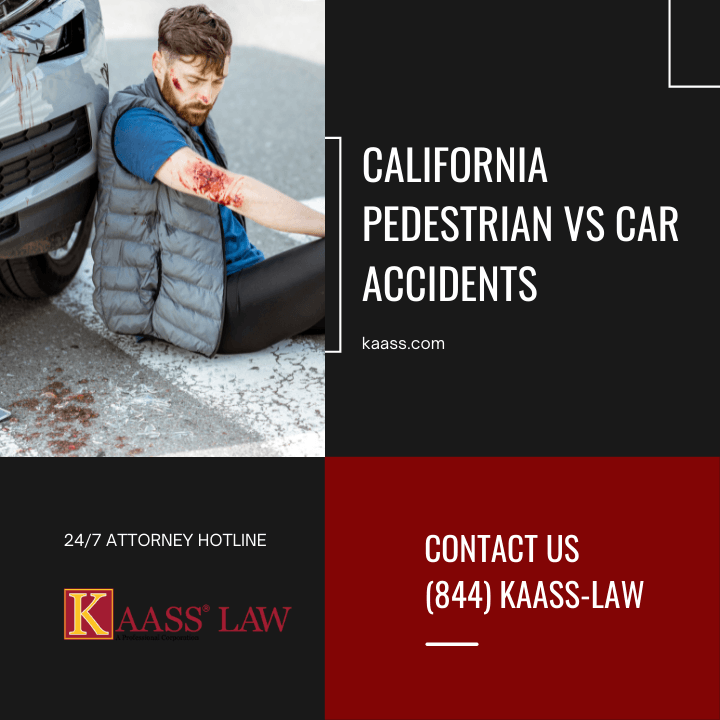
Pedestrian vs vehicle accidents occurs far often than one may believe, especially in Los Angeles. California has several right-of-way laws designed to protect pedestrians and may serve to show that a driver is liable for an accident.
CVC 21950(a) provides that "the driver of a vehicle shall yield the right-of-way to a pedestrian crossing the roadway within any marked crosswalk or within any unmarked crosswalk at an intersection, except as otherwise provided..."
In order for an injured pedestrian to recover in a personal injury lawsuit they must prove:
An experienced Glendale personal injury lawyer can evaluate the facts and circumstances of a case and help recover for damages such as:
Some common personal injury cases include:
There are two types of damages that are recoverable in California personal injury cases, which include special damages and general damages. Special damages are those damages that are financial in nature, such as hospital and medical bills or lost wages. On the other hand, general damages are those that are non-financial losses, including pain and suffering, loss of consortium, and emotional distress.
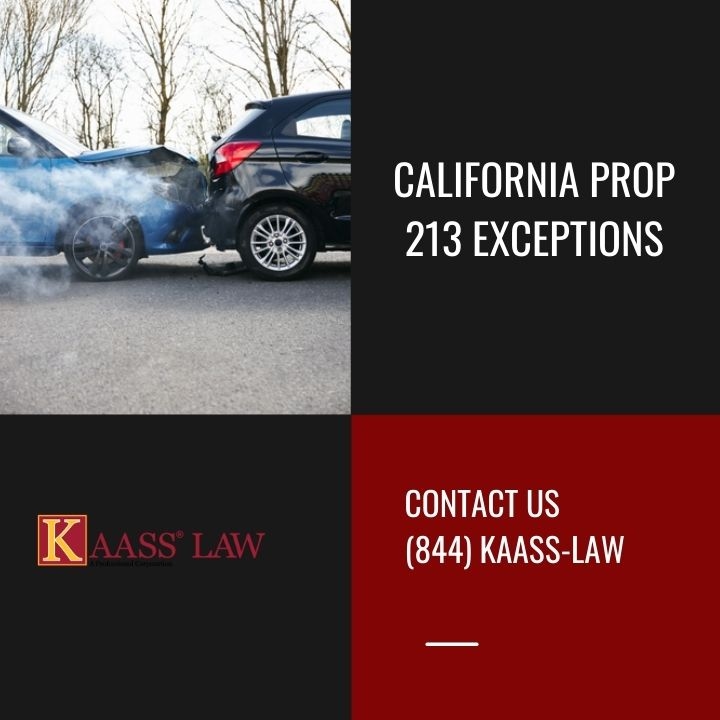
California Proposition 213 restricts uninsured drivers from recovering general damages, or compensation for pain and suffering, following a car accident. Unfortunately, often times, insurance gaps happen, and so do auto accidents. In California, drivers are required to carry liability insurance when operating a motor vehicle on a public road.
California Prop 213 was created to prevent uninsured drivers from recovering money for pain and suffering following an accident. However, it does not limit your ability to recover medical costs, lost wages, or compensate you for future medical charges, if your accident was caused by a negligent driver. There are exceptions to the rule, and with a knowledgeable Glendale personal injury attorney, you can receive the compensation you deserve. Prop 213 does not apply to:

Judgement or settlement which exceeds policy limits after denying a settlement offer within policy limits and the excess settlement rule. California Court of Appeals ruled that primary insurance companies are responsible for paying all losses in excess of policy limits after denying a within-limits settlement offer, regardless of whether the excess loss arises out of a verdict, judgment or a settlement.
The Second District California Court of Appeal’s August 5, 2016 opinion in Ace American Ins. Co. v. Fireman’s Fund Ins. Co. found that “where the insured or excess insurer has actually contributed to an excess settlement, [the insured or excess insurer] may allege that the primary insurer’s breach of the duty to accept reasonable settlement offers resulted in damages in the form of the excess settlement.” The lack of a final judgment was immaterial, as there was “no persuasive reason to hold that the [policyholder] or its assignee, [the excess insurance company], must suffer that loss with no remedy simply because the case reached an eventual settlement instead of being litigated through trial.”
In the US, the legalization of lane-splitting is different in each state. So far, California is still the only state where it is legally allowed. California's special position on this issue was fixed after it adopted the practice in 2016 through Assembly Bill No. 51. Nevertheless, the legislation and attitudes towards this practice differ in other states. For example, Utah has lane-filtering, which is a similar but different practice: cars are stopped, and the motorcycle’s speed does not exceed 15 miles per hour. Some states, such as Arizona and Oregon, have tried to legalize lane-splitting, but no law similar to the one in California has been passed yet. In contrast, most states either do not prohibit lane-splitting or have no law explicitly dealing with the practice, which, by default, makes it illegal. The absence of the same rules for everyone causes the riders to be in the middle, particularly those traveling across the states.
In Los Angeles, like in the whole of California, lane-splitting is legal. The state's laws allow motorcyclists to participate in lane-splitting in a safe way. The vehicle code of California states that lane-splitting must be done in a "safe and prudent" way. Nevertheless, the law does not mention the precise speed or conditions under which lane-splitting is considered safe. On the contrary, it leaves it to the motorcyclist's judgment. Thus, possible subjective interpretations of the safe can be made. The California Highway Patrol (CHP) has put forward the rules that have to be followed by the riders if they want to lane-split safely. These guidelines will advise motorcyclists not to lane-split at speeds over ten mph faster than normal traffic. Additionally, it is better not to lane-split at all if the traffic is 30 mph or faster. Besides, the most secure zones for lane-splitting are usually between the far left lanes.
Society's view on lane-splitting in Los Angeles is a mix of the positive and the negative. Numerous motorcyclists support the car-pooling system as the best way to ensure safety and efficiency. The other drivers consider it perilous and anxious. Especially those who have not yet mastered the technique of motorcycle behavior and speed. Safety is the utmost concern in lane-splitting. Research from the University of California, Berkeley, shows that lane-splitting is safe if it is done under the right conditions, which are low-speed differentials and moderate traffic speeds. These studies have also created CHP issue guidelines so that the drivers' problems in automated vehicles can be solved with them.
Lane-splitting in Los Angeles results from efforts to balance efficiency, motorcyclist safety, and the general concerns of sharing the road. California is the only state where lane-splitting is legal. Thus, the state's approach could be a good role model for other states contemplating similar legislation. Currently, motorcyclists in Los Angeles and the entire of California should keep on the lane-splitting. However, they should cautiously follow the guidelines to ensure everyone on the road is safe. With the changing traffic patterns and the increasing data, laws and perceptions about lane-splitting will be developing, which may lead to a new era of motorcycling in urban America.
Motorcycle accidents can result in a wide range of injuries, from minor bruises to life-threatening conditions. Understanding these common injuries can help individuals recognize symptoms, seek timely medical care, and take preventive measures to enhance their safety on the road. By staying informed and cautious, we can all contribute to reducing the risk and impact of car accidents. Please contact us at 844-522-7752 for a free consultation, and let us assist you during this difficult time.
Excessive speed is a critical factor in many motorcycle accidents. Speeding reduces the time available to react to obstacles or sudden changes in road conditions. It also increases the severity of accidents, as higher speeds result in greater impact forces. Motorcyclists are particularly vulnerable when speeding, as their bikes offer less protection than enclosed vehicles.
Impaired driving due to alcohol or drugs significantly elevates the risk of accidents. Motorcyclists require excellent balance, coordination, and judgment to navigate safely. Alcohol and drugs impair these faculties, leading to poor decision-making, slower reaction times, and reduced ability to control the motorcycle.
Inexperienced riders are more likely to be involved in accidents. Proper training and experience are essential for developing the skills to handle a motorcycle safely. New riders may need help with balance, maneuvering, and understanding traffic dynamics, increasing their susceptibility to crashes.
Risk-taking behaviors, such as weaving through traffic, performing stunts, or riding aggressively, are significant causes of motorcycle accidents. Such behaviors can lead to loss of control, collisions with other vehicles, or crashes due to unexpected obstacles or road conditions.
Environmental factors play a crucial role in motorcycle safety. Unlike cars, motorcycles are susceptible to road conditions and weather changes.
Poor road conditions, including potholes, loose gravel, oil spills, and uneven surfaces, can be hazardous for motorcyclists. These conditions can cause loss of traction and control, leading to accidents. Construction zones and poorly maintained roads are dangerous.
Adverse weather conditions such as rain, snow, ice, and fog significantly increase the risk of motorcycle accidents. Wet and icy roads reduce traction, making it difficult for motorcyclists to brake and maneuver safely. Visibility is also compromised in foggy or rainy conditions, making it harder for riders to see and be seen by other road users.
Poor lighting and visibility conditions, such as riding at night or in areas with inadequate street lighting, can lead to accidents. Motorcyclists are less visible to other drivers in low-light conditions, increasing the risk of collisions. Additionally, riding with defective headlights or taillights further exacerbates the problem.
Mechanical failures and maintenance issues can also contribute to motorcycle accidents. Ensuring that the motorcycle is in good working condition is vital for safety.
Mechanical failures, such as brake failures, tire blowouts, and engine problems, can lead to accidents. Regular maintenance and timely repairs are essential to prevent such issues. Motorcyclists should routinely check their bikes for any signs of wear and tear and address them promptly.
Improper modifications, such as adding non-standard parts or altering the bike's structure, can compromise safety. These modifications can affect the motorcycle's balance, handling, and stability, increasing accident risk.
The interaction between motorcycles and other vehicles is critical to many accidents.
One of the most common causes of motorcycle accidents involving other vehicles is the failure to yield the right of way. Car and truck drivers often misjudge the speed and distance of oncoming motorcycles, leading to collisions at intersections and during lane changes.
Motorcycles are often hidden in the blind spots of larger vehicles. Drivers who fail to check their blind spots before changing lanes or merging can inadvertently collide with motorcyclists. Motorcyclists must be aware of blind spots and avoid lingering in them.
Left-turn accidents occur when a vehicle turns left in front of an oncoming motorcycle. This type of accident is often due to the driver's failure to see the bike or misjudgment of its speed. Motorcyclists should exercise caution at intersections and anticipate potential hazards.
Reducing motorcycle accidents requires rider education, vehicle maintenance, and awareness from all road users. Here are some preventive measures and safety tips:
Proper training and education are essential for all motorcyclists. Completing a motorcycle safety course can equip riders with the skills and knowledge to navigate safely. Continuous learning and practice are also crucial for maintaining and improving riding skills.
Wearing appropriate protective gear, including helmets, gloves, jackets, pants, and boots, can significantly reduce the severity of injuries in the event of an accident. High-visibility clothing and reflective gear can also enhance visibility to other drivers.
Regular maintenance and inspections ensure the motorcycle is in good working condition. Checking the brakes, tires, lights, and other critical components can prevent mechanical failures and reduce accident risk.
Motorcyclists should practice defensive riding by being aware of their surroundings, anticipating potential hazards, and maintaining a safe distance from other vehicles. Predictability, signaling intentions, and avoiding risky behaviors can also enhance safety.
All road users, including car and truck drivers, should be aware of motorcycles and share the road responsibly. Effective communication through signaling, eye contact, and understanding traffic dynamics can prevent many accidents.
Motorcycle accidents are a complex issue with multiple contributing factors. Human error remains the leading cause, but environmental conditions, vehicle issues, and interactions with other vehicles also play significant roles. By understanding these causes and implementing preventive measures, we can create a safer environment for motorcyclists and reduce the number of accidents on our roads. Awareness, education, and responsibility are critical components in achieving this goal, ensuring that the thrill of motorcycling can be enjoyed with minimized risk.
Due to their lack of protection, motorcycle riders are extremely vulnerable when on the road. Because motorcycles are not protected, it is believed that they may suffer catastrophic injuries in an accident. Motorcycle accidents frequently result in the following injuries:
TBI occurs when an individual suffers a forceful blow to the head, resulting in intense shaking. A biker who is engaged in an accident suffers a significant injury, especially if they are not wearing a helmet. A person's physical and cognitive abilities will be impacted by a TBI. In order to fully recover from a TBI, the person must have many procedures. In some situations, the injury may have long-term consequences for the individual.
After a crash, a motorcycle rider is likely to make physical contact with the ground. They may break bones depending on the force of the strike. The most common portion of the body to be injured in a motorbike accident is the ribs.
When a motorcyclist's skin is scraped against the road, this painful injury occurs. Road burns aren't often fatal, but if they're not treated properly, infections can develop. Failure to seek medical help may result in permanent scarring on the pulled body part.
Internal bleeding can occur when internal organs are damaged or pierced as a result of a strong force striking the body. Any area of the body might bleed internally. Internal bleeding is a hidden damage, thus it's critical to see a doctor following a motorbike accident. Even if you don't think you were seriously hurt in the accident, it's a good idea to go to the hospital and get checked out.
The spine is one of the most susceptible regions of the body. If it is subjected to a significant amount of force, it may become paralyzed permanently. If a motorcycle rider lands on their neck or back, there is a good risk they will get this injury. Basically, anything that has a strong impact on a person's back might cause injury to the spinal cord. An individual may suffer from a transient or permanent spinal cord injury, depending on the circumstances.
Unfortunate events occur. You may be entitled to compensation for your losses if you were hurt as a result of someone else's negligence. Here's a quick rundown of the many types of losses. Damages are a form of monetary award made by a court of law to compensate an injured party for any losses or injuries experienced as a result of someone else's negligence.
Economic damages are meant to recompense a plaintiff for losses that can be quantified in monetary terms. Economic damages are assessed by calculating the amount of out-of-pocket losses that an injured party has or would have as a result of their injuries. Find below examples of economic losses:
Non-economic damages are meant to cover losses that are considered subjective, but they do not always pay out-of-pocket expenses. Compensation for non-economic damages may include:
Punitive damages are the third sort of damages that a California court may award. Punitive damages are designed to penalize the defendant and are only granted when the defendant's actions are particularly detrimental. Punitive damages are uncommon, accounting for approximately 5% of all judgements. Furthermore, there is no universally accepted formula for assessing and assigning punitive damages. Punitive damages are awarded at the discretion of the court and will vary depending on the facts of the case.
A motorcycle accident lawyer can assist you in identifying concerns in your case. Without an adequate investigation, even the most straightforward case can pose complexities and impediments, and this inquiry should be conducted as quickly as possible after the collision. Feel free to give our office a call at 310.943.1171 or schedule a consultation by calling now!
In California, rental vehicle companies do not have an legal obligation to investigate a renter's driving record. However, the situation is different in case the at-fault driver rented the car with a suspended license. The rental motorcycle company is required to check the license and compare the signatures on the customer's license and the rental agreement. In case the rental vehicle company doesn't follow the mentioned procedure of verification, it may be held directly liable for negligent entrustment. This is when it rents to an incompetent or unfit driver who has a revoked or suspended license. The rental agency can also be liable if the provided motorcycle had a defect that could lead to an accident, and it was known by the company without a fix implemented. So, there was foreknowledge about the defective materials or parts within the motorcycle that were allocated to the victim of the accident. Even if an insurance policy coverage is at the motorcycle company. The business could still be liable for the damages due to the breach of duty. Furthermore, claims go through an insurance provider to guarantee compensation and recovery of the victim.
If you sustain an injury in an accident involving a rented motorcycle, it is important to seek legal consultation as soon as you can. Our personal injury firm can:
At KAASS LAW, we have years of experience in handling personal injury cases, including motorcycle accidents, with rental companies. We understand the complexities of these cases and we commit to helping our clients obtain the compensation they deserve. If you've you've been injured in an accident involving a rented motorcycle, contact us today for a confidential consultation. We will review your case, explain your options, and help you navigate the legal process. Don't face this difficult time alone. Let the experienced attorneys at KAASS LAW fight for you. https://www.youtube.com/watch?v=JdxKaTtFv-A If you’ve been injured in a motorcycle accident, we invite you to contact KAASS Law for a free consultation at (310) 943-1171. Our staff speaks English, Spanish, Armenian, Russian, and French.
California law also prohibits certain motorcycle modifications that can compromise safety or create excessive noise:
Adhering to California's motorcycle equipment requirements and modification restrictions is not only a legal obligation but also a crucial safety practice. Properly maintained and legally compliant motorcycles contribute to a safer riding environment for everyone on the road.
Riding under the influence of cannabis in the state of California can result in a DUI charge. As a result, a rider can get penalties and fees, including suspension of a motorcycle rider's license and driving privileges. In case the motorcyclist caused an accident while under the influence of cannabis, he can be financially liable for injuries and other damages.
Lane splitting is when a motorcycle rider drives between two lanes of traffic to get around other vehicles. In the state of California, it is legal to practice lane splitting on the state's roadways. Here are regulations related to lane splitting:
At KAASS LAW, we dedicate to promoting motorcycle safety and helping riders understand their legal features or help them understand CA Motorcycle Insurance. As always, we ask our clients and riders to stay safe out there! If you have any questions about motorcycle equipment requirements, modifications, or any other legal matters related to motorcycling, contact us for a free consultation. We can provide guidance and representation to ensure you're riding safely and legally within the boundaries of California law. https://www.youtube.com/watch?v=tEKrzYAGGiU
There are two types of damages that are recoverable in California personal injury cases, which include special damages and general damages. Special damages are those damages that are financial in nature, such as hospital and medical bills or lost wages. On the other hand, general damages are those that are non-financial losses, including pain and suffering, loss of consortium, and emotional distress.
The statute of limitation for bringing a pedestrian vs car accident is 2 years from the date of the accident. However, claims involving government tort or injury involving a government entity, such as a car accident with a government city vehicle, requires the injured party to first file a claim with the appropriate governmental agency within 6 months from the date of the accident. Finally, depending on the outcome of the claim, the claimant will then have either 6 months or two years to file suit. If you fail to follow the guidelines for the statute of limitations, you may lose your right to file a claim.
California Code of Civil Procedure section 335.1 provides, an injured pedestrian has two years to file a claim against those who may be liable for their accident.
Our personal injury attorneys specialize in various personal injury matters including complex personal injury cases, government torts specifically related to auto accidents, motorcycle accidents, left turn motorcycle accidents, truck accidents, multi-car accidents, which involve a government vehicle such as Metro Bus, fire truck, U.S Postal Service, and Water & Power Truck. If you have been involved in an accident involving a Government vehicle, give our office a call at (310) 943-1171 for a free consultation. [contact-form][contact-field label="Name" type="name" required="true" /][contact-field label="Email" type="email" required="true" /][contact-field label="Website" type="url" /][contact-field label="Message" type="textarea" /][/contact-form]
[video width="1280" height="720" mp4="https://kaass.com/wp-content/uploads/2020/02/California-Pedastrian-Vehicle-Accident.mp4"][/video]
Loss of consortium is a claim for damages suffered by the spouse or children of a person who has been injured or killed as a result of the defendant's negligent or wrongful acts. Generally, claims for loss of consortium are not awarded unless the person injured dies or suffers a severe and enduring injury. The suing party must show that the injured or deceased family member cannot provide his or her spouse or family member with the same love, affection, companionship, comfort, society, or sexual relations that were provided before the accident.
Statute of limitations is the period of time you have to file a claim or suit. Personal injury cases have a statute of limitations varies depending on the type of case, but generally, the time limit usually starts on the day the accident or injury occurred and can last anywhere from 1 to 2 years. However, in claims involving government tort or injury involving government entity, such as an car accident with a government city vehicle, requires the injured party to first file a claim with the appropriate governmental agency within 6 months from the date of the accident. Finally, depending on the outcome of the claim, the injured party will then have either 6 months or two years to file suit. If you fail to follow the guidelines for the statute of limitations, you may lose your right to file a claim. Thus, it is vital you speak to a Los Angeles personal injury lawyer immediately to preserve your claim! Our lawyers in Glendale, Los Angeles, California, will be happy to help you through every step of your personal injury case.
Our personal injury attorneys specialize in various personal injury matters including complex personal injury cases, government torts specifically related to auto accidents, motorcycle accidents, left turn motorcycle accidents, truck accident, multi-car accidents, which involve a government vehicle such as Metro Bus, fire truck, U.S Postal Service, and Water & Power Truck. If you have been in an accident involving an Government vehicle, give our office a call at (310) 943-1171 for a free consultation! This content is for educational purposes only. KAASS LAW is authorized to practice law in California. The above content is for California residents only. This content provides only general information, which may or may not reflect current legal developments. KAASS LAW expressly disclaims all liability in respect to actions taken or not taken based on any of the contents of this website. The above content DOES NOT create an attorney-client relationship. KAASS LAW does not represent you unless you have expressly retained KAASS LAW in person at the KAASS LAW office. KAASS LAW helps clients in: Los Angeles, Burbank, Hollywood, Glendale, Van Nuys, North Hollywood, Studio City, Highland Park, Eagle Rock, Sunland, Tujunga, Sylmar, La Crescenta, La Canada, Beverly Hills, Westwood, Santa Monica, Brentwood. Pacoima, Montebello, Commerce, Alhambra, Downey, Bell, Maywood, Walnut Park, Vernon, Lynwood, Echo Park, Silverlake, Mission Hills, Northridge, North Hills, Porter Ranch, Chatsworth, Reseda, San Diego, La Jolla, El Cajon, Chula Visa, Del Mar
If you were uninsured and injured in a auto accident, our knowledgeable accident attorneys can help you get the compensation you deserve. Call us at (310) 943-1171, 24 hours a day, 7 days a week for a free consultation tailored to the specifics of your case. Attorneys at KAASS Law speak English, French, Spanish, Russian, Armenian, and Italian.
In order words, in the event that a policyholder(s) do not have excess insurance, policyholders should argue that their first party insurance company or primary insurer who rejected a within-limits settlement offer is obligated to pay the full amount of any subsequent settlement which exceeds that insured's policy limits. There is no reason why the first party insured should be forced to contribute or pay a settlement of which first party insured could recover by filing at first party bad faith action against their primary insurance company.
California insurance bad faith actions arise when insurance company breaches the implied obligation of good faith and fair dealing. Insurance companies must, unreasonably or without proper cause, act or fail to act in a manner that deprives the insured of the benefits of the policy. It is not a mere failure to exercise reasonable care. However, it is not necessary for the insurer to intend to deprive the insured of the benefits of the policy. Generally, the term bad faith for insurance purposes means an insurance company:
The court found that when an insurer's failure to reasonably settle a claim within policy limits, after primary or "first party" insurance rejected a within-limits settlement offer and there is a judgement against their insured/policyholder, whether by settlement or verdict, the first party insurance company must pay any excess monies, whether through jury verdict, settlement, or judgment. Policy limits demands can be a powerful tool for plaintiffs' insurance lawyers and can cause headaches for claims adjusters. While, it all depends on the circumstances surrounding the claim or issue, an insurer that misses an opportunity for a reasonable settlement of a claim against its insured can now be liable for the full amount of a later judgment, regardless of the policy limits. If you believe that your primary insurance company rejected a within-limits settlement offer and an later there was a subsequent settlement or judgement which exceeds your policy limits or you believe that your insurance company may be acting in bad faith, speak to one of our Los Angeles insurance lawyers for a free consultation and case review. Call our office at (310) 943-1171, our attorneys speak English, French, Spanish, Russian, Armenian, and Italian.