

Cybersecurity has never been as important as it is today for safeguarding crucial information. This includes information that can easily be used to identify and to compromise the personal details of our lives. Everything from bank account and transactional details to personal milestones, memories and life events are all available to access online. All of these trends are natural consequences of our increasing reliance on the internet and online activities. The sheer amount of personal data that can be retrieved online is staggering...which then begs the question: who or what is protecting all of it?
While an easy answer to the question of online security simply does not exist, we can determine the security protocols of many of the online services we use by doing some quick research. The main things to look out for are their terms of use and their privacy policy. These two together are what constitute the core ethos of the company with regards to their users’ privacy and the lengths they are willing to go through to protect it. Outside of that, it’s all about being conscious of what services you use and what information you give up in order to use it. However, despite being careful, there’s no much you can do if the service itself gets breached. In those cases, it’s all about how the company responds to and deals with online attacks.
As far as how companies must respond to security breaches, there are laws in place which require them to disclose what happened if the compromised information can jeopardize clients’ personal information and private matters. Specifically, the California data security breach notification law was enacted in 2002 and has been in effect ever since and it requires that companies notify California residents whose unencrypted information was acquired by any unauthorized person. The law is extensive in that it still requires that you be notified even if the information was leaked or hacked. This means that even if a company is not one hundred percent sure if your information was breached, they do still have to notify you so long as there is a reasonable doubt.
California’s civil law code 1798.82, while originally enacted only in California, most states have since followed suit by enacting similar laws. In fact, the California data security breach notification law was quite novel and progressive for its time as it deals with issues of cybersecurity and online privacy at a time when those areas were nowhere near as well-developed and intensive as they are today. The intent of this law is simply to ensure that the public remains aware of any successful cybersecurity attacks and to keep companies accountable for their security protocols and measures.
Since this groundbreaking law came into effective, there have been many more laws like it added in an effort to stay ahead of the security curve. The importance of strong, online encryption really cannot be understated and it was laws like these that jump started the movement.
At KAASS LAW, we believe your personal information is yours, only. If you have any doubts as to whether or not your personal data was breached, or if you have any questions about what can be done about it, then we encourage you to give us a toll free call at (310) 943-1171 to speak to our California privacy attorneys today. We can walk you through your options and we will always stand by our clients and their security.

All of the apps and online services you use track, collect and distribute your usage patterns and demographic information. However, some companies put much more emphasis on protecting the data of their consumers, whereas others go out of their way to collect and analyze as much of their users’ data as they can. The ever-increasing gap between companies’ ethos and philosophy toward user privacy has reached a turning point. On the one hand, you have companies like Apple that have built up a brand and a reputation for standing with their customers by protecting and encrypting their data as much as possible–at times even making that data completely inaccessible to Apple itself. Then again, on the other hand, you have companies like Google that go out of their way to gather as much data and information as possible from their users, without paying nearly as much thought as to how to contain and protect that data from breaches and hacks. As a consumer, these increasingly polarized attitudes and approaches toward the issue of privacy should definitely strike a chord, and at least raise some questions for thought.
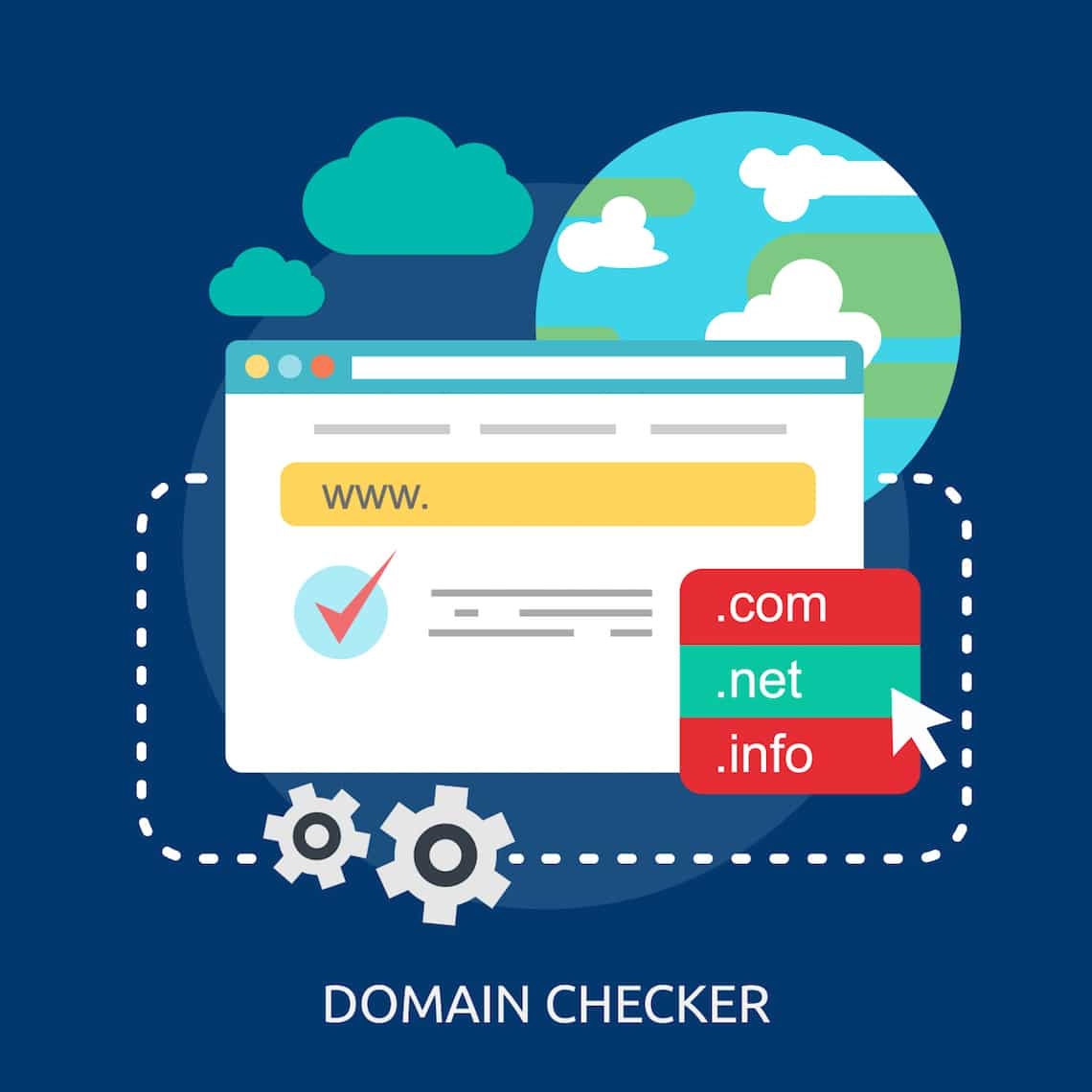
If one cannot duplicate a phone number or street address, then why should one have the power to duplicate a domain name? Domain names, similar to words and symbols, can be used to identify a seller’s products and distinguish them from the products of another, and are thus viewed as trademarks. The Ninth Circuit U.S. Court of Appeals recently ruled that a business must use its domain name to sell goods or services in order to protect the name — even if a competitor starts to use the name after you registered the domain. In other words, merely reserving a domain name isn't enough. Thus, its important to register your domain name, because if your domain name has a trademark, the URL has protection under the USPTO.
The Trademark Act of 1946 (“Lanham Act”) prohibits uses of trademarks that are likely to cause confusion about the source of a product or service. 15 U.S.C. §§ 1114, 1125(a). Moreover, to establish a trademark infringement claim under the Lanham Act, a plaintiff must establish that defendant’s use of a mark is confusing similar to plaintiff’s. Id. The main area of inquiry in trademark infringement cases is whether the similarity of the marks is likely to confuse customers about the source of a product or service. ., 174 F.3d 1036, 1062 (1999).
As an owner of a registered trademark or service, you probably wonder when others are responsible for infringing your mark. You should know that the test for trademark infringement is the likelihood of confusion as a result of the similarity of the marks.
A person may be liable for infringement of a federally registered mark if his use of a mark in relation to any goods of services is likely to cause confusion, mistake or to deceive. 15 U.S.C.A. § 1114(1). This test to determine whether a registered mark is being infringed is known as the test of likelihood of confusion.
The test of likelihood of confusion includes not only the confusion as to source but also as to affiliation, connection or sponsorship. Champions Golf Club v. Champions Golf Club, 78 F.3d 1111, 1121 (6th Cir. 1996) (internal citations omitted). This means that a user of a mark may be liable for trademark infringement if the use creates a likelihood of confusion that the goods are affiliated to, connected with or sponsored by the owner of the registered mark.

Protecting your brand through California trademark registration is vital in today’s competitive market. This process establishes your brand identity and prevents others from using similar marks. In this guide, we will explore key aspects of the registration process under Business and Professions Code (BP) 14205 and BP 1407.
Business and Professions Code 14205 outlines criteria that can lead to the rejection of a trademark application. Knowing these criteria is essential for a successful application:

Only certain number of H-1B petitions can be approved each year. There is an annual limit for new admissions in the H-1B category. An H-1B number must be available at the time of adjudicating a new petition, and USCIS will not approve an H-1B petition once the annual cap has been reached.
Only 65,000 new H-1B petitions can be approved each fiscal year. However, it should be noted that this number is reduced under the US-Singapore and US-Chile Free Trade Agreements. Under these agreements, 6,800 H-1B numbers shall be available for citizens of Chile and Singapore each fiscal year. Hence, the actual annual cap is not 65,000 but 58,200. If any part of the number set aside for Chile and Singapore is not used during a fiscal year that number is added to the general annual cap for the next fiscal year. It is also worthy to mention that only initial H-1B petitions are subject to the annual cap. Petitions for sequential employment, concurrent employment, extensions of stay, and amended petitions are not counted against the gap.
There is an exemption from H-1B annual cap for 20,000 foreign employees with advanced degrees from US universities. To fall under this exemption, the foreign employee must have a master’s or higher degree from a US university. A master’s degree is a degree for which a bachelor’s degree in any field is required. The place of the specific degree in the academic hierarchy of degrees should be considered in order to determine whether it qualifies as a master’s or higher degree or not. If the petition qualifies for another exemption, in addition to the advanced degree exemption, officers shall apply the exemption that does not include numerical limitations before applying the advanced degree exemption.

heAll US employers willing to sponsor foreign citizens for H-1B visa must submit the labor condition application (LCA) first. Employers must submit a certified LCA with the Department of Labor before filing an H-1B petition, ensuring the H-1B employee's job does not negatively impact the wages and working conditions of US workers.
Form ETA 9035/9035E is a document that a prospective H-1B employer files with ETA when it seeks to employ nonimmigrant workers at a specific job occupation in an area of intended employment for not more than three years.
Many people often confuse the LCA with the labor certification application that US employers must file with the Department of Labor for most employment-based immigrant visas. However, these two applications are different.
Before filing the labor certification application, US employers must conduct specific recruitment steps and can only submit the application if they cannot find a qualified US employee. In contrast, employers can file the LCA without conducting any recruitment steps, making it a much simpler application compared to the labor certification application. LCA’s only purpose is to ensure that the employment of the H-1B worker will not negatively affect the wages and working conditions of US employees.
One of the questions that might come to mind is whether or not you actually have any say as to how often or what kinds of data companies can collect from you. Unfortunately, the answer isn’t as cut and dry as a yes or no. The reality is that privacy laws vary immensely depending on the industry, type of service, and location of the company providing the app you are using. As such, the level of accountability and transparency that businesses must meet are quite different from one another. What this means in real world situations is that a customer cannot have universal demands or expectations from businesses and companies regarding their privacy. While this is hugely inconvenient, there is a silver lining in the form of your own decision making. Though you alone cannot control the laws governing the ins and outs of these companies, you can make an educated decision as to which services you choose to use and to what extent you wish to use them.
For example, upon creating an account for Gmail, Twitter, Facebook iCloud and the like, you will typically be presented with a series of options regarding data and diagnostics. While most folks usually just take the easy route and skip ahead using the default settings, it is definitely worth your time to stick around and explore a bit. By taking a second look at what you are agreeing to, you may notice a couple of things that genuinely surprise you. It’s amazing how much these companies can get away with gathering from your usage and many people probably would not be as comfortable using those services, if they understood the extent of the access these companies have regarding your private data. By taking a couple of minutes and reading up on your options while signing up, you can actually limit several major pieces of information that these companies have access to, such as browsing and crash data, frequency of use, and general statistics about your areas of interest and demographics.
As for the things you cannot control, there is little else you can do about that outside of finding another company that provides a similar service that values your privacy more than its data collection. Some things you can’t easily limit access to include anything the company exempts or says it needs from you in order to provide their service in their privacy policy and anything else that they can gather ‘publicly’ from your browsing or usage. Certain bits of information are personal but not identifiable, meaning that they cannot see who the data is from nor any identifying characteristics of the user. While it can definitely be scary to think of all the data these companies have collected from you, you should know that usually the data is only used internally. What this means is the company that collected your data while you used their app or service will only use that data to improve the quality and performance of their site or product. The upside of this is your data will not be pawned off to other companies, but the downside is that less and less businesses give you that level of privacy as an option.
The classic example of a company that is more than willing to sell and barter away their gathered information is Facebook. To be clear, Facebook is a company which has millions of active users and their database of users is quite diverse, covering many different spheres and communities. As such one would think that Facebook would understand and value their users’ privacy by respecting and protecting it...but no. Facebook instead takes the much more lowly route of simply hoarding as much user data as possible and then selling this data to third party companies for a massive markup and profit. Perhaps the most insulting aspect of this shady business practice is that it happens almost entirely in total secrecy, without any notice or heads up given to any of the user base. As a result of their recklessness, Facebook CEO Mark Zuckerberg has had to appear before Congress to explain the company’s actions and decision making processes, especially in light of recent hacks and security breaks which have exposed millions of users’ profiles, photos, friend lists, and other private data without their permission.
In light of these now public scandals, most consumers have reached a point where they just want to enjoy the services they need without a constant fear of being tracked and the worry of having their collected information leaked publicly. For your own privacy and security, we recommend to do some searching around to see if the particular apps and services you use have strong options for limiting the amount of data that can be gathered from your activity, as well as checking up on the overall reputation of that company as it is relevant to user privacy. Even a simple internet search can bring up any major scandals, side deals, security breaches, and common privacy concerns regarding any given company. By checking out some articles like this one here, you can learn so much more about how your data and privacy are treated on the internet and what you can do about it on your end.
Our goal here is to empower you with some of the basics regarding your rights to privacy and how data collection works on different platforms. At KAASS LAW, we stand with our clients and we believe that privacy is a right, not a privilege. If you have any other questions or concerns regarding your online privacy and how you can take control of it, don’t hesitate to get in touch with us. We invite you to reach out to us with any problems or cases you may have by giving us a toll free call at (310) 943-1171 to speak to one of our lawyers today.
To protect your business or brand from infringement, you may want to trademark your domain name in addition to a logo, slogan, or design. Merely, registering a domain name does not give you trademark rights, rather it identifies your website and generally will not prevent others from using the name. If you trademark your domain name, you have legal protection if a third party uses your trademarked name. You can file a trademark infringement action against the infringing party and recover money damages, financial losses, and other damages you might have incurred.
The domain should function as a "source indicator." It must convey to whoever sees the URL what products or services are behind the name. A domain qualifies as a trademark when it is a "source indicator." Your domain must convey the products or services associated with the name to whoever sees the URL. Not all domain names can be registered as trademarks. The PTO is particular about what can be registered as a domain name.
Consumer confusion occurs when another company has a domain name close in spelling to your domain. The other company's name might different by one letter. Generally, consumer confusion matters only if a domain name that's similar to the one you want to use is a protected trademark. To be protected, a trademark must be distinctive. If the trademark owner has been able to register a name with the U.S. Patent and Trademark Office, it is probably distinctive. The dispositive question in trademark infringement cases is whether the similarity of the marks is likely to confuse customers about the source of a product or service. Interstellar Starship Services, Ltd. V. Epix, Inc., 304 F. 3d 936, 941 (2002).
Initial interest confusion occurs when the defendant’s use of plaintiff’s trademark sways consumers towards their own product or service by capturing “initial consumer attention.” Brookfield at 1045. In the context of website domain, the defendant’s unauthorized use of the trademark confuses consumers who expect to find the plaintiff’s product or service at that web address. Interstellar at 942. Although actual confusion is not required, plaintiff must prove a probability of confusion, as the mere possibility is not enough. Perfumebay.com Inc. v. eBay, Inc., 506 F.3d 1165, 1176.
To evaluate the likelihood of confusion, including initial interest confusion, the Sleekcraft factors considered are:
(1) the similarity of the marks;
(2) the relatedness or proximity of the two companies' products or services;
(3) the strength of the registered mark;
(4) the marketing channels used;
(5) the degree of care likely to be exercised by the purchaser in selecting goods;
(6) the accused infringers' intent in selecting its mark;
(7) evidence of actual confusion; and
(8) the likelihood of expansion in product lines.
Courts consider these factors within the totality of the circumstances through the eyes of the “reasonably prudent consumer” in the marketplace, not a person with a legally trained mind. Dreamwerks Production Group, Inc. v. SKG Studio, 142 F.3d 1127, 1129 (1998).
In the context of website domain, courts have held that the three most important Sleekcraft factors in evaluating a likelihood of confusion are (1) the similarity of the marks, (2) the relatedness of the goods or services, and (3) the parties’ simultaneous use of the Web as a marketing channel. Interstellar at 942.
No one factor is to be considered conclusive and the relative importance of each individual factor will be case-specific. Compare Brookfield, 174 F.3d at 1061 (holding that use of the domain name “moviebuff.com” violated plaintiff’s trademark rights in the mark “MovieBuff,” as consumer confusion is likely to result from the relatedness of the products and the companies’ simultaneous use of the Web as a marketing and advertising tool) with Interstellar at 943 (finding that domain name “epix.com” for website showcasing creator’s electronic pictures did not infringe the trademark “EPIX,” used in connection with printed circuit boards and computer programs, because there was a lack of relation between the products and both parties marketed to a different consumer base through the web).
The Federal Trademark Dilution Act (FDTA) allows a trademark owner to obtain an injunction against another’s “commercial use in commerce” of a mark or trade name” 15 U.S.C. § 1125(c)(1). “Commercial use in commerce” has been generally interpreted to mean use of mark in relation to any goods or services. Mattel, Inc. v. MCA Records, Inc., 296 F.3d 894, 903 (2002).
If you believe someone is infringing on your trademark or have questions regarding trademark registration, copyright, or any other intellectual property related question, we invite you to contact our office and speak to an experienced Los Angeles trademark lawyer at (310) 943-1171.
In order to show likelihood of confusion, there must be a probability of confusion; mere possibility of confusion is not enough. Nora Beverages, Inc. v. The Perrier Group of America, Inc., 269 F.3d 114, 121 (2d Cir. 2001) (internal citations omitted). It should also be noted that plaintiff does not have to prove actual confusion in order to show that the defendant is liable for trademark infringement. Perfumebay.com Inc. v. eBay, Inc., 506 F.3d 1165, 1176 (9th Cir. 2007) (internal citations omitted). If the plaintiff is able to show likelihood of confusion the defendant will still be liable for trademark infringement even if the plaintiff shows no instances of actual confusion.
The test for likelihood of confusion is whether a reasonably prudent consumer is likely to be confused as a result of the similarity of the marks. Dreamwerks Production Group, Inc. v. SKG Studio, 142 F.3d 1127, 1129 (9th Cir. 1998) (internal citations omitted). The likelihood of confusion exists when there is a likelihood that an appreciable number of reasonably prudent consumers is likely to be misled or confused because of the similarity of the marks. McGregor-Doniger, Inc. v. Drizzle, Inc., 599 F.2d 1126, 1130 (2d Cir. 1979) (internal citations omitted). To sum up, there is a likelihood of confusion when there is a probability that an appreciable number of reasonably prudent consumers will be confused as to the source, affiliation, connection or sponsorship of goods or services because of the similarity of the two marks.
Federal courts in different federal circuits have come up with multi-factor tests in order to determine whether there is a likelihood of confusion or not. The test in the 9th Circuit, which includes the State of California, is the eight-factor Sleekcraft test pursuant to which the court shall consider the following factors to determine if there is a likelihood of confusion or not:
These factors are not requirements but are helpful guidelines for courts in order to determine whether there is a likelihood of confusion or not. Eclipse Ass’n, Ltd. v. Data General Corp., 894 F.2d 1114, 1118 (9th Cir. 1990). The application of the text shall be flexible, and there is no specific formula setting forth how the factors included in the text shall be considered. Nautilus Group, Inc. v. ICON Health and Fitness, Inc., 372 F.3d 1330, 1346 (Fed. Cir. 2004) (internal citations omitted). The important question is what the analysis as a whole reveals about the issue of likelihood of confusion. Entrepreneur Media, Inc. v. Smith, 279 F.3d 1135, 1141 (9th Cir. 2002). This means that none of the factors is determinative but the analysis as a whole shall answer the question whether there is a likelihood of confusion or not.
It should be noted that the degree of similarity of marks necessary to show likelihood of confusion varies depending on the competitiveness of goods and services. The more similar the goods or services the less similar marks need to be in order to prove likelihood of confusion. Century 21 Real Estate Corp. v. Century Life of America, 970 F.2d 874, 877 (internal citations omitted). Conversely, “… the greater the degree of similarity between the marks, the lesser the degree of similarity between the goods is necessary to support a finding of likelihood of confusion.” The Board of Regents, University of Texas System v. Southern Illinois Miners, LLC, 110 U.S.P.Q.2d 1182, 1189 (internal citations omitted). Hence, if the marks are very similar the court may find a likelihood of confusion even if the goods or services at issue are not very similar. To summarize, your trademark or service mark is being infringed if a use of another mark creates a likelihood of confusion among consumers. If the other mark is very similar to your trademark or service mark you might have a cause of action for trademark infringement even if the goods or services are not very similar. If you believe someone is infringing on your trademark or have questions regarding trademark registration, copyright, or any other intellectual property related question, we invite you to contact our office and speak to one of our experienced business attorneys at (310) 943-1171.
Understanding these restrictions is crucial for anyone seeking California trademark registration.
To apply for trademark registration under BP 1407, you must provide specific information as required by the Secretary of State:
After submission, your application will undergo an examination as outlined in BP 14209. Here’s what to expect during the review:
Understanding this process can significantly improve your chances of successfully registering your trademark.
Given the complexities of California trademark registration, seeking legal advice is highly recommended. An experienced attorney can guide you through the application process, ensuring compliance with all requirements and protecting your rights. For comprehensive guidance on trademark law, visit the American Bar Association's section on trademarks for valuable insights and resources. At KAASS LAW, our team of dedicated attorneys is ready to assist you in navigating the intricacies of trademark registration and safeguarding your intellectual property. We speak multiple languages, including English, Spanish, Russian, Armenian, French, and Italian, so you can communicate comfortably. If you are considering California trademark registration, don’t go through this process alone. Contact KAASS LAW today for a consultation. Our knowledgeable attorneys will help you understand your rights and responsibilities, ensuring your brand is effectively protected. Your brand deserves the best defense—let us help you secure it!
During the recent years the annual H-1B cap is usually reached within a few days after the start of the filing season. USCIS decides which H-1B petitions will be approved by conducting a lottery. The petitions received within 5 business days after the start of the filing season can participate in the lottery. USCIS first conducts lottery for petitions subject to the advanced degree exemption. After that USCIS conducts lottery for petitions subject to the regular cap. Petitions not selected during the first lottery participate in the second lottery as well.
In addition to the US advanced degree exemption, there is also an exemption for employees of certain organizations. Particularly, petitions filed by institutions of higher education, affiliated or related nonprofit entities, nonprofit research organizations, or government research organizations are exempt from the annual cap. Third party petitioners can also claim this exemption if the H-1B employee will perform job duties at the qualifying organization and directly and predominantly further the essential purposes of the qualifying institution.
As it can be seen, the annual number of available H-1B visas is very limited, and there are just a few exemptions from the general cap. During the recent years the annual cap was reached within a few days after the start of the filing season. Hence, employers, willing to hire foreign workers, must have their H-1B petitions ready by the beginning of the filing season in order to get a chance to participate in the H-1B lottery.
An immigration attorney can provide you with additional information regarding such matters.
By submitting the LCA employers make several attestations required by law before the Department of Labor may certify the LCA: That the employer will pay the employee at least the prevailing wage for the specific occupation in the geographic area.
Most employers file LCAs online through an electronic system, and you can find the LCA link here. Employers must create an employer account in order to file the LCA. Alternatively, the employer’s counsel can file the LCA through their attorney account. Employers can submit LCAs to the Department of Labor by mail if they obtain prior approval for this method. They must file the LCA no more than six months before the employment begins. There is no fee for filing the LCA with the Department of Labor.
The Department of Labor usually approves the LCA within seven (7) business days from the filing date. They reject the LCA only if it is incomplete or contains obvious inaccuracies. The Department of Labor may approve the LCA for a maximum period of three (3) years. After receiving certification, the employer must print and sign the LCA. The employer must maintain the original in its files. Additionally, the employer must keep a copy of the signed LCA in the public access file created for the specific H-1B case. Another copy of the LCA shall be sent to USCIS with the H-1B petition.
Employers shall file the LCA about a month before submitting the H-1B petition, taking into account that it takes the Department of Labor seven (7) business days to certify the LCA. Employers should be aware that sometimes the online electronic system does not recognize the information submitted by the employer, and employers have to send additional verifying information. This usually happens with the Federal Employment Identification Number, and employers have to send additional documents to verify that the EIN number is a real one. If employers prepare for the submission of the LCA beforehand even in case of such complications they will have the certified LCA by the deadline for filing the H-1B petition.
Certification of the LCA is an important part of the process of filing the H-1B petition. Employers shall keep in mind that they must have a certified LCA by the deadline for filing the H-1B petition and shall prepare and submit the LCA beforehand to avoid any complications during the filing season.
KAASS LAW is authorized to practice law in California. Practice areas of our attorneys include employment law, immigration law, and more.